Overview
Verbal communication is the transmission of information through spoken or written language, representing one of the most fundamental mechanisms through which humans create meaning, establish relationships, and navigate social structures. Within the context of Sociology and the MCAT's Social Interaction and Identity framework, verbal communication extends beyond simple word exchange to encompass the complex interplay of language choice, tone, context, and social positioning that shapes every human interaction. Understanding verbal communication requires recognizing that language serves not merely as a neutral conduit for information but as a powerful tool that constructs social reality, reinforces hierarchies, and enables both cooperation and conflict.
For the MCAT, verbal communication represents a high-yield topic that appears frequently across Psychological, Social, and Biological Foundations of Behavior passages. Test-makers consistently integrate verbal communication concepts into scenarios involving doctor-patient interactions, research methodology discussions, social psychology experiments, and health disparities analyses. The MCAT expects students to recognize how verbal communication patterns reflect and perpetuate social structures, how language barriers affect healthcare access, and how communication styles vary across cultural contexts and power differentials. Questions often require students to identify communication breakdowns, analyze the social implications of language choices, or predict outcomes based on communication patterns described in experimental passages.
The significance of verbal communication within Sociology connects directly to symbolic interactionism, social constructionism, and theories of social stratification. Language serves as the primary vehicle through which individuals engage in the symbolic interaction that creates shared meanings and social bonds. Verbal communication intersects with concepts of social identity, group dynamics, cultural transmission, and institutional power structures, making it an integrative topic that bridges multiple domains within the MCAT's behavioral sciences content.
Learning Objectives
- [ ] Define verbal communication using accurate Sociology terminology
- [ ] Explain why verbal communication matters for the MCAT
- [ ] Apply verbal communication to exam-style questions
- [ ] Identify common mistakes related to verbal communication
- [ ] Connect verbal communication to related Sociology concepts
- [ ] Analyze how verbal communication patterns reflect and reinforce social hierarchies and power structures
- [ ] Distinguish between different components of verbal communication including content, tone, and linguistic register
- [ ] Evaluate the role of verbal communication in healthcare settings and its impact on health outcomes and disparities
Prerequisites
- Basic understanding of symbolic interactionism: Verbal communication serves as the primary mechanism through which symbols and meanings are exchanged in social interactions
- Familiarity with social identity concepts: Language choices reflect and construct social identities including race, class, gender, and professional roles
- Knowledge of cultural competence fundamentals: Verbal communication patterns vary significantly across cultural contexts and require cultural awareness
- Understanding of social stratification: Language use both reflects and perpetuates social hierarchies and power differentials
Why This Topic Matters
Clinical and Real-World Significance
Verbal communication represents the cornerstone of effective healthcare delivery and patient outcomes. Research consistently demonstrates that physician communication style directly impacts patient satisfaction, treatment adherence, health literacy comprehension, and clinical outcomes. Communication breakdowns contribute to medical errors, misdiagnoses, and health disparities affecting marginalized populations. Healthcare professionals who master verbal communication techniques—including active listening, clear explanation of medical concepts, and culturally appropriate language use—achieve better therapeutic relationships and improved patient outcomes. Beyond clinical settings, verbal communication shapes educational achievement, workplace dynamics, legal proceedings, and virtually every domain of social life.
MCAT Exam Statistics and Question Types
Verbal communication appears in approximately 15-20% of Psychological, Social, and Biological Foundations of Behavior questions, making it one of the highest-yield topics in the behavioral sciences. The MCAT tests this concept through multiple question formats:
- Passage-based questions analyzing research studies on communication patterns, doctor-patient interactions, or language and social identity
- Discrete questions requiring identification of communication components or prediction of outcomes based on communication styles
- Data interpretation questions presenting graphs or tables showing communication effectiveness across different populations or contexts
- Application questions asking students to apply communication principles to novel clinical or social scenarios
Common Exam Passage Contexts
MCAT passages featuring verbal communication typically present:
- Studies examining health literacy and patient comprehension of medical terminology
- Research on communication disparities across socioeconomic or cultural groups
- Experiments investigating persuasion, compliance, or attitude change through verbal messaging
- Analyses of professional socialization and the acquisition of specialized language registers
- Investigations of stereotype threat, microaggressions, or discriminatory language patterns
Core Concepts
Definition and Components of Verbal Communication
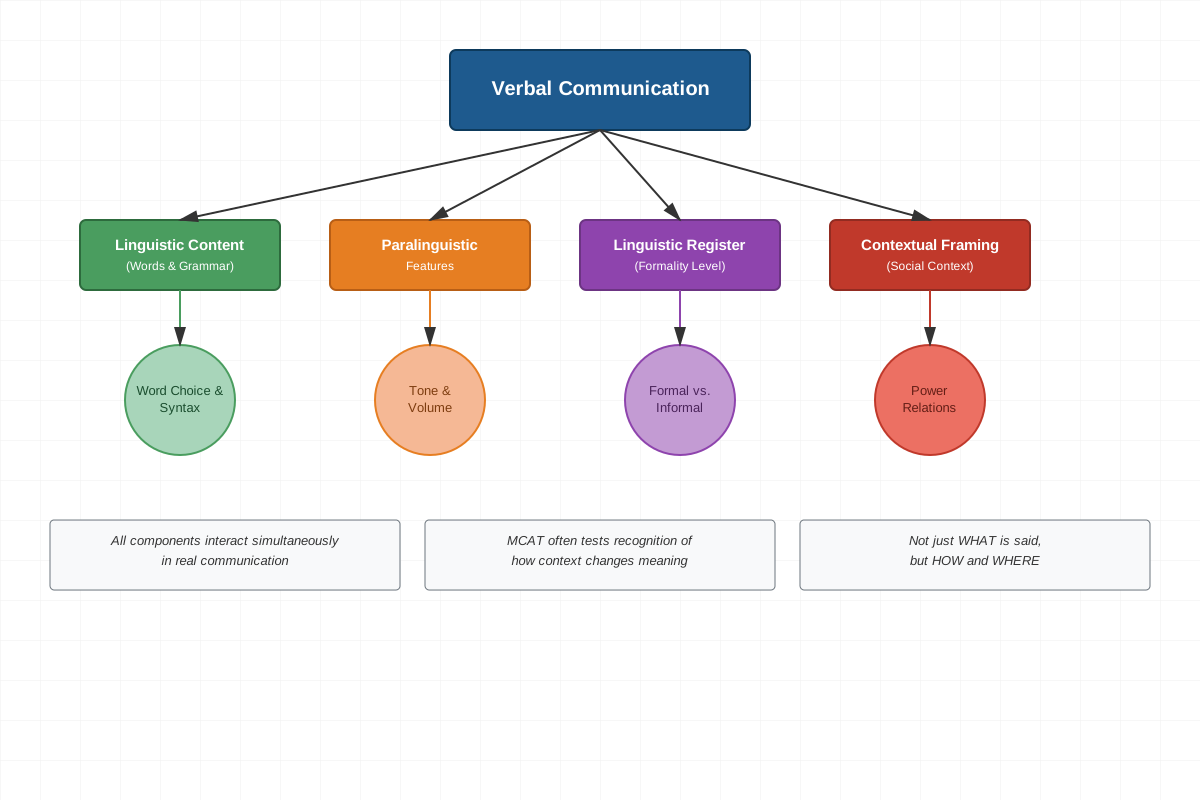
Verbal communication refers to the exchange of information through language-based symbols, encompassing both spoken and written forms. Unlike nonverbal communication, which relies on gestures, facial expressions, and body language, verbal communication utilizes linguistic codes—structured systems of words, grammar, and syntax—to convey meaning. Within Sociology, verbal communication is understood not merely as information transfer but as a social practice that constructs reality, establishes relationships, and enacts power dynamics.
The core components of verbal communication include:
- Content: The literal information or message being transmitted
- Tone: The emotional quality and attitude conveyed through word choice and vocal characteristics
- Register: The level of formality or informality appropriate to the social context
- Pragmatics: The contextual and social rules governing language use in specific situations
- Semantics: The meanings associated with words and phrases, which may vary across social groups
Language as Social Construction
From a sociological perspective, language does not simply describe pre-existing reality but actively constructs social reality. The Sapir-Whorf hypothesis (linguistic relativity) suggests that language shapes thought patterns and perception, meaning that speakers of different languages may experience and categorize the world differently. While strong versions of this hypothesis remain controversial, substantial evidence supports the idea that language influences cognition, attention, and social categorization.
Code-switching represents a critical phenomenon where individuals alternate between different language varieties, dialects, or registers depending on social context. This practice demonstrates how verbal communication serves as a tool for navigating multiple social identities and contexts. For example, a bilingual physician might switch between English and Spanish when treating patients from different linguistic backgrounds, or a professional might use technical jargon with colleagues but simplified language with clients.
Linguistic Register and Social Context
Linguistic register refers to the variation in language formality, vocabulary, and structure based on social context, relationship between speakers, and communication purpose. Registers range from intimate (used with close family) to frozen (highly formal, ritualized language). Understanding register is essential for the MCAT because inappropriate register use can signal social incompetence, create barriers to effective communication, or reinforce status differences.
| Register Type | Characteristics | Example Context | MCAT Relevance |
|---|---|---|---|
| Intimate | Private vocabulary, nonverbal cues significant | Close family, romantic partners | Rarely tested directly |
| Casual | Informal, slang, ellipsis common | Friends, peers | Peer communication in research settings |
| Consultative | Standard professional communication | Doctor-patient, teacher-student | High-yield for clinical scenarios |
| Formal | Complete sentences, technical vocabulary | Academic presentations, official documents | Research methodology discussions |
| Frozen | Ritualized, unchanging language | Legal documents, religious ceremonies | Medical informed consent |
Verbal Communication and Power Dynamics
Language serves as a primary mechanism through which power and social stratification are enacted and maintained. Several key concepts illuminate this relationship:
Linguistic capital (Pierre Bourdieu) refers to the value assigned to particular language varieties, accents, or communication styles within a society. Speakers of prestige dialects or those who command formal registers possess greater linguistic capital, which translates into social and economic advantages. In healthcare contexts, patients who can effectively communicate using medical terminology and formal registers often receive better care and more respectful treatment.
Linguistic discrimination occurs when individuals face prejudice or disadvantage based on their language use, accent, or dialect. This phenomenon contributes to health disparities when healthcare providers make assumptions about patient intelligence, compliance, or credibility based on language patterns. The MCAT frequently tests understanding of how linguistic discrimination intersects with other forms of social inequality.
Dominant discourse refers to the prevailing ways of speaking and thinking that reflect and reinforce the interests of powerful groups. Medical discourse, for example, privileges biomedical explanations and technical terminology, potentially marginalizing patients who understand health through alternative frameworks or lack formal medical education.
Health Literacy and Medical Communication
Health literacy represents the degree to which individuals can obtain, process, and understand basic health information needed to make appropriate health decisions. Verbal communication plays a central role in health literacy because medical information is primarily transmitted through spoken and written language. Low health literacy affects approximately 36% of U.S. adults and correlates strongly with worse health outcomes, higher hospitalization rates, and increased mortality.
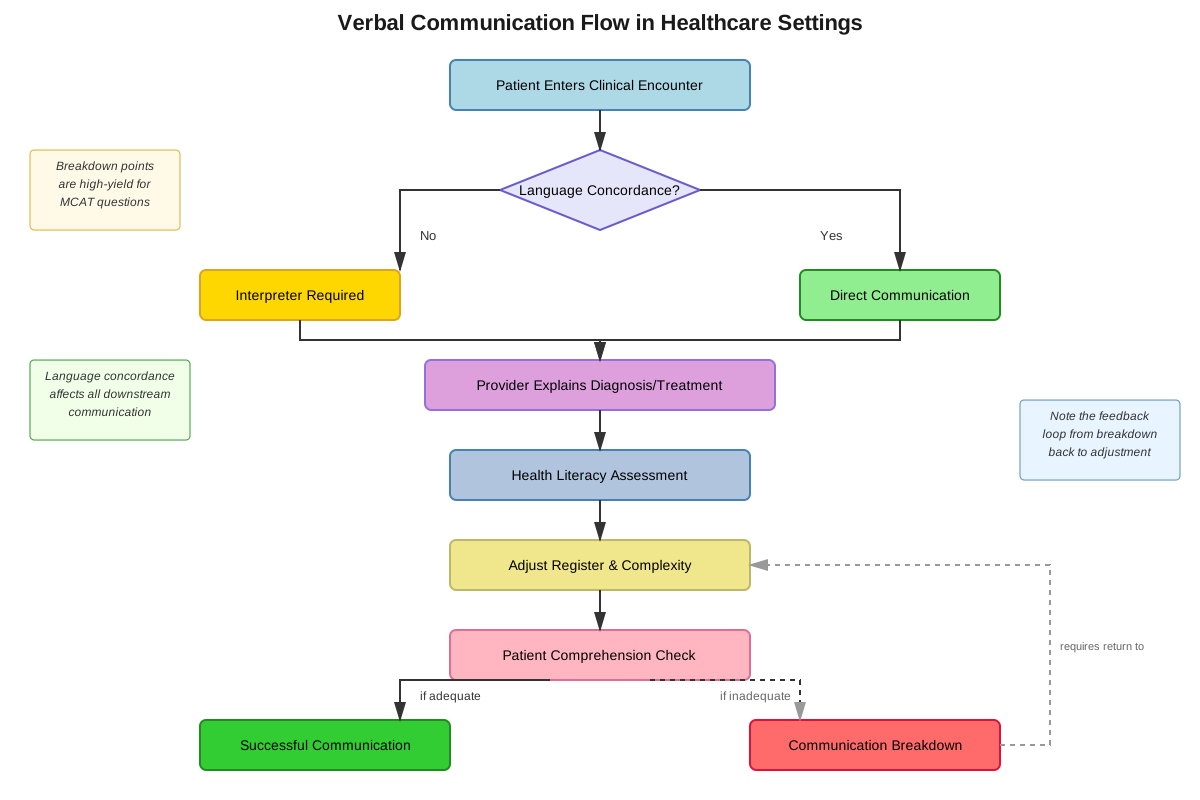
Effective medical communication requires:
- Plain language: Avoiding unnecessary jargon and explaining technical terms when they must be used
- Teach-back method: Asking patients to explain information in their own words to verify comprehension
- Cultural tailoring: Adapting communication style to match patient cultural backgrounds and preferences
- Active listening: Demonstrating attention and understanding through verbal acknowledgment and clarifying questions
Verbal Communication in Research and Methodology
The MCAT frequently presents research passages where verbal communication serves as either the independent variable (manipulated communication style), dependent variable (measured communication outcomes), or confounding variable (uncontrolled communication differences affecting results). Understanding how verbal communication operates in research contexts is essential for passage analysis.
Interviewer effects occur when researcher verbal behavior influences participant responses, potentially biasing data collection. Leading questions, tone of voice, or use of technical language can all shape how participants respond. Well-designed studies implement standardized interview protocols and train researchers to minimize verbal communication variability.
Demand characteristics arise when participants alter their verbal responses based on perceived study expectations rather than genuine attitudes or behaviors. Researchers must carefully craft verbal instructions and questions to minimize these effects.
Concept Relationships
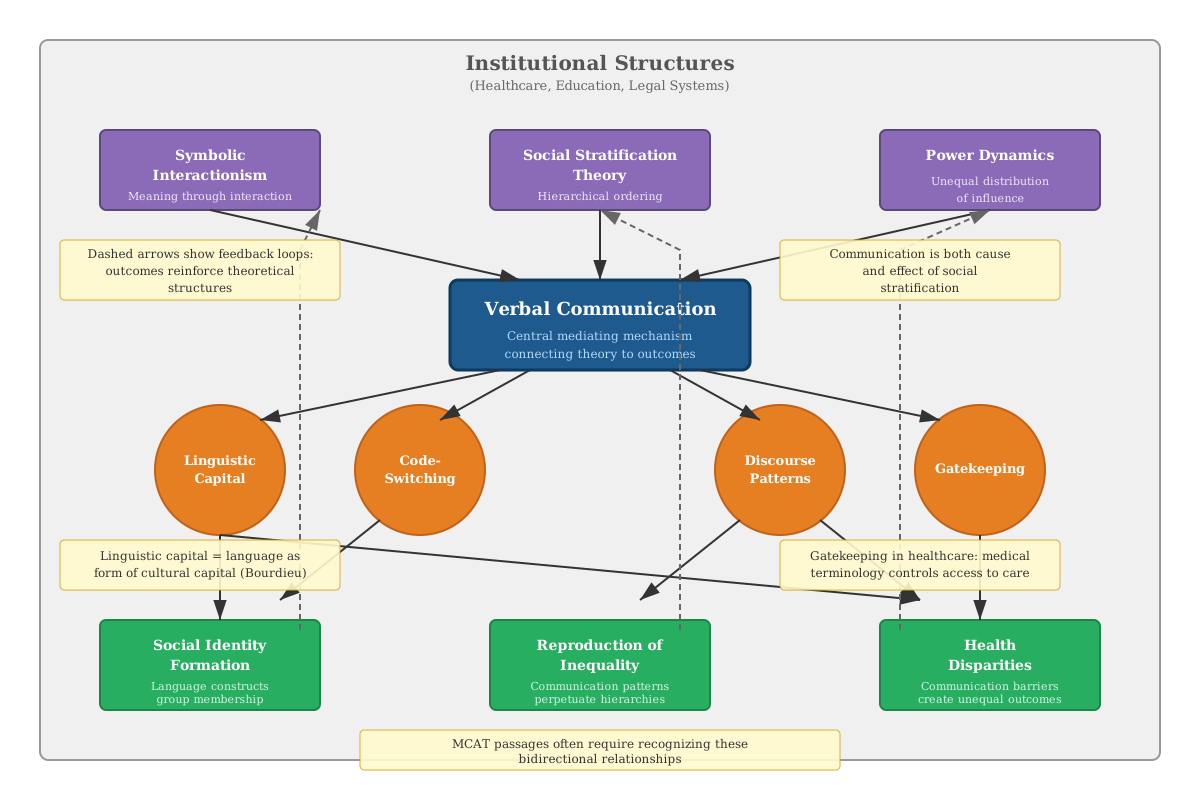
Verbal communication serves as a foundational concept that connects to virtually every aspect of social interaction and identity. The relationships can be mapped as follows:
Symbolic Interactionism → Verbal Communication → Social Reality Construction: Symbolic interactionism provides the theoretical framework explaining how verbal communication creates shared meanings and social bonds. Through language-based symbolic exchange, individuals negotiate definitions of situations and construct social reality.
Social Identity → Verbal Communication → Group Membership: Language use signals social identity and group membership. Individuals adopt specific communication patterns (vocabulary, accent, register) that mark them as members of particular social, cultural, or professional groups. This relationship operates bidirectionally—social identity shapes language use, while language use reinforces and constructs identity.
Power Structures → Verbal Communication → Social Stratification: Existing power hierarchies shape who has authority to speak, whose language is valued, and which communication styles are considered legitimate. Simultaneously, verbal communication practices reproduce and sometimes challenge these power structures.
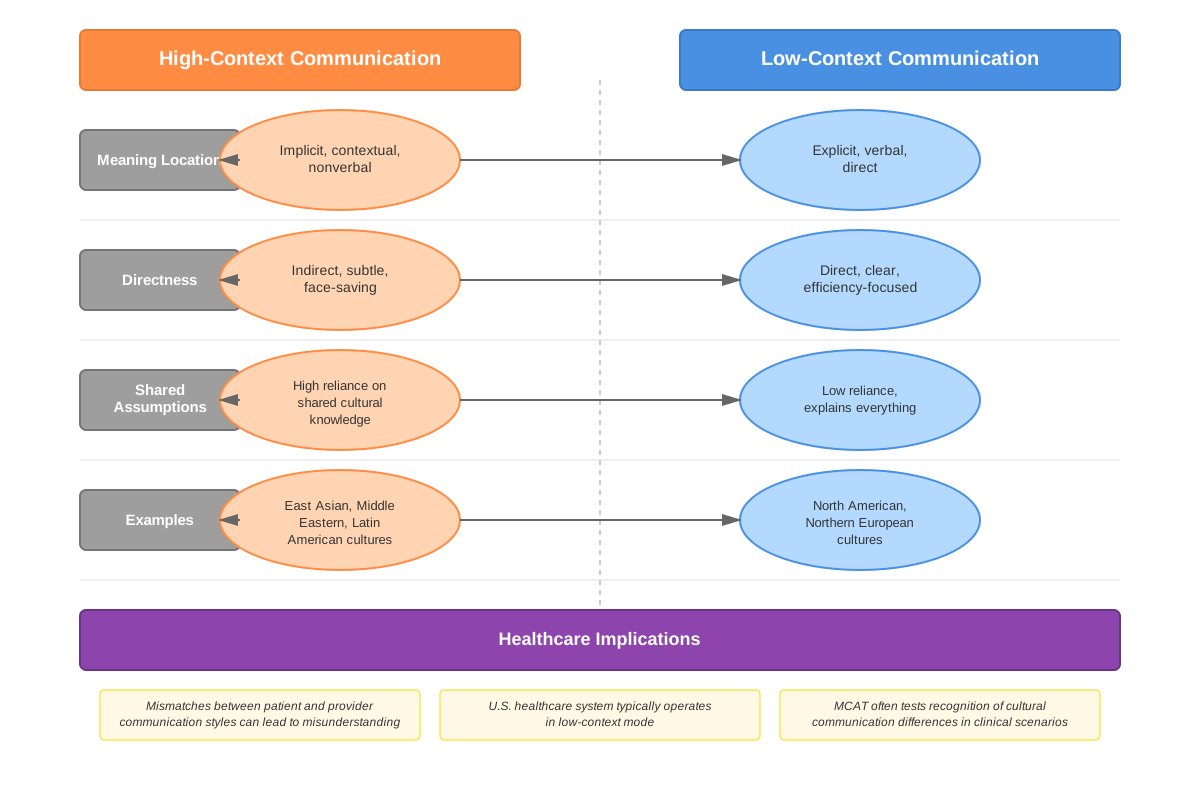
Culture → Verbal Communication → Cultural Transmission: Culture shapes communication norms, including directness versus indirectness, appropriate topics, turn-taking rules, and emotional expression. Verbal communication serves as the primary vehicle for transmitting cultural knowledge across generations.
Verbal Communication ↔ Nonverbal Communication: These two forms of communication operate in constant interaction. Verbal and nonverbal channels can reinforce each other (congruent communication) or contradict each other (incongruent communication), with nonverbal cues typically carrying more weight when conflict occurs.
Health Literacy ← Verbal Communication → Health Outcomes: The quality and appropriateness of medical verbal communication directly impacts patient health literacy, which in turn affects treatment adherence, self-care behaviors, and health outcomes.
Quick check — test yourself on Verbal communication so far.
Try Flashcards →High-Yield Facts
⭐ Verbal communication encompasses both spoken and written language-based information exchange and serves as the primary mechanism for symbolic interaction and social reality construction.
⭐ Linguistic register varies from intimate to frozen formality levels, and appropriate register use is essential for effective communication in professional contexts including healthcare.
⭐ Health literacy affects approximately 36% of U.S. adults and is directly influenced by the clarity, appropriateness, and cultural sensitivity of medical verbal communication.
⭐ Code-switching represents the practice of alternating between language varieties or registers based on social context and demonstrates linguistic flexibility and social awareness.
⭐ Linguistic capital refers to the social value assigned to particular language varieties, with prestige dialects and formal registers conferring advantages in educational, professional, and healthcare settings.
- The teach-back method is an evidence-based communication technique where healthcare providers ask patients to explain information in their own words to verify comprehension.
- Dominant discourse reflects and reinforces the interests of powerful groups, with medical discourse privileging biomedical explanations and technical terminology.
- Linguistic discrimination occurs when individuals face prejudice based on accent, dialect, or language use and contributes to health disparities and social inequality.
- The Sapir-Whorf hypothesis (linguistic relativity) suggests that language shapes thought patterns and perception, though the strength of this effect remains debated.
- Interviewer effects in research occur when researcher verbal behavior influences participant responses, potentially introducing bias into data collection.
- Pragmatics refers to the contextual and social rules governing appropriate language use in specific situations, varying significantly across cultures.
- Plain language communication in healthcare settings reduces medical jargon and improves patient comprehension, treatment adherence, and health outcomes.
Common Misconceptions
Misconception: Verbal communication is simply about transmitting information accurately from sender to receiver.
Correction: Verbal communication is a complex social practice that constructs reality, enacts power dynamics, and creates social relationships. The meaning of verbal communication emerges from social context, relationship between speakers, and cultural frameworks, not merely from the literal content of words.
Misconception: Using more sophisticated vocabulary and technical terminology makes communication more effective.
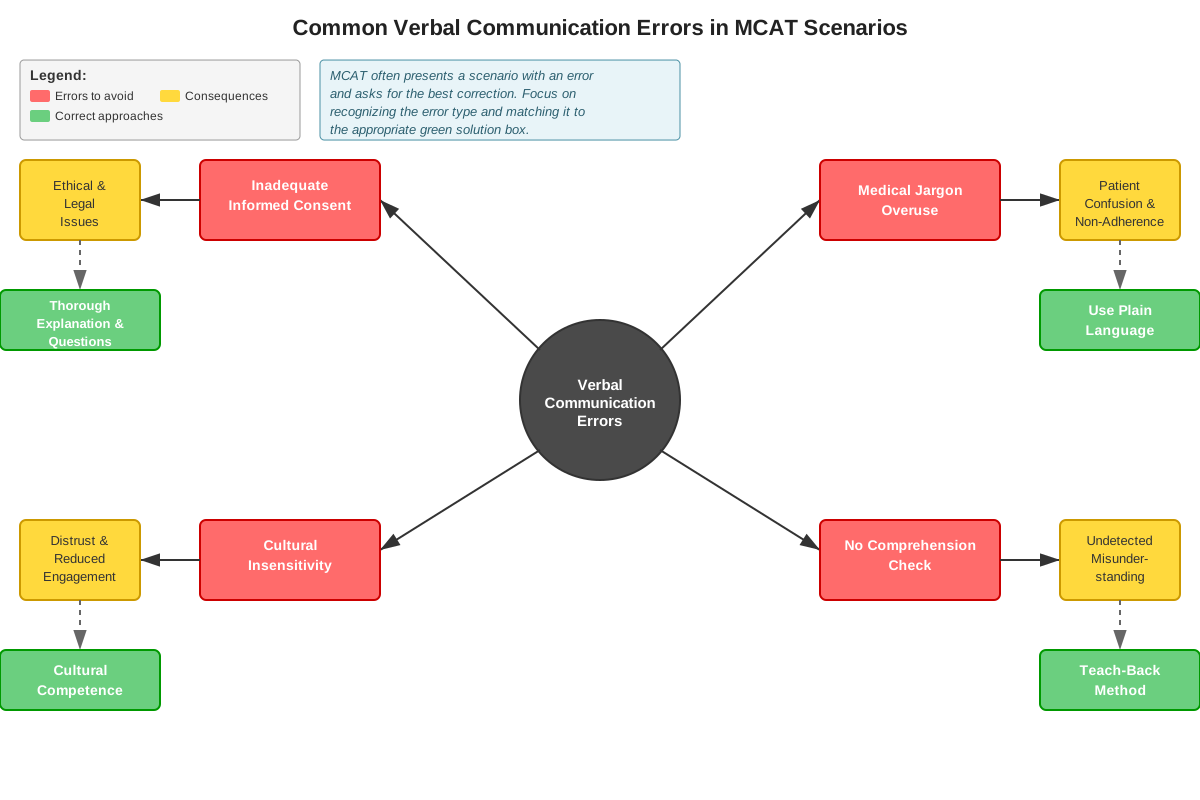
Correction: Effective communication matches language complexity to audience comprehension level and context. In healthcare settings, excessive medical jargon creates barriers to understanding, reduces patient satisfaction, and worsens health outcomes. Plain language communication is generally more effective than technical language when communicating with non-specialists.
Misconception: Verbal and nonverbal communication carry equal weight when they conflict.
Correction: When verbal and nonverbal channels send contradictory messages, receivers typically trust nonverbal cues more heavily. However, verbal communication remains essential because it can convey complex, abstract, and precise information that nonverbal communication cannot transmit.
Misconception: Code-switching represents linguistic confusion or inability to maintain consistent language use.
Correction: Code-switching demonstrates sophisticated linguistic competence and social awareness. Individuals who code-switch effectively navigate multiple social contexts and identities, adapting their communication style to match situational demands and audience expectations.
Misconception: All communication problems can be solved by speaking more clearly or loudly.
Correction: Communication barriers often stem from cultural differences, power imbalances, health literacy limitations, or systemic factors rather than simple clarity issues. Effective communication requires cultural competence, appropriate register use, active listening, and addressing structural barriers, not merely increased volume or enunciation.
Misconception: Medical terminology should always be avoided when communicating with patients.
Correction: While plain language is generally preferred, some medical terms should be introduced and explained to patients to improve health literacy and enable effective communication with other healthcare providers. The key is explaining technical terms when they are used and ensuring patient comprehension rather than avoiding all medical vocabulary.
Worked Examples
Example 1: Analyzing Communication in a Clinical Scenario
Scenario: A research study examines doctor-patient communication across different socioeconomic groups. Researchers find that physicians spend an average of 12 minutes with high-SES patients versus 8 minutes with low-SES patients. Additionally, physicians use more technical medical terminology with high-SES patients and are more likely to ask about their preferences regarding treatment options. Low-SES patients report lower satisfaction and worse treatment adherence.
Question: Which sociological concept best explains the differential communication patterns observed?
Analysis:
This scenario requires integrating multiple verbal communication concepts with social stratification theory. Let's work through the key elements:
- Identify the communication differences: Physicians vary their verbal communication in three ways—time spent, linguistic register (technical vs. simplified language), and participatory communication style (asking preferences vs. directive approach).
- Connect to sociological concepts: The pattern reflects linguistic capital and power dynamics in healthcare. High-SES patients likely possess greater linguistic capital, including familiarity with medical terminology and comfort with formal registers. Physicians may unconsciously respond to these social cues by engaging in more collaborative, detailed communication.
- Consider consequences: The differential communication contributes to health disparities. Low-SES patients receive less information, have fewer opportunities to participate in decision-making, and consequently report lower satisfaction and adherence.
- Best explanation: This scenario exemplifies how linguistic capital and social stratification shape healthcare communication. Physicians' communication patterns reflect and reinforce existing social hierarchies, with patients possessing greater linguistic capital receiving more respectful, collaborative care.
Answer: The concept of linguistic capital best explains these patterns. High-SES patients possess greater linguistic capital (familiarity with medical discourse, formal register competence), which physicians respond to with more detailed, collaborative communication. This differential treatment perpetuates health disparities.
Example 2: Evaluating Research Methodology
Scenario: Researchers investigate the effectiveness of a health education intervention for diabetes management. They conduct interviews with participants using standardized questions but notice that participants from different cultural backgrounds provide very different types of responses. Some participants give brief, direct answers, while others provide lengthy narratives including family history and personal context. The researchers are concerned about data consistency.
Question: What verbal communication concept explains the response variation, and how should researchers address this methodological challenge?
Analysis:
- Identify the communication pattern: Response variation reflects different cultural norms regarding appropriate verbal communication in interview contexts. Some cultures value direct, concise responses to specific questions, while others consider contextual narrative and relationship-building essential to meaningful communication.
- Relevant concepts: This scenario involves pragmatics (cultural rules governing appropriate communication), cultural competence, and interviewer effects. The standardized questions may not account for cultural communication differences.
- Methodological implications: The variation could represent either:
- Confounding variable: Cultural communication norms affecting data quality and comparability
- Rich data: Narrative responses potentially providing deeper insight into participant experiences
- Interviewer effect: Researcher expectations or behavior inadvertently shaping response patterns
- Appropriate response: Researchers should recognize that communication norms vary culturally and adapt their methodology accordingly. Options include:
- Training interviewers in culturally responsive communication techniques
- Using semi-structured interviews allowing flexibility while maintaining core questions
- Analyzing response patterns for cultural themes rather than forcing artificial consistency
- Including cultural communication norms as a variable in the analysis
Answer: The response variation reflects cultural differences in pragmatics—the social rules governing appropriate communication in interview contexts. Researchers should adopt culturally responsive methodology, potentially using semi-structured interviews and analyzing cultural communication patterns as meaningful data rather than problematic inconsistency. This approach respects cultural diversity while maintaining methodological rigor.
Exam Strategy
Approaching MCAT Questions on Verbal Communication
When encountering verbal communication questions on the MCAT, follow this systematic approach:
- Identify the communication context: Determine whether the scenario involves healthcare, research, social interaction, or institutional settings, as context shapes appropriate communication norms.
- Recognize power dynamics: Note any status differences between communicators (doctor-patient, researcher-participant, employer-employee) as these affect communication patterns and effectiveness.
- Consider cultural factors: Watch for cues about cultural background, as communication norms vary significantly across cultures regarding directness, formality, and appropriate topics.
- Distinguish content from process: Separate what is being communicated (content) from how it is being communicated (register, tone, style), as MCAT questions often test understanding of communication process rather than content.
Trigger Words and Phrases
Watch for these high-yield terms that signal verbal communication concepts:
- "Health literacy": Indicates questions about patient comprehension and medical communication effectiveness
- "Code-switching": Signals questions about linguistic flexibility and social identity
- "Register" or "formality": Points to questions about appropriate language use in different contexts
- "Linguistic capital": Indicates questions about language and social stratification
- "Jargon" or "technical terminology": Often appears in questions about communication barriers
- "Cultural competence": Suggests questions about culturally appropriate communication
- "Teach-back method": Specific evidence-based communication technique frequently tested
Process of Elimination Tips
When using process of elimination on verbal communication questions:
- Eliminate options that ignore context: Communication effectiveness always depends on social context, audience, and purpose. Options suggesting universal "best" communication approaches are typically incorrect.
- Eliminate options that oversimplify: Verbal communication involves complex interactions between content, tone, register, power dynamics, and cultural norms. Options reducing communication to simple information transfer are usually wrong.
- Eliminate options that contradict health literacy principles: In healthcare scenarios, options suggesting increased jargon use or ignoring patient comprehension are typically incorrect.
- Watch for options that confuse verbal and nonverbal: Some incorrect options attribute nonverbal communication characteristics to verbal communication or vice versa.
Time Allocation
For passage-based questions on verbal communication:
- Spend 1-2 minutes identifying the main communication concept being tested (health literacy, linguistic capital, cultural communication norms, etc.)
- Allocate 30-45 seconds per question applying the concept to specific scenarios
- For questions requiring analysis of research methodology, spend extra time identifying potential confounds or biases related to verbal communication
Memory Techniques
Mnemonic for Components of Verbal Communication: "CTRPS"
Content - What is being said
Tone - Emotional quality and attitude
Register - Formality level
Pragmatics - Contextual rules
Semantics - Meaning of words
Mnemonic for Linguistic Registers: "I Can't Find Formal"
Intimate - Closest relationships
Casual - Friends and peers
Consultative - Professional interactions (most tested on MCAT)
Formal - Academic and official
Frozen - Ritualized language
Visualization Strategy for Health Literacy
Imagine a bridge between healthcare provider and patient:
- Strong bridge = Plain language, teach-back method, cultural competence → Good health outcomes
- Weak bridge = Excessive jargon, no comprehension checks, cultural insensitivity → Poor health outcomes, disparities
The bridge metaphor helps remember that communication quality directly connects to health outcomes.
Acronym for Effective Medical Communication: "PLEASE"
Plain language
Listen actively
Explain technical terms
Ask about comprehension (teach-back)
Sensitive to culture
Empathy and respect
Summary
Verbal communication represents the transmission of information through spoken or written language and serves as the primary mechanism for symbolic interaction, social reality construction, and relationship formation within sociological frameworks. For the MCAT, understanding verbal communication requires recognizing that language operates not merely as a neutral information conduit but as a powerful social tool that reflects and reinforces power structures, constructs social identities, and shapes health outcomes. Key concepts include linguistic register (formality levels from intimate to frozen), linguistic capital (social value assigned to language varieties), code-switching (alternating between language varieties based on context), and health literacy (ability to understand and use health information). Effective medical communication employs plain language, the teach-back method, and cultural competence to overcome barriers and improve patient outcomes. Verbal communication intersects with social stratification, cultural transmission, and power dynamics, making it an integrative topic connecting multiple domains within the behavioral sciences. MCAT questions test understanding of how communication patterns vary across social contexts, how language barriers contribute to health disparities, and how research methodology must account for verbal communication effects.
Key Takeaways
- Verbal communication is a complex social practice that constructs reality and enacts power dynamics, not merely information transfer between sender and receiver
- Linguistic register ranges from intimate to frozen formality, with consultative register most relevant for healthcare and professional contexts tested on the MCAT
- Health literacy is directly influenced by medical communication quality, with plain language and teach-back methods improving patient comprehension and outcomes
- Linguistic capital creates social advantages for speakers of prestige dialects and those competent in formal registers, contributing to healthcare disparities
- Code-switching demonstrates sophisticated linguistic competence and social awareness, allowing individuals to navigate multiple social contexts effectively
- Cultural competence in verbal communication requires understanding that pragmatic norms (rules for appropriate language use) vary significantly across cultural groups
- Effective MCAT performance requires recognizing how verbal communication intersects with social stratification, identity, power dynamics, and research methodology
Related Topics
Nonverbal Communication: While this guide focuses on verbal communication, understanding nonverbal channels (body language, facial expressions, proxemics) is essential for comprehensive communication competence. Mastering verbal communication provides the foundation for analyzing how verbal and nonverbal channels interact and sometimes contradict each other.
Symbolic Interactionism: This theoretical framework explains how verbal communication creates shared meanings and social bonds through symbolic exchange. Understanding verbal communication mechanisms enables deeper comprehension of symbolic interactionist theory.
Social Identity and Group Dynamics: Language use both reflects and constructs social identities including race, ethnicity, class, gender, and professional roles. Mastering verbal communication concepts facilitates analysis of how language shapes group membership and intergroup relations.
Health Disparities and Social Determinants of Health: Communication barriers represent a significant contributor to health disparities affecting marginalized populations. Understanding verbal communication provides tools for analyzing how systemic factors create differential health outcomes.
Cultural Competence in Healthcare: Effective cross-cultural communication requires understanding how verbal communication norms vary across cultural contexts. Mastering verbal communication fundamentals enables progression to advanced cultural competence topics.
Practice CTA
Now that you have thoroughly reviewed verbal communication concepts, challenge yourself with practice questions and flashcards to reinforce your understanding. Focus particularly on applying these concepts to clinical scenarios and research methodology passages, as these represent the highest-yield question formats on the MCAT. Remember that mastering verbal communication provides a foundation for understanding broader social interaction and identity topics—your investment in this material will pay dividends across multiple sections of the exam. Approach practice questions systematically, identifying the specific verbal communication concept being tested before selecting your answer. You've got this!
Sign up free to keep reading
Create a free AnvayaPrep account to finish this MCAT guide on Verbal communication — plus flashcards and practice questions.