Overview
Racialization is a fundamental sociological concept that describes the process by which societies construct and assign racial meanings to relationships, social practices, groups, or identities that did not previously have such meanings. This concept is critical for understanding how race operates as a social construct rather than a biological reality, and how racial categories are created, maintained, and transformed over time through social, political, and economic processes. Unlike static racial classifications, racialization emphasizes the dynamic, ongoing nature of how racial meanings are produced and reproduced in society.
For the MCAT, racialization represents a high-yield topic within the Social Stratification and Inequality framework of Sociology. The exam frequently tests students' ability to recognize how social processes create and perpetuate racial categories, how these categories influence health outcomes and healthcare access, and how institutional practices contribute to racial disparities. Understanding racialization enables test-takers to analyze complex passages about health disparities, discrimination in medical settings, and the social determinants of health through a sociological lens rather than relying on oversimplified biological explanations of race.
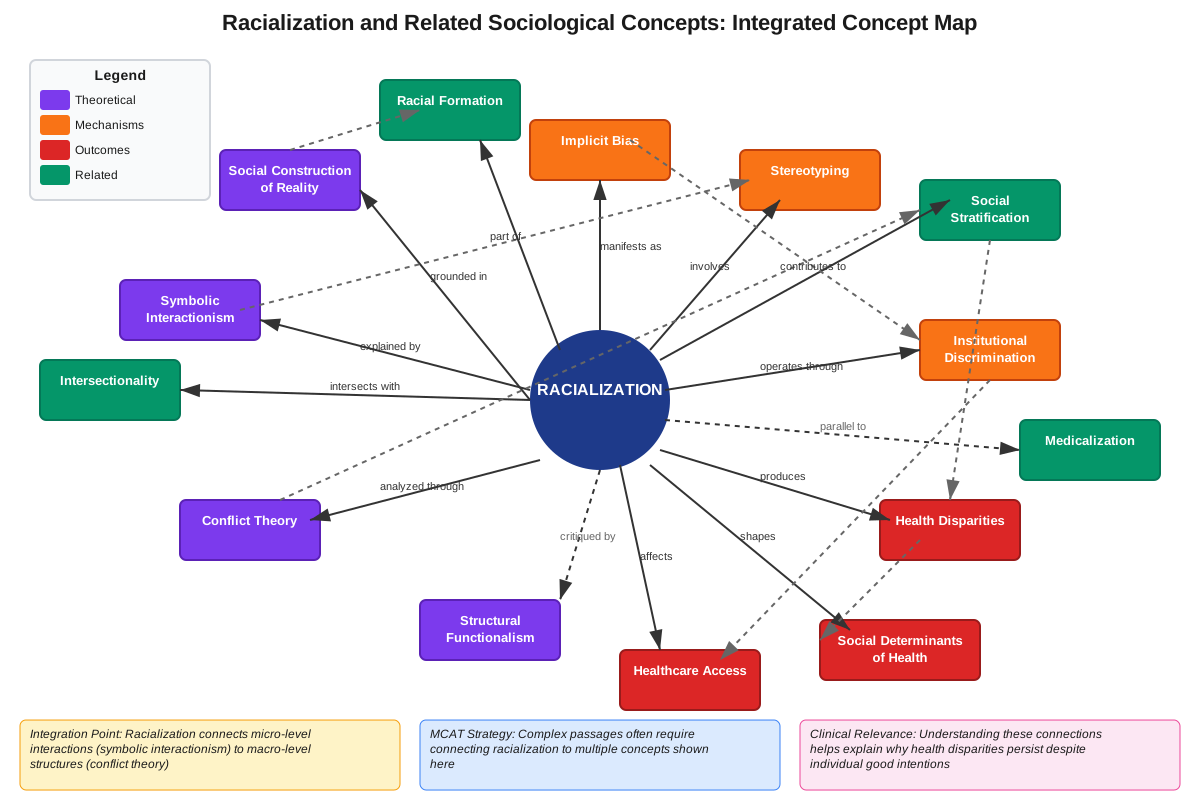
Racialization connects intimately with broader concepts in sociology including social construction of reality, symbolic interactionism, structural functionalism, and conflict theory. It serves as a bridge between micro-level interactions (how individuals experience and perform race) and macro-level structures (how institutions create and maintain racial hierarchies). Mastering this concept provides the analytical framework necessary to understand related topics such as institutional discrimination, implicit bias in healthcare, health disparities, and the social determinants of health—all of which appear regularly in MCAT Psychological, Social, and Biological Foundations passages.
Learning Objectives
- [ ] Define Racialization using accurate Sociology terminology
- [ ] Explain why Racialization matters for the MCAT
- [ ] Apply Racialization to exam-style questions
- [ ] Identify common mistakes related to Racialization
- [ ] Connect Racialization to related Sociology concepts
- [ ] Distinguish between racialization and related concepts such as racial formation, racism, and discrimination
- [ ] Analyze how racialization operates at individual, institutional, and structural levels
- [ ] Evaluate the health consequences of racialization processes in medical contexts
Prerequisites
- Social Construction of Reality: Understanding that social categories are created through human interaction rather than existing naturally is essential for grasping how racial categories are constructed through racialization
- Race as a Social Construct: Recognizing that race lacks biological validity but has profound social consequences provides the foundation for understanding racialization processes
- Social Stratification: Familiarity with how societies organize hierarchically helps explain why racialization creates and maintains inequality
- Symbolic Interactionism: Knowledge of how meaning is created through social interaction illuminates the micro-level processes of racialization
- Institutional Discrimination: Understanding systematic disadvantage helps contextualize racialization as an institutional process
Why This Topic Matters
Racialization appears in approximately 15-20% of MCAT Psychological, Social, and Biological Foundations passages that address social inequality, making it one of the most frequently tested sociology concepts. The MCAT specifically emphasizes racialization because it directly relates to understanding health disparities—a core competency for future physicians. Medical schools recognize that physicians must understand how social processes, not biological differences, create the racial health gaps they will encounter in clinical practice.
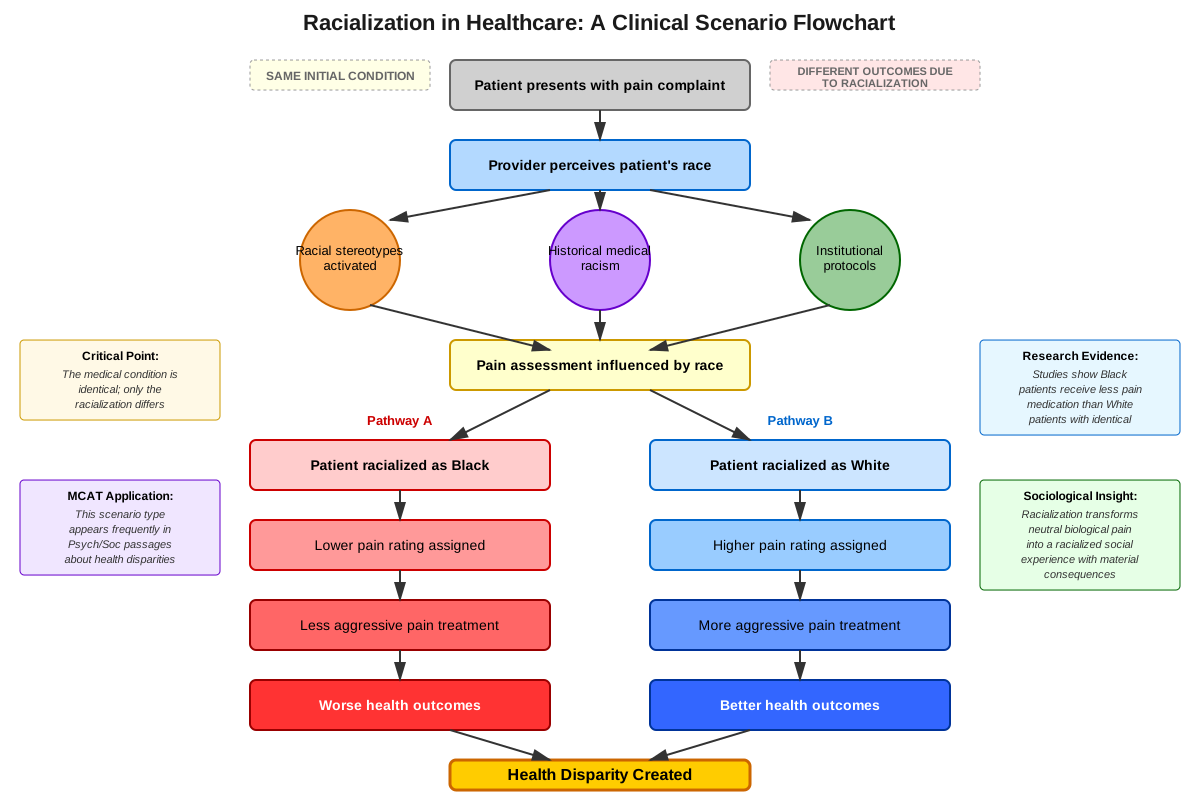
In real-world clinical contexts, racialization explains why certain groups experience differential health outcomes, face barriers to healthcare access, and receive different quality of care even when controlling for socioeconomic factors. For example, racialization processes have led to the persistent myth that Black patients have higher pain tolerance, resulting in inadequate pain management. Understanding racialization helps future physicians recognize how their own implicit biases and institutional practices perpetuate health inequities.
On the MCAT, racialization typically appears in passages discussing health disparities, healthcare access, physician bias, or social determinants of health. Questions may present data showing differential health outcomes and ask students to identify the sociological process responsible, or they may describe institutional practices and require students to recognize racialization at work. The exam often contrasts racialization with biological explanations, testing whether students can correctly identify social construction versus genetic determinism. Discrete questions may ask for definitions or applications of racialization to novel scenarios, while passage-based questions typically require students to apply the concept to interpret research findings or clinical situations.
Core Concepts
Definition and Fundamental Characteristics
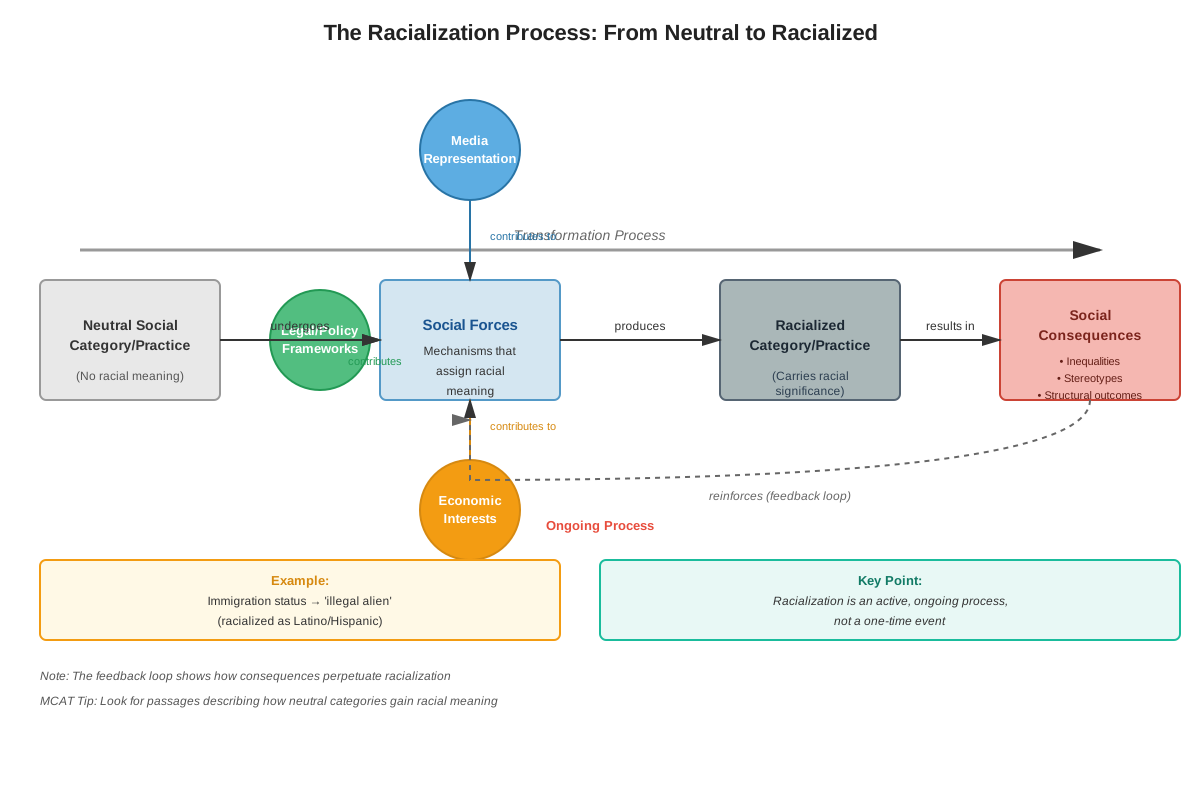
Racialization is the social process through which racial categories are constructed, deconstructed, and reconstructed over time, and through which racial meanings are attached to previously unracialized relationships, social practices, or groups. This process transforms neutral characteristics, behaviors, or populations into racialized ones, imbuing them with racial significance and often creating hierarchies based on these constructed categories. The term emphasizes that race is not a fixed, natural category but rather an ongoing social accomplishment that requires continuous work to maintain.
The concept of racialization sociology emerged from critical race theory and postcolonial studies, challenging essentialist views of race that treat racial categories as biological or natural. Instead, racialization highlights three key characteristics:
- Processual Nature: Racialization is ongoing and dynamic, not a one-time event
- Social Construction: Racial meanings are created through social interaction and institutional practices
- Power Relations: Racialization serves to create, justify, and maintain social hierarchies and unequal resource distribution
Mechanisms of Racialization
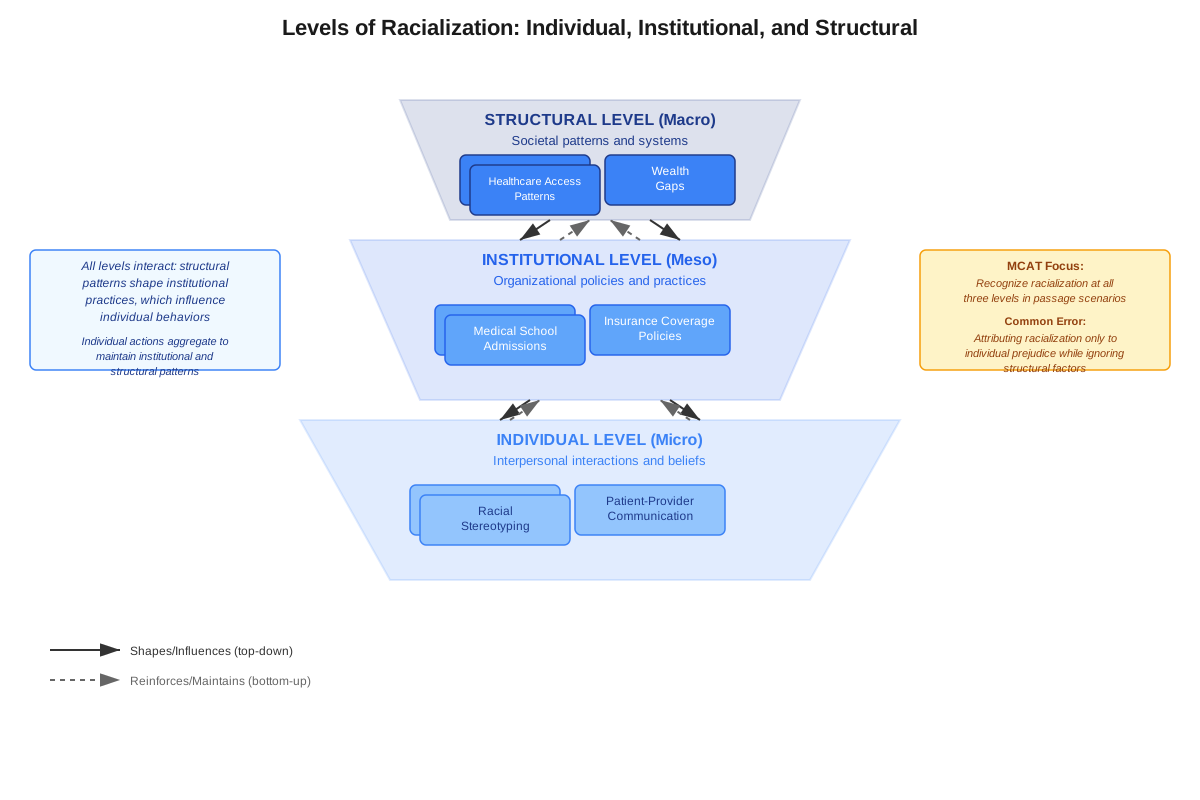
Racialization operates through multiple interconnected mechanisms at different levels of social organization:
Individual Level Mechanisms:
- Categorization of people based on perceived physical characteristics
- Attribution of cultural, behavioral, or intellectual traits to racial groups
- Development and reinforcement of racial stereotypes through social interaction
- Internalization of racial identities and meanings by individuals
Institutional Level Mechanisms:
- Creation of policies that explicitly or implicitly categorize people by race
- Differential treatment of racial groups within organizations (healthcare, education, criminal justice)
- Collection and use of racial data that reifies racial categories
- Allocation of resources based on racialized criteria
Structural Level Mechanisms:
- Legal codification of racial categories (historical examples: one-drop rule, apartheid)
- Economic systems that create racialized labor markets
- Residential segregation that concentrates racial groups spatially
- Cultural production (media, education) that disseminates racial meanings
Racialization in Healthcare Contexts
For racialization MCAT preparation, understanding healthcare-specific applications is crucial. Medical racialization occurs when:
Diagnostic Practices Become Racialized:
- Certain diseases become associated with particular racial groups (e.g., sickle cell disease with Black populations)
- Differential diagnostic consideration based on patient race
- Use of race-adjusted algorithms in medical decision-making (e.g., kidney function calculations)
Treatment Protocols Incorporate Racial Categories:
- Race-specific medication recommendations (e.g., BiDil for heart failure in Black patients)
- Different pain management approaches based on racial assumptions
- Varying levels of aggressive treatment offered to different racial groups
Research and Medical Knowledge Production:
- Historical exclusion of certain racial groups from clinical trials
- Overrepresentation of certain groups in research on specific conditions
- Publication of research that attributes health differences to race rather than racism
Racialization versus Related Concepts
Understanding distinctions between racialization and similar concepts is essential for MCAT success:
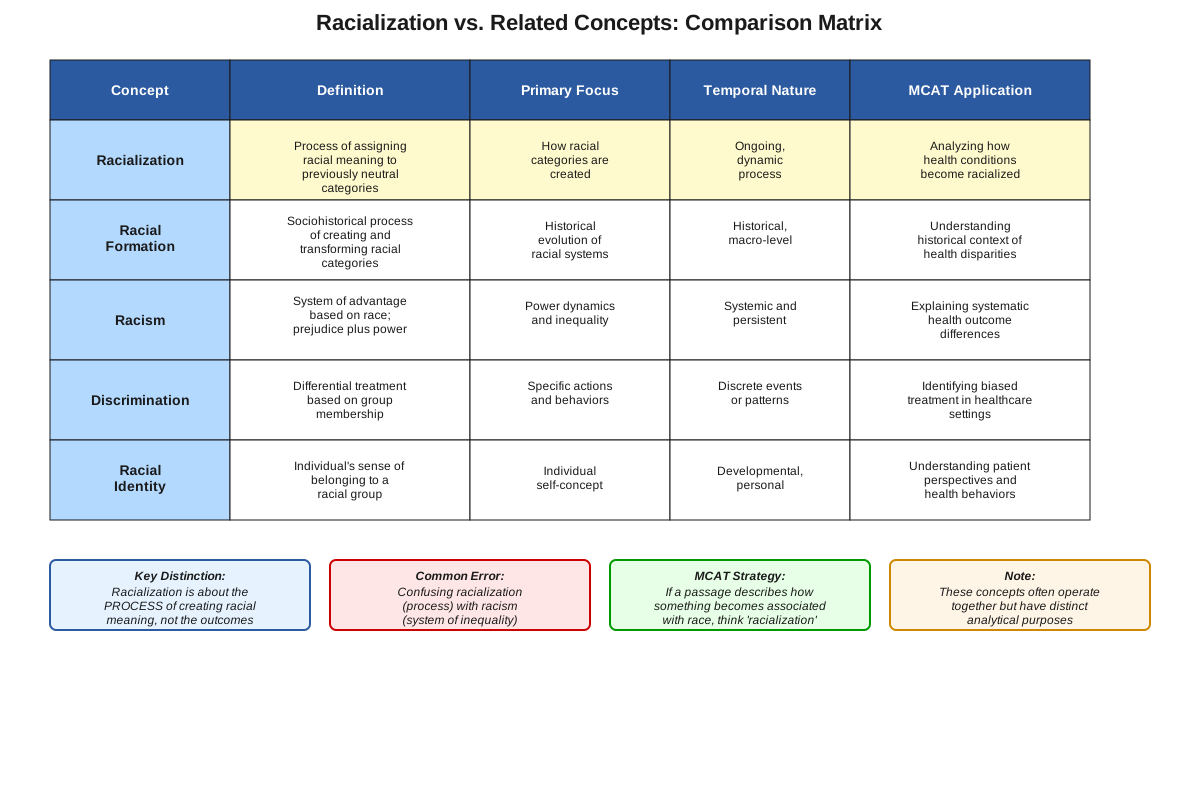
| Concept | Definition | Key Distinction from Racialization |
|---|---|---|
| Racial Formation | The sociohistorical process by which racial categories are created, inhabited, transformed, and destroyed | Broader concept encompassing racialization; includes both structural and cultural dimensions |
| Racism | Prejudice plus power; systematic oppression based on race | Outcome or consequence of racialization; racialization is the process, racism is the system |
| Discrimination | Differential treatment based on group membership | Behavioral manifestation; racialization creates the categories that enable discrimination |
| Prejudice | Preconceived negative attitudes toward a group | Individual-level attitude; racialization operates at multiple levels including structural |
| Stereotyping | Overgeneralized beliefs about group characteristics | Cognitive process that both results from and reinforces racialization |
Historical Examples of Racialization
Understanding concrete historical examples helps recognize racialization processes:
Immigration and Racialization:
- Irish immigrants in 19th century America were racialized as non-white, then gradually "became white" through social processes
- Asian immigrants faced racialization through laws like the Chinese Exclusion Act
- Latino/Hispanic populations have been inconsistently racialized across different contexts and time periods
Medical Racialization:
- 19th century physicians racialized enslaved Africans by inventing diseases like "drapetomania" (desire to escape slavery)
- Tuskegee Syphilis Study racialized Black men as suitable subjects for unethical research
- Contemporary use of race in clinical algorithms racializes medical decision-making
Criminal Justice Racialization:
- War on Drugs policies racialized drug use despite similar rates across racial groups
- Differential sentencing for crack versus powder cocaine racialized drug offenses
- Racial profiling practices racialized suspicion and surveillance
Contemporary Racialization Processes
Modern racialization often operates through seemingly race-neutral mechanisms:
Colorblind Racism:
- Policies that avoid explicit racial language but produce racialized outcomes
- "Culture of poverty" explanations that racialize economic disadvantage
- Merit-based systems that ignore historical racialization and its ongoing effects
Biological Racialization:
- Genetic research that seeks racial differences in disease susceptibility
- Pharmaceutical development targeting specific racial groups
- Medical education that teaches race-based physiological differences
Spatial Racialization:
- Neighborhood effects research that racializes geography
- School district boundaries that create racialized educational opportunities
- Healthcare facility location decisions that produce racialized access
Concept Relationships
Racialization serves as a foundational concept connecting multiple domains within social stratification and inequality. The process of racialization → creates racial categories → which enable racism and discrimination → leading to health disparities and differential outcomes. This causal chain appears frequently in MCAT passages.
At the micro level, racialization connects to symbolic interactionism through the everyday interactions that create and reinforce racial meanings. When individuals categorize others racially and act based on those categories, they participate in racialization. This links to social identity theory, as racialized categories become sources of both personal and social identity.
At the meso level, racialization connects to institutional discrimination through organizational practices that embed racial categories into routine operations. Healthcare institutions that collect racial data, use race-adjusted algorithms, or show differential treatment patterns exemplify institutional racialization. This connects to structural functionalism by showing how institutions maintain social order through racialized practices.
At the macro level, racialization connects to conflict theory by revealing how racial categories serve dominant group interests in maintaining power and resource control. The relationship flows: economic interests → drive racialization processes → which justify exploitation → creating stratified outcomes. This connects to social determinants of health, as racialization shapes access to health-promoting resources.
Racialization also connects forward to understanding health disparities: racialization processes → create differential exposure to stressors → produce weathering effects → resulting in measurable health gaps. Understanding this pathway is essential for MCAT passages on health equity.
High-Yield Facts
⭐ Racialization is a process, not a state: Race is continuously constructed and reconstructed through social practices, not a fixed biological category
⭐ Racialization operates at multiple levels simultaneously: Individual interactions, institutional policies, and structural arrangements all contribute to racialization
⭐ Medical racialization contributes to health disparities: When healthcare systems treat race as biological rather than social, they perpetuate inequitable outcomes
⭐ Racialization can change over time: Groups can be racialized differently across historical periods and social contexts (e.g., Irish, Italian immigrants)
⭐ Colorblind policies can perpetuate racialization: Ignoring race does not eliminate racialization; it may obscure ongoing racialization processes
- Racialization creates the categories that make racism possible; without racialized categories, systematic racial oppression cannot exist
- The same physical characteristics may or may not be racialized depending on social context and historical period
- Racialization in medicine often manifests through race-adjusted clinical algorithms that assume biological racial differences
- Self-identification of race on forms participates in racialization by reifying racial categories
- Racialization can occur without explicit racial language through proxies like neighborhood, names, or cultural practices
- Healthcare disparities attributed to race are actually consequences of racialization processes, not racial biology
- Racialization intersects with other forms of categorization (gender, class) to create unique experiences
Quick check — test yourself on Racialization so far.
Try Flashcards →Common Misconceptions
Misconception: Racialization is the same as racism
Correction: Racialization is the process of creating racial categories and meanings, while racism is the system of oppression based on those categories. Racialization is a prerequisite for racism but describes the construction process rather than the oppressive system itself.
Misconception: Racialization only happened historically and is no longer occurring
Correction: Racialization is an ongoing, contemporary process. Modern examples include the racialization of Muslims post-9/11, the racialization of immigration debates, and continued medical racialization through race-based algorithms and research.
Misconception: Acknowledging race perpetuates racialization, so colorblind approaches are better
Correction: Colorblind approaches often obscure ongoing racialization processes and prevent addressing their consequences. Recognizing racialization as a social process is necessary to dismantle it; ignoring race allows racialization to continue unchallenged.
Misconception: Racialization is only about how dominant groups categorize minority groups
Correction: While racialization often involves dominant groups categorizing others, all groups participate in racialization processes. Additionally, groups can self-racialization through identity formation and community building, though these processes occur within contexts of unequal power.
Misconception: If race has biological components (like sickle cell trait prevalence), then racialization is justified
Correction: While certain genetic variations correlate with ancestry, racial categories are social constructions that poorly map onto genetic variation. Racialization takes limited biological variation and constructs broad, socially meaningful categories that have no biological validity. The social consequences of racialization (discrimination, stress, resource deprivation) create far more health impact than any genetic factors.
Misconception: Racialization only affects people of color
Correction: Racialization affects all groups, including white populations. Whiteness itself is a racialized category that has been constructed and reconstructed over time. However, racialization typically advantages white populations while disadvantaging others, creating asymmetric consequences.
Misconception: Using race in medical research or treatment is always an example of harmful racialization
Correction: The issue is not whether race is mentioned but how it is conceptualized and used. Research examining how racialization produces health disparities is valuable; research treating race as a biological cause of differences perpetuates harmful racialization. The key distinction is whether race is understood as a social process or biological essence.
Worked Examples
Example 1: Identifying Racialization in a Research Study
Scenario: A research study examines kidney function in patients and uses different equations to calculate estimated glomerular filtration rate (eGFR) based on whether patients self-identify as Black or non-Black. The equation for Black patients includes a correction factor that assumes higher muscle mass and therefore higher creatinine levels. Researchers justify this by stating that Black patients have inherently different physiology.
Analysis:
Step 1 - Identify the Process: This scenario describes medical racialization. The researchers are taking a physiological measurement (kidney function) and applying racial categories to it, assuming biological differences based on race.
Step 2 - Recognize the Mechanism: The racialization operates through an institutional mechanism—a clinical algorithm that embeds racial categories into routine medical practice. This reifies race as a biological category rather than a social one.
Step 3 - Evaluate the Assumptions: The assumption of inherent physiological differences based on race reflects biological essentialism. While the researchers may point to average differences in muscle mass, these differences are not uniformly distributed within racial groups and overlap substantially between groups. The racial category serves as a crude proxy that racializes a physiological measurement.
Step 4 - Consider Consequences: This racialization has concrete health consequences. Studies have shown that race-adjusted eGFR calculations delay diagnosis of kidney disease in Black patients and reduce their eligibility for transplant referrals. The racialization process thus contributes to health disparities.
Step 5 - Connect to Learning Objectives: This example demonstrates how racialization operates in healthcare settings, how it differs from biological reality, and how it produces inequitable outcomes. On the MCAT, recognizing this as racialization rather than appropriate use of biological differences is crucial.
MCAT Application: If asked to identify the sociological concept illustrated, the correct answer would be racialization. If asked about consequences, the answer would connect racialization to health disparities. If asked about alternatives, the answer would suggest race-neutral approaches or examining social determinants of kidney disease.
Example 2: Distinguishing Racialization from Related Concepts
Scenario: A hospital administrator notices that Black patients in the emergency department wait longer for pain medication than white patients with similar conditions. She implements three changes: (1) mandatory implicit bias training for all staff, (2) standardized pain assessment protocols that don't reference patient race, and (3) regular audits of pain medication administration times by patient demographics. A researcher studying these changes describes them as addressing different aspects of racial inequality in healthcare.
Analysis:
Step 1 - Identify Multiple Concepts: This scenario involves several related but distinct concepts that students must differentiate.
Step 2 - Analyze Implicit Bias Training: The implicit bias training addresses individual-level prejudice and stereotyping. While these cognitive processes are influenced by racialization (the broader social process that created racial categories and associated meanings), the training itself targets individual attitudes rather than the racialization process.
Step 3 - Analyze Standardized Protocols: The standardized protocols address institutional discrimination—the differential treatment based on race. This discrimination is enabled by racialization (which created the racial categories that staff use to categorize patients), but the protocols target the discriminatory behavior rather than the racialization process itself.
Step 4 - Analyze Demographic Audits: The demographic audits actually participate in racialization by collecting and analyzing data using racial categories. However, this racialization serves a different purpose—making visible the consequences of other racialization processes rather than creating new inequalities.
Step 5 - Synthesize Relationships: Racialization (the process of creating and maintaining racial categories) → enables discrimination (differential treatment) → which is influenced by prejudice and stereotypes (individual attitudes) → producing disparities (unequal outcomes). The interventions target different points in this causal chain.
MCAT Application: Questions might ask students to identify which intervention addresses racialization (none directly do, though the audits use racialization for anti-racist purposes), which addresses discrimination (standardized protocols), or which addresses individual bias (training). Understanding these distinctions is essential for selecting correct answers.
Exam Strategy
When approaching racialization MCAT questions, employ this systematic strategy:
Step 1 - Identify Trigger Words: Watch for phrases like "social construction of race," "racial categories are created," "process of racialization," "racial meanings are assigned," or "groups become racialized." These signal that racialization is the relevant concept. Distinguish from triggers for related concepts: "differential treatment" suggests discrimination, "negative attitudes" suggests prejudice, "systematic oppression" suggests racism.
Step 2 - Determine the Level of Analysis: MCAT questions often test whether students can identify the level at which racialization operates. Individual-level racialization involves interpersonal categorization and meaning-making. Institutional-level racialization involves organizational policies and practices. Structural-level racialization involves broad social systems. The correct answer will match the level described in the passage.
Step 3 - Distinguish Process from Outcome: Racialization is a process (how racial categories are created), not an outcome (the inequality that results). If a question asks about the process creating racial categories, choose racialization. If it asks about the resulting inequality, choose racism, discrimination, or health disparities depending on context.
Step 4 - Apply the Social Construction Framework: When passages present biological explanations for racial differences, recognize that the MCAT expects you to identify these as products of racialization rather than biological reality. The exam consistently tests whether students understand race as socially constructed. Choose answers that emphasize social processes over biological determinism.
Step 5 - Use Process of Elimination:
- Eliminate answers that treat race as biological or natural
- Eliminate answers that confuse racialization with its consequences (racism, discrimination)
- Eliminate answers that suggest racialization is historical rather than ongoing
- Eliminate answers that apply racialization only to minority groups
Time Management: Racialization questions typically appear in passages about health disparities or social inequality. Allocate 1-2 minutes to identify the key sociological concept in the passage, then 30-45 seconds per question. If you correctly identify racialization as the relevant framework, questions become straightforward applications.
Exam Tip: The MCAT frequently contrasts racialization with biological explanations. When you see answer choices that include both social and biological explanations for racial differences, the social explanation (racialization) is almost always correct for sociology questions.
Memory Techniques
PROCESS Mnemonic for Racialization Characteristics:
- Processual (ongoing, not fixed)
- Relational (creates hierarchies between groups)
- Organizational (operates at multiple levels)
- Constructed (socially created, not natural)
- Embedded (in institutions and structures)
- Shifting (changes across time and context)
- Significant (has real consequences despite being constructed)
Visualization Strategy: Picture racialization as a factory assembly line. Raw materials (human physical variation) enter, social processes (the machinery) transform them into racial categories (the product), and these categories then get distributed throughout society (shipping) where they structure interactions and institutions. This image emphasizes that racialization is an active, ongoing manufacturing process, not a natural state.
Levels Acronym - ISI: Remember that racialization operates at Individual, Structural, and Institutional levels. The repetition of "I" reminds you that racialization affects identity at multiple scales.
Distinction Memory Aid: "Racialization CREATES the categories, Racism USES the categories, Discrimination ACTS on the categories, Disparities RESULT from the categories." This sequence helps distinguish related concepts.
Healthcare Application Mnemonic - DART:
- Diagnosis (racialization of disease categories)
- Algorithms (race-adjusted clinical tools)
- Research (racialized medical knowledge production)
- Treatment (differential care based on racial categories)
Summary
Racialization is the fundamental sociological process through which racial categories are socially constructed, maintained, and transformed over time, and through which racial meanings are assigned to previously unracialized relationships, groups, or practices. Unlike static conceptions of race, racialization emphasizes the dynamic, ongoing nature of racial categorization and the multiple levels—individual, institutional, and structural—at which this process operates. For the MCAT, understanding racialization is essential because it provides the theoretical framework for analyzing health disparities, recognizing how medical practices perpetuate racial inequality, and distinguishing between social and biological explanations for racial differences in health outcomes. Racialization creates the categories that enable racism and discrimination, making it a prerequisite concept for understanding racial stratification and inequality. In healthcare contexts, racialization manifests through race-adjusted clinical algorithms, differential diagnostic and treatment practices, and research that treats race as biological rather than social. The MCAT consistently tests whether students can identify racialization processes, distinguish them from related concepts like racism and discrimination, and apply the concept to analyze passages about health disparities and medical practice. Mastering racialization requires recognizing it as a process rather than a state, understanding its operation at multiple social levels, and consistently applying a social construction framework rather than biological essentialism when analyzing racial phenomena.
Key Takeaways
- Racialization is the social process of creating and maintaining racial categories, not a fixed state or biological reality; it emphasizes the ongoing construction of race through social interaction and institutional practices
- Racialization operates simultaneously at individual, institutional, and structural levels, creating racial meanings through interpersonal interactions, organizational policies, and broad social systems
- Medical racialization contributes significantly to health disparities by treating race as biological rather than social, embedding racial categories in clinical algorithms, and perpetuating differential treatment
- Racialization is distinct from but related to racism, discrimination, and prejudice: racialization creates the categories, racism systematically oppresses based on those categories, discrimination acts differentially, and prejudice involves negative attitudes
- The MCAT expects students to apply social construction frameworks rather than biological explanations when analyzing racial differences in health outcomes or healthcare experiences
- Racialization changes over time and across contexts, as demonstrated by how different groups have been racialized differently throughout history
- Recognizing racialization processes is essential for understanding health equity and for future clinical practice that addresses rather than perpetuates racial health disparities
Related Topics
Racial Formation Theory: Expands on racialization by examining both structural and cultural dimensions of how racial categories are created and transformed; mastering racialization provides the foundation for understanding this broader theoretical framework
Institutional Discrimination: Explores how organizational policies and practices create systematic disadvantage; understanding racialization explains how institutions create and use racial categories to discriminate
Social Determinants of Health: Examines how social conditions shape health outcomes; racialization is a key mechanism through which social determinants operate differentially across racial groups
Implicit Bias in Healthcare: Investigates unconscious attitudes affecting medical decision-making; racialization creates the racial categories and meanings that inform implicit biases
Health Disparities: Studies unequal health outcomes across populations; racialization provides the theoretical explanation for how these disparities are socially produced rather than biologically determined
Intersectionality: Analyzes how multiple social categories interact to create unique experiences; understanding racialization of race enables analysis of how it intersects with gender, class, and other racialized dimensions
Practice CTA
Now that you have mastered the concept of racialization, test your understanding with practice questions and flashcards. Focus on distinguishing racialization from related concepts, identifying racialization processes in healthcare contexts, and applying the social construction framework to analyze health disparities. Remember that consistent practice with MCAT-style questions is essential for translating conceptual knowledge into exam success. Challenge yourself to explain racialization to a study partner, create your own examples from current events, and analyze research articles for evidence of racialization processes. Your ability to recognize and analyze racialization will serve you not only on the MCAT but throughout your medical career as you work to provide equitable care and address health disparities.
Sign up free to keep reading
Create a free AnvayaPrep account to finish this MCAT guide on Racialization — plus flashcards and practice questions.