Overview
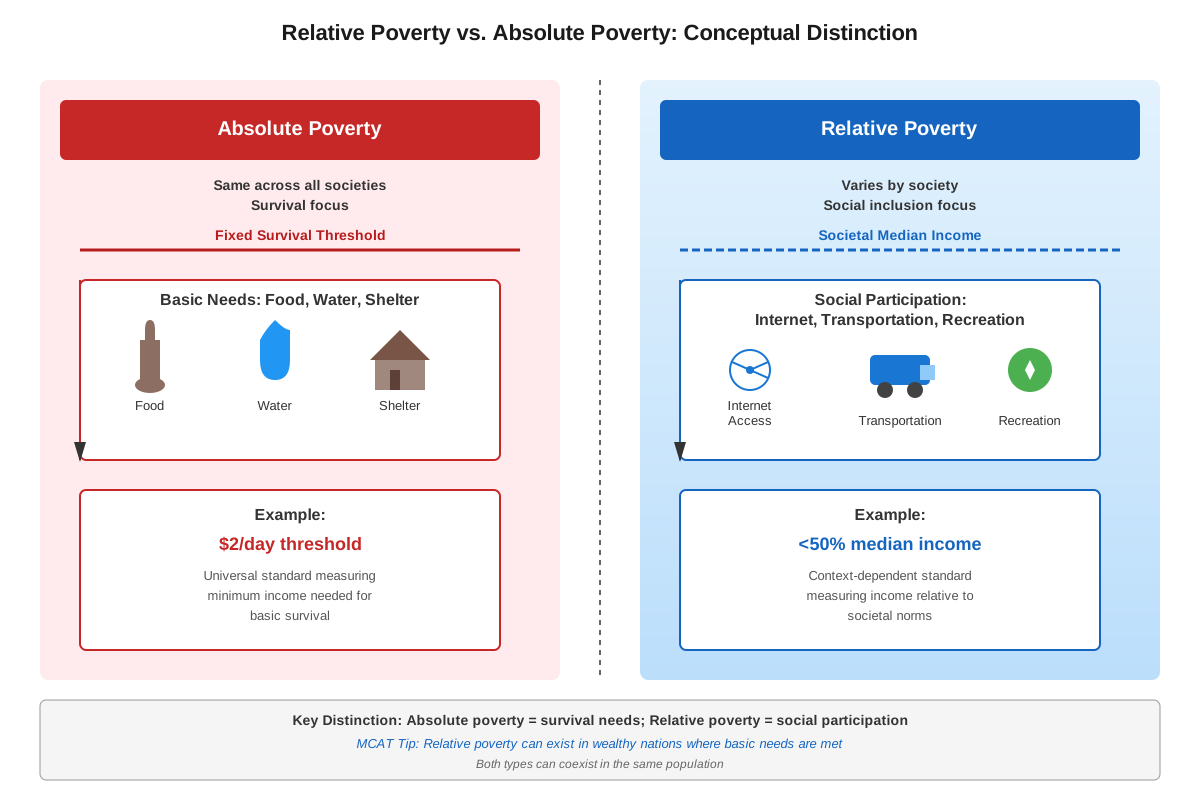
Relative poverty is a foundational concept in Sociology that describes economic disadvantage in relation to the standards of living within a specific society or community. Unlike absolute poverty, which measures deprivation against fixed survival needs (food, shelter, clean water), relative poverty assesses an individual's or group's economic position compared to others in their society. Someone experiencing relative poverty may have their basic survival needs met but lacks the resources to participate fully in the social, cultural, and economic activities considered normal in their community. This concept is crucial for understanding social stratification and inequality because it highlights how poverty is not merely about survival but about social inclusion, dignity, and access to opportunities that others take for granted.
For the MCAT, relative poverty appears frequently in the Psychological, Social, and Biological Foundations of Behavior section, particularly in passages examining health disparities, social determinants of health, and the effects of socioeconomic status on behavior and outcomes. The MCAT tests understanding of how relative poverty influences health behaviors, access to healthcare, stress levels, and overall well-being. Questions often require students to distinguish between absolute and relative poverty, analyze how relative deprivation affects individuals psychologically and socially, and evaluate policy interventions aimed at reducing inequality.
Understanding relative poverty connects to broader sociological frameworks including social class, social mobility, social capital, and theories of inequality. It intersects with concepts like the social gradient in health, where health outcomes progressively worsen as socioeconomic position decreases. Mastering this topic enables students to analyze complex passages about healthcare access, educational disparities, neighborhood effects, and the social determinants that create and perpetuate health inequalities—all high-yield areas for MCAT success.
Learning Objectives
- [ ] Define relative poverty using accurate Sociology terminology
- [ ] Explain why relative poverty matters for the MCAT
- [ ] Apply relative poverty to exam-style questions
- [ ] Identify common mistakes related to relative poverty
- [ ] Connect relative poverty to related Sociology concepts
- [ ] Distinguish between relative poverty and absolute poverty in clinical and research contexts
- [ ] Analyze how relative poverty affects health outcomes and health behaviors
- [ ] Evaluate the psychological and social consequences of relative deprivation
Prerequisites
- Basic understanding of socioeconomic status (SES): Relative poverty is fundamentally a measure of economic position within social hierarchies
- Familiarity with social stratification: Understanding how societies organize into hierarchical layers provides context for relative comparisons
- Knowledge of basic statistical concepts (median, percentiles): Relative poverty is often measured using statistical thresholds like percentage of median income
- Awareness of social determinants of health: Relative poverty operates as a key social determinant affecting multiple health outcomes
Why This Topic Matters
Clinical and Real-World Significance
Relative poverty profoundly impacts health outcomes, healthcare utilization, and disease prevention behaviors. Individuals experiencing relative poverty face increased stress from social comparisons, reduced access to health-promoting resources (nutritious food, safe exercise spaces, preventive care), and decreased social capital. These factors contribute to higher rates of chronic diseases, mental health conditions, and premature mortality. Healthcare providers must understand relative poverty to address health disparities effectively and recognize that patients with adequate survival resources may still face significant barriers to optimal health due to their relative economic position.
Exam Statistics and Question Types
Relative poverty appears in approximately 15-20% of MCAT Sociology passages, making it a high-yield topic. Questions typically present in three formats: (1) passage-based questions requiring students to identify relative poverty in research scenarios or case studies, (2) discrete questions testing definitional knowledge and distinctions from absolute poverty, and (3) application questions asking students to predict health or behavioral outcomes based on relative economic position. The MCAT frequently embeds relative poverty concepts within passages about health disparities, neighborhood effects, educational achievement gaps, and social mobility.
Common Exam Passage Contexts
- Research studies comparing health outcomes across income quintiles within developed nations
- Analyses of neighborhood effects on health behaviors and outcomes
- Discussions of the social gradient in health
- Evaluations of policy interventions targeting inequality
- Case studies examining stress, mental health, and relative deprivation
- Cross-cultural comparisons of poverty definitions and measurements
Core Concepts
Definition and Measurement of Relative Poverty
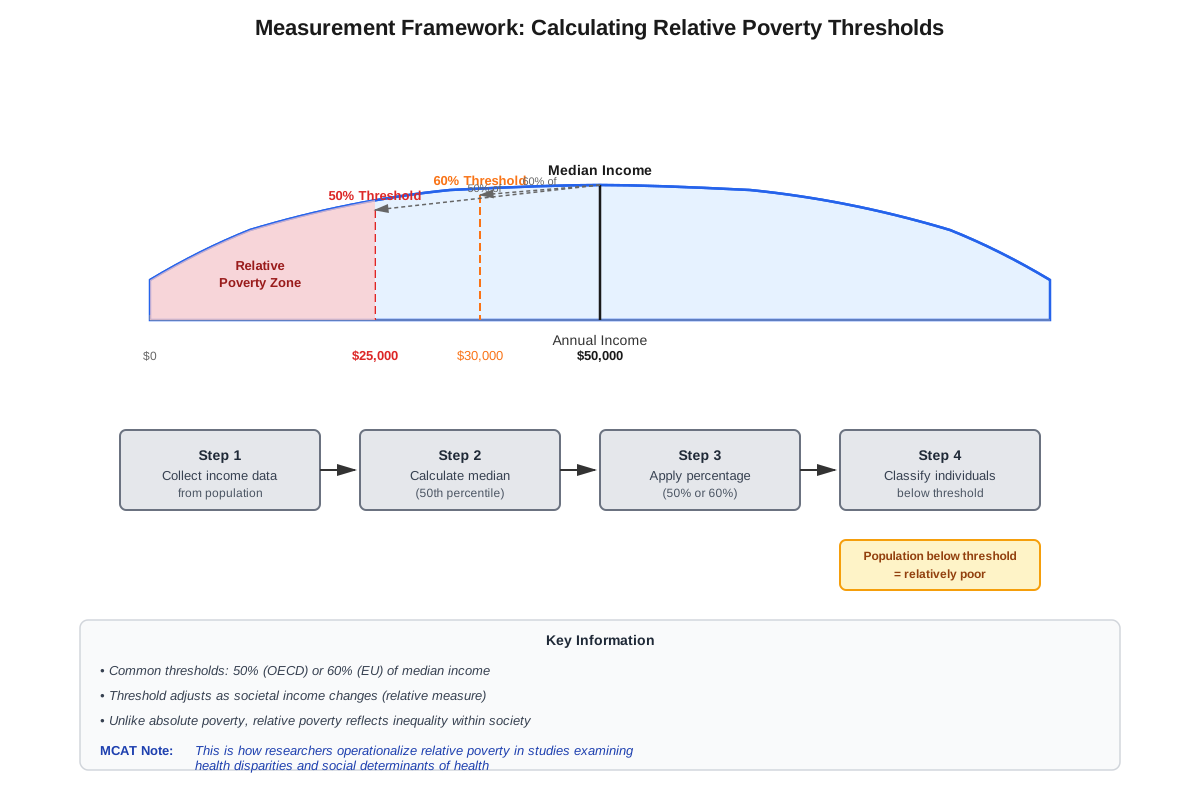
Relative poverty refers to the condition of having significantly less income or resources than the average person in a given society, resulting in inability to maintain the standard of living considered normal or acceptable in that society. This concept emphasizes that poverty is socially constructed and context-dependent—what constitutes poverty in an affluent nation differs substantially from poverty in a developing nation.
The most common measurement approach defines the relative poverty threshold as a percentage of the median household income, typically 50% or 60% of median income. For example, if the median household income in a country is $60,000 annually, households earning less than $30,000 (50% threshold) or $36,000 (60% threshold) would be classified as experiencing relative poverty. This measurement automatically adjusts to societal standards—as overall prosperity increases, the poverty line rises accordingly.
Alternative measurements include:
- Income quintiles or deciles: Comparing the bottom 20% or 10% to other segments
- Deprivation indices: Assessing lack of specific goods or services considered standard (car ownership, internet access, annual vacation)
- Subjective poverty: Self-reported inability to afford items considered necessities in one's community
Relative Poverty vs. Absolute Poverty
Understanding the distinction between relative and absolute poverty is essential for MCAT success, as exam questions frequently test this differentiation.
| Dimension | Relative Poverty | Absolute Poverty |
|---|---|---|
| Definition | Economic disadvantage compared to societal norms | Inability to meet basic survival needs |
| Measurement | Percentage of median income or comparative indices | Fixed threshold (e.g., $2.15/day international poverty line) |
| Context-dependency | Varies by society and changes over time | Universal minimum standard |
| Focus | Social inclusion and participation | Physical survival |
| Prevalence in developed nations | Common (10-20% of population) | Rare but present |
| Health impacts | Chronic stress, relative deprivation effects, reduced social capital | Malnutrition, infectious disease, high mortality |
MCAT Exam Tip: When a passage describes poverty in a developed nation like the United States or discusses inability to afford "normal" activities rather than survival needs, think relative poverty. When discussing developing nations or survival thresholds, consider absolute poverty.
Relative Deprivation Theory
Relative deprivation is the psychological experience of feeling disadvantaged compared to others or compared to one's expectations. This theory, developed by sociologist Samuel Stouffer and refined by Robert Merton, explains how individuals assess their situation not in absolute terms but through social comparisons. Relative deprivation produces feelings of injustice, resentment, and frustration that can motivate social movements or lead to negative health outcomes.
Two types of relative deprivation exist:
- Egoistic (individual) relative deprivation: Personal comparison to similar others ("My neighbors have newer cars and take vacations, but I cannot afford these things")
- Fraternalistic (group) relative deprivation: Group-level comparison ("Our community lacks resources that other communities have")
The health consequences of relative deprivation include:
- Chronic stress activation and elevated cortisol levels
- Increased risk of cardiovascular disease
- Higher rates of depression and anxiety
- Adoption of unhealthy coping behaviors (smoking, excessive alcohol consumption)
- Reduced health-seeking behaviors due to perceived barriers
Social Gradient in Health
The social gradient in health describes the stepwise relationship between socioeconomic position and health outcomes—at each step down the socioeconomic ladder, health worsens. This gradient exists even in countries with universal healthcare, demonstrating that relative poverty and relative position matter for health beyond access to medical services.
Key features of the social gradient:
- Continuous relationship: Health improves incrementally with each increase in socioeconomic position, not just at poverty thresholds
- Multiple pathways: Operates through material resources, psychosocial stress, health behaviors, and environmental exposures
- Cumulative effects: Disadvantage accumulates across the lifespan, with early-life relative poverty having lasting impacts
- Universal phenomenon: Observed across diverse societies and health outcomes
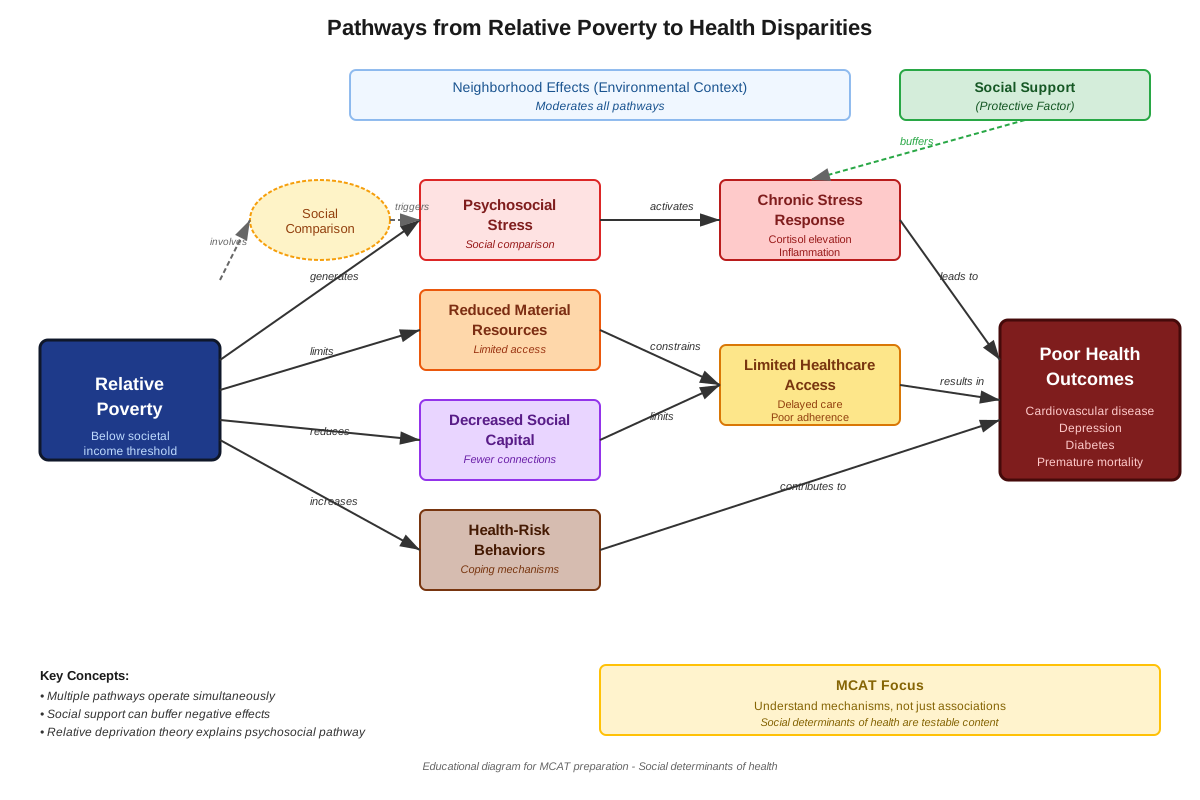
Mechanisms Linking Relative Poverty to Health
Understanding the pathways through which relative poverty affects health is crucial for analyzing MCAT passages:
- Material pathway: Limited financial resources restrict access to health-promoting goods (nutritious food, safe housing, healthcare, recreational facilities)
- Psychosocial pathway: Social comparisons generate chronic stress, feelings of shame, and reduced sense of control, activating physiological stress responses
- Behavioral pathway: Stress and limited resources lead to unhealthy coping behaviors and reduced engagement in preventive health practices
- Social capital pathway: Relative poverty reduces social networks, community resources, and collective efficacy
- Environmental pathway: Residential segregation by income concentrates disadvantage, exposing those in relative poverty to environmental hazards and reduced neighborhood resources
Policy Implications and Interventions
Relative poverty has distinct policy implications compared to absolute poverty. While absolute poverty requires ensuring survival needs, addressing relative poverty involves reducing inequality and promoting social inclusion. Policy approaches include:
- Progressive taxation and income redistribution: Reducing income gaps through tax policy
- Universal basic income or guaranteed minimum income: Ensuring baseline economic security
- Investment in public goods: Parks, libraries, public transportation that provide resources regardless of income
- Educational equity initiatives: Reducing achievement gaps that perpetuate relative disadvantage
- Affordable housing policies: Preventing residential segregation by income
Concept Relationships
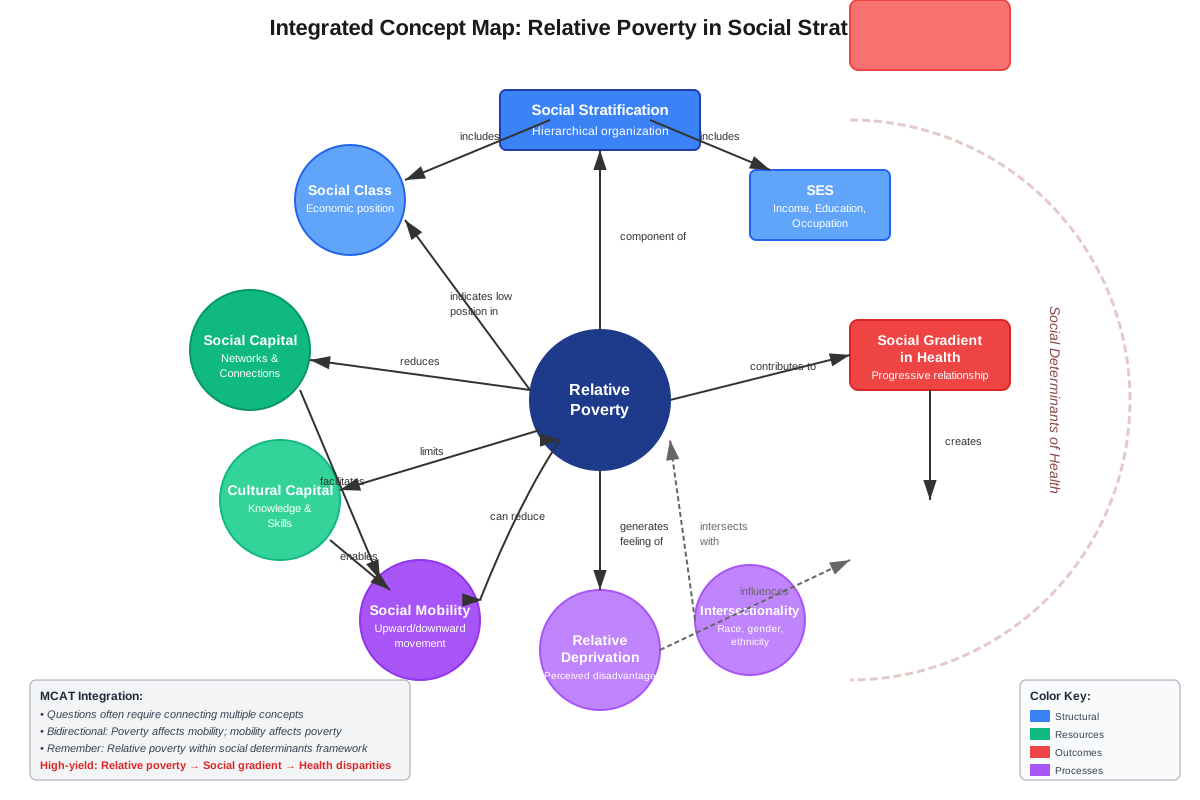
The concepts within relative poverty form an interconnected framework: Relative poverty (economic position compared to societal norms) → generates → Relative deprivation (psychological experience of disadvantage) → produces → Chronic psychosocial stress → contributes to → Social gradient in health (stepwise relationship between position and health outcomes) → manifests through → Multiple pathways (material, psychosocial, behavioral, social capital, environmental) → results in → Health disparities (unequal distribution of disease and mortality).
Relative poverty connects to prerequisite knowledge of social stratification by providing a specific measurement of position within stratified systems. It relates to socioeconomic status as one dimension of SES (economic resources) that interacts with education and occupational prestige. The concept links to social determinants of health as a fundamental cause of health inequalities that operates through multiple mechanisms.
Relative poverty also connects to related sociological concepts including social mobility (movement between relative positions), social capital (resources accessed through social networks, often reduced in relative poverty), residential segregation (spatial concentration of relative poverty), and intersectionality (how relative poverty combines with race, gender, and other identities to shape experiences).
High-Yield Facts
⭐ Relative poverty is defined as having significantly less income than the societal average, typically measured as earning below 50-60% of median household income
⭐ Unlike absolute poverty (inability to meet survival needs), relative poverty focuses on inability to participate in normal social and economic activities
⭐ The social gradient in health demonstrates that health outcomes worsen progressively at each step down the socioeconomic ladder, even above poverty thresholds
⭐ Relative deprivation refers to the psychological experience of feeling disadvantaged through social comparisons, generating stress and negative health outcomes
⭐ Relative poverty affects health through multiple pathways: material resources, psychosocial stress, health behaviors, social capital, and environmental exposures
- Relative poverty is context-dependent and changes as societal standards change, unlike the fixed threshold of absolute poverty
- In developed nations, relative poverty is far more prevalent than absolute poverty, affecting 10-20% of populations
- The health impacts of relative poverty persist even in countries with universal healthcare, indicating that medical access alone does not eliminate health disparities
- Chronic stress from relative deprivation activates the hypothalamic-pituitary-adrenal (HPA) axis, leading to elevated cortisol and increased disease risk
- Residential segregation by income concentrates relative poverty geographically, creating neighborhood effects that amplify individual disadvantage
- Relative poverty in childhood has lasting effects on health, educational achievement, and economic outcomes in adulthood
- Policy interventions for relative poverty focus on reducing inequality rather than just ensuring survival, requiring different approaches than absolute poverty reduction
Quick check — test yourself on Relative poverty so far.
Try Flashcards →Common Misconceptions
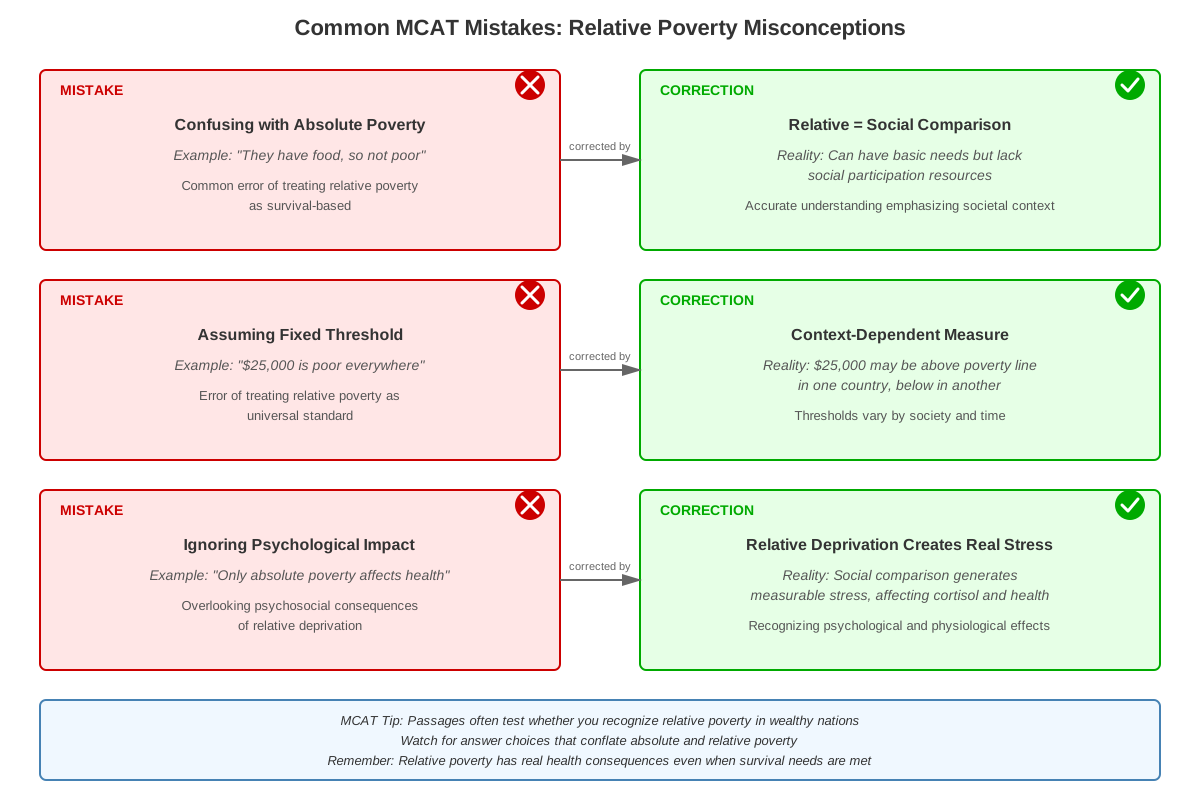
Misconception: Relative poverty is not "real" poverty because people have their basic needs met → Correction: Relative poverty has profound real-world consequences including increased mortality, chronic disease, mental health problems, and social exclusion. The inability to participate in normal social activities causes significant psychological distress and material hardship.
Misconception: Relative poverty only matters in wealthy countries → Correction: While relative poverty is more commonly discussed in developed nations, relative comparisons and social gradients exist in all societies. Both absolute and relative poverty can coexist, and relative position matters for health outcomes across all economic contexts.
Misconception: Relative poverty is purely subjective or psychological → Correction: Relative poverty has objective measurement criteria (percentage of median income) and produces measurable material consequences. While it includes psychological components (relative deprivation), it reflects real differences in access to resources, opportunities, and health-promoting environments.
Misconception: The social gradient in health only affects those below the poverty line → Correction: The social gradient is continuous across the entire socioeconomic spectrum. Even comparing middle-class to upper-class individuals reveals health differences, demonstrating that relative position matters at all levels, not just at poverty thresholds.
Misconception: Providing universal healthcare eliminates the health effects of relative poverty → Correction: While healthcare access is important, the social gradient in health persists in countries with universal healthcare systems. Relative poverty operates through multiple pathways beyond medical care, including chronic stress, health behaviors, environmental exposures, and social capital.
Misconception: Relative poverty is the same as income inequality → Correction: While related, these are distinct concepts. Income inequality describes the overall distribution of income in a society (often measured by Gini coefficient), while relative poverty identifies individuals or households below a specific threshold relative to the median. A society can have high inequality without high rates of relative poverty if the bottom is elevated, or vice versa.
Worked Examples
Example 1: Distinguishing Poverty Types in Research Context
Passage Scenario: A study examines health outcomes in two countries. Country A has a median household income of $50,000, and researchers identify households earning less than $25,000 as the study group. Country B has a median household income of $5,000, and researchers identify households earning less than $2 per day as the study group. Both groups show elevated rates of chronic disease.
Question: Which type of poverty is being measured in each country, and what would be the primary health mechanism in each?
Analysis:
- Country A: The threshold of $25,000 represents 50% of median income ($50,000), which is the classic relative poverty measurement. This is relative poverty.
- Country B: The $2 per day threshold is an absolute poverty measure based on international standards for survival needs, regardless of the country's median income. This is absolute poverty.
Primary health mechanisms:
- Country A (relative poverty): The primary mechanisms would be psychosocial stress from relative deprivation, reduced social capital, and behavioral pathways. These individuals likely have survival needs met but experience chronic stress from social comparisons and inability to participate in normal activities.
- Country B (absolute poverty): The primary mechanisms would be material deprivation affecting nutrition, infectious disease exposure, lack of clean water and sanitation, and limited access to any healthcare. Survival needs are not consistently met.
Connection to learning objectives: This example demonstrates the ability to define and distinguish relative poverty from absolute poverty, apply these concepts to research scenarios, and connect poverty types to different health mechanisms—all critical MCAT skills.
Example 2: Analyzing the Social Gradient
Passage Scenario: Researchers examine cardiovascular disease (CVD) rates across five income quintiles in a country with universal healthcare. Results show CVD rates of 15% (lowest quintile), 12% (second quintile), 10% (middle quintile), 8% (fourth quintile), and 6% (highest quintile). All groups have equal access to medical care.
Question: What concept explains this pattern, and why does it persist despite equal healthcare access?
Analysis:
The stepwise decrease in CVD rates with each increase in income quintile demonstrates the social gradient in health. This is not simply a poverty threshold effect (where only the poorest have worse health) but a continuous gradient across the entire socioeconomic spectrum.
Why it persists despite equal healthcare access:
- Psychosocial stress pathway: Each step down the income ladder involves increased relative deprivation, chronic stress, and reduced sense of control, activating stress physiology (elevated cortisol, inflammation) that contributes to CVD
- Behavioral pathway: Lower income quintiles may have higher rates of smoking, poor diet, and physical inactivity due to stress, limited resources for health-promoting activities, and targeted marketing of unhealthy products
- Environmental pathway: Lower-income neighborhoods may have fewer safe spaces for exercise, more fast-food outlets, and greater exposure to pollution
- Social capital pathway: Higher income quintiles have stronger social networks and community resources that buffer stress and promote health
Key insight: Healthcare access addresses only one pathway to health. The social gradient operates through multiple mechanisms that begin before people need medical care and continue regardless of treatment availability.
Connection to learning objectives: This example applies relative poverty concepts to interpret research findings, connects relative poverty to the social gradient in health, and demonstrates understanding of multiple pathways—essential for analyzing complex MCAT passages.
Exam Strategy
Approaching MCAT Questions on Relative Poverty
- Identify the context: Determine whether the passage describes a developed or developing nation, as this influences whether relative or absolute poverty is more relevant
- Look for comparison language: Words like "compared to," "relative to," "median income," or "societal standards" signal relative poverty
- Assess what needs are unmet: If survival needs are unmet, think absolute poverty; if social participation is limited despite survival, think relative poverty
- Consider the gradient: If the passage shows stepwise health differences across income levels (not just poor vs. non-poor), apply social gradient concepts
Trigger Words and Phrases
Relative poverty indicators:
- "Percentage of median income"
- "Income quintiles" or "income deciles"
- "Social exclusion"
- "Unable to afford normal activities"
- "Relative deprivation"
- "Social comparisons"
- "Developed nation" or "high-income country"
Absolute poverty indicators:
- "Survival needs"
- "International poverty line"
- "Dollars per day"
- "Malnutrition" or "starvation"
- "Lack of clean water"
- "Developing nation" or "low-income country"
Process-of-Elimination Tips
When distinguishing answer choices:
- Eliminate options that confuse relative and absolute poverty: If the passage describes a developed nation and social exclusion, eliminate answers discussing survival needs
- Eliminate single-pathway explanations: Relative poverty operates through multiple mechanisms; answers suggesting only one pathway (e.g., "only through healthcare access") are typically incorrect
- Eliminate answers that ignore the gradient: If data shows continuous relationships across income levels, eliminate answers that only discuss poverty thresholds
- Watch for extreme language: Answers using "always," "never," or "only" are often incorrect when discussing relative poverty, which has context-dependent effects
Time Allocation Advice
Relative poverty questions typically appear in longer passages (6-7 questions) about health disparities or social determinants. Allocate:
- 2-3 minutes for initial passage reading, identifying the type of poverty and key mechanisms
- 1-1.5 minutes per question, with extra time for questions requiring integration of multiple concepts
- Flag and return to questions asking you to distinguish subtle differences between poverty types if uncertain; answer more straightforward questions first
Memory Techniques
Mnemonic for Relative Poverty Pathways: "MBPSE"
Material resources (limited access to health-promoting goods)
Behavioral factors (unhealthy coping, reduced prevention)
Psychosocial stress (relative deprivation, chronic stress)
Social capital (reduced networks and community resources)
Environmental exposures (neighborhood effects, pollution)
Visualization Strategy
Picture a ladder to remember the social gradient in health:
- Each rung represents an income level
- At each step down, visualize health deteriorating slightly
- The gradient is continuous (every rung matters), not just bottom vs. top
- Even people on middle rungs have worse health than those above them
Acronym for Distinguishing Poverty Types: "RACS"
Relative poverty = Relative to society, Adjusts with societal changes, Comparison-based, Social inclusion focus
Absolute poverty = Absolute threshold, Basic survival needs, Same everywhere, Objective minimum (remember "ABSO-lute")
Memory Hook for Relative Deprivation
"Relative deprivation = Comparison creates stress"
Remember: It's not about what you lack in absolute terms, but what you lack compared to others that generates psychological distress and health consequences.
Summary
Relative poverty represents economic disadvantage measured against societal standards rather than absolute survival needs, typically defined as earning below 50-60% of median household income. This concept is fundamental to understanding social stratification and inequality on the MCAT because it explains health disparities that persist even when basic needs are met and healthcare is accessible. Relative poverty operates through multiple interconnected pathways—material resources, psychosocial stress from relative deprivation, health behaviors, social capital, and environmental exposures—to create the social gradient in health, where outcomes worsen progressively at each step down the socioeconomic ladder. Unlike absolute poverty, which focuses on survival, relative poverty emphasizes social inclusion and participation in normal societal activities. For MCAT success, students must distinguish between these poverty types, recognize relative poverty in research contexts, understand the mechanisms linking relative position to health outcomes, and apply these concepts to analyze health disparities in diverse populations. The persistence of health inequalities across the socioeconomic spectrum, even in wealthy nations with universal healthcare, demonstrates that relative poverty is a fundamental social determinant of health requiring policy interventions focused on reducing inequality rather than merely ensuring survival.
Key Takeaways
- Relative poverty is defined by comparison to societal standards (typically <50-60% of median income), while absolute poverty measures inability to meet survival needs
- The social gradient in health shows continuous health improvements at each step up the socioeconomic ladder, demonstrating that relative position matters across the entire spectrum, not just at poverty thresholds
- Relative deprivation—the psychological experience of disadvantage through social comparisons—generates chronic stress that contributes significantly to health disparities
- Relative poverty affects health through five major pathways: material resources, psychosocial stress, health behaviors, social capital, and environmental exposures
- Health disparities from relative poverty persist even with universal healthcare access, indicating that medical care alone cannot eliminate inequality-driven health differences
- In developed nations, relative poverty is far more prevalent than absolute poverty and is the primary framework for understanding socioeconomic health disparities
- MCAT passages about health disparities in high-income countries almost always involve relative poverty concepts, making this a high-yield topic for exam success
Related Topics
Social Mobility: The movement of individuals or groups between different socioeconomic positions, directly related to relative poverty as mobility determines whether people move into or out of relative poverty. Understanding barriers to upward mobility helps explain the persistence of relative poverty across generations.
Social Capital: The resources available through social networks and community connections, which are often reduced in relative poverty and represent one pathway through which relative poverty affects health and opportunities.
Health Disparities and Social Determinants of Health: Relative poverty is a fundamental social determinant that creates and perpetuates health disparities. Mastering relative poverty enables deeper analysis of why health inequalities exist and persist.
Residential Segregation: The spatial separation of groups by income, race, or other characteristics, which concentrates relative poverty geographically and amplifies its effects through neighborhood-level mechanisms.
Intersectionality: The framework examining how multiple social identities (race, gender, class) intersect to shape experiences. Relative poverty intersects with other identities to create unique patterns of advantage and disadvantage.
Practice CTA
Now that you've mastered the core concepts of relative poverty, it's time to solidify your understanding through active practice. Complete the practice questions and flashcards for this topic to test your ability to distinguish poverty types, analyze the social gradient in health, and apply these concepts to MCAT-style passages. Remember: understanding relative poverty is not just about memorizing definitions—it's about recognizing how relative position shapes health, behavior, and opportunities in the complex scenarios you'll encounter on exam day. Your ability to quickly identify relative poverty concepts and connect them to health outcomes will be a significant advantage in the Psychological, Social, and Biological Foundations section. You've got this!
Sign up free to keep reading
Create a free AnvayaPrep account to finish this MCAT guide on Relative poverty — plus flashcards and practice questions.