Overview
Agents of socialization are the individuals, groups, and institutions that shape an individual's self-concept, emotions, attitudes, and behaviors throughout the lifespan. These agents transmit cultural norms, values, beliefs, and social expectations from one generation to the next, fundamentally shaping how people understand themselves and their place within society. The process of socialization occurs continuously from infancy through old age, with different agents playing more prominent roles during different life stages.
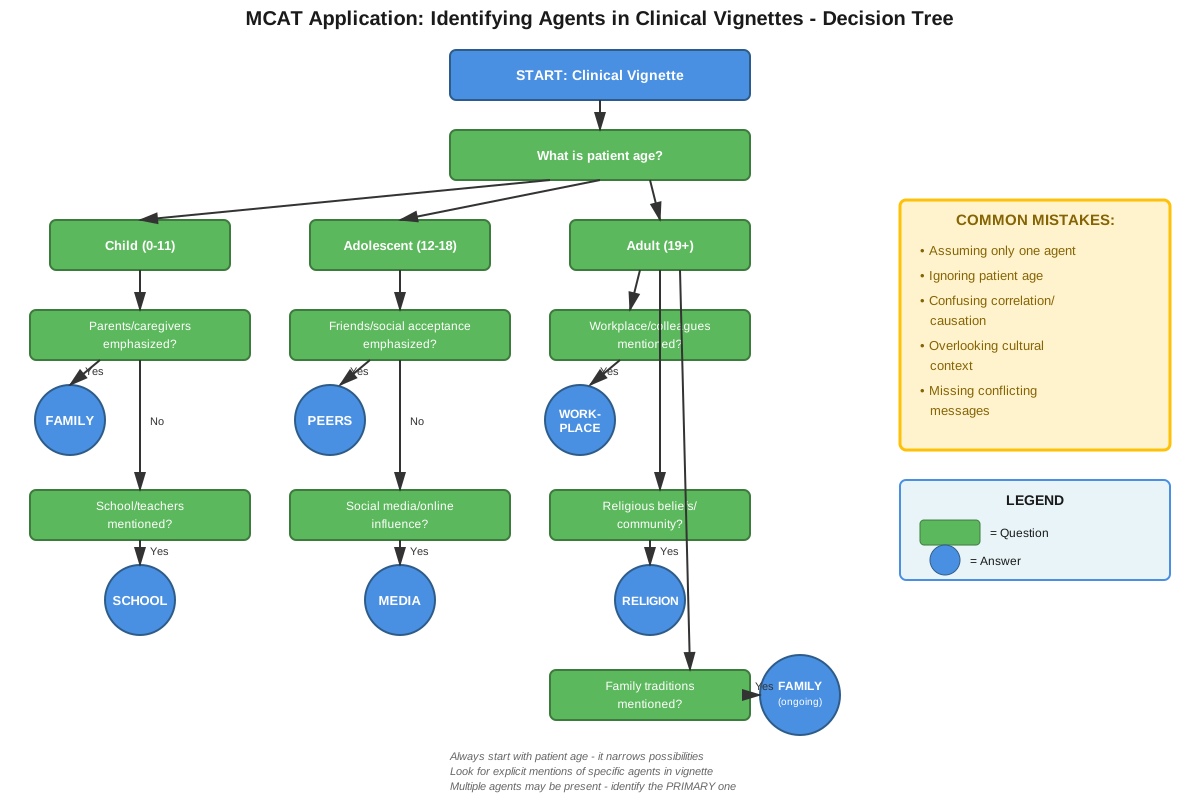
Understanding agents of socialization is essential for the MCAT because questions in the Sociology section frequently test how social forces shape individual behavior, identity formation, and health outcomes. The MCAT Psychological, Social, and Biological Foundations of Behavior section emphasizes how social structure and institutions influence health disparities, patient compliance, physician-patient interactions, and population health patterns. Questions may present clinical vignettes where family dynamics, peer pressure, educational experiences, or media exposure influence health behaviors, requiring test-takers to identify which agent of socialization is most relevant to the scenario.
This topic connects directly to broader concepts in sociology including social structure, culture, social institutions, identity formation, and social inequality. Agents of socialization serve as the mechanisms through which abstract social structures become internalized by individuals, making this topic a bridge between macro-level sociological theories and micro-level individual behaviors. Mastery of this content enables students to analyze how social forces operate at multiple levels simultaneously and to predict how changes in one agent of socialization might ripple through an individual's development and health outcomes.
Learning Objectives
- [ ] Define agents of socialization using accurate Sociology terminology
- [ ] Explain why agents of socialization matters for the MCAT
- [ ] Apply agents of socialization to exam-style questions
- [ ] Identify common mistakes related to agents of socialization
- [ ] Connect agents of socialization to related Sociology concepts
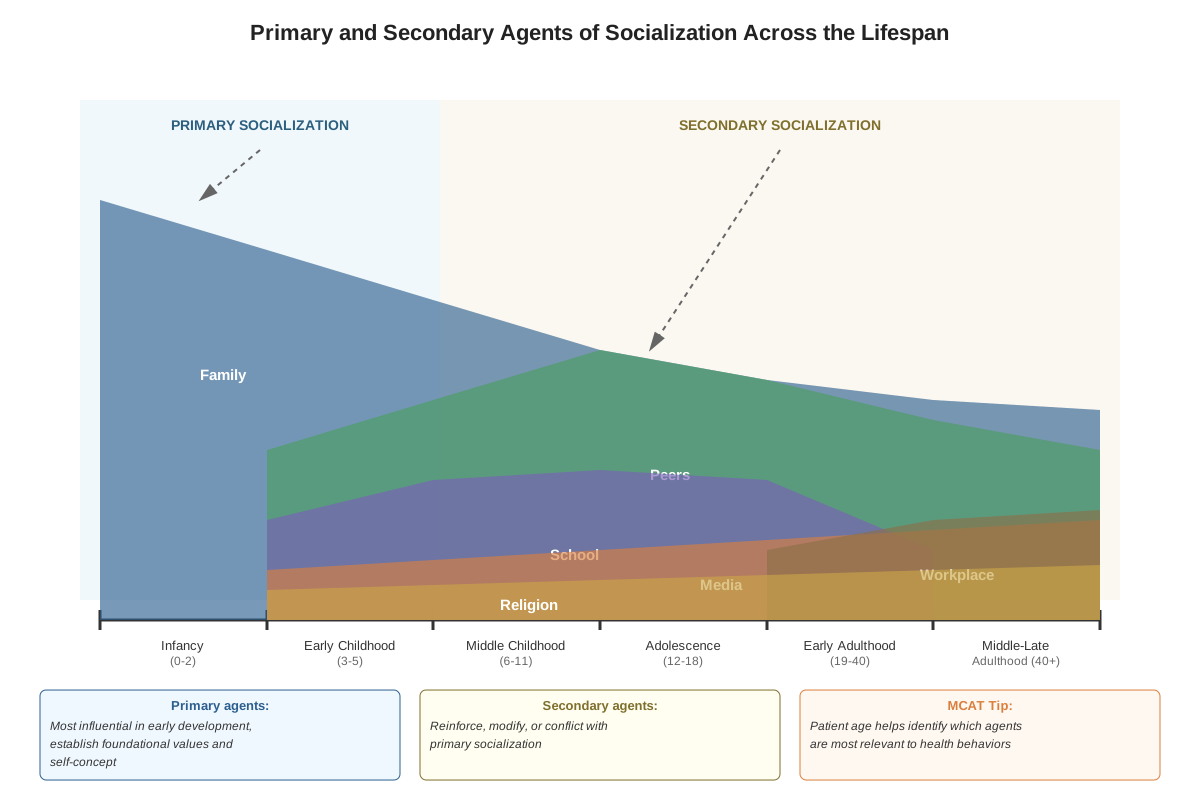
- [ ] Distinguish between primary and secondary agents of socialization and their relative influence across the lifespan
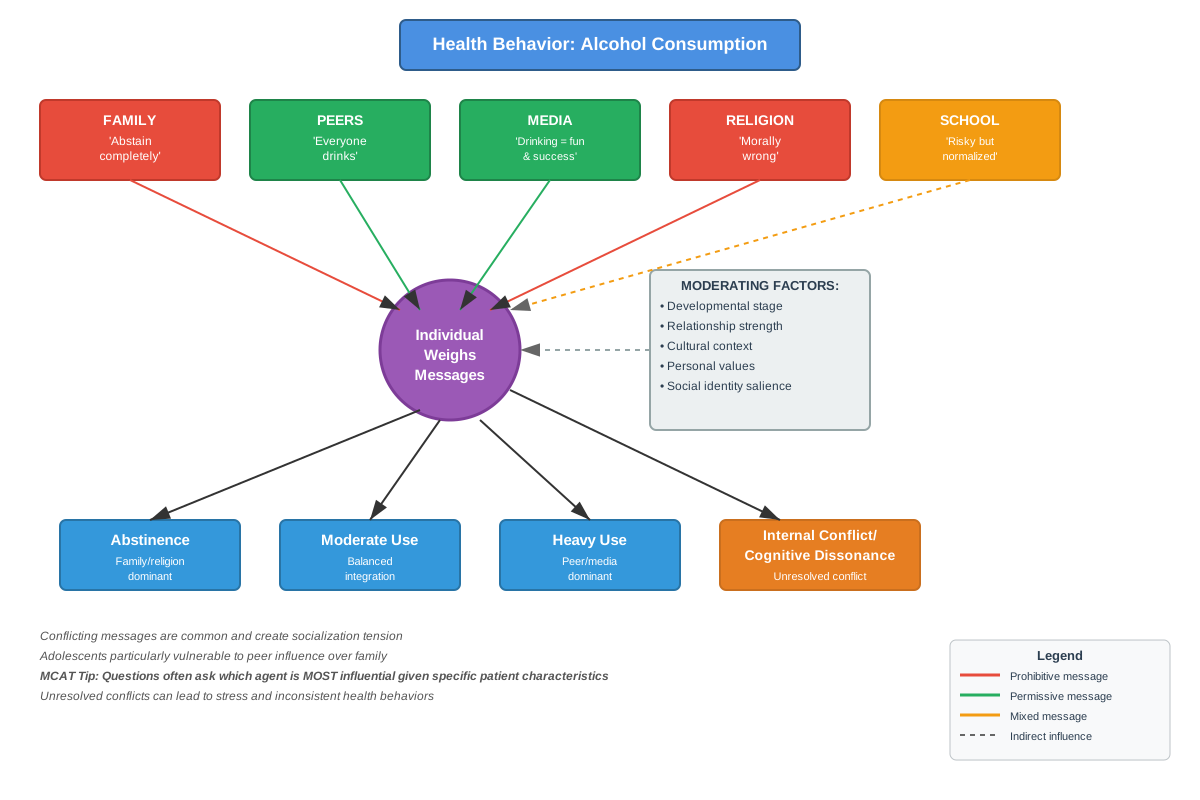
- [ ] Analyze how multiple agents of socialization may transmit conflicting messages and predict outcomes
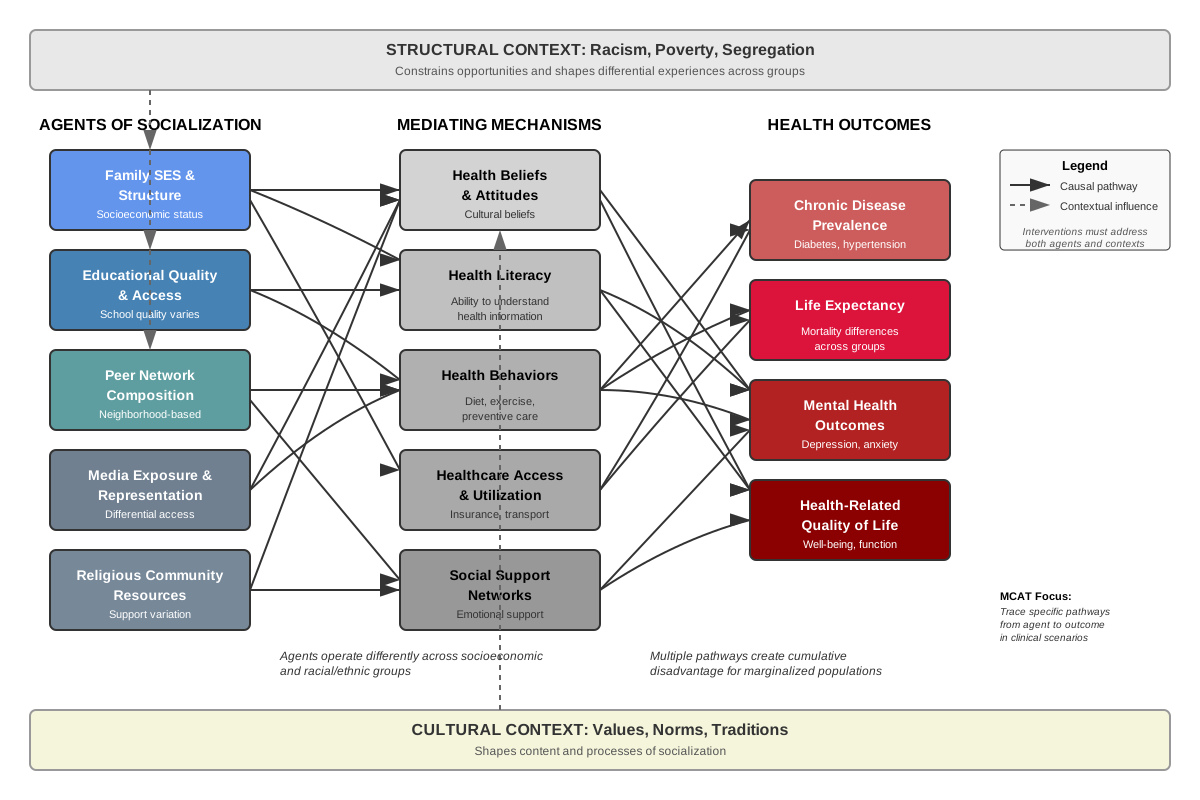
- [ ] Evaluate how agents of socialization contribute to health disparities and differential health outcomes across populations
Prerequisites
- Basic understanding of socialization: The lifelong process through which individuals learn and internalize cultural norms, values, and behaviors; this is the foundational process that agents facilitate
- Concept of social norms: Shared expectations about appropriate behavior within a group or society; agents of socialization are the primary transmitters of these norms
- Understanding of culture: The shared beliefs, values, practices, and material objects of a group; agents of socialization transmit cultural content from generation to generation
- Awareness of social institutions: Organized patterns of beliefs and behaviors centered on basic social needs; many agents of socialization are themselves institutions (family, education, religion)
Why This Topic Matters
Agents of socialization appear frequently on the MCAT because they provide a framework for understanding how social factors influence health behaviors, medical decision-making, and health outcomes. Clinical scenarios often involve patients whose health beliefs and behaviors have been shaped by family traditions, religious teachings, peer influences, or media exposure. Physicians must recognize these influences to provide culturally competent care and to design effective interventions that account for the social contexts shaping patient behavior.
From an exam statistics perspective, questions about agents of socialization appear in approximately 5-8% of Sociology passages on the MCAT, often integrated with topics like identity formation, social inequality, and health disparities. These questions typically present as passage-based scenarios requiring students to identify which agent is most influential in a given situation, predict how conflicting messages from different agents might affect behavior, or explain how socialization patterns contribute to population-level health differences.
Common exam presentations include: (1) vignettes describing how family health beliefs influence treatment adherence, (2) research passages examining how peer groups affect adolescent risk behaviors, (3) scenarios analyzing how educational experiences shape health literacy, (4) questions about how media representations influence body image and mental health, and (5) passages exploring how religious communities affect end-of-life decision-making. The MCAT frequently tests the ability to distinguish between different agents and to recognize that socialization is a dynamic, ongoing process rather than a one-time event.
Core Concepts
Definition and Overview of Agents of Socialization
Agents of socialization are the specific individuals, groups, and institutions responsible for transmitting culture and teaching people the norms, values, beliefs, and behaviors appropriate to their society. These agents serve as the primary mechanisms through which the abstract concept of socialization becomes concrete and operational in people's lives. The agents of socialization Sociology framework recognizes that socialization is not a passive process but rather an active, interactive experience where individuals both receive and interpret social messages.
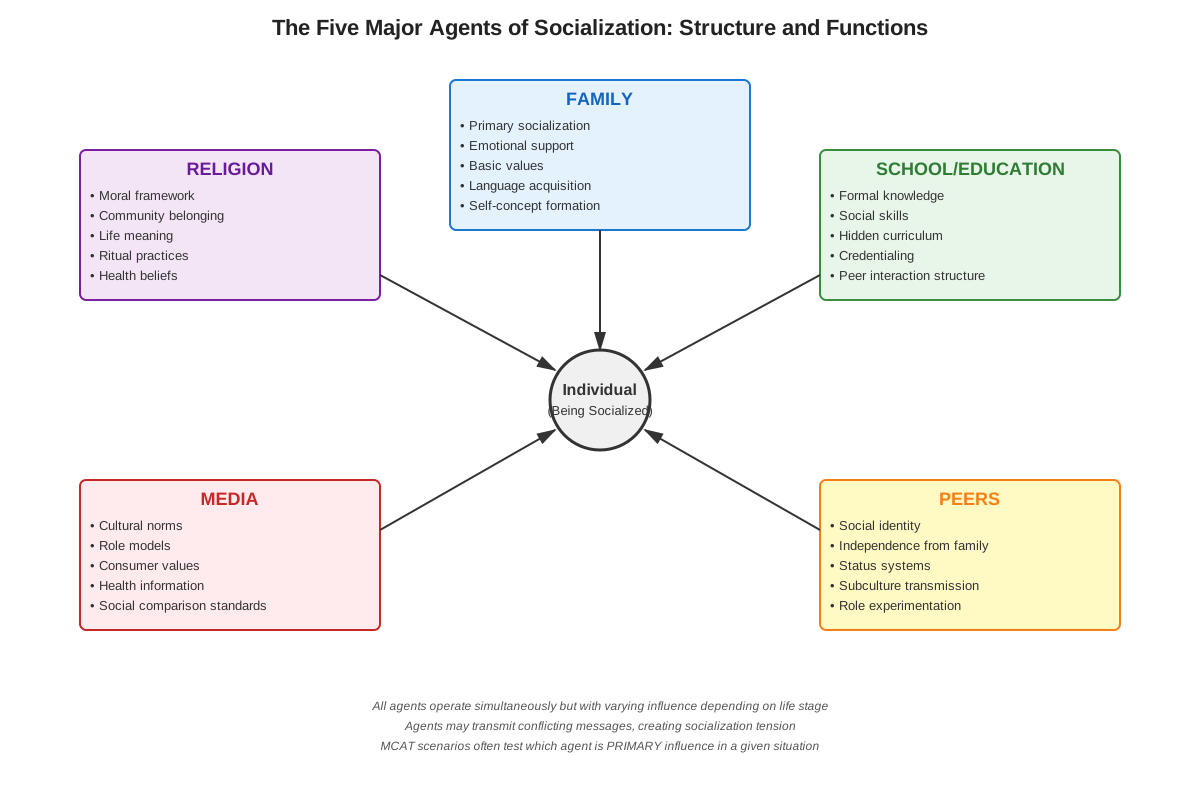
The major agents of socialization include family, peers, schools, media, religion, and workplace. Each agent operates through different mechanisms, has varying degrees of influence at different life stages, and may transmit complementary or conflicting messages. Understanding these agents is crucial for agents of socialization MCAT preparation because test questions frequently require identifying which agent is most relevant in a clinical or research scenario.
Primary vs. Secondary Agents
Sociologists distinguish between primary agents of socialization and secondary agents of socialization based on timing, intimacy, and influence intensity:
| Characteristic | Primary Agents | Secondary Agents |
|---|---|---|
| Timing | Early childhood, formative years | Later childhood through adulthood |
| Relationship Type | Intimate, personal, emotional bonds | More formal, impersonal, specialized |
| Primary Example | Family | School, workplace, media |
| Influence Scope | Broad, foundational values and identity | Specific roles, skills, and behaviors |
| Emotional Intensity | High emotional investment | Lower emotional investment |
| Duration | Continuous, long-term | Often time-limited or context-specific |
Primary agents, particularly family, establish the foundational framework through which individuals interpret all subsequent socialization experiences. Secondary agents build upon this foundation, teaching specialized skills and role-specific behaviors. However, the distinction is not absolute—peers can function as primary agents during adolescence when peer relationships become emotionally central.
Family as Agent of Socialization
The family is universally recognized as the most influential agent of socialization, particularly during early childhood. Family socialization occurs through multiple mechanisms:
- Direct instruction: Parents explicitly teach children rules, values, and appropriate behaviors
- Modeling: Children observe and imitate family members' behaviors, attitudes, and emotional responses
- Reinforcement: Family members reward desired behaviors and punish undesired ones
- Emotional climate: The overall family atmosphere shapes children's emotional development and attachment styles
Family socialization is particularly powerful because it occurs during critical developmental periods when children are most impressionable, involves intense emotional bonds that make messages more impactful, and establishes baseline expectations that filter all subsequent social experiences. For the MCAT, family socialization is especially relevant to understanding health behaviors, as families transmit health beliefs, dietary patterns, attitudes toward medical care, and health literacy across generations.
Families also engage in anticipatory socialization, preparing children for future roles they will occupy. This includes gender socialization (teaching gender-appropriate behaviors), class socialization (transmitting class-specific values and aspirations), and cultural socialization (maintaining ethnic or cultural identity).
Peer Groups as Agents of Socialization
Peer groups consist of individuals of similar age and social status who interact regularly. Peer influence increases dramatically during adolescence and remains significant throughout adulthood. Peer socialization differs from family socialization in several key ways:
- Egalitarian structure: Peers interact as equals rather than in hierarchical relationships
- Choice: Individuals select peer groups, whereas family is ascribed
- Conformity pressure: Peers enforce conformity through acceptance or rejection
- Age-specific relevance: Peer influence peaks during adolescence when identity formation intensifies
Peer groups socialize members through mechanisms including peer pressure (direct or indirect pressure to conform), social comparison (evaluating oneself against peers), and collective identity formation (developing shared group identity). For MCAT purposes, peer influence is particularly relevant to understanding adolescent risk behaviors (substance use, sexual activity, dangerous driving), body image concerns, and mental health outcomes.
Research demonstrates that peer influence operates through both selection effects (people choose peers similar to themselves) and socialization effects (peers actually change each other's behaviors). MCAT questions may require distinguishing between these mechanisms when analyzing research designs.
Schools and Educational Institutions
Schools serve as formal agents of socialization with both explicit and implicit curricula. The explicit curriculum includes the official academic content taught in classes, while the hidden curriculum refers to the unofficial norms, values, and beliefs transmitted through school structure, teacher interactions, and institutional practices.
Schools socialize students through:
- Academic content: Teaching knowledge, critical thinking, and discipline-specific skills
- Social norms: Enforcing punctuality, respect for authority, delayed gratification, and competition
- Peer interaction: Providing structured environments for peer socialization
- Tracking and labeling: Sorting students into different educational paths that shape self-concept and aspirations
- Cultural transmission: Teaching dominant cultural values, historical narratives, and civic responsibilities
The hidden curriculum is particularly important for understanding social reproduction—how schools perpetuate existing social inequalities by teaching class-specific behaviors and expectations. For the MCAT, educational socialization connects to health literacy, health disparities (as educational attainment strongly predicts health outcomes), and professional socialization in medical training.
Mass Media as Agent of Socialization
Mass media includes television, films, music, social media, news outlets, advertising, and digital platforms. Media has become increasingly influential as technology expands access and screen time increases across all age groups. Media socialization operates through:
- Representation: Depicting certain groups, behaviors, and lifestyles as normal or desirable
- Agenda-setting: Determining which issues receive public attention
- Cultivation theory: Heavy media consumption shapes perceptions of social reality
- Social learning: Observing media models influences attitudes and behaviors
For agents of socialization MCAT questions, media influence is particularly relevant to body image and eating disorders, health information seeking, mental health stigma, violence and aggression, and health behavior modeling. The MCAT may present research examining how media exposure correlates with health outcomes or how media literacy interventions affect behavior.
Media socialization differs from other agents because it is largely one-directional (though social media has increased interactivity), reaches massive audiences simultaneously, and is often commercially motivated rather than focused on the individual's best interests.
Religion as Agent of Socialization
Religious institutions socialize members through doctrine, ritual, community participation, and moral teaching. Religious socialization transmits:
- Worldviews: Fundamental beliefs about existence, purpose, and morality
- Moral frameworks: Guidelines for ethical behavior and decision-making
- Community identity: Sense of belonging to a faith community
- Ritual practices: Behaviors that reinforce beliefs and community bonds
- Life transitions: Frameworks for understanding birth, marriage, death, and other major life events
Religious socialization is particularly relevant for MCAT questions about end-of-life care, medical decision-making (e.g., refusal of blood transfusions, organ donation), reproductive health, mental health treatment, and health behaviors (dietary restrictions, substance use). Religious communities may also provide social support that buffers against stress and improves health outcomes.
The influence of religious socialization varies by religiosity (degree of religious commitment), denomination, and cultural context. MCAT questions may require recognizing how religious beliefs interact with medical recommendations and how physicians can provide culturally competent care that respects religious values.
Workplace as Agent of Socialization
The workplace socializes adults into occupational roles, professional identities, and organizational cultures. Workplace socialization includes:
- Occupational socialization: Learning the skills, knowledge, and norms of a profession
- Organizational socialization: Adapting to a specific workplace's culture, expectations, and informal rules
- Professional identity formation: Developing self-concept as a member of a profession
- Anticipatory socialization: Preparing for future career advancement
For medical students and physicians, professional socialization is particularly important. Medical training socializes students into the physician role through formal education, clinical rotations, mentorship, and the hidden curriculum of medical culture. This process shapes clinical decision-making, communication styles, attitudes toward patients, and professional identity.
MCAT questions may address how workplace socialization affects health (occupational stress, work-life balance), how professional socialization shapes physician behavior, or how workplace culture influences health and safety practices.
Total Institutions
Total institutions are settings where individuals are isolated from broader society and subjected to comprehensive, controlled socialization. Examples include prisons, military boot camps, psychiatric hospitals, and residential treatment facilities. Total institutions attempt to resocialize individuals by stripping away previous identities and imposing new ones through:
- Physical isolation: Separating individuals from outside influences
- Strict schedules: Controlling all aspects of daily life
- Mortification of self: Breaking down previous identity through humiliation or deprivation
- Privilege systems: Rewarding compliance and punishing resistance
- Institutional identity: Imposing a new identity aligned with institutional goals
Understanding total institutions is relevant for MCAT questions about psychiatric treatment, incarceration and health, rehabilitation programs, and the ethics of coercive treatment. Questions may explore how total institutions affect mental health, identity, and reintegration into society.
Concept Relationships
The various agents of socialization operate simultaneously and interactively throughout the lifespan, creating a complex web of influences on individual development. Family socialization establishes the foundational framework → which filters how individuals interpret messages from peer groups, schools, and media → these secondary agents either reinforce or challenge family teachings → creating potential role conflict when agents transmit contradictory messages → individuals must negotiate these conflicts, developing their own synthesis of values and behaviors.
The relationship between agents changes across the lifespan: Family dominates early childhood → Schools and peers increase in influence during middle childhood and adolescence → Peers peak in influence during adolescence → Workplace and media become more influential in adulthood → Religious institutions may increase in importance during major life transitions or later life.
Agents of socialization connect to broader social structure and institutions by serving as the mechanisms through which macro-level social structures become internalized at the individual level. Social institutions (family, education, religion, economy) function as agents of socialization → transmitting cultural norms and values → which maintain social order and reproduce social stratification → creating patterns of social inequality that persist across generations.
This topic also connects to identity formation (agents shape self-concept and social identity), social roles (agents teach role expectations), deviance (agents define and enforce norms, with deviance occurring when socialization fails or conflicts), and social change (changes in agents of socialization can drive broader social transformation).
Quick check — test yourself on Agents of socialization so far.
Try Flashcards →High-Yield Facts
⭐ Family is the primary agent of socialization, most influential during early childhood, establishing foundational values, beliefs, and behavioral patterns that filter all subsequent socialization experiences.
⭐ Peer influence peaks during adolescence, when conformity pressure is strongest and peer acceptance becomes central to identity formation and self-esteem.
⭐ Schools transmit both explicit curriculum (official academic content) and hidden curriculum (unofficial norms and values), with the hidden curriculum often perpetuating social inequality.
⭐ Mass media cultivates perceptions of social reality, with heavy media consumption shaping beliefs about prevalence of violence, body ideals, and social norms.
⭐ Total institutions attempt comprehensive resocialization through isolation, mortification of self, and strict control of daily life, fundamentally altering identity and behavior.
- Agents of socialization can transmit conflicting messages, creating role strain and requiring individuals to negotiate competing expectations.
- Religious socialization provides moral frameworks and community support that significantly influence health behaviors and medical decision-making.
- Workplace socialization shapes professional identity, with medical training involving intensive professional socialization into the physician role.
- Anticipatory socialization prepares individuals for future roles before they occupy them, including gender roles, occupational roles, and life transitions.
- Socialization is a lifelong process, not limited to childhood, with different agents becoming more or less influential at different life stages.
- The relative influence of different agents varies by culture, with collectivist cultures typically emphasizing family influence more than individualist cultures.
- Agents of socialization reproduce social inequality by transmitting class-specific values, aspirations, and cultural capital across generations.
Common Misconceptions
Misconception: Socialization only occurs during childhood and ends in adulthood. → Correction: Socialization is a lifelong process that continues throughout the entire lifespan. Adults undergo socialization when entering new roles (parenthood, marriage, career changes), adapting to new cultural contexts (immigration), or experiencing resocialization in total institutions. The MCAT may test understanding that socialization is continuous and dynamic.
Misconception: All agents of socialization transmit consistent, complementary messages. → Correction: Agents frequently transmit conflicting messages, creating role strain and requiring individuals to negotiate competing expectations. For example, family may teach traditional gender roles while peers and media promote more egalitarian views. MCAT questions often present scenarios where multiple agents conflict, requiring identification of which agent is most influential or how individuals resolve conflicts.
Misconception: Individuals are passive recipients of socialization who simply absorb whatever agents teach them. → Correction: Socialization is an interactive process where individuals actively interpret, accept, modify, or reject messages from agents. People exercise agency in selecting peer groups, interpreting media messages, and synthesizing conflicting teachings. The MCAT emphasizes this active interpretation, particularly in questions about individual variation in responses to similar socialization experiences.
Misconception: The family's influence decreases to insignificance once children reach adolescence and peer influence increases. → Correction: While peer influence does increase during adolescence, family remains highly influential throughout the lifespan, particularly for core values, long-term goals, and major life decisions. Research shows that adolescents typically conform to peers for surface behaviors (fashion, music) but continue to rely on family for deeper values and important decisions. MCAT questions may require distinguishing between domains where peer vs. family influence dominates.
Misconception: Media influence is superficial and only affects trivial behaviors like consumer choices. → Correction: Media significantly shapes attitudes, beliefs, and behaviors related to body image, violence, gender roles, racial stereotypes, health behaviors, and political views. Cultivation theory demonstrates that heavy media consumption fundamentally alters perceptions of social reality. The MCAT frequently tests media influence on health-relevant outcomes like eating disorders, aggression, and health information seeking.
Misconception: Religious socialization only affects people who are highly religious or attend services regularly. → Correction: Religious socialization influences even those who are not actively practicing, as religious teachings often become embedded in cultural values and family traditions. Additionally, religious communities provide social support and health-protective behaviors that benefit members regardless of personal religiosity. MCAT questions may present scenarios where cultural or family traditions rooted in religious teachings influence health behaviors even when individuals don't identify as religious.
Worked Examples
Example 1: Identifying Primary Agent in Clinical Scenario
Vignette: A 16-year-old patient presents to the emergency department with alcohol poisoning. Her parents report that she has always been a responsible student who follows family rules. The patient reveals that she attended a party where "everyone was drinking" and she "didn't want to be the only one not participating." When asked about her family's views on alcohol, she states her parents strongly disapprove and have clearly communicated expectations that she not drink. Which agent of socialization most directly influenced this behavior?
Analysis:
- Step 1: Identify all agents mentioned: Family (parents teaching anti-alcohol norms) and peers (party attendees engaging in drinking)
- Step 2: Recognize the conflict: Family socialization transmitted anti-alcohol messages, while peer socialization transmitted pro-alcohol messages
- Step 3: Evaluate which agent's influence dominated in this specific situation: The patient explicitly states she drank because "everyone was drinking" and she didn't want to be excluded, indicating peer conformity pressure
- Step 4: Consider developmental context: At age 16, peer influence is at or near its peak, and conformity pressure is particularly strong during adolescence
- Step 5: Note that family socialization established baseline values (she describes herself as "responsible" and acknowledges family rules), but peer influence overrode these values in the immediate situation
Answer: Peer groups most directly influenced this behavior. This example illustrates that different agents can transmit conflicting messages, and the dominant agent may vary by situation and developmental stage. The MCAT frequently presents scenarios requiring identification of which agent is most influential when multiple agents conflict.
Connection to Learning Objectives: This example demonstrates application of agents of socialization to exam-style questions, distinguishes between primary and secondary agents, and shows how to analyze situations where multiple agents transmit conflicting messages.
Example 2: Analyzing Research Design on Media Influence
Vignette: Researchers investigate whether exposure to thin-ideal media images causes body dissatisfaction in young women. They randomly assign 200 female college students to view either fashion magazines featuring very thin models (experimental group) or magazines featuring neutral content (control group) for 30 minutes. Immediately after exposure, participants complete a body satisfaction questionnaire. The experimental group reports significantly lower body satisfaction than the control group. The researchers conclude that media exposure causes body dissatisfaction.
Analysis:
- Step 1: Identify the agent of socialization being studied: Mass media (specifically, fashion magazines with thin-ideal images)
- Step 2: Evaluate the research design: This is an experimental design with random assignment, allowing causal inference
- Step 3: Consider the mechanism: Media socialization through representation (depicting very thin bodies as ideal) and social comparison (participants compare themselves to models)
- Step 4: Identify limitations: The study measures immediate effects only; real-world media socialization occurs through repeated, long-term exposure. The artificial laboratory setting may not reflect natural media consumption patterns
- Step 5: Consider alternative explanations: The experimental design with random assignment controls for pre-existing differences, strengthening causal claims
- Step 6: Connect to broader concepts: This study demonstrates cultivation theory (media shapes perceptions) and social comparison processes
Critical Evaluation: While the experimental design supports causal inference, the study measures only immediate effects. Media socialization typically operates through cumulative exposure over time. Additionally, the study doesn't account for individual differences in media interpretation (active vs. passive processing) or protective factors (media literacy, strong family socialization promoting body acceptance). A complete understanding of media as an agent of socialization requires considering both experimental evidence of short-term effects and longitudinal evidence of long-term socialization patterns.
Connection to Learning Objectives: This example demonstrates how to apply agents of socialization concepts to research passages, evaluate evidence for media influence, identify methodological limitations, and connect to related concepts like social comparison and cultivation theory.
Exam Strategy
When approaching agents of socialization MCAT questions, use this systematic strategy:
1. Identify all agents mentioned or implied in the passage or question stem. Questions often present scenarios involving multiple agents simultaneously. Create a mental list of which agents are present (family, peers, school, media, religion, workplace).
2. Watch for trigger words and phrases:
- Family: "parents taught," "family tradition," "grew up believing," "family values"
- Peers: "friends," "everyone was doing it," "didn't want to be left out," "peer pressure," "social acceptance"
- School: "learned in school," "teacher," "curriculum," "educational experience," "hidden curriculum"
- Media: "television," "social media," "advertising," "saw in movies," "online"
- Religion: "faith community," "religious beliefs," "church/mosque/temple," "spiritual values"
- Workplace: "professional training," "on the job," "organizational culture," "occupational norms"
3. Consider developmental stage. The question will often specify age, which helps determine which agent is likely most influential:
- Early childhood (0-5): Family dominates
- Middle childhood (6-11): Family and school both influential
- Adolescence (12-18): Peers peak in influence, but family remains important for core values
- Young adulthood (18-25): Peers, workplace, and media all influential
- Adulthood (25+): Workplace, family (as parent), media
4. Distinguish between establishing baseline values vs. influencing specific behaviors. Family typically establishes foundational values that persist, while other agents may influence specific situational behaviors that contradict those values. MCAT questions may ask which agent is most influential "in this situation" vs. "in general" or "long-term."
5. Look for conflict between agents. Many MCAT questions present scenarios where different agents transmit contradictory messages. The question may ask:
- Which agent is most influential in resolving the conflict?
- How does the individual negotiate competing messages?
- Which agent's influence persists long-term vs. short-term?
6. Process of elimination tips:
- Eliminate answers that confuse agents (e.g., attributing peer influence to family)
- Eliminate answers that ignore developmental stage (e.g., suggesting peers are most influential for a 5-year-old)
- Eliminate answers that oversimplify by suggesting only one agent matters when multiple agents clearly interact
- Eliminate answers that treat socialization as one-directional rather than interactive
7. Time allocation: Agents of socialization questions are typically straightforward identification questions (30-45 seconds) or moderate-difficulty application questions requiring analysis of scenarios (60-90 seconds). Don't overthink—the MCAT usually provides clear evidence in the passage about which agent is most relevant.
8. Connect to health outcomes. The MCAT emphasizes health-relevant applications. Always consider how the agent of socialization in question relates to health behaviors, health disparities, patient-physician interactions, or health outcomes.
Memory Techniques
Mnemonic for Major Agents: "FPR-SMW" (Family, Peers, Religion, School, Media, Workplace)
- Family: First and Foundational
- Peers: Peaks in adolescence
- Religion: Ritual and moral frameworks
- School: Social reproduction through hidden curriculum
- Media: Mass reach and cultivation
- Workplace: Where adults spend most time
Visualization for Primary vs. Secondary Agents:
Picture a tree: The roots (family) provide the foundational structure and nutrients that support everything else. The trunk and branches (secondary agents like school, peers, media) build upon this foundation, growing outward and upward, but always connected to and supported by the roots.
Acronym for Hidden Curriculum Components: "PACT"
- Punctuality and time management
- Authority respect and hierarchy
- Competition and individual achievement
- Tracking and social sorting
Memory Palace for Developmental Stages:
Imagine walking through a house:
- Nursery (early childhood): Only family members present
- Playroom (middle childhood): Family members plus school supplies and a few friends
- Teenager's bedroom (adolescence): Posters of media figures, phone for peer communication, family photos in background
- Home office (adulthood): Computer for work, professional books, family photos as parent
Rhyme for Peer Influence Peak: "When teens convene, peers reign supreme" (reminds you that peer influence peaks during adolescence)
Summary
Agents of socialization are the individuals, groups, and institutions that transmit cultural norms, values, and behaviors throughout the lifespan, fundamentally shaping identity, attitudes, and behaviors. The major agents include family (primary agent, most influential in early childhood, establishes foundational values), peers (influence peaks during adolescence through conformity pressure), schools (transmit explicit curriculum and hidden curriculum that reproduces social inequality), mass media (cultivates perceptions of social reality through representation and repeated exposure), religion (provides moral frameworks and community identity), and workplace (socializes adults into professional roles and organizational cultures). These agents operate simultaneously and may transmit conflicting messages, requiring individuals to actively negotiate and synthesize competing expectations. The relative influence of different agents varies by developmental stage, cultural context, and specific behavioral domain. For the MCAT, understanding agents of socialization is essential for analyzing how social forces shape health behaviors, health disparities, medical decision-making, and patient-physician interactions. Questions typically require identifying which agent is most influential in a given scenario, predicting outcomes when agents conflict, or explaining how socialization patterns contribute to population-level health differences.
Key Takeaways
- Family is the primary agent of socialization, establishing foundational values during early childhood that filter all subsequent socialization experiences throughout the lifespan
- Different agents dominate at different developmental stages: family in early childhood, peers peaking during adolescence, workplace in adulthood
- Schools transmit hidden curriculum (unofficial norms and values) alongside explicit curriculum, often perpetuating social inequality through tracking and differential expectations
- Agents frequently transmit conflicting messages, requiring individuals to actively negotiate competing expectations rather than passively absorbing teachings
- Media cultivates perceptions of social reality through repeated exposure, significantly influencing body image, violence perceptions, and health behaviors
- Socialization is lifelong and interactive, not limited to childhood, with individuals actively interpreting and sometimes resisting socialization messages
- For MCAT success, focus on identifying which agent is most relevant in clinical scenarios, recognizing developmental patterns of influence, and connecting agents to health outcomes and disparities
Related Topics
- Socialization Process: The broader mechanisms through which socialization occurs, including modeling, reinforcement, and internalization; mastering agents of socialization provides the foundation for understanding these processes
- Identity Formation: How individuals develop self-concept and social identity through interactions with socialization agents; agents provide the raw material from which identity is constructed
- Social Institutions: The organized patterns of beliefs and behaviors (family, education, religion, economy, government) that structure society; many agents of socialization are themselves institutions
- Social Inequality and Stratification: How agents of socialization reproduce class, race, and gender inequality across generations through differential socialization experiences
- Deviance and Social Control: How agents define and enforce norms, with deviance occurring when socialization fails or when individuals are socialized into deviant subcultures
- Culture and Cultural Change: How agents transmit culture and how changes in agents (e.g., new media technologies) drive cultural transformation
- Life Course Perspective: How socialization experiences accumulate across the lifespan to shape trajectories of health, achievement, and well-being
Practice CTA
Now that you've mastered the core concepts of agents of socialization, it's time to solidify your understanding through active practice. Complete the practice questions to test your ability to identify agents in complex scenarios, distinguish between primary and secondary influences, and apply these concepts to health-relevant situations. Use the flashcards to reinforce high-yield facts and ensure rapid recall during the exam. Remember: understanding agents of socialization gives you a powerful framework for analyzing how social forces shape individual behavior—a skill that will serve you throughout the MCAT Sociology section and in your future medical career. You've got this!
Sign up free to keep reading
Create a free AnvayaPrep account to finish this MCAT guide on Agents of socialization — plus flashcards and practice questions.