Overview
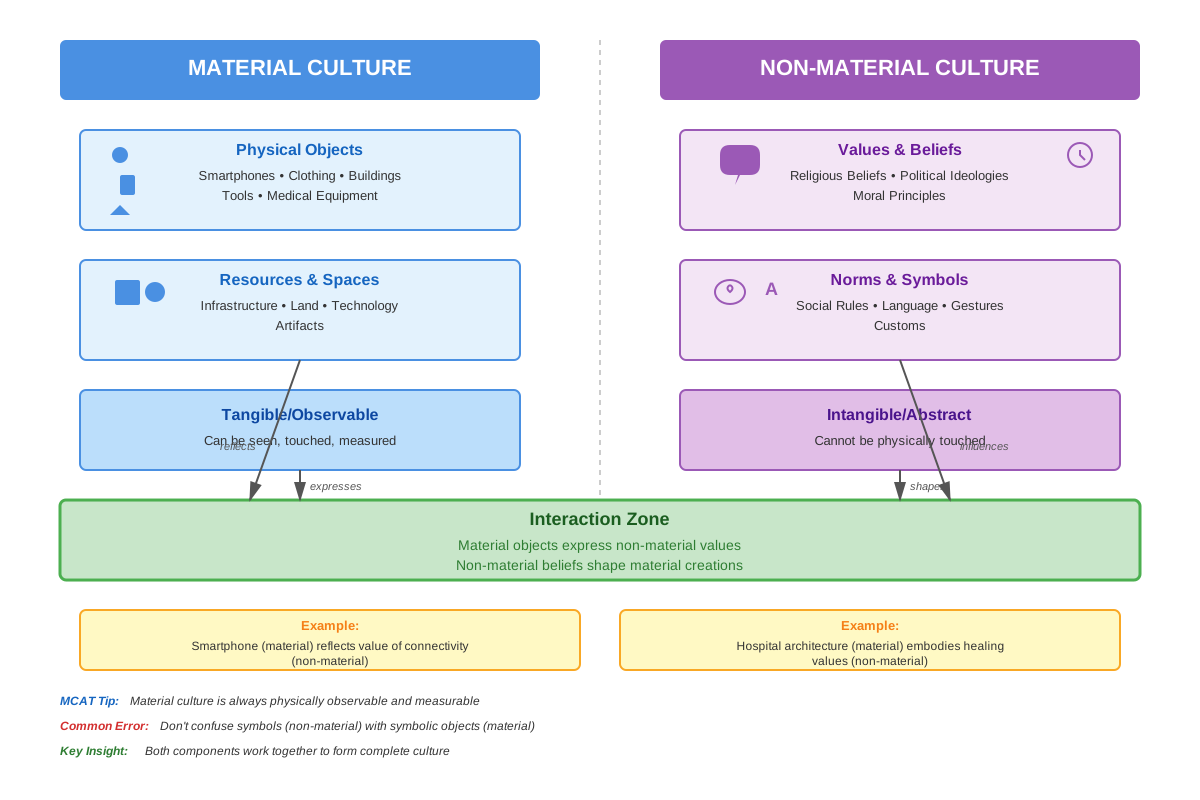
Material culture represents one of the fundamental building blocks of sociological analysis, referring to the physical objects, resources, and spaces that people use to define their culture. These tangible artifacts—ranging from smartphones and clothing to buildings and tools—serve as concrete expressions of a society's values, beliefs, and social organization. Unlike non-material culture (which encompasses intangible elements like norms, values, and beliefs), material culture provides observable, measurable evidence of how societies function and evolve.
For the MCAT, understanding material culture is essential because it frequently appears in Psychological, Social, and Biological Foundations of Behavior passages that examine how physical environments shape human behavior, social stratification, and cultural identity. The exam tests not only definitional knowledge but also the ability to analyze how material objects reflect and reinforce social structures, power dynamics, and cultural change. Questions may present scenarios involving technology adoption, consumer behavior, architectural design, or resource distribution, requiring test-takers to identify material culture elements and explain their sociological significance.
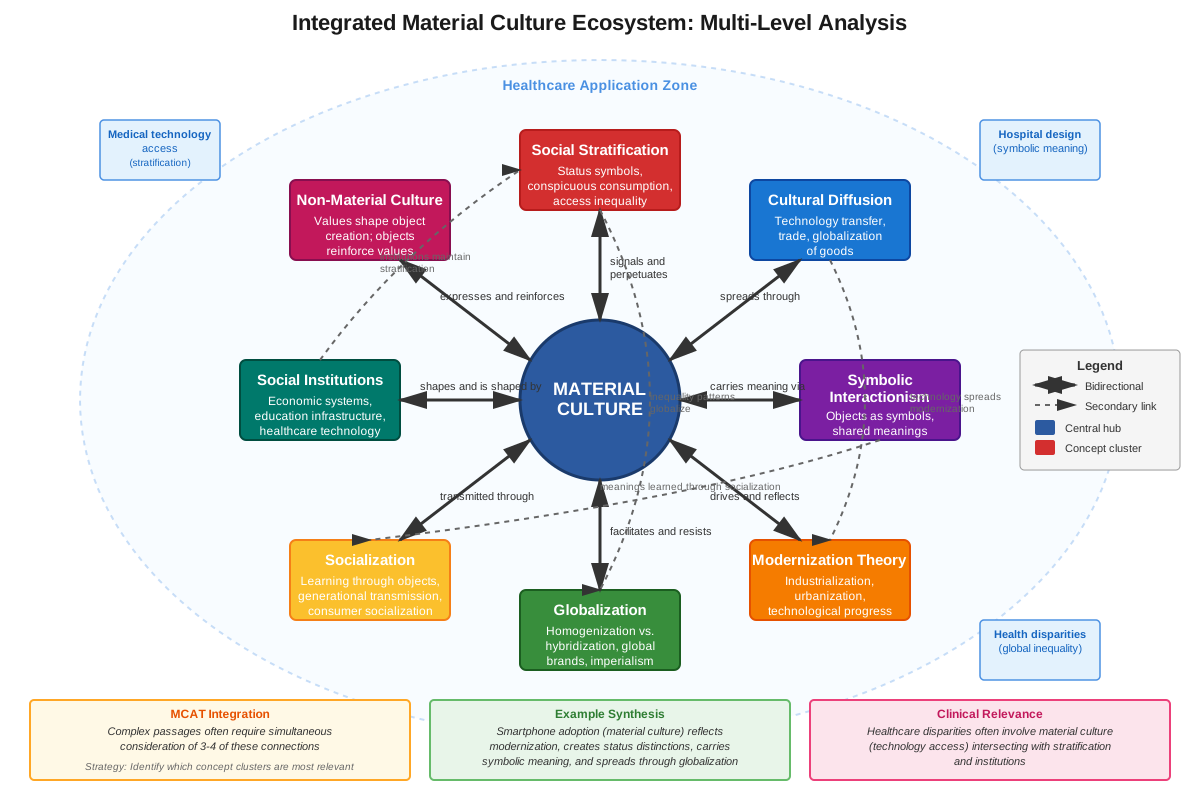
Material culture sits at the intersection of multiple high-yield MCAT topics within Social Structure and Institutions. It connects directly to concepts like social stratification (material possessions as status symbols), cultural diffusion (spread of physical innovations), symbolic interactionism (objects as symbols with shared meanings), and modernization theory (technological advancement). Mastering material culture enables students to analyze complex passages about inequality, globalization, urbanization, and social change—all frequent themes in MCAT Sociology questions.
Learning Objectives
- [ ] Define Material culture using accurate Sociology terminology
- [ ] Explain why Material culture matters for the MCAT
- [ ] Apply Material culture to exam-style questions
- [ ] Identify common mistakes related to Material culture
- [ ] Connect Material culture to related Sociology concepts
- [ ] Distinguish between material and non-material culture in complex scenarios
- [ ] Analyze how material culture reflects and perpetuates social inequality
- [ ] Evaluate the role of material culture in cultural change and diffusion
Prerequisites
- Basic understanding of culture: Material culture is one component of the broader concept of culture; recognizing culture as learned, shared patterns of behavior is foundational
- Familiarity with social stratification: Material possessions often serve as markers of social class and status, making stratification concepts essential for deeper analysis
- Knowledge of symbolic interactionism: Understanding that objects carry symbolic meaning helps explain how material culture functions in social interactions
- Awareness of socialization processes: Material culture is transmitted through socialization, making this connection important for comprehensive understanding
Why This Topic Matters
Material culture appears in approximately 15-20% of MCAT Sociology passages, making it a high-yield topic for test preparation. The concept frequently emerges in questions about social inequality, cultural change, globalization, and the relationship between technology and society. Understanding material culture enables students to quickly identify the sociological dimensions of seemingly straightforward scenarios about consumer behavior, technological adoption, or environmental design.
In real-world and clinical contexts, material culture analysis helps healthcare professionals understand health disparities related to access to medical technology, recognize how hospital design affects patient outcomes, and appreciate how cultural artifacts (religious objects, traditional medicines) influence patient care preferences. Public health initiatives often succeed or fail based on understanding the material culture of target populations—for example, designing sanitation infrastructure that aligns with local practices or introducing medical devices that fit cultural contexts.
On the MCAT, material culture typically appears in three question formats: (1) passage-based questions asking students to identify examples of material versus non-material culture, (2) discrete questions requiring application of material culture concepts to novel scenarios, and (3) research-based passages examining how material objects influence social behavior or reflect social structures. The exam particularly favors questions that require distinguishing material culture from related concepts or analyzing how material culture both reflects and shapes social inequality.
Core Concepts
Definition and Scope of Material Culture
Material culture refers to the physical objects, resources, spaces, and technologies that people create, use, and assign meaning to within a society. This encompasses everything from simple tools and clothing to complex infrastructure and digital devices. The defining characteristic is tangibility—material culture consists of things that can be touched, seen, or physically experienced. In Material culture Sociology, these objects are studied not merely as functional items but as carriers of cultural meaning, social values, and power relations.
The scope of material culture extends across multiple domains:
- Technology and tools: Computers, medical equipment, agricultural implements
- Architecture and infrastructure: Buildings, roads, bridges, urban layouts
- Consumer goods: Clothing, food, vehicles, electronics
- Art and symbolic objects: Sculptures, religious artifacts, monuments
- Natural resources modified by humans: Cultivated land, domesticated animals, processed materials
Material Culture vs. Non-Material Culture
Understanding the distinction between material and non-material culture is crucial for Material culture MCAT questions. This comparison appears frequently on the exam:
| Aspect | Material Culture | Non-Material Culture |
|---|---|---|
| Definition | Physical, tangible objects and spaces | Intangible ideas, beliefs, and norms |
| Examples | Smartphones, clothing, buildings | Values, language, customs, laws |
| Observability | Directly observable and measurable | Inferred from behavior and communication |
| Transmission | Through physical exchange and demonstration | Through socialization and communication |
| Change rate | Often changes rapidly (especially technology) | Typically changes more slowly |
| Relationship | Reflects and reinforces non-material culture | Provides meaning to material culture |
The relationship between these two forms is bidirectional and dynamic. Material culture embodies non-material culture—a wedding ring (material) represents commitment and love (non-material). Conversely, non-material culture shapes how material objects are created, used, and valued. This interplay is a frequent focus of MCAT passages examining cultural change.
Material Culture and Social Stratification
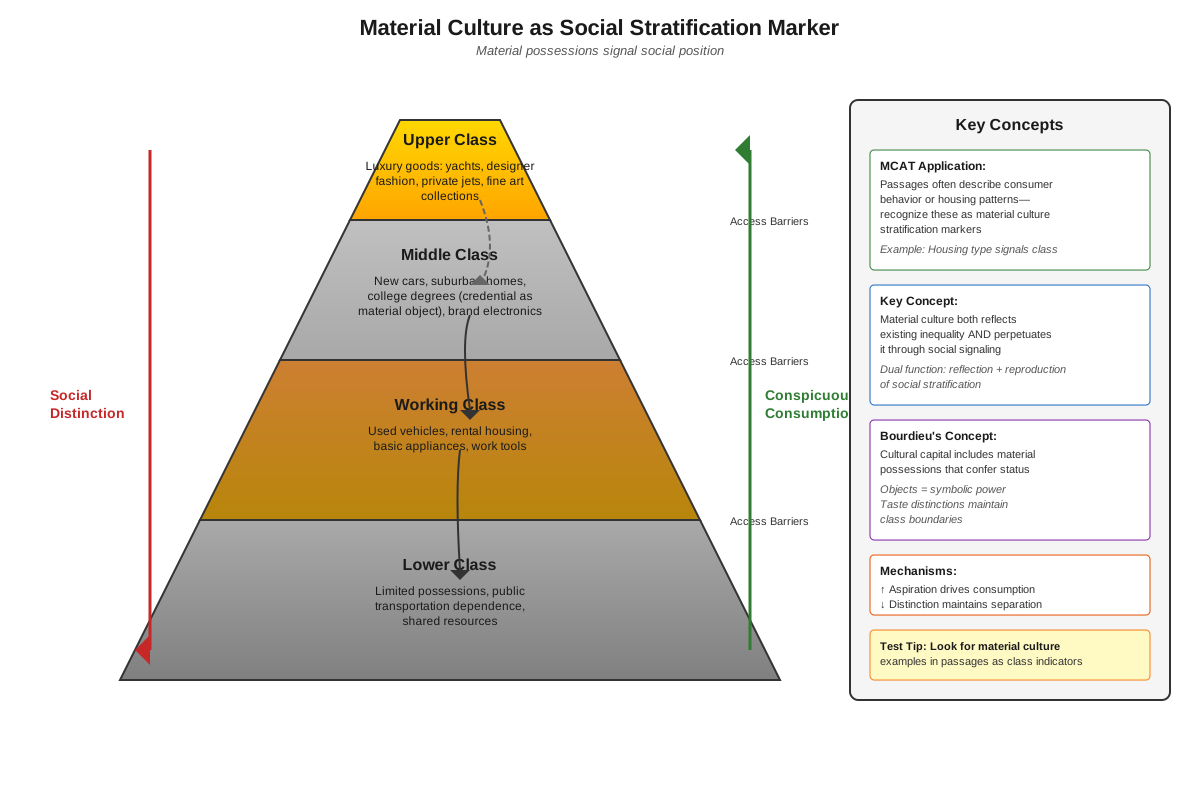
Material culture serves as a visible marker of social stratification and class position. The concept of conspicuous consumption—introduced by sociologist Thorstein Veblen—describes how people use material possessions to display wealth and status. Luxury goods, designer clothing, expensive vehicles, and prestigious residential locations function as status symbols that communicate social position.
The relationship between material culture and inequality operates through several mechanisms:
- Differential access: Unequal distribution of material resources creates and maintains social hierarchies
- Cultural capital: Certain material possessions (art collections, books, technology) signal education and refinement
- Symbolic boundaries: Material culture marks group membership and exclusion
- Reproduction of inequality: Material advantages (inheritance, property) perpetuate stratification across generations
Material Culture in Cultural Change and Diffusion
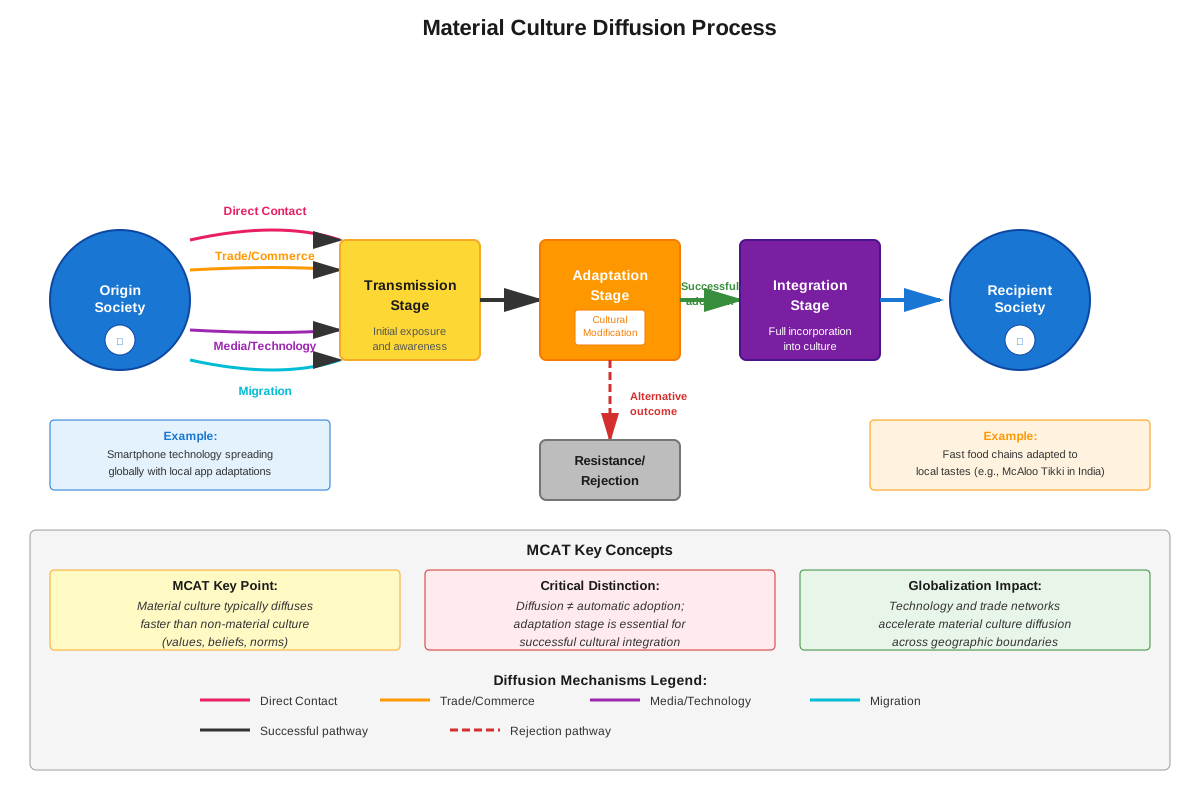
Material culture plays a central role in cultural diffusion—the spread of cultural elements from one society to another. Technology and consumer goods often diffuse more rapidly than non-material culture because they are concrete, visible, and their benefits may be immediately apparent. However, this differential rate of change can create cultural lag, where material culture advances faster than the non-material culture (values, norms, laws) needed to regulate it.
Examples of material culture diffusion include:
- Spread of smartphones globally, transforming communication patterns
- Adoption of Western clothing in non-Western societies
- Diffusion of agricultural technologies across regions
- Global spread of fast-food restaurants and consumer brands
The process of globalization is largely visible through material culture—the same products, brands, and technologies appearing worldwide. However, glocalization occurs when global material culture is adapted to local contexts, creating hybrid forms that blend global and local elements.
Material Culture and Identity Formation
Material possessions contribute significantly to individual and group identity construction. Through symbolic interactionism, objects acquire meanings through social interaction, and people use these objects to communicate identity to others. Clothing choices, technology preferences, home decoration, and consumer brands all serve as identity markers.
Material culture functions in identity formation through:
- Self-expression: Objects chosen to represent personal values and preferences
- Group affiliation: Material culture marking membership in subcultures, professions, or social groups
- Distinction: Using material possessions to differentiate oneself from others
- Memory and continuity: Objects connecting individuals to their past and cultural heritage
Technology as Material Culture
Technology represents a particularly dynamic and MCAT-relevant category of material culture. The social construction of technology perspective emphasizes that technological development is shaped by social forces, not just technical possibilities. Different groups may use the same technology differently based on cultural values and social contexts.
Key considerations for technology as material culture:
- Digital divide: Unequal access to technology reinforcing social inequality
- Technological determinism: The idea that technology drives social change (often oversimplified)
- Social shaping of technology: How social factors influence technological design and adoption
- Unintended consequences: Technologies producing social effects beyond their intended purposes
Concept Relationships
Material culture connects to numerous sociological concepts in a complex web of relationships. At the foundational level, material culture → embodies → non-material culture, as physical objects express abstract values and beliefs. This relationship is bidirectional: non-material culture → shapes → material culture creation and use.
Moving upward in complexity, material culture → reflects and reinforces → social stratification, as possessions signal status and unequal access perpetuates inequality. This connects to cultural capital theory, where material culture → functions as → a form of capital that can be converted into social advantage. The relationship extends to symbolic interactionism: material objects → serve as → symbols in social interaction, carrying meanings negotiated through communication.
In the domain of social change, material culture → drives → cultural diffusion, as tangible objects spread more easily than abstract ideas. This can create → cultural lag, where material culture advances faster than regulatory norms. Material culture also → mediates → globalization processes, serving as the visible manifestation of global interconnection while simultaneously → enabling → glocalization through local adaptation.
The relationship to Social Structure and Institutions operates through multiple pathways: material culture → shapes → institutional practices (hospital design affecting healthcare delivery), while institutions → regulate → material culture production and distribution (economic systems determining resource allocation). Finally, material culture → influences → identity formation, as individuals → use → possessions to construct and communicate social identities.
High-Yield Facts
⭐ Material culture consists of physical, tangible objects, resources, and spaces that people create and use, distinguishing it from non-material culture's intangible elements like values and norms
⭐ Material culture serves as a visible marker of social stratification, with possessions functioning as status symbols that communicate class position
⭐ Cultural lag occurs when material culture (especially technology) changes faster than non-material culture (laws, norms, values) can adapt
⭐ Material culture diffuses more rapidly than non-material culture because physical objects are concrete, visible, and their benefits are often immediately apparent
⭐ The relationship between material and non-material culture is bidirectional: material objects embody abstract values while values shape how objects are created and used
- Material culture reflects power relations and can perpetuate social inequality through differential access to resources and technology
- Conspicuous consumption describes using material possessions to display wealth and status, a concept introduced by Thorstein Veblen
- Globalization is visible primarily through material culture, as the same products and technologies appear worldwide
- Technology represents a particularly dynamic category of material culture subject to rapid change and social shaping
- Material culture contributes to identity formation by serving as symbols that communicate group membership and personal values
Quick check — test yourself on Material culture so far.
Try Flashcards →Common Misconceptions
Misconception: Material culture only includes modern technology and consumer goods → Correction: Material culture encompasses all physical objects created or modified by humans, including ancient tools, traditional clothing, agricultural products, buildings, and natural resources shaped by human activity. A clay pot from 5000 BCE is as much material culture as a smartphone.
Misconception: Material culture determines social behavior in a straightforward, causal way → Correction: The relationship between material culture and behavior is complex and mediated by non-material culture. The same technology can be used differently across cultures based on values and norms. Material culture provides possibilities and constraints, but social meanings and cultural contexts shape actual use.
Misconception: Material and non-material culture are completely separate categories → Correction: These categories are analytically distinct but deeply interconnected in practice. Every material object carries non-material meanings, and non-material culture is often expressed through material forms. The distinction is useful for analysis but should not imply complete separation.
Misconception: Material culture always changes faster than non-material culture → Correction: While technology often advances rapidly, creating cultural lag, this is not universal. Some material culture (traditional crafts, religious artifacts) changes very slowly, while some non-material culture (slang, fashion norms) changes rapidly. The rate of change varies by domain and context.
Misconception: Material culture is less important than non-material culture for understanding society → Correction: Both forms are equally important and mutually constitutive. Material culture provides concrete evidence of social organization, reflects power structures, and shapes daily experiences. Ignoring material culture means missing crucial dimensions of social life, including inequality, identity, and cultural change.
Misconception: All members of a society have equal access to material culture → Correction: Access to material culture is stratified by class, race, gender, and other social categories. Differential access to technology, housing, consumer goods, and resources is a primary mechanism through which social inequality is created and maintained.
Worked Examples
Example 1: Identifying Material Culture in a Research Passage
Passage Summary: A study examines how smartphone adoption in rural India affects social relationships. Researchers found that while smartphones became widespread within five years, traditional norms about gender-segregated communication persisted. Women used smartphones primarily to contact family members, while men used them for business and social networking. Village elders expressed concern about young people's changing communication patterns but had not established new norms governing smartphone use.
Question: Which of the following best illustrates the concept of cultural lag as described in the passage?
A) Smartphones spreading rapidly throughout rural India
B) Women using smartphones differently than men
C) Traditional gender norms persisting despite new technology
D) The absence of established norms governing smartphone use
Worked Solution:
Step 1: Identify the material culture element. Smartphones are the material culture—physical, tangible technology that has been adopted.
Step 2: Identify the non-material culture elements. Traditional gender norms, communication patterns, and social norms about technology use represent non-material culture.
Step 3: Apply the concept of cultural lag. Cultural lag occurs when material culture changes faster than non-material culture can adapt. We need to find evidence of this temporal mismatch.
Step 4: Evaluate each option:
- Option A describes material culture diffusion but not lag
- Option B describes differential use patterns, not lag
- Option C describes persistence of old norms but doesn't capture the lag concept
- Option D directly describes the absence of new norms to govern new technology—this is the definition of cultural lag
Answer: D. The absence of established norms governing smartphone use exemplifies cultural lag because the material culture (smartphones) has changed rapidly (within five years) while the non-material culture (norms and rules) has not yet developed to regulate this new technology.
Connection to Learning Objectives: This example demonstrates applying material culture concepts to exam-style questions and distinguishing between material and non-material culture in complex scenarios.
Example 2: Analyzing Material Culture and Social Stratification
Scenario: A sociologist studying an urban neighborhood notices distinct patterns in housing quality, vehicle ownership, and access to technology across different blocks. Block A residents live in renovated historic homes, drive luxury vehicles, and have home offices with advanced technology. Block B residents live in aging apartment buildings, use public transportation, and access the internet primarily through smartphones rather than home computers. The sociologist observes that children from Block A attend private schools with extensive facilities, while Block B children attend public schools with limited resources.
Question: How does material culture function to perpetuate social stratification in this scenario?
Worked Solution:
Step 1: Identify material culture elements. Housing (renovated homes vs. aging apartments), vehicles (luxury cars vs. public transportation), technology (home offices vs. smartphone-only access), and educational facilities (private vs. public schools) all represent material culture.
Step 2: Recognize the stratification pattern. Block A residents have superior access to material resources compared to Block B residents, indicating class-based stratification.
Step 3: Analyze mechanisms of perpetuation:
- Differential access: Unequal distribution of material resources marks and maintains class boundaries
- Status symbols: Luxury vehicles and renovated homes signal higher social position
- Opportunity structures: Superior educational facilities provide Block A children with advantages
- Intergenerational transmission: Material advantages (property, technology) pass to next generation
Step 4: Connect to broader concepts. Material culture here functions as both a marker of existing inequality and a mechanism that reproduces inequality over time. The digital divide (differential technology access) and educational inequality (facility quality) create lasting disadvantages for Block B residents.
Answer: Material culture perpetuates stratification through multiple mechanisms: (1) visible markers of status that reinforce social boundaries, (2) differential access to resources that provide practical advantages, (3) educational facilities that create unequal opportunities for social mobility, and (4) property and technology that can be transmitted across generations, reproducing inequality over time.
Connection to Learning Objectives: This example demonstrates analyzing how material culture reflects and perpetuates social inequality while connecting material culture to related sociology concepts like stratification and cultural capital.
Exam Strategy
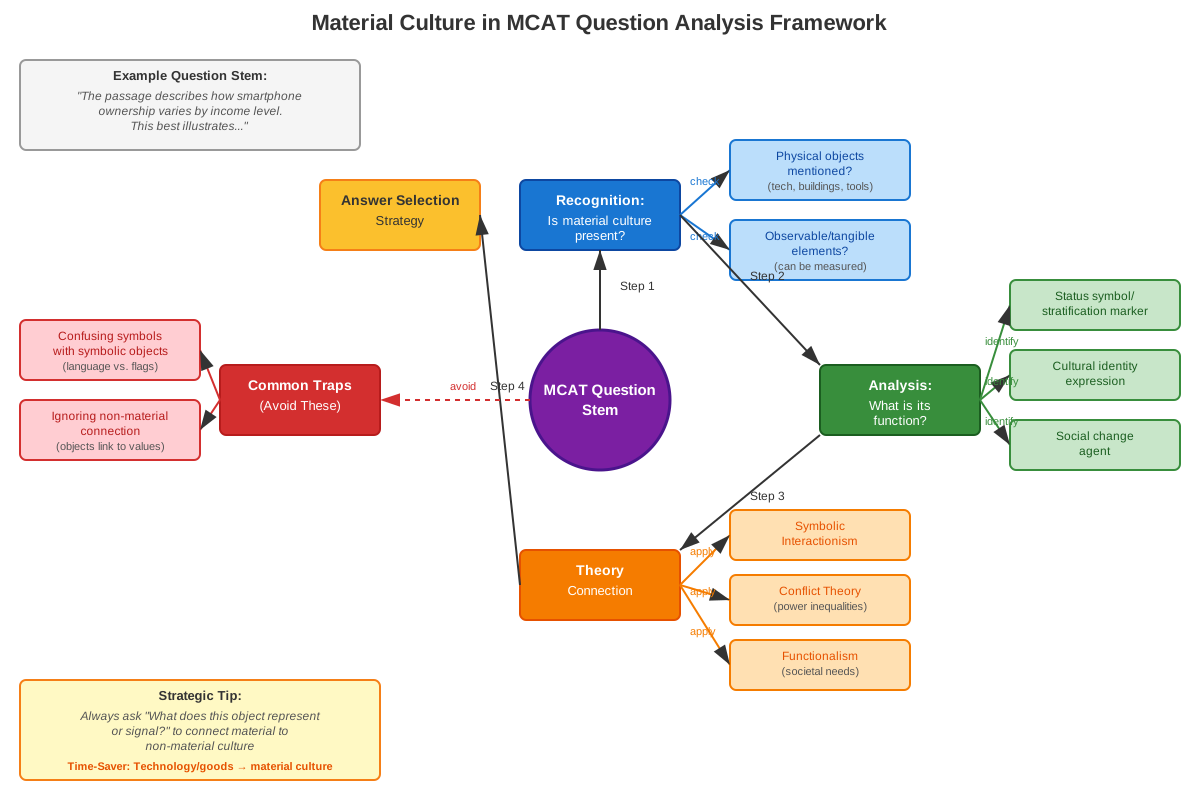
When approaching Material culture MCAT questions, begin by identifying whether the question asks about material or non-material culture. Look for trigger words indicating physical objects: "technology," "possessions," "buildings," "tools," "resources," "infrastructure," or "artifacts." These signal material culture, while words like "beliefs," "values," "norms," "customs," or "attitudes" indicate non-material culture.
Exam Tip: If a passage describes both physical objects and social beliefs, the question likely tests your ability to distinguish between material and non-material culture or analyze their relationship. Create a mental two-column list as you read.
For questions about cultural change, watch for temporal language suggesting different rates of change. Phrases like "rapid adoption," "slow to change," "traditional values persist," or "new technology but old norms" often signal cultural lag questions. The correct answer typically identifies the mismatch between material and non-material culture change rates.
Process-of-elimination strategy: When answers include both material and non-material culture examples, eliminate options that misclassify elements. For instance, if an option claims "religious beliefs" are material culture, eliminate it immediately. Similarly, eliminate answers that oversimplify the relationship between material culture and behavior, suggesting direct causation without considering cultural context.
For questions about social stratification, look for answers that explain how material culture functions in inequality—not just that it correlates with class. Strong answers describe mechanisms: differential access, status signaling, opportunity creation, or intergenerational transmission. Weak answers merely note that rich people have more stuff.
Time allocation: Material culture questions typically require 60-90 seconds. Spend 20-30 seconds identifying key elements in the passage or question stem, 30-40 seconds evaluating options, and 10-20 seconds confirming your answer by checking it against the passage. Don't overthink—these questions test conceptual understanding, not obscure details.
Memory Techniques
Mnemonic for Material Culture Definition: "TOPS"
- Tangible (can be touched)
- Objects (physical things)
- Physical (exists in material form)
- Spaces (includes built environments)
Mnemonic for Material vs. Non-Material Culture: "If you can DROP it, it's material"
- Drop (physical test—can it fall?)
- Real (exists in physical reality)
- Observable (directly visible)
- Possessable (can be owned/held)
Visualization Strategy: Picture a museum display case. Everything inside the case (artifacts, tools, clothing) represents material culture. Everything on the label (explanations of beliefs, values, customs) represents non-material culture. The case itself shows how material culture embodies and displays non-material culture.
Acronym for Cultural Lag: "FAST Material, SLOW Non-material"
- Fast-changing technology
- Adapting norms lag behind
- Slow value change
- Time mismatch creates problems
Memory Palace Technique: Imagine walking through your home. Each room contains material culture (furniture, technology, decorations) that reflects non-material culture (your values, beliefs, identity). The kitchen tools reflect food culture and values; bedroom items reflect privacy norms; living room arrangement reflects social values. This personal connection strengthens recall.
Summary
Material culture encompasses the physical objects, resources, spaces, and technologies that societies create, use, and assign meaning to, distinguishing it from non-material culture's intangible elements like values and norms. This concept is essential for MCAT Sociology because it appears frequently in passages examining social stratification, cultural change, globalization, and the relationship between technology and society. Material culture functions simultaneously as a reflection of social structures and a mechanism that shapes behavior and perpetuates inequality. The bidirectional relationship between material and non-material culture—where objects embody values while values shape object creation and use—is particularly important for exam questions. Understanding cultural lag (material culture changing faster than non-material culture), material culture's role in status signaling and stratification, and how material objects contribute to identity formation enables students to analyze complex sociological scenarios effectively. Success on MCAT material culture questions requires distinguishing between material and non-material elements, analyzing mechanisms rather than just correlations, and recognizing how physical objects mediate social relationships and cultural change.
Key Takeaways
- Material culture consists of tangible, physical objects and spaces, while non-material culture encompasses intangible beliefs, values, and norms—the distinction is fundamental but the relationship is bidirectional and mutually constitutive
- Material culture serves as a visible marker of social stratification, with differential access to resources and conspicuous consumption perpetuating inequality across generations
- Cultural lag occurs when material culture (especially technology) advances faster than non-material culture (norms, laws, values) can adapt, creating social tensions and regulatory gaps
- Material culture diffuses more rapidly than non-material culture because physical objects are concrete and their benefits are often immediately apparent, driving globalization processes
- The relationship between material culture and behavior is complex and mediated by cultural context—the same object can have different meanings and uses across societies
- Material culture contributes to identity formation by serving as symbols that communicate group membership, personal values, and social position
- MCAT questions on material culture typically test the ability to distinguish material from non-material culture, analyze mechanisms of inequality, or identify cultural lag in scenarios involving technological change
Related Topics
Non-Material Culture: Understanding the intangible elements of culture (values, beliefs, norms, language) is essential for grasping the complete picture of how societies function. Mastering material culture provides the foundation for analyzing how these two forms interact and shape each other.
Social Stratification and Inequality: Material culture serves as both a marker and mechanism of stratification. Deeper study of class systems, status hierarchies, and inequality mechanisms builds on material culture concepts to explain how societies organize and perpetuate advantage.
Cultural Change and Diffusion: Material culture plays a central role in how cultures evolve and spread. Further exploration of innovation, diffusion patterns, acculturation, and assimilation extends material culture understanding to dynamic processes.
Symbolic Interactionism: This theoretical perspective explains how material objects acquire meaning through social interaction. Advanced study reveals how people use material culture to construct and negotiate identities in everyday life.
Globalization and Modernization: Material culture provides the visible evidence of global interconnection. Studying these macro-level processes shows how material culture mediates relationships between local and global forces, traditional and modern societies.
Practice CTA
Now that you've mastered the core concepts of material culture, it's time to solidify your understanding through active practice. Attempt the practice questions and flashcards designed specifically for this topic—they'll challenge you to apply these concepts in exam-realistic scenarios and identify the subtle distinctions that separate correct from incorrect answers. Remember, understanding material culture isn't just about memorizing definitions; it's about recognizing how physical objects reflect and shape social life in the complex passages you'll encounter on test day. You've built a strong foundation—now strengthen it through deliberate practice!
Sign up free to keep reading
Create a free AnvayaPrep account to finish this MCAT guide on Material culture — plus flashcards and practice questions.