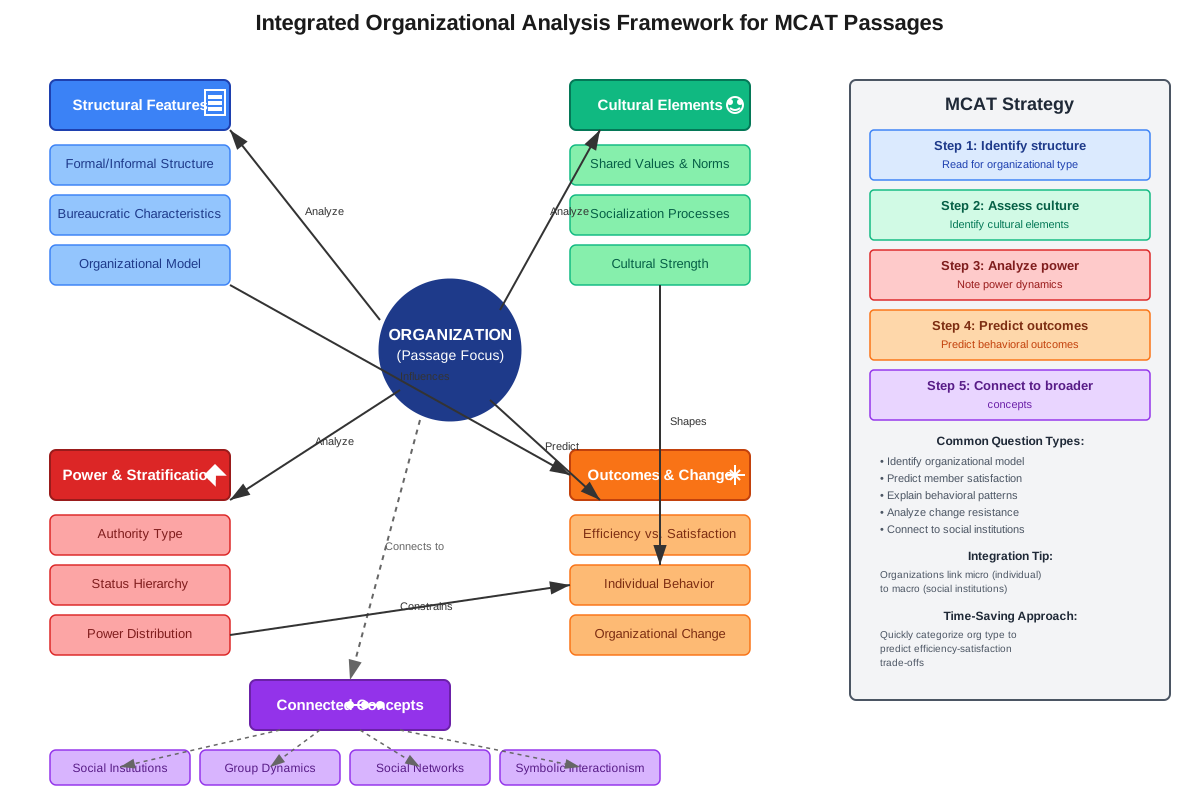
Overview
Organizations represent one of the most fundamental concepts in Sociology and are critical for understanding how human behavior is structured, coordinated, and directed toward collective goals. Within the MCAT's Social Structure and Institutions framework, organizations serve as the primary mechanism through which societies accomplish complex tasks that individuals cannot achieve alone. From hospitals and medical practices to research institutions and public health agencies, organizations shape every aspect of healthcare delivery and medical practice that future physicians will encounter.
Understanding Organizations Sociology is essential for MCAT success because questions frequently test the ability to analyze how formal structures influence individual behavior, decision-making processes, and social outcomes. The MCAT Psychological, Social, and Biological Foundations of Behavior section regularly presents passages describing healthcare settings, research teams, or community programs, requiring students to identify organizational characteristics, analyze power dynamics, and predict how structural features affect outcomes. These questions assess not just memorization but the application of sociological frameworks to real-world scenarios.
Organizations connect to broader sociological concepts including social institutions, bureaucracy, social networks, and group dynamics. They represent the formalized expression of social structure, bridging micro-level interactions between individuals and macro-level societal patterns. Mastering organizational theory enables students to understand how medical systems function, why healthcare disparities persist, and how institutional factors influence patient outcomes—knowledge that appears across multiple MCAT question types and is foundational for medical practice itself.
Learning Objectives
- [ ] Define Organizations using accurate Sociology terminology
- [ ] Explain why Organizations matters for the MCAT
- [ ] Apply Organizations to exam-style questions
- [ ] Identify common mistakes related to Organizations
- [ ] Connect Organizations to related Sociology concepts
- [ ] Distinguish between formal and informal organizational structures
- [ ] Analyze how different organizational models affect efficiency and member satisfaction
- [ ] Evaluate the relationship between organizational culture and individual behavior
- [ ] Compare bureaucratic and non-bureaucratic organizational forms
Prerequisites
- Social groups and group dynamics: Organizations are specialized types of groups with formal structures, making understanding of primary/secondary groups essential for recognizing organizational characteristics
- Social institutions: Organizations operate within and help constitute larger institutions (healthcare, education, government), requiring familiarity with institutional concepts
- Social structure: Organizations represent formalized social structures, so understanding roles, statuses, and hierarchies provides the foundation for analyzing organizational arrangements
- Norms and values: Organizational culture emerges from shared norms and values, making these concepts necessary for understanding organizational behavior
Why This Topic Matters
Organizations are ubiquitous in medical practice and healthcare delivery, making this topic both clinically relevant and frequently tested on the MCAT. Physicians work within hospitals (complex organizations), collaborate with insurance companies (bureaucratic organizations), and may establish private practices (small organizations). Understanding organizational dynamics helps future physicians navigate institutional constraints, advocate for patients within system limitations, and recognize how organizational structures affect care quality and access.
On the MCAT, Organizations MCAT questions appear in approximately 8-12% of Psychological, Social, and Biological Foundations of Behavior passages, making this a high-yield topic. Questions typically present scenarios involving healthcare institutions, research teams, or community programs, then ask students to identify organizational characteristics, predict outcomes based on organizational structure, or analyze how organizational factors influence individual behavior. The exam frequently tests the distinction between formal and informal structures, characteristics of bureaucracies, and how organizational culture affects decision-making.
Common question formats include: (1) passage-based questions describing a healthcare setting and asking students to identify organizational features; (2) standalone questions requiring application of organizational theory to hypothetical scenarios; (3) questions connecting organizational structure to outcomes like efficiency, innovation, or employee satisfaction. The MCAT particularly emphasizes understanding how organizational factors create or perpetuate health disparities, how institutional racism operates through organizational structures, and how organizational culture influences medical decision-making—all critical for culturally competent medical practice.
Core Concepts
Definition and Characteristics of Organizations
Organizations are social entities that are goal-directed, deliberately structured, and coordinated activity systems linked to the external environment. Unlike informal groups that emerge spontaneously, organizations are formal groups characterized by explicit structures, defined roles, and coordinated activities designed to achieve specific objectives. The defining features of organizations include: (1) a defined membership with clear boundaries distinguishing members from non-members; (2) a goal orientation directing collective activity toward specific outcomes; (3) a deliberate structure with established roles, hierarchies, and procedures; (4) coordinated activities that integrate individual efforts; and (5) continuity over time that transcends individual membership changes.
Organizations exist on a spectrum from small, simple structures (a medical practice with three physicians) to massive, complex institutions (the Centers for Disease Control and Prevention). All organizations share the fundamental characteristic of being deliberately constructed to accomplish goals that individuals cannot achieve alone. In healthcare, organizations range from small clinics to hospital systems, professional associations, insurance companies, pharmaceutical corporations, and government health agencies—each with distinct structures designed for specific purposes.
Formal vs. Informal Organizational Structure
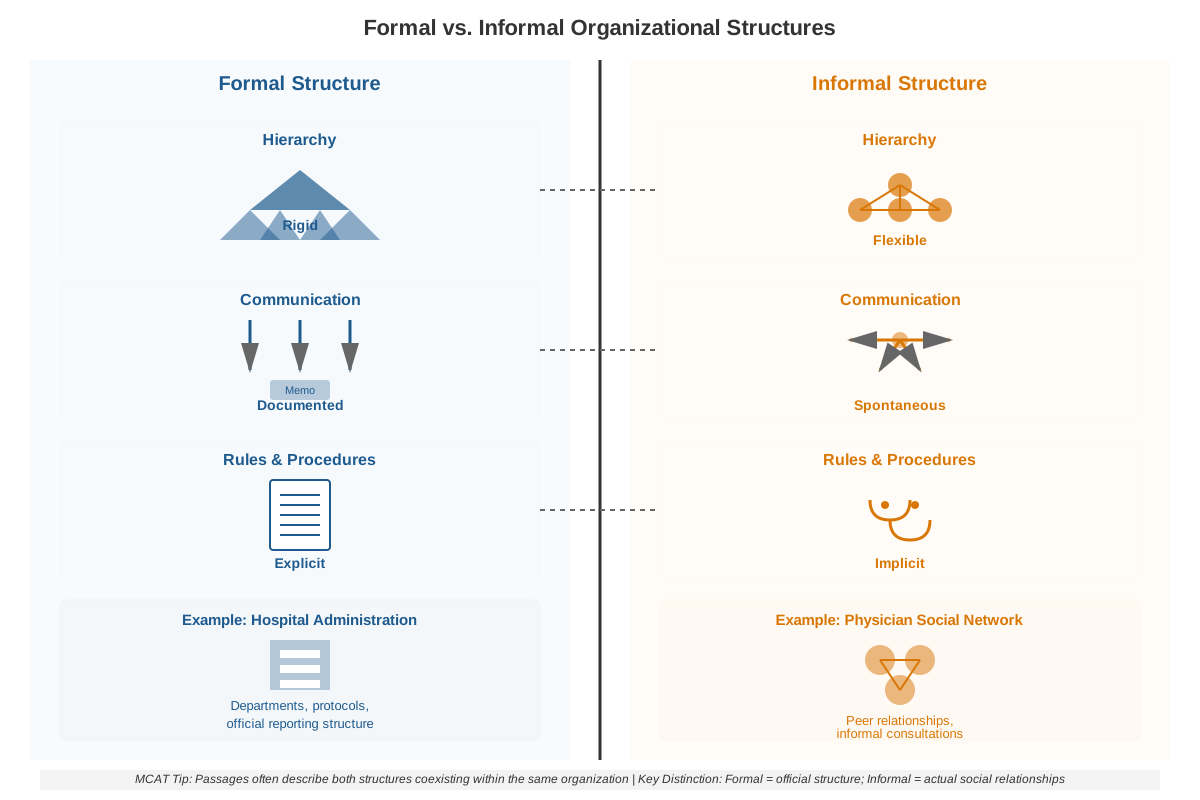
Every organization possesses both formal structure and informal structure. The formal organizational structure consists of officially designated roles, explicit hierarchies, written rules and procedures, and documented reporting relationships. This structure appears in organizational charts, job descriptions, policy manuals, and official communications. Formal structure defines who has authority, how decisions should be made, and what procedures govern organizational activities.
In contrast, informal organizational structure emerges spontaneously from social interactions, personal relationships, and unofficial communication networks. Informal structure includes friendship networks, unofficial leaders who lack formal authority but wield influence, unwritten norms governing behavior, and communication channels that bypass official hierarchies (the "grapevine"). While formal structure represents how the organization is supposed to function, informal structure reflects how it actually operates in practice.
The relationship between formal and informal structures significantly affects organizational effectiveness. When informal structure aligns with formal structure, organizations function smoothly. When they conflict—for example, when informal leaders oppose formal policies—organizations experience dysfunction. In healthcare settings, understanding both structures is crucial: a hospital's formal hierarchy may indicate that attending physicians make all decisions, but informal structure might reveal that experienced nurses actually guide many clinical choices.
Bureaucracy and Bureaucratic Organizations
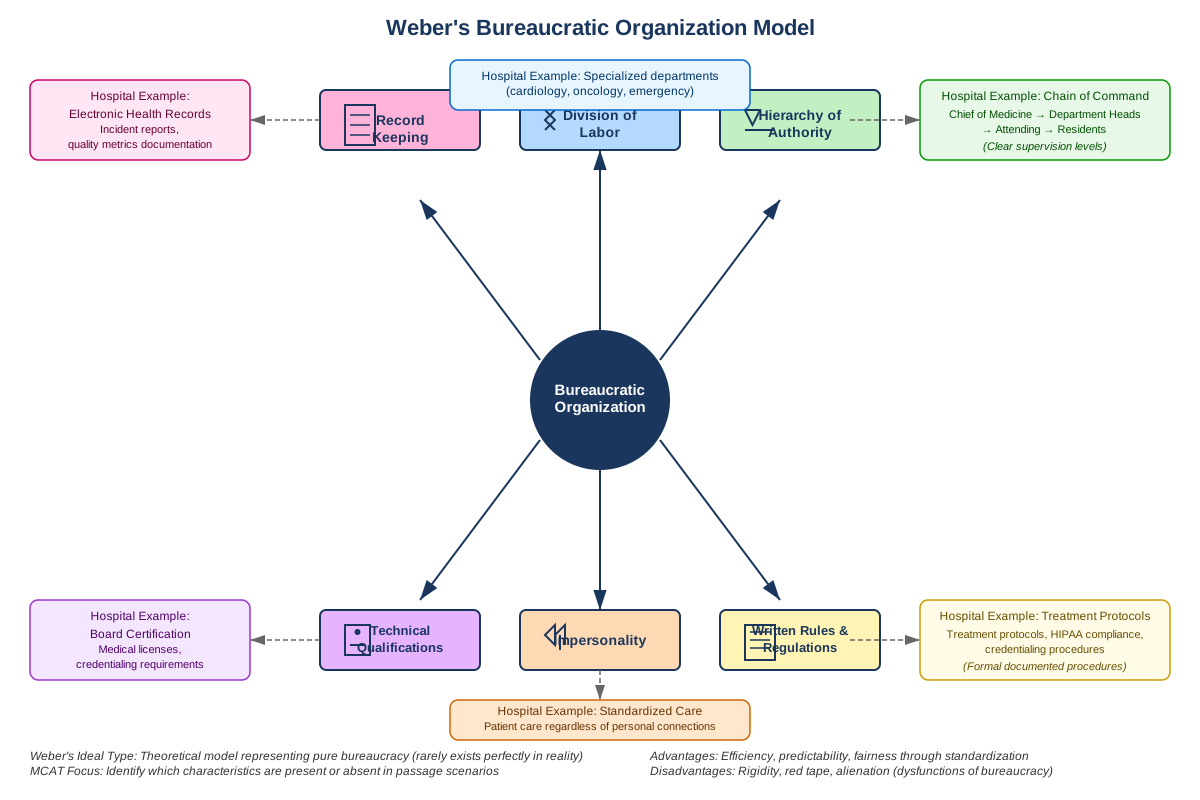
Bureaucracy represents a specific organizational form characterized by formal rules, hierarchical authority, specialized roles, and impersonal relationships. Max Weber, the foundational sociologist of organizational theory, identified bureaucracy as the most efficient and rational form of organization for large-scale coordination. The ideal-type bureaucracy possesses six key characteristics:
- Hierarchy of authority: Clear chain of command with each position supervised by a higher position
- Division of labor: Specialized roles with defined responsibilities and expertise requirements
- Written rules and regulations: Formal procedures governing all organizational activities
- Impersonality: Decisions based on rules rather than personal relationships or favoritism
- Technical competence: Employment and advancement based on qualifications and merit
- Formal written communications: Documentation of decisions, procedures, and activities
| Bureaucratic Feature | Advantage | Disadvantage |
|---|---|---|
| Hierarchy of authority | Clear accountability, coordinated decision-making | Slow response to change, communication bottlenecks |
| Division of labor | Expertise development, efficiency through specialization | Narrow focus, difficulty seeing big picture |
| Written rules | Consistency, predictability, fairness | Rigidity, inability to adapt to unique situations |
| Impersonality | Reduces favoritism and discrimination | Dehumanizing, ignores individual circumstances |
| Technical competence | Qualified personnel, meritocracy | Credential inflation, ignores other valuable qualities |
| Written communication | Documentation, accountability | Paperwork burden, slowed processes |
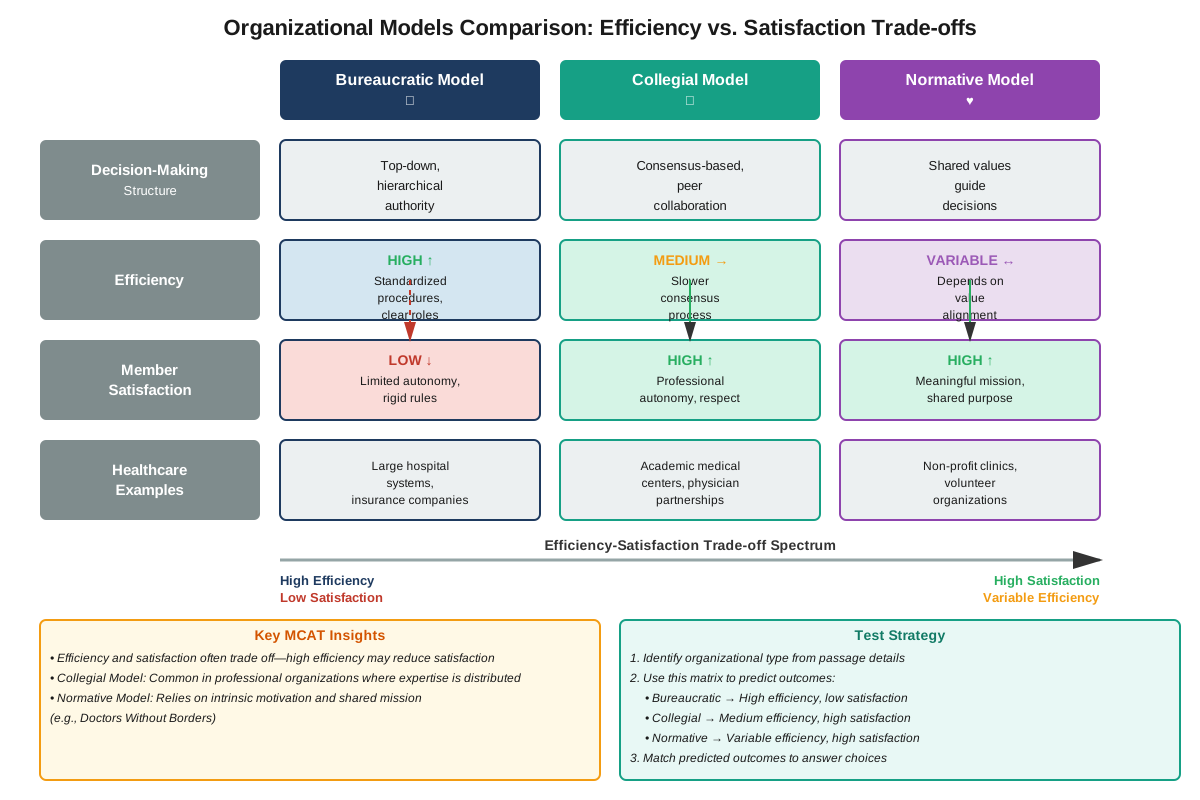
Healthcare organizations frequently exhibit bureaucratic characteristics, particularly large hospitals and government health agencies. While bureaucracy provides coordination and consistency essential for patient safety (standardized procedures reduce errors), it can also create frustration through rigid rules that don't accommodate individual patient needs or slow decision-making that delays care.
Organizational Models and Typologies
Beyond the bureaucratic model, sociologists have identified several organizational forms relevant to healthcare:
Professional organizations emphasize expertise and autonomy rather than hierarchical control. Medical practices, law firms, and universities exemplify this model, where highly trained professionals require independence to exercise judgment. These organizations feature flat hierarchies with minimal supervision and decision-making authority distributed to individual professionals based on expertise rather than position.
Normative organizations (also called voluntary organizations) rely on shared values and commitment rather than financial compensation or coercion to motivate members. Professional associations, advocacy groups, and charitable organizations exemplify this type. Members join because they believe in the organization's mission, and leadership depends on persuasion rather than formal authority.
Utilitarian organizations provide material rewards (primarily wages) in exchange for membership and effort. Most businesses and employment-based organizations fit this category, where members participate primarily for financial compensation rather than intrinsic commitment to organizational goals.
Coercive organizations use force or threat of punishment to maintain membership and compliance. Prisons, psychiatric institutions (historically), and military organizations during wartime exemplify this type. While less common in modern healthcare, understanding coercive elements helps recognize when medical institutions inappropriately restrict patient autonomy.
Organizational Culture
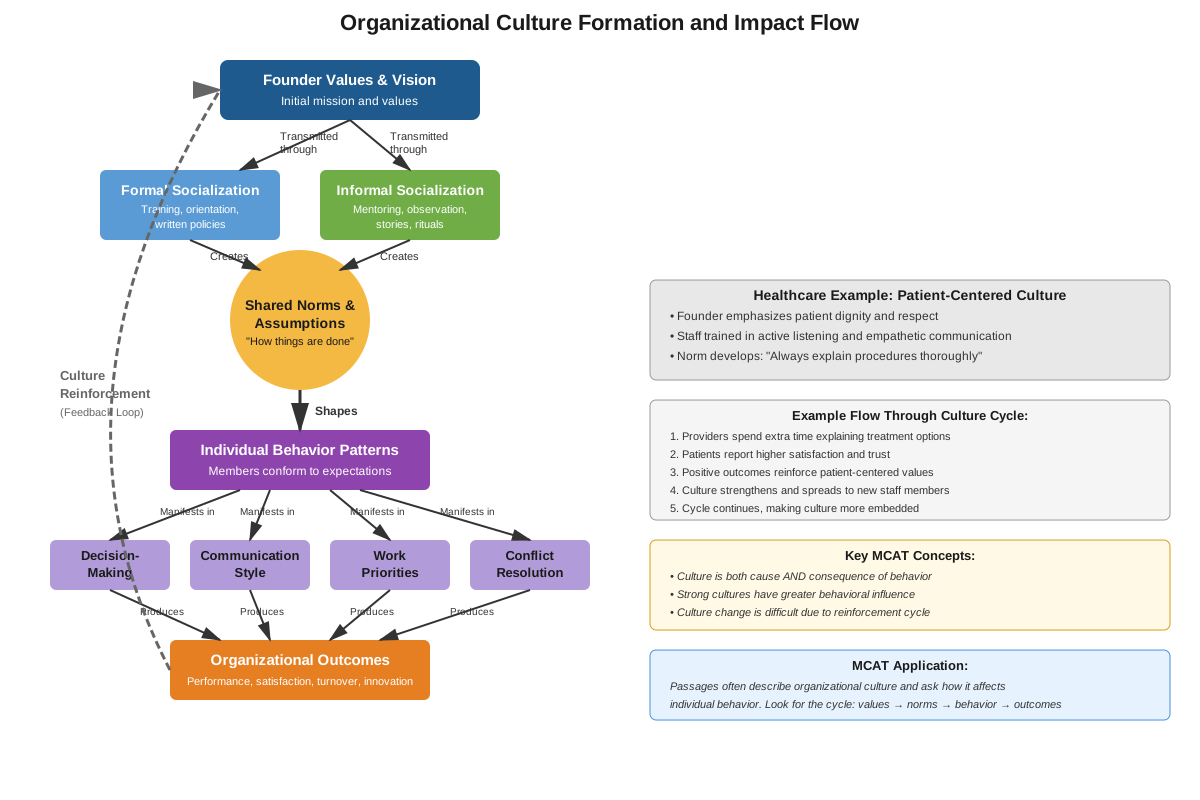
Organizational culture encompasses the shared values, beliefs, norms, and practices that characterize an organization and guide member behavior. Culture represents "how things are done here"—the unwritten rules, assumptions, and expectations that shape daily interactions. Organizational culture includes:
- Artifacts: Visible symbols like dress codes, office layouts, and ceremonies
- Espoused values: Officially stated beliefs and principles
- Basic assumptions: Deeply held, often unconscious beliefs about human nature, relationships, and appropriate behavior
Strong organizational cultures align member behavior with organizational goals, create cohesion, and provide identity. However, strong cultures can also resist necessary change and exclude individuals who don't fit cultural norms. In healthcare, organizational culture profoundly affects patient safety (cultures that punish error reporting versus those that encourage transparency), treatment approaches (cultures emphasizing aggressive intervention versus palliative care), and health equity (cultures that recognize versus ignore systemic biases).
Safety culture in healthcare organizations specifically refers to shared commitment to minimizing patient harm through error reporting, learning from mistakes, and prioritizing safety over efficiency or hierarchy. Organizations with strong safety cultures encourage staff at all levels to speak up about concerns, systematically analyze errors without blame, and implement improvements based on lessons learned.
Iron Law of Oligarchy
The iron law of oligarchy, proposed by Robert Michels, states that all organizations, regardless of how democratic they begin, inevitably develop into oligarchies where power concentrates in the hands of a small elite. As organizations grow, they require coordination and expertise that necessitates specialized leadership roles. These leaders gain advantages—information access, communication control, organizational knowledge—that make them difficult to replace. Over time, leaders prioritize organizational maintenance and their own positions over original democratic ideals or member interests.
This concept is particularly relevant for understanding how healthcare organizations evolve. A community health clinic founded on principles of shared governance and patient input may gradually concentrate decision-making power in an executive team as it grows and faces complex regulatory requirements. Recognizing this tendency helps identify when organizational structures need deliberate mechanisms to maintain accountability and member voice.
McDonaldization
McDonaldization, a concept developed by George Ritzer, describes the process by which principles of fast-food restaurants increasingly dominate more sectors of society, including healthcare. The four dimensions of McDonaldization are:
- Efficiency: Optimizing processes to achieve goals with minimal time and effort
- Calculability: Emphasizing quantifiable measures (numbers, size, time) over quality
- Predictability: Standardizing products and services to ensure uniformity
- Control: Replacing human judgment with technology and standardized procedures
In healthcare, McDonaldization manifests as standardized treatment protocols, emphasis on patient throughput metrics, electronic health records that structure clinical encounters, and corporate healthcare chains offering uniform services. While these features can improve consistency and reduce errors, critics argue McDonaldization dehumanizes care, reduces physician autonomy, prioritizes efficiency over patient needs, and creates an "irrationality of rationality" where hyper-rational systems produce irrational outcomes (like spending more time documenting care than providing it).
Concept Relationships
Organizations represent the formalized expression of social structure, connecting micro-level individual behavior to macro-level institutional patterns. The relationship flows: Social structure (roles, statuses, hierarchies) → Organizations (formalized structures coordinating collective action) → Social institutions (established patterns meeting societal needs).
Within organizational theory, concepts interconnect systematically: Formal structure establishes official roles and hierarchies → Informal structure emerges from social interactions within formal constraints → Organizational culture develops from repeated interactions and shared experiences → Culture influences how formal and informal structures operate in practice. This cyclical relationship means organizational change requires addressing all three elements.
Bureaucracy represents one specific organizational form, characterized by particular structural features (hierarchy, specialization, rules) that produce both advantages (efficiency, consistency) and disadvantages (rigidity, impersonality). The iron law of oligarchy describes an inevitable tendency within all organizations, including bureaucracies, toward power concentration. McDonaldization represents a contemporary trend affecting organizational design across sectors, emphasizing efficiency and standardization.
Organizations connect to related sociological concepts: Social networks operate within and across organizational boundaries, with informal structure representing internal networks; Social capital accumulates through organizational membership and networking; Social institutions (healthcare, education, government) consist of multiple interconnected organizations; Social stratification is reinforced through organizational hierarchies and differential access to organizational resources.
Quick check — test yourself on Organizations so far.
Try Flashcards →High-Yield Facts
⭐ Organizations are goal-directed, deliberately structured social entities with defined membership, coordinated activities, and continuity over time
⭐ Every organization has both formal structure (official roles, rules, hierarchies) and informal structure (unofficial relationships, communication networks, emergent norms)
⭐ Bureaucracy is characterized by hierarchy of authority, division of labor, written rules, impersonality, technical competence, and formal written communications
⭐ The iron law of oligarchy states that all organizations inevitably concentrate power in the hands of a small elite, regardless of initial democratic intentions
⭐ Organizational culture encompasses shared values, beliefs, norms, and practices that guide member behavior and represent "how things are done here"
- Professional organizations emphasize expertise and autonomy with flat hierarchies and distributed decision-making authority
- Normative organizations rely on shared values and commitment rather than financial compensation to motivate members
- Utilitarian organizations provide material rewards (wages) in exchange for membership and effort
- McDonaldization describes increasing emphasis on efficiency, calculability, predictability, and control across organizational sectors including healthcare
- Strong organizational cultures align behavior with goals but can resist necessary change and exclude non-conforming individuals
- Safety culture in healthcare specifically refers to shared commitment to minimizing patient harm through transparency and learning from errors
- Formal and informal structures may align (smooth functioning) or conflict (organizational dysfunction)
- Bureaucratic advantages include consistency, coordination, and reduced favoritism; disadvantages include rigidity, slow adaptation, and impersonality
- Organizations exist on a spectrum from small, simple structures to massive, complex institutions
- Organizational structure significantly affects outcomes including efficiency, innovation, member satisfaction, and in healthcare settings, patient safety and care quality
Common Misconceptions
Misconception: Organizations and institutions are the same thing → Correction: Organizations are specific entities (a hospital, a clinic), while institutions are broader established patterns of behavior meeting societal needs (healthcare as an institution). Multiple organizations operate within each institution.
Misconception: Bureaucracy is inherently bad or inefficient → Correction: Bureaucracy is the most efficient structure for large-scale coordination and provides important benefits like consistency and reduced favoritism. Problems arise from excessive bureaucratization or inappropriate application, not from bureaucratic features themselves.
Misconception: Formal organizational structure determines how organizations actually function → Correction: Informal structure significantly affects organizational operations, often more than formal structure. Understanding both is essential for predicting organizational behavior.
Misconception: Organizational culture is just the stated values and mission statement → Correction: Organizational culture includes espoused values but more importantly encompasses the actual norms, practices, and basic assumptions that guide daily behavior—which may differ substantially from official statements.
Misconception: The iron law of oligarchy means democracy in organizations is impossible → Correction: While the iron law describes a tendency toward power concentration, organizations can implement structural mechanisms (term limits, transparency requirements, participatory decision-making) to counteract this tendency, though it requires deliberate effort.
Misconception: McDonaldization only affects fast-food restaurants and retail → Correction: McDonaldization increasingly affects healthcare, education, and other professional sectors, manifesting as standardized protocols, emphasis on metrics, and technology replacing human judgment.
Misconception: Professional organizations don't have hierarchies → Correction: Professional organizations have flatter hierarchies than bureaucracies and emphasize expertise over position, but they still have leadership structures and authority relationships, just organized differently.
Worked Examples
Example 1: Analyzing Organizational Structure in Healthcare
Scenario: A large urban hospital has an official policy requiring all treatment decisions to be made by attending physicians after consulting relevant specialists. However, a researcher observing the hospital notices that experienced nurses frequently make preliminary decisions about patient care, and physicians typically approve these recommendations without modification. Additionally, the researcher finds that physicians often seek advice from a particular senior nurse who lacks any formal leadership position but is widely respected. When the hospital administration tries to implement a new electronic documentation system, this senior nurse's opposition leads many staff members to resist the change, despite official directives from hospital leadership.
Question: Identify the formal and informal organizational structures in this scenario and explain how they interact.
Analysis:
Formal structure elements:
- Official policy designating attending physicians as decision-makers
- Requirement for specialist consultation
- Hospital administration as leadership
- Official directives about the new documentation system
Informal structure elements:
- Nurses making preliminary care decisions (unofficial role expansion)
- Physicians routinely approving nurse recommendations (unofficial delegation)
- Senior nurse as informal leader despite lacking formal authority
- Staff resistance to change following informal leader's position rather than official directives
Interaction analysis: This scenario demonstrates conflict between formal and informal structures. Formally, physicians hold decision-making authority, but informally, nurses exercise substantial influence over care decisions. The senior nurse exemplifies an informal leader—someone who wields influence through respect and relationships rather than official position. The informal structure's power becomes evident when it successfully resists formal organizational change.
This situation is common in healthcare organizations where formal hierarchies don't reflect actual expertise distribution or working relationships. The conflict creates organizational dysfunction: the new documentation system fails despite being officially mandated because informal structure opposes it. Effective organizational change requires addressing both formal policies and informal power structures.
MCAT connection: This example illustrates why understanding both formal and informal structures is essential for predicting organizational behavior and outcomes—a frequent MCAT question type.
Example 2: Applying Bureaucratic Theory
Scenario: A community health clinic serving a low-income neighborhood operates with minimal formal rules. Staff members have overlapping responsibilities, decisions are made collectively through discussion, and the clinic adapts procedures to individual patient circumstances. The clinic director knows all 15 staff members personally and makes hiring decisions based partly on whether candidates will "fit" the clinic's collaborative culture. As the clinic grows to serve more patients, it receives government funding that requires detailed documentation, standardized procedures, and formal accountability structures. The director must decide whether to maintain the current flexible approach or adopt more bureaucratic features.
Question: Analyze the advantages and disadvantages of bureaucratization for this clinic using organizational theory.
Analysis:
Current non-bureaucratic features:
- Minimal formal rules (flexibility)
- Overlapping responsibilities (no strict division of labor)
- Collective decision-making (no clear hierarchy)
- Personalized treatment (no standardization)
- Hiring based on "fit" (not purely technical competence)
Advantages of maintaining non-bureaucratic structure:
- Flexibility to adapt to individual patient needs (important for diverse, low-income population)
- Strong organizational culture and staff cohesion
- Quick decision-making without hierarchical approval
- Personalized care that may improve patient satisfaction and outcomes
Disadvantages of maintaining non-bureaucratic structure:
- Difficulty meeting government documentation requirements
- Inconsistent care quality without standardized procedures
- Unclear accountability when problems occur
- Limited scalability as clinic grows
- Potential for favoritism in hiring and treatment
Advantages of bureaucratization:
- Meets regulatory requirements for government funding
- Standardized procedures improve consistency and may enhance patient safety
- Clear accountability structures
- Easier to scale operations and train new staff
- Merit-based hiring ensures qualified personnel
Disadvantages of bureaucratization:
- Reduced flexibility to address unique patient circumstances
- Potential loss of collaborative culture and staff satisfaction
- Slower decision-making through hierarchical approval
- Increased paperwork burden reducing time for patient care
- Risk of impersonal treatment alienating vulnerable patients
Recommendation: The clinic faces the classic organizational dilemma of balancing bureaucratic efficiency and accountability with flexibility and personalization. An optimal approach might involve selective bureaucratization—adopting formal documentation procedures and clear accountability structures to meet regulatory requirements while maintaining collaborative decision-making and flexibility in patient care. This represents a hybrid organizational model combining bureaucratic and professional organizational features.
MCAT connection: This example demonstrates how to analyze organizational trade-offs and apply bureaucratic theory to healthcare scenarios—skills frequently tested on the MCAT through passage-based questions requiring evaluation of organizational changes.
Exam Strategy
When approaching Organizations MCAT questions, first identify whether the question asks about formal versus informal structure, organizational type, or organizational culture. These represent the three most common question categories.
Trigger words for formal structure: "official policy," "organizational chart," "job description," "written rules," "reporting relationship," "formal authority"
Trigger words for informal structure: "actually," "in practice," "unofficial," "personal relationships," "social networks," "influence without authority"
Trigger words for bureaucracy: "hierarchy," "specialization," "standardized procedures," "rules and regulations," "impersonal," "merit-based"
Trigger words for organizational culture: "shared values," "how things are done," "unwritten rules," "assumptions," "organizational climate"
For passage-based questions, create a quick organizational map while reading: identify the formal structure (who officially has authority), informal structure (who actually influences decisions), and any conflicts between them. Most correct answers will involve recognizing how informal structure affects outcomes despite formal policies.
When questions present organizational changes or interventions, evaluate effects on both formal and informal structures. A common wrong answer pattern involves assuming formal policy changes automatically produce intended outcomes without considering informal resistance.
For questions about bureaucracy, remember that bureaucratic features have both advantages and disadvantages—avoid extreme answers suggesting bureaucracy is entirely good or bad. The correct answer usually involves recognizing trade-offs or identifying when bureaucratic features are appropriate versus inappropriate for specific contexts.
Use process of elimination by identifying answers that: (1) confuse organizations with institutions; (2) ignore informal structure; (3) present bureaucracy as purely negative; (4) assume organizational culture equals stated values; (5) suggest organizational structure doesn't affect individual behavior.
Time allocation: Spend 60-70 seconds on standalone organizational questions, 90-120 seconds on passage-based questions. If a question requires choosing between formal and informal structure explanations, informal structure is more likely correct when the question includes words like "actually," "despite," or "although."
Memory Techniques
Mnemonic for bureaucratic characteristics - "HI DRIFT":
- Hierarchy of authority
- Impersonality
- Division of labor
- Rules (written)
- Information (formal written communications)
- Formal competence (technical qualifications)
- Time (continuity over time)
Mnemonic for McDonaldization dimensions - "ECPC" (think "Every Corporation Prioritizes Control"):
- Efficiency
- Calculability
- Predictability
- Control
Visualization for formal vs. informal structure: Picture an organizational chart (formal structure) drawn in solid lines, then imagine dotted lines connecting people based on friendships, influence, and actual communication patterns (informal structure). The dotted lines often cross or bypass the solid lines.
Acronym for organizational culture levels - "AAB" (deepest to most visible):
- Assumptions (basic, unconscious)
- Articulated values (espoused)
- Behaviors (artifacts, visible)
Memory aid for organizational types: Think of motivation source:
- Normative = Norms and values (voluntary)
- Utilitarian = Utility/money (employment)
- Coercive = Compulsion (force)
Visualization for iron law of oligarchy: Picture a pyramid that starts flat (democratic) but inevitably grows taller and more pointed at the top (oligarchic) as the organization ages, with power concentrating at the peak.
Summary
Organizations represent goal-directed, deliberately structured social entities that coordinate collective action to achieve objectives individuals cannot accomplish alone. Every organization possesses both formal structure (official roles, rules, hierarchies) and informal structure (emergent relationships, unofficial leaders, unwritten norms), with the interaction between these structures significantly affecting organizational outcomes. Bureaucracy, characterized by hierarchy, specialization, written rules, impersonality, technical competence, and formal communications, represents the most efficient form for large-scale coordination but involves trade-offs between consistency and flexibility. Organizational culture—the shared values, beliefs, and practices guiding member behavior—profoundly influences how structures operate in practice. Contemporary trends like McDonaldization increasingly emphasize efficiency, calculability, predictability, and control across organizational sectors including healthcare. The iron law of oligarchy describes the inevitable tendency toward power concentration in organizational leadership. Understanding organizations is essential for analyzing healthcare systems, predicting how institutional factors affect patient outcomes, and recognizing how organizational structures can create or perpetuate health disparities—all high-yield topics for MCAT success.
Key Takeaways
- Organizations are deliberately structured social entities with defined membership, goal orientation, coordinated activities, and continuity over time—distinguishing them from informal groups
- Both formal structure (official) and informal structure (emergent) exist in every organization, and their alignment or conflict significantly affects organizational functioning
- Bureaucracy provides efficiency and consistency through hierarchy, specialization, and rules, but involves trade-offs with flexibility and personalization
- Organizational culture encompasses shared values, norms, and practices that guide behavior and often matters more than formal policies for predicting outcomes
- The iron law of oligarchy describes inevitable power concentration in organizational leadership, regardless of initial democratic intentions
- McDonaldization represents increasing emphasis on efficiency, calculability, predictability, and control across sectors including healthcare
- Understanding organizations is essential for analyzing healthcare systems, institutional factors affecting patient outcomes, and how organizational structures influence health equity
Related Topics
Bureaucracy and Rationalization: Deeper exploration of Max Weber's theory of rationalization, ideal-type bureaucracy, and the relationship between bureaucratic organization and modernity—builds directly on organizational foundations
Social Institutions: Examination of established patterns of behavior meeting societal needs (healthcare, education, government, family, religion)—organizations are the building blocks of institutions
Social Networks: Analysis of relationship patterns connecting individuals and groups—informal organizational structure consists of internal social networks
Power and Authority: Study of different bases of power (coercive, reward, legitimate, expert, referent) and authority types (traditional, charismatic, rational-legal)—essential for understanding organizational hierarchies and leadership
Social Capital: Exploration of resources accessed through social connections—organizational membership provides opportunities for social capital accumulation
Medical Sociology: Application of sociological concepts specifically to healthcare settings, medical professions, and patient experiences—organizations are central to healthcare delivery
Mastering organizations provides the foundation for understanding how social structures coordinate collective action, how institutions function, and how healthcare systems operate—essential knowledge for both MCAT success and medical practice.
Practice CTA
Now that you've mastered the core concepts of organizations, test your understanding with practice questions and flashcards. Focus particularly on distinguishing formal from informal structures, analyzing bureaucratic trade-offs, and applying organizational theory to healthcare scenarios—these represent the highest-yield question types on the MCAT. Remember that understanding organizations isn't just about memorizing definitions; it's about developing the analytical skills to predict how structural features affect individual behavior and organizational outcomes. This knowledge will serve you not only on exam day but throughout your medical career as you navigate complex healthcare organizations. You've built a strong foundation—now reinforce it through active practice!
Sign up free to keep reading
Create a free AnvayaPrep account to finish this MCAT guide on Organizations — plus flashcards and practice questions.