Overview
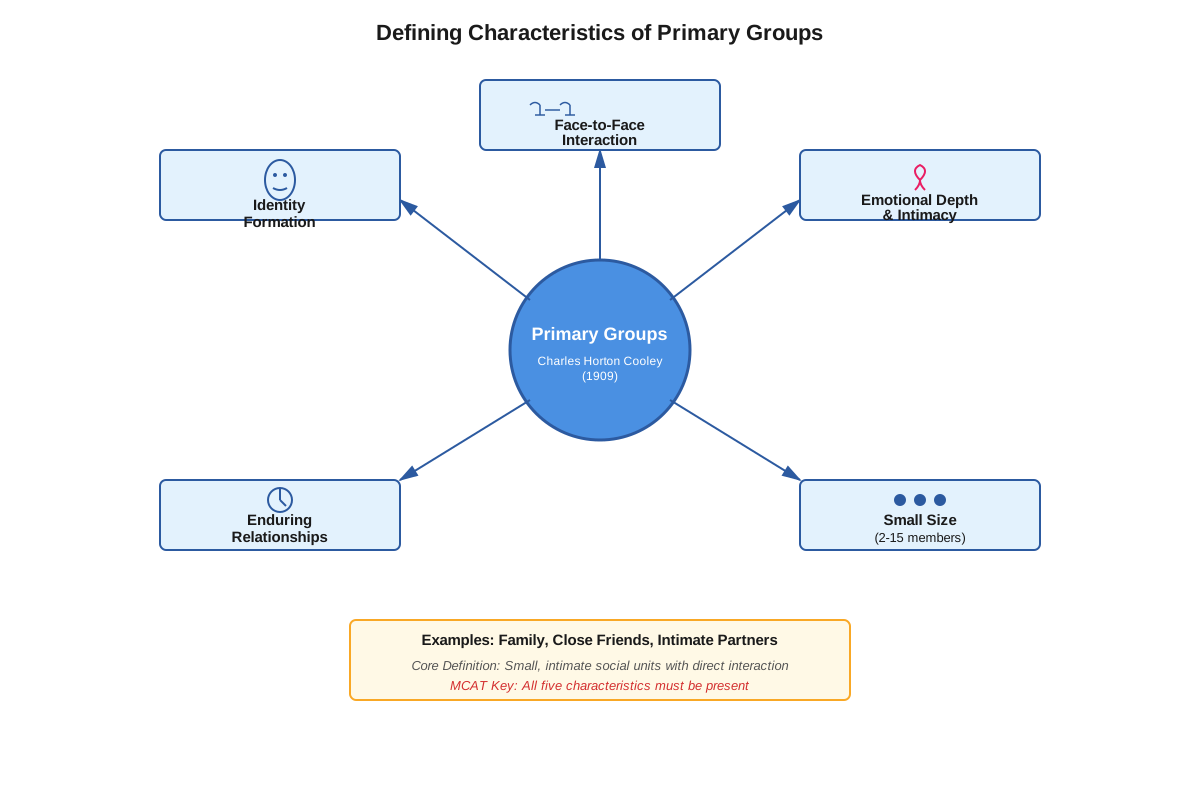
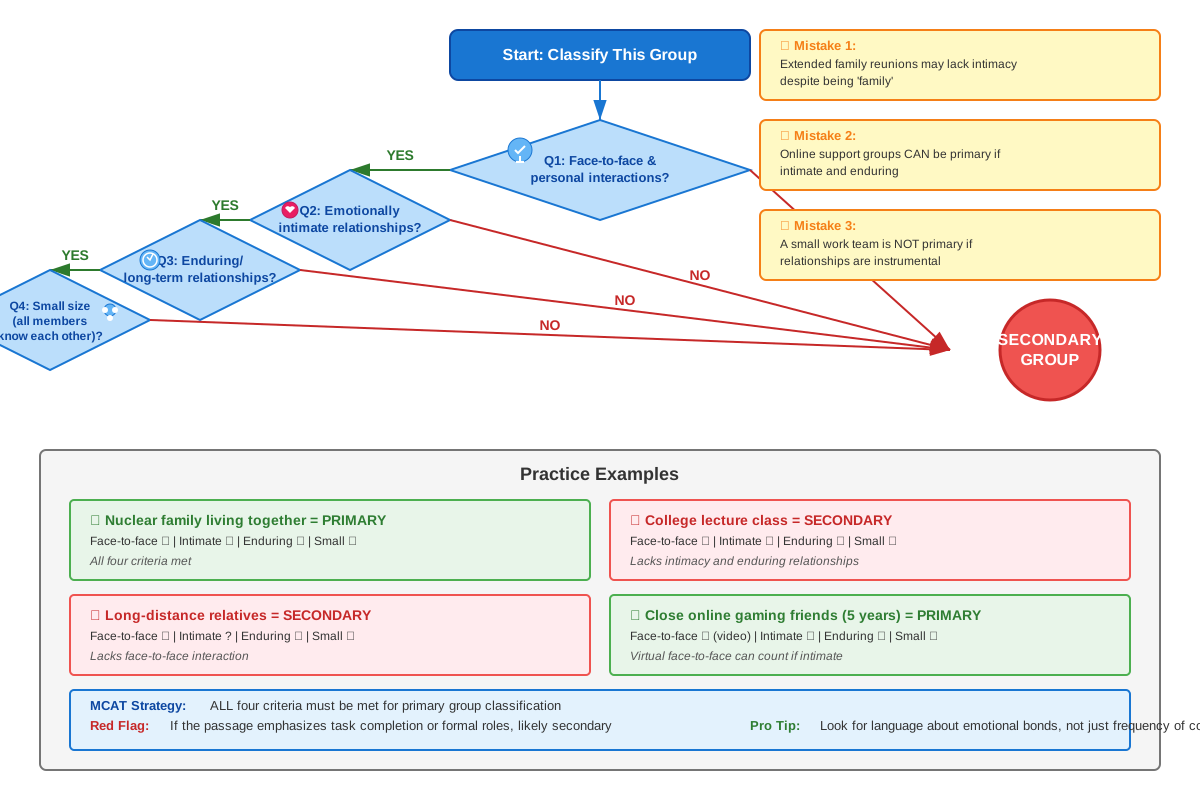
Primary groups represent one of the foundational concepts in Sociology that appears frequently on the MCAT, particularly within questions addressing Social Structure and Institutions. Coined by sociologist Charles Horton Cooley in 1909, primary groups are small, intimate social units characterized by face-to-face interaction, emotional depth, and enduring relationships. These groups—such as families, close friendships, and intimate partnerships—serve as the fundamental building blocks of social organization and play a critical role in shaping individual identity, values, and behavior patterns throughout the lifespan.
Understanding primary groups is essential for Primary groups MCAT success because these concepts frequently appear in passage-based questions that require students to analyze social dynamics, interpret behavioral patterns in clinical contexts, or evaluate how social relationships influence health outcomes. The MCAT Psychological, Social, and Biological Foundations of Behavior section regularly tests students' ability to distinguish between different types of social groups, understand their functions, and apply these concepts to real-world scenarios involving patient care, community health, and social support systems.
Primary groups Sociology connects to broader themes including social identity formation, socialization processes, reference groups, in-groups and out-groups, and the distinction between Gemeinschaft and Gesellschaft societies. Mastery of this topic enables students to understand how micro-level social interactions scale up to create larger social structures and institutions, making it a critical bridge concept between individual psychology and macro-level sociological phenomena tested on the MCAT.
Learning Objectives
- [ ] Define Primary groups using accurate Sociology terminology
- [ ] Explain why Primary groups matters for the MCAT
- [ ] Apply Primary groups to exam-style questions
- [ ] Identify common mistakes related to Primary groups
- [ ] Connect Primary groups to related Sociology concepts
- [ ] Distinguish primary groups from secondary groups across multiple dimensions
- [ ] Analyze how primary groups influence identity formation and socialization
- [ ] Evaluate the role of primary groups in health behaviors and patient outcomes
Prerequisites
- Basic understanding of sociological perspective: Necessary to comprehend how sociologists analyze social interactions and group dynamics systematically
- Familiarity with socialization concepts: Primary groups serve as primary agents of socialization, requiring baseline knowledge of how individuals learn social norms
- Knowledge of social structure fundamentals: Understanding that society is organized into interconnected units helps contextualize where primary groups fit within larger social systems
- Basic group dynamics terminology: Terms like "group," "interaction," and "social relationship" must be understood before exploring specific group types
Why This Topic Matters
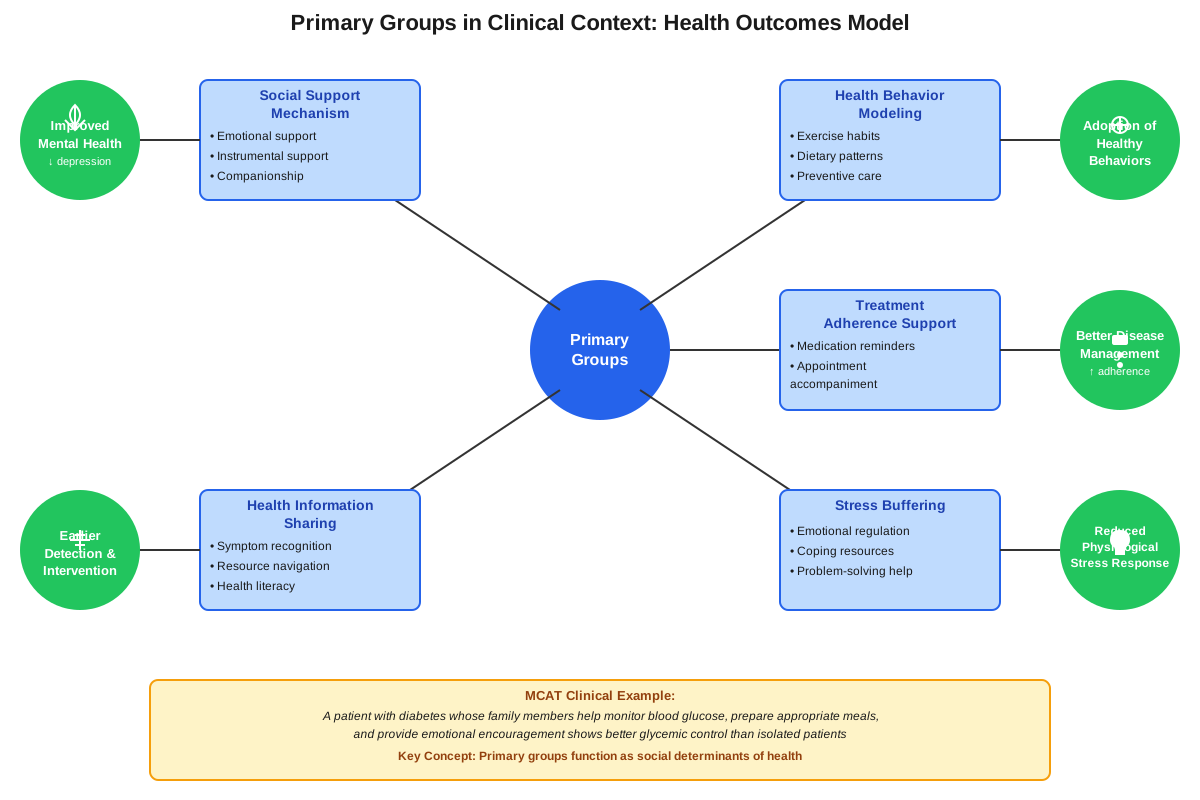
Primary groups hold significant clinical and real-world significance because they directly impact patient health outcomes, treatment adherence, and psychological well-being. Family support systems—a quintessential primary group—influence recovery rates from illness, medication compliance, and mental health stability. Healthcare providers must understand primary group dynamics to deliver culturally competent care, recognize social determinants of health, and develop effective intervention strategies that leverage existing social support networks.
On the MCAT, primary groups appear with high frequency across multiple question formats. Approximately 15-20% of Sociology questions involve group dynamics, with primary groups being the most commonly tested group type. Questions typically appear as:
- Passage-based questions analyzing family dynamics in health behavior studies
- Discrete questions requiring differentiation between primary and secondary groups
- Pseudo-discrete questions embedded in brief clinical vignettes about patient support systems
- Research interpretation questions evaluating studies on social support and health outcomes
Common exam passage contexts include studies examining how family relationships affect chronic disease management, research on peer influence in adolescent health behaviors, investigations of social isolation's impact on elderly populations, and analyses of how intimate relationships influence mental health treatment outcomes. Recognizing primary group characteristics in these passages enables rapid question analysis and accurate answer selection.
Core Concepts
Definition and Characteristics of Primary Groups
Primary groups are small social groups characterized by intimate, face-to-face interaction, emotional closeness, and enduring relationships that significantly influence members' identities and values. Charles Horton Cooley introduced this concept to describe groups where relationships are ends in themselves rather than means to other goals. The defining features include:
- Small size: Typically 2-20 members, allowing for direct interaction among all members
- Face-to-face interaction: Regular, direct personal contact rather than mediated communication
- Emotional depth: Relationships involve genuine affection, loyalty, and personal concern
- Durability: Relationships persist over extended time periods, often years or lifetimes
- Diffuse relationships: Members interact across multiple contexts and roles rather than single-purpose interactions
- Intrinsic value: Membership is valued for its own sake, not for instrumental purposes
Examples of primary groups include nuclear families, extended family units, close friendship circles, romantic partnerships, childhood peer groups, and long-term roommate relationships. These groups serve as the primary context for socialization, identity formation, and emotional support throughout the lifespan.
Primary Groups vs. Secondary Groups
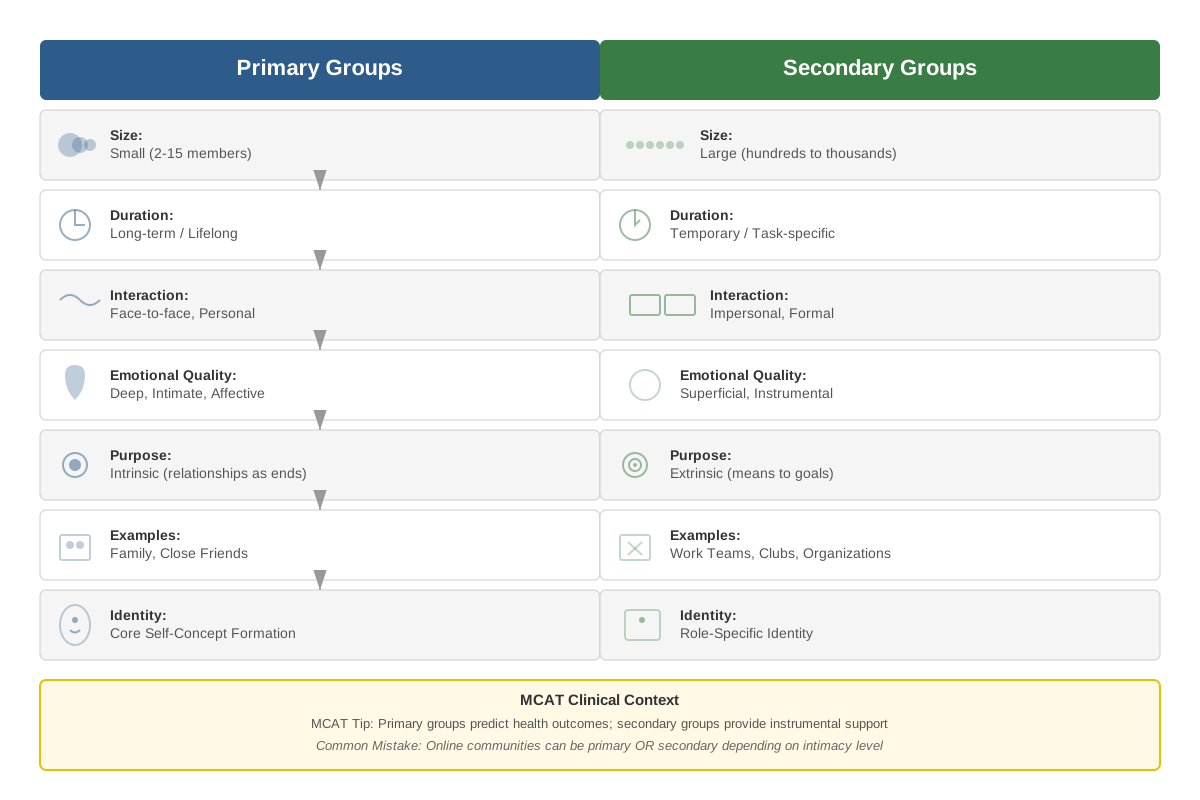
Understanding the distinction between primary and secondary groups is high-yield for the MCAT and frequently tested. The comparison reveals fundamental differences in social organization:
| Dimension | Primary Groups | Secondary Groups |
|---|---|---|
| Size | Small (2-20 members) | Large (can be hundreds or thousands) |
| Interaction type | Face-to-face, personal | Impersonal, often indirect |
| Relationship duration | Long-term, enduring | Temporary, time-limited |
| Emotional quality | Deep, affective bonds | Superficial, task-focused |
| Purpose | Intrinsic (valued for itself) | Instrumental (means to goals) |
| Role specificity | Diffuse, whole-person | Specific, segmented roles |
| Examples | Family, close friends | Workplace teams, professional organizations |
| Communication style | Informal, personal | Formal, professional |
Secondary groups are larger, more impersonal social groups organized around specific goals or activities where relationships are instrumental rather than intrinsic. Examples include workplace departments, professional associations, university classes, and political organizations. While secondary groups can develop primary group characteristics over time (such as close workplace friendships), they fundamentally differ in their organizational purpose and relationship quality.
Functions of Primary Groups
Primary groups serve multiple critical sociological functions that the MCAT frequently tests:
- Socialization: Primary groups, especially families, serve as the primary agents of socialization, teaching language, norms, values, and cultural practices during formative years
- Identity formation: Through the "looking-glass self" process (also coined by Cooley), individuals develop self-concepts based on how they believe primary group members perceive them
- Emotional support: Primary groups provide psychological security, affection, and belonging that buffer against stress and promote mental health
- Social control: Informal sanctions within primary groups regulate behavior more effectively than formal rules in many contexts
- Resource exchange: Members share material resources, information, and assistance based on reciprocity and mutual obligation
- Social integration: Primary groups connect individuals to broader society, preventing isolation and anomie
Primary Groups and the Looking-Glass Self
Charles Horton Cooley's concept of the looking-glass self is intrinsically connected to primary groups and represents a testable MCAT concept. This theory proposes that self-concept develops through a three-stage process:
- Imagination of appearance: We imagine how we appear to others in our primary groups
- Imagination of judgment: We imagine how those others evaluate our appearance and behavior
- Self-feeling: We develop feelings about ourselves (pride, shame, confidence) based on these imagined judgments
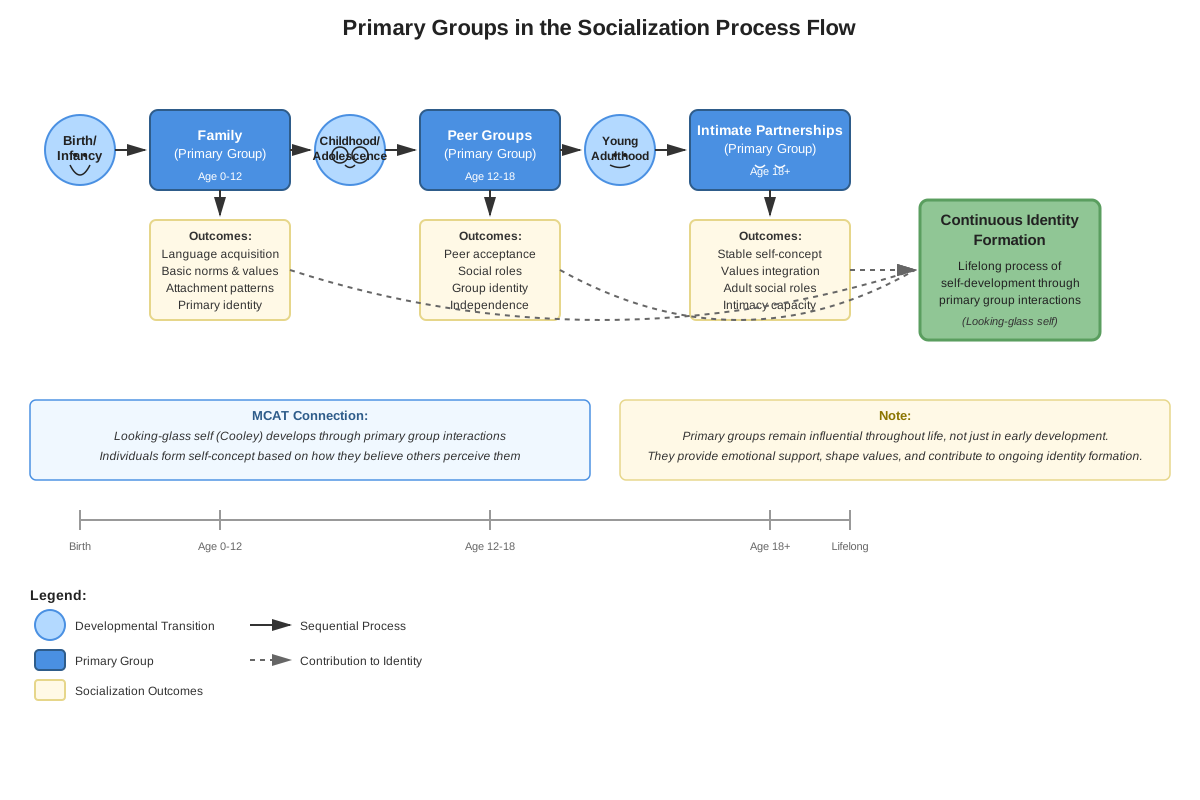
Primary groups are the primary context for looking-glass self development because their members' opinions carry the most emotional weight and influence. A child's self-concept forms largely through parental reactions, while adolescent identity develops significantly through close peer relationships. This process continues throughout life as primary group feedback shapes evolving self-concepts.
Primary Groups in Different Life Stages
The composition and influence of primary groups evolve across the lifespan, a concept that may appear in developmental psychology or sociology passages:
Childhood (0-12 years): Family serves as the dominant primary group, with parents and siblings providing nearly all socialization, emotional support, and identity formation influences. Peer primary groups begin forming in later childhood.
Adolescence (13-18 years): Peer primary groups gain prominence while family remains important. Close friendships become central to identity exploration, and romantic relationships may emerge as new primary groups.
Young adulthood (19-40 years): Romantic partnerships often become central primary groups, potentially leading to new family formation. Close friendships continue, though geographic mobility may challenge maintenance.
Middle adulthood (41-65 years): Established families (spouse, children) typically constitute core primary groups. Long-term friendships provide continuity, and adult children may transition from dependent to peer-like primary group relationships.
Late adulthood (65+ years): Primary groups may contract due to mortality, but remaining relationships often deepen. Grandchildren may become important primary group members, and long-term friendships gain significance.
Primary Groups and Social Support
Social support from primary groups represents a critical health-related concept frequently tested on the MCAT. Research consistently demonstrates that strong primary group connections correlate with:
- Reduced mortality rates across all age groups
- Faster recovery from illness and surgery
- Better management of chronic diseases
- Lower rates of depression and anxiety
- Enhanced immune system functioning
- Greater treatment adherence
Social support from primary groups operates through multiple mechanisms:
- Emotional support: Providing empathy, love, and reassurance
- Instrumental support: Offering tangible assistance like transportation to medical appointments
- Informational support: Sharing health knowledge and advice
- Appraisal support: Helping evaluate situations and make decisions
MCAT passages frequently present research studies examining these relationships, requiring students to identify primary group influences on health outcomes and distinguish them from secondary group or institutional effects.
Concept Relationships
Primary groups connect to numerous sociological concepts tested on the MCAT, forming an interconnected conceptual network:
Primary groups → Socialization: Primary groups serve as the primary agents of socialization, teaching language, norms, and values. This relationship flows bidirectionally, as socialization processes strengthen primary group bonds.
Primary groups → Identity formation: Through looking-glass self processes and social comparison within primary groups, individuals develop self-concepts and social identities. This connects to symbolic interactionism and self-concept theories.
Primary groups ↔ Social support: Primary groups provide the most significant social support, which in turn strengthens primary group bonds through reciprocity and emotional connection.
Primary groups vs. Secondary groups: These represent opposite ends of a continuum of group intimacy and purpose, with some groups exhibiting mixed characteristics.
Primary groups → Reference groups: Primary groups often serve as reference groups (groups used for self-evaluation and attitude formation), though not all reference groups are primary groups.
Primary groups → In-groups: Primary groups typically function as in-groups (groups to which one belongs and feels loyalty), contrasted with out-groups.
Primary groups ← Gemeinschaft societies: Traditional Gemeinschaft societies emphasize primary group relationships, while modern Gesellschaft societies emphasize secondary group relationships.
Primary groups → Social capital: Strong primary group networks generate bonding social capital (resources accessed through close relationships), distinct from bridging social capital from weak ties.
This conceptual map reveals that primary groups serve as a foundational concept connecting micro-level interactions to macro-level social structures, making it essential for comprehensive MCAT preparation.
High-Yield Facts
⭐ Primary groups are characterized by small size, face-to-face interaction, emotional depth, long duration, and intrinsic value of relationships
⭐ Family is the most universal primary group and serves as the primary agent of socialization across all cultures
⭐ Primary groups differ from secondary groups in being smaller, more personal, emotionally deeper, longer-lasting, and valued for themselves rather than instrumental purposes
⭐ Charles Horton Cooley coined the term "primary group" and developed the related concept of the looking-glass self
⭐ Strong primary group connections correlate with better health outcomes, including reduced mortality, faster recovery from illness, and better mental health
- Primary groups provide the context for developing the looking-glass self through imagining how others perceive and judge us
- The composition and relative importance of primary groups change across the lifespan, with family dominant in childhood and peer groups gaining prominence in adolescence
- Primary groups can exist within larger secondary groups (such as close friendships forming within a workplace)
- Social support from primary groups operates through emotional, instrumental, informational, and appraisal support mechanisms
- Primary groups exercise informal social control through emotional bonds and fear of disappointing valued members
- The transition from Gemeinschaft (community-oriented) to Gesellschaft (society-oriented) social organization involves a shift from primary to secondary group dominance
- Primary groups generate bonding social capital through strong ties, while secondary groups generate bridging social capital through weak ties
Quick check — test yourself on Primary groups so far.
Try Flashcards →Common Misconceptions
Misconception: All small groups are primary groups → Correction: Size alone does not define primary groups; a small work team may be a secondary group if relationships are impersonal, task-focused, and temporary. Primary groups require emotional depth, face-to-face interaction, and intrinsic value of relationships.
Misconception: Primary groups are always positive and supportive → Correction: While primary groups typically provide support, they can also be sources of conflict, stress, and negative influence. Dysfunctional families, toxic friendships, and abusive relationships are still primary groups based on their structural characteristics, even when they cause harm.
Misconception: Secondary groups cannot become primary groups → Correction: Over time, secondary group relationships can develop primary group characteristics. Coworkers may become close friends, and professional relationships can evolve into deep personal bonds, though the group may retain some secondary characteristics.
Misconception: Primary groups only exist in traditional or non-Western societies → Correction: Primary groups are universal across all societies and time periods. While modern Gesellschaft societies emphasize secondary groups more than traditional Gemeinschaft societies, primary groups remain fundamental to human social organization everywhere.
Misconception: Online relationships cannot form primary groups → Correction: While Cooley's original concept emphasized face-to-face interaction, contemporary sociology recognizes that deep, enduring, emotionally significant relationships can develop through digital communication, creating primary groups that may never meet physically.
Misconception: Primary groups are the same as in-groups → Correction: While primary groups typically function as in-groups, these are distinct concepts. In-groups are defined by membership and loyalty (versus out-groups), while primary groups are defined by relationship quality and intimacy. A large organization can be an in-group without being a primary group.
Misconception: The nuclear family is the only type of primary group → Correction: Many types of relationships constitute primary groups, including extended families, close friendships, romantic partnerships, long-term roommates, and chosen families. The nuclear family is one common example but not the exclusive form.
Worked Examples
Example 1: Distinguishing Primary and Secondary Groups in a Clinical Context
Vignette: A research study examines social support among elderly patients recovering from hip replacement surgery. The study identifies four types of relationships: (A) spouse or adult children who visit daily and provide emotional support, (B) members of a church congregation who organize meal delivery, (C) physical therapists who provide rehabilitation services, and (D) neighbors who have known the patient for 30+ years and visit regularly.
Question: Which relationships most clearly represent primary groups?
Analysis:
Let's evaluate each relationship type against primary group criteria:
(A) Spouse or adult children:
- Small size: ✓ (immediate family)
- Face-to-face interaction: ✓ (daily visits)
- Emotional depth: ✓ (family bonds)
- Duration: ✓ (lifelong relationships)
- Intrinsic value: ✓ (valued for themselves)
Conclusion: Clear primary group
(B) Church congregation members:
- Small size: ? (depends on how organized)
- Face-to-face interaction: ✓ (but task-focused)
- Emotional depth: ? (may be superficial)
- Duration: ? (may be temporary response)
- Intrinsic value: ✗ (instrumental purpose: meal delivery)
Conclusion: Secondary group with some primary characteristics
(C) Physical therapists:
- Small size: ✓ (individual providers)
- Face-to-face interaction: ✓ (but professional)
- Emotional depth: ✗ (professional boundaries)
- Duration: ✗ (temporary, treatment-limited)
- Intrinsic value: ✗ (instrumental: rehabilitation)
Conclusion: Clear secondary group
(D) Long-term neighbors:
- Small size: ✓ (individual relationships)
- Face-to-face interaction: ✓ (regular visits)
- Emotional depth: ✓ (30+ year relationships)
- Duration: ✓ (decades-long)
- Intrinsic value: ✓ (friendship valued for itself)
Conclusion: Primary group
Answer: Relationships A and D most clearly represent primary groups, as they meet all criteria for intimate, enduring, face-to-face relationships valued for themselves. This example demonstrates how primary groups provide crucial social support in health contexts, a common MCAT theme.
Example 2: Applying Primary Group Concepts to Identity Formation
Vignette: A 16-year-old patient presents with symptoms of depression. During the interview, she reports feeling "worthless" and states, "My parents constantly criticize my grades, and my best friends have been excluding me from their activities. I feel like nobody values me anymore." The psychiatrist notes that the patient's self-esteem appears closely tied to perceived evaluations from significant others.
Question: Which sociological concept best explains the relationship between the patient's social experiences and her self-concept?
Analysis:
This vignette requires connecting primary groups to identity formation theory:
Step 1: Identify the primary groups mentioned:
- Parents (family primary group)
- Best friends (peer primary group)
Step 2: Recognize the process described:
The patient's self-concept ("worthless," "nobody values me") is forming based on how she believes important others perceive her. This matches Cooley's looking-glass self process:
- She imagines how she appears to parents and friends
- She imagines their judgments (criticism, exclusion)
- She develops negative self-feelings (worthlessness, low self-esteem)
Step 3: Connect to primary group theory:
Primary groups have disproportionate influence on identity formation because:
- Emotional bonds make their opinions carry more weight
- Face-to-face interaction provides constant feedback
- Enduring relationships create sustained influence
- Members care deeply about primary group acceptance
Step 4: Consider clinical implications:
Treatment might involve:
- Strengthening positive primary group relationships
- Developing more accurate perceptions of others' judgments
- Building self-concept less dependent on external validation
- Expanding primary group network to include supportive relationships
Answer: The looking-glass self concept best explains this relationship, demonstrating how primary group members' perceived evaluations shape self-concept and emotional well-being. This example illustrates the clinical relevance of primary group theory for understanding mental health, a high-yield MCAT connection.
Exam Strategy
When approaching Primary groups MCAT questions, employ these strategic approaches:
Trigger words indicating primary groups:
- "Family," "close friends," "intimate relationships"
- "Long-term," "enduring," "lifelong"
- "Emotional support," "personal bonds," "deep connections"
- "Face-to-face," "direct interaction," "personal contact"
- "Childhood socialization," "identity formation"
Trigger words indicating secondary groups:
- "Organization," "workplace," "professional"
- "Task-oriented," "goal-focused," "instrumental"
- "Formal," "impersonal," "role-based"
- "Temporary," "time-limited," "specific purpose"
Question approach process:
- Identify the group type: Quickly assess whether the passage or question describes primary or secondary group characteristics
- Check all criteria: Don't rely on a single feature; verify that multiple primary group characteristics are present
- Consider context: Evaluate whether relationships are valued intrinsically or instrumentally
- Watch for evolution: Some questions test understanding that groups can transition between types
Process-of-elimination strategies:
- Eliminate answers that confuse primary and secondary groups
- Eliminate answers that treat all small groups as primary groups
- Eliminate answers that ignore the emotional quality of relationships
- Eliminate answers that focus solely on group size while ignoring other characteristics
Time allocation:
- Primary group identification questions: 45-60 seconds (straightforward application)
- Primary group function questions: 60-90 seconds (requires connecting to outcomes)
- Passage-based primary group questions: 90-120 seconds (requires passage integration)
Common question formats:
- "Which of the following best represents a primary group?"
- "The patient's family most likely influences health behavior through which mechanism?"
- "The study findings suggest that primary groups affect outcomes by..."
- "Which characteristic distinguishes the described relationship as a primary group?"
Exam Tip: When a question presents multiple social relationships, create a quick mental checklist of primary group criteria (small, face-to-face, emotional, enduring, intrinsic) and evaluate each relationship systematically rather than relying on intuition alone.
Memory Techniques
FIENDS Mnemonic for primary group characteristics:
- Face-to-face interaction
- Intrinsic value (valued for itself)
- Emotional depth and intimacy
- Narrow size (small groups)
- Durable relationships (long-lasting)
- Socialization function
"Primary = Personal" Association: Remember that PRIMARY groups involve PERSONAL relationships. Both words start with "P" and emphasize the intimate, individual nature of these connections.
Cooley's Two Concepts Linkage: Charles Horton COOLEY created both "primary groups" and "looking-glass self." Remember them together: "Cooley's primary groups provide the mirror for the looking-glass self."
Family First Visualization: Picture concentric circles with family at the center (most primary), close friends in the next ring, then acquaintances, then formal organizations moving outward. This visual represents the continuum from primary to secondary groups.
Contrast Table Memory: Create a mental table with PRIMARY on one side and SECONDARY on the other, then populate it with opposite characteristics:
- PRIMARY: Small / SECONDARY: Large
- PRIMARY: Personal / SECONDARY: Impersonal
- PRIMARY: Permanent / SECONDARY: Temporary
- PRIMARY: Emotional / SECONDARY: Rational
Life Stage Story: Create a narrative of primary groups across life: "Baby bonds with family, child plays with close friends, teen trusts peer group, adult loves spouse, elder cherishes lifelong friends." This story helps remember how primary groups evolve.
Summary
Primary groups represent small, intimate social units characterized by face-to-face interaction, emotional depth, enduring relationships, and intrinsic value that fundamentally shape individual identity, values, and behavior. Distinguished from secondary groups by their personal rather than impersonal nature, primary groups—including families, close friendships, and romantic partnerships—serve critical functions in socialization, identity formation through the looking-glass self process, emotional support provision, and social integration. These groups evolve across the lifespan but remain universally important across all cultures and societies. For the MCAT, understanding primary groups enables analysis of social support's impact on health outcomes, interpretation of socialization processes, and differentiation between types of social relationships in clinical and research contexts. Mastery requires recognizing all defining characteristics rather than relying on single features like size alone, understanding the bidirectional relationship between primary groups and individual development, and applying these concepts to passage-based questions involving family dynamics, peer influence, and social determinants of health.
Key Takeaways
- Primary groups are defined by six key characteristics: small size, face-to-face interaction, emotional depth, long duration, diffuse relationships, and intrinsic value—all must be present for true primary group classification
- Charles Horton Cooley introduced both the primary group concept and the related looking-glass self theory, which explains how primary group members' perceived judgments shape individual self-concept and identity
- Primary groups differ fundamentally from secondary groups across multiple dimensions, with primary groups being personal, emotional, and valued for themselves while secondary groups are impersonal, task-focused, and instrumentally valued
- Strong primary group connections consistently correlate with better health outcomes, including reduced mortality, faster illness recovery, and improved mental health—making this a high-yield MCAT connection
- Primary groups serve as the primary agents of socialization, teaching language, norms, values, and cultural practices while providing emotional support and social integration throughout the lifespan
- The composition and relative importance of primary groups evolve across developmental stages, with family dominant in childhood, peers gaining prominence in adolescence, and romantic partnerships becoming central in adulthood
- MCAT questions frequently test the ability to distinguish primary from secondary groups in clinical contexts, understand primary groups' influence on health behaviors, and recognize their role in identity formation and social support provision
Related Topics
Secondary Groups: Understanding secondary groups—large, impersonal, task-oriented social groups—provides essential contrast to primary groups and completes the fundamental group typology tested on the MCAT.
Reference Groups: Reference groups (groups used for self-evaluation and attitude formation) often overlap with but are distinct from primary groups, representing another dimension of social influence.
In-groups and Out-groups: These concepts describe group membership and loyalty dynamics that frequently intersect with primary group membership but operate on different principles.
Social Support and Health: Deeper exploration of mechanisms linking social relationships to health outcomes builds directly on primary group foundations and represents high-yield MCAT content.
Socialization and Agents of Socialization: Primary groups serve as the most important agents of socialization, making this a natural progression for understanding how individuals learn social norms and values.
Symbolic Interactionism: This theoretical perspective, which includes the looking-glass self, provides the broader framework for understanding how primary group interactions shape identity and meaning-making.
Gemeinschaft and Gesellschaft: These concepts describe traditional versus modern social organization and the relative emphasis on primary versus secondary group relationships in different societies.
Practice CTA
Now that you've mastered the foundational concepts of primary groups, it's time to solidify your understanding through active practice. Complete the accompanying practice questions to test your ability to identify primary groups in clinical contexts, distinguish them from secondary groups, and apply these concepts to MCAT-style passages. Use the flashcards to reinforce key definitions, characteristics, and high-yield facts until you can recall them automatically. Remember: understanding primary groups isn't just about memorizing definitions—it's about recognizing how these intimate social relationships shape health, identity, and behavior in the real-world scenarios you'll encounter on exam day. Your investment in mastering this high-yield topic will pay dividends across multiple Sociology questions. You've got this!
Sign up free to keep reading
Create a free AnvayaPrep account to finish this MCAT guide on Primary groups — plus flashcards and practice questions.