Overview
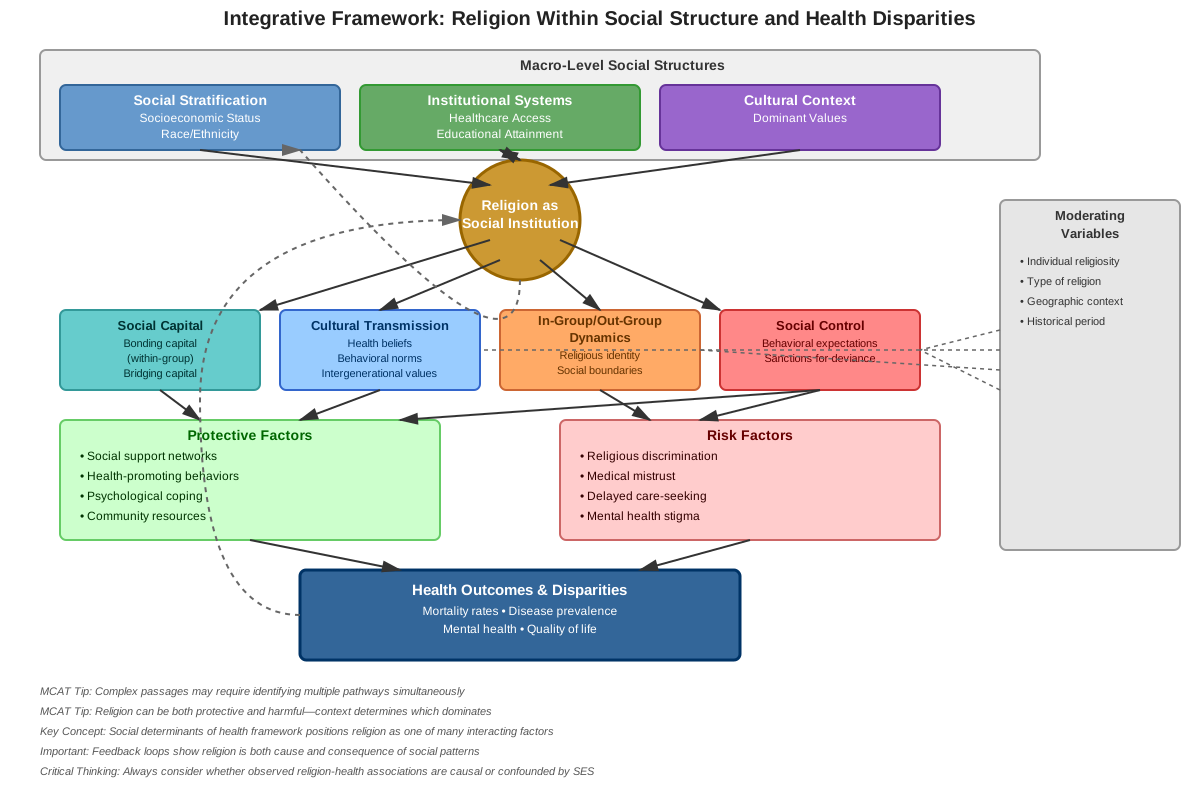
Religion is a fundamental component of human social organization and represents one of the most enduring and influential institutions examined in Sociology. For the MCAT, understanding religion extends beyond personal belief systems to encompass its role as a social structure that shapes behavior, creates community bonds, establishes moral frameworks, and influences health outcomes. Religion functions as both a cultural system and a social institution, providing meaning, identity, and cohesion to groups while simultaneously creating boundaries and potential sources of conflict. The sociological study of religion examines how religious beliefs and practices emerge, persist, change, and impact individuals and societies across diverse contexts.
The MCAT Psychological, Social, and Biological Foundations of Behavior section frequently tests religion within the broader framework of Social Structure and Institutions. Test-makers expect students to analyze how religious institutions interact with other social systems (healthcare, education, family), understand the functions religion serves in society, and recognize how religious identity influences health behaviors, medical decision-making, and patient-provider interactions. Questions may present clinical vignettes where religious beliefs affect treatment adherence, organ donation decisions, end-of-life care preferences, or mental health stigma. Understanding religion from a sociological perspective—rather than a theological one—is essential for analyzing these scenarios objectively and selecting evidence-based answers.
Religion connects intimately with numerous other sociology concepts tested on the MCAT, including social identity theory, in-group/out-group dynamics, social capital, cultural transmission, socialization processes, and social stratification. Religious institutions often serve as primary agents of socialization, transmit cultural values across generations, and create networks that provide social support. Additionally, religion intersects with concepts of deviance, social control, and collective behavior. Mastering the sociological perspective on religion enables students to analyze complex passages involving cultural competence, health disparities, community health interventions, and the social determinants of health—all high-yield topics for exam success.
Learning Objectives
- [ ] Define Religion using accurate Sociology terminology
- [ ] Explain why Religion matters for the MCAT
- [ ] Apply Religion to exam-style questions
- [ ] Identify common mistakes related to Religion
- [ ] Connect Religion to related Sociology concepts
- [ ] Distinguish between the major sociological theories of religion (functionalist, conflict, symbolic interactionist perspectives)
- [ ] Analyze how religious identity influences health behaviors and medical decision-making
- [ ] Evaluate the relationship between religiosity, social support, and health outcomes
- [ ] Compare and contrast different types of religious organizations (churches, sects, cults, denominations)
Prerequisites
- Basic understanding of social institutions: Religion is one of several major social institutions (alongside family, education, government, economy) that organize society and fulfill essential functions
- Familiarity with sociological perspectives: The three major theoretical frameworks (functionalism, conflict theory, symbolic interactionism) provide different lenses for analyzing religion's role in society
- Concept of culture: Religion represents a cultural system that includes beliefs, values, norms, symbols, and rituals shared by a group
- Social identity and group dynamics: Understanding in-group/out-group distinctions helps explain how religious affiliation creates social boundaries and solidarity
Why This Topic Matters
Clinical and Real-World Significance
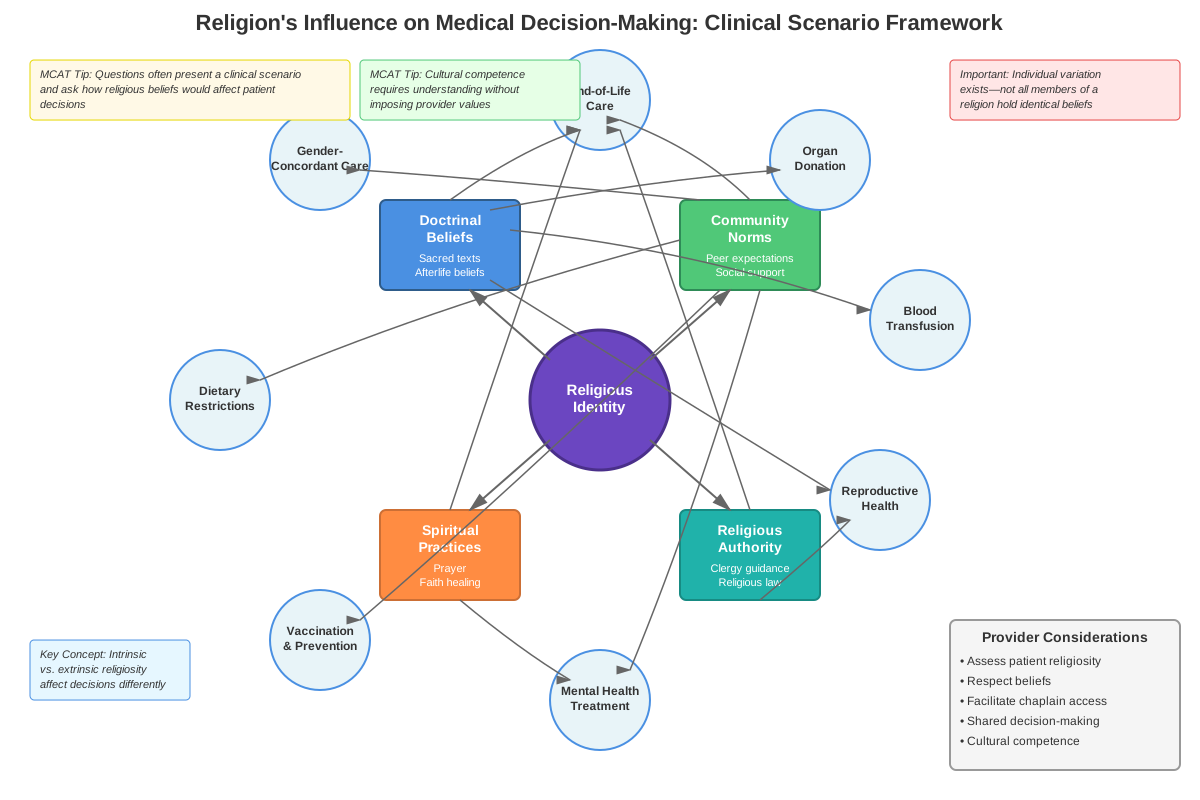
Religion profoundly influences health-related behaviors, medical decision-making, and patient outcomes across diverse populations. Healthcare providers regularly encounter situations where patients' religious beliefs shape their preferences regarding blood transfusions, organ donation, contraception, abortion, end-of-life care, autopsy, and mental health treatment. Religious communities often provide crucial social support networks that buffer against stress, reduce isolation, and promote health-protective behaviors. Understanding religion's sociological dimensions enables future physicians to practice culturally competent care, respect patient autonomy, navigate ethical dilemmas, and leverage religious communities as partners in public health interventions.
Religious institutions frequently serve as trusted sources of health information within communities, particularly among minority and immigrant populations. Faith leaders may influence health behaviors more effectively than medical professionals in certain contexts. Additionally, religious beliefs can create barriers to care (stigma around mental illness, mistrust of medical establishment) or facilitate positive outcomes (meaning-making during illness, hope, adherence to health-promoting religious codes). The intersection of religion and health represents a critical domain for reducing health disparities and improving population health outcomes.
Exam Statistics and Question Types
Religion appears in approximately 5-8% of MCAT Psychological, Social, and Biological Foundations questions, making it a moderate-to-high-yield topic. Questions typically appear in two formats: (1) passage-based questions presenting research studies or clinical vignettes where religious variables influence outcomes, and (2) discrete questions testing theoretical knowledge about religion's social functions or organizational types. The AAMC frequently integrates religion into passages about health disparities, community interventions, patient-provider communication, and social determinants of health.
Common question stems include: "According to functionalist theory, which of the following best explains the role of religion in this community?" or "A patient refuses a recommended treatment based on religious beliefs. This scenario best illustrates which concept?" or "The study findings showing reduced mortality among religiously active individuals can best be explained by which mechanism?" Test-makers favor questions requiring students to apply sociological theories to novel scenarios rather than simply recall definitions, emphasizing the importance of understanding religion's multifaceted social functions.
Core Concepts
Definition of Religion
Religion is a unified system of beliefs, practices, and values centered on questions of ultimate meaning, often involving the sacred or transcendent, that binds individuals into a moral community. From a sociological perspective, religion encompasses three essential components: (1) a set of beliefs about the nature of reality, existence, and the supernatural; (2) practices and rituals that express and reinforce these beliefs; and (3) a moral community of adherents who share these beliefs and practices. This definition, influenced by sociologist Émile Durkheim, emphasizes religion's social dimensions rather than focusing on specific theological content or the existence of deities.
The sociological study of religion distinguishes between religiosity (the intensity of religious commitment and practice) and spirituality (personal quest for meaning and connection to the transcendent, which may exist outside organized religion). For MCAT purposes, understanding that religion functions as a social institution—regardless of the truth claims of any particular faith—is essential. The exam tests how religion operates in society, not theological doctrine.
Sociological Theories of Religion
Functionalist Perspective
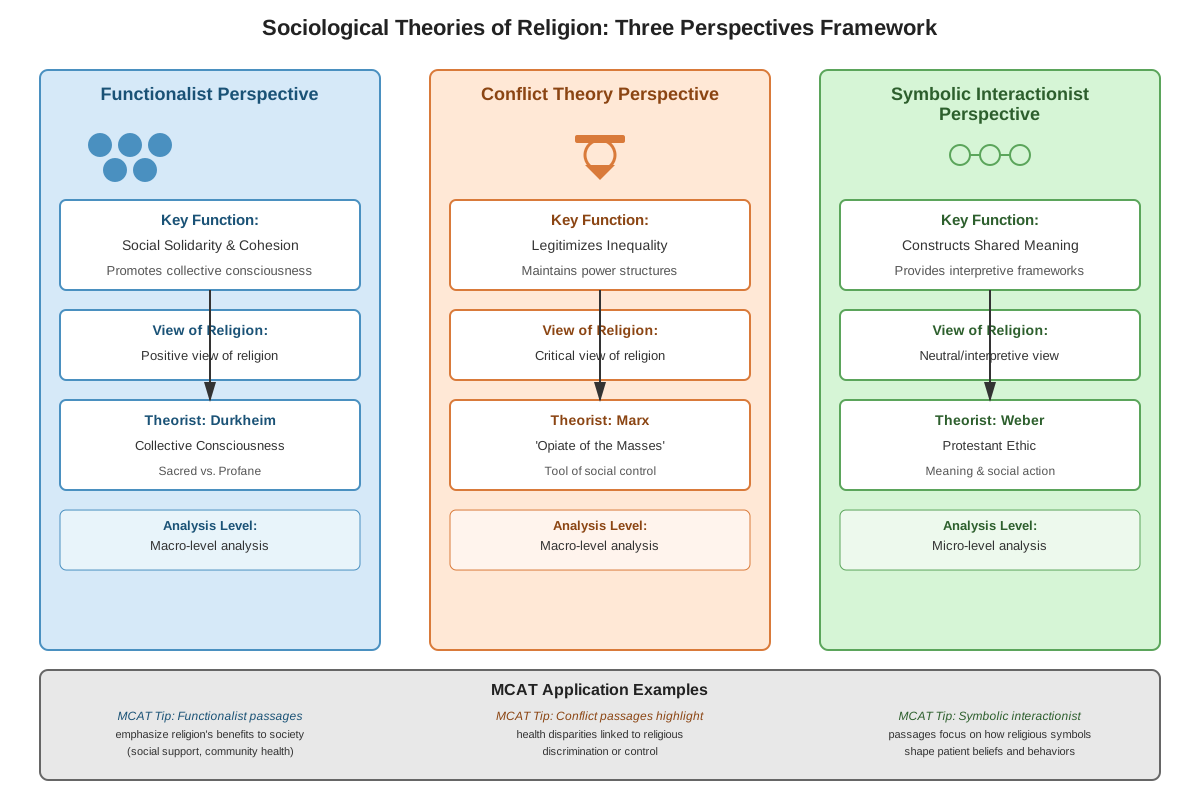
The functionalist perspective views religion as serving essential functions that maintain social stability and cohesion. Émile Durkheim argued that religion's primary function is creating social solidarity by uniting individuals around shared beliefs and collective rituals. Religious ceremonies bring community members together, reinforce group identity, and strengthen social bonds. Beyond solidarity, functionalists identify several key functions religion serves:
- Social cohesion and integration: Shared beliefs and practices create a sense of belonging and collective identity
- Social control: Religious moral codes regulate behavior and maintain social order
- Meaning and purpose: Religion provides explanations for suffering, death, and existential questions
- Emotional support: Religious communities offer comfort during crises and life transitions
- Social change facilitation: Religion can motivate social movements and justify reform efforts
For the MCAT, recognize that functionalist questions emphasize religion's positive contributions to social stability, community health, and individual well-being. However, this perspective has limitations—it may overlook religion's role in perpetuating inequality or generating conflict.
Conflict Perspective
The conflict perspective, rooted in Karl Marx's analysis, views religion as a tool used by dominant groups to maintain power and justify social inequality. Marx famously described religion as "the opium of the people," suggesting it pacifies the oppressed by promising rewards in an afterlife while discouraging challenges to current power structures. Conflict theorists emphasize how religious institutions:
- Legitimize existing social hierarchies: Religious doctrines may justify wealth inequality, gender roles, or racial hierarchies as divinely ordained
- Distract from material conditions: Focus on spiritual concerns diverts attention from economic exploitation
- Reinforce patriarchy: Many religious traditions maintain male authority and restrict women's roles
- Create intergroup conflict: Religious differences can fuel discrimination, violence, and war
Max Weber offered a more nuanced conflict perspective, arguing that religion could also inspire social change. His analysis of the Protestant work ethic demonstrated how Calvinist beliefs about predestination and worldly success contributed to capitalism's development. For MCAT questions, conflict-oriented answers emphasize power dynamics, inequality, and religion's potential to both maintain and challenge existing social structures.
Symbolic Interactionist Perspective
The symbolic interactionist perspective focuses on the micro-level meanings, symbols, and interactions that constitute religious experience. This approach examines how individuals construct religious identity through social interactions, interpret religious symbols, and negotiate religious meanings in everyday life. Key concepts include:
- Religious symbols and rituals: Objects, gestures, and ceremonies carry shared meanings that communicate religious identity and values
- Religious socialization: Individuals learn religious beliefs and practices through interaction with family, religious communities, and institutions
- Meaning-making: People actively interpret religious teachings and apply them to personal circumstances
- Religious identity construction: Religious affiliation becomes part of self-concept through ongoing social interactions
For the MCAT, symbolic interactionist questions often involve scenarios where individuals interpret religious teachings differently, where religious symbols influence behavior, or where religious identity is negotiated in multicultural contexts. This perspective helps explain variation in religious practice even within the same tradition.
Types of Religious Organizations
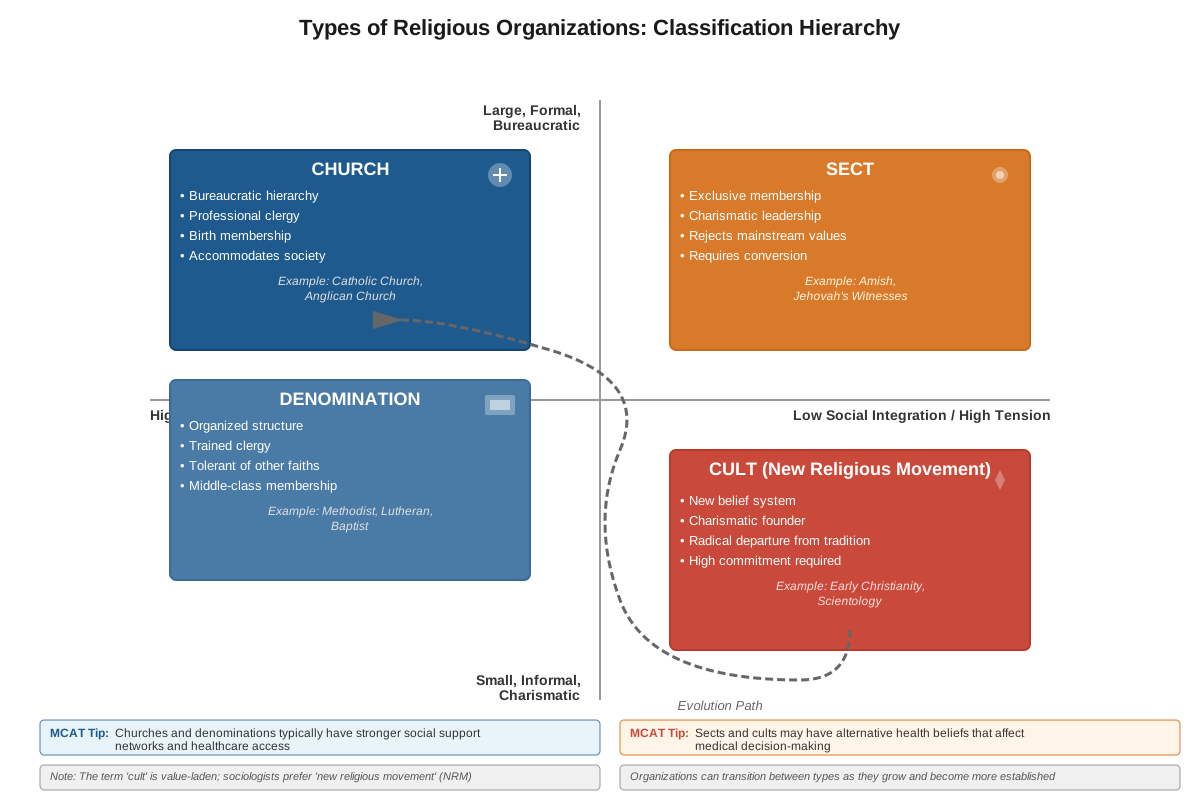
Sociologists classify religious organizations along a continuum based on their relationship to society and their organizational characteristics:
| Type | Relationship to Society | Membership | Structure | Examples |
|---|---|---|---|---|
| Church | Accepts and integrates with society | Large, inclusive, often birthright | Formal hierarchy, bureaucratic | Catholic Church, Anglican Church |
| Denomination | Accepts society but maintains distinct identity | Moderate size, voluntary | Some formal structure | Methodist, Presbyterian, Reform Judaism |
| Sect | Rejects or withdraws from society | Small, exclusive, requires commitment | Informal, charismatic leadership | Amish, Jehovah's Witnesses |
| Cult/New Religious Movement | Offers alternative to mainstream religion | Small, centered on new teachings | Charismatic leader, innovative practices | Early Christianity, Scientology |
Churches represent established, mainstream religious organizations that accommodate societal values and maintain formal institutional structures. They typically have professional clergy, elaborate rituals, and intergenerational membership. Denominations share many church characteristics but represent distinct branches within a religious tradition, often formed through historical splits.
Sects emerge as breakaway groups that reject what they perceive as corruption or compromise in established churches. They emphasize purity, strict adherence to doctrine, and separation from secular society. Sects often attract members experiencing economic or social marginalization. Over time, successful sects may evolve into denominations as they become more established and accommodating.
Cults or new religious movements (the preferred sociological term) represent innovative religious groups centered on new revelations or charismatic leaders. The term "cult" carries negative connotations in popular usage, but sociologically it simply describes a religious organization offering novel teachings that diverge significantly from mainstream traditions. For MCAT purposes, understand that these organizational types represent ideal types—real religious groups may display characteristics of multiple categories.
Secularization and Religious Change
Secularization refers to the declining influence of religion in public life and social institutions. Secularization theory suggests that as societies modernize, become more educated, and develop scientific explanations for natural phenomena, religious authority diminishes. Evidence for secularization includes declining religious attendance in many developed nations, separation of church and state, and reduced religious influence over education, law, and politics.
However, secularization is not universal or linear. The United States displays high religiosity despite modernization, and religious revivals occur globally. Some sociologists argue for religious transformation rather than decline—religion persists but changes form, becoming more individualized, privatized, and diverse. The rise of spirituality outside organized religion, religious pluralism, and fundamentalist movements all suggest complex patterns of religious change rather than simple decline.
Religion and Social Capital
Religious communities generate social capital—networks, norms, and trust that facilitate cooperation and mutual benefit. Religious congregations provide:
- Bonding social capital: Strong ties within religious communities create support networks, shared identity, and mutual assistance
- Bridging social capital: Religious organizations can connect diverse individuals and facilitate cooperation across social boundaries
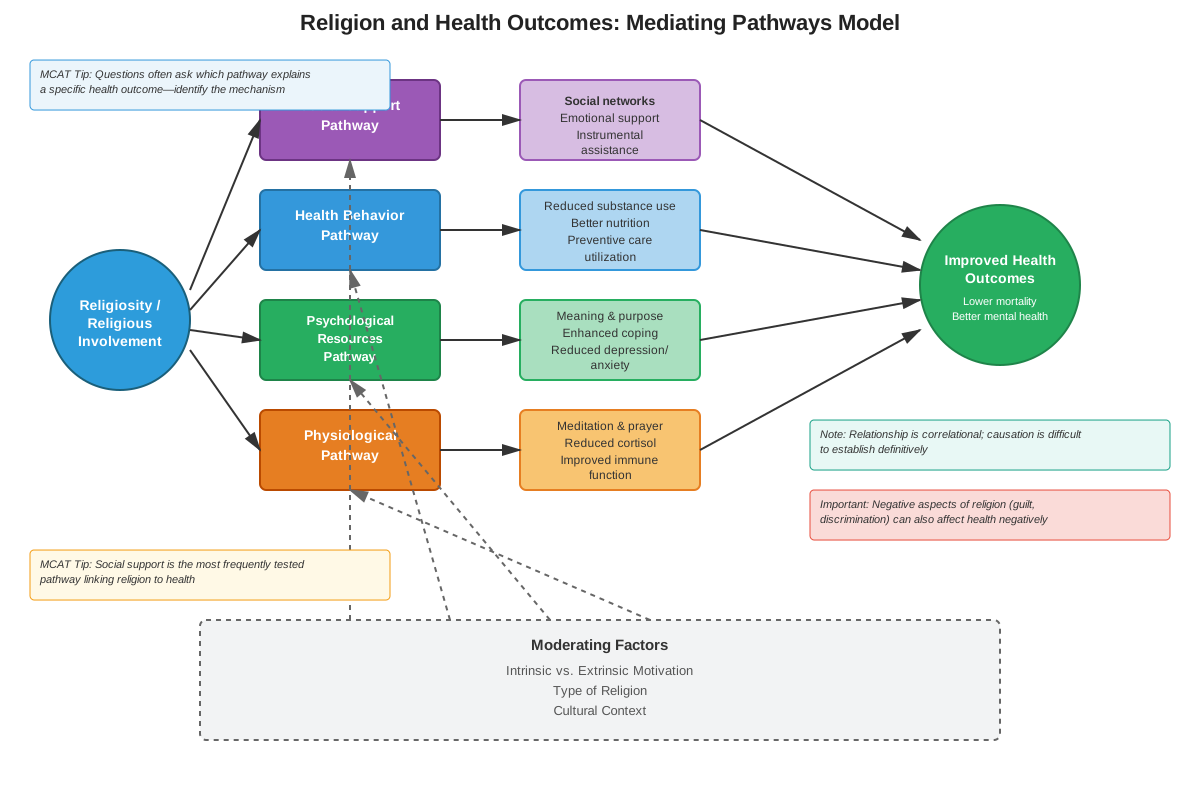
- Health-protective effects: Social support from religious communities correlates with better mental health, lower mortality, and healthier behaviors
The relationship between religiosity and health outcomes represents a high-yield MCAT topic. Research consistently shows associations between religious involvement and positive health indicators, explained by mechanisms including social support, health-promoting behaviors (reduced substance use), stress buffering, and sense of meaning and purpose.
Concept Relationships
Religion as a social institution connects to multiple sociological concepts tested on the MCAT. Religion → Social Identity: Religious affiliation becomes a core component of social identity, creating in-group solidarity and out-group distinctions. This connection explains both the social support benefits of religious communities and potential sources of prejudice and discrimination.
Religion → Socialization: Religious institutions serve as primary agents of socialization, transmitting values, norms, and worldviews across generations. Family religious practices, religious education, and participation in religious communities shape individual beliefs, moral frameworks, and behaviors from childhood through adulthood.
Religion → Social Stratification: Religious affiliation correlates with socioeconomic status, educational attainment, and social mobility. Some religious groups emphasize education and achievement (contributing to upward mobility), while others may reinforce existing class positions. Religious institutions can either challenge or legitimize social inequality.
Religion → Culture: Religion represents a cultural system encompassing beliefs, values, symbols, and practices. Religious culture influences everything from dietary practices to gender roles to attitudes toward science and medicine. Understanding religion as culture helps explain health behavior variations across religious groups.
Religion → Social Movements: Religious beliefs and institutions frequently motivate social movements, from the Civil Rights Movement (drawing on Black church traditions) to contemporary movements around abortion, LGBTQ+ rights, and environmental justice. Religion provides moral frameworks, organizational resources, and mobilizing narratives for collective action.
Religion → Health and Medicine: Religious beliefs influence medical decision-making, treatment adherence, end-of-life preferences, and health behaviors. Religious communities affect health through social support, behavioral norms, and meaning-making during illness. This intersection represents a particularly high-yield area for MCAT passages.
Quick check — test yourself on Religion so far.
Try Flashcards →High-Yield Facts
⭐ Religion is defined sociologically as a unified system of beliefs, practices, and values centered on the sacred that binds individuals into a moral community, regardless of specific theological content.
⭐ Functionalist theory emphasizes religion's role in creating social cohesion, providing meaning, offering emotional support, and maintaining social control through shared moral codes.
⭐ Conflict theory views religion as a tool that can legitimize social inequality and maintain power structures, though it can also inspire social change movements.
⭐ Religious involvement correlates with positive health outcomes through mechanisms including social support, health-protective behaviors, stress buffering, and enhanced sense of meaning and purpose.
⭐ Churches are large, established religious organizations that integrate with society, while sects are smaller groups that reject mainstream society and emphasize strict adherence to doctrine.
- Symbolic interactionism focuses on how individuals construct religious meaning through symbols, rituals, and social interactions at the micro level.
- Denominations represent distinct branches within religious traditions that accept society while maintaining separate identities and voluntary membership.
- Secularization refers to declining religious influence in public institutions, though this process is neither universal nor linear across societies.
- Religious communities generate social capital through networks of trust, reciprocity, and mutual support that facilitate collective action and individual well-being.
- Religious identity intersects with other social identities (race, ethnicity, class, gender) to shape experiences of privilege, discrimination, and health outcomes.
- Religious socialization occurs primarily through family, religious education, and participation in religious communities, transmitting beliefs and practices across generations.
- New religious movements (cults) represent innovative religious groups centered on novel teachings or charismatic leaders that diverge from mainstream traditions.
Common Misconceptions
Misconception: Religion is declining everywhere due to modernization and scientific advancement.
Correction: Secularization is not universal. While religious authority has declined in some Western European nations, religiosity remains high in the United States and is growing in many parts of the world. Religious change is more complex than simple decline, involving transformation, diversification, and periodic revivals.
Misconception: The sociological study of religion evaluates the truth or validity of religious beliefs.
Correction: Sociology examines religion as a social phenomenon—how it functions in society, influences behavior, and shapes social structures—without making claims about theological truth. The MCAT tests understanding of religion's social functions, not religious doctrine or the existence of the divine.
Misconception: Conflict theory views religion as entirely negative and oppressive.
Correction: While conflict theory emphasizes how religion can legitimize inequality and maintain power structures, it also recognizes religion's potential to inspire social change and challenge injustice. Max Weber's work on the Protestant ethic and analyses of liberation theology demonstrate religion's complex relationship with social change.
Misconception: All religious people within the same tradition believe and practice identically.
Correction: Significant variation exists within religious traditions based on denomination, geographic location, individual interpretation, and degree of religiosity. Symbolic interactionism highlights how individuals actively construct religious meaning and identity through social interactions, leading to diverse expressions even within the same faith.
Misconception: Spirituality and religion are the same thing.
Correction: While related, spirituality refers to individual quests for meaning and connection to the transcendent that may exist outside organized religion, whereas religion involves participation in institutionalized systems of beliefs, practices, and communities. People can be spiritual without being religious, or religious without emphasizing personal spirituality.
Misconception: Religious effects on health are purely psychological or placebo effects.
Correction: While psychological mechanisms (hope, meaning-making) contribute to religion's health effects, social mechanisms are equally important. Religious communities provide tangible social support, practical assistance, health information, and behavioral norms that directly influence health outcomes through social rather than purely psychological pathways.
Worked Examples
Example 1: Functionalist Analysis of Religious Community Health Program
Vignette: A study examines a faith-based health initiative in an urban neighborhood with limited healthcare access. The program, organized through local churches, provides health screenings, nutrition education, and exercise classes. Researchers find that program participants show improved health outcomes and report feeling more connected to their community. Which sociological perspective best explains these findings?
Analysis:
Step 1: Identify the key elements—religious institutions organizing health interventions, improved health outcomes, and increased community connection.
Step 2: Consider each theoretical perspective:
- Functionalist: Would emphasize religion's positive functions including social cohesion, community integration, and collective well-being
- Conflict: Would focus on power dynamics, inequality, or how religion might maintain existing structures
- Symbolic interactionist: Would examine individual meanings, symbols, and micro-level interactions
Step 3: Match findings to theory. The improved health outcomes and enhanced community connection align with functionalist emphasis on religion's integrative functions and contribution to social solidarity.
Step 4: Recognize that religious institutions are serving multiple functions: providing practical health services (manifest function), creating social bonds (latent function), and strengthening community cohesion.
Answer: The functionalist perspective best explains these findings because it emphasizes religion's role in creating social cohesion, integrating community members, and contributing to collective well-being. The faith-based program demonstrates how religious institutions can serve positive social functions by addressing community needs and strengthening social bonds.
Connection to Learning Objectives: This example demonstrates applying sociological theories to analyze religion's role in health outcomes, connecting religion to health behaviors, and distinguishing between theoretical perspectives.
Example 2: Religious Identity and Medical Decision-Making
Vignette: A physician recommends a blood transfusion for a patient experiencing severe anemia following surgery. The patient, a Jehovah's Witness, refuses the transfusion based on religious beliefs that prohibit receiving blood products. The patient requests alternative treatments. The physician is frustrated, believing the transfusion is medically necessary. From a sociological perspective, this scenario best illustrates which concept?
Analysis:
Step 1: Identify the core issue—conflict between medical recommendations and religious beliefs affecting treatment decisions.
Step 2: Consider relevant sociological concepts:
- Religion as a social institution that shapes values and behaviors
- Religious identity influencing decision-making
- Potential conflict between religious and medical authority
- Cultural competence in healthcare
Step 3: Recognize that religious beliefs are not merely individual preferences but reflect deeply held values rooted in religious community membership and identity. The patient's decision reflects religious socialization and commitment to religious norms.
Step 4: Consider the physician's response. Frustration may stem from not recognizing religion's powerful influence on behavior or viewing religious beliefs as irrational rather than understanding them as socially constructed values.
Step 5: Identify the broader sociological principle: Religious identity shapes health behaviors and medical decision-making, requiring healthcare providers to practice cultural competence and respect patient autonomy while navigating ethical dilemmas.
Answer: This scenario illustrates how religious identity and beliefs influence medical decision-making and health behaviors. It demonstrates the need for cultural competence in healthcare, recognition of religion as a powerful social force shaping values and choices, and the potential for conflict between religious and medical authority systems.
Connection to Learning Objectives: This example applies religion concepts to clinical scenarios, demonstrates why religion matters for the MCAT, identifies how religious identity influences health decisions, and connects religion to healthcare delivery and patient-provider communication.
Exam Strategy
Approaching MCAT Questions on Religion
When encountering religion-related questions, first determine whether the question asks about (1) theoretical perspectives on religion, (2) types of religious organizations, (3) religion's relationship to health outcomes, or (4) religious identity and behavior. Read carefully to distinguish between questions requiring theoretical analysis versus application to specific scenarios.
For theory-based questions, identify trigger words: "social cohesion," "solidarity," and "integration" signal functionalist answers; "inequality," "power," and "legitimize" suggest conflict theory; "meaning," "symbols," and "identity construction" indicate symbolic interactionism. Remember that the same religious phenomenon can be analyzed from multiple perspectives—choose the perspective that best matches the question's emphasis.
Trigger Words and Phrases
Watch for these high-yield terms in passages and questions:
- "Social support": Often connects to religion's health-protective effects through community networks
- "Meaning-making": Relates to religion's function in providing purpose and explaining suffering
- "Cultural competence": Signals questions about respecting religious diversity in healthcare
- "Patient autonomy": May involve scenarios where religious beliefs influence medical decisions
- "Community-based intervention": Religious institutions frequently serve as partners in public health programs
- "Health disparities": Religion may explain variation in health outcomes across groups
- "Legitimize" or "justify": Suggests conflict theory perspective on religion and inequality
Process of Elimination Tips
Eliminate answers that:
- Confuse theoretical perspectives (e.g., attributing conflict theory concepts to functionalism)
- Make theological claims rather than sociological analysis
- Oversimplify religion's effects as entirely positive or entirely negative
- Ignore the social dimensions of religion, treating it as purely individual belief
- Conflate correlation with causation in religion-health relationships
Choose answers that:
- Recognize religion as a social institution with multiple functions
- Acknowledge both positive and negative social effects of religion
- Apply appropriate theoretical frameworks to the scenario
- Consider social mechanisms (not just psychological) linking religion to outcomes
- Respect religious diversity and avoid ethnocentric bias
Time Allocation
Religion questions typically appear in passages requiring 8-10 minutes total (passage reading plus 4-6 questions). Spend 3-4 minutes reading passages carefully, noting the research design, key findings, and theoretical framework. For discrete questions, allocate 60-90 seconds, quickly identifying the concept being tested and eliminating clearly incorrect answers. Don't overthink religion questions—the MCAT tests sociological principles, not theological knowledge or personal religious views.
Memory Techniques
Mnemonic for Religion's Functions (Functionalist Perspective)
"SCEME" - Social cohesion, Control, Emotional support, Meaning, (social) Exchange
- Social cohesion: Brings people together, creates solidarity
- Control: Regulates behavior through moral codes
- Emotional support: Provides comfort during crises
- Meaning: Explains suffering, death, existential questions
- Exchange: Facilitates social change and reform movements
Visualization for Types of Religious Organizations
Picture a spectrum from integrated to separated:
- Church (far left): Large cathedral integrated into city center, formal ceremonies, everyone welcome
- Denomination (center-left): Distinct church building, moderate size, voluntary membership
- Sect (center-right): Small, simple building separated from town, exclusive membership
- Cult/NRM (far right): Completely separate compound, charismatic leader, novel teachings
Acronym for Theoretical Perspectives
"FCS" - Functionalist, Conflict, Symbolic interactionist
When analyzing religion questions, systematically consider each perspective:
- F: What functions does religion serve? (cohesion, meaning, support)
- C: What conflicts or inequalities does religion create or maintain?
- S: What symbols, meanings, and interactions construct religious experience?
Memory Aid for Religion-Health Mechanisms
"SSBM" - Social support, Salutary behaviors, Buffering stress, Meaning
These four mechanisms explain how religious involvement influences health outcomes:
- Social support from religious communities
- Salutary (health-promoting) behaviors encouraged by religious norms
- Buffering against stress through coping resources
- Meaning and purpose that enhance psychological well-being
Summary
Religion represents a fundamental social institution that the MCAT tests within the broader framework of social structure and institutions. Sociologically, religion is defined as a unified system of beliefs, practices, and values centered on the sacred that binds individuals into moral communities. The three major theoretical perspectives—functionalism, conflict theory, and symbolic interactionism—offer distinct lenses for analyzing religion's role in society. Functionalists emphasize religion's positive functions including social cohesion, meaning-making, and emotional support. Conflict theorists focus on how religion can legitimize inequality and maintain power structures while also inspiring social change. Symbolic interactionists examine how individuals construct religious meaning through symbols, rituals, and social interactions. Religious organizations range from large, integrated churches to small, separated sects. Religion profoundly influences health outcomes through social support, behavioral norms, stress buffering, and meaning-making. For MCAT success, students must understand religion as a social phenomenon that shapes identity, behavior, and health while recognizing its complex, multifaceted effects on individuals and societies.
Key Takeaways
- Religion is a social institution comprising beliefs, practices, and values centered on the sacred that creates moral communities, analyzed sociologically rather than theologically
- Functionalist theory emphasizes religion's positive functions (cohesion, meaning, support, control), while conflict theory focuses on religion's role in maintaining or challenging inequality
- Religious organizations exist on a spectrum from integrated churches to separated sects, with denominations and new religious movements occupying intermediate positions
- Religious involvement correlates with positive health outcomes through social support, health-protective behaviors, stress buffering, and enhanced sense of meaning
- Religious identity influences medical decision-making, treatment adherence, and health behaviors, requiring cultural competence from healthcare providers
- Religion connects to multiple MCAT topics including social identity, socialization, social capital, health disparities, and patient-provider communication
- MCAT questions on religion require applying sociological theories to scenarios, distinguishing theoretical perspectives, and analyzing religion's multifaceted social effects
Related Topics
Social Identity and Group Dynamics: Understanding how religious affiliation creates in-group solidarity and out-group distinctions builds on concepts of social identity theory, prejudice, and discrimination. Mastering religion enables deeper analysis of how multiple social identities (race, ethnicity, religion, class) intersect to shape experiences.
Agents of Socialization: Religious institutions serve as primary socialization agents alongside family, education, peers, and media. Understanding religion's role in transmitting values and norms connects to broader concepts of cultural transmission and social reproduction.
Social Capital and Networks: Religious communities generate bonding and bridging social capital that facilitates collective action and individual well-being. This connects to network theory, community health interventions, and social determinants of health.
Health Disparities and Cultural Competence: Religion influences health behaviors and outcomes across diverse populations, contributing to health disparities. Mastering religion enables analysis of culturally competent care, patient-provider communication, and community-based health interventions.
Social Movements and Collective Behavior: Religious beliefs and institutions frequently motivate social movements, from civil rights to contemporary political activism. Understanding religion's mobilizing potential connects to theories of collective behavior and social change.
Practice CTA
Now that you've mastered the sociological foundations of religion, test your understanding with practice questions and flashcards. Focus on applying theoretical perspectives to novel scenarios, distinguishing between types of religious organizations, and analyzing how religion influences health outcomes. Remember that MCAT success requires not just memorizing definitions but developing the ability to analyze complex passages and apply sociological concepts to diverse contexts. Challenge yourself with timed practice to build both accuracy and speed. You've built a strong foundation—now reinforce it through active retrieval and application. Your investment in understanding religion's sociological dimensions will pay dividends across multiple MCAT topics and in your future medical career!
Sign up free to keep reading
Create a free AnvayaPrep account to finish this MCAT guide on Religion — plus flashcards and practice questions.