Overview
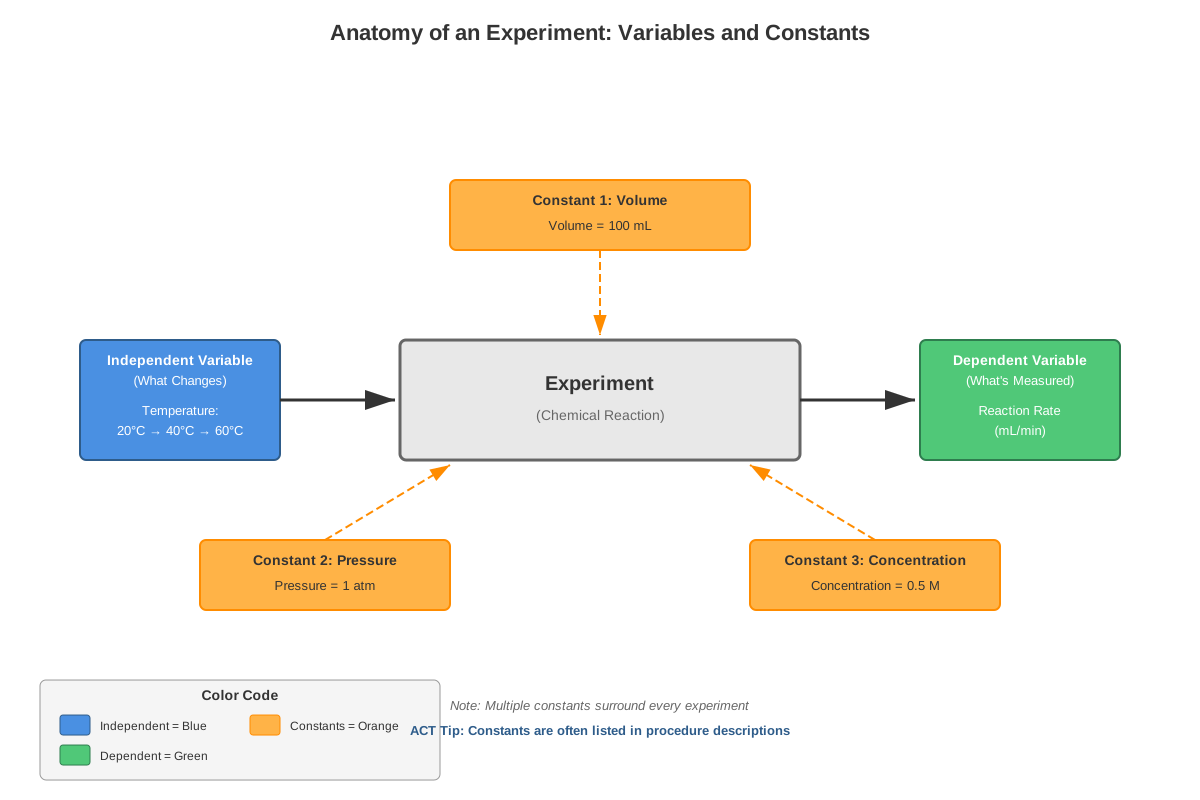
In the ACT Science section, understanding constants is fundamental to interpreting experimental design and analyzing research summaries. A constant is any variable that remains unchanged throughout an experiment, ensuring that observed effects can be attributed to the independent variable being manipulated rather than to extraneous factors. When scientists design experiments, they carefully control certain conditions to maintain consistency across all trials, and recognizing these controlled elements is crucial for ACT test-takers.
The ability to identify and understand constants appears frequently in Research Summaries passages, which comprise approximately 45-55% of the ACT Science test. These passages present experimental procedures where students must distinguish between independent variables (what the experimenter changes), dependent variables (what is measured), and constants (what stays the same). Mastering ACT constants enables students to quickly analyze experimental validity, compare multiple experiments within a passage, and answer questions about why certain procedures were followed or what would happen if conditions changed.
Constants connect directly to the broader scientific method and experimental design principles that underpin the entire ACT Science section. Understanding constants helps students evaluate whether an experiment is well-designed, identify potential confounding variables, and recognize when two experiments can be legitimately compared. This topic serves as a bridge between basic scientific literacy and the more complex analytical skills required for high-scoring performance on research-based passages.
Learning Objectives
- [ ] Identify when Constants is being tested in ACT Science passages
- [ ] Explain the core rule or strategy behind Constants in experimental design
- [ ] Apply Constants to ACT-style questions accurately
- [ ] Distinguish between constants, independent variables, and dependent variables in multi-experiment passages
- [ ] Evaluate whether an experiment properly controls variables by identifying appropriate constants
- [ ] Predict how changing a constant would affect experimental validity and results
- [ ] Compare constants across multiple experiments to determine which studies can be validly compared
Prerequisites
- Basic understanding of variables: Students must know that experiments involve factors that can change or be measured; this is essential because constants are defined in relation to variables.
- Scientific method fundamentals: Familiarity with hypothesis testing and experimental procedures provides context for why constants matter in research design.
- Reading comprehension of scientific passages: The ability to extract information from experimental descriptions is necessary since constants are typically identified within procedural text rather than explicitly labeled.
Why This Topic Matters
Constants represent a cornerstone of valid scientific experimentation in real-world research. Scientists across all disciplines—from pharmaceutical researchers testing new medications to environmental scientists studying climate change—must carefully control variables to ensure their findings are reliable and reproducible. When a chemist investigates how temperature affects reaction rate, they must keep pressure, concentration, and volume constant. Without proper controls, results become meaningless because multiple factors could explain any observed changes.
On the ACT Science test, questions involving constants appear in approximately 3-5 questions per test, making this a high-yield topic that directly impacts scores. These questions typically appear in Research Summaries passages (18 out of 40 questions total) and occasionally in Data Representation passages. The ACT tests constants through several question formats: direct identification questions ("Which of the following was held constant?"), comparison questions ("What do Experiments 1 and 2 have in common?"), experimental design questions ("To test the hypothesis, which variable should remain unchanged?"), and validity questions ("Why was [specific factor] kept the same across all trials?").
Constants questions often appear early in a passage set, serving as foundational questions that test basic comprehension before moving to more complex analysis. Students who quickly identify constants can answer these questions in 20-30 seconds, banking time for more challenging items. Additionally, recognizing constants helps students organize information mentally, creating a framework for understanding the entire experimental setup and making subsequent questions easier to answer.
Core Concepts
Definition and Purpose of Constants
Constants are variables or conditions in an experiment that are deliberately kept the same across all trials, groups, or experimental conditions. Unlike the independent variable (which the experimenter intentionally manipulates) or the dependent variable (which is measured as the outcome), constants remain fixed throughout the study. The primary purpose of maintaining constants is to ensure experimental validity—the confidence that any observed changes in the dependent variable are caused by changes in the independent variable alone, not by other factors.
For example, if a botanist studies how different amounts of sunlight affect plant growth, the type of plant, soil composition, water amount, temperature, and pot size should all remain constant. If these factors varied, the experimenter couldn't determine whether differences in growth resulted from sunlight exposure or from one of these other changing factors.
Types of Constants in ACT Passages
ACT Science passages feature several categories of constants that students should recognize:
Environmental constants include temperature, pressure, humidity, light exposure, and atmospheric conditions. These appear frequently in biology, chemistry, and physics experiments. For instance, a passage about enzyme activity might specify that all reactions occurred at 37°C (body temperature).
Material constants refer to the substances, equipment, or organisms used in the study. This includes the type of chemical reagent, species of organism, brand of equipment, or source of materials. A genetics experiment might use the same strain of bacteria across all trials.
Procedural constants involve the methods and techniques applied consistently throughout the experiment. This includes measurement techniques, duration of trials, sample sizes, or timing of observations. An ecology study might collect data at the same time each day across all observation periods.
Quantitative constants are specific numerical values held steady, such as volume, concentration, mass, or distance. A chemistry experiment might use 50 mL of solution in every trial, making volume a constant.
Identifying Constants in Experimental Descriptions
ACT passages typically describe experimental procedures in paragraph form, and students must extract information about constants from this text. Constants are often indicated by phrases such as:
- "All experiments were conducted at..."
- "In each trial..."
- "The same [material/condition] was used..."
- "Throughout the study..."
- "For all samples..."
- "Keeping [factor] constant..."
Consider this example passage excerpt: "A researcher investigated how fertilizer concentration affects tomato yield. Three groups of 20 tomato plants (variety 'Roma') were grown in identical greenhouses maintained at 25°C with 12 hours of light daily. Each plant received 500 mL of water weekly. Group 1 received no fertilizer, Group 2 received 5g of fertilizer weekly, and Group 3 received 10g of fertilizer weekly. After 90 days, the total mass of tomatoes from each plant was recorded."
In this description, the constants include: plant variety (Roma), number of plants per group (20), temperature (25°C), light duration (12 hours daily), water volume (500 mL weekly), and experimental duration (90 days). The independent variable is fertilizer concentration, and the dependent variable is tomato mass.
Constants vs. Controls
Students often confuse constants with control groups, but these are distinct concepts. A control group is a baseline group that receives no treatment or a standard treatment, used for comparison purposes. In the tomato example above, Group 1 (no fertilizer) is the control group. Constants, however, are factors kept the same across ALL groups, including the control group and experimental groups.
| Concept | Definition | Example from Tomato Study |
|---|---|---|
| Constant | Factor kept the same across all groups | Temperature (25°C for all groups) |
| Control Group | Baseline group receiving no/standard treatment | Group 1 (no fertilizer) |
| Independent Variable | Factor deliberately changed by experimenter | Fertilizer concentration |
| Dependent Variable | Outcome measured by experimenter | Tomato mass |
Why Constants Matter for Experimental Validity
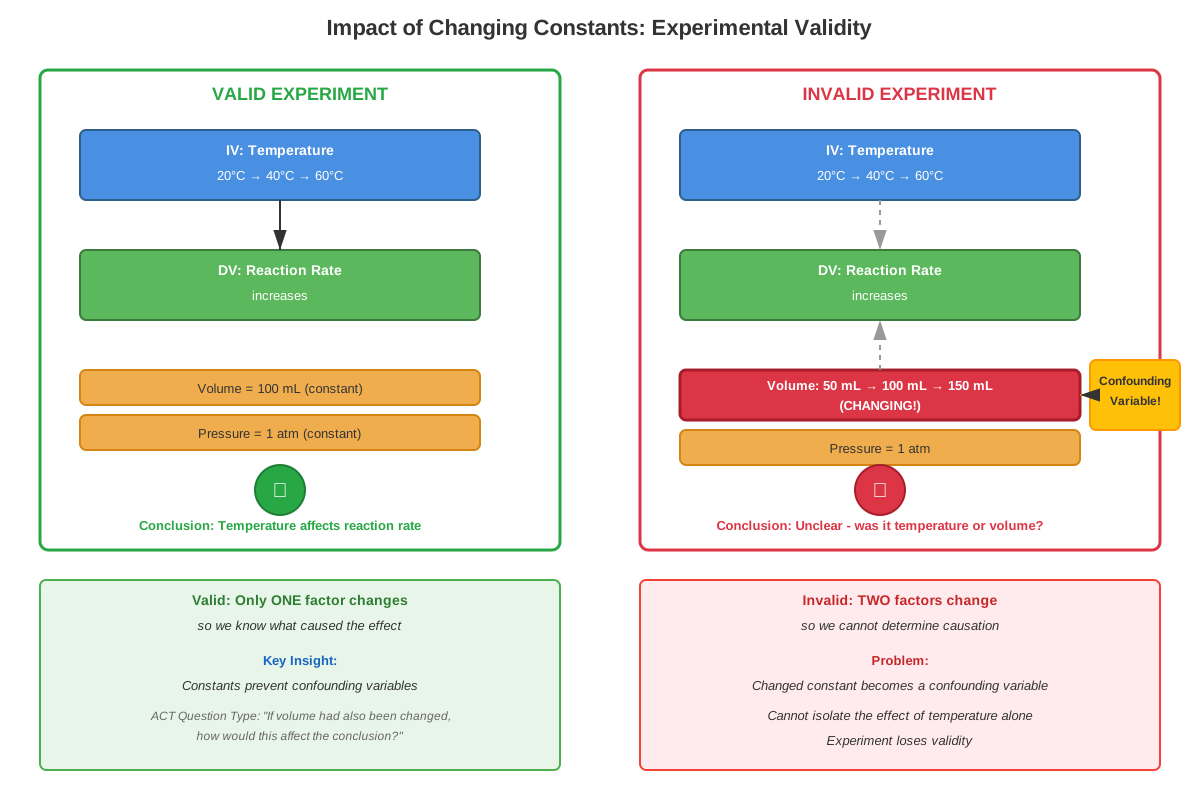
The principle of controlling variables is fundamental to the scientific method. When multiple factors change simultaneously, the experiment suffers from confounding variables—factors other than the independent variable that might influence the dependent variable. This makes it impossible to establish causation.
Imagine if the tomato experiment had been conducted with Group 1 at 20°C, Group 2 at 25°C, and Group 3 at 30°C. If Group 3 produced the most tomatoes, we couldn't determine whether this resulted from the higher fertilizer concentration or the higher temperature. By keeping temperature constant, the researcher eliminates it as a potential explanation for differences in yield.
Comparing Multiple Experiments
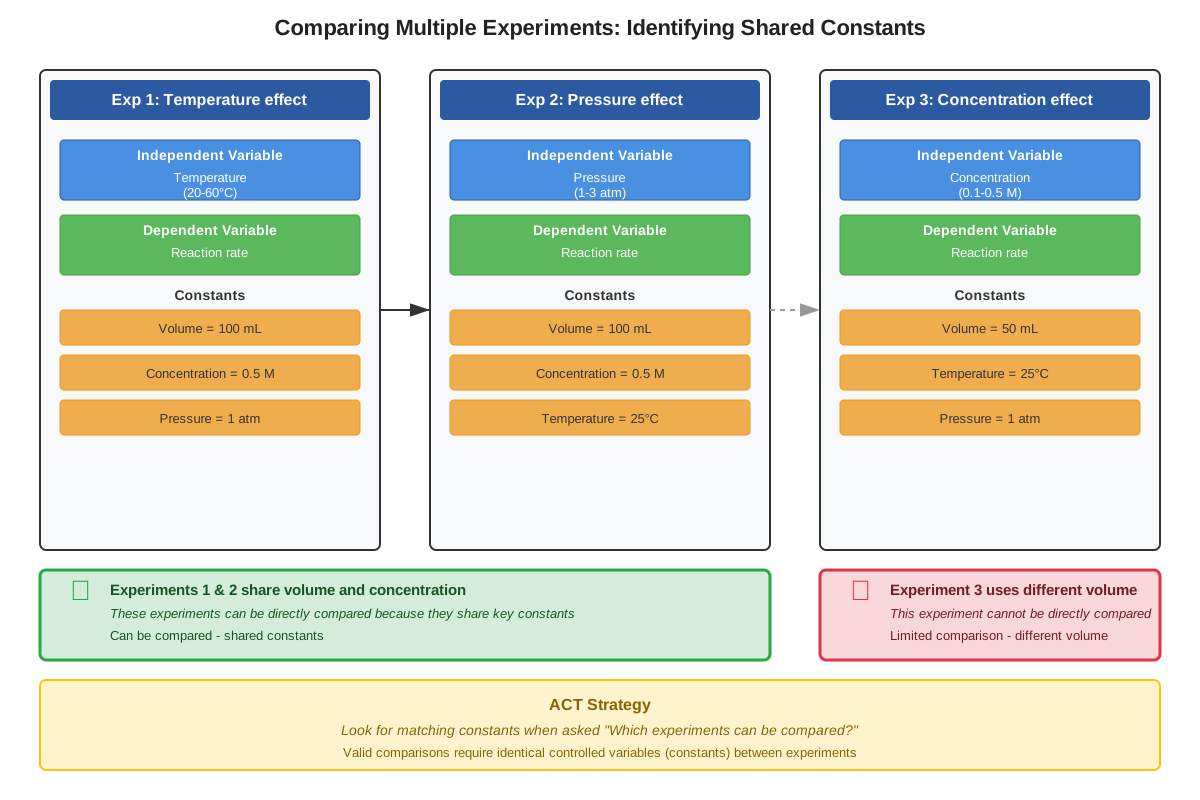
Many ACT passages present two or more related experiments. Identifying which factors are constants within each experiment and which factors differ between experiments is crucial for answering comparison questions. Factors that are constant within one experiment but vary between experiments help students understand what additional question the second experiment addresses.
For example, Experiment 1 might test fertilizer concentration on tomatoes at 25°C, while Experiment 2 tests fertilizer concentration on tomatoes at 30°C. Within each experiment, temperature is a constant, but between experiments, temperature varies. This design allows researchers to determine whether the relationship between fertilizer and yield depends on temperature.
Concept Relationships
The concept of constants sits at the center of experimental design understanding. Constants → enable isolation of → independent variable effects → which allows measurement of → dependent variable changes → which supports → valid conclusions. Without proper constants, this causal chain breaks down.
Constants connect directly to the prerequisite understanding of variables. Students must first recognize that experiments involve multiple factors (variables) before they can identify which factors remain unchanged (constants). This relationship flows as: general variable awareness → differentiation into types → identification of constants specifically.
Within a passage, recognizing constants helps students understand the experimental structure, which then facilitates answering questions about results interpretation, hypothesis testing, and experimental modification. The relationship flows: identify constants → understand experimental design → interpret results accurately → answer complex analytical questions.
Constants also relate to the broader concept of scientific validity and reproducibility. When students understand why constants matter, they can evaluate experimental quality and recognize flawed designs. This connects to critical thinking skills tested throughout the ACT Science section: recognize constants → evaluate experimental validity → assess reliability of conclusions → apply scientific reasoning.
High-Yield Facts
⭐ Constants are factors deliberately kept the same across all experimental groups or trials to ensure that observed effects result from the independent variable alone.
⭐ The most commonly tested constants on the ACT include temperature, time duration, sample size, type of material/organism, and measurement techniques.
⭐ Constants appear in approximately 3-5 questions per ACT Science test, primarily in Research Summaries passages.
⭐ When comparing multiple experiments in a passage, factors that are constant within each experiment but differ between experiments indicate what additional variable is being investigated.
⭐ ACT questions about constants often use phrases like "held constant," "remained the same," "did not vary," or "was consistent across all trials."
- Constants differ from control groups; constants are unchanging factors, while control groups are baseline comparison groups.
- Environmental conditions (temperature, pressure, light) are among the most frequently held constant in ACT passages.
- Identifying constants quickly helps students organize experimental information and answer foundational questions efficiently.
- If a passage doesn't explicitly state that something was held constant, students should look for phrases indicating consistency across trials.
- Questions asking "What do Experiments 1 and 2 have in common?" are typically asking about shared constants.
- Changing a constant would compromise experimental validity by introducing a confounding variable.
- The number of constants in an experiment typically exceeds the number of independent variables (usually just one) and dependent variables (usually one or a few).
Quick check — test yourself on Constants so far.
Try Flashcards →Common Misconceptions
Misconception: All factors mentioned in an experimental description are constants. → Correction: Only factors explicitly or implicitly stated to remain the same across all groups/trials are constants. The independent variable (what's being changed) and dependent variable (what's being measured) are not constants, even though they're mentioned in the procedure.
Misconception: The control group is the same thing as a constant. → Correction: A control group is a specific experimental group that receives no treatment or standard treatment for comparison purposes. Constants are factors kept the same across ALL groups, including both control and experimental groups. For example, if all groups use the same type of plant, that's a constant; the group receiving no fertilizer is the control group.
Misconception: If a factor isn't explicitly labeled as "constant," it isn't one. → Correction: ACT passages rarely use the word "constant" directly. Instead, they describe constants through phrases like "all experiments used," "each trial included," or "throughout the study." Students must infer constants from procedural descriptions.
Misconception: Constants are less important than variables, so questions about them are easy. → Correction: While constants questions often appear early in a passage and may be straightforward, they're foundational to understanding the entire experimental design. Missing these questions indicates a fundamental misunderstanding that will likely affect performance on subsequent, more complex questions.
Misconception: If two experiments have different constants, they can't be compared. → Correction: Experiments with some different constants can still be validly compared if the difference in constants is intentional and addresses a specific research question. For example, one experiment at 20°C and another at 30°C can be compared to determine how temperature affects the relationship being studied. However, if constants differ randomly or unintentionally, comparison becomes problematic.
Worked Examples
Example 1: Identifying Constants in a Biology Passage
Passage Excerpt: "A biologist studied the effect of pH on bacterial growth rate. Four cultures of E. coli bacteria were prepared, each containing 100 mL of nutrient broth in identical 250 mL flasks. The pH of the broths was adjusted to 4, 5, 6, and 7 using hydrochloric acid or sodium hydroxide. Each flask was inoculated with 1 mL of bacterial suspension containing 1×10⁶ cells/mL. All flasks were incubated at 37°C with constant shaking at 150 rpm for 24 hours. Bacterial density was measured every 4 hours using spectrophotometry at 600 nm wavelength."
Question: Which of the following was held constant across all four cultures?
A. pH of the nutrient broth
B. Bacterial density over time
C. Volume of nutrient broth
D. Wavelength used for measurement
Solution Process:
Step 1: Identify the independent variable (what the experimenter deliberately changed). The passage states "the effect of pH on bacterial growth," and pH values of 4, 5, 6, and 7 were used. Therefore, pH is the independent variable, not a constant. Eliminate A.
Step 2: Identify the dependent variable (what was measured as the outcome). The passage indicates "bacterial density was measured," making this the dependent variable. Since bacterial density changed over time (that's what was being measured), it's not a constant. Eliminate B.
Step 3: Examine the remaining options for factors explicitly stated to be the same across all cultures. The passage states "each containing 100 mL of nutrient broth," indicating volume was the same for all cultures. C is likely correct.
Step 4: Verify option D. The passage states measurements used "spectrophotometry at 600 nm wavelength" without indicating this varied between cultures, suggesting it was constant. However, the question asks for what was held constant, and C is more explicitly stated.
Step 5: Confirm by listing all constants mentioned: bacterial species (E. coli), broth volume (100 mL), flask size (250 mL), inoculation volume (1 mL), initial cell concentration (1×10⁶ cells/mL), temperature (37°C), shaking speed (150 rpm), duration (24 hours), measurement interval (every 4 hours), and measurement wavelength (600 nm).
Answer: C - Volume of nutrient broth was explicitly held constant at 100 mL across all four cultures.
Connection to Learning Objectives: This example demonstrates how to identify constants by distinguishing them from independent variables (pH) and dependent variables (bacterial density), and by recognizing procedural descriptions that indicate consistency across trials.
Example 2: Comparing Constants Across Multiple Experiments
Passage Excerpt: "Experiment 1: A chemist investigated how reactant concentration affects reaction rate. Solutions of sodium thiosulfate at concentrations of 0.1 M, 0.2 M, 0.3 M, and 0.4 M were each mixed with 10 mL of 1.0 M hydrochloric acid at 25°C. The time for the solution to become opaque was recorded.
Experiment 2: The chemist repeated the procedure from Experiment 1, but all reactions were conducted at 35°C instead of 25°C."
Question: Which of the following factors was constant within Experiment 1 but varied between Experiments 1 and 2?
A. Sodium thiosulfate concentration
B. Temperature
C. Volume of hydrochloric acid
D. Hydrochloric acid concentration
Solution Process:
Step 1: Understand what the question asks. We need a factor that stayed the same throughout all trials of Experiment 1 (making it a constant within that experiment) but was different when comparing Experiment 1 to Experiment 2.
Step 2: Analyze option A. Sodium thiosulfate concentration varied within Experiment 1 (0.1 M, 0.2 M, 0.3 M, 0.4 M), so it was NOT constant within Experiment 1. Eliminate A.
Step 3: Analyze option B. Temperature was 25°C for all trials in Experiment 1 (constant within the experiment). Temperature was 35°C for all trials in Experiment 2. Therefore, temperature was constant within each experiment but varied between experiments. B is correct.
Step 4: Verify by checking remaining options. Option C (volume of HCl) was 10 mL in both experiments—constant within and between experiments. Option D (HCl concentration) was 1.0 M in both experiments—also constant within and between experiments.
Answer: B - Temperature was held constant at 25°C within Experiment 1 but changed to 35°C in Experiment 2, making it the factor that varied between experiments.
Connection to Learning Objectives: This example shows how to compare constants across multiple experiments, demonstrating that factors constant within one experiment may be intentionally varied between experiments to investigate additional research questions (in this case, how temperature affects the concentration-rate relationship).
Exam Strategy
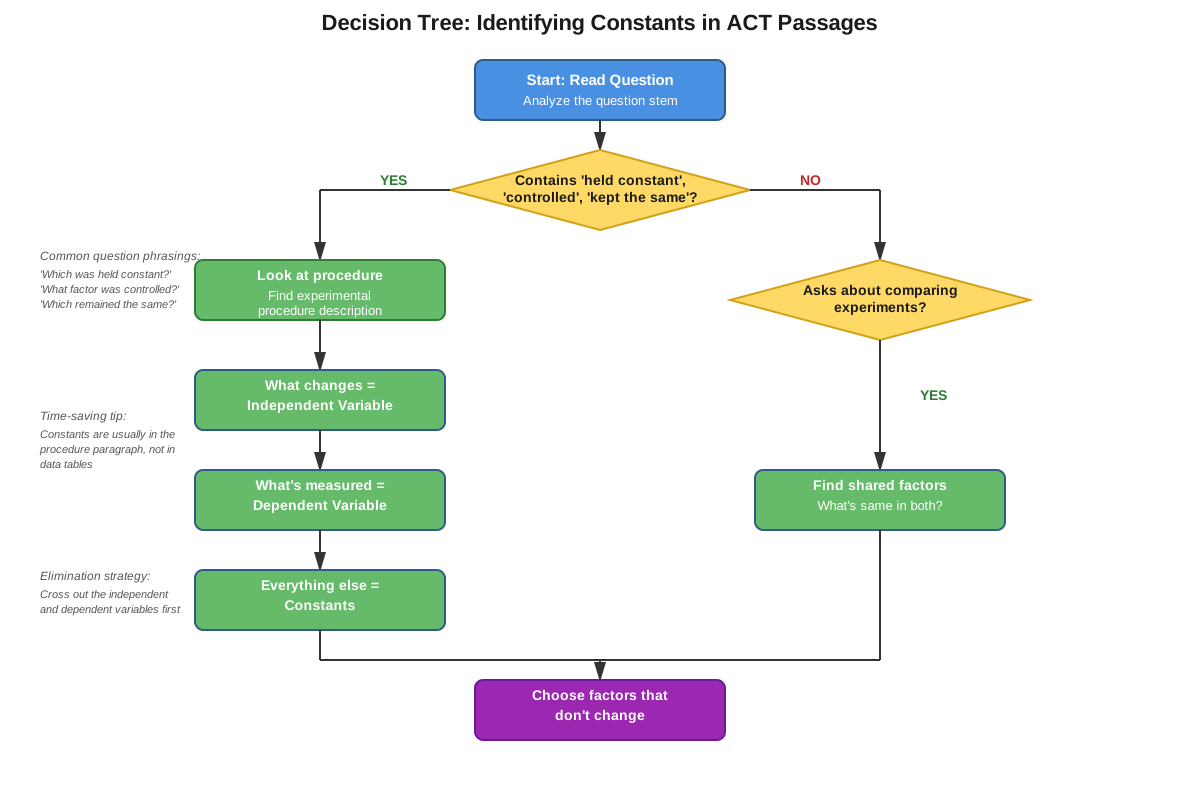
When approaching ACT Science questions about constants, employ a systematic strategy to maximize accuracy and efficiency. First, preview the questions before reading the passage to identify which ones ask about constants. Look for trigger phrases such as "held constant," "remained the same," "did not change," "was consistent," or "what do the experiments have in common."
As you read the experimental description, actively annotate or mentally note factors that appear consistent across trials. Create a mental or written list with three categories: independent variable (what changes), dependent variable (what's measured), and constants (everything else that's specified). This organization prevents confusion and speeds up question answering.
For direct identification questions ("Which was held constant?"), use process of elimination aggressively. First eliminate the independent variable (what the experimenter deliberately changed) and the dependent variable (what was measured). Then eliminate any factors that clearly varied across trials. The remaining option is typically correct.
When questions ask about comparing multiple experiments, create a quick comparison chart in your mind or on scratch paper:
                    Exp 1    Exp 2
Temperature:        25°C     35°C     (varies between)
Volume:            10 mL    10 mL     (constant in both)
Concentration:     varies   varies    (varies within each)
This visualization immediately reveals which factors are constants within experiments versus between experiments.
Time allocation: Constants questions should take 20-30 seconds each since they test comprehension rather than complex analysis. If you're spending more than 45 seconds on a constants question, you may be overthinking it. These questions reward careful reading more than deep reasoning.
Watch for implicit constants: Not all constants are explicitly stated. If a passage describes "identical flasks," "the same species," or "using the same equipment," these phrases indicate constants even without the word "constant." Similarly, if a procedure describes something once without mentioning variation, assume it was constant (e.g., "bacteria were incubated at 37°C" implies all bacteria were incubated at this temperature).
Beware of answer choices that list dependent variables: Test makers frequently include the dependent variable as a wrong answer choice for "what was held constant" questions. Remember that the dependent variable changes in response to the independent variable—it's what you're measuring, so it cannot be constant.
Memory Techniques
C.O.N.S.T.A.N.T. Mnemonic for identifying common constants in ACT passages:
- Conditions (environmental: temperature, pressure, humidity)
- Organisms/Objects (species, materials, equipment type)
- Number (sample size, quantity of materials)
- Source (origin of materials, brand of equipment)
- Time (duration, measurement intervals)
- Amount (volume, mass, concentration of controlled substances)
- Nature (type of procedure, measurement technique)
- Technique (method of measurement, experimental protocol)
Visualization Strategy: Picture an experiment as a stage play. The independent variable is the actor who changes costumes (different conditions). The dependent variable is the audience reaction you're measuring. Constants are the unchanging stage, lighting, and props—everything that stays the same so you can focus on how the costume changes affect the audience.
The "Same, Same, Same" Rule: When reading experimental procedures, mentally repeat "same" for each factor that doesn't vary. "Same temperature, same volume, same species, same duration." This active reading technique helps you identify constants as you encounter them rather than searching later.
Acronym for Question Types - CHAV: Constants questions come in four types:
- Comparison (What do experiments have in common?)
- Held constant (Which factor remained unchanged?)
- Across trials (What was consistent throughout?)
- Validity (Why was X kept the same?)
Summary
Constants are factors deliberately maintained at the same level throughout an experiment to ensure that observed changes in the dependent variable result from manipulation of the independent variable alone. On the ACT Science test, identifying constants is essential for understanding experimental design, evaluating research validity, and answering 3-5 questions per test that directly assess this concept. Constants differ from control groups (baseline comparison groups) and from variables (factors that change or are measured). Common constants include environmental conditions (temperature, pressure), materials (species, equipment type), quantities (volume, mass, sample size), and procedures (measurement techniques, duration). ACT passages describe constants through phrases like "all experiments used," "each trial included," or "throughout the study" rather than explicitly labeling them. Students must distinguish constants from independent variables (deliberately changed) and dependent variables (measured outcomes). When comparing multiple experiments, factors that are constant within each experiment but vary between experiments indicate additional research questions being investigated. Mastering constants enables efficient answering of foundational questions and provides a framework for understanding complex experimental designs.
Key Takeaways
- Constants are factors held unchanged throughout an experiment to isolate the effect of the independent variable on the dependent variable.
- Quickly identify constants by eliminating the independent variable (what changes) and dependent variable (what's measured), then recognizing factors described as consistent across all trials.
- Common ACT constants include temperature, time duration, sample size, material type, volume, concentration of controlled substances, and measurement techniques.
- Constants differ from control groups; constants are unchanging factors across all groups, while control groups are specific baseline groups for comparison.
- When comparing multiple experiments, identify which factors are constant within each experiment versus which vary between experiments to understand the research design.
- ACT questions about constants use trigger phrases like "held constant," "remained the same," "did not vary," or "what do the experiments have in common."
- Allocate 20-30 seconds per constants question, as these test reading comprehension rather than complex analysis, making them efficient points to secure.
Related Topics
Independent and Dependent Variables: Understanding how to identify what experimenters manipulate (independent) and measure (dependent) is the natural next step after mastering constants, as these three concepts form the foundation of experimental design analysis.
Experimental Design and Controls: Building on constants knowledge, this topic explores control groups, experimental groups, randomization, and blind procedures—all elements that ensure valid scientific conclusions.
Confounding Variables: This advanced topic examines what happens when constants aren't properly maintained, introducing factors that compromise experimental validity and make results uninterpretable.
Data Interpretation in Multi-Experiment Passages: Mastering constants enables students to tackle complex passages where multiple related experiments must be compared and synthesized to answer higher-order questions.
Scientific Method and Hypothesis Testing: Constants fit into the broader framework of how scientists design studies to test hypotheses, connecting experimental design to the logic of scientific inquiry.
Practice CTA
Now that you've mastered the concept of constants in experimental design, it's time to apply this knowledge! Work through the practice questions to test your ability to identify constants quickly and accurately under timed conditions. The flashcards will help you memorize common constants that appear on the ACT and reinforce the distinction between constants, variables, and controls. Remember, constants questions are high-yield opportunities to secure quick points—with focused practice, you can answer these confidently in under 30 seconds each, banking valuable time for more challenging items. Your understanding of constants provides the foundation for analyzing complex research summaries, so invest the practice time now to see significant score improvements on test day!
Sign up free to keep reading
Create a free AnvayaPrep account to finish this ACT guide on Constants — plus flashcards and practice questions.