Overview
Citrate synthase is a pivotal enzyme that catalyzes the first committed step of the citric acid cycle (also known as the Krebs cycle or TCA cycle), one of the most fundamental metabolic pathways tested on the MCAT. This enzyme facilitates the condensation reaction between acetyl-CoA and oxaloacetate to form citrate, effectively linking glycolysis and fatty acid oxidation to the citric acid cycle. Understanding citrate synthase is essential not only for grasping the mechanics of cellular respiration but also for appreciating how cells regulate energy production in response to metabolic demands. The enzyme serves as a critical regulatory point, responding to feedback inhibition and substrate availability to maintain metabolic homeostasis.
For the MCAT Biochemistry section, citrate synthase represents a high-yield topic that frequently appears in passages involving metabolism, cellular energetics, and enzyme kinetics. Questions may test knowledge of the reaction mechanism, regulatory features, thermodynamics, or the enzyme's role in integrating multiple metabolic pathways. The MCAT often presents experimental scenarios where citrate synthase activity is measured under various conditions, requiring students to interpret data and apply biochemical principles. Additionally, understanding this enzyme provides insight into broader concepts such as allosteric regulation, feedback inhibition, and the coordination of anabolic and catabolic processes.
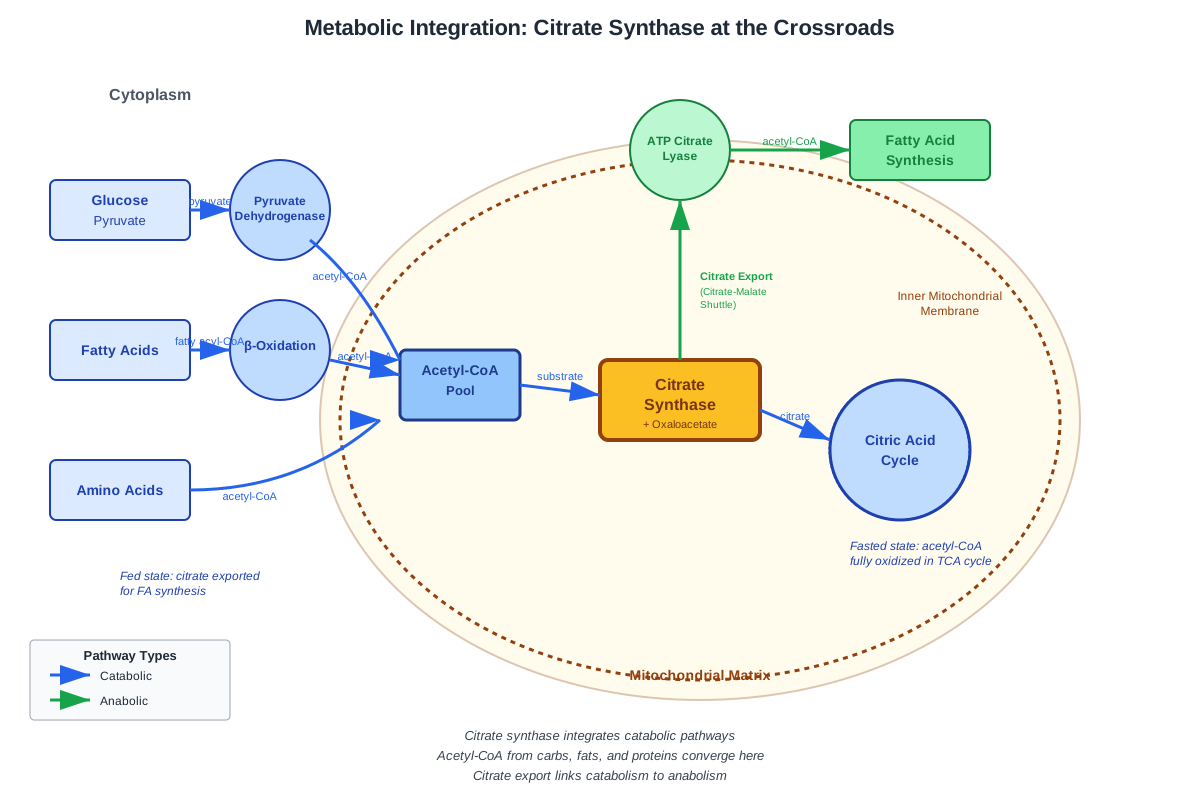
The significance of citrate synthase extends beyond the citric acid cycle itself. The enzyme sits at a metabolic crossroads where carbohydrate, lipid, and amino acid metabolism converge. Citrate produced by this enzyme can exit the mitochondria to serve as a precursor for fatty acid synthesis, demonstrating the interconnected nature of metabolic pathways. This integration makes citrate synthase an excellent topic for MCAT passages that test systems-level thinking and the ability to trace metabolic intermediates through multiple pathways—skills that are essential for success on the exam.
Learning Objectives
- [ ] Define citrate synthase using accurate Biochemistry terminology
- [ ] Explain why citrate synthase matters for the MCAT
- [ ] Apply citrate synthase to exam-style questions
- [ ] Identify common mistakes related to citrate synthase
- [ ] Connect citrate synthase to related Biochemistry concepts
- [ ] Describe the reaction mechanism and thermodynamics of the citrate synthase-catalyzed reaction
- [ ] Analyze the regulatory mechanisms that control citrate synthase activity
- [ ] Predict the metabolic consequences of citrate synthase inhibition or dysfunction
Prerequisites
- Basic enzyme kinetics: Understanding Michaelis-Menten kinetics and enzyme catalysis is essential for comprehending how citrate synthase functions and is regulated
- Glycolysis fundamentals: Knowledge of how pyruvate is produced and converted to acetyl-CoA provides context for the substrate entering the citric acid cycle
- Mitochondrial structure: Familiarity with mitochondrial compartments helps explain where citrate synthase operates and how metabolites are transported
- Coenzyme A chemistry: Understanding the high-energy thioester bond in acetyl-CoA is crucial for grasping the reaction mechanism
- Basic thermodynamics: Concepts of ΔG, exergonic reactions, and irreversibility are necessary to understand why this step commits acetyl-CoA to oxidation
Why This Topic Matters
Clinical and Real-World Significance
Citrate synthase serves as a biomarker for mitochondrial content and function in both research and clinical settings. Muscle biopsies often measure citrate synthase activity to assess mitochondrial density, which is relevant in conditions ranging from metabolic disorders to athletic performance evaluation. Deficiencies in citric acid cycle enzymes, though rare, can cause severe neurological and metabolic diseases, highlighting the enzyme's essential role in human physiology. Additionally, cancer cells often exhibit altered citrate synthase regulation as they reprogram metabolism to support rapid proliferation, making this enzyme a potential therapeutic target.
MCAT Exam Statistics and Question Types
Citrate synthase appears in approximately 15-20% of MCAT Biochemistry passages involving metabolism. The MCAT typically tests this topic through:
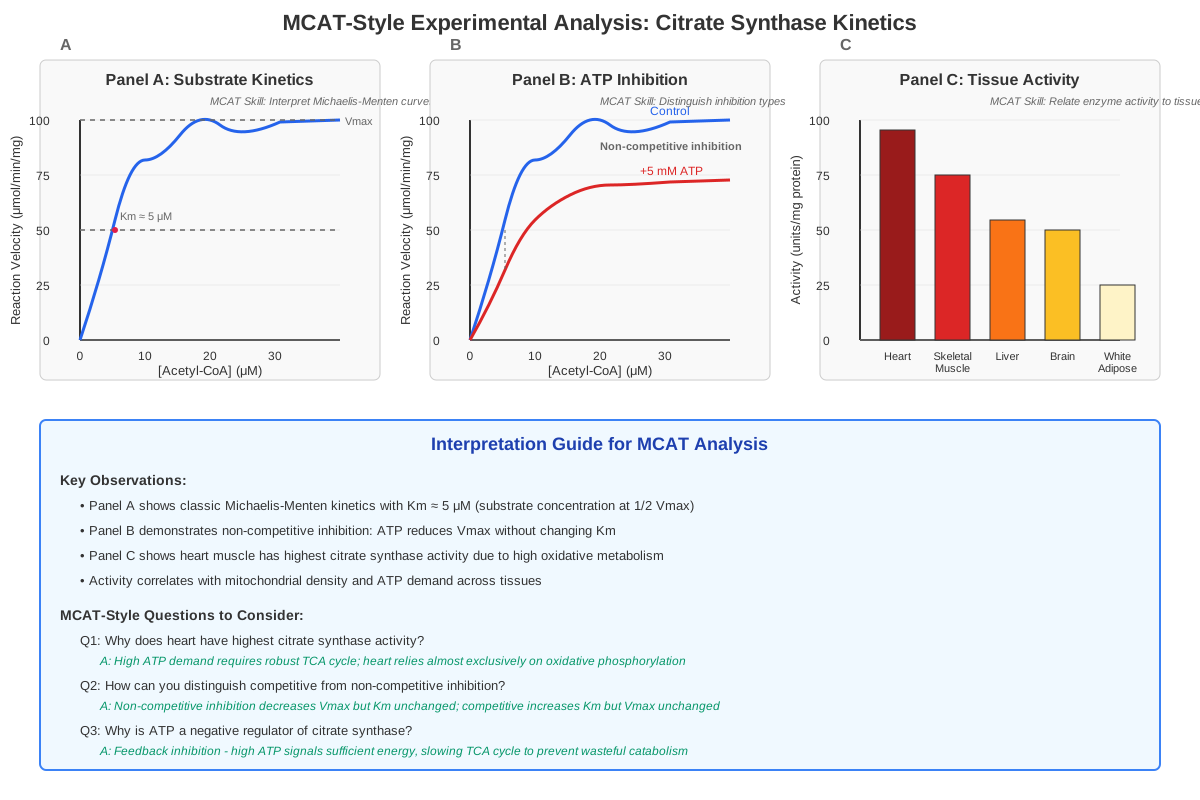
- Experimental analysis passages presenting enzyme kinetics data under various conditions
- Metabolic pathway integration questions requiring students to trace carbon atoms through multiple pathways
- Regulatory mechanism questions testing understanding of feedback inhibition and allosteric control
- Thermodynamics problems asking students to predict reaction directionality or calculate energy changes
- Discrete questions about enzyme classification, reaction products, or metabolic consequences of inhibition
Common Exam Passage Contexts
MCAT passages featuring citrate synthase often present scenarios involving:
- Mitochondrial dysfunction or disease states affecting energy metabolism
- Exercise physiology and metabolic adaptations to training
- Drug development targeting metabolic enzymes
- Comparative biochemistry examining metabolic differences between organisms
- Experimental manipulations of substrate availability or enzyme expression
Core Concepts
Enzyme Structure and Classification
Citrate synthase is a transferase enzyme (specifically, an acyltransferase) that belongs to the EC 2.3.3.1 classification. The enzyme exists as a dimer in most organisms, with each subunit containing an active site that undergoes significant conformational changes during catalysis. The enzyme exhibits an induced-fit mechanism, meaning the active site adopts its catalytically competent conformation only after substrate binding. This conformational change is crucial for both catalytic efficiency and substrate specificity.
The enzyme's structure features a large cleft that closes around the substrates upon binding, creating a protected environment for the reaction. This closure is particularly important because it shields the reactive intermediates from water, which would otherwise hydrolyze the high-energy thioester bond of acetyl-CoA before citrate formation. The conformational change also positions catalytic residues precisely for optimal interaction with substrates, demonstrating the sophisticated molecular architecture that enables efficient catalysis.
The Citrate Synthase Reaction
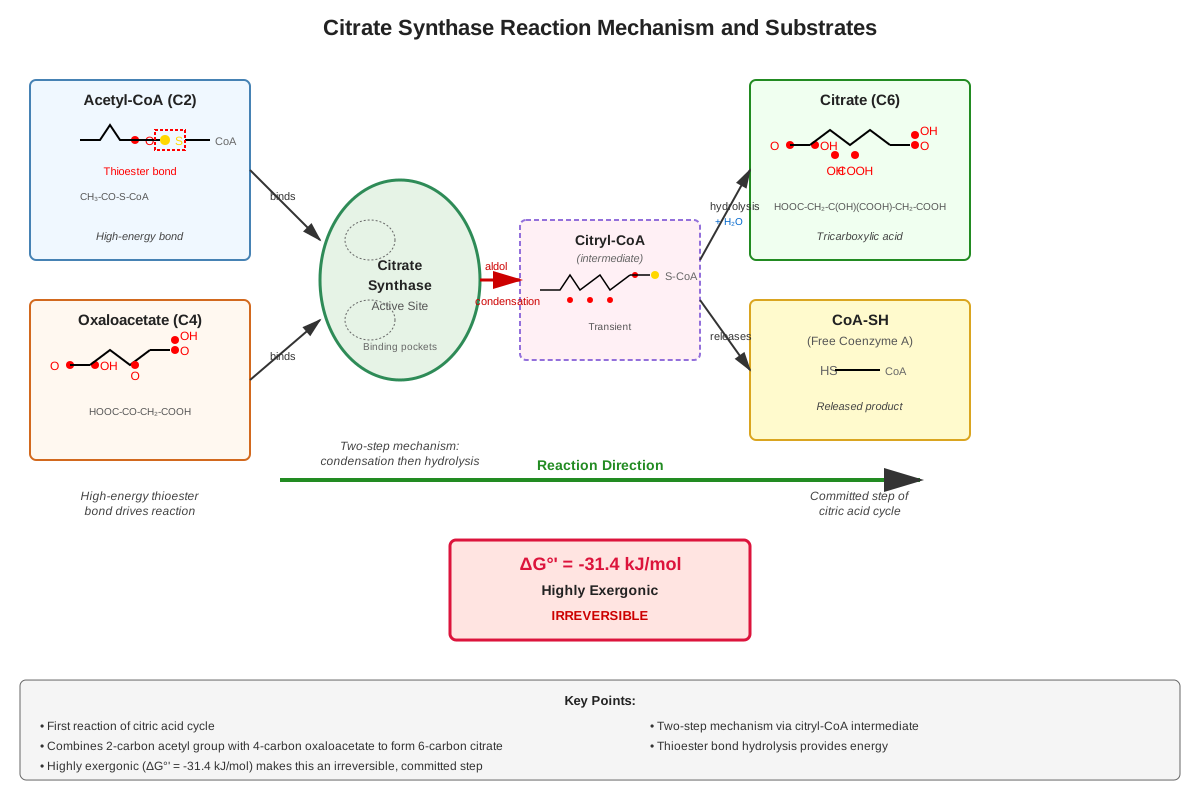
The reaction catalyzed by citrate synthase represents the first step of the citric acid cycle and can be written as:
Acetyl-CoA + Oxaloacetate + H₂O → Citrate + CoA-SH + H⁺This condensation reaction involves the nucleophilic attack of the methyl carbon of acetyl-CoA on the carbonyl carbon of oxaloacetate. The reaction proceeds through several distinct steps:
- Oxaloacetate binding: The four-carbon oxaloacetate binds first, inducing a partial conformational change
- Acetyl-CoA binding: Acetyl-CoA binds second, triggering complete active site closure
- Condensation: The methyl group of acetyl-CoA attacks the carbonyl carbon of oxaloacetate, forming citryl-CoA as an intermediate
- Hydrolysis: The thioester bond of citryl-CoA is hydrolyzed, releasing free coenzyme A and citrate
- Product release: Citrate and CoA-SH are released, and the enzyme returns to its open conformation
Thermodynamics and Reaction Energetics
The citrate synthase reaction is highly exergonic with a ΔG°' of approximately -31.4 kJ/mol (-7.5 kcal/mol). This large negative free energy change makes the reaction essentially irreversible under physiological conditions, serving as a committed step that channels acetyl-CoA into the citric acid cycle. The favorable thermodynamics arise primarily from the hydrolysis of the high-energy thioester bond in acetyl-CoA, which releases substantial energy that drives citrate formation.
This irreversibility has important metabolic implications: once acetyl-CoA enters the citric acid cycle via citrate synthase, it is committed to oxidation. The cell cannot reverse this step to regenerate acetyl-CoA from citrate using citrate synthase. Instead, a different enzyme (ATP citrate lyase) in the cytoplasm can cleave citrate to regenerate acetyl-CoA, but this requires ATP input, demonstrating the energetic cost of reversing the process.
Regulatory Mechanisms
Citrate synthase is subject to multiple regulatory mechanisms that coordinate its activity with cellular energy status:
| Regulatory Mechanism | Effect | Metabolic Signal |
|---|---|---|
| Feedback inhibition by NADH | Decreases activity | High energy charge |
| Feedback inhibition by succinyl-CoA | Decreases activity | Cycle intermediate accumulation |
| Feedback inhibition by citrate | Decreases activity | Product accumulation |
| Inhibition by ATP | Decreases activity | High energy charge |
| Activation by ADP | Increases activity | Low energy charge |
| Substrate availability | Modulates activity | Acetyl-CoA and oxaloacetate levels |
Feedback inhibition by downstream products represents a classic example of metabolic regulation. When NADH accumulates (indicating sufficient energy), it inhibits citrate synthase, slowing the citric acid cycle and preventing unnecessary substrate oxidation. Similarly, ATP inhibition and ADP activation create a responsive system that adjusts cycle activity based on cellular energy demands. This regulation exemplifies the principle of metabolic economy—cells produce ATP only when needed and conserve resources when energy is abundant.
Substrate Availability and Metabolic Integration
The activity of citrate synthase is profoundly influenced by the availability of its substrates, acetyl-CoA and oxaloacetate. Acetyl-CoA availability reflects the input from multiple pathways:
- Glycolysis → pyruvate → pyruvate dehydrogenase → acetyl-CoA
- β-oxidation of fatty acids → acetyl-CoA
- Amino acid catabolism → acetyl-CoA
Oxaloacetate availability is more complex because this intermediate can be diverted to other pathways:
- Gluconeogenesis: Oxaloacetate can be converted to phosphoenolpyruvate for glucose synthesis
- Amino acid synthesis: Oxaloacetate serves as a precursor for aspartate and other amino acids
- Anaplerotic reactions: Pyruvate carboxylase replenishes oxaloacetate when levels are depleted
This dual substrate dependence makes citrate synthase a metabolic integration point where the cell balances competing demands for carbon skeletons. During fasting, when gluconeogenesis is active, oxaloacetate may be preferentially diverted to glucose production, potentially limiting citric acid cycle flux even when acetyl-CoA is abundant from fatty acid oxidation.
Role in Fatty Acid Synthesis
Beyond its role in the citric acid cycle, citrate synthase indirectly participates in anabolic metabolism. When cellular energy is abundant and the citric acid cycle is saturated, citrate accumulates and can be transported out of the mitochondria into the cytoplasm. In the cytoplasm, ATP citrate lyase cleaves citrate back to acetyl-CoA and oxaloacetate, providing acetyl-CoA for fatty acid synthesis. This pathway demonstrates how citrate synthase, despite catalyzing a catabolic reaction, contributes to the coordination of catabolism and anabolism.
This dual role creates an elegant metabolic switch: when energy is needed, citrate remains in the mitochondria and proceeds through the citric acid cycle for oxidation; when energy is abundant, citrate exits to support biosynthesis. The MCAT may test understanding of this integration by presenting scenarios where metabolic conditions shift and asking students to predict the fate of citrate.
Concept Relationships
The concepts surrounding citrate synthase form an interconnected network that reflects the enzyme's central position in metabolism. The enzyme structure (induced-fit mechanism) → enables → substrate specificity and catalytic efficiency → which determines → reaction kinetics. The thermodynamics (large negative ΔG) → makes the reaction → irreversible → which establishes → metabolic commitment to acetyl-CoA oxidation.
Regulatory mechanisms (feedback inhibition by NADH, ATP, succinyl-CoA) → respond to → cellular energy status → which modulates → citric acid cycle flux → affecting → ATP production. The substrate availability (acetyl-CoA from multiple sources, oxaloacetate from anaplerotic reactions) → determines → enzyme activity → which influences → metabolic pathway selection (oxidation vs. biosynthesis).
Connections to prerequisite topics include: Glycolysis → produces pyruvate → converted to acetyl-CoA → substrate for citrate synthase. Coenzyme A chemistry → explains the high-energy thioester bond → whose hydrolysis → drives citrate formation. Mitochondrial structure → compartmentalizes citrate synthase → enabling → concentration gradients and metabolic regulation.
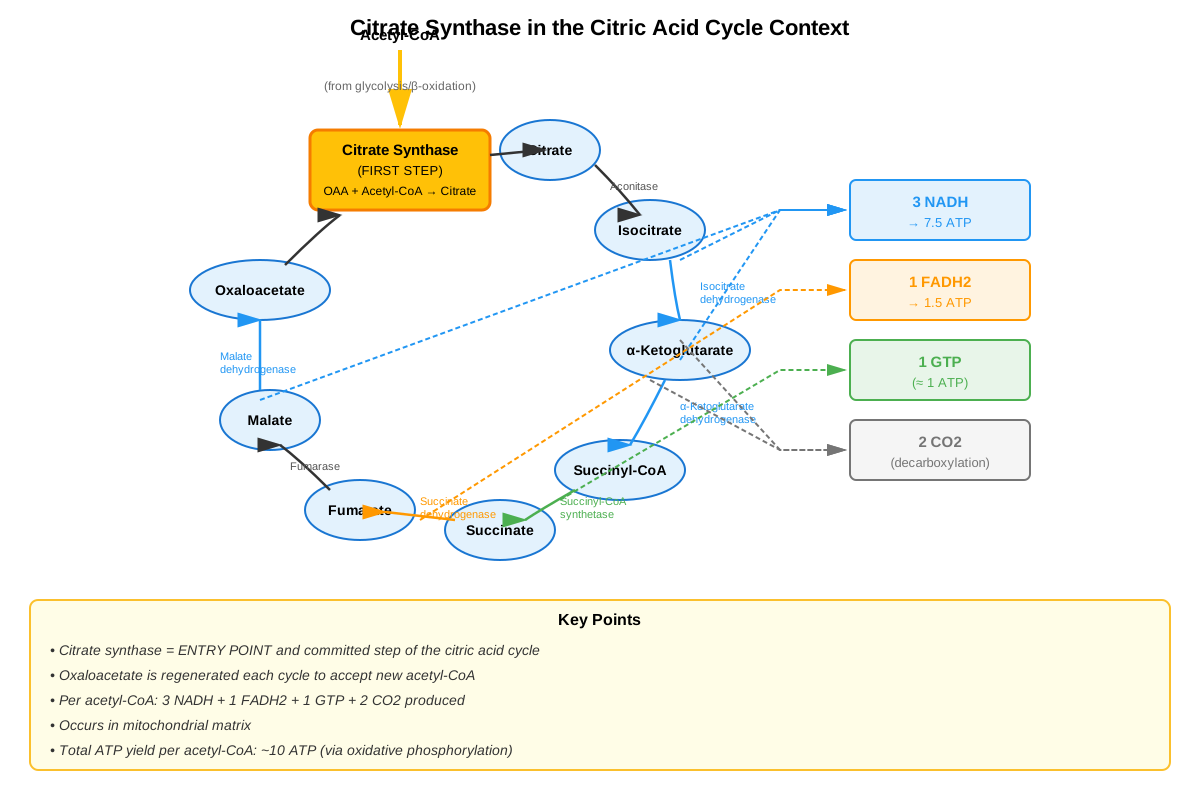
Connections to related topics include: Citric acid cycle → begins with citrate synthase → continues through → eight enzymatic steps → producing NADH and FADH₂ → which feed → electron transport chain. Fatty acid synthesis → requires cytoplasmic acetyl-CoA → obtained from → citrate export and cleavage → demonstrating → catabolism-anabolism integration.
High-Yield Facts
⭐ Citrate synthase catalyzes the condensation of acetyl-CoA and oxaloacetate to form citrate, the first committed step of the citric acid cycle
⭐ The reaction is highly exergonic (ΔG°' ≈ -31.4 kJ/mol) and essentially irreversible under physiological conditions
⭐ The enzyme exhibits induced-fit mechanism, with the active site closing around substrates to exclude water and position catalytic residues
⭐ Citrate synthase is inhibited by NADH, ATP, succinyl-CoA, and citrate—all indicators of high energy status or product accumulation
⭐ The enzyme serves as a metabolic integration point where carbohydrate, lipid, and amino acid catabolism converge
- Citrate synthase is classified as a transferase (EC 2.3.3.1), specifically an acyltransferase
- The reaction proceeds through a citryl-CoA intermediate before hydrolysis releases citrate and free coenzyme A
- Oxaloacetate binds before acetyl-CoA in an ordered sequential mechanism
- Citrate produced can exit mitochondria to provide cytoplasmic acetyl-CoA for fatty acid synthesis when energy is abundant
- The enzyme activity serves as a biomarker for mitochondrial content in muscle tissue
- Substrate availability (especially oxaloacetate) can limit citrate synthase activity even when the enzyme is not directly inhibited
- The conformational change upon substrate binding increases the enzyme's affinity for the second substrate (cooperative binding)
- Citrate synthase activity is higher in aerobic tissues (heart, slow-twitch muscle) compared to glycolytic tissues
Quick check — test yourself on Citrate synthase so far.
Try Flashcards →Common Misconceptions
Misconception: Citrate synthase is the rate-limiting enzyme of the citric acid cycle
Correction: While citrate synthase catalyzes the first step, isocitrate dehydrogenase is generally considered the primary rate-limiting enzyme because it is more extensively regulated and catalyzes an irreversible, oxidative step. Citrate synthase is regulated but typically operates near equilibrium with respect to substrate availability.
Misconception: The reaction is reversible, allowing citrate to be converted back to acetyl-CoA and oxaloacetate by citrate synthase
Correction: The citrate synthase reaction is essentially irreversible due to its large negative ΔG. To regenerate acetyl-CoA from citrate requires a different enzyme (ATP citrate lyase) in the cytoplasm, which couples citrate cleavage to ATP hydrolysis to overcome the unfavorable thermodynamics.
Misconception: Citrate synthase directly uses ATP or produces ATP during its reaction
Correction: The citrate synthase reaction does not involve ATP as a substrate or product. The energy for citrate formation comes from hydrolysis of the high-energy thioester bond in acetyl-CoA, not from ATP. The confusion may arise from the fact that the citric acid cycle as a whole produces GTP/ATP at the succinyl-CoA synthetase step.
Misconception: Acetyl-CoA can only enter the citric acid cycle from glucose metabolism
Correction: Acetyl-CoA is produced from multiple sources including fatty acid β-oxidation (which actually produces more acetyl-CoA per molecule than glucose), amino acid catabolism, and ketone body metabolism. This multi-source input is crucial for understanding metabolic flexibility and is frequently tested on the MCAT.
Misconception: Citrate synthase is located in the cytoplasm like glycolytic enzymes
Correction: Citrate synthase is a mitochondrial matrix enzyme, which is essential for understanding compartmentalization of metabolism. The citric acid cycle occurs in the mitochondrial matrix, requiring transport systems to move substrates and products across mitochondrial membranes.
Misconception: All regulation of citrate synthase occurs through allosteric inhibition
Correction: While allosteric regulation is important, citrate synthase activity is also significantly controlled by substrate availability, particularly oxaloacetate concentration. When oxaloacetate is diverted to gluconeogenesis or amino acid synthesis, citrate synthase activity decreases regardless of allosteric effector concentrations.
Worked Examples
Example 1: Metabolic Consequence Analysis
Question: A researcher treats isolated mitochondria with a compound that specifically inhibits citrate synthase. The mitochondria are provided with pyruvate, oxygen, and all necessary cofactors. Which of the following would be expected to increase?
A) ATP production
B) NADH concentration
C) Acetyl-CoA concentration
D) Citrate concentration
Solution:
Step 1: Identify what citrate synthase does
- Citrate synthase converts acetyl-CoA + oxaloacetate → citrate
- This is the entry point for acetyl-CoA into the citric acid cycle
Step 2: Determine the immediate consequence of inhibition
- If citrate synthase is inhibited, acetyl-CoA cannot enter the cycle
- Pyruvate is still being converted to acetyl-CoA by pyruvate dehydrogenase
- Acetyl-CoA will accumulate because it's being produced but not consumed
Step 3: Consider downstream effects
- Without citrate formation, the citric acid cycle cannot proceed
- NADH production from the cycle will decrease (not increase)
- ATP production will decrease because less NADH is available for the electron transport chain
- Citrate concentration will decrease because it's not being synthesized
Step 4: Evaluate each option
- A) ATP production would decrease (eliminated)
- B) NADH would decrease because the cycle is blocked (eliminated)
- C) Acetyl-CoA would accumulate because production continues but consumption is blocked (correct)
- D) Citrate would decrease because synthesis is inhibited (eliminated)
Answer: C) Acetyl-CoA concentration
Key Concept: This question tests understanding of metabolic flux and the principle that inhibiting an enzyme causes accumulation of its substrate and depletion of its product. This connects to Learning Objective: "Predict the metabolic consequences of citrate synthase inhibition."
Example 2: Thermodynamics and Regulation
Question: During intense exercise, muscle cells experience increased ADP/ATP ratio and decreased NADH/NAD⁺ ratio. How would these changes affect citrate synthase activity, and what is the metabolic logic?
Solution:
Step 1: Identify the regulatory signals
- Increased ADP/ATP ratio means more ADP, less ATP
- Decreased NADH/NAD⁺ ratio means less NADH, more NAD⁺
- Both indicate low energy status (cell needs more ATP)
Step 2: Recall citrate synthase regulation
- ATP inhibits citrate synthase
- NADH inhibits citrate synthase
- ADP can activate citrate synthase (or at least relieve ATP inhibition)
Step 3: Predict the effect on enzyme activity
- Less ATP → reduced inhibition → increased activity
- Less NADH → reduced inhibition → increased activity
- Both changes would increase citrate synthase activity
Step 4: Explain the metabolic logic
- During intense exercise, muscles need rapid ATP production
- Increasing citrate synthase activity accelerates the citric acid cycle
- Faster cycle produces more NADH and FADH₂
- These reduced cofactors feed the electron transport chain for ATP synthesis
- This represents coordinated regulation matching ATP production to demand
Step 5: Consider additional factors
- Increased muscle contraction also increases calcium, which activates pyruvate dehydrogenase
- This produces more acetyl-CoA substrate for citrate synthase
- The combination of increased substrate and decreased inhibition maximizes flux
Answer: Citrate synthase activity would increase due to relief of ATP and NADH inhibition. This makes metabolic sense because the cell needs to accelerate ATP production, and increasing citric acid cycle flux provides more reduced cofactors for oxidative phosphorylation.
Key Concept: This question integrates enzyme regulation with physiological context, demonstrating how feedback inhibition creates a responsive system that matches metabolic activity to cellular needs. This addresses Learning Objectives related to regulation and applying concepts to exam-style questions.
Exam Strategy
Approaching MCAT Questions on Citrate Synthase
When encountering citrate synthase questions, follow this systematic approach:
- Identify the question type: Is it asking about mechanism, regulation, thermodynamics, or metabolic integration?
- Locate the enzyme in the pathway: Remember it's the first step of the citric acid cycle, in the mitochondrial matrix
- Consider substrates and products: Acetyl-CoA + oxaloacetate → citrate + CoA-SH
- Check for regulatory signals: Look for mentions of ATP, NADH, ADP, or energy status
- Think about metabolic context: Is the scenario describing fed/fasted state, exercise, or disease?
Trigger Words and Phrases
Watch for these key phrases that signal citrate synthase involvement:
- "First step of the citric acid cycle" or "entry into the Krebs cycle"
- "Condensation reaction" in the context of metabolism
- "Acetyl-CoA utilization" or "fate of acetyl-CoA"
- "Mitochondrial matrix enzyme"
- "Feedback inhibition by NADH" or "energy charge regulation"
- "Metabolic integration point" or "convergence of pathways"
- "Irreversible step" in the citric acid cycle
Process of Elimination Tips
When using process of elimination:
- Eliminate options suggesting reversibility: Citrate synthase does not catalyze the reverse reaction
- Eliminate options placing the enzyme in wrong compartments: It's mitochondrial, not cytoplasmic
- Eliminate options suggesting ATP involvement: The reaction doesn't use or produce ATP directly
- Eliminate options contradicting thermodynamics: The reaction is exergonic and spontaneous
- Watch for options confusing citrate synthase with other cycle enzymes: Don't confuse it with isocitrate dehydrogenase or other regulatory enzymes
Time Allocation Advice
For discrete questions on citrate synthase: allocate 60-90 seconds. These typically test straightforward recall of the reaction, regulation, or location.
For passage-based questions: allocate 90-120 seconds per question. These require integrating passage information with background knowledge, often involving data interpretation or experimental analysis. Quickly scan the passage for:
- Experimental conditions affecting enzyme activity
- Data tables or graphs showing enzyme kinetics
- Metabolic states or perturbations
- Substrate or inhibitor concentrations
Exam Tip: If a passage presents enzyme kinetics data for citrate synthase, immediately check the x-axis for substrate concentration and y-axis for activity or product formation. Look for classic patterns like competitive inhibition (increased Km) or allosteric inhibition (decreased Vmax).
Memory Techniques
Mnemonics for Citrate Synthase
"Citrate Synthesis Starts Cycles" - Remember the key features:
- Citrate is the product
- Synthase (not synthetase - doesn't use ATP)
- Starts the citric acid cycle
- Condensation reaction
"ANAS" for regulation - Remember what inhibits citrate synthase:
- ATP
- NADH
- Acetyl-CoA (product inhibition by citrate, which contains the acetyl group)
- Succinyl-CoA
Visualization Strategy
Visualize citrate synthase as a molecular clamp:
- Picture the enzyme as an open clamp (unbound state)
- Oxaloacetate (4-carbon) enters first, partially closing the clamp
- Acetyl-CoA (2-carbon) enters, fully closing the clamp
- Inside the closed clamp, the two molecules join to form citrate (6-carbon)
- The clamp opens, releasing citrate and CoA-SH
This visualization helps remember:
- The induced-fit mechanism
- The ordered substrate binding
- The protection of intermediates from water
- The product release
Substrate and Product Memory Aid
"2 + 4 = 6, then split":
- 2-carbon acetyl group from acetyl-CoA
- 4-carbon oxaloacetate
- 6-carbon citrate product
- CoA-SH splits off
This simple arithmetic helps remember the carbon accounting and ensures you don't confuse citrate synthase with other enzymes that have different carbon numbers.
Thermodynamics Memory Device
Remember: "Thioester breaks, citrate makes"
- The high-energy thioester bond in acetyl-CoA breaks
- This energy release makes citrate formation favorable
- The large negative ΔG makes the reaction irreversible
Summary
Citrate synthase is a mitochondrial matrix enzyme that catalyzes the first committed step of the citric acid cycle by condensing acetyl-CoA with oxaloacetate to form citrate. This highly exergonic reaction (ΔG°' ≈ -31.4 kJ/mol) is essentially irreversible and represents a critical metabolic commitment point where acetyl-CoA from multiple sources (glycolysis, fatty acid oxidation, amino acid catabolism) enters the cycle for oxidation. The enzyme exhibits an induced-fit mechanism with ordered substrate binding and is subject to feedback inhibition by NADH, ATP, succinyl-CoA, and citrate—all signals of high energy status. Beyond its catabolic role, citrate synthase indirectly supports anabolism by producing citrate that can be exported from mitochondria to provide cytoplasmic acetyl-CoA for biosynthesis. For the MCAT, students must understand the reaction mechanism, thermodynamics, regulatory mechanisms, and metabolic integration, as questions frequently test the ability to predict metabolic consequences of enzyme inhibition or changing cellular conditions. Mastery requires connecting citrate synthase to broader concepts of metabolic regulation, compartmentalization, and the coordination of energy production with cellular demands.
Key Takeaways
- Citrate synthase catalyzes the irreversible condensation of acetyl-CoA and oxaloacetate to form citrate, marking the committed entry point into the citric acid cycle
- The reaction is highly exergonic (ΔG°' ≈ -31.4 kJ/mol) due to hydrolysis of the high-energy thioester bond in acetyl-CoA, making it essentially irreversible under physiological conditions
- The enzyme is regulated by feedback inhibition from NADH, ATP, succinyl-CoA, and citrate, coordinating citric acid cycle activity with cellular energy status
- Citrate synthase serves as a metabolic integration point where carbohydrate, lipid, and amino acid catabolism converge through their common product, acetyl-CoA
- The enzyme exhibits induced-fit mechanism with ordered substrate binding (oxaloacetate first, then acetyl-CoA) and active site closure that protects reactive intermediates
- Substrate availability, particularly oxaloacetate concentration, significantly influences enzyme activity and can limit citric acid cycle flux even when the enzyme is not allosterically inhibited
- Citrate produced can exit mitochondria to support fatty acid synthesis in the cytoplasm, demonstrating the enzyme's indirect role in coordinating catabolism and anabolism
Related Topics
Citric Acid Cycle (Krebs Cycle): Understanding the complete eight-step cycle that begins with citrate synthase provides context for how citrate is further metabolized and how the cycle generates reduced cofactors. Mastering citrate synthase enables deeper comprehension of cycle regulation and integration.
Pyruvate Dehydrogenase Complex: This multi-enzyme complex produces the acetyl-CoA substrate for citrate synthase, linking glycolysis to the citric acid cycle. Understanding both enzymes together reveals how carbohydrate oxidation is coordinated.
Fatty Acid β-Oxidation: This pathway produces acetyl-CoA that feeds into citrate synthase, demonstrating metabolic flexibility and the integration of lipid and carbohydrate metabolism. Mastery of citrate synthase helps understand how different fuel sources converge.
Oxidative Phosphorylation and Electron Transport Chain: The NADH and FADH₂ produced by the citric acid cycle (initiated by citrate synthase) feed into this pathway for ATP production. Understanding citrate synthase helps appreciate how substrate oxidation couples to energy production.
Gluconeogenesis: Oxaloacetate, a substrate for citrate synthase, can be diverted to glucose synthesis, creating metabolic competition. Understanding this relationship helps predict metabolic flux under different physiological conditions.
Fatty Acid Synthesis: Citrate export from mitochondria provides cytoplasmic acetyl-CoA for this anabolic pathway, demonstrating how citrate synthase indirectly supports biosynthesis when energy is abundant.
Practice CTA
Now that you've mastered the core concepts of citrate synthase, it's time to solidify your understanding through active practice. Challenge yourself with MCAT-style practice questions that test your ability to apply these concepts in experimental contexts and clinical scenarios. Use flashcards to reinforce high-yield facts, regulatory mechanisms, and the connections between citrate synthase and related metabolic pathways. Remember, understanding citrate synthase isn't just about memorizing a reaction—it's about appreciating how cells orchestrate complex metabolic networks to meet energy demands. Your ability to think systematically about this enzyme will serve you well not only on the MCAT but in understanding human physiology and disease. Keep pushing forward—you're building the biochemical foundation for medical school success!
Sign up free to keep reading
Create a free AnvayaPrep account to finish this MCAT guide on Citrate synthase — plus flashcards and practice questions.