Overview
Complex III, also known as cytochrome bc₁ complex or ubiquinol-cytochrome c oxidoreductase, represents a critical checkpoint in the electron transport chain (ETC) within mitochondrial oxidative phosphorylation. This membrane-bound protein complex catalyzes the transfer of electrons from ubiquinol (reduced coenzyme Q, QH₂) to cytochrome c while simultaneously pumping protons across the inner mitochondrial membrane. This dual function—electron transfer coupled with proton translocation—makes Complex III essential for establishing the electrochemical gradient that drives ATP synthesis, the ultimate goal of cellular respiration.
For MCAT preparation in Biochemistry, understanding Complex III is fundamental because it bridges the concepts of electron transport, chemiosmotic coupling, and energy transduction. The MCAT frequently tests students' ability to trace electron flow through the respiratory chain, predict the consequences of inhibitor binding, and calculate ATP yields from various metabolic substrates. Complex III questions often appear in passage-based formats that describe experimental manipulations of mitochondrial function or clinical scenarios involving mitochondrial diseases. The complex's unique Q-cycle mechanism, while mechanistically intricate, represents a high-yield concept that distinguishes top-scoring students from those with superficial understanding.
Within the broader context of Metabolism, Complex III occupies a central position connecting the products of the citric acid cycle (NADH and FADH₂, which feed electrons into the chain) to the final electron acceptor, oxygen, at Complex IV. Mastery of Complex III requires integration of thermodynamic principles (understanding why electrons flow "downhill" in terms of reduction potential), structural biochemistry (recognizing the roles of heme groups and iron-sulfur clusters), and physiological regulation (appreciating how metabolic demand modulates electron transport). This topic exemplifies the MCAT's emphasis on mechanistic reasoning rather than rote memorization.
Learning Objectives
- [ ] Define Complex III using accurate Biochemistry terminology
- [ ] Explain why Complex III matters for the MCAT
- [ ] Apply Complex III to exam-style questions
- [ ] Identify common mistakes related to Complex III
- [ ] Connect Complex III to related Biochemistry concepts
- [ ] Describe the Q-cycle mechanism and explain how it doubles proton pumping efficiency
- [ ] Calculate the contribution of Complex III to the proton-motive force and predict ATP yield
- [ ] Analyze the effects of specific inhibitors (antimycin A, myxothiazol) on electron transport and oxygen consumption
- [ ] Compare the structural features and cofactors of Complex III with other ETC complexes
Prerequisites
- Electron Transport Chain overview: Understanding the general organization of Complexes I-IV and their sequential arrangement is essential for placing Complex III in context
- Oxidation-reduction reactions: Familiarity with electron donors/acceptors and reduction potentials explains why electrons flow through Complex III
- Mitochondrial structure: Knowledge of inner membrane topology clarifies how proton pumping creates the electrochemical gradient
- Coenzyme Q (ubiquinone): Understanding this mobile electron carrier's structure and function is critical since it's Complex III's substrate
- Cytochrome structure: Basic knowledge of heme-containing proteins helps explain electron transfer mechanisms
- Chemiosmotic theory: Grasping how proton gradients drive ATP synthesis contextualizes Complex III's role in energy transduction
Why This Topic Matters
Clinical and Real-World Significance
Complex III dysfunction underlies several mitochondrial diseases and contributes to pathological processes. Mutations in genes encoding Complex III subunits cause exercise intolerance, encephalomyopathy, and multisystem disorders. The complex also serves as a major site of reactive oxygen species (ROS) generation when electron transport becomes disrupted, contributing to oxidative stress in aging, neurodegenerative diseases, and ischemia-reperfusion injury. Antimycin A, a specific Complex III inhibitor, has been used as a piscicide and research tool, demonstrating the complex's vulnerability to targeted disruption. Understanding Complex III function provides insight into why mitochondrial toxins (certain medications, environmental pollutants) can cause severe metabolic dysfunction.
MCAT Exam Statistics and Question Types
Complex III appears in approximately 15-20% of MCAT passages involving cellular respiration and bioenergetics. Questions typically fall into three categories: (1) mechanistic questions asking students to trace electron flow or predict the effects of inhibitors, (2) quantitative problems requiring calculation of proton pumping stoichiometry or ATP yield, and (3) experimental interpretation questions presenting data from mitochondrial function assays. The MCAT favors questions that integrate Complex III with other metabolic pathways—for example, asking how decreased Complex III activity affects the citric acid cycle or glycolysis through feedback mechanisms.
Common Exam Passage Contexts
Complex III frequently appears in passages describing: mitochondrial isolation experiments measuring oxygen consumption rates with different substrates and inhibitors; clinical vignettes about patients with mitochondrial myopathies; evolutionary biology passages comparing respiratory chains across species; pharmacology scenarios involving drugs that affect mitochondrial function; and research passages investigating ROS generation and antioxidant mechanisms. Recognition of these contexts helps students quickly identify relevant concepts during timed exam conditions.
Core Concepts
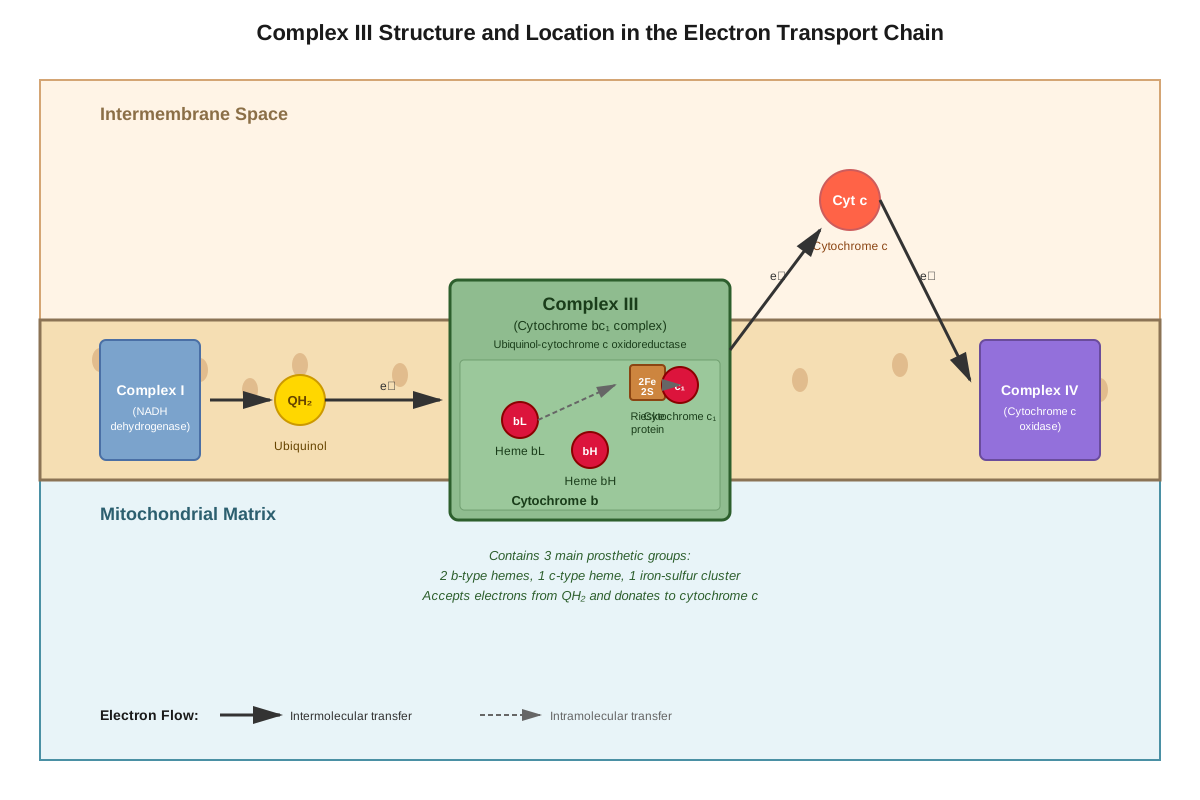
Structure and Location of Complex III
Complex III is an integral membrane protein complex embedded in the inner mitochondrial membrane, consisting of 11 subunits in mammals (though only three—cytochrome b, cytochrome c₁, and the Rieske iron-sulfur protein—directly participate in electron transfer). The complex exists as a functional dimer, with each monomer containing multiple redox-active prosthetic groups. The cytochrome b subunit contains two distinct heme groups (b_L and b_H, where L and H refer to low and high reduction potential) that play crucial roles in the Q-cycle. The cytochrome c₁ subunit contains a c-type heme that transfers electrons to cytochrome c. The Rieske iron-sulfur protein contains a [2Fe-2S] cluster that accepts electrons from ubiquinol and represents a unique structural feature with one iron coordinated by two histidines rather than the typical cysteine coordination.
The Q-Cycle Mechanism
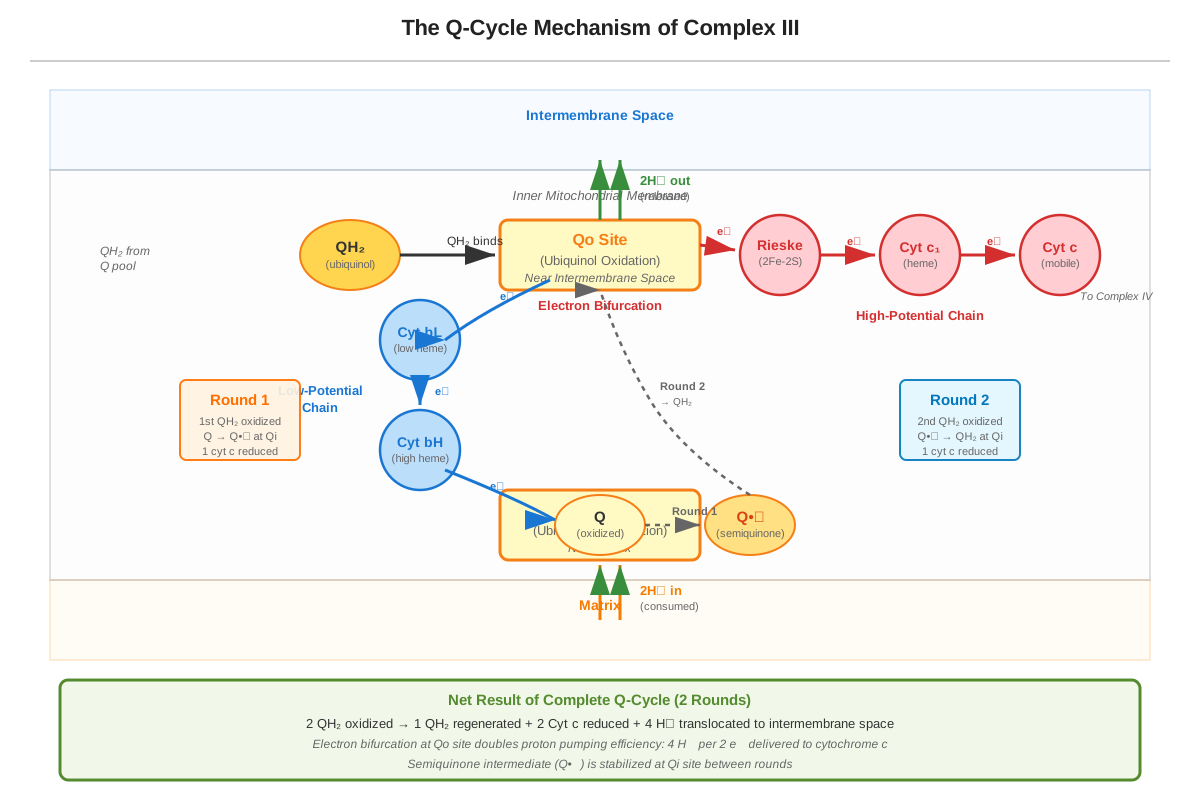
The Q-cycle represents Complex III's most sophisticated and MCAT-relevant feature. This mechanism explains how the oxidation of one ubiquinol (QH₂) molecule results in the translocation of four protons across the membrane—twice the number that would be expected from simple electron transfer. The cycle operates through two distinct binding sites: the Q_o site (oriented toward the intermembrane space) where ubiquinol oxidation occurs, and the Q_i site (oriented toward the matrix) where ubiquinone reduction occurs.
The Q-cycle proceeds through these steps:
- First turnover: A ubiquinol molecule binds at the Q_o site and releases two electrons and two protons. One electron follows a "high-potential chain" through the Rieske [2Fe-2S] cluster to cytochrome c₁, then to cytochrome c (a mobile electron carrier in the intermembrane space). The second electron follows a "low-potential chain" through cytochrome b_L to cytochrome b_H, then reduces a ubiquinone at the Q_i site to a semiquinone radical (Q•⁻). The two protons from ubiquinol oxidation are released into the intermembrane space.
- Second turnover: Another ubiquinol binds at the Q_o site and undergoes the same bifurcated electron transfer. Again, one electron travels through the high-potential chain to reduce another cytochrome c molecule, while the second electron travels through the low-potential chain to fully reduce the semiquinone at the Q_i site to ubiquinol. This reduction consumes two protons from the matrix.
Net result per Q-cycle: Two ubiquinol molecules are oxidized at Q_o (releasing 4 H⁺ to intermembrane space), one ubiquinone is reduced at Q_i (consuming 2 H⁺ from matrix), and two cytochrome c molecules are reduced. The net effect is 4 H⁺ translocated per 2 electrons delivered to cytochrome c, or 2 H⁺ per electron—double the efficiency of simple proton pumping.
Electron Flow and Reduction Potentials
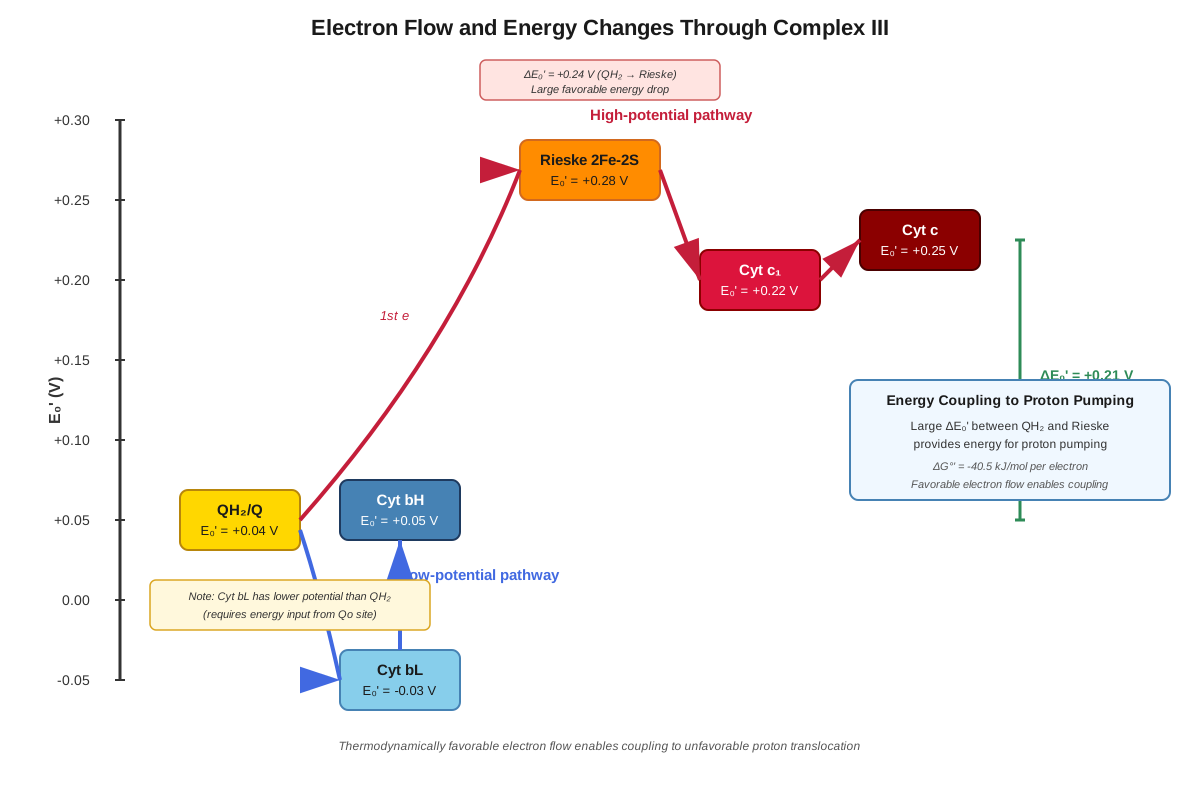
Understanding the thermodynamic driving force for electron transfer through Complex III requires knowledge of reduction potentials (E₀'). Electrons flow spontaneously from species with lower (more negative) reduction potentials to those with higher (more positive) potentials, releasing free energy. The relevant reduction potentials are:
| Redox Couple | E₀' (V) |
|---|---|
| QH₂/Q | +0.04 |
| Cytochrome b_L | -0.10 |
| Cytochrome b_H | +0.05 |
| Rieske [2Fe-2S] | +0.28 |
| Cytochrome c₁ | +0.22 |
| Cytochrome c (oxidized/reduced) | +0.25 |
The bifurcated electron transfer at the Q_o site is thermodynamically favorable because the high-potential electron moves to the Rieske center (ΔE₀' = +0.24 V), releasing sufficient energy to drive the energetically unfavorable transfer of the low-potential electron to cytochrome b_L (ΔE₀' = -0.14 V). This coupling of favorable and unfavorable reactions exemplifies a fundamental biochemical principle frequently tested on the MCAT.
Proton Pumping Stoichiometry
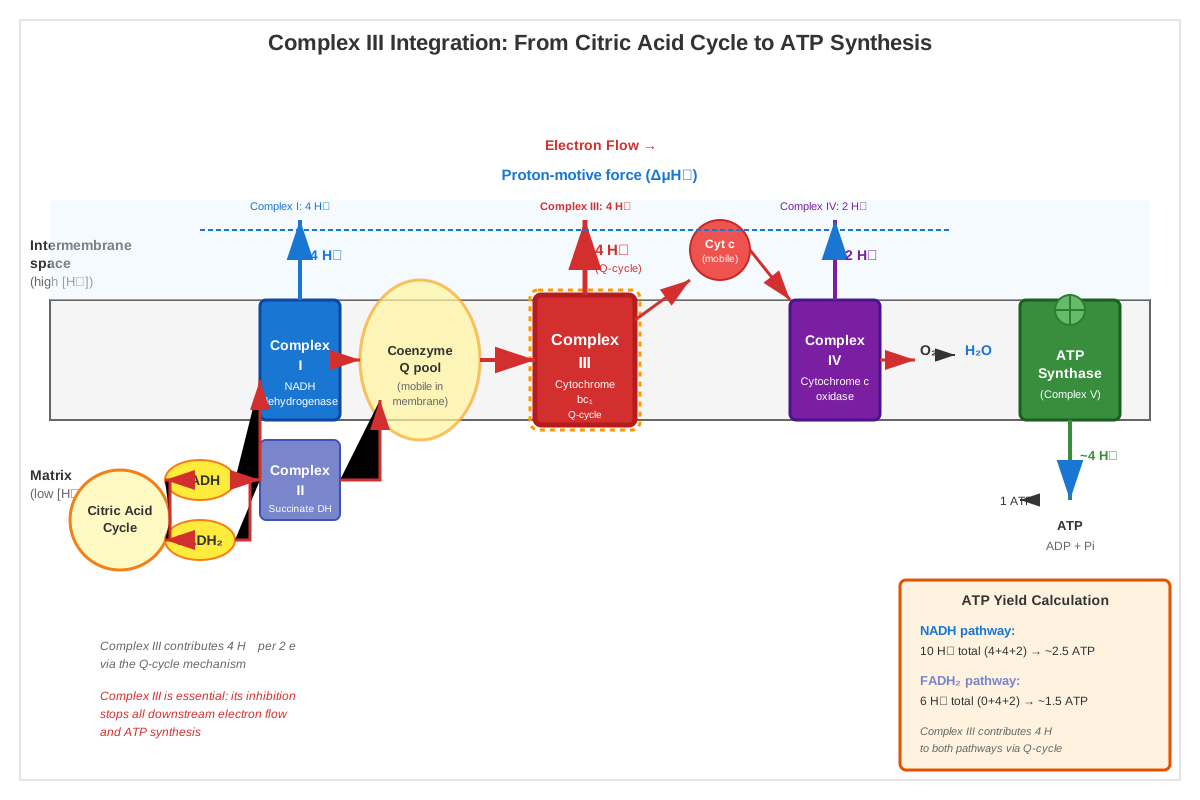
Complex III contributes significantly to the proton-motive force that drives ATP synthesis. For every two electrons transferred from ubiquinol to cytochrome c, Complex III translocates four protons from the matrix to the intermembrane space (as explained by the Q-cycle). This 4 H⁺/2e⁻ ratio (or 2 H⁺/e⁻) is higher than the stoichiometry of Complex IV (2 H⁺/2e⁻) and comparable to Complex I (4 H⁺/2e⁻). Understanding these stoichiometries is essential for calculating ATP yields from different substrates—a common MCAT quantitative question type.
Inhibitors of Complex III
Two major classes of inhibitors target Complex III, and distinguishing their mechanisms is high-yield for the MCAT:
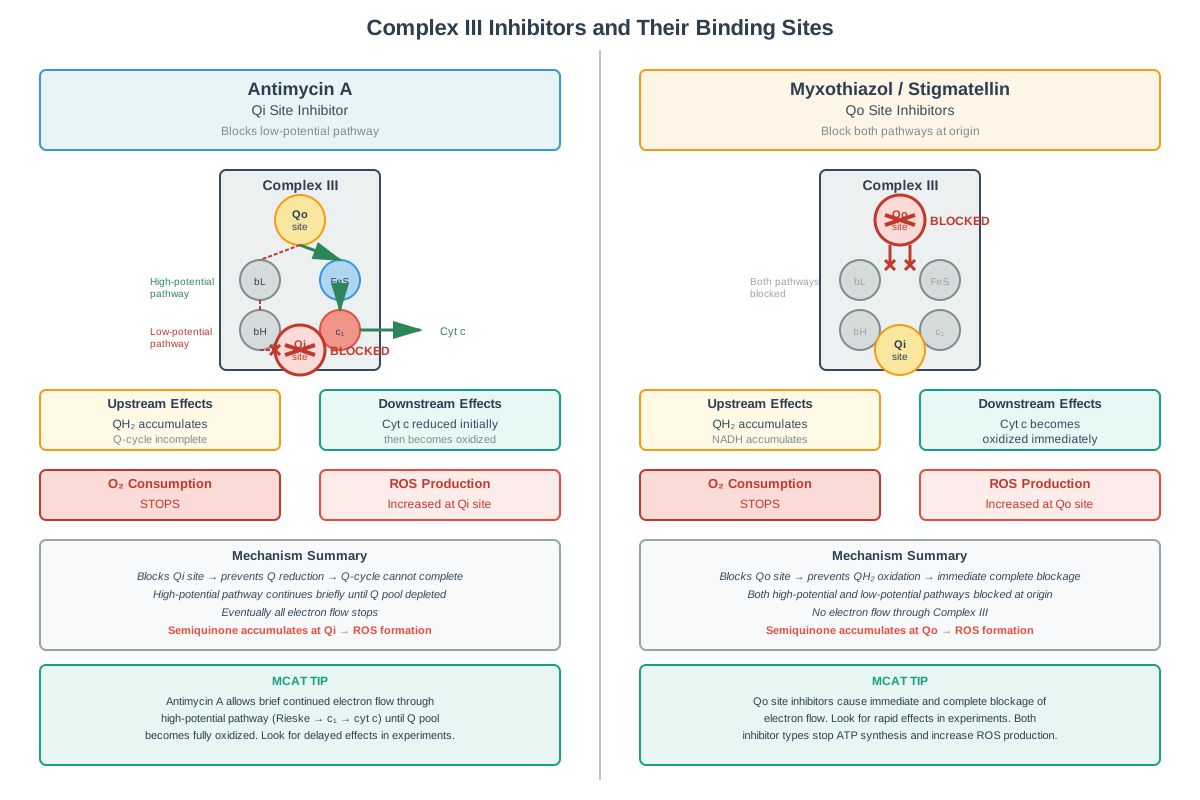
Antimycin A binds to the Q_i site, preventing ubiquinone reduction and blocking electron flow through the low-potential chain (cytochrome b pathway). This inhibition prevents the Q-cycle from completing, halting all electron transport through Complex III. Antimycin A causes ubiquinol to accumulate (substrate builds up before the block) while ubiquinone becomes depleted. Oxygen consumption ceases because electrons cannot reach Complex IV.
Myxothiazol and related inhibitors bind to the Q_o site, preventing ubiquinol oxidation. This blocks electron entry into Complex III at the initial step. Myxothiazol causes ubiquinol accumulation and prevents cytochrome c reduction. Like antimycin A, it completely halts oxygen consumption.
Exam Tip: When analyzing inhibitor effects, always consider what accumulates (substrates before the block) and what becomes depleted (products after the block). This reasoning applies to all metabolic pathway inhibition questions.
Connection to ATP Synthesis
While Complex III does not directly synthesize ATP, its proton pumping is essential for creating the electrochemical gradient that drives ATP synthase (Complex V). The relationship between proton translocation and ATP synthesis follows this logic:
- Complex III pumps 4 H⁺ per 2 electrons (from one NADH or two FADH₂ molecules entering at different points)
- ATP synthase requires approximately 4 H⁺ to synthesize one ATP (including the cost of transporting ATP out and ADP/Pi in)
- Therefore, electron flow through Complex III contributes to the synthesis of approximately 1 ATP per 2 electrons
This calculation is simplified for MCAT purposes; the actual P/O ratio (ATP synthesized per oxygen atom reduced) involves contributions from all proton-pumping complexes and varies slightly depending on experimental conditions.
Reactive Oxygen Species Generation
Complex III represents a significant source of superoxide radical (O₂•⁻) production, particularly when electron transport is inhibited or when the Q_o site is occupied by semiquinone radicals. If the semiquinone intermediate at Q_o encounters molecular oxygen before transferring its electron to the Rieske center, it can reduce O₂ to superoxide. This ROS generation has pathological implications and explains why mitochondrial dysfunction contributes to oxidative stress. Antimycin A actually increases ROS production by causing electron backup and prolonging semiquinone lifetime. Understanding this mechanism helps explain the cellular damage associated with mitochondrial toxins and respiratory chain defects.
Concept Relationships
Complex III functions as a critical integration point connecting multiple metabolic concepts. Ubiquinol (the substrate for Complex III) is generated by both Complex I (from NADH oxidation) and Complex II (from FADH₂ oxidation during succinate dehydrogenase activity in the citric acid cycle). This convergence means that Complex III activity depends on the combined output of multiple metabolic pathways. The product of Complex III, reduced cytochrome c, serves as the substrate for Complex IV, creating a direct sequential relationship: Complex III → cytochrome c → Complex IV → O₂.
The proton gradient established by Complex III (along with Complexes I and IV) drives ATP synthase, linking electron transport to phosphorylation through chemiosmotic coupling. When ATP demand increases, ATP synthase activity increases, dissipating the proton gradient and stimulating electron transport through Complex III—an example of respiratory control. Conversely, when the proton gradient becomes too large (high membrane potential), electron transport through Complex III slows, demonstrating feedback regulation.
Complex III dysfunction affects upstream pathways through product inhibition. When electron transport slows, the ubiquinol/ubiquinone ratio increases, which can inhibit Complex I and Complex II. The resulting accumulation of NADH inhibits citric acid cycle dehydrogenases, causing citric acid cycle intermediates to accumulate. This backup can ultimately affect glycolysis through NAD⁺ depletion, illustrating how a defect in one component of metabolism propagates throughout the entire system—a concept the MCAT frequently tests through multi-step reasoning questions.
Conceptual flow: Glycolysis → Pyruvate → Acetyl-CoA → Citric Acid Cycle → NADH/FADH₂ → Complex I/II → Ubiquinol → Complex III → Cytochrome c → Complex IV → H₂O, with Complex III simultaneously contributing to Proton gradient → ATP synthase → ATP.
Quick check — test yourself on Complex III so far.
Try Flashcards →High-Yield Facts
⭐ Complex III (cytochrome bc₁ complex) transfers electrons from ubiquinol to cytochrome c while pumping 4 H⁺ per 2 electrons transferred
⭐ The Q-cycle mechanism doubles proton pumping efficiency by oxidizing two ubiquinol molecules to reduce one ubiquinone and two cytochrome c molecules
⭐ Antimycin A inhibits Complex III at the Q_i site, blocking the low-potential electron pathway and halting all electron transport
⭐ Complex III contains three electron-carrying subunits: cytochrome b (with b_L and b_H hemes), cytochrome c₁, and the Rieske iron-sulfur protein
⭐ Bifurcated electron transfer at the Q_o site sends one electron through the high-potential chain (Rieske → cyt c₁ → cyt c) and one through the low-potential chain (cyt b_L → cyt b_H → Q at Q_i site)
- Complex III exists as a functional dimer in the inner mitochondrial membrane
- Myxothiazol inhibits Complex III at the Q_o site, preventing ubiquinol oxidation
- The Rieske iron-sulfur protein has a unique [2Fe-2S] cluster with histidine coordination
- Complex III is a major site of reactive oxygen species (superoxide) generation when electron transport is disrupted
- Cytochrome c is a mobile electron carrier that shuttles between Complex III and Complex IV in the intermembrane space
- Complex III dysfunction causes ubiquinol accumulation and can lead to mitochondrial myopathies
- The reduction potential increases along the high-potential chain: QH₂ (+0.04 V) → Rieske (+0.28 V) → cyt c (+0.25 V)
- Each NADH molecule (entering at Complex I) generates enough ubiquinol to support one complete Q-cycle at Complex III
- Complex III activity is regulated by the proton-motive force through respiratory control
Common Misconceptions
Misconception: Complex III directly pumps protons like a traditional ion pump, using ATP or conformational changes to move protons against their gradient.
Correction: Complex III uses a Q-cycle mechanism that couples electron transfer to proton translocation. Protons are not actively pumped; instead, ubiquinol oxidation releases protons on one side of the membrane (intermembrane space) while ubiquinone reduction consumes protons on the other side (matrix), creating net translocation. This is a chemically-driven process, not a conformational pump.
Misconception: Each ubiquinol molecule oxidized by Complex III results in two protons pumped (one per electron transferred).
Correction: The Q-cycle doubles efficiency—each complete cycle oxidizes two ubiquinol molecules and pumps four protons while reducing only one ubiquinone and two cytochrome c molecules. This 4 H⁺/2e⁻ stoichiometry is crucial for ATP yield calculations.
Misconception: Antimycin A and myxothiazol have identical effects because both inhibit Complex III.
Correction: While both halt electron transport, they bind at different sites. Antimycin A blocks the Q_i site (affecting the low-potential chain), while myxothiazol blocks the Q_o site (preventing initial ubiquinol oxidation). This distinction matters for interpreting experimental data about where electrons accumulate in the presence of different inhibitors.
Misconception: Complex III generates ATP directly through substrate-level phosphorylation.
Correction: Complex III does not synthesize ATP directly. It contributes to ATP synthesis indirectly by establishing the proton-motive force that drives ATP synthase. Only substrate-level phosphorylation (in glycolysis and the citric acid cycle) and oxidative phosphorylation at ATP synthase produce ATP directly.
Misconception: Cytochrome c is part of Complex III's structure and remains bound during electron transfer.
Correction: Cytochrome c is a mobile electron carrier that diffuses in the intermembrane space between Complex III and Complex IV. It transiently associates with Complex III to accept electrons from cytochrome c₁, then dissociates and moves to Complex IV. This mobility is essential for electron transport chain function.
Misconception: All electrons entering Complex III follow the same pathway through the complex.
Correction: Complex III performs bifurcated electron transfer—the two electrons from each ubiquinol molecule follow different paths. One electron takes the high-potential route (through Rieske and cytochrome c₁ to cytochrome c), while the other takes the low-potential route (through cytochrome b to reduce ubiquinone at the Q_i site). This bifurcation is essential for the Q-cycle mechanism.
Worked Examples
Example 1: Inhibitor Analysis and Oxygen Consumption
Question: Researchers isolate mitochondria and measure oxygen consumption in the presence of excess NADH and ADP. They then add antimycin A and observe that oxygen consumption immediately drops to zero. Next, they add an artificial electron donor that directly reduces cytochrome c, bypassing Complex III. What happens to oxygen consumption, and why?
Solution:
Step 1: Analyze the initial condition
With excess NADH and ADP, electron transport proceeds normally: NADH → Complex I → ubiquinol → Complex III → cytochrome c → Complex IV → O₂. Oxygen consumption is high because electrons flow through the entire chain.
Step 2: Understand antimycin A's effect
Antimycin A binds to the Q_i site of Complex III, blocking electron flow through the cytochrome b pathway. This prevents the Q-cycle from completing, so electrons cannot pass through Complex III to reach cytochrome c. Without reduced cytochrome c, Complex IV cannot transfer electrons to oxygen, so oxygen consumption drops to zero. This demonstrates that Complex III is essential for normal electron transport.
Step 3: Analyze the artificial electron donor
The artificial electron donor directly reduces cytochrome c, bypassing the blocked Complex III. Now reduced cytochrome c is available as a substrate for Complex IV.
Step 4: Predict oxygen consumption
Oxygen consumption will resume because electrons can now flow from the artificial donor → cytochrome c → Complex IV → O₂. However, the rate will likely be lower than the initial rate because: (1) the artificial donor may not reduce cytochrome c as efficiently as Complex III, and (2) proton pumping by Complexes I and III is bypassed, reducing the proton-motive force and potentially affecting respiratory control.
Key Concept: This example illustrates that electron transport complexes function sequentially, and inhibiting one complex blocks the entire chain unless downstream components can be supplied with electrons through alternative routes. This reasoning applies to all ETC inhibitor questions.
Example 2: ATP Yield Calculation Involving Complex III
Question: Calculate the maximum number of ATP molecules that can be synthesized from the complete oxidation of one molecule of succinate to fumarate, assuming standard P/O ratios and that all reducing equivalents enter the electron transport chain. Show how Complex III contributes to this yield.
Solution:
Step 1: Identify the reaction and products
Succinate + FAD → Fumarate + FADH₂ (catalyzed by succinate dehydrogenase, which is Complex II)
Step 2: Trace FADH₂ electrons through the ETC
FADH₂ is covalently bound to Complex II, so its electrons enter the ETC by reducing ubiquinone to ubiquinol. The electrons then flow: ubiquinol → Complex III → cytochrome c → Complex IV → O₂.
Step 3: Calculate proton pumping
- Complex II: 0 H⁺ pumped (it reduces ubiquinone but doesn't pump protons)
- Complex III: 4 H⁺ pumped per 2 electrons (one complete Q-cycle)
- Complex IV: 2 H⁺ pumped per 2 electrons
- Total: 6 H⁺ pumped per FADH₂ oxidized
Step 4: Convert protons to ATP
Using the standard assumption that ~4 H⁺ are required per ATP synthesized (including transport costs):
6 H⁺ ÷ 4 H⁺/ATP = 1.5 ATP
Step 5: Identify Complex III's contribution
Of the 6 total protons pumped, Complex III contributes 4 H⁺, which represents:
4 H⁺ ÷ 4 H⁺/ATP = 1 ATP
Answer: Complete oxidation of succinate yields approximately 1.5 ATP, with Complex III contributing approximately 1 ATP (or 2/3 of the total yield). This is lower than the ~2.5 ATP from NADH oxidation because FADH₂ bypasses Complex I, which would contribute an additional 4 H⁺.
Key Concept: This calculation demonstrates why FADH₂ yields less ATP than NADH—it enters the ETC downstream of Complex I. Understanding each complex's contribution to proton pumping is essential for ATP yield calculations, a common MCAT quantitative question type.
Exam Strategy
Approaching Complex III Questions
When encountering Complex III questions on the MCAT, follow this systematic approach:
- Identify the question type: Is it asking about mechanism (electron flow, Q-cycle), stoichiometry (proton pumping, ATP yield), inhibitors (effects on electron transport), or experimental interpretation (oxygen consumption data)?
- Map electron flow: Quickly sketch the pathway: ubiquinol → Complex III → cytochrome c → Complex IV. This visual reference prevents confusion about substrate/product relationships.
- Check for inhibitors: If the question mentions antimycin A, myxothiazol, or "Complex III inhibitor," immediately consider what accumulates (ubiquinol) and what becomes depleted (reduced cytochrome c, oxygen consumption stops).
- Consider stoichiometry: For quantitative questions, remember the 4 H⁺/2e⁻ ratio and that each NADH supports one Q-cycle while each FADH₂ enters at ubiquinone.
Trigger Words and Phrases
Watch for these terms that signal Complex III content:
- "Cytochrome bc₁ complex" or "ubiquinol-cytochrome c oxidoreductase" (alternative names)
- "Q-cycle" (mechanism question likely)
- "Antimycin A" or "myxothiazol" (inhibitor analysis)
- "Bifurcated electron transfer" (mechanism detail)
- "Proton-motive force" (connection to ATP synthesis)
- "Oxygen consumption" in experimental contexts (often involves ETC inhibitors)
- "Reduction potential" (thermodynamic analysis)
Process-of-Elimination Tips
For Complex III multiple-choice questions:
- Eliminate answers that confuse Complex III with other complexes: Complex III does NOT oxidize NADH directly (that's Complex I), does NOT contain copper centers (that's Complex IV), and does NOT synthesize ATP directly (that's ATP synthase).
- Eliminate answers with incorrect stoichiometry: If an answer states that Complex III pumps 2 H⁺ per 2 electrons, it's wrong (correct answer: 4 H⁺ per 2 electrons).
- Eliminate answers that misplace inhibitors: Antimycin A blocks Complex III, not Complex I or IV. Rotenone blocks Complex I, cyanide blocks Complex IV.
- For mechanism questions, eliminate answers that violate thermodynamics: Electrons flow from lower to higher reduction potential, so any answer suggesting reverse flow is incorrect.
Time Allocation
Complex III questions typically require 60-90 seconds:
- Simple recall (inhibitor identification, stoichiometry): 30-45 seconds
- Mechanism tracing (electron flow, Q-cycle): 60-75 seconds
- Quantitative calculations (ATP yield): 90-120 seconds
- Passage-based experimental interpretation: 90-120 seconds
If a question requires detailed Q-cycle mechanism knowledge beyond basic electron flow, consider whether the answer can be inferred from general principles before investing time in complex mechanistic reasoning.
Memory Techniques
Mnemonic for Complex III Components
"Really Big Cats" helps remember the three electron-carrying subunits:
- Rieske iron-sulfur protein
- B = cytochrome b (with b_L and b_H)
- Cytochrome c₁
Q-Cycle Visualization
Imagine the Q-cycle as a "two-for-one deal": Two ubiquinol molecules enter (at Q_o), but only one ubiquinone gets reduced (at Q_i), with the "extra" electrons going to reduce two cytochrome c molecules. This mental model helps remember that the cycle doubles efficiency.
Inhibitor Location Mnemonic
"Antimycin At the Inside" (Q_i site is on the matrix/inside)
"Myxothiazol at the Outside" (Q_o site is toward intermembrane space/outside)
Proton Pumping Stoichiometry
"Complex III: 4 for 2" (4 protons for 2 electrons) helps distinguish it from Complex IV (2 for 2) and Complex I (4 for 2, same as III).
Electron Path Visualization
Picture ubiquinol as a "Y-shaped splitter": When it releases two electrons at the Q_o site, they split into two paths—one goes "high" (through Rieske, high reduction potential) and one goes "low" (through cytochrome b, low reduction potential). This bifurcation is the key to understanding the Q-cycle.
Reduction Potential Sequence
For the high-potential chain, remember "QRC" (increasing reduction potential):
- QH₂ (+0.04 V)
- Rieske (+0.28 V)
- Cytochrome c (+0.25 V)
Note: Cytochrome c is slightly lower than Rieske, but both are much higher than ubiquinol, so electrons flow spontaneously through this chain.
Summary
Complex III (cytochrome bc₁ complex) serves as the central electron transfer station in the mitochondrial electron transport chain, accepting electrons from ubiquinol and delivering them to cytochrome c while simultaneously establishing a proton gradient essential for ATP synthesis. The complex's sophisticated Q-cycle mechanism doubles proton pumping efficiency by oxidizing two ubiquinol molecules to reduce one ubiquinone and two cytochrome c molecules, translocating four protons per two electrons transferred. This mechanism involves bifurcated electron transfer at the Q_o site, where electrons split into high-potential (Rieske → cytochrome c₁ → cytochrome c) and low-potential (cytochrome b_L → cytochrome b_H → ubiquinone at Q_i) pathways. Complex III is vulnerable to specific inhibitors—antimycin A blocks the Q_i site while myxothiazol blocks the Q_o site—both of which halt electron transport and oxygen consumption. Understanding Complex III requires integrating structural biochemistry (heme groups, iron-sulfur clusters), thermodynamics (reduction potentials driving electron flow), and metabolic regulation (respiratory control through proton-motive force). For MCAT success, students must master the Q-cycle mechanism, calculate proton pumping stoichiometry for ATP yield questions, predict inhibitor effects, and connect Complex III function to upstream (citric acid cycle, Complexes I and II) and downstream (Complex IV, ATP synthase) processes.
Key Takeaways
- Complex III transfers electrons from ubiquinol to cytochrome c via the Q-cycle mechanism, pumping 4 H⁺ per 2 electrons transferred—double the efficiency of simple electron transfer
- The Q-cycle involves bifurcated electron transfer at the Q_o site: one electron follows the high-potential chain (Rieske → cyt c₁ → cyt c) while the other follows the low-potential chain (cyt b_L → cyt b_H → Q at Q_i)
- Antimycin A (Q_i site inhibitor) and myxothiazol (Q_o site inhibitor) both block electron transport through Complex III, causing ubiquinol accumulation and halting oxygen consumption
- Complex III contains three electron-carrying subunits: cytochrome b (with two hemes), cytochrome c₁, and the Rieske iron-sulfur protein; cytochrome c is a mobile carrier, not part of the complex structure
- Complex III contributes approximately 1 ATP per 2 electrons through its proton pumping, making it essential for oxidative phosphorylation efficiency
- Understanding Complex III requires connecting it to upstream processes (NADH/FADH₂ generation) and downstream processes (Complex IV, ATP synthase) through electron flow and proton gradient establishment
- Complex III is a major site of reactive oxygen species generation when electron transport is disrupted, explaining mitochondrial contributions to oxidative stress
Related Topics
Complex I (NADH-CoQ Oxidoreductase): The entry point for electrons from NADH into the electron transport chain; understanding Complex I helps contextualize where ubiquinol (Complex III's substrate) originates and why NADH yields more ATP than FADH₂.
Complex II (Succinate Dehydrogenase): The citric acid cycle enzyme that also functions as an ETC component, feeding electrons directly to ubiquinone; mastering Complex II explains the alternative route for electron entry that bypasses Complex I.
Complex IV (Cytochrome c Oxidase): The terminal electron acceptor that receives electrons from cytochrome c (Complex III's product) and reduces oxygen to water; understanding Complex IV completes the electron transport sequence.
ATP Synthase (Complex V): The enzyme that uses the proton gradient established by Complexes I, III, and IV to synthesize ATP; connecting Complex III to ATP synthase explains how electron transport couples to phosphorylation.
Mitochondrial Diseases: Clinical conditions resulting from electron transport chain defects, including Complex III mutations; studying these diseases provides clinical context for biochemical mechanisms.
Reactive Oxygen Species and Oxidative Stress: The pathological consequences of electron transport dysfunction, particularly ROS generation at Complex III; this topic bridges biochemistry with cell biology and pathology.
Practice CTA
Now that you've mastered the core concepts of Complex III, it's time to solidify your understanding through active practice. Attempt the practice questions and flashcards associated with this topic to test your ability to apply the Q-cycle mechanism, calculate ATP yields, analyze inhibitor effects, and integrate Complex III with broader metabolic pathways. Remember that MCAT success comes not from passive reading but from actively working through problems and identifying gaps in your understanding. Each practice question you complete strengthens your pattern recognition and builds the confidence needed for test day. You've built a strong foundation—now reinforce it through deliberate practice!
Sign up free to keep reading
Create a free AnvayaPrep account to finish this MCAT guide on Complex III — plus flashcards and practice questions.