Overview
DNA replication is one of the most fundamental processes in molecular biology, and understanding the lagging strand is essential for mastering this topic on the MCAT. During DNA replication, the two strands of the double helix are synthesized in fundamentally different ways due to the antiparallel nature of DNA and the directional constraints of DNA polymerase. The lagging strand represents the strand that is synthesized discontinuously in short fragments, moving away from the replication fork. This seemingly inefficient process reflects an elegant solution to the biochemical constraints imposed by enzyme directionality and DNA structure.
For MCAT preparation, the lagging strand concept appears frequently in both passage-based and discrete questions within the Molecular Biology and Genetics section of Biology. Questions may test your understanding of the enzymes involved, the sequence of events during replication, or the consequences of mutations affecting lagging strand synthesis. The topic integrates knowledge of DNA structure, enzyme function, and cellular processes, making it a high-yield area that connects to broader themes in genetics and cell biology.
Understanding lagging strand synthesis provides insight into DNA repair mechanisms, telomere maintenance, and the molecular basis of certain genetic diseases. The process involves multiple enzymes working in coordination—DNA polymerase, primase, ligase, and helicase—each playing a specific role that may be tested individually or as part of an integrated passage. Mastery of this topic enables students to tackle complex questions about replication fidelity, mutation rates, and the cellular response to DNA damage.
Learning Objectives
- [ ] Define lagging strand using accurate Biology terminology
- [ ] Explain why lagging strand matters for the MCAT
- [ ] Apply lagging strand concepts to exam-style questions
- [ ] Identify common mistakes related to lagging strand synthesis
- [ ] Connect lagging strand to related Biology concepts
- [ ] Describe the complete mechanism of Okazaki fragment synthesis and processing
- [ ] Compare and contrast leading strand and lagging strand synthesis at the molecular level
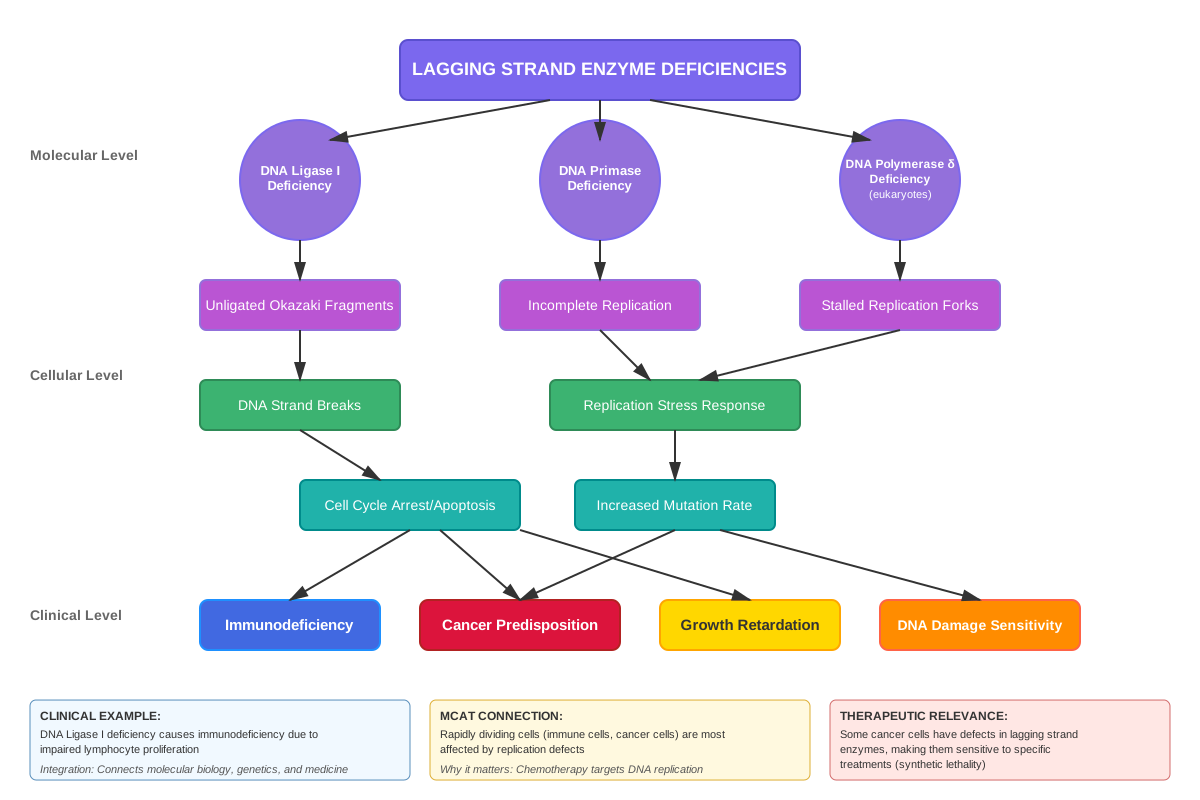
- [ ] Predict the consequences of enzyme deficiencies affecting lagging strand replication
Prerequisites
- DNA structure and antiparallel orientation: Understanding that DNA strands run in opposite 5' to 3' directions is essential because this explains why lagging strand synthesis must be discontinuous
- DNA polymerase directionality: Knowledge that DNA polymerase can only synthesize DNA in the 5' to 3' direction is fundamental to understanding why the lagging strand exists
- Complementary base pairing: Familiarity with A-T and G-C pairing rules is necessary to understand template-directed synthesis
- Basic enzyme function: General understanding of how enzymes catalyze reactions and require specific substrates
- Nucleotide structure: Knowledge of the 5' phosphate and 3' hydroxyl groups on nucleotides explains the chemistry of DNA synthesis
Why This Topic Matters
The lagging strand concept has significant clinical and research implications. Defects in lagging strand synthesis enzymes are associated with various genetic disorders, including certain forms of immunodeficiency and cancer predisposition syndromes. DNA ligase deficiencies, for example, can lead to increased sensitivity to DNA damage and impaired immune function. Understanding lagging strand synthesis is also crucial for comprehending how chemotherapeutic agents and antiviral medications target rapidly dividing cells by interfering with DNA replication.
On the MCAT, lagging strand Biology appears in approximately 15-20% of molecular biology questions, either as the primary focus or as part of broader DNA replication passages. The topic commonly appears in several formats: discrete questions testing enzyme function, passage-based questions analyzing experimental data about replication, and questions requiring students to predict outcomes of mutations. The MCAT frequently presents diagrams of replication forks and asks students to identify which strand is the lagging strand or to explain why certain enzymes are necessary.
Exam passages often integrate lagging strand concepts with other topics such as PCR (which mimics aspects of DNA replication), telomere biology (where lagging strand synthesis creates the end-replication problem), and DNA repair mechanisms. Questions may present experimental scenarios where researchers manipulate replication machinery or analyze cells with defective replication enzymes, requiring students to apply their understanding of lagging strand synthesis to novel situations.
Core Concepts
Definition and Basic Mechanism
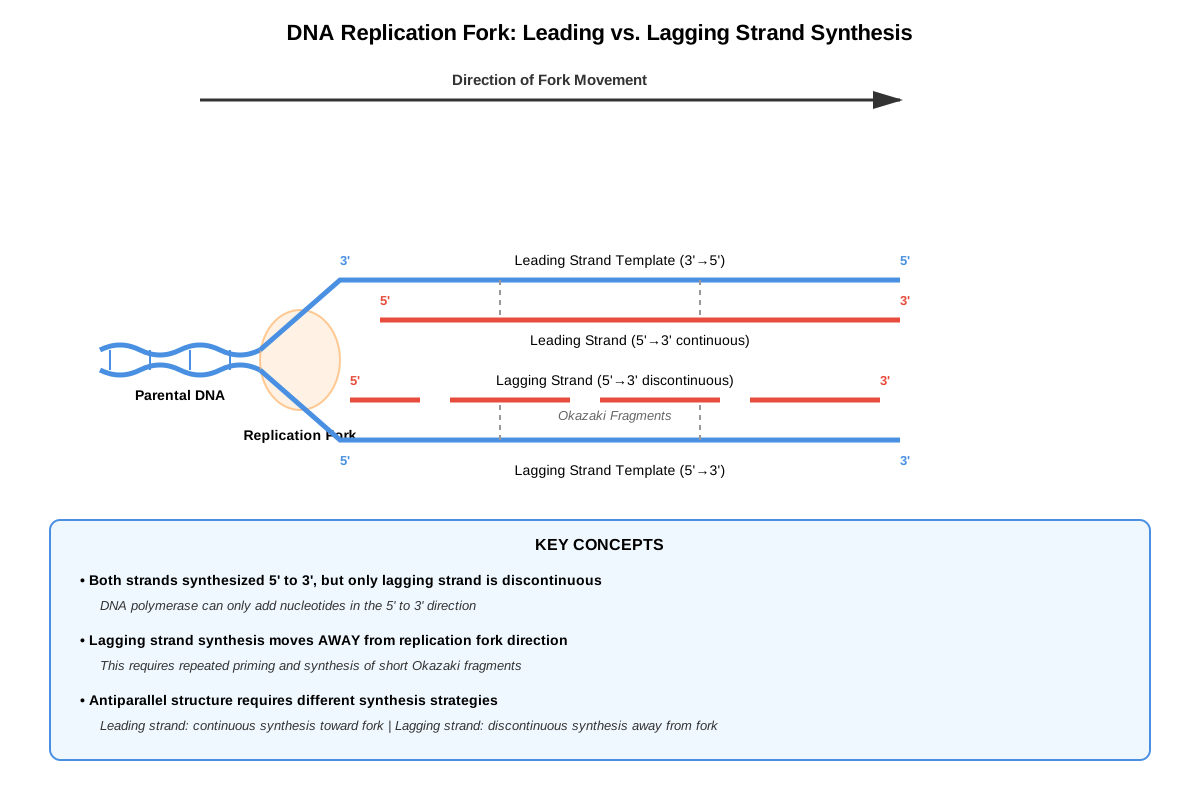
The lagging strand is the DNA strand synthesized discontinuously during DNA replication, produced in short segments called Okazaki fragments that are later joined together. This strand is synthesized in the direction away from the replication fork, despite DNA polymerase only being able to add nucleotides in the 5' to 3' direction. The lagging strand is complementary to the 3' to 5' template strand at the replication fork.
During replication, the DNA double helix unwinds at the replication fork, creating two template strands. Because DNA polymerase can only synthesize in the 5' to 3' direction, and the two template strands are antiparallel, one strand (the leading strand) can be synthesized continuously toward the replication fork, while the other (the lagging strand) must be synthesized in short, discontinuous segments moving away from the fork.
Okazaki Fragments
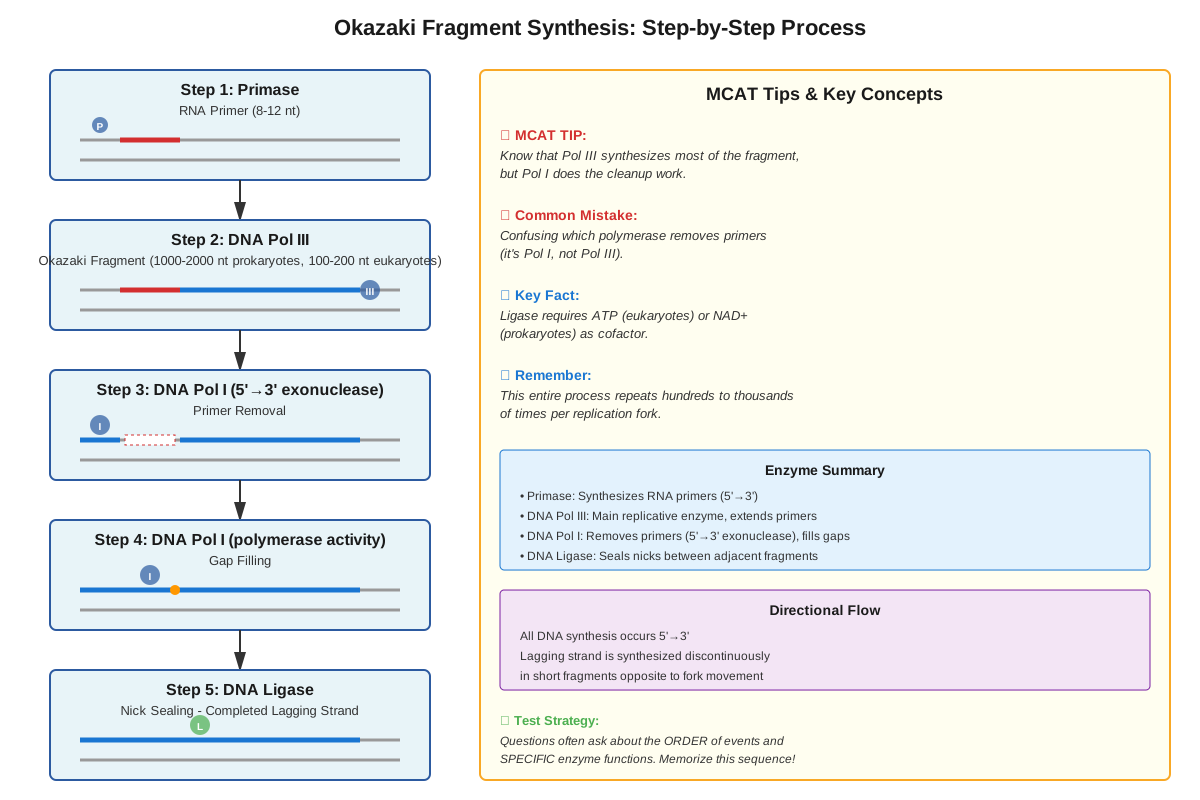
Okazaki fragments are the short DNA segments (approximately 1,000-2,000 nucleotides in prokaryotes and 100-200 nucleotides in eukaryotes) that compose the lagging strand before they are joined together. These fragments are named after Reiji Okazaki, who discovered them in the 1960s. Each Okazaki fragment begins with a short RNA primer synthesized by primase and is then extended by DNA polymerase.
The size difference between prokaryotic and eukaryotic Okazaki fragments reflects differences in the speed of replication and the processivity of DNA polymerases in these organisms. This size difference is testable on the MCAT, particularly in comparative biology questions.
Enzymes Involved in Lagging Strand Synthesis
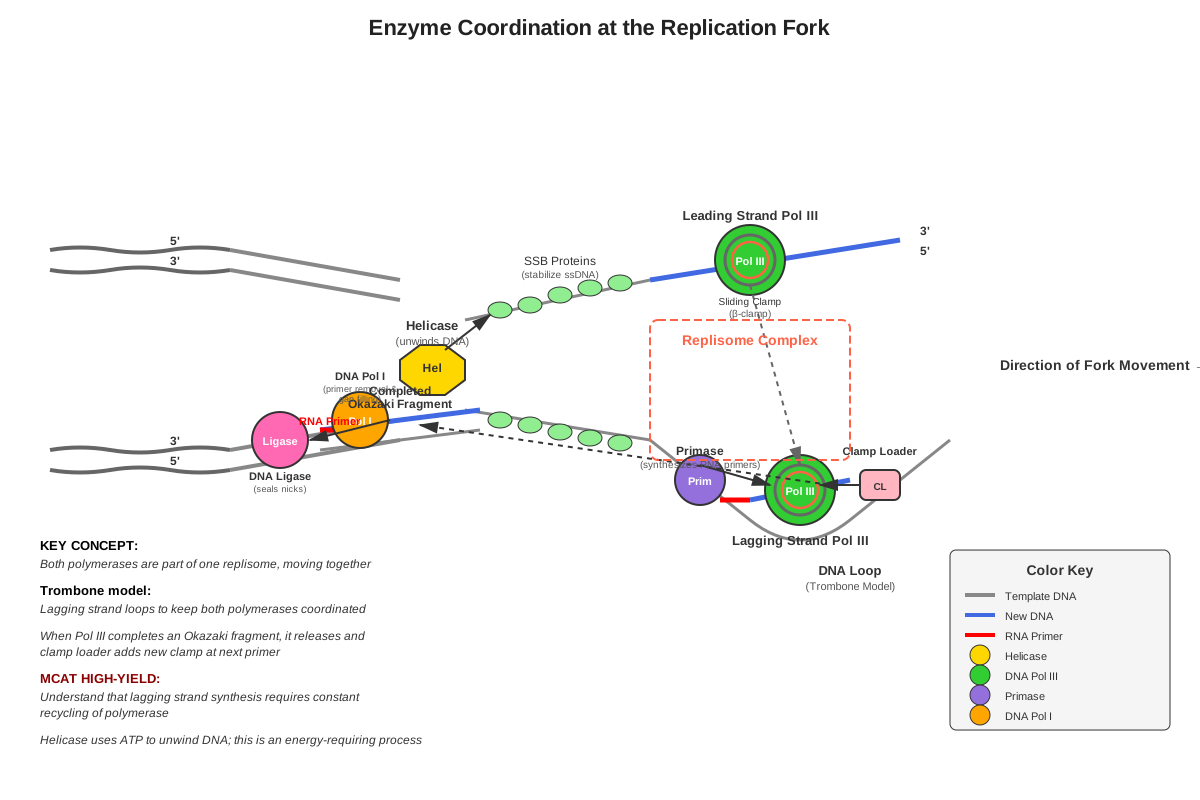
Multiple enzymes coordinate to synthesize the lagging strand:
- Helicase: Unwinds the DNA double helix at the replication fork, creating single-stranded template DNA
- Single-strand binding proteins (SSB): Stabilize the unwound single-stranded DNA and prevent it from re-annealing
- Primase: Synthesizes short RNA primers (approximately 10 nucleotides) that provide the 3'-OH group required by DNA polymerase to begin synthesis
- DNA polymerase III (prokaryotes) or DNA polymerase δ (eukaryotes): Extends the RNA primer by adding DNA nucleotides in the 5' to 3' direction
- DNA polymerase I (prokaryotes) or DNA polymerase δ/ε (eukaryotes): Removes RNA primers and fills in the gaps with DNA using its 5' to 3' exonuclease activity
- DNA ligase: Seals the nicks between adjacent Okazaki fragments by catalyzing the formation of phosphodiester bonds
Step-by-Step Process of Lagging Strand Synthesis
The synthesis of the lagging strand follows a repetitive cycle:
- Helicase unwinds the DNA double helix, moving along the replication fork
- SSB proteins bind to the exposed single-stranded DNA on the lagging strand template
- Primase synthesizes a short RNA primer complementary to the template strand
- DNA polymerase III binds to the 3'-OH of the RNA primer and synthesizes DNA in the 5' to 3' direction, creating an Okazaki fragment
- DNA polymerase III continues until it reaches the RNA primer of the previous Okazaki fragment
- DNA polymerase I removes the RNA primer using its 5' to 3' exonuclease activity and simultaneously fills in the gap with DNA nucleotides (called nick translation)
- DNA ligase seals the remaining nick between the 3'-OH of one Okazaki fragment and the 5'-phosphate of the adjacent fragment, forming a continuous DNA strand
- The cycle repeats as the replication fork continues to advance
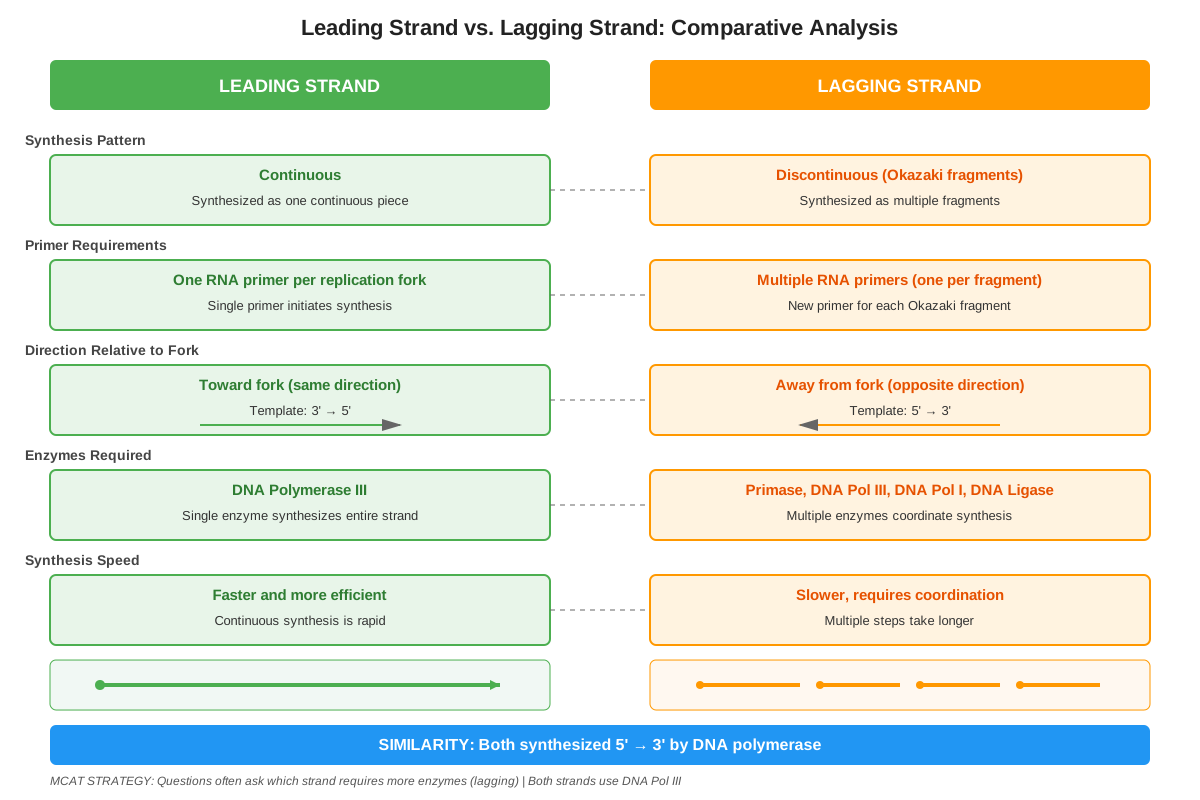
Comparison: Leading vs. Lagging Strand
| Feature | Leading Strand | Lagging Strand |
|---|---|---|
| Direction of synthesis | Toward the replication fork | Away from the replication fork |
| Continuity | Continuous | Discontinuous (Okazaki fragments) |
| Number of primers needed | One per replication fork | Multiple (one per Okazaki fragment) |
| Template strand orientation | 3' to 5' (toward fork) | 5' to 3' (toward fork) |
| Primary polymerase (prokaryotes) | DNA Pol III | DNA Pol III (extension), DNA Pol I (primer removal) |
| Complexity | Simpler, more efficient | More complex, requires coordination of multiple enzymes |
| Primer removal required | Minimal (only initial primer) | Extensive (every Okazaki fragment) |
The Role of RNA Primers
DNA polymerase cannot initiate DNA synthesis de novo; it requires a pre-existing 3'-OH group to add nucleotides. RNA primers provide this essential 3'-OH group. Primase, an RNA polymerase, can initiate synthesis without a primer, making it crucial for both leading and lagging strand synthesis. However, the lagging strand requires many more primers than the leading strand.
The RNA primers must be removed and replaced with DNA to maintain the integrity of the DNA molecule. This is accomplished by DNA polymerase I in prokaryotes, which has both 5' to 3' exonuclease activity (to remove the RNA) and polymerase activity (to fill in with DNA). The enzyme moves along the strand, simultaneously removing ribonucleotides ahead and adding deoxyribonucleotides behind—a process called nick translation.
DNA Ligase and the Final Sealing
After DNA polymerase I removes all RNA primers and fills in the gaps, small breaks called nicks remain in the sugar-phosphate backbone between adjacent Okazaki fragments. DNA ligase catalyzes the formation of phosphodiester bonds between the 3'-OH of one fragment and the 5'-phosphate of the next fragment. This reaction requires energy, which comes from ATP in eukaryotes and NAD+ in prokaryotes—a distinction that occasionally appears on the MCAT.
The ligase reaction is essential for creating a continuous, stable DNA molecule. Without functional ligase, the lagging strand would remain fragmented, leading to DNA breaks and genomic instability.
Concept Relationships
The lagging strand concept is deeply interconnected with multiple aspects of molecular biology. DNA structure (antiparallel orientation) → necessitates → bidirectional synthesis strategies → creates → leading and lagging strand distinction. The 5' to 3' directionality of DNA polymerase → requires → discontinuous synthesis on one strand → produces → Okazaki fragments.
The process connects to enzyme specificity: primase function → enables → DNA polymerase initiation → leads to → Okazaki fragment synthesis. Subsequently, DNA polymerase I exonuclease activity → removes → RNA primers → followed by → DNA ligase action → produces → continuous lagging strand.
Lagging strand synthesis relates to broader cellular processes: DNA replication → enables → cell division → requires → accurate lagging strand synthesis → prevents → mutations and genomic instability. The concept also connects to DNA repair mechanisms, as many repair pathways use similar enzymes (ligase, polymerases) and mechanisms (nick translation, primer synthesis).
Understanding the lagging strand is prerequisite knowledge for telomere biology, where the inability to fully replicate the lagging strand at chromosome ends creates the end-replication problem. This connection explains why telomeres shorten with each cell division and why telomerase is necessary in certain cell types.
Quick check — test yourself on Lagging strand so far.
Try Flashcards →High-Yield Facts
⭐ The lagging strand is synthesized discontinuously in short fragments called Okazaki fragments, which are approximately 1,000-2,000 nucleotides in prokaryotes and 100-200 nucleotides in eukaryotes
⭐ DNA polymerase can only synthesize DNA in the 5' to 3' direction, which necessitates discontinuous synthesis of the lagging strand
⭐ Each Okazaki fragment begins with an RNA primer synthesized by primase, which is later removed by DNA polymerase I (prokaryotes) or DNA polymerase δ (eukaryotes)
⭐ DNA ligase seals the nicks between adjacent Okazaki fragments, using ATP in eukaryotes and NAD+ in prokaryotes as an energy source
⭐ The lagging strand template runs 5' to 3' toward the replication fork, while the newly synthesized lagging strand runs 5' to 3' away from the fork
- Multiple RNA primers are required for lagging strand synthesis, whereas the leading strand requires only one primer per replication fork
- DNA polymerase I has 5' to 3' exonuclease activity that removes RNA primers through a process called nick translation
- Single-strand binding proteins (SSB) stabilize the single-stranded DNA template on the lagging strand to prevent secondary structure formation
- The lagging strand is more prone to errors than the leading strand due to the multiple initiation events and enzyme coordination required
- Defects in DNA ligase can lead to accumulation of DNA breaks and increased sensitivity to DNA-damaging agents
Common Misconceptions
Misconception: The lagging strand is synthesized in the 3' to 5' direction → Correction: The lagging strand is always synthesized in the 5' to 3' direction (like all DNA synthesis), but the overall direction of synthesis is away from the replication fork. The template strand for the lagging strand runs 5' to 3' toward the fork, but the new strand being synthesized runs 5' to 3' away from the fork.
Misconception: Okazaki fragments are made of RNA → Correction: Okazaki fragments are primarily DNA with a short RNA primer at the 5' end. The RNA primer is later removed and replaced with DNA, making the final lagging strand entirely DNA.
Misconception: DNA polymerase III removes the RNA primers → Correction: DNA polymerase I (in prokaryotes) removes RNA primers using its 5' to 3' exonuclease activity. DNA polymerase III lacks this exonuclease activity and cannot remove primers.
Misconception: The lagging strand is the bottom strand in a diagram → Correction: The designation of leading versus lagging strand depends on the direction of replication fork movement, not the visual position in a diagram. At one replication fork, the top strand might be lagging, while at the other fork (replication is bidirectional), the bottom strand would be lagging.
Misconception: DNA ligase fills in gaps between Okazaki fragments → Correction: DNA ligase only seals nicks (single phosphodiester bond breaks) between adjacent nucleotides. DNA polymerase I fills in gaps (missing nucleotides) after removing RNA primers; ligase then seals the remaining nick.
Misconception: The lagging strand is synthesized more slowly than the leading strand → Correction: Both strands are synthesized at approximately the same rate overall because the replication machinery is coordinated. However, lagging strand synthesis is discontinuous and requires more enzymatic steps, making it more complex but not necessarily slower.
Worked Examples
Example 1: Identifying Enzymes in a Replication Defect
Question: A bacterial strain has a mutation in the gene encoding DNA polymerase I. When these bacteria replicate their DNA, researchers observe that replication proceeds normally initially, but the newly synthesized DNA contains numerous short RNA segments interspersed with DNA. Which of the following best explains this observation?
Step 1 - Identify what's abnormal: The presence of RNA segments in the final DNA product indicates that RNA primers are not being removed properly.
Step 2 - Recall normal function: In normal lagging strand synthesis, DNA polymerase I removes RNA primers using its 5' to 3' exonuclease activity and replaces them with DNA.
Step 3 - Connect mutation to phenotype: Without functional DNA polymerase I, RNA primers remain in place because DNA polymerase III (which synthesizes the Okazaki fragments) lacks 5' to 3' exonuclease activity and cannot remove primers.
Step 4 - Consider which strand is affected: This defect would primarily affect the lagging strand, which requires removal of multiple RNA primers (one per Okazaki fragment). The leading strand would have only one RNA primer at the origin, which might be removed by alternative mechanisms or remain as a single RNA segment.
Answer: The mutation prevents removal of RNA primers from Okazaki fragments on the lagging strand. DNA polymerase I normally removes these primers and fills in the gaps with DNA. Without this function, the RNA primers persist in the final DNA molecule.
Learning objective connection: This example applies lagging strand knowledge to predict the consequences of enzyme deficiencies and demonstrates understanding of the specific roles of different DNA polymerases.
Example 2: Analyzing an Experimental Result
Question: Researchers pulse-label replicating DNA with radioactive nucleotides for a very short time period, then isolate the newly synthesized DNA. They find that much of the radioactive DNA is in short fragments of 100-200 nucleotides. After a longer incubation period without radioactive nucleotides, they find that the radioactivity is now incorporated into high-molecular-weight DNA. These experiments were performed in eukaryotic cells. What do these results indicate about DNA replication?
Step 1 - Analyze the short pulse result: Short fragments of 100-200 nucleotides match the size of eukaryotic Okazaki fragments, indicating that newly synthesized DNA initially exists as short fragments.
Step 2 - Identify which strand: The presence of short fragments indicates lagging strand synthesis, as the leading strand would be synthesized as one continuous, long molecule.
Step 3 - Analyze the chase result: After a longer incubation, the radioactivity appears in high-molecular-weight DNA, indicating that the short fragments have been joined together into continuous DNA.
Step 4 - Identify the mechanism: The joining of Okazaki fragments requires removal of RNA primers (by DNA polymerase δ in eukaryotes) and sealing of nicks (by DNA ligase).
Step 5 - Synthesize the conclusion: These results demonstrate that lagging strand synthesis occurs through discontinuous synthesis of Okazaki fragments that are subsequently processed and joined into continuous DNA.
Answer: The results demonstrate discontinuous lagging strand synthesis. The initial short fragments represent Okazaki fragments being synthesized on the lagging strand. Over time, these fragments are processed (primers removed, gaps filled) and ligated together to form continuous high-molecular-weight DNA.
Learning objective connection: This example requires applying knowledge of lagging strand synthesis to interpret experimental data, a common MCAT question format. It integrates understanding of Okazaki fragment size, the processing steps, and the timeline of events during replication.
Exam Strategy
When approaching lagging strand MCAT questions, first identify whether the question is asking about structure, mechanism, or consequences of defects. Look for trigger words such as "discontinuous," "Okazaki fragments," "RNA primers," "DNA ligase," or "5' to 3' direction." These terms signal that lagging strand concepts are being tested.
For diagram-based questions, immediately identify the replication fork and determine the direction of fork movement. The lagging strand template will run 5' to 3' toward the fork. Draw arrows showing the direction of synthesis (always 5' to 3') to visualize which strand must be synthesized discontinuously. Many students make errors by confusing template strand direction with newly synthesized strand direction.
When questions involve enzyme deficiencies or mutations, use a systematic approach: (1) identify the normal function of the enzyme, (2) determine which step of lagging strand synthesis would be affected, (3) predict the immediate consequence, and (4) consider downstream effects. For example, a ligase deficiency would prevent nick sealing, leading to fragmented DNA, which could trigger DNA damage responses.
For process-of-elimination, remember that DNA polymerase always synthesizes 5' to 3'—any answer choice suggesting 3' to 5' synthesis can be immediately eliminated. Similarly, eliminate choices that suggest DNA polymerase can initiate synthesis without a primer, or that RNA remains in the final DNA product under normal circumstances.
Time allocation: Spend 60-90 seconds on discrete questions about lagging strand synthesis. For passage-based questions, allocate 2-3 minutes to understand the experimental setup or clinical scenario, then 60-90 seconds per question. If a question requires drawing or visualizing the replication fork, take the extra 15-20 seconds to sketch it—this investment prevents directional errors.
Memory Techniques
Mnemonic for enzyme sequence: "Please Don't Leave Gaps"
- Primase (synthesizes RNA primer)
- DNA polymerase III (extends primer, synthesizes Okazaki fragment)
- Leave (DNA polymerase I removes primer)
- Gaps (DNA ligase seals gaps/nicks)
Visualization strategy: Picture the replication fork as a zipper opening. The leading strand is like a smooth, continuous thread following the zipper pull. The lagging strand is like a thread being sewn in short stitches backward, with each stitch requiring a new start (primer) and the stitches being connected afterward (ligase).
Acronym for Okazaki fragment processing: "PREP"
- Primer synthesized (by primase)
- Replication of DNA (by DNA Pol III)
- Excision of primer (by DNA Pol I)
- Phosphodiester bond formation (by ligase)
Directional memory aid: "Lagging Lags Behind" - The lagging strand synthesis lags behind the replication fork movement, synthesizing away from the fork rather than toward it.
Size memory trick: "Prokaryotes are Plenty big" - Prokaryotic Okazaki fragments are larger (1,000-2,000 nt) than eukaryotic fragments (100-200 nt). The alliteration helps remember that prokaryotes have the bigger fragments.
Summary
The lagging strand represents one of the most elegant solutions to a biochemical constraint in molecular biology. Because DNA polymerase can only synthesize in the 5' to 3' direction and the two DNA strands are antiparallel, one strand at each replication fork must be synthesized discontinuously in short segments called Okazaki fragments. This process requires precise coordination of multiple enzymes: helicase unwinds the DNA, primase synthesizes RNA primers, DNA polymerase III extends these primers to create Okazaki fragments, DNA polymerase I removes the RNA primers and fills gaps, and DNA ligase seals the nicks to create a continuous strand. Understanding this process is essential for MCAT success, as questions frequently test knowledge of enzyme functions, the sequence of events, and the consequences of replication defects. The lagging strand concept integrates DNA structure, enzyme specificity, and cellular processes, making it a high-yield topic that connects to broader themes in genetics, cell division, and molecular medicine.
Key Takeaways
- The lagging strand is synthesized discontinuously in short Okazaki fragments (1,000-2,000 nt in prokaryotes, 100-200 nt in eukaryotes) due to DNA polymerase's 5' to 3' directional constraint
- Each Okazaki fragment requires an RNA primer synthesized by primase, which is later removed by DNA polymerase I and replaced with DNA
- DNA ligase performs the final step of lagging strand synthesis by sealing nicks between adjacent Okazaki fragments using ATP (eukaryotes) or NAD+ (prokaryotes)
- The lagging strand template runs 5' to 3' toward the replication fork, while the newly synthesized lagging strand runs 5' to 3' away from the fork
- Multiple enzymes coordinate lagging strand synthesis: helicase, SSB proteins, primase, DNA polymerase III, DNA polymerase I, and DNA ligase
- Defects in lagging strand synthesis enzymes can lead to genomic instability, increased mutation rates, and various genetic disorders
- Understanding the distinction between leading and lagging strands is essential for interpreting replication diagrams and experimental data on the MCAT
Related Topics
DNA Replication - Leading Strand: Understanding leading strand synthesis provides the necessary contrast to fully appreciate why the lagging strand must be synthesized differently. Mastering both strands together creates a complete picture of the replication fork.
DNA Polymerase Structure and Function: Deeper knowledge of DNA polymerase proofreading, processivity, and the structural basis for 5' to 3' synthesis enhances understanding of why lagging strand synthesis requires the specific mechanisms described.
Telomeres and Telomerase: The end-replication problem arises specifically from lagging strand synthesis limitations at chromosome ends. Understanding lagging strand synthesis is prerequisite knowledge for telomere biology.
DNA Repair Mechanisms: Many DNA repair pathways use the same enzymes involved in lagging strand synthesis (DNA polymerase I, ligase), and understanding their function in replication helps comprehend their role in repair.
Cell Cycle Regulation: DNA replication, including lagging strand synthesis, must be completed before cells can progress through the cell cycle. Understanding replication fidelity connects to cell cycle checkpoints.
Practice CTA
Now that you've mastered the core concepts of lagging strand synthesis, it's time to reinforce your understanding through active practice. Work through the practice questions and flashcards to test your ability to apply these concepts in exam-style scenarios. Focus particularly on questions involving enzyme functions, replication diagrams, and experimental interpretations—these are the highest-yield question types for this topic. Remember, understanding the lagging strand is not just about memorizing facts; it's about visualizing the dynamic process at the replication fork and predicting outcomes when components of this system are altered. Your investment in mastering this topic will pay dividends across multiple areas of the MCAT Biology section!
Sign up free to keep reading
Create a free AnvayaPrep account to finish this MCAT guide on Lagging strand — plus flashcards and practice questions.