Overview
Restriction enzymes are bacterial proteins that recognize and cleave double-stranded DNA at specific nucleotide sequences. Also known as restriction endonucleases, these molecular "scissors" serve as a fundamental defense mechanism in bacteria against foreign DNA, particularly from bacteriophages. In the laboratory and clinical settings, restriction enzymes have become indispensable tools for genetic engineering, molecular cloning, DNA fingerprinting, and diagnostic applications. Their ability to cut DNA at precise locations with predictable outcomes makes them essential for manipulating genetic material in research and biotechnology.
For the MCAT, restriction enzymes represent a high-yield topic that bridges multiple domains of Biology, including Molecular Biology and Genetics, biochemistry, and biotechnology applications. The exam frequently tests students' understanding of how these enzymes function mechanistically, their role in recombinant DNA technology, and their applications in experimental design. Questions may appear as standalone discrete items or embedded within passage-based scenarios involving genetic engineering experiments, gene therapy protocols, or forensic analysis. Understanding restriction enzymes provides the foundation for comprehending more complex topics such as plasmid construction, gene cloning, and modern molecular diagnostic techniques.
The significance of restriction enzymes extends beyond their immediate function to encompass broader biological principles including enzyme specificity, DNA structure and topology, bacterial immunity, and the evolution of host-pathogen interactions. Mastery of this topic enables students to understand how scientists manipulate genetic information, design experiments involving DNA analysis, and interpret results from molecular biology techniques that appear frequently in MCAT passages. This knowledge integrates seamlessly with concepts of DNA replication, transcription, translation, and genetic regulation—all core components of the MCAT Biology curriculum.
Learning Objectives
- [ ] Define restriction enzymes using accurate Biology terminology
- [ ] Explain why restriction enzymes matters for the MCAT
- [ ] Apply restriction enzymes to exam-style questions
- [ ] Identify common mistakes related to restriction enzymes
- [ ] Connect restriction enzymes to related Biology concepts
- [ ] Distinguish between different types of restriction enzymes and their cutting patterns
- [ ] Predict the products of restriction enzyme digestion given specific recognition sequences
- [ ] Analyze experimental designs involving restriction mapping and recombinant DNA technology
- [ ] Evaluate the role of methylation in protecting host DNA from restriction enzyme activity
Prerequisites
- DNA structure and base pairing: Understanding the double helix, antiparallel strands, and complementary base pairing is essential for recognizing how restriction enzymes identify palindromic sequences
- Enzyme kinetics and specificity: Knowledge of how enzymes recognize substrates and catalyze reactions provides the foundation for understanding restriction enzyme mechanism
- Phosphodiester bonds: Familiarity with the chemical bonds linking nucleotides is necessary to understand where and how restriction enzymes cleave DNA
- Bacterial genetics basics: Understanding bacterial chromosome structure and plasmids helps contextualize the natural function of restriction enzymes
- Complementary DNA strands: Recognition that DNA strands run antiparallel and have complementary sequences is crucial for understanding palindromic recognition sites
Why This Topic Matters
Clinical and Real-World Significance
Restriction enzymes have revolutionized medicine and biotechnology since their discovery in the 1970s. They enable the production of recombinant insulin, human growth hormone, and other therapeutic proteins that have saved countless lives. In diagnostic medicine, restriction fragment length polymorphism (RFLP) analysis uses these enzymes to detect genetic mutations associated with diseases like sickle cell anemia, cystic fibrosis, and Huntington's disease. Forensic scientists employ restriction enzymes in DNA fingerprinting to identify individuals in criminal investigations and paternity testing. Gene therapy protocols rely on restriction enzymes to insert therapeutic genes into viral vectors. The CRISPR-Cas9 system, which has transformed genetic engineering, evolved from bacterial restriction-modification systems.
MCAT Exam Statistics
Restriction enzymes appear in approximately 15-20% of MCAT Biology passages involving molecular biology techniques. Questions testing this topic typically fall into three categories: (1) mechanism and function questions requiring students to predict cutting patterns or identify recognition sequences, (2) experimental design questions where students must interpret restriction mapping data or troubleshoot cloning experiments, and (3) application questions involving biotechnology or genetic engineering scenarios. The topic frequently appears in conjunction with gel electrophoresis, plasmid vectors, and DNA sequencing passages.
Common Exam Contexts
MCAT passages featuring restriction enzymes often present experimental scenarios such as: constructing recombinant plasmids for protein expression, creating restriction maps to identify gene locations, diagnosing genetic disorders through RFLP analysis, or investigating bacterial defense mechanisms. Questions may ask students to predict fragment sizes after digestion, determine the number of restriction sites in a DNA molecule, explain why certain enzymes produce compatible ends for ligation, or troubleshoot failed cloning experiments. Understanding restriction enzymes is also essential for interpreting gel electrophoresis results, which frequently accompany these passages.
Core Concepts
Definition and Basic Function
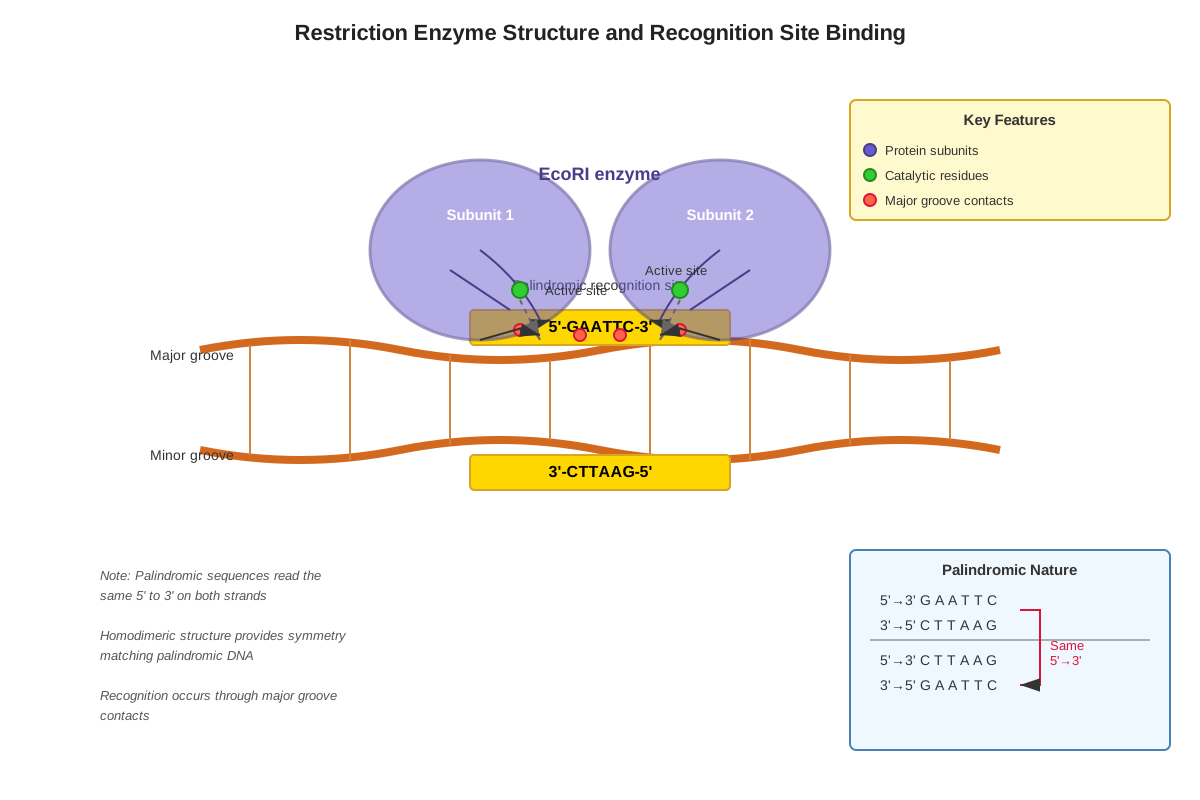
Restriction enzymes (also called restriction endonucleases) are bacterial enzymes that recognize specific short DNA sequences, typically 4-8 base pairs in length, and catalyze the hydrolysis of phosphodiester bonds within or near these recognition sites. The term "restriction" refers to their natural function of restricting bacteriophage infection by degrading foreign viral DNA. These enzymes exhibit remarkable sequence specificity, cutting DNA only at their designated recognition sequences (also called restriction sites). The recognition sequences are almost always palindromic, meaning they read the same on both strands when read in the 5' to 3' direction.
For example, the restriction enzyme EcoRI recognizes the palindromic sequence:
5'-GAATTC-3'
3'-CTTAAG-5'
This palindromic nature reflects the dimeric structure of most restriction enzymes—two identical subunits bind to the DNA from opposite sides, each recognizing one strand of the palindrome.
Types of Restriction Enzymes
Restriction enzymes are classified into three main types based on their structure, recognition sequences, and cleavage patterns:
Type I restriction enzymes are large, complex enzymes that recognize specific sequences but cleave DNA at random locations up to 1000 base pairs away from the recognition site. They require ATP and both methylate and cleave DNA. These enzymes are rarely used in molecular biology applications due to their unpredictable cutting patterns.
Type II restriction enzymes are the most commonly used in research and biotechnology. They recognize specific palindromic sequences and cleave within or immediately adjacent to the recognition site. They do not require ATP and function independently of methylation activity. Examples include EcoRI, BamHI, PstI, and HindIII. Their predictable cutting patterns make them invaluable for genetic engineering.
Type III restriction enzymes recognize specific sequences and cleave DNA 20-30 base pairs away from the recognition site. They require ATP and work best when two recognition sites are present in opposite orientations. These are less commonly used than Type II enzymes.
Cleavage Patterns and DNA Ends
Type II restriction enzymes produce two distinct types of DNA ends:
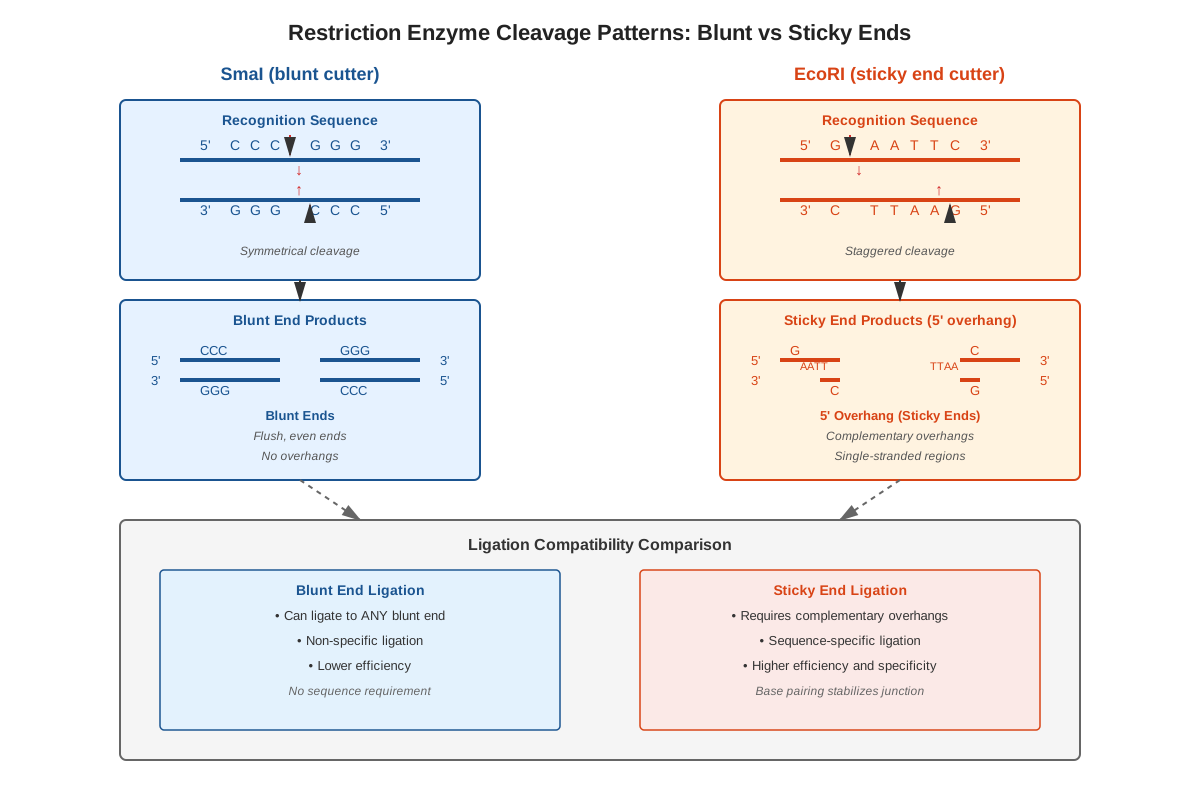
Blunt ends (also called flush ends) occur when the enzyme cuts straight across both DNA strands at the same position, leaving no overhanging nucleotides. For example, SmaI cuts:
5'-CCCGGG-3'  →  5'-CCC    GGG-3'
3'-GGGCCC-5'     3'-GGG    CCC-5'
Sticky ends (also called cohesive ends or overhangs) result when the enzyme makes staggered cuts, leaving single-stranded overhangs on each end. These can be either 5' overhangs or 3' overhangs. EcoRI produces 5' overhangs:
5'-GAATTC-3'  →  5'-G    AATTC-3'
3'-CTTAAG-5'     3'-CTTAA    G-5'
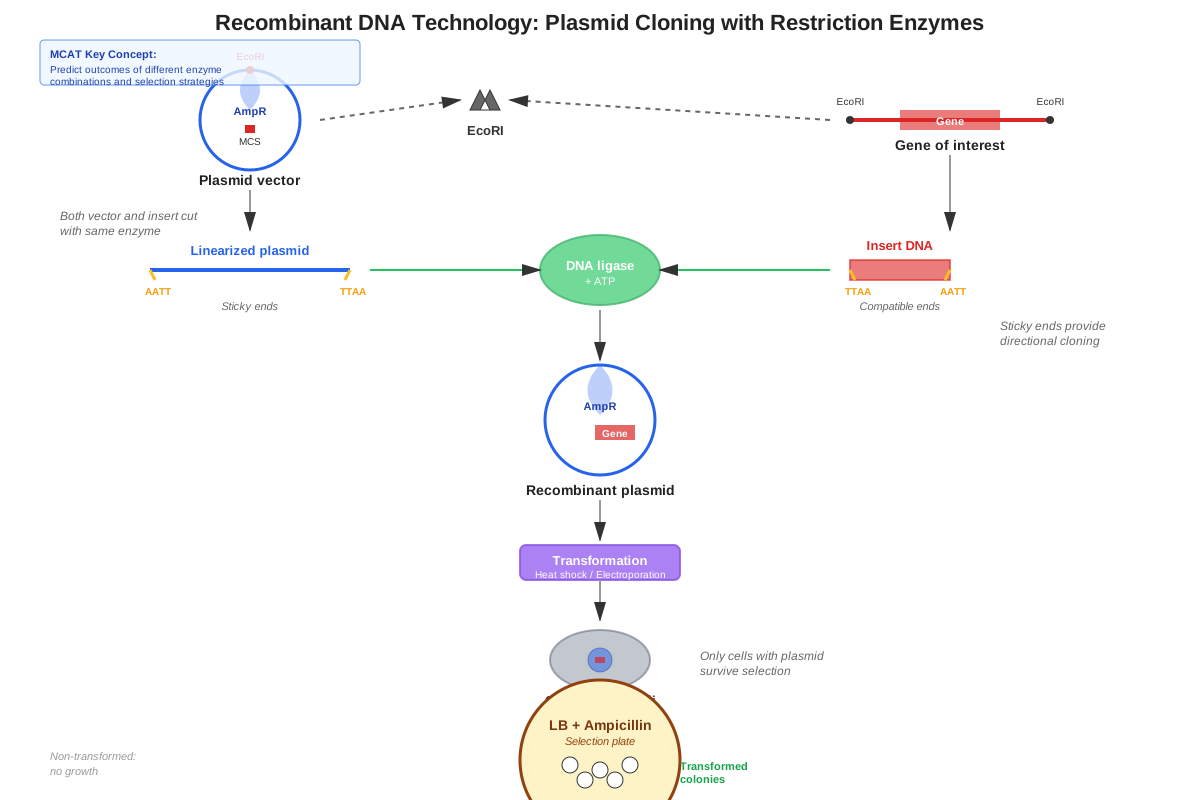
Sticky ends are particularly valuable in molecular cloning because complementary overhangs from different DNA molecules can base-pair with each other, facilitating ligation by DNA ligase. This property enables scientists to join DNA fragments from different sources, creating recombinant DNA.
Restriction-Modification Systems
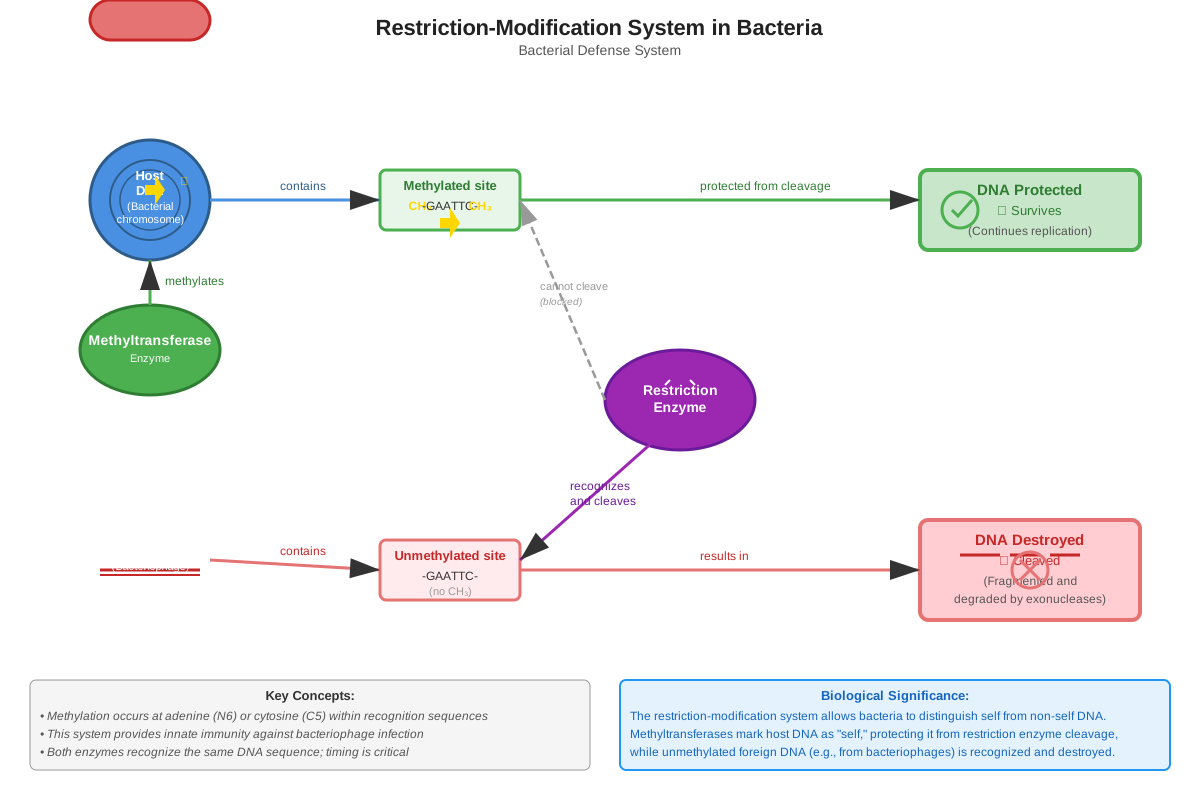
In bacteria, restriction enzymes function as part of restriction-modification (R-M) systems that protect the host cell from foreign DNA while preserving its own genetic material. This system includes two components:
- Restriction endonuclease: Cleaves unmethylated DNA at specific recognition sequences
- Methyltransferase: Adds methyl groups to adenine or cytosine bases within the recognition sequence on the host DNA
The host bacterium's DNA is protected because the methyltransferase modifies the recognition sequences before the restriction enzyme can cleave them. When foreign DNA (such as bacteriophage DNA) enters the cell, it lacks these protective methyl groups and is therefore recognized and destroyed by the restriction enzyme. This represents an ancient form of bacterial immunity and illustrates the evolutionary arms race between bacteria and their viral predators.
Nomenclature and Naming Conventions
Restriction enzyme names follow a standardized system that encodes information about their bacterial origin:
- First letter: Genus of the source bacterium (capitalized)
- Next two letters: Species of the source bacterium (lowercase)
- Optional letter: Strain designation
- Roman numeral: Order of discovery from that strain
For example, EcoRI comes from:
- E: Escherichia (genus)
- co: coli (species)
- R: RY13 strain
- I: First enzyme discovered from this strain
Similarly, BamHI derives from Bacillus amyloliquefaciens strain H, and PstI comes from Providencia stuartii.
Applications in Molecular Biology
| Application | Description | Key Enzymes Used |
|---|---|---|
| Gene Cloning | Inserting genes into plasmid vectors for replication and expression | EcoRI, BamHI, HindIII |
| Restriction Mapping | Determining the location and number of restriction sites in DNA | Multiple enzymes in combination |
| RFLP Analysis | Detecting genetic variations and mutations | Enzymes that cut at polymorphic sites |
| DNA Fingerprinting | Identifying individuals based on unique restriction patterns | Various enzymes creating unique patterns |
| Subcloning | Moving DNA fragments between different vectors | Compatible enzyme pairs |
| Southern Blotting | Detecting specific DNA sequences after restriction digestion | Enzymes producing optimal fragment sizes |
Restriction Mapping
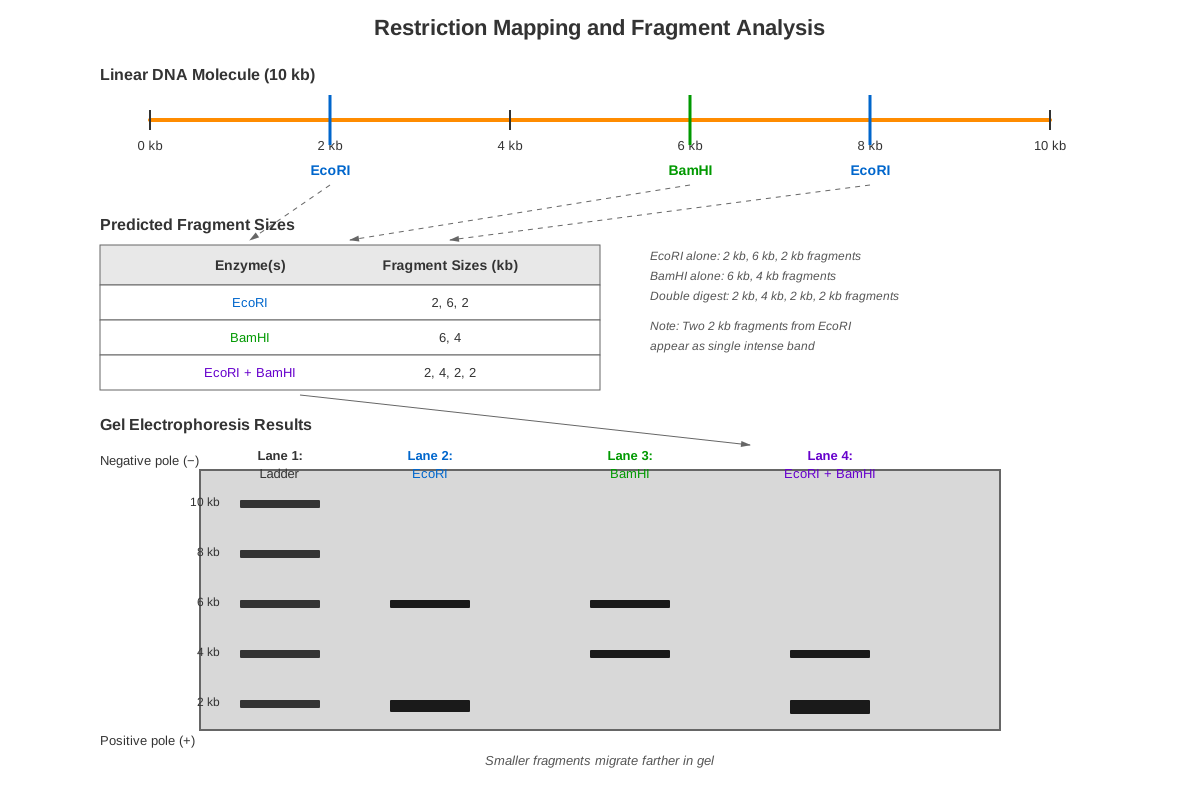
Restriction mapping involves determining the number, order, and relative positions of restriction sites within a DNA molecule. This technique provides a physical map of the DNA and is essential for planning cloning strategies. The process involves:
- Digesting DNA samples with different restriction enzymes individually and in combination
- Separating the resulting fragments by gel electrophoresis
- Determining fragment sizes based on migration distance
- Deducing the arrangement of restriction sites from fragment patterns
For example, if a 10 kb plasmid is cut once by EcoRI (producing one 10 kb fragment), once by BamHI (producing one 10 kb fragment), and twice by a double digest with both enzymes (producing 6 kb and 4 kb fragments), the two restriction sites must be 4 kb apart on the circular plasmid.
Compatible and Incompatible Ends
Different restriction enzymes can produce compatible ends that can ligate to each other, even if they recognize different sequences. This occurs when two enzymes create identical overhangs. For example:
- BamHI cuts: 5'-GGATCC-3' → 5'-G GATCC-3'
- BglII cuts: 5'-AGATCT-3' → 5'-A GATCT-3'
Both produce 5'-GATC-3' overhangs that are complementary and can base-pair, allowing ligation between BamHI-cut and BglII-cut DNA fragments. This property is exploited in directional cloning strategies.
Conversely, incompatible ends cannot ligate because their overhangs are not complementary. Blunt ends can ligate to any other blunt end but with lower efficiency than sticky end ligation.
Star Activity
Under non-optimal conditions (incorrect pH, high glycerol concentration, high enzyme concentration, or prolonged incubation), some restriction enzymes exhibit star activity—relaxed specificity that allows them to cleave at sites similar but not identical to their normal recognition sequence. For example, EcoRI* (EcoRI exhibiting star activity) may cut at sequences like AATTC or GAATTT instead of only GAATTC. This can produce unexpected results in cloning experiments and is avoided by using optimal reaction conditions and appropriate enzyme concentrations.
Concept Relationships
The understanding of restriction enzymes builds directly upon knowledge of DNA structure, particularly the antiparallel nature of DNA strands and complementary base pairing, which explains why recognition sequences are palindromic. The enzyme specificity principles learned in biochemistry apply directly to how restriction enzymes recognize and bind their target sequences with high fidelity.
Restriction enzymes connect forward to numerous molecular biology techniques: DNA cloning requires restriction enzymes to cut both insert DNA and vector DNA at compatible sites; gel electrophoresis separates the fragments produced by restriction digestion; DNA ligase joins the compatible ends created by restriction enzymes; plasmid vectors are designed with multiple cloning sites containing various restriction enzyme recognition sequences; PCR products are often digested with restriction enzymes before cloning; and DNA sequencing strategies may involve restriction mapping to orient fragments.
The relationship map flows as follows:
DNA Structure → Palindromic Sequences → Restriction Enzyme Recognition → DNA Cleavage → Sticky or Blunt Ends → DNA Ligation → Recombinant DNA → Gene Cloning → Protein Expression
Additionally, restriction-modification systems connect to broader concepts of bacterial immunity, horizontal gene transfer, and evolutionary biology. The methylation component links to epigenetics and gene regulation. Understanding restriction enzymes also enables comprehension of CRISPR-Cas systems, which represent evolved versions of bacterial defense mechanisms.
High-Yield Facts
⭐ Restriction enzymes recognize palindromic DNA sequences that read the same 5' to 3' on both strands
⭐ Sticky ends (cohesive ends) facilitate more efficient ligation than blunt ends because complementary overhangs can base-pair
⭐ Type II restriction enzymes are most commonly used in molecular biology because they cut at predictable locations within their recognition sequences
⭐ Bacterial methylation of recognition sequences protects host DNA from cleavage by the bacterium's own restriction enzymes
⭐ Compatible ends from different restriction enzymes can ligate together if they produce identical overhangs (e.g., BamHI and BglII)
- Restriction enzyme names encode information about the bacterial genus, species, strain, and order of discovery
- Longer recognition sequences (6-8 bp) occur less frequently in DNA than shorter sequences (4 bp), resulting in fewer cuts
- Star activity occurs under non-optimal conditions and causes relaxed specificity, leading to cleavage at non-canonical sites
- Restriction mapping determines the location and number of restriction sites in a DNA molecule by analyzing fragment patterns
- EcoRI is one of the most commonly used restriction enzymes and recognizes the sequence GAATTC, producing 5' overhangs
- Isoschizomers are different restriction enzymes that recognize the same DNA sequence but may cut differently
- Heat inactivation of restriction enzymes after digestion prevents continued cutting during subsequent steps
- The frequency of a restriction site in random DNA can be calculated as (1/4)^n where n is the length of the recognition sequence
Quick check — test yourself on Restriction enzymes so far.
Try Flashcards →Common Misconceptions
Misconception: All restriction enzymes produce sticky ends.
Correction: Restriction enzymes can produce either sticky ends (with overhangs) or blunt ends (flush cuts). Examples of blunt-end cutters include SmaI, EcoRV, and HpaI. The type of end produced depends on the specific enzyme's cutting pattern.
Misconception: Restriction enzymes can only cut linear DNA molecules.
Correction: Restriction enzymes cut both linear and circular DNA (such as plasmids). When a circular plasmid is cut once, it becomes linear. When cut multiple times, it produces multiple linear fragments. The circular topology doesn't prevent enzyme access to recognition sites.
Misconception: Methylation by the host bacterium changes the DNA sequence.
Correction: Methylation adds a methyl group to specific bases (adenine or cytosine) within the recognition sequence but does not change the nucleotide sequence itself. The sequence remains the same; only the chemical modification of bases changes, which prevents restriction enzyme binding and cleavage.
Misconception: Any two DNA fragments with sticky ends can ligate together.
Correction: Only DNA fragments with complementary sticky ends can ligate efficiently. The overhangs must be able to base-pair according to Watson-Crick rules (A with T, G with C). Non-complementary overhangs cannot form stable base pairs and will not ligate.
Misconception: Restriction enzymes are only found in bacteria.
Correction: While restriction enzymes are primarily bacterial in origin and function as bacterial defense mechanisms, restriction enzyme-like activities have been discovered in archaea and some eukaryotes. However, the well-characterized Type II restriction enzymes used in molecular biology are indeed bacterial.
Misconception: A restriction enzyme will always cut DNA at every recognition sequence present.
Correction: Several factors can prevent cutting: methylation of the recognition sequence, DNA secondary structure that blocks enzyme access, protein binding that occludes the site, or suboptimal reaction conditions. Additionally, some recognition sequences may be incomplete or contain mismatches that prevent enzyme binding.
Misconception: Longer recognition sequences mean the enzyme cuts more frequently.
Correction: The opposite is true. Longer recognition sequences occur less frequently by chance in DNA. A 4-base recognition sequence appears approximately every 256 bp (4^4), while a 6-base sequence appears approximately every 4,096 bp (4^6), and an 8-base sequence every 65,536 bp (4^8).
Worked Examples
Example 1: Restriction Mapping Problem
Question: A linear DNA fragment of 12 kb is digested with restriction enzymes EcoRI and BamHI, separately and together. The results are:
- EcoRI alone: 8 kb and 4 kb fragments
- BamHI alone: 9 kb and 3 kb fragments
- EcoRI + BamHI together: 6 kb, 3 kb, 2 kb, and 1 kb fragments
Draw a restriction map showing the positions of the EcoRI and BamHI sites.
Solution:
Step 1: Analyze single digests.
- EcoRI cuts once, producing 8 kb and 4 kb fragments
- BamHI cuts once, producing 9 kb and 3 kb fragments
Step 2: Analyze the double digest.
- Four fragments are produced: 6 kb, 3 kb, 2 kb, and 1 kb
- Total: 6 + 3 + 2 + 1 = 12 kb ✓
Step 3: Determine which fragments are cut in the double digest.
- The 8 kb EcoRI fragment must be cut by BamHI into 6 kb and 2 kb (since these don't appear in EcoRI alone)
- The 9 kb BamHI fragment must be cut by EcoRI into 8 kb and 1 kb (since 8 kb appears in EcoRI digest)
- The 3 kb fragment appears in both BamHI alone and the double digest, meaning it's not cut by EcoRI
Step 4: Construct the map.
Starting from the left end:
- 0 kb to 1 kb: fragment between left end and EcoRI site
- 1 kb: EcoRI site
- 1 kb to 3 kb: 2 kb fragment between EcoRI and BamHI
- 3 kb: BamHI site
- 3 kb to 9 kb: 6 kb fragment between BamHI and right end (but wait—this doesn't match)
Let me reconsider: If BamHI produces 9 kb and 3 kb, and EcoRI is within the 9 kb fragment:
- 0 kb to 3 kb: 3 kb fragment (BamHI to left end)
- 3 kb: BamHI site
- 3 kb to 4 kb: 1 kb fragment
- 4 kb: EcoRI site
- 4 kb to 12 kb: 8 kb fragment (but this should be cut by BamHI...)
Correct interpretation:
- Left end to 1 kb: 1 kb fragment
- 1 kb: EcoRI site
- 1 kb to 3 kb: 2 kb fragment
- 3 kb: BamHI site
- 3 kb to 9 kb: 6 kb fragment
- Total: 1 + 2 + 6 = 9 kb (this is the BamHI 9 kb fragment cut by EcoRI)
- 9 kb to 12 kb: 3 kb fragment (the BamHI 3 kb fragment, uncut by EcoRI)
Final Map:
0----1kb----3kb---------9kb----12kb
     EcoRI  BamHI
This example demonstrates the logical process of restriction mapping and how to integrate information from multiple digests.
Example 2: Cloning Strategy Problem
Question: A researcher wants to clone a 2 kb gene into a plasmid vector. The gene has been amplified by PCR and has EcoRI sites at both ends. The plasmid vector is 5 kb and contains a single EcoRI site within the ampicillin resistance gene (amp^R) and a single BamHI site within the tetracycline resistance gene (tet^R). After transformation, the researcher plates bacteria on media containing ampicillin and finds no colonies. What went wrong, and how should the experiment be redesigned?
Solution:
Step 1: Analyze the experimental design.
- The gene has EcoRI sites at both ends
- The vector has one EcoRI site in the amp^R gene
- Both were cut with EcoRI and ligated
Step 2: Identify the problem.
- Cutting the vector with EcoRI disrupts the amp^R gene
- Inserting the gene at this site permanently inactivates ampicillin resistance
- Bacteria with recombinant plasmids cannot grow on ampicillin-containing media
- Only bacteria with religated empty vector (no insert) would be ampicillin resistant
- The researcher selected against successful clones!
Step 3: Explain why no colonies appeared.
- If ligation efficiency was high and most vectors received inserts, very few empty vectors would religate
- The few bacteria with empty vectors might not be enough to form visible colonies
- Alternatively, if the insert disrupted an essential plasmid function, even transformed bacteria couldn't survive
Step 4: Redesign the experiment.
Option 1: Use the BamHI site instead
- Redesign PCR primers to add BamHI sites to the gene ends
- Cut both gene and vector with BamHI
- Ligate and transform
- Select on tetracycline plates (bacteria with inserts will be tet^S, amp^R)
- Use blue-white screening if the tet^R gene contains a lacZ fragment
Option 2: Use insertional inactivation correctly
- Cut vector with EcoRI as before
- After ligation and transformation, plate on tetracycline (not ampicillin)
- Replica plate colonies onto ampicillin plates
- Colonies that grow on tetracycline but not ampicillin contain the insert (amp^S, tet^R)
Option 3: Use directional cloning
- Add different restriction sites to each end of the gene (e.g., EcoRI and BamHI)
- Use a vector with both sites in a multiple cloning site
- This prevents insert self-ligation and ensures proper orientation
This example illustrates the importance of understanding antibiotic selection strategies and how restriction enzyme sites relate to selectable markers in cloning vectors.
Exam Strategy
Approaching MCAT Questions on Restriction Enzymes
When encountering restriction enzyme questions on the MCAT, follow this systematic approach:
- Identify the question type: Is it asking about mechanism, experimental design, data interpretation, or application?
- Note the recognition sequence: If provided, verify it's palindromic and determine whether cuts will be blunt or sticky
- Track fragment sizes: In restriction mapping problems, ensure all fragments sum to the total DNA length
- Consider circular vs. linear DNA: Remember that one cut in circular DNA produces one linear fragment; n cuts produce n fragments in linear DNA but n fragments in circular DNA
Trigger Words and Phrases
Watch for these key terms that signal restriction enzyme content:
- "Restriction digest," "restriction analysis," or "restriction mapping"
- "Palindromic sequence" or "recognition site"
- "Sticky ends," "cohesive ends," "blunt ends," or "overhangs"
- "Recombinant DNA" or "molecular cloning"
- "Methylation" in the context of bacterial DNA
- "Compatible ends" or "directional cloning"
- Specific enzyme names (EcoRI, BamHI, etc.)
- "Gel electrophoresis" following restriction digestion
Process of Elimination Tips
When evaluating answer choices:
- Eliminate answers that violate palindrome rules: Recognition sequences must read the same 5' to 3' on both strands
- Eliminate answers with incorrect fragment totals: All fragments must sum to the original DNA length
- Eliminate answers that ignore methylation: If the passage mentions methylation, answers must account for protection of host DNA
- Eliminate answers confusing sticky and blunt ends: Verify whether the enzyme produces overhangs or flush cuts
- Eliminate answers that violate base-pairing rules: Complementary overhangs must follow A-T and G-C pairing
Time Allocation
For discrete questions on restriction enzymes, allocate 60-90 seconds. For passage-based questions:
- Spend 3-4 minutes reading and annotating the passage
- Identify restriction enzyme applications and experimental design
- Note any gel electrophoresis results or restriction maps
- Allocate 90-120 seconds per question
- For complex restriction mapping problems, quickly sketch the map rather than trying to visualize mentally
Memory Techniques
Mnemonics
"PEST" for restriction enzyme properties:
- Palindromic recognition sequences
- Endonuclease activity (cuts within DNA)
- Specific sequence recognition
- Type II most commonly used
"STEM" for sticky end advantages:
- Specific base pairing
- Target-directed ligation
- Efficient joining
- More stable than blunt ends
"BamHI Bam!" for remembering BamHI recognition sequence:
- Think of "Bam!" as an explosion: Go Get Away To Cover Carefully
- GGATCC (the recognition sequence)
Visualization Strategies
For palindromic sequences: Visualize a mirror placed vertically between the two DNA strands. The sequence should look the same when reflected, reading 5' to 3' on each strand.
For sticky vs. blunt ends: Picture sticky ends as puzzle pieces with tabs that fit together (complementary overhangs), while blunt ends are flat surfaces that must be glued together (less efficient ligation).
For restriction mapping: Draw a linear representation of the DNA as a horizontal line, marking restriction sites as vertical lines. Label distances between sites. This visual approach prevents calculation errors.
For methylation protection: Imagine the bacterial DNA wearing a protective "methyl coat" that shields it from its own restriction enzymes, while naked foreign DNA is vulnerable to attack.
Acronyms
RFLP: Restriction Fragment Length Polymorphism—remember this technique detects genetic variations
R-M system: Restriction-Modification system—the two-component bacterial defense mechanism
Summary
Restriction enzymes are bacterial endonucleases that recognize and cleave specific palindromic DNA sequences, serving as both natural defense mechanisms against foreign DNA and essential tools for molecular biology. Type II restriction enzymes, the most commonly used in research, cut at predictable locations within their recognition sequences, producing either sticky ends with single-stranded overhangs or blunt ends with flush cuts. Sticky ends facilitate efficient ligation because complementary overhangs can base-pair, making them preferred for cloning applications. Bacterial restriction-modification systems protect host DNA through methylation while destroying unmethylated foreign DNA. For the MCAT, students must understand restriction enzyme nomenclature, predict cutting patterns, interpret restriction mapping data, and apply these concepts to experimental design scenarios involving recombinant DNA technology. Mastery requires recognizing palindromic sequences, calculating fragment sizes, understanding compatible ends, and connecting restriction enzyme applications to broader molecular biology techniques including gel electrophoresis, DNA cloning, and genetic analysis.
Key Takeaways
- Restriction enzymes recognize palindromic DNA sequences and cleave phosphodiester bonds with high specificity, functioning as bacterial defense mechanisms and molecular biology tools
- Type II restriction enzymes are most commonly used because they cut at predictable locations, producing either sticky ends (with overhangs) or blunt ends (flush cuts)
- Sticky ends enable more efficient ligation than blunt ends because complementary single-stranded overhangs can base-pair before DNA ligase seals the backbone
- Bacterial methylation of recognition sequences protects host DNA from cleavage while allowing restriction enzymes to destroy unmethylated foreign DNA
- Restriction mapping determines the location and number of restriction sites by analyzing fragment patterns from single and double digests
- Compatible ends from different restriction enzymes can ligate if they produce identical overhangs, enabling sophisticated cloning strategies
- MCAT questions frequently test restriction enzyme applications in experimental design, data interpretation, and recombinant DNA technology scenarios
Related Topics
DNA Ligase: Understanding how DNA ligase seals nicks in the sugar-phosphate backbone complements knowledge of restriction enzymes, as these two enzymes work together in molecular cloning to cut and rejoin DNA fragments.
Gel Electrophoresis: This technique separates DNA fragments produced by restriction digestion based on size, making it essential for restriction mapping and analyzing cloning results.
Plasmid Vectors: Plasmids serve as vehicles for cloning genes and are designed with multiple restriction sites in their multiple cloning sites (MCS), directly applying restriction enzyme knowledge.
PCR (Polymerase Chain Reaction): PCR amplifies DNA sequences, and primers can be designed with restriction sites at their ends to facilitate subsequent cloning of PCR products.
Recombinant DNA Technology: This broad field encompasses all applications of restriction enzymes, including gene cloning, protein expression, and genetic engineering.
Southern Blotting: This technique uses restriction enzymes to fragment DNA before transfer and hybridization, applying restriction enzyme concepts to gene detection.
CRISPR-Cas Systems: These modern gene-editing tools evolved from bacterial restriction-modification systems, representing the next generation of sequence-specific DNA manipulation.
Practice CTA
Now that you've mastered the core concepts of restriction enzymes, it's time to solidify your understanding through active practice. Work through the practice questions to test your ability to apply these concepts to MCAT-style scenarios, and use the flashcards to reinforce high-yield facts and terminology. Remember, restriction enzymes appear frequently on the MCAT in both discrete questions and passage-based contexts, so thorough mastery of this topic will directly contribute to your score. Focus especially on restriction mapping problems and experimental design scenarios, as these require integration of multiple concepts and represent the highest-yield question types. You've built a strong foundation—now strengthen it through deliberate practice!
Sign up free to keep reading
Create a free AnvayaPrep account to finish this MCAT guide on Restriction enzymes — plus flashcards and practice questions.