Overview
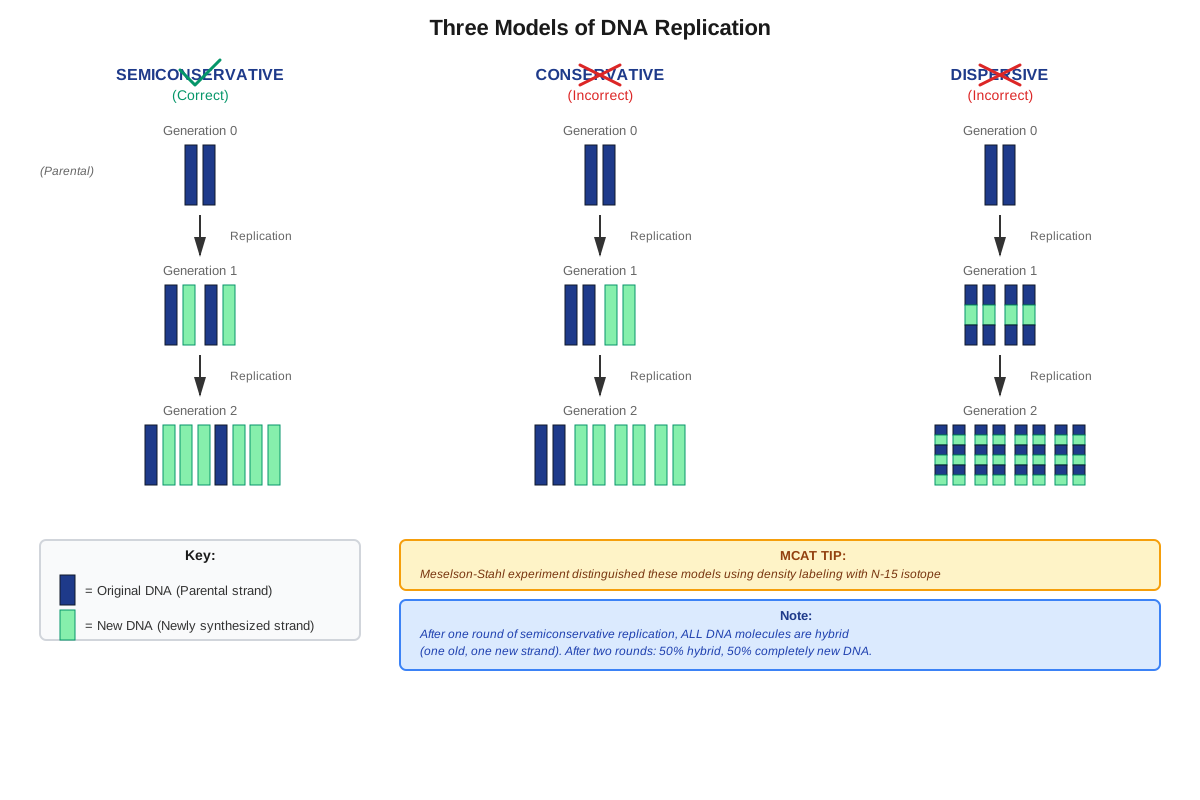
Semiconservative replication is one of the most fundamental processes in Molecular Biology and Genetics, representing the mechanism by which DNA duplicates itself with extraordinary fidelity before cell division. This process ensures that genetic information passes accurately from parent cells to daughter cells, maintaining the continuity of life across generations. The term "semiconservative" describes the elegant mechanism discovered by Meselson and Stahl in 1958: each newly synthesized DNA double helix consists of one original (parental) strand and one newly synthesized (daughter) strand. This contrasts with hypothetical conservative replication (where the original double helix remains intact) or dispersive replication (where old and new DNA segments intermingle randomly).
For the MCAT, understanding semiconservative replication is absolutely essential because it forms the conceptual foundation for numerous high-yield topics including cell division, mutation mechanisms, DNA repair, genetic inheritance patterns, and molecular biology techniques. The MCAT frequently tests not only the basic mechanism but also experimental evidence supporting this model, the enzymes involved in replication, and how errors in this process lead to genetic variation or disease. Questions may appear as standalone discrete items, but more commonly, semiconservative replication appears within passage-based questions discussing experimental techniques, cancer biology, or evolutionary mechanisms.
This topic bridges multiple domains within Biology tested on the MCAT. It connects directly to cell cycle regulation, protein synthesis, genetic mutations, biotechnology applications (such as PCR and DNA sequencing), and even evolutionary biology concepts. Understanding semiconservative replication provides the mechanistic basis for comprehending how genetic information flows through biological systems, making it indispensable for achieving a competitive score on the biological and biochemical foundations section of the exam.
Learning Objectives
- [ ] Define semiconservative replication using accurate Biology terminology
- [ ] Explain why semiconservative replication matters for the MCAT
- [ ] Apply semiconservative replication to exam-style questions
- [ ] Identify common mistakes related to semiconservative replication
- [ ] Connect semiconservative replication to related Biology concepts
- [ ] Describe the experimental evidence (Meselson-Stahl experiment) that confirmed semiconservative replication
- [ ] Differentiate between semiconservative, conservative, and dispersive models of DNA replication
- [ ] Explain the molecular mechanisms that ensure semiconservative replication occurs correctly
- [ ] Analyze how semiconservative replication relates to mutation rates and genetic fidelity
Prerequisites
- DNA structure (double helix, antiparallel strands, complementary base pairing): Understanding the physical structure of DNA is essential because semiconservative replication depends on strand separation and complementary base pairing to guide synthesis of new strands.
- Basic enzyme function and catalysis: Replication requires multiple enzymes (DNA polymerase, helicase, ligase) whose mechanisms must be understood to grasp how semiconservative replication proceeds.
- Cell cycle basics (S phase): DNA replication occurs during the S phase of the cell cycle, providing temporal context for when semiconservative replication takes place.
- Nucleotide structure (purines and pyrimidines): The building blocks of DNA must be familiar since replication involves adding nucleotides according to base-pairing rules.
- Hydrogen bonding: The mechanism of strand separation and template-directed synthesis relies on breaking and forming hydrogen bonds between complementary bases.
Why This Topic Matters
Clinical and Real-World Significance
Semiconservative replication is not merely an academic concept—it has profound clinical implications. Errors in DNA replication contribute to cancer development when mutations accumulate in genes controlling cell growth and division. Many chemotherapy drugs specifically target rapidly dividing cells by interfering with DNA replication, exploiting the fact that cancer cells replicate their DNA more frequently than most normal cells. Additionally, understanding replication mechanisms has enabled the development of antiviral medications that inhibit viral DNA polymerases, treating infections like herpes and HIV. Genetic counseling relies on understanding how replication errors can lead to inherited disorders, and forensic science uses PCR (which mimics semiconservative replication) for DNA fingerprinting.
MCAT Exam Statistics and Question Types
Semiconservative replication appears on the MCAT with high frequency, typically in 2-4 questions per exam either directly or as foundational knowledge for related questions. Questions fall into several categories: (1) experimental analysis questions asking students to interpret data from replication studies, particularly variations of the Meselson-Stahl experiment; (2) mechanism-based questions requiring students to predict outcomes when specific replication enzymes are inhibited; (3) application questions connecting replication to mutation rates, cancer, or biotechnology; and (4) passage-based questions where understanding replication is necessary to interpret research findings about DNA repair, telomeres, or genetic engineering.
Common Exam Passage Contexts
The MCAT frequently embeds semiconservative replication within passages about: experimental techniques using isotope labeling to track DNA synthesis; cancer biology passages discussing how chemotherapy drugs target replication; molecular biology passages about DNA polymerase fidelity and proofreading; evolutionary biology passages examining mutation rates and genetic variation; and biotechnology passages describing PCR, cloning, or DNA sequencing methodologies. Recognizing these contexts helps students quickly identify when their knowledge of semiconservative replication will be tested.
Core Concepts
Definition and Mechanism of Semiconservative Replication
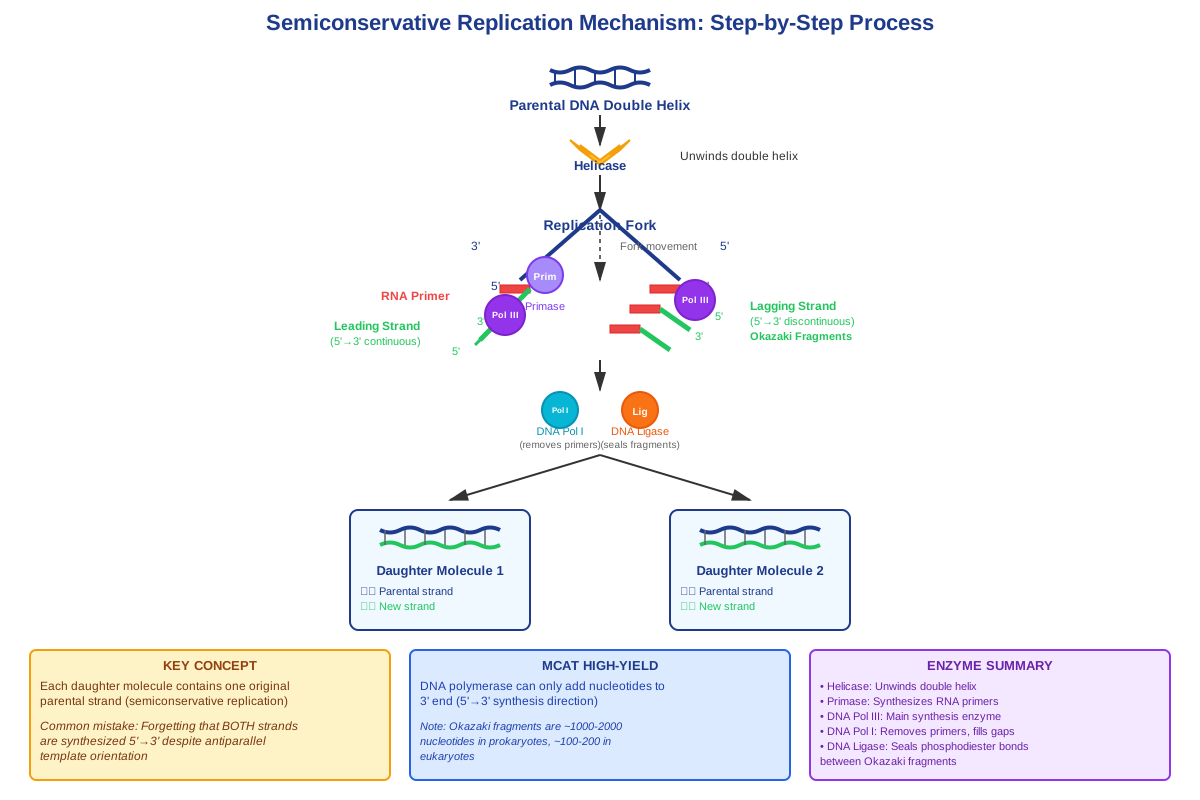
Semiconservative replication is the process by which DNA duplicates itself such that each resulting DNA molecule consists of one original parental strand and one newly synthesized daughter strand. This mechanism ensures that genetic information is preserved with high fidelity across cell divisions. The process begins when the DNA double helix unwinds and separates at specific sites called origins of replication. Each separated strand then serves as a template for synthesizing a complementary new strand according to base-pairing rules (adenine pairs with thymine, guanine pairs with cytosine).
The term "semiconservative" precisely describes the outcome: half (semi-) of the original DNA molecule is conserved (preserved) in each daughter molecule. This stands in contrast to two alternative hypothetical models that were considered before experimental evidence settled the question. In conservative replication, the original double helix would remain completely intact, and an entirely new double helix would be synthesized—meaning one daughter cell would receive the original DNA and the other would receive completely new DNA. In dispersive replication, the original DNA strands would be broken into fragments, and new and old DNA segments would be interspersed throughout both daughter molecules in a patchwork pattern.
The Meselson-Stahl Experiment
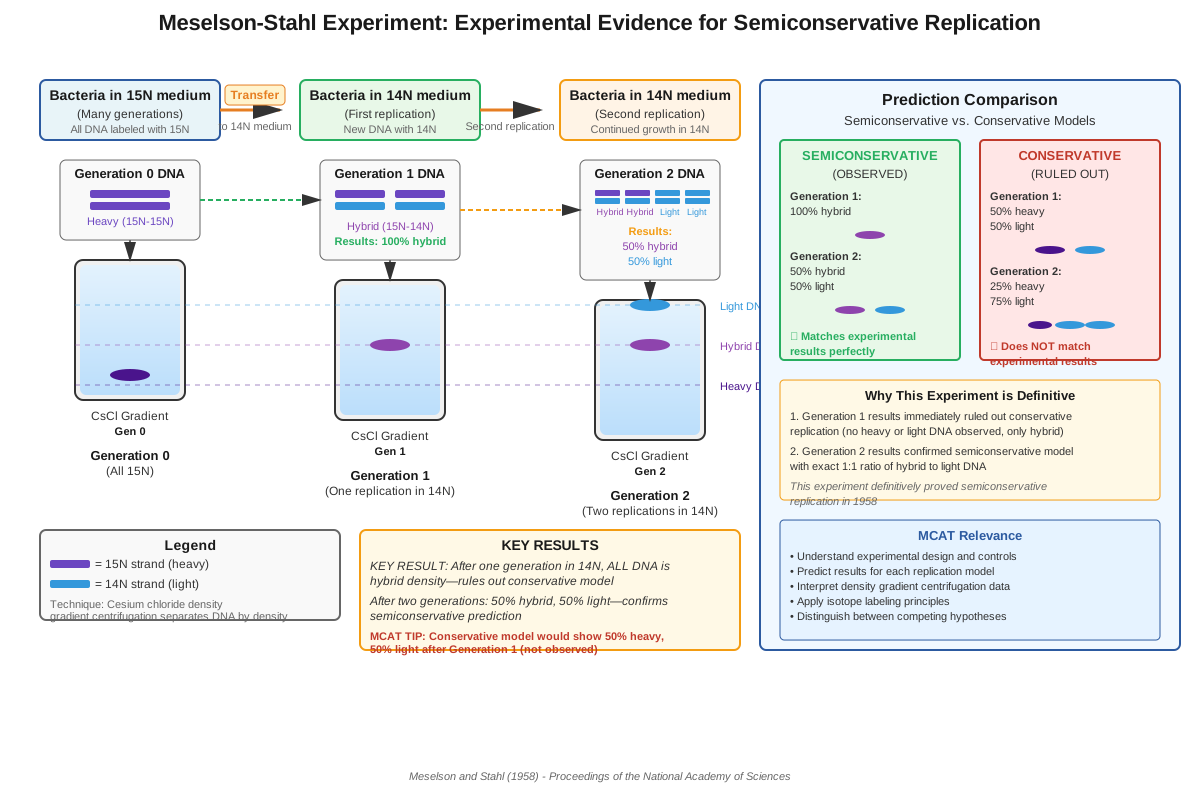
The definitive proof of semiconservative replication came from the elegant 1958 experiment conducted by Matthew Meselson and Franklin Stahl. They used nitrogen isotopes to differentially label DNA across generations, allowing them to track which replication model was correct. The experimental design involved growing E. coli bacteria in medium containing heavy nitrogen (¹⁵N) for many generations, which incorporated into all DNA bases. This created DNA that was denser than normal and could be separated from regular DNA using cesium chloride density gradient centrifugation.
After the bacteria had fully incorporated ¹⁵N into their DNA, Meselson and Stahl transferred them to medium containing only normal, light nitrogen (¹⁴N). The bacteria were then allowed to replicate once, and the DNA was extracted and centrifuged. The results showed that all DNA after one replication cycle had intermediate density—neither fully heavy nor fully light. This ruled out conservative replication, which would have produced both fully heavy and fully light DNA molecules. After a second replication cycle in ¹⁴N medium, the DNA separated into two bands: 50% intermediate density and 50% light density. This pattern perfectly matched the predictions of semiconservative replication and definitively ruled out dispersive replication, which would have produced DNA of gradually decreasing density with no distinct bands.
Molecular Machinery of Semiconservative Replication
Several key enzymes orchestrate semiconservative replication with remarkable precision. Helicase unwinds the DNA double helix by breaking hydrogen bonds between base pairs, creating a replication fork where the two strands separate. Single-strand binding proteins (SSBPs) stabilize the separated strands, preventing them from re-annealing before replication is complete. Topoisomerase (also called DNA gyrase in prokaryotes) relieves the tension created ahead of the replication fork by making temporary cuts in the DNA backbone, allowing it to rotate and preventing supercoiling.
DNA polymerase is the central enzyme that synthesizes new DNA strands by adding nucleotides complementary to the template strand. However, DNA polymerase has a critical limitation: it can only add nucleotides to an existing 3'-OH group, meaning it cannot start synthesis de novo. This necessitates primase, an RNA polymerase that synthesizes short RNA primers (approximately 10 nucleotides long) to provide the 3'-OH group that DNA polymerase requires. DNA polymerase then extends from these primers, adding deoxyribonucleotides in the 5' to 3' direction.
Because DNA strands are antiparallel and DNA polymerase can only synthesize in the 5' to 3' direction, replication proceeds differently on the two template strands. The leading strand is synthesized continuously in the same direction as the replication fork movement, requiring only one RNA primer. The lagging strand must be synthesized discontinuously in short segments called Okazaki fragments (approximately 1000-2000 nucleotides in prokaryotes, 100-200 in eukaryotes), each requiring its own RNA primer. After synthesis, DNA polymerase I (in prokaryotes) or DNA polymerase δ (in eukaryotes) removes the RNA primers and fills in the gaps with DNA. Finally, DNA ligase seals the nicks between adjacent Okazaki fragments by forming phosphodiester bonds, creating a continuous DNA strand.
Replication Fidelity and Proofreading
The semiconservative mechanism inherently contributes to replication fidelity because each parental strand serves as a template that guides synthesis through complementary base pairing. However, DNA polymerase also possesses 3' to 5' exonuclease activity, allowing it to proofread newly added nucleotides. If an incorrect nucleotide is incorporated, the polymerase can detect the mismatch, reverse direction, excise the incorrect nucleotide, and then resume synthesis in the forward direction. This proofreading mechanism reduces the error rate from approximately 1 in 10⁴ base pairs (without proofreading) to approximately 1 in 10⁷ base pairs.
Additional mismatch repair systems scan newly replicated DNA for errors that escaped proofreading, further reducing the error rate to approximately 1 in 10⁹ to 10¹⁰ base pairs. These systems can distinguish the newly synthesized strand from the template strand (in prokaryotes, by methylation patterns; in eukaryotes, by detecting nicks in the new strand) and selectively correct errors in the new strand. This multi-layered error correction system ensures that semiconservative replication maintains genetic information with extraordinary accuracy across generations.
Comparison of Replication Models
| Feature | Semiconservative | Conservative | Dispersive |
|---|---|---|---|
| Parental DNA fate | Each strand conserved in different daughter molecule | Both strands remain together in one daughter molecule | Fragmented and dispersed throughout both daughters |
| Daughter DNA composition | One old strand + one new strand | Either both old or both new strands | Mixture of old and new segments on each strand |
| Meselson-Stahl first generation result | All intermediate density | 50% heavy, 50% light | All intermediate density |
| Meselson-Stahl second generation result | 50% intermediate, 50% light | 25% heavy, 75% light | All intermediate (but lighter than first generation) |
| Biological reality | Correct model | Disproven | Disproven |
Concept Relationships
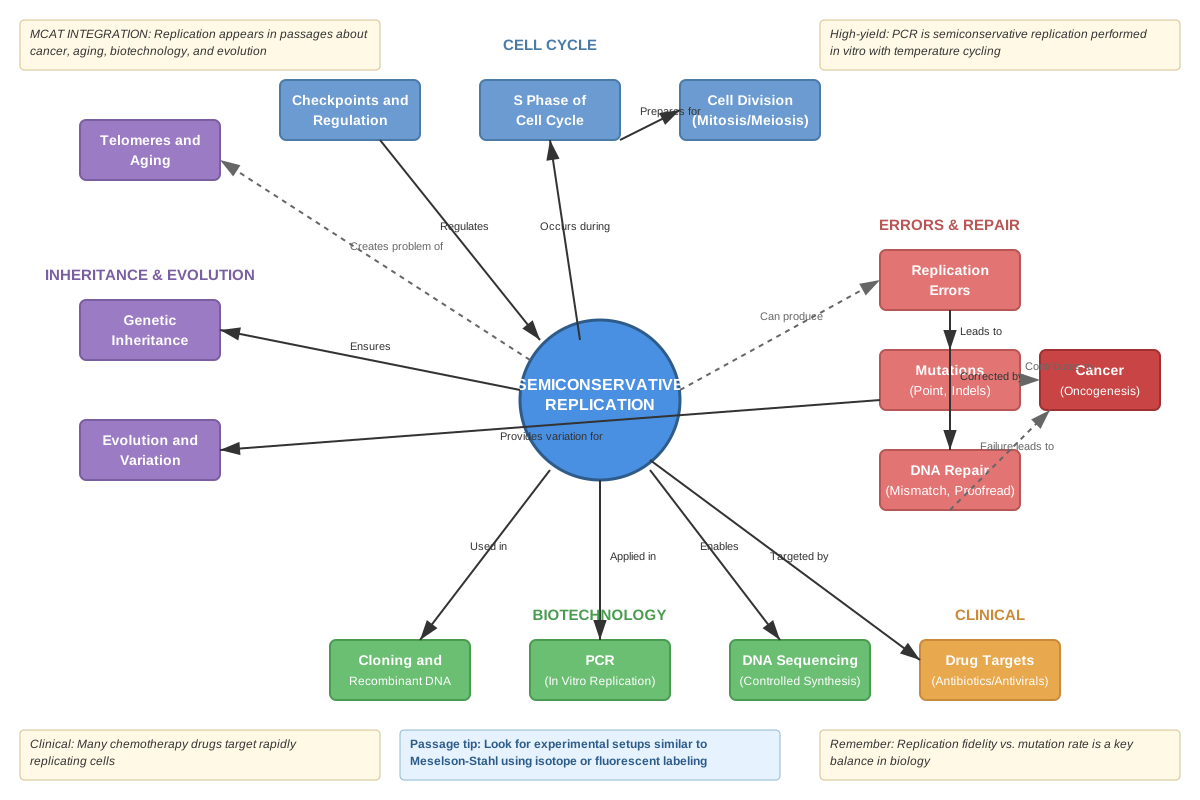
Semiconservative replication serves as a central hub connecting multiple concepts within molecular biology and genetics. The process directly depends on DNA structure, particularly the antiparallel nature of strands and complementary base pairing, which enable each strand to serve as a template. This template-directed synthesis ensures that genetic information flows accurately from parent to daughter cells, embodying the central dogma of molecular biology (DNA → DNA → RNA → protein).
The relationship flows as follows: DNA structure → enables → semiconservative replication → produces → identical genetic copies → allows → cell division (mitosis and meiosis) → results in → genetic inheritance. When errors occur during replication despite proofreading mechanisms, mutations arise, which can lead to genetic variation (the raw material for evolution) or cancer (when mutations affect growth-control genes).
Semiconservative replication also connects forward to biotechnology applications. PCR (polymerase chain reaction) mimics semiconservative replication in vitro, using cycles of heating (to separate strands) and cooling (to allow primer annealing and polymerase extension) to exponentially amplify DNA. DNA sequencing technologies rely on understanding replication mechanisms, using modified nucleotides that terminate synthesis at specific positions. Cloning and genetic engineering depend on the ability of DNA to replicate semiconservatively in host organisms.
The concept also relates to cell cycle regulation, as replication must be tightly controlled to occur only once per cell cycle during S phase. Dysregulation of this control can lead to genomic instability, a hallmark of cancer. Understanding semiconservative replication is therefore prerequisite knowledge for comprehending oncogenes, tumor suppressors, and DNA damage response pathways.
Quick check — test yourself on Semiconservative replication so far.
Try Flashcards →High-Yield Facts
⭐ Semiconservative replication produces two DNA molecules, each containing one original parental strand and one newly synthesized daughter strand.
⭐ The Meselson-Stahl experiment used ¹⁵N (heavy) and ¹⁴N (light) nitrogen isotopes with density gradient centrifugation to prove semiconservative replication.
⭐ DNA polymerase can only synthesize DNA in the 5' to 3' direction and requires a 3'-OH group (provided by an RNA primer) to begin synthesis.
⭐ The leading strand is synthesized continuously, while the lagging strand is synthesized discontinuously as Okazaki fragments.
⭐ DNA polymerase has 3' to 5' exonuclease activity that allows proofreading and error correction during replication.
- Helicase unwinds the DNA double helix, while topoisomerase relieves tension ahead of the replication fork by preventing supercoiling.
- Primase synthesizes short RNA primers that provide the 3'-OH group necessary for DNA polymerase to begin synthesis.
- DNA ligase seals nicks between Okazaki fragments on the lagging strand, creating a continuous DNA molecule.
- Single-strand binding proteins (SSBPs) stabilize separated DNA strands during replication, preventing premature re-annealing.
- The overall error rate of DNA replication after all proofreading and repair mechanisms is approximately 1 error per 10⁹ to 10¹⁰ base pairs.
- Conservative replication (disproven model) would have kept both original strands together in one daughter molecule.
- Dispersive replication (disproven model) would have fragmented and interspersed old and new DNA segments throughout both daughter molecules.
- Eukaryotic chromosomes have multiple origins of replication, while prokaryotic chromosomes typically have a single origin.
- Telomerase is required to fully replicate the ends of linear eukaryotic chromosomes because DNA polymerase cannot replicate the extreme 5' ends.
Common Misconceptions
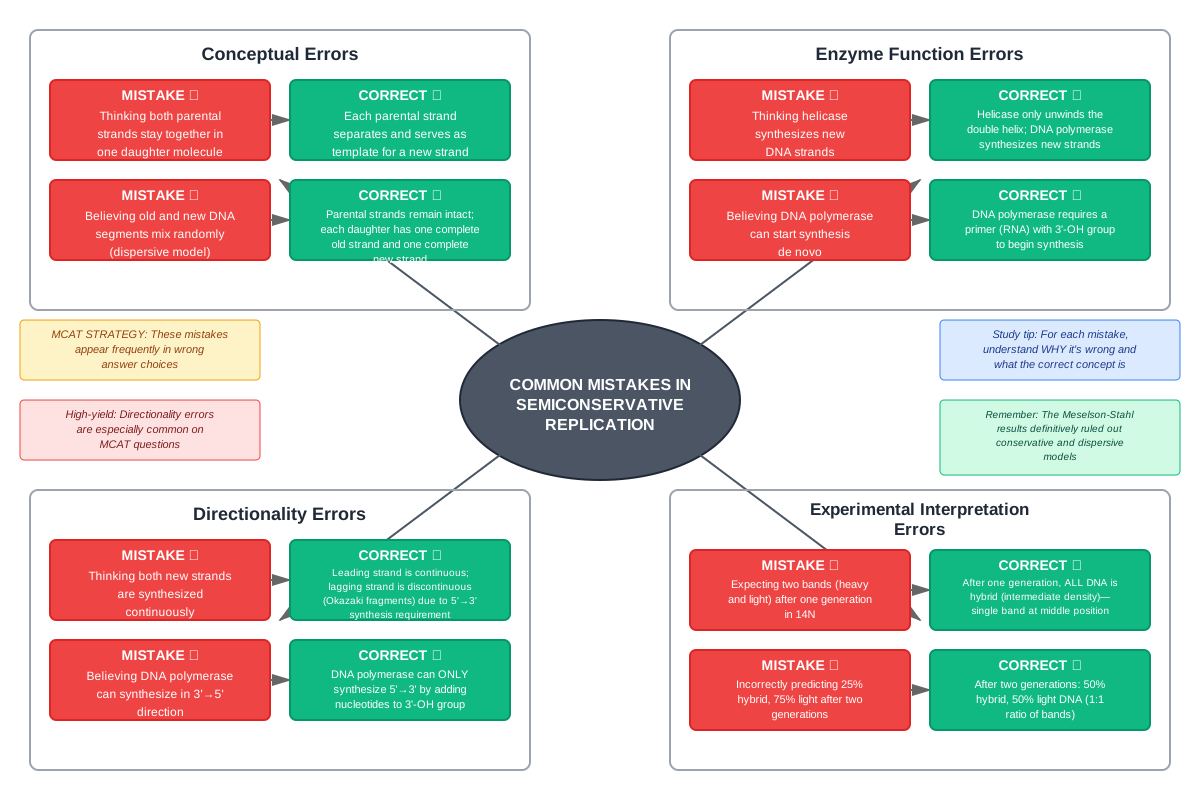
Misconception: Semiconservative replication means that half of the DNA molecule is conserved and half is new, referring to the amount of DNA rather than the strand composition.
Correction: Semiconservative refers to the fact that each of the two strands is conserved in different daughter molecules. Each daughter DNA molecule contains 50% old DNA (one complete parental strand) and 50% new DNA (one complete newly synthesized strand), but the key point is that one entire strand from the parent is preserved intact in each daughter molecule.
Misconception: DNA polymerase can start synthesizing DNA from scratch on a single-stranded template.
Correction: DNA polymerase absolutely requires a primer with a 3'-OH group to begin synthesis. It can only add nucleotides to an existing strand, which is why primase must first synthesize RNA primers. This limitation is why the lagging strand requires multiple primers for each Okazaki fragment.
Misconception: Both strands of DNA are synthesized in the same manner during replication.
Correction: Due to the antiparallel nature of DNA strands and the 5' to 3' directionality constraint of DNA polymerase, the two strands are synthesized differently. The leading strand is synthesized continuously in one long piece, while the lagging strand is synthesized discontinuously as multiple Okazaki fragments that are later joined together.
Misconception: The Meselson-Stahl experiment showed intermediate density DNA after one generation, which could support either semiconservative or dispersive replication, so the experiment was inconclusive.
Correction: While the first generation results were indeed consistent with both models, the second generation results definitively distinguished between them. Semiconservative replication predicted (and produced) 50% intermediate and 50% light DNA, while dispersive replication predicted all DNA would be intermediate but lighter than the first generation. The appearance of distinct bands rather than a single intermediate band ruled out dispersive replication.
Misconception: Mutations during replication are always harmful and represent failures of the replication machinery.
Correction: While many mutations are neutral or harmful, mutations are also the source of genetic variation that drives evolution. The low but non-zero error rate of replication (even with proofreading) provides a balance between maintaining genetic fidelity and generating variation. Some mutations can be beneficial, providing raw material for natural selection.
Misconception: Conservative replication was a reasonable hypothesis that was simply proven wrong by experiment.
Correction: While conservative replication was indeed disproven experimentally, it was always mechanistically implausible because it would require synthesizing an entirely new double helix while keeping the original completely intact, which would be energetically unfavorable and mechanistically complex. Semiconservative replication is elegant because strand separation naturally provides templates for synthesis.
Misconception: DNA ligase synthesizes new DNA to fill gaps between Okazaki fragments.
Correction: DNA ligase only seals nicks by forming phosphodiester bonds between adjacent nucleotides that are already in place. The gaps left after RNA primer removal are filled by DNA polymerase (DNA polymerase I in prokaryotes, DNA polymerase δ in eukaryotes), and then ligase seals the remaining nick.
Worked Examples
Example 1: Interpreting a Modified Meselson-Stahl Experiment
Question: Researchers grow bacteria in medium containing ¹⁵N (heavy nitrogen) for multiple generations, then transfer them to ¹⁴N (light nitrogen) medium. After two rounds of replication in ¹⁴N medium, they extract the DNA and perform density gradient centrifugation. If DNA replication were conservative rather than semiconservative, what percentage of DNA molecules would be heavy, intermediate, and light density?
Solution:
Step 1: Understand what conservative replication predicts. In conservative replication, the original double helix remains completely intact, and an entirely new double helix is synthesized.
Step 2: Track the DNA through generations. Initially, all DNA is heavy (both strands contain ¹⁵N).
Step 3: After the first replication in ¹⁴N medium:
- Conservative replication would produce one DNA molecule with both original heavy strands (heavy density)
- One DNA molecule with both new light strands (light density)
- Result: 50% heavy, 50% light, 0% intermediate
Step 4: After the second replication in ¹⁴N medium:
- The original heavy DNA molecule replicates conservatively again, producing one heavy molecule and one light molecule
- Each of the light DNA molecules from the first generation replicates conservatively, each producing one light molecule (the conserved original) and one light molecule (the new copy)
- Starting with 2 molecules after first replication, we now have 4 molecules total
Step 5: Count the molecules:
- Heavy: 1 molecule (the original, conserved through both replications)
- Light: 3 molecules (all newly synthesized molecules)
- Intermediate: 0 molecules
Answer: 25% heavy, 0% intermediate, 75% light
Connection to learning objectives: This example demonstrates how to apply understanding of semiconservative replication to analyze experimental data and distinguish between different replication models, directly addressing the objective of applying this concept to exam-style questions.
Example 2: Predicting Effects of Enzyme Inhibition
Question: A researcher treats cells with a drug that specifically inhibits DNA ligase but does not affect any other replication enzymes. The cells are allowed to complete one round of DNA replication in the presence of this drug. What would be the expected structure of the newly replicated DNA?
Solution:
Step 1: Identify the function of DNA ligase. Ligase seals nicks between adjacent DNA segments by forming phosphodiester bonds, particularly between Okazaki fragments on the lagging strand.
Step 2: Consider what happens on the leading strand. The leading strand is synthesized continuously as one long piece. After the RNA primer is removed and replaced with DNA, there is only one nick to seal. Without ligase, this nick would remain, but the leading strand would otherwise be intact.
Step 3: Consider what happens on the lagging strand. The lagging strand is synthesized as many Okazaki fragments (hundreds to thousands depending on the organism). After RNA primers are removed and replaced with DNA, there are many nicks between adjacent fragments. Without ligase, none of these nicks would be sealed.
Step 4: Predict the overall structure. Each newly replicated DNA molecule would consist of:
- One intact parental strand (the template strand)
- One leading strand that is mostly intact but has one unsealed nick where the primer was removed
- One lagging strand that exists as many separate Okazaki fragments with unsealed nicks between them
Answer: The newly replicated DNA would have one intact parental strand, a nearly complete leading strand with one nick, and a fragmented lagging strand consisting of many unconnected Okazaki fragments. This DNA would be structurally unstable and likely trigger DNA damage response pathways.
Connection to learning objectives: This example requires understanding the molecular mechanisms of semiconservative replication, particularly the different synthesis patterns of leading and lagging strands, and demonstrates how to predict outcomes when normal replication processes are disrupted—a common MCAT question type.
Exam Strategy
Approaching MCAT Questions on Semiconservative Replication
When encountering questions about semiconservative replication, first identify whether the question is asking about: (1) the basic mechanism and definition, (2) experimental evidence (especially Meselson-Stahl variations), (3) the enzymes and molecular machinery involved, or (4) applications or consequences of the process. This categorization helps activate the relevant knowledge quickly.
For experimental questions, always draw out what happens to DNA across generations. Use simple notation like "HH" for heavy-heavy (both strands ¹⁵N), "HL" for hybrid (one heavy, one light), and "LL" for light-light (both strands ¹⁴N). Track each molecule through each generation systematically. Remember that semiconservative replication produces 50% hybrid and 50% light after the second generation in light medium—this is the signature pattern that distinguishes it from other models.
Trigger Words and Phrases
Watch for these key phrases that signal semiconservative replication is being tested:
- "Isotope labeling" or "density gradient centrifugation" → likely a Meselson-Stahl variation
- "Template strand" or "parental strand" → focus on which strand serves as the guide for synthesis
- "Leading strand" vs. "lagging strand" → consider directionality and continuous vs. discontinuous synthesis
- "Okazaki fragments" → lagging strand synthesis and the need for ligase
- "Proofreading" or "fidelity" → DNA polymerase exonuclease activity
- "Origins of replication" → where replication begins; multiple in eukaryotes, typically one in prokaryotes
Process-of-Elimination Tips
When evaluating answer choices:
- Eliminate any option suggesting DNA polymerase can synthesize without a primer
- Eliminate options that confuse the direction of synthesis (DNA polymerase only works 5' to 3')
- Eliminate options that suggest both strands are synthesized identically (leading and lagging differ)
- For Meselson-Stahl questions, eliminate options that don't match the 50% intermediate/50% light pattern after two generations
- Eliminate options that attribute DNA synthesis to ligase (ligase only seals, doesn't synthesize)
Time Allocation
For discrete questions on semiconservative replication, aim to spend 60-75 seconds. These are typically straightforward if you know the content. For passage-based questions, spend 90-120 seconds per question, as you'll need to integrate passage information with your background knowledge. If a question asks you to track DNA through multiple generations, quickly sketch out the generations on your noteboard rather than trying to visualize mentally—this prevents errors and actually saves time.
Memory Techniques
Mnemonics
"SEMI = Strands Each Make Individuals" - Remember that in semiconservative replication, each strand makes an individual new molecule (each parental strand ends up in a different daughter molecule).
"Leading Lady is Continuous, Lagging Lad is Fragmented" - The leading strand is synthesized continuously, while the lagging strand is synthesized in fragments (Okazaki fragments).
"Please Help Synthesize DNA Ligase" - The order of key enzymes at the replication fork: Primase, Helicase, SSBPs (single-strand binding proteins), DNA polymerase, Ligase.
"3 to 5 Exo = Error Excision" - DNA polymerase's 3' to 5' exonuclease activity is for error correction (proofreading).
Visualization Strategy
Visualize the Meselson-Stahl experiment as a "family tree" of DNA molecules:
- Generation 0: Both parents are "heavy" (HH)
- Generation 1: All children are "hybrid" (HL) - one heavy parent, one light parent
- Generation 2: Half are "hybrid" (HL), half are "light" (LL) - the hybrids produce one hybrid and one light; the lights produce two lights
For the replication fork, visualize a zipper opening (helicase), with one side being sewn continuously (leading strand) and the other side being sewn in patches that are later stitched together (lagging strand with Okazaki fragments).
Acronym for Replication Accuracy
"PPM" = Polymerase Proofreading + Mismatch repair - The two main mechanisms ensuring replication fidelity, reducing errors from 1 in 10⁴ to 1 in 10⁹-10¹⁰.
Summary
Semiconservative replication is the fundamental mechanism by which DNA duplicates itself, with each daughter DNA molecule containing one original parental strand and one newly synthesized strand. This elegant process, definitively proven by the Meselson-Stahl experiment using nitrogen isotope labeling, ensures genetic continuity across cell divisions while maintaining high fidelity through multiple error-correction mechanisms. The molecular machinery involves coordinated action of helicase (unwinding), primase (providing RNA primers), DNA polymerase (synthesizing new strands), and ligase (sealing nicks), with synthesis proceeding continuously on the leading strand but discontinuously via Okazaki fragments on the lagging strand due to the antiparallel nature of DNA and the 5' to 3' directionality constraint of DNA polymerase. Understanding semiconservative replication is essential for the MCAT because it connects to cell division, mutation mechanisms, cancer biology, biotechnology applications, and serves as the mechanistic foundation for genetic inheritance and variation.
Key Takeaways
- Semiconservative replication produces two DNA molecules, each with one parental strand and one new strand, distinguishing it from conservative and dispersive models
- The Meselson-Stahl experiment using ¹⁵N and ¹⁴N isotopes definitively proved semiconservative replication, with second-generation results showing 50% intermediate and 50% light density DNA
- DNA polymerase synthesizes only in the 5' to 3' direction and requires an RNA primer to begin, necessitating continuous synthesis on the leading strand and discontinuous synthesis (Okazaki fragments) on the lagging strand
- Multiple enzymes coordinate replication: helicase unwinds, primase provides primers, DNA polymerase synthesizes, and ligase seals nicks between fragments
- DNA polymerase's 3' to 5' exonuclease activity provides proofreading capability, combined with mismatch repair systems to achieve error rates of approximately 1 in 10⁹-10¹⁰ base pairs
- Semiconservative replication connects to numerous high-yield MCAT topics including cell cycle, mutations, cancer, biotechnology (PCR), and genetic inheritance
- Common question types include experimental analysis (Meselson-Stahl variations), enzyme function predictions, and applications to real-world scenarios
Related Topics
DNA Repair Mechanisms: Understanding semiconservative replication provides the foundation for comprehending how cells detect and correct replication errors through mismatch repair, base excision repair, and nucleotide excision repair systems.
Cell Cycle Regulation: Replication occurs during S phase and must be tightly controlled to prevent re-replication, connecting to checkpoints, cyclins, and cyclin-dependent kinases that regulate progression through the cell cycle.
Telomeres and Telomerase: The end-replication problem arises because DNA polymerase cannot fully replicate the 5' ends of linear chromosomes, making telomerase essential for maintaining chromosome integrity across multiple cell divisions.
PCR and Molecular Biology Techniques: Polymerase chain reaction mimics semiconservative replication in vitro, using thermal cycling to exponentially amplify DNA sequences for research, diagnostics, and forensics.
Mutations and Genetic Variation: Errors in semiconservative replication that escape proofreading and repair mechanisms generate mutations, providing the raw material for evolution and contributing to cancer when they affect critical genes.
Prokaryotic vs. Eukaryotic Replication: While the semiconservative mechanism is universal, important differences exist in the number of origins of replication, the specific polymerases involved, and the processing of Okazaki fragments between prokaryotes and eukaryotes.
Practice CTA
Now that you've mastered the core concepts of semiconservative replication, it's time to solidify your understanding through active practice. Challenge yourself with the practice questions and flashcards designed specifically for this topic. These resources will help you identify any remaining gaps in your knowledge and build the pattern recognition skills essential for quickly and accurately answering MCAT questions. Remember, understanding the mechanism is just the first step—applying that knowledge under timed conditions is what translates into points on test day. You've built a strong foundation; now reinforce it through deliberate practice!
Sign up free to keep reading
Create a free AnvayaPrep account to finish this MCAT guide on Semiconservative replication — plus flashcards and practice questions.