Overview
Acid chlorides (also known as acyl chlorides) represent one of the most reactive classes of carbonyl compounds encountered in Organic Chemistry. These compounds feature a carbonyl group (C=O) directly bonded to a chlorine atom, creating the functional group -COCl. Their exceptional reactivity stems from the combination of the electron-withdrawing carbonyl group and the excellent leaving ability of the chloride ion, making acid chlorides powerful acylating agents that readily transfer their acyl group (RCO-) to various nucleophiles.
Understanding acid chlorides is essential for MCAT success because they serve as central intermediates in Carbonyl Chemistry, connecting multiple reaction pathways that interconvert carboxylic acid derivatives. The MCAT frequently tests students' ability to predict reaction products, compare relative reactivities of carbonyl compounds, and understand the mechanisms by which acid chlorides transform into other functional groups. Questions may appear as discrete items testing reaction outcomes or embedded within passage-based questions involving pharmaceutical synthesis or biochemical pathways.
Within the broader landscape of Organic Chemistry MCAT content, acid chlorides occupy a pivotal position in the reactivity hierarchy of carboxylic acid derivatives. They are more reactive than anhydrides, esters, and amides, but can be synthesized from carboxylic acids. This positioning makes them crucial for understanding both synthetic strategies and the logic of carbonyl reactivity patterns—concepts that appear repeatedly across multiple MCAT sections, particularly in Chemical and Physical Foundations of Biological Systems passages involving drug synthesis or metabolic transformations.
Learning Objectives
- [ ] Define acid chlorides using accurate Organic Chemistry terminology
- [ ] Explain why acid chlorides matters for the MCAT
- [ ] Apply acid chlorides to exam-style questions
- [ ] Identify common mistakes related to acid chlorides
- [ ] Connect acid chlorides to related Organic Chemistry concepts
- [ ] Predict the products of nucleophilic acyl substitution reactions involving acid chlorides
- [ ] Compare and rank the reactivity of acid chlorides relative to other carboxylic acid derivatives
- [ ] Explain the mechanistic basis for acid chloride reactivity using resonance and inductive effects
Prerequisites
- Carboxylic acids structure and properties: Acid chlorides are synthesized from carboxylic acids and share the carbonyl functional group, making understanding of carboxylic acid structure essential for recognizing the transformation
- Nucleophilic substitution mechanisms: The primary reactions of acid chlorides proceed through nucleophilic acyl substitution, requiring familiarity with nucleophile attack and leaving group departure
- Carbonyl group reactivity: Understanding the electrophilic nature of carbonyl carbons provides the foundation for predicting how nucleophiles interact with acid chlorides
- Leaving group ability: Recognizing that chloride is an excellent leaving group explains why acid chlorides are more reactive than other carboxylic acid derivatives
- Resonance structures: Evaluating the stability of carbonyl compounds through resonance helps explain the reactivity hierarchy among acid derivatives
Why This Topic Matters
Acid chlorides possess significant real-world importance in pharmaceutical synthesis and industrial chemistry. Many drug molecules contain amide, ester, or other functional groups that are most efficiently introduced through acid chloride intermediates. For example, the synthesis of aspirin derivatives, local anesthetics like lidocaine, and numerous antibiotics involves acid chloride chemistry at critical steps. Understanding these transformations provides insight into how medicinal chemists design synthetic routes to complex therapeutic molecules.
On the MCAT, acid chlorides appear with notable frequency in both discrete questions and passage-based items. Statistical analysis of recent MCAT administrations suggests that carbonyl chemistry, including acid chlorides, comprises approximately 10-15% of Organic Chemistry content. Questions typically test three main areas: (1) predicting reaction products when acid chlorides react with various nucleophiles, (2) ranking reactivity among carboxylic acid derivatives, and (3) identifying appropriate reagents to synthesize target molecules. The MCAT particularly favors questions that require students to apply mechanistic understanding rather than memorize isolated reactions.
In exam passages, acid chlorides MCAT content commonly appears in contexts involving pharmaceutical synthesis, polymer chemistry (such as nylon formation), or biochemical acylation reactions. Passages may describe multi-step syntheses where students must identify which intermediate is an acid chloride or predict how an acid chloride will react with biological nucleophiles like amino acids. The ability to quickly recognize acid chloride reactivity patterns and predict products under time pressure represents a high-yield skill that distinguishes top-scoring students from average performers.
Core Concepts
Structure and Nomenclature
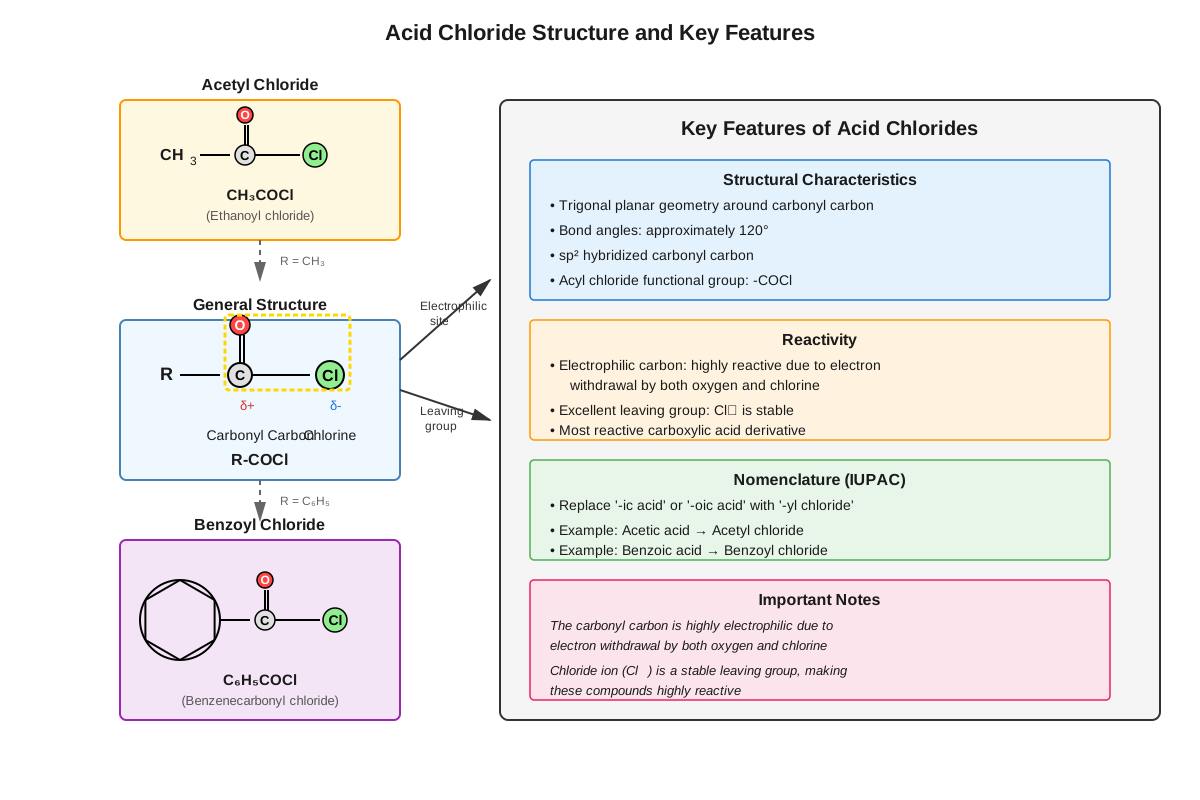
Acid chlorides contain a carbonyl group (C=O) bonded directly to a chlorine atom, with the general formula RCOCl, where R represents an alkyl or aryl group. The systematic IUPAC nomenclature replaces the "-ic acid" or "-oic acid" ending of the parent carboxylic acid with "-yl chloride." For example, acetic acid (CH₃COOH) becomes acetyl chloride (CH₃COCl), and benzoic acid becomes benzoyl chloride. Common names frequently appear in laboratory settings and MCAT passages, so familiarity with both systematic and trivial names is essential.
The carbonyl carbon in acid chlorides exhibits sp² hybridization with trigonal planar geometry and bond angles of approximately 120°. The C=O bond is highly polarized due to oxygen's greater electronegativity, creating a partial positive charge (δ+) on the carbonyl carbon that makes it strongly electrophilic. The C-Cl bond also contributes to the electrophilicity through inductive electron withdrawal, though chlorine's lone pairs can participate in weak resonance donation to the carbonyl.
Electronic Properties and Reactivity
The exceptional reactivity of acid chlorides derives from two complementary electronic factors. First, the chlorine atom withdraws electron density through the inductive effect (σ-bond electron withdrawal), making the carbonyl carbon more electrophilic and susceptible to nucleophilic attack. Second, chloride ion (Cl⁻) is an excellent leaving group due to its weak basicity and ability to stabilize negative charge through size and polarizability. These factors combine to make acid chlorides the most reactive carboxylic acid derivatives.
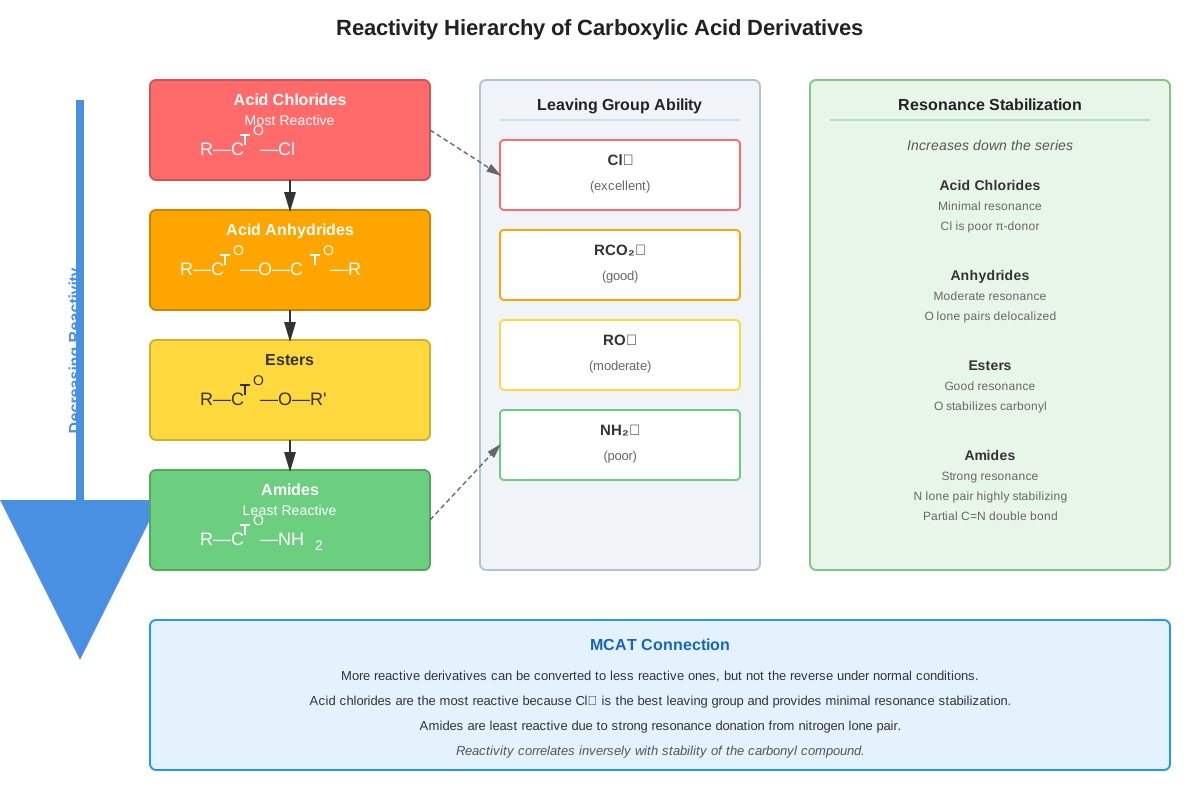
Resonance analysis reveals why acid chlorides are more reactive than other derivatives. While chlorine's lone pairs can theoretically donate into the carbonyl π* orbital, this resonance stabilization is weak because chlorine's 3p orbitals overlap poorly with carbon's 2p orbitals due to size mismatch. This contrasts sharply with amides, where nitrogen's 2p orbital overlaps effectively with the carbonyl, creating strong resonance stabilization that reduces reactivity. The reactivity order for carboxylic acid derivatives follows: acid chlorides > anhydrides > esters > amides, with acid chlorides being most reactive.
Synthesis of Acid Chlorides
Acid chlorides are typically synthesized from carboxylic acids using chlorinating reagents. The most common reagents include thionyl chloride (SOCl₂), phosphorus trichloride (PCl₃), phosphorus pentachloride (PCl₅), and oxalyl chloride ((COCl)₂). These reactions proceed by activating the carboxylic acid's hydroxyl group, making it a better leaving group, followed by chloride substitution.
The reaction with thionyl chloride is particularly popular because the byproducts (SO₂ and HCl) are gases that escape from the reaction mixture, driving the equilibrium toward product formation:
RCOOH + SOCl₂ → RCOCl + SO₂↑ + HCl↑For MCAT purposes, students should recognize that carboxylic acids cannot be directly converted to acid chlorides through simple substitution—special reagents are required because hydroxide is a poor leaving group. The conversion represents an oxidation state change at the functional group level, though not at the carbon oxidation state.
Nucleophilic Acyl Substitution Mechanism
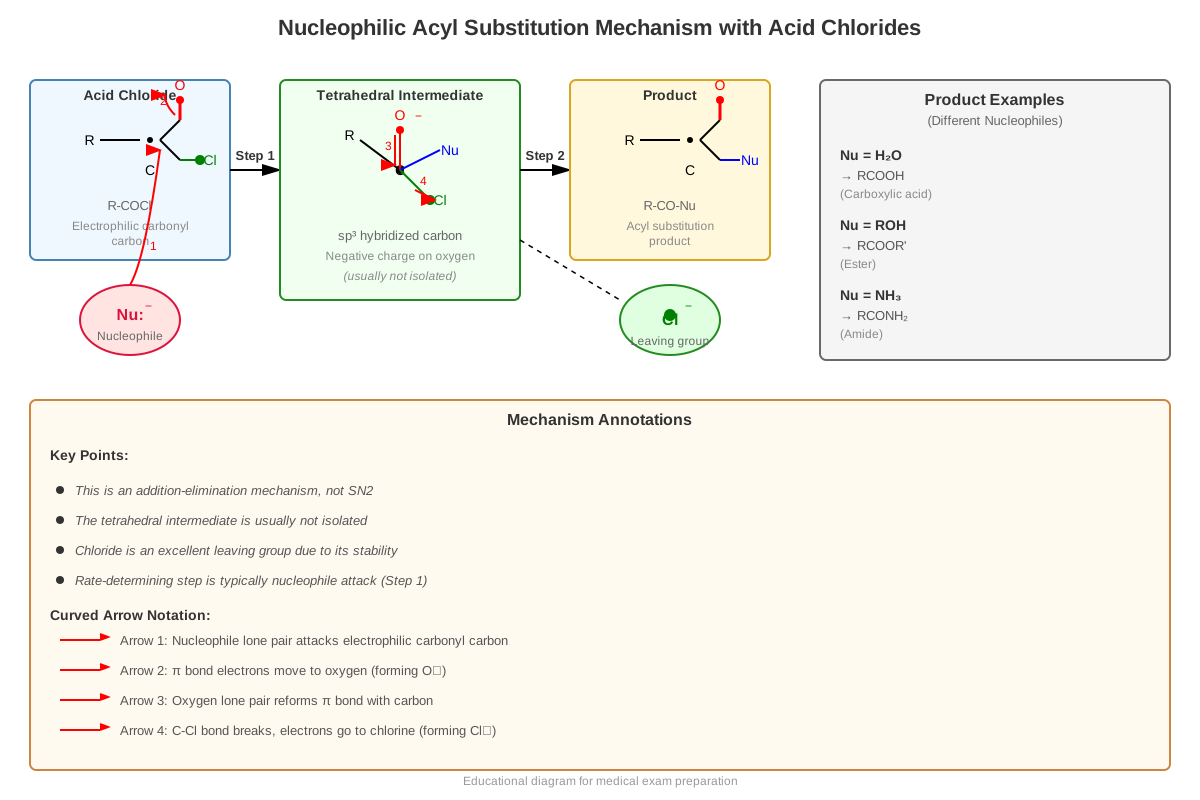
The primary reaction pathway for acid chlorides is nucleophilic acyl substitution, a two-step mechanism involving addition followed by elimination. In step one, a nucleophile attacks the electrophilic carbonyl carbon, forming a tetrahedral intermediate. This intermediate contains four groups bonded to the formerly carbonyl carbon, including the nucleophile, the chlorine, the R group, and an oxygen bearing a negative charge.
In step two, the tetrahedral intermediate collapses as the carbonyl reforms, expelling chloride as the leaving group. The driving force for this elimination is the stability of the chloride ion and the favorable formation of the strong C=O π bond. The overall result is substitution of the chlorine with the nucleophile, though the mechanism proceeds through addition-elimination rather than direct displacement.
For MCAT passages, recognizing that this mechanism requires the nucleophile to be reasonably strong (not highly stabilized) helps predict reaction outcomes. Weak nucleophiles like water react slowly, while strong nucleophiles like amines, alcohols (in the presence of base), and organometallic reagents react rapidly.
Key Reactions of Acid Chlorides
Acid chlorides undergo numerous transformations that interconvert carboxylic acid derivatives:
- Hydrolysis to carboxylic acids: Reaction with water (H₂O) produces the parent carboxylic acid and HCl. This reaction is vigorous and exothermic, proceeding rapidly even without catalysts.
RCOCl + H₂O → RCOOH + HCl- Alcoholysis to esters: Reaction with alcohols (ROH) yields esters. A base like pyridine is typically added to neutralize the HCl byproduct and prevent acid-catalyzed side reactions.
RCOCl + R'OH → RCOOR' + HCl- Aminolysis to amides: Reaction with ammonia or amines produces amides. Two equivalents of amine are typically used—one to form the amide and one to neutralize the HCl.
RCOCl + 2 R'NH₂ → RCONHR' + R'NH₃⁺Cl⁻- Reaction with carboxylate salts to anhydrides: Acid chlorides react with carboxylate anions (RCOO⁻) to form anhydrides, useful for synthesizing mixed anhydrides.
- Friedel-Crafts acylation: In the presence of Lewis acid catalysts like AlCl₃, acid chlorides acylate aromatic rings, introducing ketone functionality directly onto benzene rings.
Comparison Table of Carboxylic Acid Derivatives
| Derivative | Structure | Relative Reactivity | Leaving Group | Resonance Stabilization |
|---|---|---|---|---|
| Acid chloride | RCOCl | Highest (1) | Cl⁻ (excellent) | Weak (poor orbital overlap) |
| Anhydride | (RCO)₂O | High (2) | RCOO⁻ (good) | Moderate |
| Ester | RCOOR' | Moderate (3) | RO⁻ (moderate) | Moderate |
| Amide | RCONH₂ | Lowest (4) | NH₂⁻ (very poor) | Strong (excellent orbital overlap) |
This reactivity hierarchy is crucial for MCAT success. More reactive derivatives can be converted to less reactive ones, but not vice versa without special conditions. Acid chlorides, being most reactive, can form all other derivatives.
Physical Properties
Acid chlorides are typically colorless liquids with pungent, irritating odors. Lower molecular weight acid chlorides like acetyl chloride are volatile and react vigorously with moisture in air, producing visible fumes of HCl. This moisture sensitivity means acid chlorides must be stored under anhydrous conditions and handled with care.
The boiling points of acid chlorides are generally lower than their parent carboxylic acids because acid chlorides cannot form hydrogen bonds (no O-H or N-H bonds). However, they are polar molecules due to the C=O and C-Cl dipoles, giving them moderate solubility in organic solvents but rapid reaction with water rather than dissolution.
Quick check — test yourself on Acid chlorides so far.
Try Flashcards →Concept Relationships
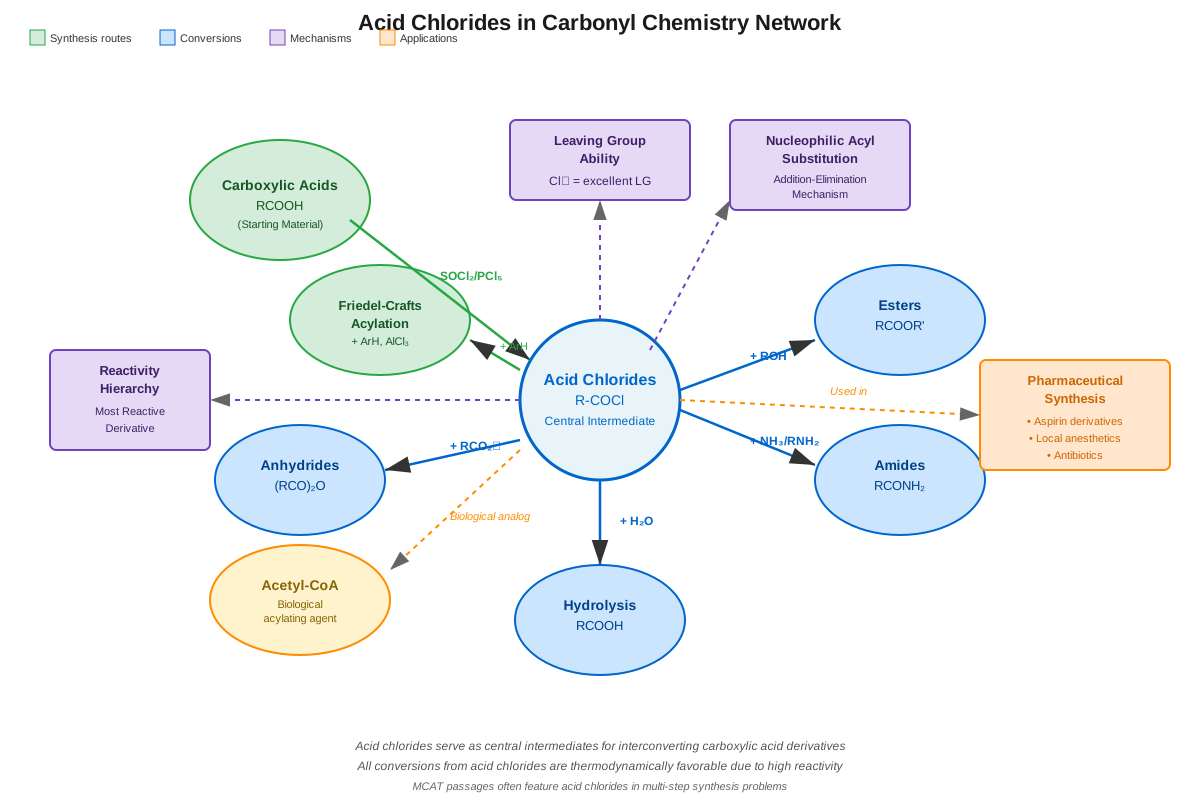
The chemistry of acid chlorides serves as a central hub connecting multiple areas of Carbonyl Chemistry. Starting from carboxylic acids (prerequisite knowledge), acid chlorides are synthesized using chlorinating reagents, representing a functional group interconversion that increases reactivity. Once formed, acid chlorides can be transformed into virtually any other carboxylic acid derivative through nucleophilic acyl substitution, making them versatile synthetic intermediates.
The relationship map flows as follows: Carboxylic acids → (chlorinating reagents) → Acid chlorides → (various nucleophiles) → Esters, Amides, Anhydrides, or back to Carboxylic acids. This unidirectional flow (from more reactive to less reactive) reflects thermodynamic favorability and represents a key principle for predicting reaction feasibility.
Within the topic itself, understanding the electronic structure of acid chlorides (weak resonance, strong inductive withdrawal) explains their position at the top of the reactivity hierarchy. This electronic understanding connects directly to the nucleophilic acyl substitution mechanism, where the electrophilic carbonyl carbon and excellent chloride leaving group enable rapid reaction. The mechanism, in turn, predicts the products formed with different nucleophiles, creating a logical chain from structure to properties to reactivity to synthetic applications.
Connections to related Organic Chemistry concepts include: (1) comparison with nucleophilic substitution at sp³ carbons (SN1/SN2), highlighting how carbonyl chemistry proceeds through addition-elimination rather than direct displacement; (2) relationship to Friedel-Crafts acylation in aromatic chemistry, where acid chlorides serve as electrophiles; and (3) parallels to biochemical acylation reactions, where acetyl-CoA (a biological equivalent of an activated carboxylic acid) transfers acetyl groups to substrates.
High-Yield Facts
⭐ Acid chlorides are the most reactive carboxylic acid derivatives due to the excellent leaving ability of chloride and weak resonance stabilization
⭐ The reactivity order is: acid chlorides > anhydrides > esters > amides, allowing conversion from more reactive to less reactive but not the reverse without activation
⭐ Acid chlorides react with water to form carboxylic acids, with alcohols to form esters, and with amines to form amides—all through nucleophilic acyl substitution
⭐ Two equivalents of amine are required when converting acid chlorides to amides: one for nucleophilic attack and one to neutralize HCl
⭐ Thionyl chloride (SOCl₂) converts carboxylic acids to acid chlorides, with gaseous byproducts (SO₂ and HCl) that drive the reaction to completion
- Acid chlorides cannot be synthesized by direct substitution of the hydroxyl group in carboxylic acids because OH⁻ is a poor leaving group
- The nucleophilic acyl substitution mechanism proceeds through a tetrahedral intermediate, not direct displacement
- Acid chlorides react vigorously with water, producing visible HCl fumes, and must be stored under anhydrous conditions
- Friedel-Crafts acylation uses acid chlorides with AlCl₃ catalyst to introduce acyl groups onto aromatic rings
- The carbonyl carbon in acid chlorides is sp² hybridized with trigonal planar geometry and bond angles near 120°
Common Misconceptions
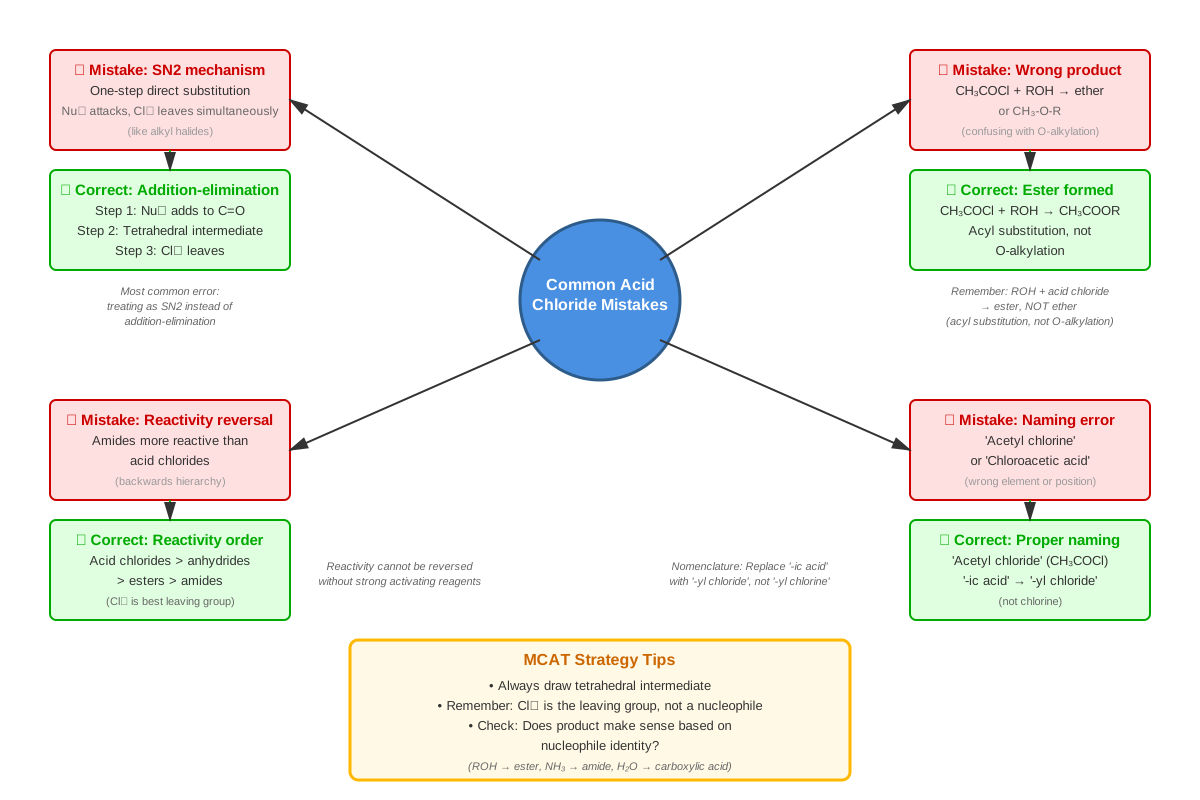
Misconception: Acid chlorides undergo SN2 substitution like alkyl halides. → Correction: Acid chlorides react through nucleophilic acyl substitution (addition-elimination mechanism) at the sp² carbonyl carbon, not SN2 displacement. The mechanism involves formation of a tetrahedral intermediate followed by leaving group departure, fundamentally different from backside attack in SN2 reactions.
Misconception: One equivalent of amine is sufficient to convert an acid chloride to an amide. → Correction: Two equivalents of amine are required—one acts as the nucleophile to form the amide, while the second neutralizes the HCl byproduct. Using only one equivalent results in incomplete conversion and formation of ammonium chloride salt that can interfere with product isolation.
Misconception: Acid chlorides are less reactive than esters because chlorine is more electronegative than oxygen. → Correction: Despite chlorine's electronegativity, acid chlorides are MORE reactive than esters. The key factor is leaving group ability (Cl⁻ is a much better leaving group than RO⁻) and resonance stabilization (chlorine's poor orbital overlap provides less stabilization than oxygen's donation in esters).
Misconception: Acid chlorides can be stored in aqueous solution like other organic compounds. → Correction: Acid chlorides react rapidly and exothermically with water, hydrolyzing to carboxylic acids and HCl. They must be stored under strictly anhydrous conditions, typically in sealed containers with desiccants, and handled in moisture-free environments.
Misconception: The chlorine in acid chlorides can be replaced by any nucleophile, including very weak ones. → Correction: While acid chlorides are highly reactive, extremely weak nucleophiles (like highly stabilized anions or very hindered species) may react slowly or not at all. The nucleophile must have sufficient nucleophilicity to attack the carbonyl carbon at a reasonable rate for practical synthesis.
Worked Examples
Example 1: Predicting Reaction Products
Question: Benzoyl chloride (C₆H₅COCl) is treated with excess ethanol (CH₃CH₂OH) in the presence of pyridine. What is the major organic product?
Solution:
Step 1: Identify the functional groups and reaction type. Benzoyl chloride is an acid chloride, and ethanol is an alcohol. This combination undergoes nucleophilic acyl substitution to form an ester.
Step 2: Write the mechanism. The ethanol oxygen (nucleophile) attacks the electrophilic carbonyl carbon of benzoyl chloride, forming a tetrahedral intermediate. The intermediate collapses, reforming the carbonyl and expelling chloride as the leaving group.
Step 3: Determine the product structure. The chlorine is replaced by the ethoxy group (-OCH₂CH₃), forming ethyl benzoate (C₆H₅COOCH₂CH₃).
Step 4: Account for the pyridine. Pyridine serves as a base to neutralize the HCl byproduct, preventing acid-catalyzed side reactions and driving the reaction to completion.
Answer: The major product is ethyl benzoate (C₆H₅COOCH₂CH₃), an ester. This example demonstrates the alcoholysis reaction of acid chlorides, a high-yield transformation for the MCAT.
Example 2: Ranking Reactivity
Question: Rank the following compounds in order of increasing reactivity toward nucleophilic acyl substitution: acetamide (CH₃CONH₂), acetic anhydride ((CH₃CO)₂O), ethyl acetate (CH₃COOCH₂CH₃), and acetyl chloride (CH₃COCl).
Solution:
Step 1: Identify the compound classes. These are all carboxylic acid derivatives: acetyl chloride (acid chloride), acetic anhydride (anhydride), ethyl acetate (ester), and acetamide (amide).
Step 2: Apply the reactivity hierarchy. Reactivity decreases in the order: acid chlorides > anhydrides > esters > amides. This order reflects leaving group ability and resonance stabilization.
Step 3: Analyze each compound:
- Acetyl chloride: Cl⁻ is an excellent leaving group; weak resonance stabilization
- Acetic anhydride: CH₃COO⁻ is a good leaving group; moderate resonance
- Ethyl acetate: CH₃CH₂O⁻ is a moderate leaving group; moderate resonance
- Acetamide: NH₂⁻ is a very poor leaving group; strong resonance stabilization from nitrogen
Step 4: Rank from least to most reactive.
Answer: Increasing reactivity order: acetamide < ethyl acetate < acetic anhydride < acetyl chloride. This ranking is essential for predicting which derivatives can be converted to others and appears frequently on MCAT questions testing carbonyl chemistry understanding.
Exam Strategy
When approaching MCAT questions involving acid chlorides, begin by identifying whether the question tests structure recognition, reactivity prediction, or mechanism understanding. Look for trigger words like "acyl chloride," "most reactive derivative," or specific reagents like SOCl₂ that signal acid chloride chemistry.
For reaction prediction questions, immediately identify the nucleophile and apply the nucleophilic acyl substitution framework. Ask: "What nucleophile is present?" and "What product forms when this nucleophile replaces chloride?" Common nucleophiles include water (→ carboxylic acid), alcohols (→ esters), and amines (→ amides). Remember that the chloride is always the leaving group, never the nucleophile.
Process-of-elimination strategies work well for reactivity ranking questions. Immediately eliminate any answer choice that places amides as more reactive than acid chlorides—this violates the fundamental reactivity hierarchy. Similarly, eliminate choices suggesting acid chlorides can be formed from less reactive derivatives without special activation. When comparing two similar structures, focus on leaving group ability and resonance stabilization as the deciding factors.
Time-Saving Tip: For synthesis questions, if the target molecule is an ester, amide, or anhydride, consider whether an acid chloride intermediate would provide an efficient route. Acid chlorides often represent the "universal donor" for acyl group transfer.
Allocate approximately 60-90 seconds for discrete acid chloride questions and up to 2 minutes for passage-based questions requiring multi-step reasoning. If a question asks about mechanism details beyond addition-elimination, it likely exceeds MCAT scope—focus on product prediction and reactivity trends instead.
Memory Techniques
Reactivity Hierarchy Mnemonic: "Children Always Eat Apples" represents Chlorides > Anhydrides > Esters > Amides in decreasing reactivity order.
Leaving Group Quality: Remember "Chloride Leaves Easily" to recall that Cl⁻ is an excellent leaving group, making acid chlorides highly reactive. The better the leaving group, the more reactive the derivative.
Nucleophile Products: Use the mnemonic "Water Alcohol Amine" → "Carboxylic acid Ester Amide" (WAA → CEA) to remember the products formed when acid chlorides react with these three common nucleophiles.
Visualization Strategy: Picture acid chlorides as "carbonyl compounds with a ticking time bomb" (the Cl leaving group ready to depart). This mental image reinforces their high reactivity and instability toward nucleophiles, especially water.
Two Equivalents Rule: For amine reactions, visualize one amine molecule attacking the carbonyl while a second amine molecule "catches" the HCl byproduct like a baseball glove. This image helps remember why two equivalents are needed.
Summary
Acid chlorides represent the most reactive class of carboxylic acid derivatives, featuring a carbonyl group bonded to chlorine (-COCl). Their exceptional reactivity stems from chloride's excellent leaving group ability and weak resonance stabilization, positioning them at the top of the reactivity hierarchy: acid chlorides > anhydrides > esters > amides. Synthesized from carboxylic acids using reagents like thionyl chloride (SOCl₂), acid chlorides undergo nucleophilic acyl substitution reactions with various nucleophiles through an addition-elimination mechanism involving tetrahedral intermediates. Key transformations include hydrolysis to carboxylic acids, alcoholysis to esters, and aminolysis to amides (requiring two equivalents of amine). For MCAT success, students must predict products based on nucleophile identity, rank derivative reactivity, and recognize that more reactive derivatives convert to less reactive ones but not vice versa without activation. Understanding acid chloride chemistry provides the foundation for mastering carbonyl interconversions and synthetic strategy questions that appear frequently across MCAT chemical sciences sections.
Key Takeaways
- Acid chlorides (RCOCl) are the most reactive carboxylic acid derivatives due to excellent Cl⁻ leaving group ability and minimal resonance stabilization
- Nucleophilic acyl substitution is the primary reaction mechanism, proceeding through tetrahedral intermediate formation followed by chloride elimination
- The reactivity hierarchy (acid chlorides > anhydrides > esters > amides) is irreversible without special activation, allowing conversion only from more to less reactive
- Common transformations include: water → carboxylic acid, alcohol → ester, amine → amide (requires 2 equivalents)
- Synthesis from carboxylic acids requires chlorinating reagents like SOCl₂, PCl₃, or PCl₅ because direct substitution is not feasible
- Acid chlorides are moisture-sensitive and react vigorously with water, requiring anhydrous storage and handling conditions
- MCAT questions emphasize product prediction, reactivity ranking, and mechanistic understanding rather than detailed synthetic procedures
Related Topics
- Carboxylic Anhydrides: The second-most reactive carboxylic acid derivatives, formed from acid chlorides and carboxylate salts, with similar but less vigorous reactivity patterns
- Esters: Products of acid chloride reactions with alcohols; understanding ester synthesis and hydrolysis builds on acid chloride chemistry
- Amides: The least reactive carboxylic acid derivatives, formed from acid chlorides and amines; crucial for understanding peptide bond formation in biochemistry
- Friedel-Crafts Acylation: Aromatic substitution reactions using acid chlorides as electrophiles to introduce ketone functionality onto benzene rings
- Carboxylic Acid Derivatives Interconversions: Comprehensive understanding of how all derivatives (chlorides, anhydrides, esters, amides) interconvert based on reactivity hierarchy
- Nucleophilic Acyl Substitution Mechanisms: Detailed mechanistic study applicable to all carboxylic acid derivatives, with acid chlorides as the prototypical example
Practice CTA
Now that you've mastered the core concepts of acid chlorides, it's time to solidify your understanding through active practice. Attempt the practice questions and flashcards designed specifically for this topic—they'll challenge you to apply reactivity hierarchies, predict products, and think through mechanisms under timed conditions that simulate actual MCAT pressure. Remember, understanding the "why" behind acid chloride reactivity transforms memorization into mastery. Each practice question you complete builds the pattern recognition and mechanistic intuition that distinguishes top scorers. You've built a strong foundation—now prove it to yourself through deliberate practice!
Sign up free to keep reading
Create a free AnvayaPrep account to finish this MCAT guide on Acid chlorides — plus flashcards and practice questions.