Overview
Demographic transition is a foundational model in Sociology that describes the transformation of a population's birth and death rates as a society progresses from pre-industrial to industrialized economic systems. This model, central to understanding Demographics and Social Change, explains how populations shift from high birth and death rates to low birth and death rates through predictable stages, fundamentally altering population size, structure, and growth patterns. The demographic transition model provides a framework for analyzing how modernization, urbanization, healthcare improvements, and economic development interact to reshape societies over time.
For the MCAT, demographic transition represents a high-yield topic that frequently appears in Psychological, Social, and Biological Foundations of Behavior passages. The exam tests not only knowledge of the stages themselves but also the ability to apply this model to real-world scenarios, interpret population pyramids, and connect demographic changes to broader social phenomena such as healthcare access, women's education, economic development, and social inequality. Understanding demographic transition enables students to analyze complex passages about global health disparities, aging populations, healthcare policy, and social stratification.
The demographic transition model connects intimately with other Sociology concepts including social stratification, globalization, urbanization, modernization theory, and social change. It provides essential context for understanding how societies evolve, why developed and developing nations face different population challenges, and how demographic factors influence social institutions, economic systems, and public health outcomes. Mastery of this topic equips students to tackle interdisciplinary MCAT questions that integrate sociological theory with public health, economics, and biological concepts related to population dynamics.
Learning Objectives
- [ ] Define Demographic transition using accurate Sociology terminology
- [ ] Explain why Demographic transition matters for the MCAT
- [ ] Apply Demographic transition to exam-style questions
- [ ] Identify common mistakes related to Demographic transition
- [ ] Connect Demographic transition to related Sociology concepts
- [ ] Distinguish between the four (or five) stages of demographic transition and their characteristic features
- [ ] Analyze population pyramids to identify which stage of demographic transition a society occupies
- [ ] Evaluate the social, economic, and healthcare factors that drive transitions between stages
- [ ] Predict the social consequences of demographic shifts including aging populations and youth bulges
Prerequisites
- Basic population terminology: Understanding terms like birth rate, death rate, and natural increase provides the quantitative foundation for demographic transition stages
- Social stratification concepts: Knowledge of how societies organize hierarchically helps explain why demographic transitions occur unevenly across social classes
- Modernization and industrialization: Familiarity with how societies transform economically contextualizes the drivers of demographic change
- Healthcare access and epidemiology: Understanding disease patterns and medical advancement explains mortality rate changes across transition stages
Why This Topic Matters
Clinical and Real-World Significance
Demographic transition theory explains critical global health challenges facing contemporary societies. Developed nations experiencing Stage 4 or 5 transitions confront aging populations, increased healthcare costs for chronic diseases, and shrinking workforces—issues directly relevant to healthcare policy and resource allocation. Conversely, developing nations in earlier stages face challenges related to maternal and child health, infectious disease burden, and rapid population growth that strains infrastructure. Understanding these patterns enables healthcare professionals to anticipate population health needs, allocate resources effectively, and design interventions appropriate to a population's demographic stage.
MCAT Exam Statistics
Demographic transition appears in approximately 15-20% of Sociology passages on the MCAT, making it one of the highest-yield topics in Demographics and Social Change. Questions typically require students to interpret data tables showing birth/death rates over time, analyze population pyramids, or apply demographic concepts to passages about global health disparities, healthcare access, or social change. The topic frequently appears in interdisciplinary contexts, integrated with concepts from epidemiology, social inequality, healthcare systems, and economic development.
Common Exam Appearances
MCAT passages featuring demographic transition often present:
- Population pyramids requiring stage identification and interpretation
- Data tables showing temporal changes in vital statistics (birth rates, death rates, infant mortality)
- Scenarios describing healthcare interventions and their demographic impacts
- Comparative analyses of developed versus developing nations
- Questions about social consequences of demographic shifts (dependency ratios, workforce changes, healthcare burden)
- Integration with topics like women's education, urbanization, and economic development
Core Concepts
The Demographic Transition Model Defined
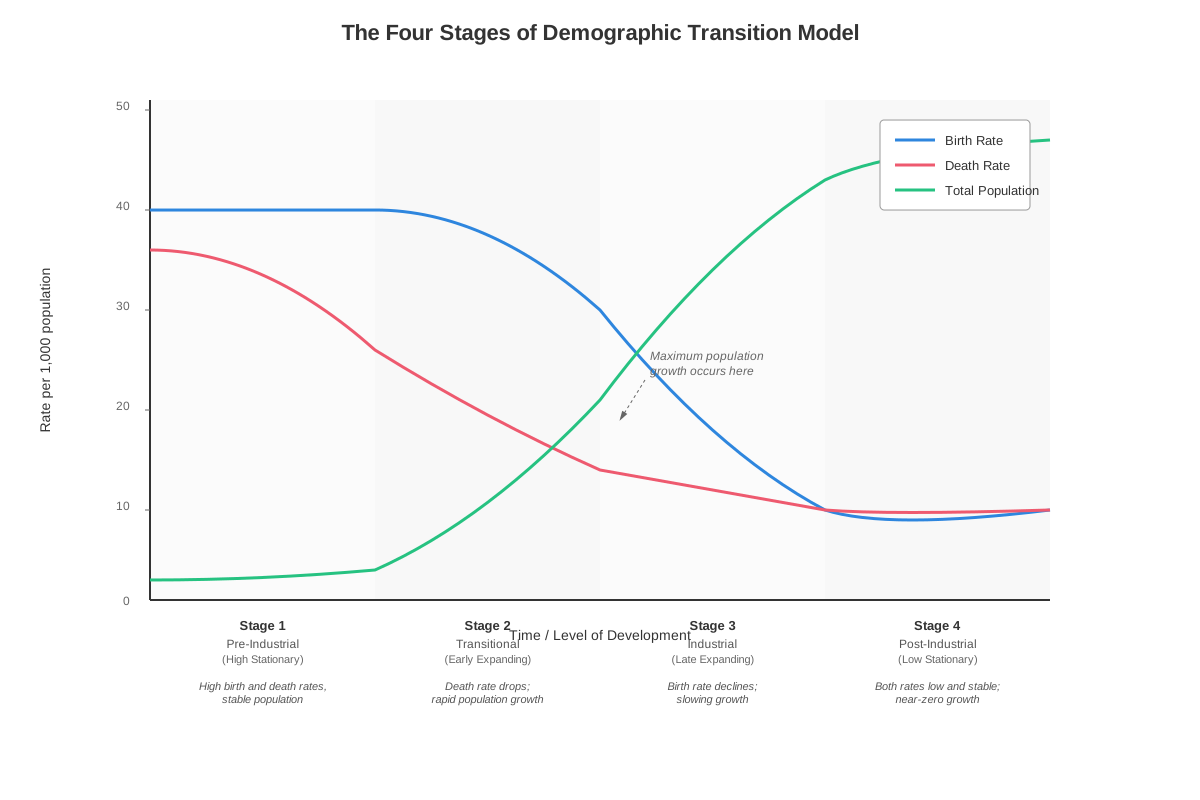
The demographic transition model is a theoretical framework describing the transition from high birth and death rates to low birth and death rates as a country develops from a pre-industrial to an industrialized economic system. This model, developed by demographer Warren Thompson in 1929 and refined by subsequent researchers, posits that demographic change follows predictable patterns linked to economic development, technological advancement, and social modernization. The model divides this transition into distinct stages, each characterized by specific patterns of fertility, mortality, and population growth.
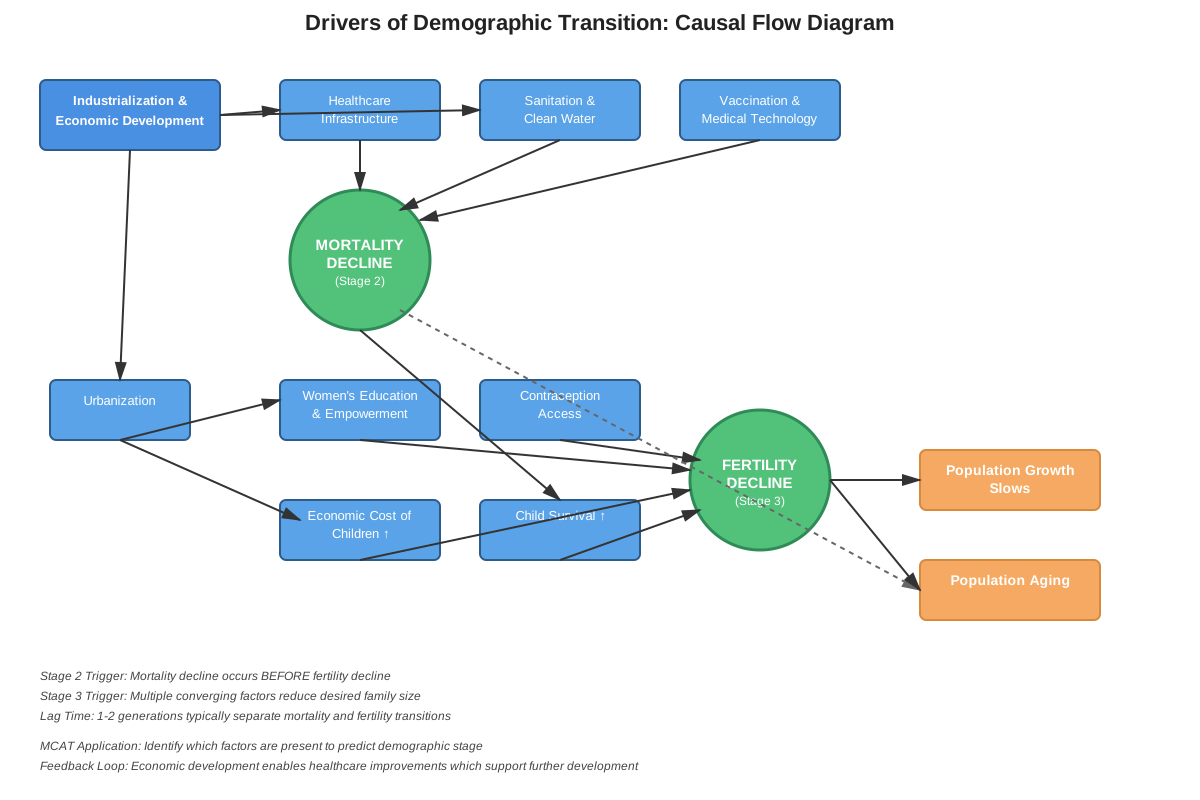
The fundamental mechanism underlying demographic transition involves a temporal lag between declining death rates and declining birth rates. Death rates typically decline first due to improvements in sanitation, nutrition, and medical care, while birth rates remain elevated due to cultural inertia, lack of contraception access, and economic incentives for large families. This lag creates a period of rapid population growth. Eventually, birth rates decline as societies urbanize, women gain education and workforce participation, child mortality decreases, and the economic value of children shifts from labor assets to costly investments requiring education.
Stage 1: Pre-Transition (High Stationary)
Stage 1 represents pre-industrial societies characterized by both high birth rates (typically 40-50 per 1,000 population) and high death rates (also 40-50 per 1,000), resulting in minimal population growth or even population decline. High mortality stems from infectious diseases, famine, poor sanitation, limited medical knowledge, and high infant mortality rates. High fertility compensates for high mortality, as families produce many children expecting several will not survive to adulthood.
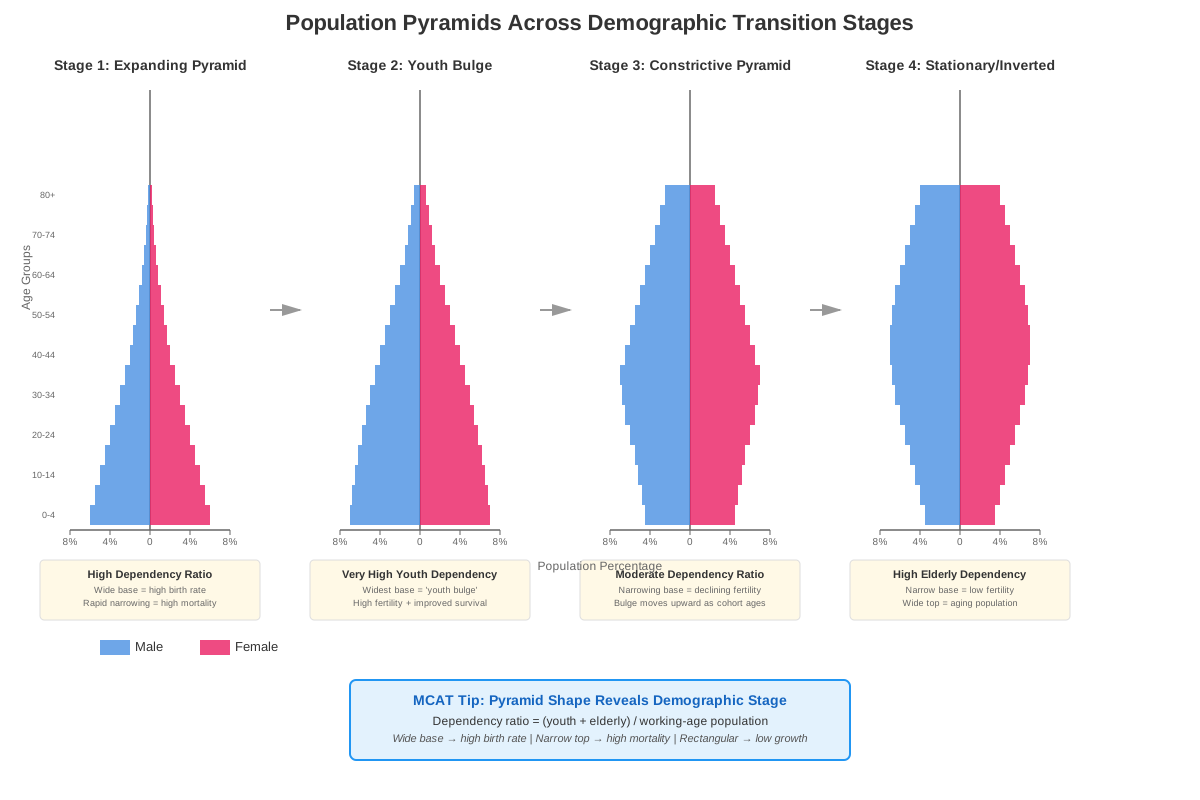
In Stage 1 societies, life expectancy remains low (typically 25-35 years), and population pyramids display a classic triangular shape with a very wide base (many young children) that narrows rapidly at older ages. Few societies remain in Stage 1 today, though some isolated populations in least-developed regions may exhibit these characteristics. Historically, all human societies existed in Stage 1 until the Agricultural and Industrial Revolutions initiated demographic transitions.
Stage 2: Early Transition (Expanding)
Stage 2 begins when death rates decline substantially while birth rates remain high, creating rapid population growth. This stage typically initiates with improvements in food supply, sanitation, clean water access, and basic medical interventions (vaccination, antibiotics, improved maternal care). Death rates may fall to 15-20 per 1,000 while birth rates remain at 35-45 per 1,000, producing natural increase rates of 2-3% annually—sufficient to double populations in 20-30 years.
Several factors explain why birth rates remain elevated despite falling mortality:
- Cultural lag: Social norms favoring large families persist despite changed mortality conditions
- Economic incentives: Children provide agricultural labor and old-age security in agrarian economies
- Limited contraception: Family planning technologies and services remain unavailable or culturally unacceptable
- Low female education: Women lack education and economic opportunities outside childbearing
- High infant mortality: Though declining, infant deaths remain common enough that families continue having many children
Stage 2 populations exhibit very young age structures with population pyramids showing extremely wide bases. Many developing nations in sub-Saharan Africa and parts of South Asia currently occupy Stage 2. The rapid population growth characteristic of this stage creates challenges for infrastructure, education systems, healthcare delivery, and economic development—often termed the demographic burden.
Stage 3: Late Transition (Stationary)
Stage 3 represents the critical transition phase where birth rates begin declining substantially, eventually approaching death rates. Birth rates may fall from 35-40 per 1,000 to 15-20 per 1,000 over several decades. Death rates continue declining gradually, stabilizing around 10-15 per 1,000. Population growth continues but decelerates significantly compared to Stage 2.
Multiple interconnected factors drive fertility decline in Stage 3:
- Urbanization: Urban living increases child-rearing costs and reduces children's economic value
- Female education and empowerment: Educated women have fewer children, marry later, and pursue careers
- Contraception access: Family planning services become widely available and culturally acceptable
- Infant mortality decline: Parents confidently expect children to survive, reducing desired family size
- Economic transformation: Shift from agricultural to industrial/service economies changes children's economic role
- Social security systems: Government programs reduce dependence on children for old-age support
- Changing gender roles: Women's workforce participation increases, competing with childbearing
Population pyramids in Stage 3 begin showing narrower bases and wider middle sections, reflecting fewer children and more working-age adults. This demographic structure creates the demographic dividend—a period when the ratio of working-age adults to dependents (children and elderly) is maximally favorable for economic growth. Many Latin American and Asian nations currently occupy Stage 3, having experienced rapid fertility declines over recent decades.
Stage 4: Post-Transition (Low Stationary)
Stage 4 characterizes fully developed, industrialized societies with both low birth rates and low death rates (typically 10-15 per 1,000 each), resulting in minimal population growth or even slight decline. Birth rates may fall below death rates, producing negative natural increase. Total fertility rates (average children per woman) typically fall to or below replacement level (approximately 2.1 children per woman).
Stage 4 populations exhibit rectangular or even inverted population pyramids, with relatively equal proportions across age groups and sometimes more elderly than children. This age structure creates significant social and economic challenges:
- Aging populations: High proportions of elderly require increased healthcare and social services
- Dependency ratio shifts: Fewer working-age adults support growing numbers of retirees
- Healthcare costs: Chronic diseases of aging (cardiovascular disease, cancer, dementia) dominate healthcare expenditure
- Pension sustainability: Retirement systems face funding challenges with fewer workers per retiree
- Labor force contraction: Economic growth may slow without sufficient workers
Most developed nations in Europe, North America, and East Asia occupy Stage 4. Some demographers propose a Stage 5 for societies where birth rates fall substantially below death rates, producing significant population decline (e.g., Japan, Italy, Germany). Stage 5 populations face potential economic stagnation, labor shortages, and questions about immigration policy to maintain workforce size.
Factors Driving Demographic Transition
| Factor | Mechanism | Stage Impact |
|---|---|---|
| Healthcare improvements | Reduces infectious disease mortality, infant/child deaths | Initiates Stage 2 transition |
| Sanitation and clean water | Prevents waterborne diseases, reduces mortality | Early Stage 2 |
| Nutrition improvements | Enhances immune function, reduces mortality | Stage 1→2 transition |
| Female education | Delays marriage, increases contraception use, reduces desired family size | Drives Stage 2→3 transition |
| Urbanization | Increases child-rearing costs, reduces children's economic value | Accelerates Stage 3 |
| Contraception access | Enables family planning, separates sexuality from reproduction | Essential for Stage 3 |
| Economic development | Shifts from agricultural to industrial/service economy | Underlies entire transition |
| Social security systems | Reduces dependence on children for old-age support | Facilitates Stage 3→4 |
| Women's workforce participation | Creates opportunity costs for childbearing | Maintains low fertility in Stage 4 |
Critiques and Limitations of the Model
While highly influential, the demographic transition model faces several important critiques:
- Eurocentric bias: The model derives from European historical experience and may not universally apply to all societies
- Economic determinism: The model assumes economic development necessarily drives demographic change, potentially overlooking cultural and political factors
- Unidirectional assumption: The model implies irreversible progression through stages, but some societies experience fertility rebounds or stalled transitions
- Timing variations: Contemporary developing nations transition much faster than historical European transitions, complicating stage classifications
- Migration omission: The original model largely ignores international migration's demographic impacts
- Policy influence: Government policies (e.g., China's one-child policy) can dramatically alter demographic trajectories independent of economic development
Despite these limitations, the demographic transition model remains valuable for understanding broad population trends and anticipating demographic challenges.
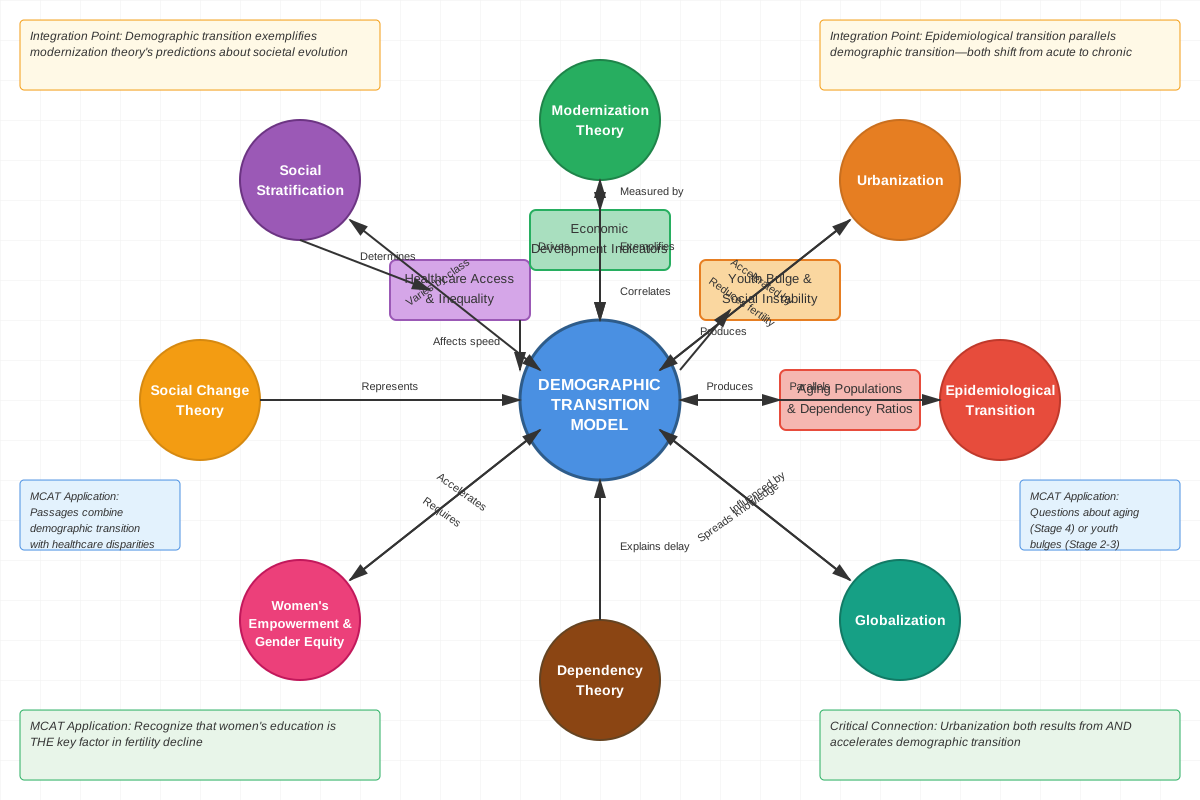
Concept Relationships
The demographic transition model integrates multiple interconnected concepts within Demographics and Social Change. The transition from Stage 1 to Stage 2 fundamentally depends on modernization—the process by which societies transform from traditional, agricultural systems to industrial, urban systems. This modernization drives improvements in healthcare access and public health infrastructure, which reduce mortality rates and initiate demographic transition.
The progression from Stage 2 to Stage 3 critically depends on social stratification patterns, particularly gender inequality. Societies where women gain education, economic opportunities, and reproductive autonomy transition faster than societies maintaining traditional gender hierarchies. This connection illustrates how demographic transition intersects with feminist theory and social change mechanisms.
Urbanization serves as both cause and consequence of demographic transition. Rural-to-urban migration accelerates fertility decline (driving Stage 3 transition) while low fertility rates in Stage 4 societies often concentrate in urban areas. This bidirectional relationship demonstrates how demographic and spatial patterns mutually reinforce each other.
The demographic transition model also connects to globalization and world systems theory. Core (developed) nations predominantly occupy Stage 4, while peripheral (developing) nations occupy Stages 2-3, creating global demographic inequality. This pattern influences international migration flows, global labor markets, and economic interdependence between nations at different transition stages.
Relationship Map:
Economic Development → Modernization → Healthcare Improvements → Mortality Decline (Stage 1→2)
                                    ↓
                              Urbanization → Increased Education → Female Empowerment → Fertility Decline (Stage 2→3)
                                    ↓
                            Contraception Access → Family Planning → Low Fertility (Stage 3→4)
                                    ↓
                            Population Aging → Healthcare Burden → Social Policy Challenges (Stage 4/5)
Quick check — test yourself on Demographic transition so far.
Try Flashcards →High-Yield Facts
⭐ Stage 2 produces the most rapid population growth due to the lag between declining death rates and persistently high birth rates, potentially doubling populations in 20-30 years.
⭐ Female education is the strongest predictor of fertility decline, more influential than GDP per capita in driving Stage 2→3 transitions.
⭐ The demographic dividend occurs in Stage 3 when the ratio of working-age adults to dependents is maximally favorable, creating economic growth opportunities.
⭐ Stage 4 societies face population aging challenges including increased healthcare costs, pension sustainability issues, and shrinking workforces.
⭐ Infant mortality decline is essential for fertility decline because parents must confidently expect children to survive before reducing desired family size.
- Death rates decline before birth rates in demographic transition, creating a period of rapid population growth in Stage 2.
- Population pyramids shift from triangular (Stage 1-2) to rectangular (Stage 4) as societies transition, reflecting changing age structures.
- Urbanization accelerates fertility decline by increasing child-rearing costs and reducing children's economic value as agricultural labor.
- Most developed nations completed demographic transition over 100-150 years, while contemporary developing nations transition in 50-75 years.
- Some demographers identify Stage 5 where birth rates fall substantially below death rates, producing population decline (e.g., Japan, Italy).
- The demographic transition model was developed by Warren Thompson in 1929 based on European and North American historical patterns.
- Replacement-level fertility (approximately 2.1 children per woman) maintains stable population size in low-mortality societies.
- Government policies can dramatically accelerate or decelerate demographic transition independent of economic development (e.g., China's one-child policy).
Common Misconceptions
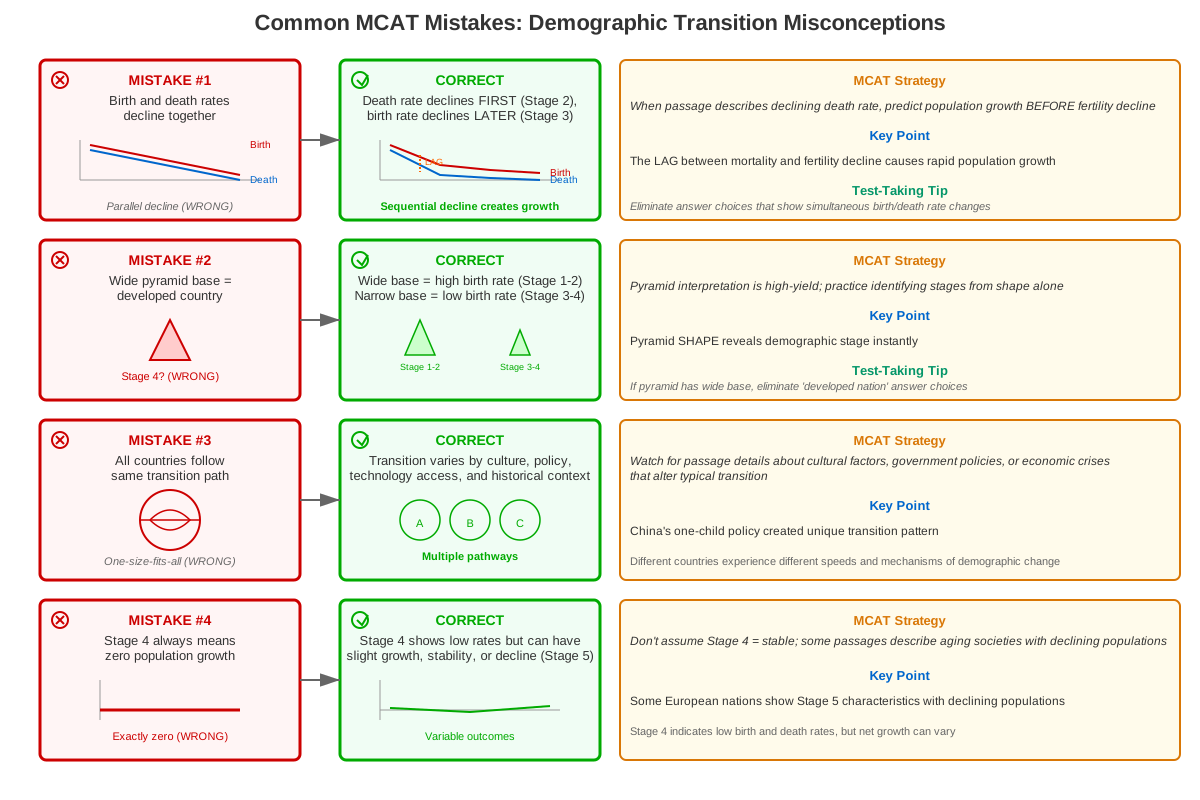
Misconception: All countries progress through demographic transition stages at the same rate.
Correction: Transition speed varies dramatically. European nations took 100-150 years to complete the transition, while some Asian nations (South Korea, Thailand) transitioned in 30-50 years due to rapid economic development, aggressive family planning programs, and technology transfer.
Misconception: Economic development automatically causes fertility decline.
Correction: While economic development correlates with fertility decline, the relationship is not deterministic. Cultural factors, government policies, women's status, and contraception access mediate this relationship. Some wealthy oil-producing nations maintain high fertility despite high GDP, while some poor nations (e.g., Kerala, India) achieved low fertility through education and healthcare investments despite limited economic development.
Misconception: Stage 1 and Stage 4 are identical because both have low population growth.
Correction: Though both stages exhibit minimal population growth, the mechanisms differ fundamentally. Stage 1 achieves low growth through high birth and death rates (high mortality cancels high fertility), while Stage 4 achieves it through low birth and death rates (low mortality with controlled fertility). The age structures, life expectancies, and social conditions differ dramatically.
Misconception: Declining death rates in Stage 2 primarily result from advanced medical technology.
Correction: Early mortality decline in Stage 2 typically results from basic public health measures (sanitation, clean water, vaccination, improved nutrition) rather than sophisticated medical technology. Advanced medical care becomes more important in later stages for treating chronic diseases and extending life expectancy beyond 70-80 years.
Misconception: The demographic transition model predicts future population trends with certainty.
Correction: The model describes general patterns but cannot predict specific outcomes. Fertility rates can rebound (pro-natalist policies), stall mid-transition (sub-Saharan Africa), or decline unexpectedly rapidly (East Asia). The model provides a framework for understanding demographic change, not deterministic predictions.
Misconception: Population aging in Stage 4 is entirely negative.
Correction: While population aging creates challenges (healthcare costs, pension sustainability), it also reflects positive achievements (longer life expectancy, better health) and creates opportunities (experienced workforce, "silver economy" markets). The challenge lies in adapting social institutions to changed demographic realities, not in aging itself.
Worked Examples
Example 1: Population Pyramid Analysis
Question: A population pyramid shows a wide base (0-14 age group comprising 45% of population), rapidly narrowing middle sections, and a very narrow top (65+ comprising 3% of population). Life expectancy is 58 years, birth rate is 38 per 1,000, and death rate is 12 per 1,000. Which demographic transition stage does this population occupy, and what challenges does it likely face?
Step 1 - Analyze vital statistics: Birth rate (38/1,000) is high while death rate (12/1,000) is moderate, indicating natural increase of 26/1,000 or 2.6% annually. This rapid growth suggests Stage 2.
Step 2 - Interpret age structure: The very wide base (45% under age 15) indicates high recent fertility. The narrow top (3% over 65) reflects both high past mortality and recent mortality improvements. This triangular pyramid is characteristic of Stage 2.
Step 3 - Consider life expectancy: Life expectancy of 58 years indicates substantial mortality decline from Stage 1 (where life expectancy is 25-35 years) but not yet the 70-80+ years typical of Stage 4. This intermediate life expectancy supports Stage 2 classification.
Step 4 - Identify challenges: Stage 2 populations face:
- Rapid population growth straining infrastructure, education, and healthcare systems
- Youth bulge requiring massive investment in schools and eventual job creation
- High dependency ratio with many children requiring support from working-age adults
- Resource pressure on food, water, housing, and environmental systems
Answer: This population occupies Stage 2 (early transition). Primary challenges include managing rapid population growth, providing education and healthcare for a very young population, and creating sufficient economic opportunities to employ the large cohorts entering working age.
Example 2: Intervention Impact Prediction
Question: A Stage 2 country implements a comprehensive program providing free secondary education for girls, reproductive health services, and microfinance loans for women entrepreneurs. Predict the demographic impacts over the next 20 years and explain the mechanisms.
Step 1 - Identify intervention targets: The interventions target three key drivers of fertility decline: female education, contraception access, and women's economic empowerment. These factors are critical for Stage 2→3 transition.
Step 2 - Predict immediate effects (0-5 years):
- Girls' secondary education enrollment increases, delaying marriage age
- Contraception use increases among women desiring to space or limit births
- Some women begin generating income through microenterprises
- Birth rate begins declining gradually as educated women have fewer children
Step 3 - Predict medium-term effects (5-15 years):
- Cohorts of educated girls enter reproductive years with different fertility preferences
- Social norms shift as educated, economically active women become more common
- Infant mortality may decline as educated mothers provide better child care
- Birth rate decline accelerates as multiple factors reinforce each other
Step 4 - Predict long-term effects (15-20 years):
- Country transitions from Stage 2 toward Stage 3
- Population growth rate decelerates significantly
- Age structure begins shifting with narrower base (fewer children)
- Potential demographic dividend emerges as dependency ratio improves
Step 5 - Explain mechanisms:
- Education effect: Educated women marry later, desire fewer children, use contraception more effectively, and have better economic opportunities outside childbearing
- Economic empowerment effect: Women with income have greater autonomy in reproductive decisions and face opportunity costs for childbearing
- Contraception access effect: Enables couples to achieve desired family size, separating sexuality from reproduction
- Multiplier effects: These factors reinforce each other—educated women are more likely to use contraception, economically empowered women invest more in children's education, etc.
Answer: The interventions would likely accelerate demographic transition from Stage 2 toward Stage 3 over 20 years, producing declining birth rates, decelerating population growth, and shifting age structure. The mechanisms involve delayed marriage, reduced desired family size, increased contraception use, and women's economic empowerment—all driven by female education as the foundational factor.
Exam Strategy
Approaching MCAT Questions on Demographic Transition
When encountering demographic transition questions, follow this systematic approach:
- Identify the stage first: Look for vital statistics (birth/death rates), population pyramid shape, or descriptive clues about development level. Correctly identifying the stage enables prediction of associated characteristics.
- Watch for temporal dynamics: Many questions test understanding of transitions between stages rather than static stage characteristics. Pay attention to phrases like "over the next decade," "recently experienced," or "is beginning to" that signal change.
- Connect to underlying mechanisms: MCAT questions often require explaining why demographic patterns occur, not just describing them. Link demographic changes to education, urbanization, healthcare access, or economic development.
- Consider social consequences: Questions frequently ask about implications of demographic patterns for healthcare systems, economic development, or social policy. Think through how age structure affects dependency ratios, healthcare needs, and workforce size.
Trigger Words and Phrases
- "Developing nation," "low-income country": Likely Stage 2 or early Stage 3
- "Industrialized," "high-income," "developed": Likely Stage 4
- "Rapid population growth": Characteristic of Stage 2
- "Aging population," "declining workforce": Characteristic of Stage 4
- "Youth bulge," "young population": Characteristic of Stage 2
- "Fertility decline," "falling birth rates": Signals Stage 2→3 transition
- "Female education," "women's empowerment": Key drivers of Stage 2→3 transition
- "Urbanization," "rural-to-urban migration": Accelerates Stage 3 transition
Process of Elimination Tips
When uncertain between answer choices:
- Eliminate answers confusing stages: If a question describes high birth and death rates, eliminate answers suggesting Stage 4 characteristics
- Eliminate answers reversing cause and effect: Demographic transition questions often test causal understanding—eliminate answers that reverse the direction of causation
- Eliminate answers ignoring temporal lag: Remember that death rates decline before birth rates—eliminate answers suggesting simultaneous decline
- Eliminate extreme answers: Demographic transition is gradual; eliminate answers suggesting instantaneous or complete transformations
Time Allocation
Demographic transition questions typically require 60-90 seconds. Allocate time as follows:
- 15-20 seconds: Read question stem and identify stage/transition being tested
- 20-30 seconds: Analyze any data (population pyramid, vital statistics table)
- 15-20 seconds: Predict answer before reading choices
- 10-15 seconds: Evaluate answer choices and select best option
If a question requires complex data interpretation or multi-step reasoning, allow up to 2 minutes but flag for review if exceeding this time.
Memory Techniques
Stage Characteristics Mnemonic: "HELP"
For remembering what changes across stages:
- High birth and death rates → Stage 1
- Expanding population (death rates drop) → Stage 2
- Lowering birth rates (approaching death rates) → Stage 3
- Post-transition stability (both low) → Stage 4
Fertility Decline Drivers: "EDUCATE"
For remembering factors driving Stage 2→3 transition:
- Education (especially female)
- Declining infant mortality
- Urbanization
- Contraception access
- Autonomy for women
- Transformed economy (industrial/service)
- Employment opportunities for women
Population Pyramid Visualization
Create mental images for each stage:
- Stage 1/2: Christmas tree (wide base, narrow top)
- Stage 3: Beehive (wide middle, narrowing top and bottom)
- Stage 4: Rectangle or column (relatively equal width)
- Stage 5: Inverted pyramid or mushroom (narrow base, wide top)
Temporal Sequence: "Death Before Birth"
Remember that death rates decline before birth rates in demographic transition. This creates the Stage 2 population explosion. Visualize death rates as the "early bird" and birth rates as the "late follower."
Summary
The demographic transition model describes how populations shift from high birth and death rates (Stage 1) through a period of rapid growth when death rates decline but birth rates remain high (Stage 2), then to declining birth rates approaching low death rates (Stage 3), and finally to low birth and death rates with minimal growth (Stage 4). This transition, driven by modernization, healthcare improvements, urbanization, female education, and economic development, fundamentally transforms population size, age structure, and growth patterns. Stage 2 produces rapid population growth and young age structures, creating challenges for developing nations. Stage 3 offers a demographic dividend when favorable dependency ratios support economic growth. Stage 4 brings population aging, healthcare cost increases, and workforce contraction challenges. Understanding demographic transition enables analysis of global health disparities, prediction of population trends, and evaluation of social policy impacts. For the MCAT, students must identify stages from vital statistics or population pyramids, explain mechanisms driving transitions, connect demographic patterns to social factors like education and urbanization, and analyze social consequences of demographic change.
Key Takeaways
- The demographic transition model describes predictable shifts from high to low birth and death rates as societies modernize, progressing through four (or five) distinct stages
- Stage 2 produces the most rapid population growth due to declining death rates while birth rates remain high, creating a temporal lag
- Female education is the strongest driver of fertility decline, more influential than economic development alone in accelerating Stage 2→3 transitions
- Population pyramids shift from triangular (young populations in Stages 1-2) to rectangular (balanced age structure in Stage 4), reflecting changing demographic patterns
- Stage 3 offers a demographic dividend when favorable ratios of working-age adults to dependents support economic growth
- Stage 4 societies face population aging challenges including increased healthcare costs, pension sustainability issues, and shrinking workforces
- The model connects to broader sociology concepts including modernization, urbanization, gender inequality, globalization, and social change
Related Topics
Population Pyramids and Age Structure: Understanding how to interpret population pyramids enables identification of demographic transition stages and prediction of future population trends. Mastering demographic transition provides the theoretical framework for pyramid interpretation.
Epidemiological Transition: This parallel model describes shifts in disease patterns from infectious diseases (predominant in early stages) to chronic diseases (predominant in later stages) as populations undergo demographic transition. The two models are intimately connected.
Urbanization and Rural-Urban Migration: Urban growth both drives and results from demographic transition, particularly the Stage 2→3 transition. Understanding urbanization mechanisms deepens comprehension of fertility decline drivers.
Gender Inequality and Women's Status: Female education, economic empowerment, and reproductive autonomy are critical drivers of demographic transition. Exploring gender stratification illuminates why some societies transition faster than others.
Global Health Disparities: Demographic transition explains why developed and developing nations face different health challenges—infectious diseases and maternal/child health in earlier stages versus chronic diseases and aging in later stages.
Social Change and Modernization Theory: Demographic transition exemplifies broader theories about how societies transform from traditional to modern systems, connecting population dynamics to economic, cultural, and institutional change.
Practice CTA
Now that you've mastered the demographic transition model, reinforce your understanding by attempting practice questions and flashcards on this topic. Focus on questions requiring stage identification from data, explanation of transition mechanisms, and analysis of social consequences. Challenge yourself with interdisciplinary questions integrating demographic transition with epidemiology, social stratification, and healthcare systems. The more you practice applying this model to diverse scenarios, the more confidently you'll tackle demographic transition questions on test day. You've built a strong foundation—now solidify it through active practice!
Sign up free to keep reading
Create a free AnvayaPrep account to finish this MCAT guide on Demographic transition — plus flashcards and practice questions.