Overview
Population pyramids are graphical representations that display the age and sex distribution of a population at a specific point in time. These demographic tools, also known as age-sex pyramids or age structure diagrams, consist of two back-to-back horizontal bar graphs—one representing males and the other females—with age cohorts displayed on the vertical axis and population size or percentage on the horizontal axis. Understanding population pyramids is fundamental to Sociology and represents a critical component of the Demographics and Social Change content area tested on the MCAT.
For the MCAT, population pyramids serve as essential analytical tools that bridge quantitative data interpretation with sociological theory. The exam frequently presents population pyramids in passage-based questions within the Psychological, Social, and Biological Foundations of Behavior section, requiring students to extract demographic information, predict social trends, and connect population structure to broader sociological phenomena such as dependency ratios, economic development, healthcare needs, and social policy implications. Mastery of this topic enables students to quickly analyze visual demographic data and apply sociological reasoning to complex scenarios.
Population pyramids connect intimately with numerous high-yield MCAT topics including demographic transition theory, epidemiological transitions, social stratification, healthcare access, economic systems, and social change. The shape of a population pyramid reveals critical information about a society's birth rates, death rates, life expectancy, migration patterns, and historical events such as wars, epidemics, or baby booms. This topic exemplifies the MCAT's emphasis on data interpretation skills combined with conceptual understanding, making it a frequent testing point that rewards students who can rapidly decode visual information and apply sociological frameworks.
Learning Objectives
- [ ] Define population pyramids using accurate Sociology terminology
- [ ] Explain why population pyramids matter for the MCAT
- [ ] Apply population pyramids to exam-style questions
- [ ] Identify common mistakes related to population pyramids
- [ ] Connect population pyramids to related Sociology concepts
- [ ] Analyze the three major types of population pyramid shapes and their sociological implications
- [ ] Calculate and interpret dependency ratios from population pyramid data
- [ ] Predict future demographic trends and social challenges based on current population structure
- [ ] Evaluate the relationship between population pyramids and stages of demographic transition
Prerequisites
- Basic graph interpretation skills: Essential for reading horizontal bar graphs and understanding axes, scales, and data representation
- Fundamental demographic concepts: Understanding of birth rate, death rate, fertility rate, and mortality provides context for pyramid interpretation
- Age cohorts and generational categories: Knowledge of how populations are divided into age groups (typically 5-year intervals) enables accurate analysis
- Percentage versus absolute number interpretation: Critical for distinguishing between population size and population structure
- Basic understanding of sex ratios: Necessary for interpreting the male-female distribution patterns shown in pyramids
Why This Topic Matters
Population pyramids represent one of the most frequently tested visual data types in the MCAT Sociology section, appearing in approximately 15-20% of demographics-related passages. The MCAT values this topic because it assesses multiple competencies simultaneously: quantitative reasoning, data interpretation, sociological knowledge application, and critical thinking about social change. Questions involving population pyramids often appear as medium-to-high difficulty items that separate high-scoring students from average performers.
In real-world applications, population pyramids inform critical policy decisions affecting healthcare resource allocation, pension system sustainability, educational infrastructure planning, and workforce development strategies. Public health officials use these tools to predict disease burden, plan vaccination campaigns, and allocate medical resources. Urban planners rely on population structure data to design age-appropriate community services. Economists analyze dependency ratios derived from pyramids to forecast economic growth potential and social security challenges.
On the MCAT, population pyramids typically appear in passages discussing: demographic transitions in developing versus developed nations; the social and economic impacts of aging populations; immigration patterns and their effects on population structure; historical events (wars, epidemics, one-child policies) and their demographic consequences; healthcare system strain related to age distribution; and intergenerational wealth transfer and social support systems. Questions may ask students to identify the pyramid type, predict future trends, calculate dependency ratios, or connect population structure to social phenomena like healthcare costs, labor force participation, or educational demand.
Core Concepts
Structure and Components of Population Pyramids
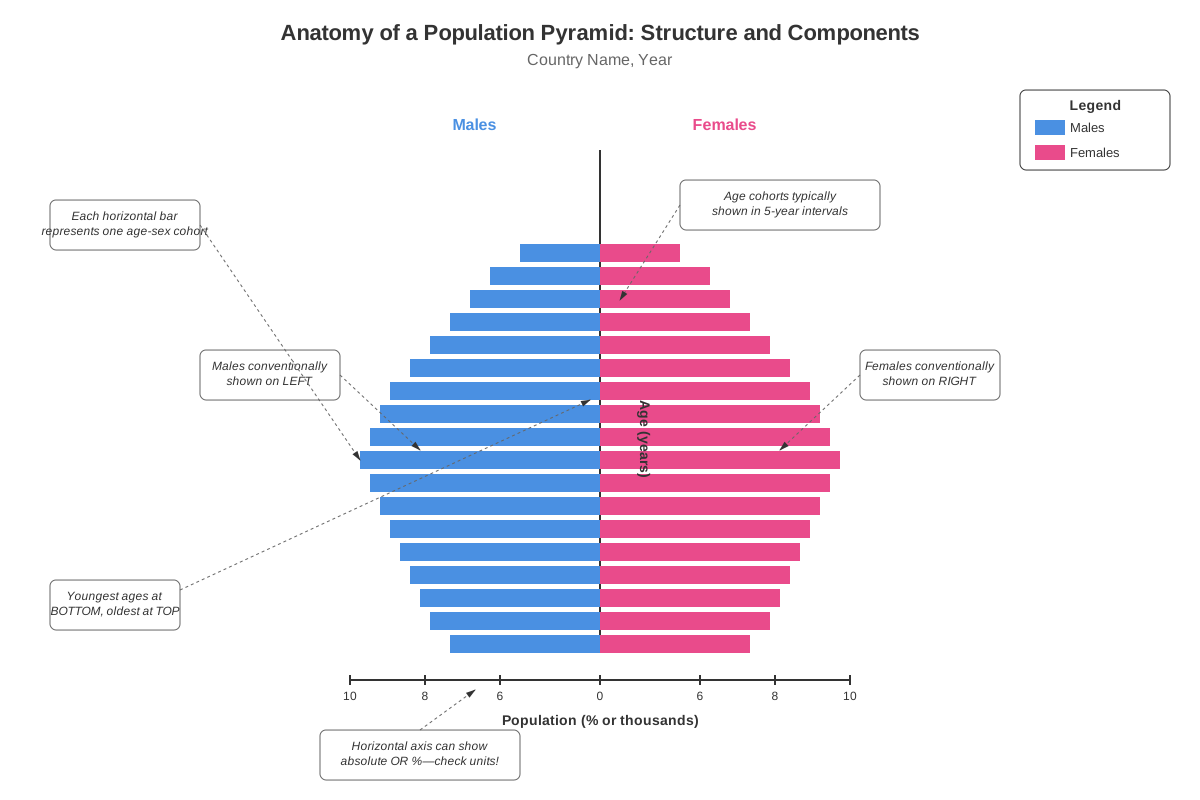
A population pyramid consists of several essential components that must be understood for accurate interpretation. The vertical (y) axis displays age groups, typically in 5-year intervals (0-4, 5-9, 10-14, etc.), progressing from youngest at the bottom to oldest at the top. The horizontal (x) axis shows either the absolute number of individuals or the percentage of the total population, with males conventionally displayed on the left side and females on the right side. The length of each horizontal bar represents the size of that particular age-sex cohort.
The midline or central vertical axis serves as the reference point separating male and female populations. Symmetry around this midline indicates balanced sex ratios, while asymmetry reveals sex-specific demographic patterns such as sex-selective migration, gender-based mortality differences, or sex ratio imbalances at birth. The width of the pyramid at any given age level indicates the relative or absolute size of that cohort, while the overall shape of the pyramid reveals fundamental characteristics about the population's demographic dynamics.
Understanding whether the pyramid displays absolute numbers versus percentages is crucial for MCAT questions. Absolute numbers show actual population counts and are useful for understanding total population size and resource needs. Percentage-based pyramids standardize the data, allowing direct comparison between populations of different sizes and revealing population structure independent of total size. The MCAT frequently tests whether students recognize this distinction and can interpret implications correctly.
Three Major Types of Population Pyramids
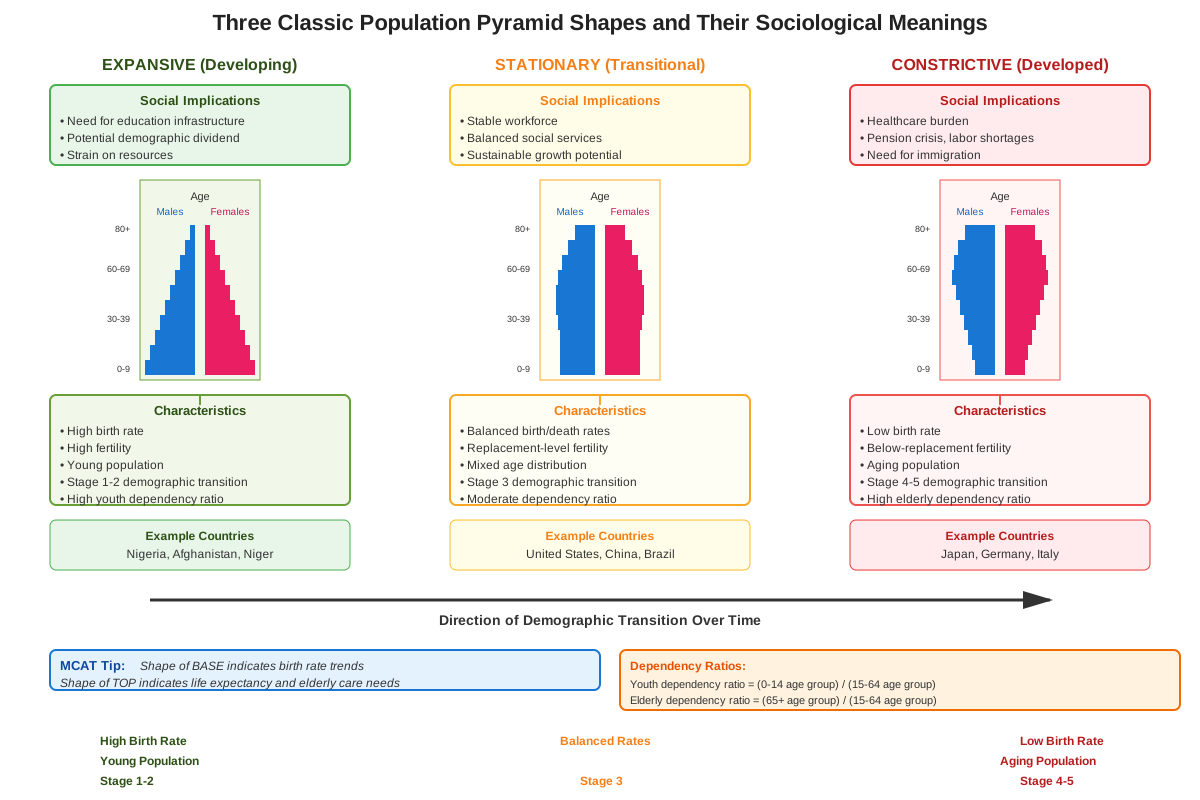
Expansive pyramids (also called "expanding" or "young" populations) display a broad base that narrows progressively toward the top, creating a classic triangular shape. This structure indicates high birth rates, high fertility rates, and a large proportion of young dependents. Expansive pyramids characterize developing nations and populations in early stages of demographic transition. The wide base reflects high fertility, while the narrow top indicates lower life expectancy and higher mortality rates across age groups. Sociologically, expansive populations face challenges including: high youth dependency ratios, substantial educational infrastructure needs, potential for rapid population growth, pressure on resources and employment, and a "youth bulge" that can create social instability if economic opportunities don't match population growth.
Constrictive pyramids (also called "contracting" or "aging" populations) feature a narrow base that widens in the middle age ranges before tapering at older ages, creating an inverted or "beehive" shape. This structure indicates low birth rates, low fertility rates (often below replacement level of 2.1 children per woman), and a large proportion of elderly dependents. Constrictive pyramids characterize developed nations and populations in late stages of demographic transition. The narrow base reflects declining fertility, while the wider middle and top sections indicate longer life expectancy and aging populations. Sociological implications include: high old-age dependency ratios, strain on pension and healthcare systems, potential labor force shortages, need for elder care infrastructure, and challenges with economic growth and innovation.
Stationary pyramids (also called "stable" populations) display relatively uniform width across most age groups with a gradual taper toward the oldest ages, creating a rectangular or column-like shape. This structure indicates birth rates and death rates that are approximately balanced, with fertility near replacement level. Stationary pyramids characterize populations in demographic equilibrium or transitional stages between expansion and contraction. These populations experience: balanced dependency ratios, stable population size, predictable resource needs, and sustainable demographic patterns. However, many developed nations that appear stationary are actually in transition toward constrictive patterns as fertility continues declining.
Dependency Ratios and Population Pyramids
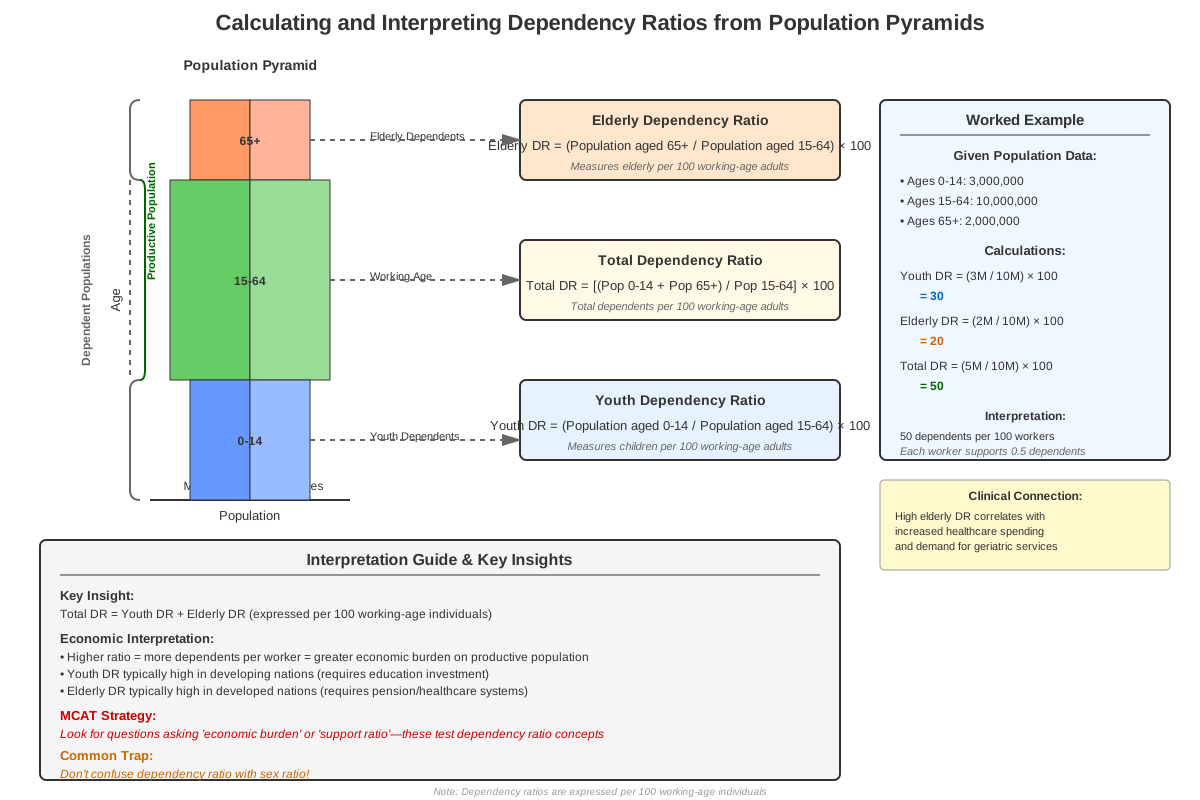
The dependency ratio quantifies the proportion of dependents (non-working age individuals) relative to the working-age population, and can be calculated directly from population pyramid data. The total dependency ratio equals (population aged 0-14 + population aged 65+) / (population aged 15-64) × 100. This metric reveals the economic burden on the productive population.
The youth dependency ratio focuses specifically on children: (population aged 0-14) / (population aged 15-64) × 100. High youth dependency ratios characterize expansive pyramids and indicate substantial investment needs in education, childcare, and pediatric healthcare. The old-age dependency ratio focuses on elderly individuals: (population aged 65+) / (population aged 15-64) × 100. High old-age dependency ratios characterize constrictive pyramids and indicate pressure on pension systems, geriatric healthcare, and elder care services.
For the MCAT, understanding that different pyramid shapes create different dependency challenges is crucial. Expansive populations struggle with youth dependency, requiring massive educational investments but benefiting from a growing future workforce. Constrictive populations face old-age dependency challenges, with fewer workers supporting more retirees, creating fiscal sustainability concerns. The demographic dividend occurs when a population transitions from high to low dependency ratios, with a large working-age population relative to dependents, creating economic growth potential—a concept frequently tested in relation to population pyramids.
Interpreting Irregularities and Anomalies
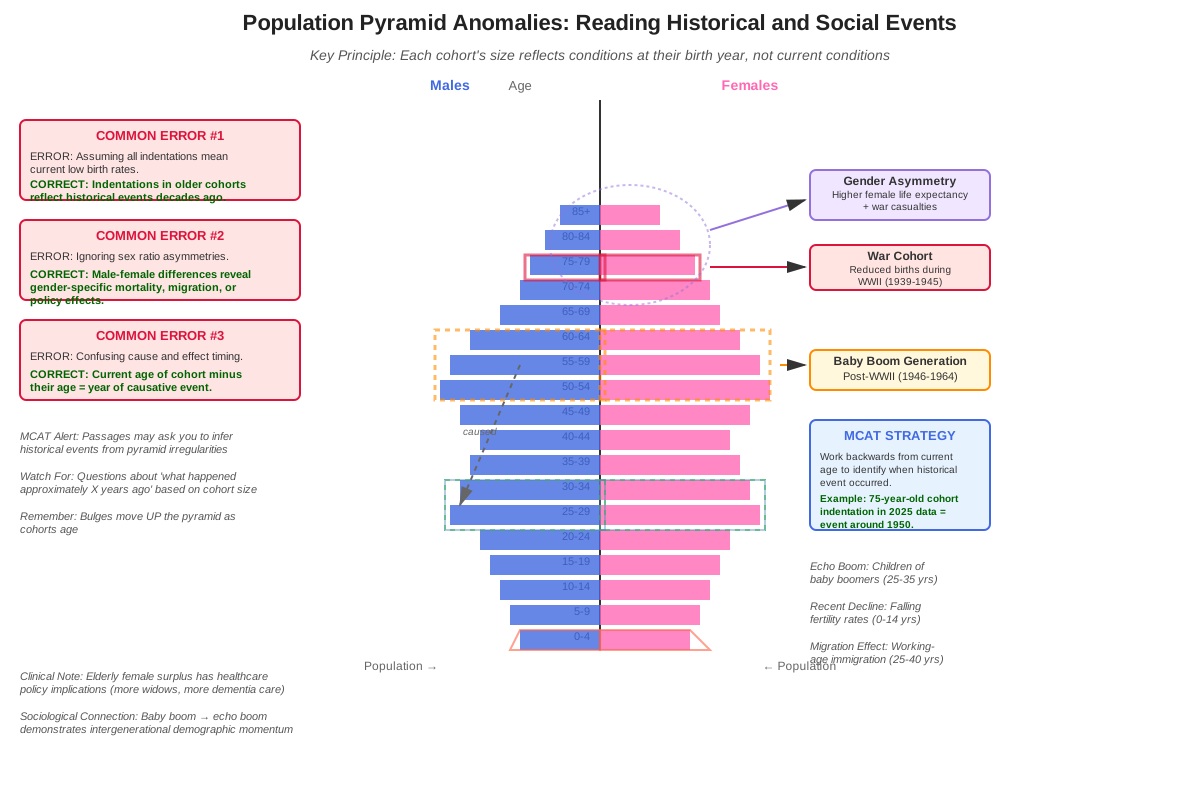
Population pyramids often display irregularities that reveal historical events and social phenomena. A notch or indentation at a specific age range indicates a cohort smaller than expected, potentially caused by: war (reduced births during conflict, military deaths), economic depression (delayed childbearing), epidemic or famine (increased mortality), or restrictive population policies. A bulge indicates an unusually large cohort, potentially caused by: baby boom following war or economic prosperity, immigration of specific age groups, or pronatalist policies encouraging births.
Sex ratio imbalances appear as asymmetry between male and female sides of the pyramid. More males than females in young age groups may indicate sex-selective abortion or infanticide (as seen in some Asian countries). More females than males in older age groups reflects women's longer life expectancy. More males than females in working-age groups may indicate male-dominated labor migration. The MCAT frequently presents pyramids with such anomalies and asks students to identify the most likely cause.
Echo effects occur when large or small cohorts produce correspondingly large or small subsequent generations. A baby boom generation creates an "echo boom" approximately 25-30 years later when that cohort reaches peak childbearing years. Understanding these temporal patterns helps predict future demographic trends from current pyramid shapes.
Population Pyramids and Demographic Transition Theory
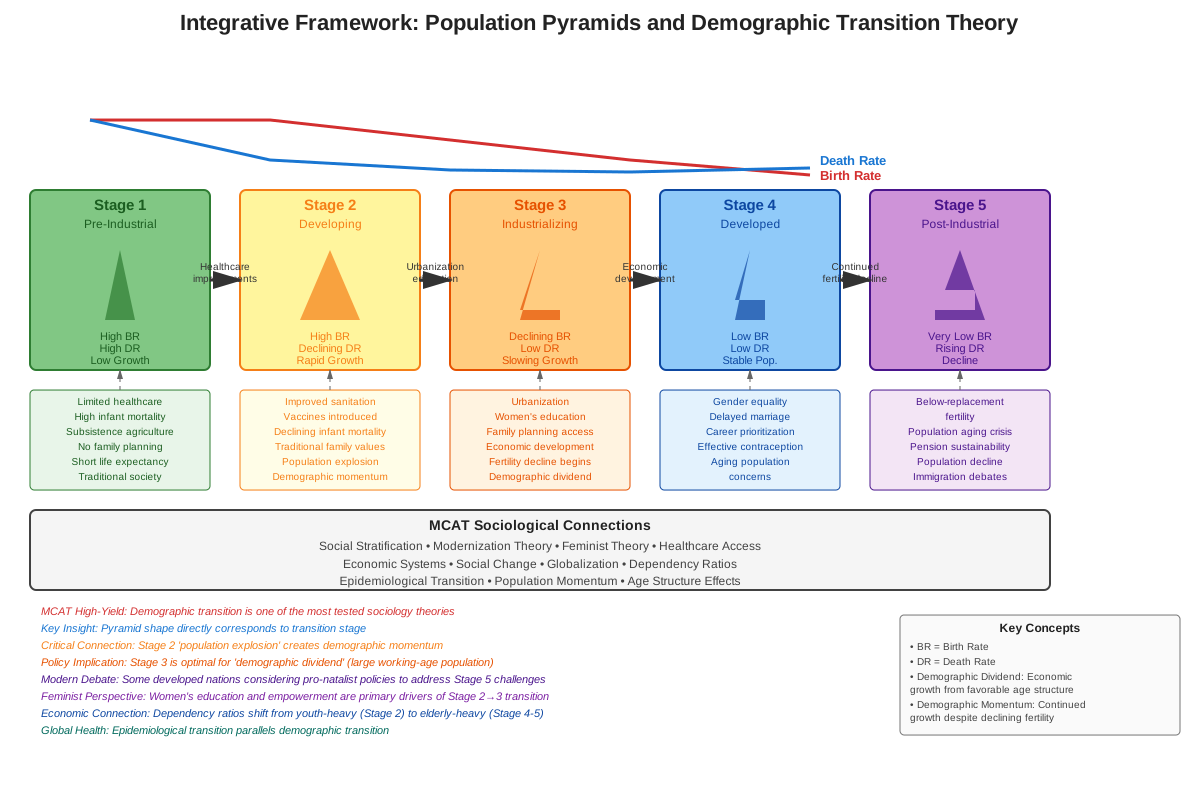
Population pyramids visually represent the stages of demographic transition, a core MCAT sociology concept. Stage 1 (pre-transition) populations show expansive pyramids with very wide bases due to high birth and death rates. Stage 2 (early transition) populations show extremely expansive pyramids as death rates decline but birth rates remain high, creating rapid population growth. Stage 3 (late transition) populations show moderately expansive pyramids as birth rates begin declining, with the base narrowing relative to Stage 2. Stage 4 (post-transition) populations show stationary or constrictive pyramids with low birth and death rates and slow or negative population growth. Some demographers propose a Stage 5 characterized by very constrictive pyramids with fertility well below replacement level.
The connection between pyramid shape and demographic transition stage enables prediction of social changes. Populations moving from Stage 2 to Stage 3 experience the demographic dividend as dependency ratios decline. Populations in Stage 4 face aging challenges as the pyramid becomes constrictive. Understanding this relationship allows MCAT test-takers to connect visual pyramid data with broader sociological theories about modernization, development, and social change.
Concept Relationships
Population pyramids serve as visual representations that integrate multiple demographic concepts. Birth rates and fertility rates directly determine the width of the pyramid base—higher fertility creates wider bases (expansive pyramids), while lower fertility creates narrower bases (constrictive pyramids). Death rates and life expectancy determine the pyramid's height and taper—higher mortality creates steeper tapers and shorter pyramids, while lower mortality and longer life expectancy create taller pyramids with substantial elderly populations.
Migration patterns modify pyramid shapes by adding or removing specific age-sex cohorts. Immigration typically adds working-age adults, widening the middle sections, while emigration removes these cohorts, creating indentations. Sex-selective migration (such as male labor migration) creates asymmetry between male and female sides.
Population pyramids connect to demographic transition theory by visually representing each transition stage. They also relate to epidemiological transition, as populations shift from infectious disease patterns (affecting young populations, creating expansive pyramids) to chronic disease patterns (affecting elderly populations, creating constrictive pyramids). The relationship flows: Economic development → Demographic transition → Pyramid shape change → Dependency ratio shifts → Social policy challenges.
Dependency ratios derived from pyramids connect to economic concepts including labor force participation, economic productivity, and fiscal sustainability. High youth dependency (expansive pyramids) requires educational investment but promises future workforce growth. High old-age dependency (constrictive pyramids) strains pension and healthcare systems but reflects successful development and longevity gains.
Population structure influences social stratification and intergenerational relations. Expansive populations with youth bulges may experience age-based competition for resources and employment. Constrictive populations may see intergenerational conflict over resource allocation between working-age and elderly populations. These connections make population pyramids a nexus concept linking demographics, economics, healthcare, and social change—exactly the type of integrative thinking the MCAT rewards.
Quick check — test yourself on Population pyramids so far.
Try Flashcards →High-Yield Facts
⭐ Expansive pyramids have wide bases and narrow tops, indicating high birth rates and young populations characteristic of developing nations
⭐ Constrictive pyramids have narrow bases and wider middle/upper sections, indicating low birth rates and aging populations characteristic of developed nations
⭐ The dependency ratio equals (population under 15 + population over 64) / (population 15-64) × 100, and can be calculated from pyramid data
⭐ Males are conventionally displayed on the left side of population pyramids, females on the right side
⭐ Notches or indentations in pyramids at specific ages indicate historical events like wars, epidemics, or economic depressions that reduced births or increased deaths
- Stationary pyramids show relatively uniform width across age groups, indicating balanced birth and death rates near replacement level
- The demographic dividend occurs when dependency ratios are low due to a large working-age population relative to dependents
- Sex ratio imbalances in pyramids may indicate sex-selective practices, differential migration patterns, or sex-specific mortality differences
- Population pyramids can display either absolute numbers or percentages—percentages allow comparison between different-sized populations
- Echo effects occur when large cohorts produce correspondingly large subsequent generations approximately 25-30 years later
- Youth dependency ratios are high in expansive pyramids, creating educational and employment challenges
- Old-age dependency ratios are high in constrictive pyramids, creating pension and healthcare sustainability challenges
- The shape of a population pyramid corresponds to stages of demographic transition theory
Common Misconceptions
Misconception: A wider pyramid always means a larger total population. → Correction: Pyramid width indicates the proportion or percentage of the population in each age group, not necessarily total population size. A small country with high fertility can have an expansive pyramid, while a large country with low fertility can have a constrictive pyramid. Always check whether the x-axis shows absolute numbers or percentages.
Misconception: Constrictive pyramids indicate population decline is currently happening. → Correction: Constrictive pyramids indicate low birth rates and potential future decline, but the population may still be growing if the large middle-aged cohorts haven't yet aged into the elderly categories. Population momentum means that even with below-replacement fertility, populations can continue growing for decades.
Misconception: The male and female sides of pyramids should always be perfectly symmetrical. → Correction: While sex ratios at birth are relatively consistent (approximately 105 males per 100 females), various factors create asymmetry including sex-selective practices, differential migration patterns, sex-specific mortality differences (women typically live longer), and war casualties affecting males disproportionately.
Misconception: All developing countries have expansive pyramids and all developed countries have constrictive pyramids. → Correction: While this generalization often holds, exceptions exist. Some developing countries have implemented successful family planning programs (like Iran) and show narrowing bases. Some developed countries with pronatalist policies or high immigration (like the United States) maintain more expansive structures than other developed nations.
Misconception: A bulge in the middle age ranges always indicates a baby boom. → Correction: While baby booms create such bulges, other factors can too, including age-selective immigration (working-age adults moving to a country), cohort survival from previous high-birth periods, or the echo effect of a previous generation's baby boom.
Misconception: Population pyramids only show current population structure without predictive value. → Correction: Population pyramids have substantial predictive power. The current age structure determines future trends because today's children become tomorrow's working-age adults and eventually elderly dependents. Barring dramatic changes in fertility, mortality, or migration, pyramid shapes evolve predictably over time.
Worked Examples
Example 1: Analyzing Pyramid Type and Implications
Scenario: A population pyramid shows the following characteristics: the 0-4 age group represents 6% of the population, the 5-9 group represents 6%, the 10-14 group represents 7%, the 15-19 group represents 8%, and subsequent age groups progressively increase in size until the 45-49 group (representing 10% of the population), after which groups progressively decrease. The 80+ group represents 2% of the population. What type of pyramid is this, and what are the primary sociological implications?
Analysis:
Step 1: Identify the shape. The base (youngest age groups) is narrow relative to middle age groups, then the pyramid tapers at older ages. This describes a constrictive pyramid.
Step 2: Interpret demographic characteristics. The narrow base indicates low birth rates and fertility below replacement level. The wider middle sections indicate a large working-age population. The presence of substantial elderly populations (though tapering) indicates relatively high life expectancy.
Step 3: Determine sociological implications. This population faces:
- High old-age dependency ratio: The large middle-aged cohorts will soon enter retirement, while few young workers are entering the labor force
- Pension and healthcare system strain: Many retirees will need support from fewer workers
- Potential labor shortages: The narrow base means fewer future workers
- Economic growth challenges: Aging populations typically show slower economic growth
- Need for elder care infrastructure: Growing elderly population requires geriatric services
Step 4: Predict future trends. Without increased fertility or immigration, this population will experience population decline as the small younger cohorts replace larger older cohorts. The dependency ratio will worsen as middle-aged workers retire.
Conclusion: This constrictive pyramid is characteristic of a developed nation in late demographic transition (Stage 4 or 5), facing the challenges of population aging and potential decline. MCAT questions might ask about policy responses (immigration, pronatalist policies, retirement age increases) or social consequences (intergenerational conflict, healthcare costs).
Example 2: Calculating and Interpreting Dependency Ratios
Scenario: A population pyramid provides the following data for a country with 50 million people: Ages 0-14 represent 35% of the population, ages 15-64 represent 60% of the population, and ages 65+ represent 5% of the population. Calculate the total dependency ratio, youth dependency ratio, and old-age dependency ratio. What do these values indicate about the country's demographic situation and challenges?
Analysis:
Step 1: Calculate total dependency ratio.
Formula: (population 0-14 + population 65+) / (population 15-64) × 100
Calculation: (35% + 5%) / (60%) × 100 = 40% / 60% × 100 = 66.7
Step 2: Calculate youth dependency ratio.
Formula: (population 0-14) / (population 15-64) × 100
Calculation: (35%) / (60%) × 100 = 58.3
Step 3: Calculate old-age dependency ratio.
Formula: (population 65+) / (population 15-64) × 100
Calculation: (5%) / (60%) × 100 = 8.3
Step 4: Interpret the values. The total dependency ratio of 66.7 means there are approximately 67 dependents for every 100 working-age individuals. The youth dependency ratio of 58.3 is very high, indicating substantial child dependents. The old-age dependency ratio of 8.3 is relatively low, indicating few elderly dependents.
Step 5: Determine demographic situation. The high youth dependency and low old-age dependency indicate an expansive pyramid characteristic of a developing nation in early demographic transition (Stage 2 or early Stage 3). The large proportion of children (35%) confirms high fertility rates.
Step 6: Identify challenges and opportunities.
- Challenges: Massive educational infrastructure needs, healthcare for children, employment creation for future workers, resource strain from rapid population growth
- Opportunities: Potential demographic dividend as this large youth cohort enters working age (if jobs are available), future workforce growth, economic dynamism from young population
Conclusion: This country faces typical developing nation challenges of youth dependency but has potential for future economic growth if it can successfully transition through demographic stages and create employment for its growing working-age population. MCAT questions might ask about appropriate policy interventions (family planning, education investment, economic development) or compare this situation to developed nations with opposite dependency patterns.
Exam Strategy
When approaching MCAT questions involving population pyramids, begin by quickly identifying the pyramid type (expansive, constrictive, or stationary) by examining the base width relative to middle sections. This immediate classification allows you to predict associated characteristics and eliminate incorrect answer choices. Look for the trigger phrase "population pyramid" or "age-sex distribution" in passages, which signals that demographic analysis will be required.
Time-saving approach: Spend 15-20 seconds orienting to the pyramid's axes and scale before reading questions. Identify whether the x-axis shows percentages or absolute numbers, confirm which side represents males versus females, and note the age interval size (usually 5 years). This prevents misinterpretation errors that waste time.
Process of elimination strategy: For questions asking about pyramid implications, eliminate answers that contradict the pyramid type. If you identify a constrictive pyramid, immediately eliminate answers suggesting high birth rates, youth dependency challenges, or rapid population growth. If you identify an expansive pyramid, eliminate answers about aging populations, pension crises, or labor shortages.
Watch for these trigger words and phrases:
- "Dependency ratio" → Calculate or interpret the proportion of dependents to working-age population
- "Demographic transition" → Connect pyramid shape to transition stages
- "Historical event" or "anomaly" → Identify notches, bulges, or irregularities and explain causes
- "Future trends" or "predict" → Use current age structure to forecast demographic changes
- "Policy implications" → Connect pyramid characteristics to appropriate social policies
- "Developed versus developing" → Distinguish constrictive versus expansive patterns
Common question types:
- Identification questions: "Which type of population pyramid is shown?" → Classify as expansive, constrictive, or stationary
- Calculation questions: "What is the dependency ratio?" → Apply formulas to pyramid data
- Interpretation questions: "What does this pyramid suggest about the society?" → Connect structure to social implications
- Comparison questions: "How does Country A's pyramid differ from Country B's?" → Contrast shapes and implications
- Prediction questions: "What challenges will this population face in 20 years?" → Project future trends from current structure
Allocation advice: Population pyramid questions typically appear in passages with 5-7 questions. Allocate 1.5 minutes per question, spending slightly more time on the first question to thoroughly analyze the pyramid, then using that analysis to answer subsequent questions more quickly. Don't recalculate or reanalyze for each question—use your initial assessment throughout the passage.
Memory Techniques
Pyramid Shape Mnemonic - "ECS":
- Expansive = Enormous base (developing nations, young populations)
- Constrictive = Compressed base (developed nations, aging populations)
- Stationary = Straight sides (stable populations, balanced rates)
Dependency Ratio Formula - "Young and Old Need Working Gold":
Remember that dependency ratios put young (0-14) and old (65+) in the numerator because they depend on the working age (15-64) population in the denominator. The "gold" reminds you that working-age people generate economic value.
Pyramid Side Memory - "MEN are LEFT behind":
Males are on the Left side of population pyramids (a somewhat dark but memorable phrase). Alternatively, "Ladies to the Right" (females on right side).
Demographic Transition Stages Visualization:
Imagine a pyramid melting as countries develop:
- Stage 1-2: Solid pyramid (wide base, expansive)
- Stage 3: Melting pyramid (base narrowing)
- Stage 4-5: Melted pyramid (narrow base, constrictive)
The "melting" represents declining fertility as development progresses.
Anomaly Causes - "WEED":
Notches and irregularities in pyramids are caused by:
- War (reduced births, military deaths)
- Epidemic (increased mortality)
- Economic crisis (delayed childbearing)
- Demographic policy (one-child policy, pronatalist programs)
Dependency Direction:
High youth dependency → Look down at pyramid base (expansive)
High old-age dependency → Look up at pyramid top (constrictive)
Summary
Population pyramids are essential demographic visualization tools that display age-sex distribution through back-to-back horizontal bar graphs, with males on the left, females on the right, and age cohorts on the vertical axis. The three major pyramid types—expansive (wide base, young populations), constrictive (narrow base, aging populations), and stationary (uniform width, stable populations)—correspond to different stages of demographic transition and create distinct sociological challenges. Expansive pyramids characterize developing nations with high youth dependency ratios, requiring educational investment and employment creation. Constrictive pyramids characterize developed nations with high old-age dependency ratios, creating pension and healthcare sustainability challenges. Dependency ratios calculated from pyramid data quantify the economic burden of dependents on working-age populations. Irregularities in pyramid shapes reveal historical events like wars, epidemics, or policy changes. For the MCAT, students must rapidly identify pyramid types, calculate dependency ratios, interpret demographic implications, and connect population structure to broader sociological concepts including demographic transition, social change, healthcare systems, and economic development. Mastery requires both quantitative skills for data interpretation and conceptual understanding of how population structure shapes social phenomena.
Key Takeaways
- Population pyramids visually represent age-sex distribution with males on the left, females on the right, and age increasing vertically from bottom to top
- Expansive pyramids (wide base) indicate high birth rates and young populations typical of developing nations facing youth dependency challenges
- Constrictive pyramids (narrow base) indicate low birth rates and aging populations typical of developed nations facing old-age dependency challenges
- Dependency ratios quantify the proportion of dependents to working-age population and can be calculated as (ages 0-14 + ages 65+) / (ages 15-64) × 100
- Pyramid irregularities (notches, bulges, asymmetries) reveal historical events, migration patterns, or demographic policies affecting specific cohorts
- Population pyramid shapes correspond to demographic transition stages, with pyramids becoming more constrictive as countries develop
- Understanding pyramid types enables prediction of future demographic trends, social challenges, and appropriate policy responses—a high-yield MCAT skill
Related Topics
Demographic Transition Theory: The theoretical framework explaining how populations shift from high birth/death rates to low birth/death rates through distinct stages, directly manifested in changing population pyramid shapes. Mastering population pyramids provides the visual foundation for understanding demographic transition.
Epidemiological Transition: The shift from infectious disease patterns to chronic disease patterns as populations develop, closely related to population aging visible in constrictive pyramids. Understanding pyramid shapes helps predict disease burden patterns.
Migration Patterns and Theories: Push-pull factors, brain drain, and remittances connect to population pyramids through their effects on age-sex structure, particularly creating bulges or notches in working-age cohorts.
Social Stratification and Inequality: Age-based stratification, intergenerational wealth transfer, and resource allocation conflicts relate to population structure, particularly in societies with extreme youth bulges or aging populations.
Healthcare Systems and Access: Population age structure determines healthcare needs, with young populations requiring maternal-child health services and aging populations requiring geriatric and chronic disease management.
Economic Development and Modernization: The demographic dividend, labor force participation, and economic productivity connect directly to population structure and dependency ratios derived from pyramids.
Practice CTA
Now that you've mastered the fundamentals of population pyramids, it's time to solidify your understanding through active practice. Challenge yourself with MCAT-style practice questions that require you to analyze pyramid shapes, calculate dependency ratios, and connect demographic data to sociological implications. Use flashcards to drill the characteristics of each pyramid type and the formulas for dependency calculations. Remember, the MCAT rewards not just knowledge but the ability to rapidly apply concepts to novel scenarios—population pyramids are perfect for developing this skill because they integrate visual analysis, quantitative reasoning, and sociological theory. Your investment in mastering this high-yield topic will pay dividends across multiple question types in the Psychological, Social, and Biological Foundations section. You've got this!
Sign up free to keep reading
Create a free AnvayaPrep account to finish this MCAT guide on Population pyramids — plus flashcards and practice questions.