Overview
Modernization is a fundamental sociological concept that describes the transformation of societies from traditional, agrarian structures to contemporary, industrialized systems. This multidimensional process encompasses economic development, technological advancement, urbanization, secularization, and shifts in social organization. For the MCAT, understanding modernization is critical because it provides the theoretical framework for analyzing demographic transitions, social change, globalization, and the evolution of social institutions—all high-yield topics in the Psychological, Social, and Biological Foundations of Behavior section.
The concept of Modernization Sociology emerged from classical theorists like Max Weber, Émile Durkheim, and Ferdinand Tönnies, who sought to explain the dramatic social transformations accompanying the Industrial Revolution. Modernization MCAT questions typically appear in passages discussing global health disparities, changing family structures, educational systems, or economic development. These questions require students to identify characteristics of modern versus traditional societies, predict social consequences of modernization, and analyze how technological and economic changes reshape social relationships and institutions.
Within the broader context of Demographics and Social Change, modernization serves as both a cause and consequence of population dynamics. It connects directly to demographic transition theory, urbanization patterns, globalization, social movements, and institutional change. Understanding modernization enables students to analyze how societies evolve, why certain social problems emerge during transitional periods, and how cultural values adapt to technological and economic transformations. This topic integrates economic Sociology with cultural analysis, making it essential for synthesizing information across multiple MCAT passages.
Learning Objectives
- [ ] Define Modernization using accurate Sociology terminology
- [ ] Explain why Modernization matters for the MCAT
- [ ] Apply Modernization to exam-style questions
- [ ] Identify common mistakes related to Modernization
- [ ] Connect Modernization to related Sociology concepts
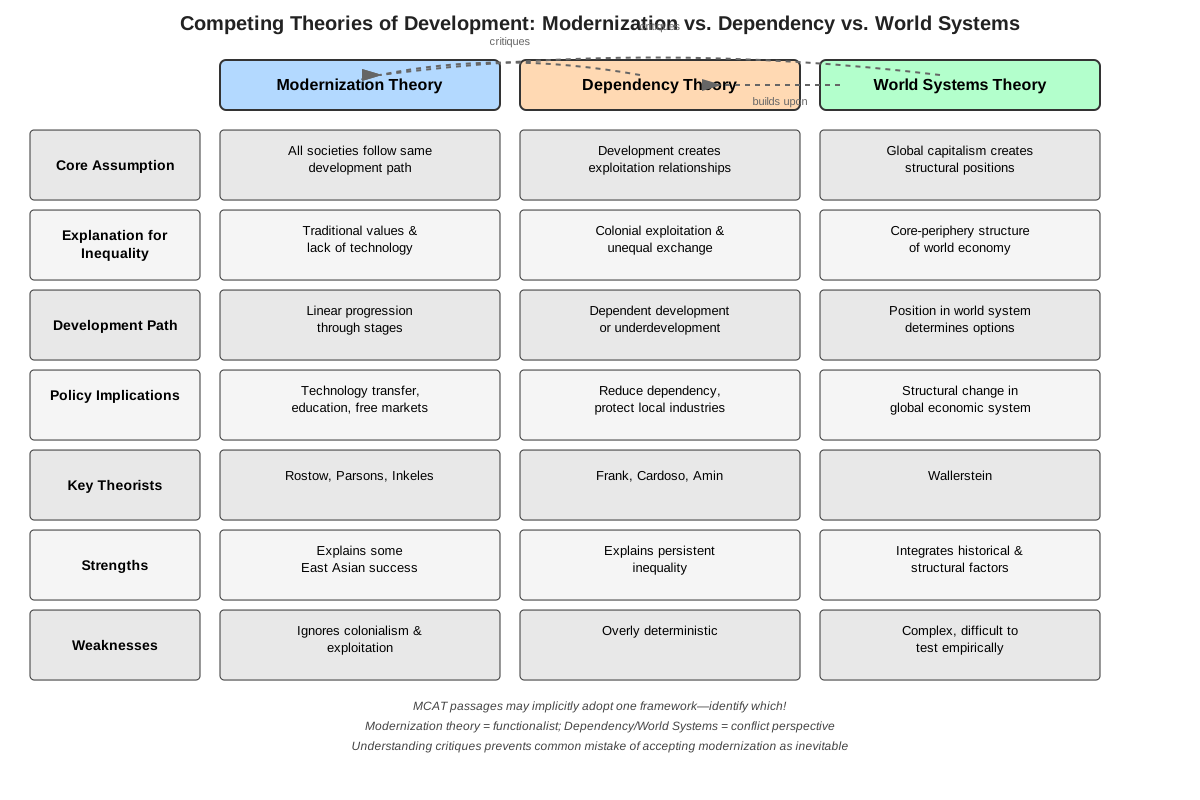
- [ ] Compare and contrast modernization theory with dependency theory and world systems theory
- [ ] Analyze the relationship between modernization and demographic transition
- [ ] Evaluate both positive and negative consequences of modernization on social structures
- [ ] Distinguish between different dimensions of modernization (economic, political, cultural, social)
Prerequisites
- Basic sociological terminology: Understanding terms like social institutions, social structure, and culture is necessary to grasp how modernization transforms these elements
- Demographic concepts: Familiarity with birth rates, death rates, and population pyramids helps connect modernization to demographic transition theory
- Economic systems: Basic knowledge of capitalism, industrialization, and market economies provides context for economic modernization
- Social stratification: Understanding class, status, and power dynamics is essential for analyzing how modernization affects inequality
- Cultural concepts: Knowledge of values, norms, and belief systems enables analysis of cultural changes during modernization
Why This Topic Matters
Modernization appears frequently on the MCAT because it provides a comprehensive framework for understanding social change—a core competency tested in the Psychological, Social, and Biological Foundations section. Questions about modernization typically appear 2-4 times per exam, often embedded within passages discussing global health, development economics, or comparative sociology. The AAMC emphasizes this topic because physicians must understand how social and economic development affects health outcomes, access to healthcare, and disease patterns across different populations.
In clinical contexts, understanding modernization helps healthcare professionals recognize how rapid social change creates health challenges. For example, modernizing societies often experience epidemiological transitions where infectious diseases decline but chronic diseases increase due to lifestyle changes. Physicians working with immigrant populations must understand how patients from less modernized societies may hold different views about health, authority, and family decision-making. Additionally, global health initiatives require understanding how modernization affects healthcare infrastructure, education, and public health capacity.
MCAT passages commonly present modernization in several formats: comparative studies of health outcomes in traditional versus modern societies, discussions of urbanization's effects on mental health, analyses of how technology changes social relationships, or examinations of how economic development affects family structures. Questions may ask students to identify characteristics of modernization, predict social consequences, or explain relationships between modernization and other demographic variables. The interdisciplinary nature of modernization makes it ideal for integrating sociological, psychological, and biological concepts within a single passage.
Core Concepts
Definition and Dimensions of Modernization
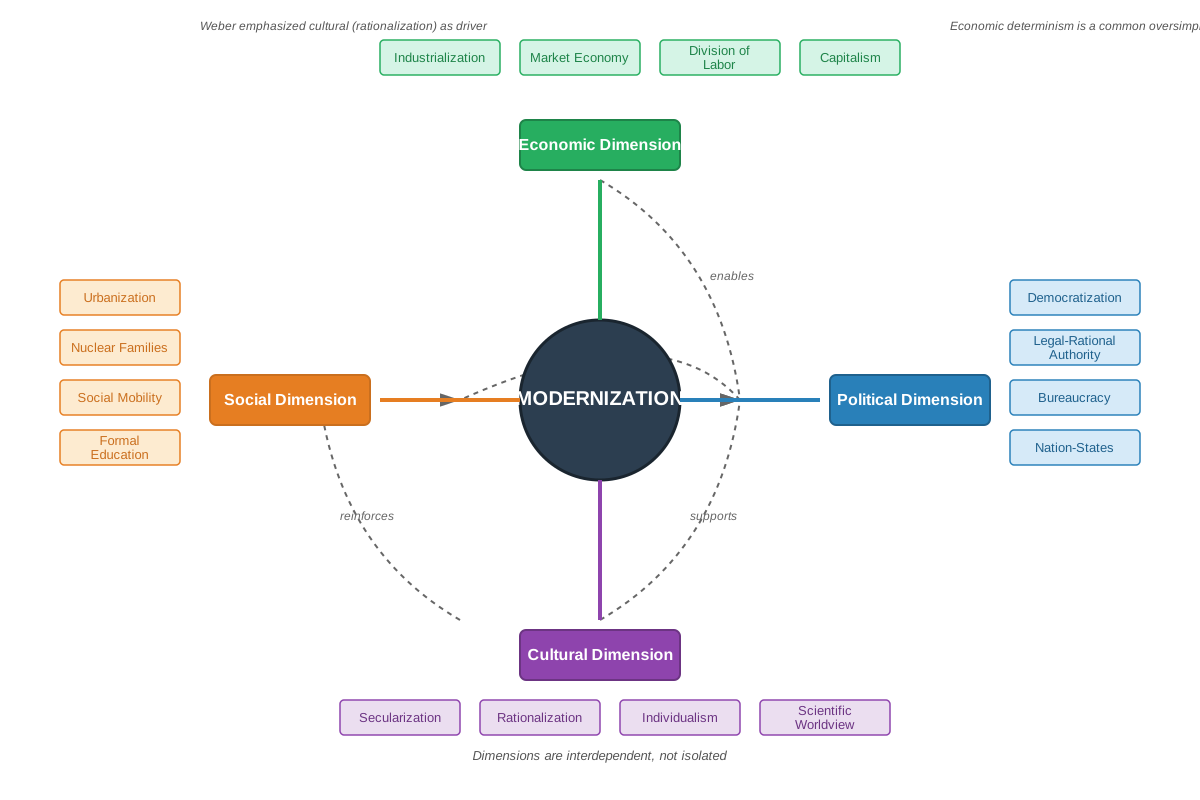
Modernization refers to the comprehensive transformation of societies from traditional, pre-industrial forms to contemporary, industrialized systems characterized by technological advancement, economic development, urbanization, and rationalization of social institutions. This process is multidimensional, affecting virtually every aspect of social life simultaneously.
The economic dimension involves the transition from subsistence agriculture to industrial and post-industrial economies. This includes mechanization of production, development of market economies, specialization of labor, and increased productivity. Economic modernization creates wage labor systems, expands trade networks, and generates surplus wealth that can be invested in further development.
The political dimension encompasses the development of centralized nation-states, bureaucratic administration, legal-rational authority (as described by Weber), and often democratic governance structures. Traditional authority based on custom and heredity gives way to systems based on formal rules and procedures. Political modernization typically includes expansion of citizenship rights, development of civil society, and increased political participation.
The social dimension involves changes in social organization, including the shift from extended to nuclear families, increased social mobility, urbanization, and the development of formal educational systems. Social relationships become more impersonal and specialized, with interactions increasingly governed by formal rules rather than personal relationships. Gesellschaft (society characterized by impersonal, contractual relationships) replaces Gemeinschaft (community characterized by intimate, personal relationships), using Tönnies' classical distinction.
The cultural dimension includes secularization (declining influence of religion in public life), rationalization (emphasis on efficiency and calculability), individualism (prioritizing individual rights over collective obligations), and adoption of scientific worldviews. Cultural modernization often involves tension between traditional values and modern practices, creating generational conflicts and identity challenges.
Theoretical Perspectives on Modernization
Classical modernization theory, developed primarily in the 1950s and 1960s, posits that all societies progress through similar stages of development from traditional to modern forms. This perspective, associated with scholars like Walt Rostow and Talcott Parsons, suggests that modernization is a linear, inevitable process that brings universal benefits including economic growth, democracy, and improved quality of life. The theory identifies specific prerequisites for modernization, including capital accumulation, technological innovation, entrepreneurial culture, and supportive political institutions.
Dependency theory emerged as a critique of classical modernization theory, arguing that underdevelopment in some regions results from exploitation by developed nations rather than from internal deficiencies. Dependency theorists contend that the global economic system creates and maintains inequality, with "core" nations extracting resources and wealth from "peripheral" nations. This perspective emphasizes how colonialism, unequal trade relationships, and multinational corporations perpetuate underdevelopment.
World systems theory, developed by Immanuel Wallerstein, expands dependency theory by analyzing the global capitalist system as a single, integrated unit with core, semi-peripheral, and peripheral regions. This perspective emphasizes that modernization in core nations depends on exploitation of peripheral regions, making universal modernization impossible within the current global system.
Convergence theory suggests that as societies modernize, they become increasingly similar in social structure, values, and institutions, regardless of their starting points or cultural traditions. This theory predicts that industrialization creates similar social pressures and requirements across different societies, leading to convergent outcomes.
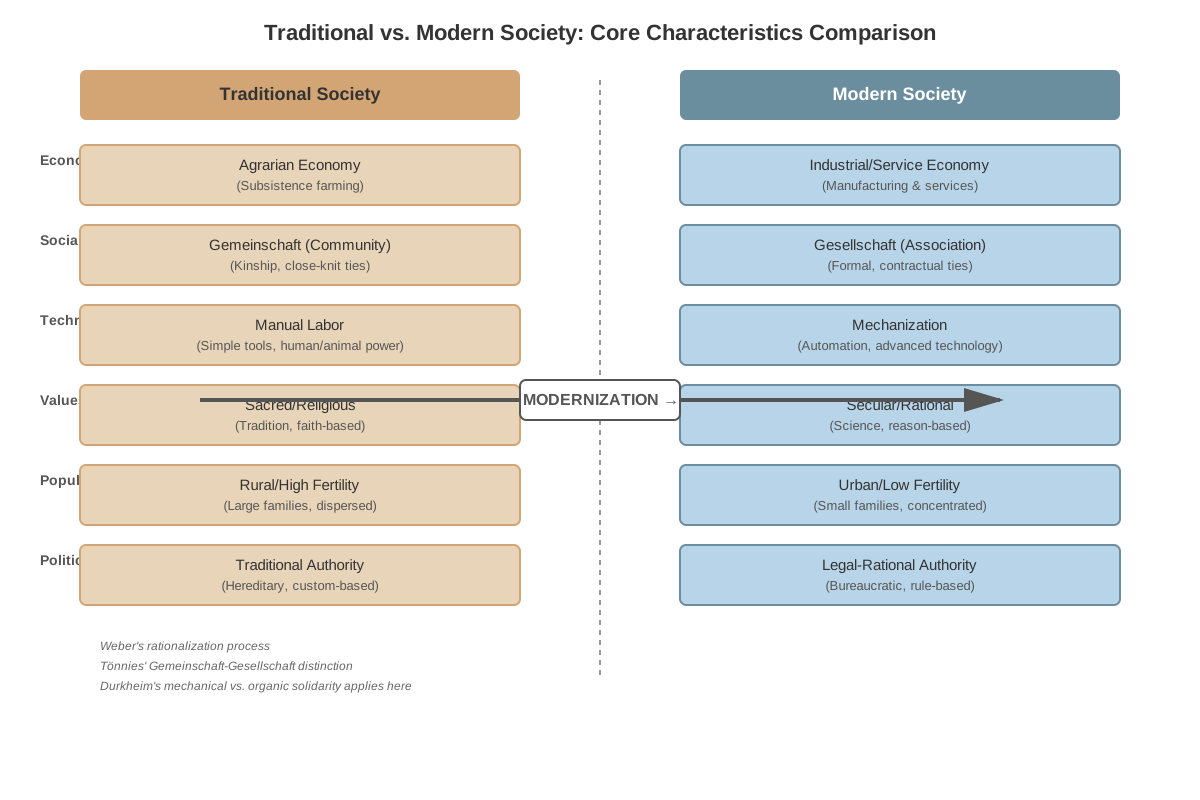
Characteristics of Modern Versus Traditional Societies
| Dimension | Traditional Society | Modern Society |
|---|---|---|
| Economy | Subsistence agriculture, barter | Industrial/post-industrial, market-based |
| Technology | Simple tools, human/animal power | Advanced machinery, automation |
| Social Organization | Extended families, kinship networks | Nuclear families, formal organizations |
| Authority | Traditional (hereditary, custom) | Legal-rational (bureaucratic rules) |
| Social Mobility | Limited, ascribed status | Greater mobility, achieved status |
| Population | High birth/death rates, rural | Low birth/death rates, urban |
| Education | Informal, family-based | Formal, institutional |
| Religion | Central to all life aspects | Secularized, privatized |
| Values | Collectivism, tradition | Individualism, innovation |
| Social Relationships | Personal, diffuse | Impersonal, specific |
Modernization and Demographic Transition
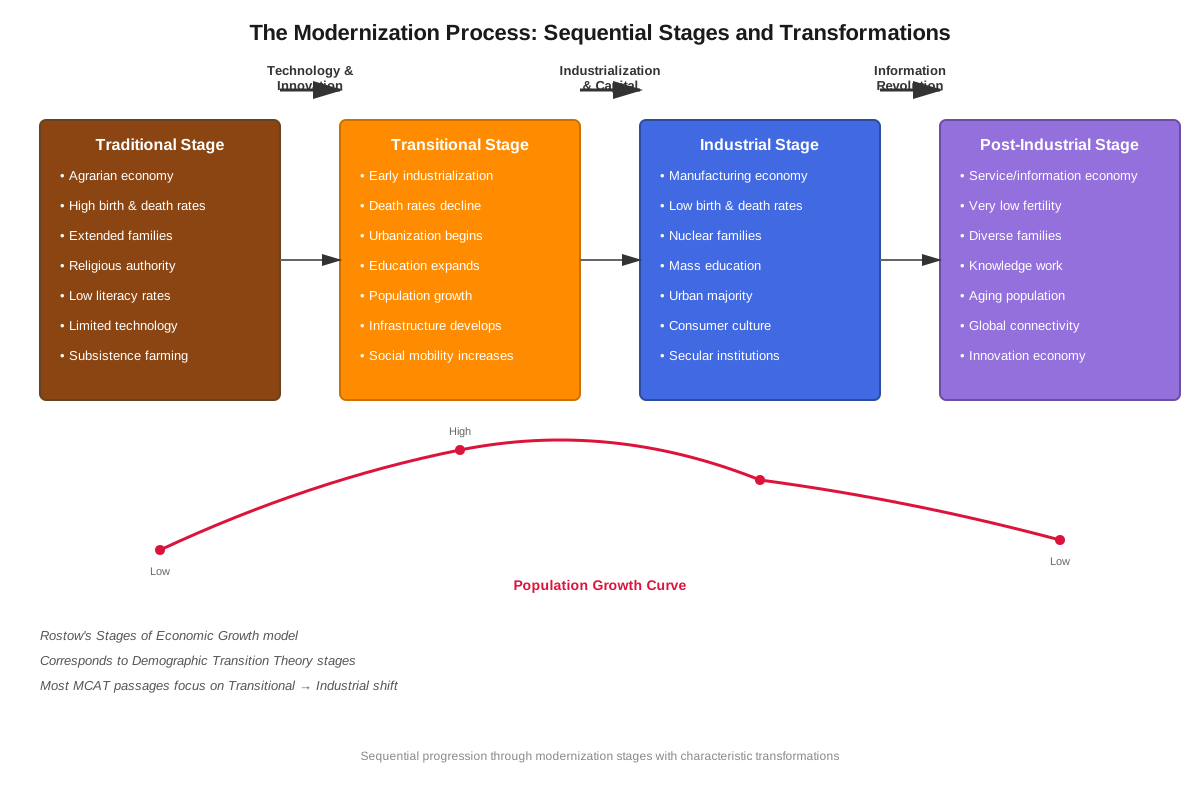
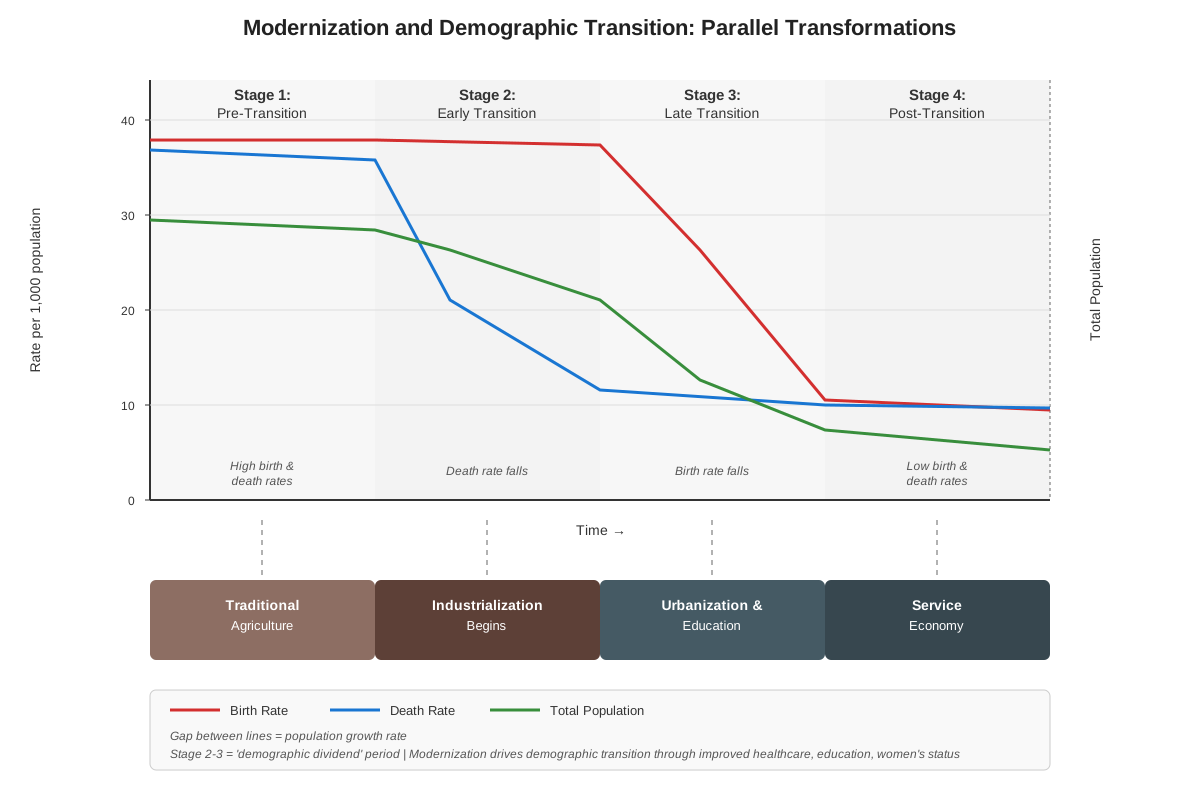
The demographic transition model describes how populations change during modernization, progressing through distinct stages. In Stage 1 (pre-modern), both birth and death rates are high, resulting in slow population growth. Stage 2 (early modernization) sees death rates decline due to improved nutrition, sanitation, and medicine, while birth rates remain high, causing rapid population growth. Stage 3 (mature modernization) experiences declining birth rates as families adapt to urban, industrial life, slowing population growth. Stage 4 (post-modern) achieves low birth and death rates with stable or declining populations.
This demographic transition connects directly to modernization because the social and economic changes of modernization create both the conditions for lower mortality (better healthcare, nutrition, sanitation) and the incentives for lower fertility (children become economic costs rather than assets in urban, industrial settings; women gain education and employment opportunities; contraception becomes available).
Consequences of Modernization
Positive consequences include increased life expectancy, higher standards of living, expanded educational opportunities, greater individual freedom and autonomy, technological innovations that improve quality of life, and increased social mobility. Modernization typically brings improved healthcare infrastructure, reduced infant mortality, and better nutrition. Political modernization often expands civil rights and democratic participation.
Negative consequences include social disruption and anomie (normlessness), environmental degradation, increased inequality during transitional periods, loss of traditional culture and community bonds, alienation and mental health challenges, and exploitation of workers during early industrialization. Rapid modernization can create social instability, generational conflicts, and identity crises as traditional values clash with modern practices. The shift from Gemeinschaft to Gesellschaft can leave individuals feeling isolated and disconnected.
Uneven modernization occurs when different sectors or regions modernize at different rates, creating social tensions and contradictions. For example, economic structures may modernize rapidly while political institutions remain traditional, or urban areas may modernize while rural regions remain traditional. This unevenness can exacerbate inequality and create social conflict.
Globalization and Modernization
Globalization represents the contemporary phase of modernization, characterized by increasing interconnectedness of societies through trade, communication, migration, and cultural exchange. While classical modernization theory focused on changes within individual societies, globalization emphasizes transnational processes and the emergence of global institutions, markets, and cultural forms.
Globalization accelerates modernization by spreading technology, ideas, and economic systems across borders. However, it also creates new forms of inequality and cultural conflict. The concept of glocalization describes how global forces interact with local contexts, producing hybrid forms that combine modern and traditional elements rather than simple replacement of traditional with modern.
Concept Relationships
Modernization serves as a central organizing concept connecting multiple sociological topics. The process begins with technological innovation and industrialization, which drive economic development. Economic changes necessitate urbanization as populations move from rural agricultural areas to urban industrial centers. Urbanization transforms family structures from extended to nuclear forms and changes social relationships from personal (Gemeinschaft) to impersonal (Gesellschaft).
These structural changes affect demographic patterns through the demographic transition: improved living conditions reduce mortality rates, while urbanization and changing family economics eventually reduce fertility rates. The demographic transition connects to population aging in fully modernized societies, creating new social challenges.
Modernization also drives secularization, reducing religion's influence on public life and social institutions. This connects to rationalization (Weber's concept of increasing emphasis on efficiency, calculability, and formal rules) and the development of bureaucratic organizations. Rationalization affects education systems, healthcare delivery, government administration, and economic production.
The process influences social stratification by increasing social mobility (shift from ascribed to achieved status) while potentially creating new forms of inequality. Modernization connects to globalization as modernized societies become increasingly interconnected through trade, communication, and cultural exchange. This relationship flows bidirectionally: modernization enables globalization, while globalization accelerates and spreads modernization.
Relationship map: Technological Innovation → Industrialization → Economic Development → Urbanization → Demographic Transition → Social Structure Changes → Cultural Transformation (including secularization and rationalization) → Globalization → (feedback loop accelerating further modernization)
High-Yield Facts
⭐ Modernization is a multidimensional process encompassing economic, political, social, and cultural transformations, not merely economic development alone.
⭐ The demographic transition model describes how populations shift from high birth/death rates to low birth/death rates during modernization, with rapid population growth occurring in the middle stages.
⭐ Gemeinschaft (community) to Gesellschaft (society) represents the shift from personal, intimate relationships based on kinship to impersonal, contractual relationships based on formal roles.
⭐ Secularization refers to the declining influence of religion in public life and social institutions, a key cultural dimension of modernization.
⭐ Dependency theory critiques classical modernization theory by arguing that underdevelopment results from exploitation by developed nations rather than internal deficiencies.
- Urbanization is both a cause and consequence of modernization, concentrating populations in cities where industrial production occurs.
- Rationalization (Weber) describes the increasing emphasis on efficiency, calculability, predictability, and control through formal rules and procedures.
- Convergence theory predicts that modernizing societies become increasingly similar regardless of cultural starting points.
- Anomie (Durkheim) describes the normlessness and social instability that can occur during rapid modernization when traditional norms break down faster than new ones develop.
- Nuclear families replace extended families during modernization as economic production moves outside the household and geographic mobility increases.
- Achieved status becomes more important than ascribed status in modern societies, increasing social mobility based on individual accomplishment.
- Uneven modernization occurs when different sectors or regions modernize at different rates, creating social tensions and contradictions.
Quick check — test yourself on Modernization so far.
Try Flashcards →Common Misconceptions
Misconception: Modernization is identical to Westernization, and all societies must follow the Western development path.
Correction: While Western societies were among the first to modernize, modernization can occur through various pathways reflecting different cultural contexts. Japan, South Korea, and Singapore demonstrate non-Western modernization paths. The equation of modernization with Westernization reflects ethnocentric bias in early modernization theory.
Misconception: Modernization is always beneficial and represents unambiguous progress.
Correction: Modernization produces both positive outcomes (increased life expectancy, higher living standards) and negative consequences (environmental degradation, social disruption, anomie, loss of community). The process creates winners and losers, often increasing inequality during transitional periods. A balanced analysis recognizes both benefits and costs.
Misconception: Traditional and modern societies are completely distinct categories with no overlap.
Correction: Most societies contain both traditional and modern elements simultaneously. The concepts represent ideal types (Weber) rather than absolute categories. Real societies exist on a continuum and often exhibit hybrid forms combining traditional and modern characteristics (glocalization).
Misconception: Modernization automatically causes secularization and the disappearance of religion.
Correction: While secularization often accompanies modernization in public institutions, religion remains important in many modern societies. The United States demonstrates high modernization with continued religious vitality. Secularization theory has been revised to recognize diverse relationships between modernization and religion across different contexts.
Misconception: The demographic transition occurs automatically and uniformly across all modernizing societies.
Correction: The timing, pace, and specific patterns of demographic transition vary considerably across societies based on cultural factors, government policies, and specific historical circumstances. Some societies have experienced fertility decline without full economic modernization, while others have modernized economically while maintaining higher fertility rates longer than predicted.
Misconception: Modernization eliminates all forms of inequality and creates meritocratic societies.
Correction: While modernization may reduce some traditional forms of inequality (like rigid caste systems) and increase social mobility, it often creates new forms of inequality based on education, skills, and access to technology. Modern societies still exhibit significant stratification, and the transition period often increases inequality before it potentially decreases.
Worked Examples
Example 1: Demographic Transition Analysis
Passage Summary: A research study compares health outcomes in two regions of the same country. Region A is primarily rural with an economy based on subsistence agriculture, extended family households, high birth rates (35 per 1,000), high infant mortality (80 per 1,000 live births), and low life expectancy (55 years). Region B is primarily urban with an industrial economy, nuclear family households, low birth rates (12 per 1,000), low infant mortality (8 per 1,000 live births), and high life expectancy (78 years).
Question: Based on demographic transition theory, which statement best characterizes the relationship between these regions?
A) Region A is in Stage 1 and Region B is in Stage 2 of demographic transition
B) Region A is in Stage 2 and Region B is in Stage 4 of demographic transition
C) Both regions are in Stage 3 but at different points
D) Region A is in Stage 4 and Region B is in Stage 1 of demographic transition
Analysis: This question requires applying modernization concepts, specifically demographic transition theory, to classify populations based on vital statistics.
Step 1: Identify the demographic characteristics of each region. Region A shows high birth rates and high death rates (indicated by high infant mortality and low life expectancy), characteristic of pre-modern or early-modernizing populations. Region B shows low birth rates and low death rates (low infant mortality, high life expectancy), characteristic of fully modernized populations.
Step 2: Match characteristics to demographic transition stages. Stage 1 features high birth and death rates with slow population growth. Stage 2 shows declining death rates but sustained high birth rates, causing rapid population growth. Stage 3 exhibits declining birth rates with already-low death rates. Stage 4 shows low birth and death rates with stable or declining populations.
Step 3: Region A's high birth and death rates suggest Stage 1 or early Stage 2. However, the question states Region A is "primarily rural with subsistence agriculture," indicating limited modernization—more consistent with Stage 1 or very early Stage 2. Region B's low birth and death rates clearly indicate Stage 4.
Step 4: Evaluate answer choices. Choice A incorrectly places Region B in Stage 2 (which has high birth rates). Choice B correctly identifies Region A as Stage 2 (or late Stage 1/early Stage 2) and Region B as Stage 4. Choice C is incorrect because the regions show dramatically different demographic profiles. Choice D reverses the stages incorrectly.
Answer: B is correct. This example demonstrates how modernization theory predicts demographic patterns, with less modernized Region A showing characteristics of earlier demographic transition stages and more modernized Region B showing characteristics of later stages.
Example 2: Social Organization and Modernization
Passage Summary: An anthropological study examines social support systems in a society undergoing rapid industrialization. Researchers find that older adults increasingly report feelings of isolation and depression. Traditional extended family compounds are being replaced by apartment buildings housing nuclear families. Adult children who previously lived with and cared for aging parents now work in factories far from their childhood homes. The study notes that formal institutions like nursing homes and social security systems remain underdeveloped.
Question: Which sociological concept best explains the psychological distress experienced by older adults in this scenario?
A) Convergence theory
B) Anomie
C) Dependency theory
D) Secularization
Analysis: This question requires connecting modernization's effects on social structure to psychological outcomes.
Step 1: Identify the social changes described. The passage describes transformation from extended to nuclear families, geographic mobility separating generations, breakdown of traditional caregiving arrangements, and inadequate development of formal support institutions.
Step 2: Identify the psychological outcome. Older adults experience isolation and depression, suggesting loss of social support and meaningful social roles.
Step 3: Connect social changes to psychological outcomes using sociological concepts. The scenario describes a transitional period where traditional norms and structures (extended family caregiving) have broken down, but modern institutions (formal elder care systems) haven't yet developed to replace them. This gap creates normlessness and social instability.
Step 4: Evaluate answer choices. Convergence theory (A) describes how modernizing societies become similar but doesn't explain psychological distress. Anomie (B), Durkheim's concept of normlessness occurring when social norms break down faster than new ones develop, directly explains the distress caused by this transitional gap. Dependency theory (C) addresses global economic inequality, not individual psychological outcomes. Secularization (D) concerns religion's declining influence, not family structure changes.
Answer: B is correct. This example illustrates how rapid modernization can create anomie when traditional social structures dissolve before adequate modern replacements develop, causing psychological distress. The scenario demonstrates uneven modernization where economic structures (industrialization) have changed faster than social institutions (elder care systems).
Exam Strategy
When approaching MCAT questions about modernization, first identify whether the passage describes a comparative scenario (contrasting traditional and modern societies), a transitional scenario (society undergoing modernization), or a consequences scenario (examining outcomes of modernization). This classification helps predict what the questions will ask.
Trigger words indicating modernization topics include: industrialization, urbanization, demographic transition, traditional versus modern, development, Gemeinschaft/Gesellschaft, secularization, rationalization, globalization, and social change. When these appear, activate your modernization framework to organize passage information.
For comparative questions, create a mental table contrasting traditional and modern characteristics across economic, social, political, and cultural dimensions. Questions often ask you to identify which society is more modernized or predict outcomes based on modernization level. Remember that modernization is multidimensional—a society might be economically modern but socially traditional, or vice versa.
For demographic questions, immediately recall the demographic transition model stages. Map the population's vital statistics (birth rates, death rates, life expectancy, infant mortality) to the appropriate stage. Remember that Stage 2 (early modernization) produces the most rapid population growth because death rates decline while birth rates remain high.
Process of elimination works well for modernization questions. Eliminate answers that confuse traditional and modern characteristics, that treat modernization as purely positive or purely negative (it's both), or that suggest modernization is identical to Westernization. Also eliminate answers that ignore the multidimensional nature of modernization by focusing exclusively on economic factors.
Time allocation: Modernization passages typically require 1.5-2 minutes to read because they often present comparative data or describe social changes over time. Budget 45-60 seconds per question. If a question asks about demographic transition, quickly sketch the four-stage model to visualize the answer rather than trying to remember abstract descriptions.
Watch for questions that require distinguishing between modernization theory (classical perspective emphasizing universal progress) and dependency/world systems theory (critical perspectives emphasizing exploitation and inequality). The MCAT often tests whether students can identify different theoretical perspectives on the same phenomenon.
Memory Techniques
MCAT Modernization Dimensions - Use the acronym SPEC for the four dimensions:
- Social (family structure, relationships, mobility)
- Political (governance, authority, citizenship)
- Economic (industrialization, markets, labor)
- Cultural (secularization, rationalization, values)
Demographic Transition Stages - Remember "DEER":
- Death rates drop first (Stage 2)
- Explosive growth in middle (Stage 2-3)
- Eventually birth rates drop (Stage 3)
- Replacement level or below (Stage 4)
Gemeinschaft vs. Gesellschaft - Visualize a community garden (Gemeinschaft) where everyone knows each other personally versus a grocery store (Gesellschaft) where interactions are impersonal and transactional. This concrete image helps recall the distinction between traditional and modern social relationships.
Modernization Consequences - Use "PLUS-MINUS" to remember both positive and negative outcomes:
- PLUS: Prosperity, Longevity, Universal education, Social mobility
- MINUS: Meaninglessness (anomie), Inequality (during transition), Nature degradation (environment), Uprooting (social disruption), Stress
Theory Comparison - Remember "CMD" for the three major theoretical perspectives:
- Classical modernization (progress, universal stages)
- Modernization critiques (dependency, world systems)
- Differentiation (convergence theory)
Summary
Modernization represents the comprehensive transformation of societies from traditional, agrarian forms to contemporary, industrialized systems through interconnected economic, political, social, and cultural changes. This multidimensional process involves industrialization, urbanization, rationalization, secularization, and shifts from Gemeinschaft to Gesellschaft social relationships. For the MCAT, understanding modernization requires mastery of demographic transition theory, which describes how populations shift from high to low birth and death rates during development. Students must recognize both positive consequences (increased life expectancy, social mobility, technological advancement) and negative outcomes (anomie, environmental degradation, social disruption) of modernization. Critical perspectives like dependency theory and world systems theory challenge classical modernization theory's assumption of universal progress, emphasizing how global inequality shapes development patterns. MCAT questions typically present comparative scenarios contrasting traditional and modern societies, transitional scenarios examining societies undergoing change, or consequences scenarios analyzing modernization's effects on health, family structure, or social institutions. Success requires distinguishing between modernization's multiple dimensions, applying demographic transition stages to population data, and recognizing that real societies exhibit hybrid forms combining traditional and modern elements rather than fitting neatly into ideal-type categories.
Key Takeaways
- Modernization is a multidimensional process encompassing economic (industrialization), political (bureaucratization), social (urbanization, nuclear families), and cultural (secularization, rationalization) transformations occurring simultaneously.
- The demographic transition model predicts that modernizing populations progress from high birth/death rates through a period of rapid growth (when death rates drop but birth rates remain high) to eventual low birth/death rates with stable populations.
- Gemeinschaft to Gesellschaft represents the fundamental shift in social relationships from personal, intimate community bonds to impersonal, contractual societal interactions during modernization.
- Modernization produces both positive and negative consequences: while increasing life expectancy, living standards, and social mobility, it also creates anomie, environmental degradation, and social disruption during transitional periods.
- Critical theories (dependency theory, world systems theory) challenge classical modernization theory by emphasizing how global inequality and exploitation shape development patterns, arguing that underdevelopment results from structural relationships rather than internal deficiencies.
- Uneven modernization occurs when different sectors, regions, or dimensions modernize at different rates, creating social tensions and contradictions that are often tested on the MCAT.
- Understanding modernization enables analysis of contemporary issues including globalization, demographic aging, urbanization's health effects, and how social change affects healthcare access and health outcomes across populations.
Related Topics
Urbanization: The concentration of populations in cities is both a cause and consequence of modernization, affecting health outcomes, social relationships, and environmental conditions. Mastering modernization provides the foundation for understanding urbanization's social and health implications.
Globalization: The contemporary phase of modernization characterized by increasing global interconnectedness through trade, communication, and cultural exchange. Understanding modernization theory helps analyze how globalization affects different societies differently.
Social Movements: Modernization creates conditions for social movements by increasing education, communication, and awareness of inequality. Understanding modernization helps explain when and why social movements emerge.
Demographic Transition: This model is central to understanding how populations change during modernization and connects directly to epidemiological transition (shifts in disease patterns from infectious to chronic diseases).
Secularization and Rationalization: These cultural dimensions of modernization affect healthcare delivery, bioethics, and patient-provider relationships, making them important for future physicians to understand.
Social Stratification and Mobility: Modernization affects how societies are stratified and the extent of social mobility, with implications for health disparities and access to healthcare.
Practice CTA
Now that you've mastered the core concepts of modernization, it's time to test your understanding with practice questions and flashcards. Focus on applying demographic transition theory to population data, distinguishing between different theoretical perspectives on modernization, and analyzing how social changes affect health outcomes. Remember that modernization questions often require synthesizing information across multiple dimensions—economic, social, political, and cultural—so practice integrating these elements in your responses. Your solid understanding of this high-yield topic will serve you well not only on the MCAT but also in understanding the social determinants of health throughout your medical career. You've got this!
Sign up free to keep reading
Create a free AnvayaPrep account to finish this MCAT guide on Modernization — plus flashcards and practice questions.