Overview
Migration is a fundamental demographic process that shapes societies, cultures, and health outcomes across the globe. In Sociology, migration refers to the movement of people from one geographic location to another, typically involving a change in permanent residence. This movement can occur within a country (internal migration) or between countries (international migration), and it profoundly influences population distribution, social structures, economic systems, and cultural dynamics.
For the MCAT, understanding migration is essential because it intersects with multiple domains tested in the Psychological, Social, and Biological Foundations of Behavior section. Migration patterns affect health disparities, access to healthcare, social stratification, cultural identity, and community cohesion—all topics frequently examined through passage-based questions and discrete items. The MCAT expects students to analyze how migration influences both individual experiences and broader societal trends, making this a high-yield topic within Demographics and Social Change.
Migration connects to numerous other sociology concepts including urbanization, globalization, social inequality, cultural assimilation, social networks, and population dynamics. Understanding migration provides a framework for analyzing how societies evolve, how cultural diversity emerges, and how social institutions adapt to demographic shifts. This topic also bridges to public health considerations, as migrant populations often face unique health challenges related to access, cultural barriers, and social determinants of health—making it particularly relevant for future physicians who will serve increasingly diverse patient populations.
Learning Objectives
- [ ] Define Migration using accurate Sociology terminology
- [ ] Explain why Migration matters for the MCAT
- [ ] Apply Migration to exam-style questions
- [ ] Identify common mistakes related to Migration
- [ ] Connect Migration to related Sociology concepts
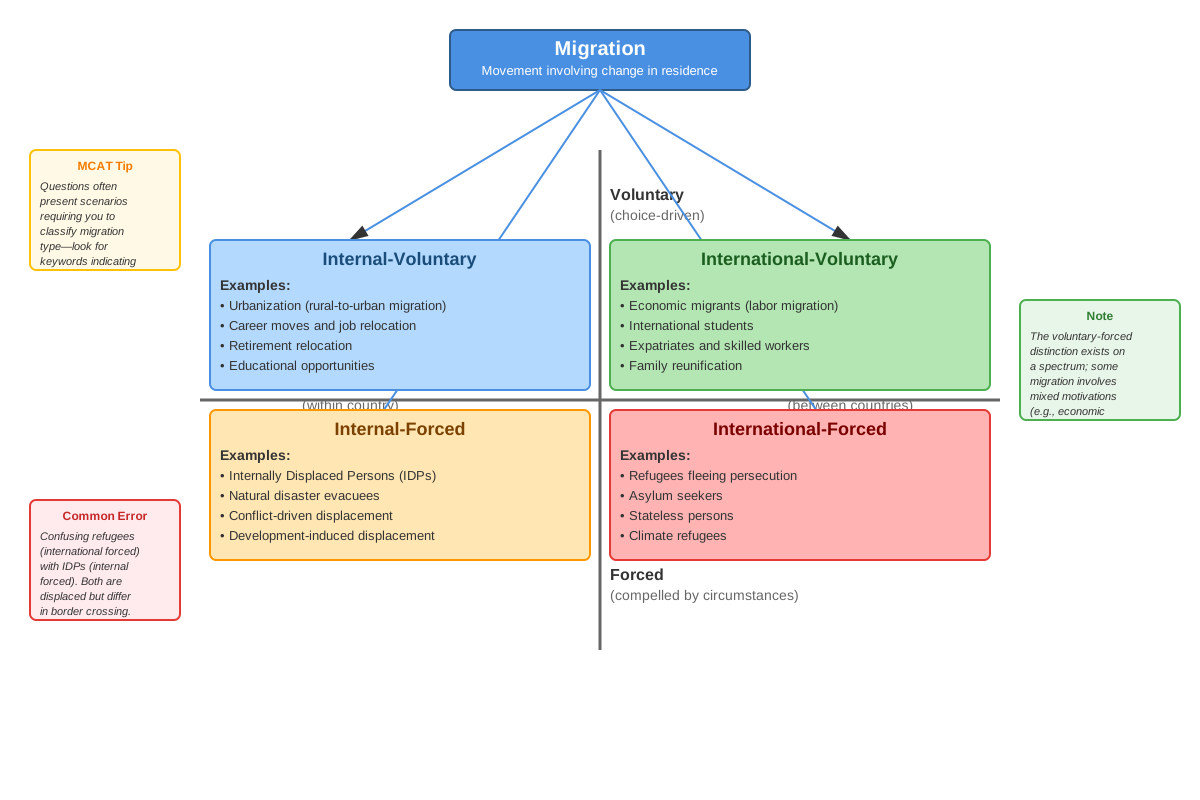
- [ ] Distinguish between different types of migration (internal vs. international, voluntary vs. forced)
- [ ] Analyze push and pull factors that drive migration patterns
- [ ] Evaluate the social, economic, and health consequences of migration for both sending and receiving communities
Prerequisites
- Basic demographic concepts: Understanding population size, density, and distribution provides the foundation for analyzing how migration alters demographic structures
- Social stratification: Knowledge of inequality and social class helps explain who migrates, why they migrate, and what barriers they face
- Culture and socialization: Familiarity with cultural norms and identity formation is essential for understanding acculturation and integration challenges
- Social institutions: Understanding how institutions (healthcare, education, government) function helps analyze how they respond to and shape migration patterns
Why This Topic Matters
Migration represents one of the most significant forces shaping contemporary society and healthcare delivery. Globally, over 280 million people live outside their country of birth, and internal migration affects hundreds of millions more. For future physicians, understanding migration is clinically relevant because migrant populations often experience health disparities, face barriers to healthcare access, and may have different disease prevalence patterns due to environmental, genetic, and social factors.
On the MCAT, migration appears in approximately 3-5% of Sociology questions, typically within passage-based scenarios that require students to analyze demographic data, interpret social trends, or evaluate health outcomes across different populations. Questions may present migration statistics, describe community changes following population movements, or explore the experiences of immigrant families navigating healthcare systems. The exam frequently tests students' ability to distinguish between migration types, identify factors driving migration, and predict social consequences of population movements.
Common question formats include: (1) data interpretation questions presenting migration statistics and asking students to draw sociological conclusions, (2) scenario-based questions describing migrant experiences and testing understanding of acculturation or social integration, and (3) application questions requiring students to predict health outcomes or social changes based on migration patterns. The MCAT particularly emphasizes the intersection of migration with health disparities, cultural competence, and social determinants of health—all critical competencies for future physicians.
Core Concepts
Definition and Types of Migration
Migration is defined as the movement of people from one geographic location to another with the intention of settling, temporarily or permanently, in the new location. This distinguishes migration from temporary travel or commuting. Migration Sociology examines the causes, patterns, and consequences of these population movements at both individual and societal levels.
Migration can be classified along several dimensions:
| Migration Type | Definition | Examples |
|---|---|---|
| Internal Migration | Movement within a country's borders | Rural-to-urban migration, movement between states |
| International Migration | Movement across national borders | Immigration, emigration, refugee resettlement |
| Voluntary Migration | Movement by choice, typically for better opportunities | Economic migration, family reunification |
| Forced Migration | Movement due to compulsion or necessity | Refugees fleeing conflict, displacement due to natural disasters |
| Temporary Migration | Short-term movement with intention to return | Seasonal workers, international students |
| Permanent Migration | Long-term or lifetime relocation | Immigration with citizenship intent |
Push and Pull Factors
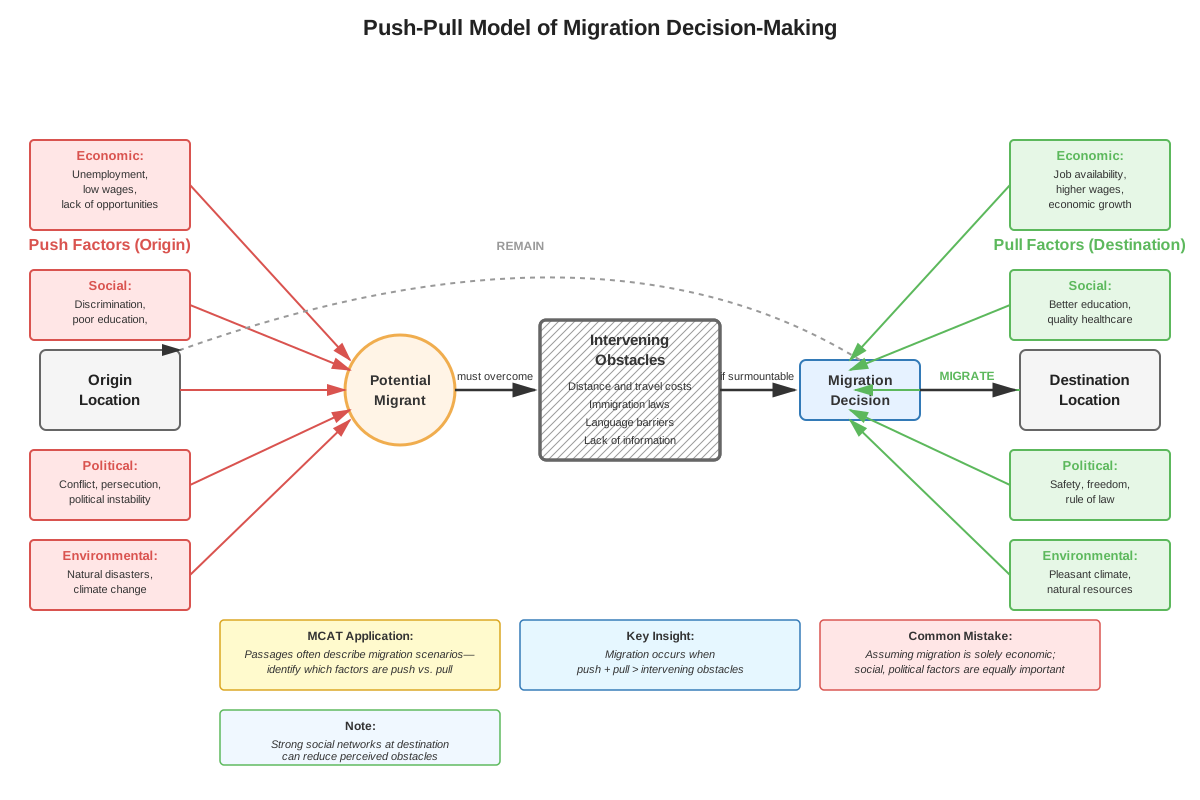
Migration decisions result from a combination of push factors (conditions that drive people away from their origin) and pull factors (conditions that attract people to a destination). Understanding these factors is crucial for the MCAT because they explain migration patterns and predict demographic changes.
Push Factors include:
- Economic hardship, unemployment, or lack of opportunity
- Political instability, persecution, or conflict
- Environmental disasters or climate change
- Lack of access to education or healthcare
- Social discrimination or limited rights
- Overpopulation or resource scarcity
Pull Factors include:
- Economic opportunities and higher wages
- Political stability and freedom
- Better educational institutions
- Advanced healthcare systems
- Family or social networks already established
- Cultural or religious freedom
- Quality of life improvements
The push-pull model suggests that migration occurs when pull factors at the destination outweigh push factors at the origin, minus the costs and barriers of migration (distance, legal restrictions, cultural differences, financial costs).
Migration Patterns and Trends
Several consistent patterns characterize global and internal migration:
- Rural-to-urban migration: The most common form of internal migration, driven by industrialization and the concentration of economic opportunities in cities
- South-to-North migration: International movement from developing to developed nations, seeking economic advancement
- Chain migration: Process where migrants from a particular origin follow others to the same destination, facilitated by social networks
- Return migration: Movement back to the origin location, often after achieving economic goals or due to changing circumstances
- Brain drain: Emigration of highly educated or skilled individuals from developing to developed countries
- Circular migration: Repeated movement between origin and destination, common among seasonal workers
Social and Economic Consequences
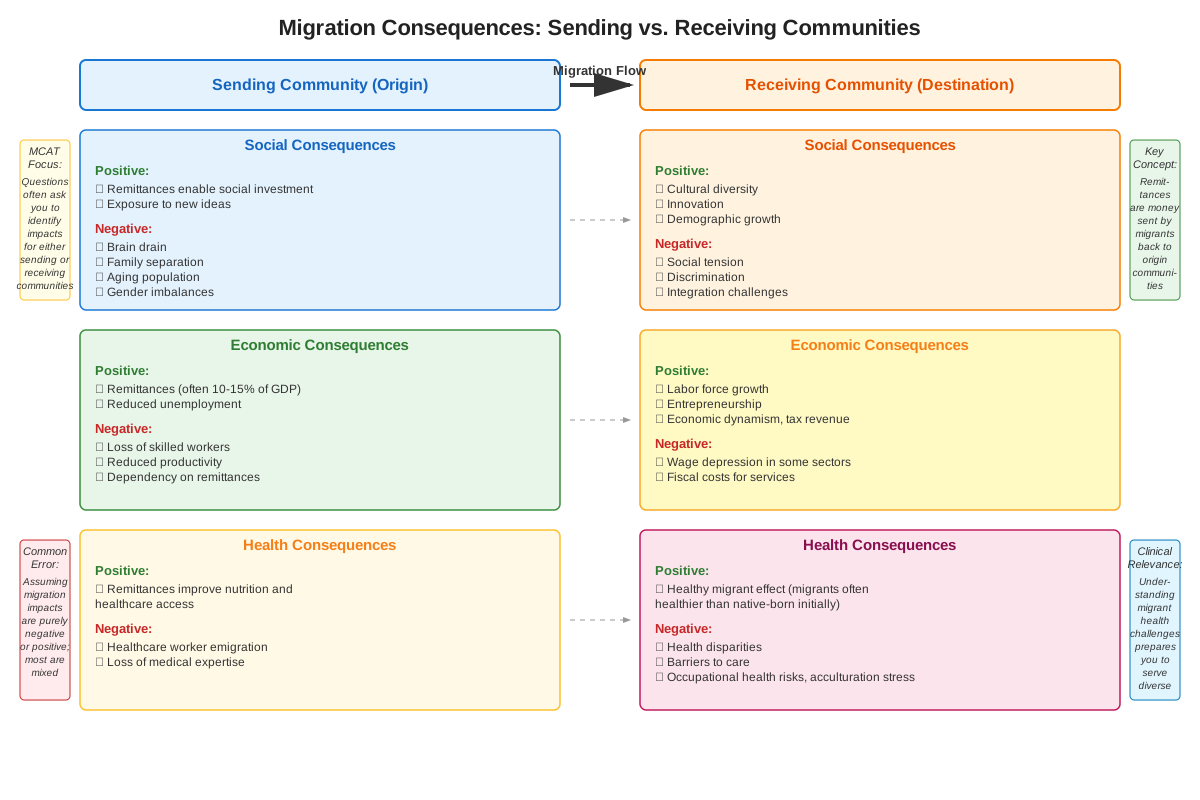
Migration produces significant effects on both sending (origin) and receiving (destination) communities:
Effects on Sending Communities:
- Loss of working-age population, potentially reducing economic productivity
- Brain drain depleting human capital
- Remittances (money sent back) supporting families and local economies
- Reduced population pressure on resources
- Social disruption of family structures
- Potential for knowledge and skill transfer when migrants return
Effects on Receiving Communities:
- Increased labor force and economic productivity
- Cultural diversity and innovation
- Potential strain on social services and infrastructure
- Changes in demographic composition (age structure, ethnic diversity)
- Social tension or conflict over resources and cultural change
- Enrichment of cultural life and perspectives
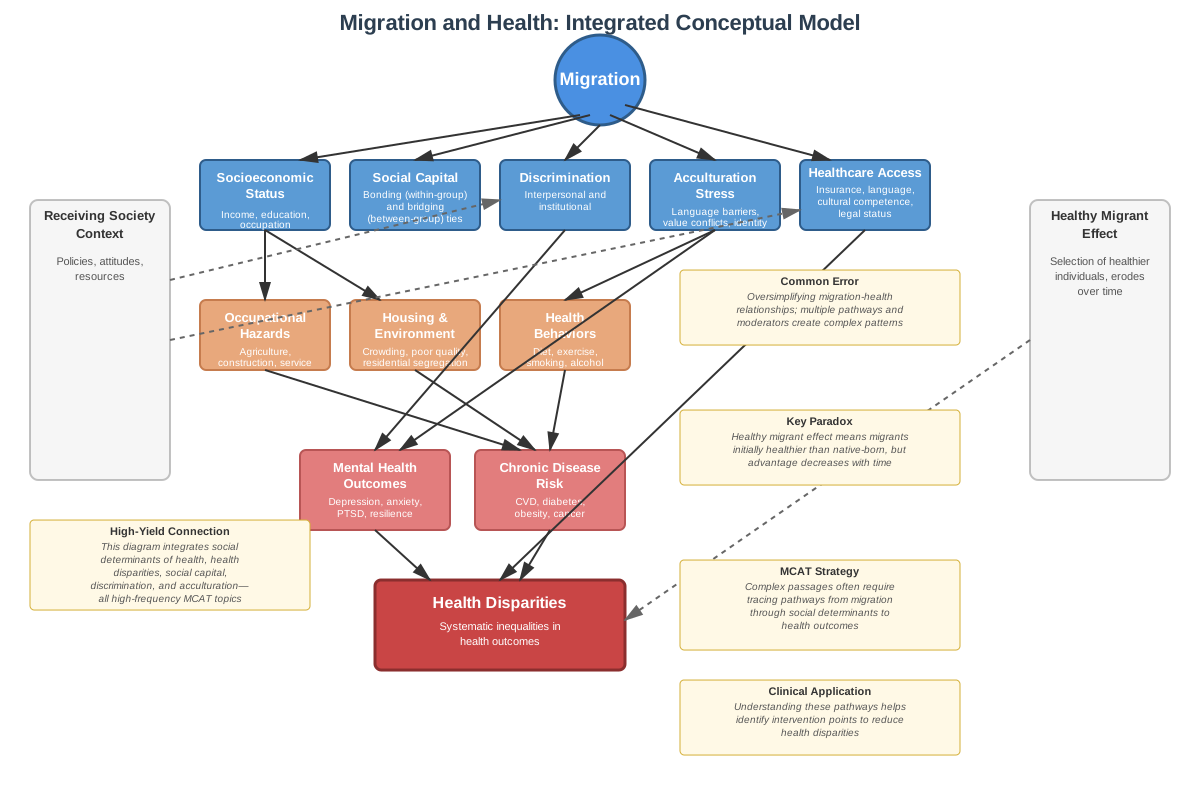
Health Implications of Migration
The MCAT frequently tests understanding of how migration affects health outcomes and healthcare access:
Health Challenges for Migrants:
- Healthy immigrant effect: Migrants often arrive healthier than native-born populations but experience health decline over time
- Barriers to healthcare access (language, legal status, unfamiliarity with systems, cost)
- Mental health challenges (stress, trauma, acculturation stress, discrimination)
- Occupational hazards (migrants often work in dangerous or low-wage jobs)
- Infectious disease considerations (different exposure histories, screening needs)
- Chronic disease management disruption during transition
Acculturation and Health:
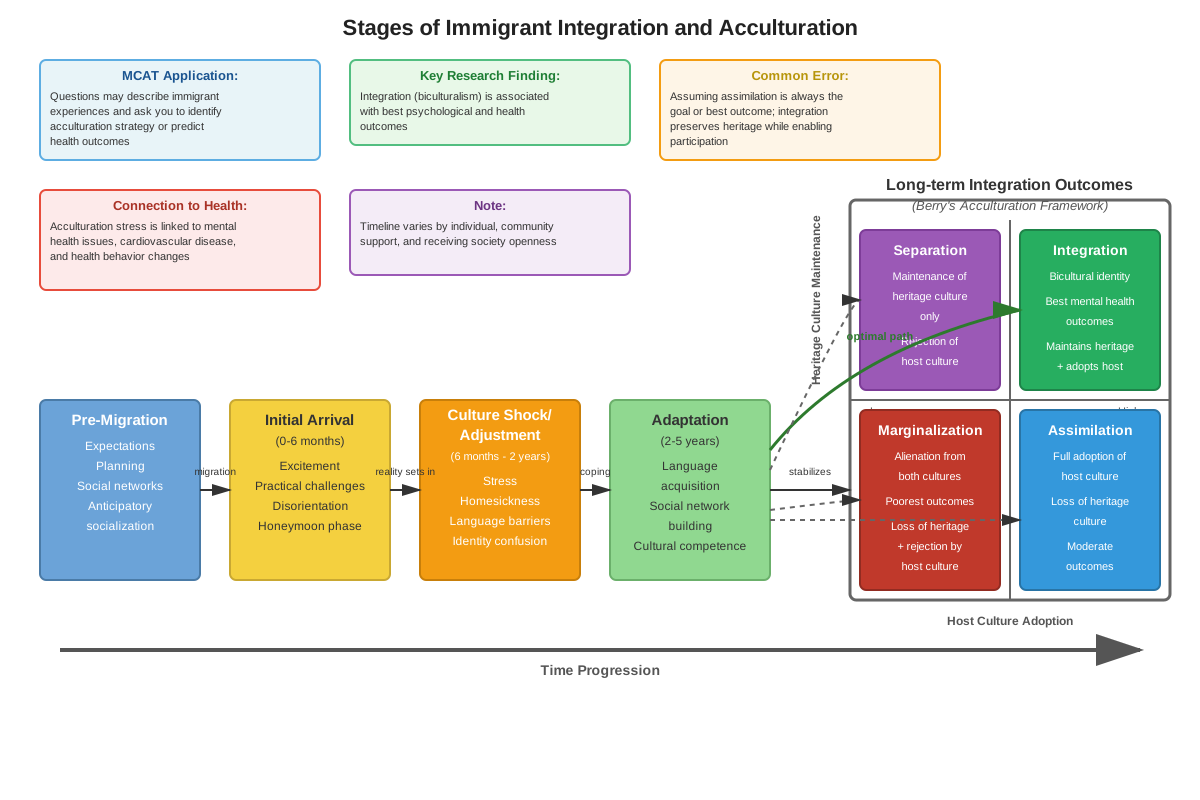
Acculturation refers to the cultural and psychological changes that occur when individuals from one culture come into continuous contact with another culture. This process significantly impacts health behaviors and outcomes:
- Adoption of destination country's dietary patterns (often less healthy)
- Changes in physical activity levels
- Shifts in health beliefs and care-seeking behaviors
- Stress from navigating between cultures
- Intergenerational conflicts over cultural values
Theories of Migration
Several theoretical frameworks explain migration patterns:
Neoclassical Economic Theory: Migration results from rational cost-benefit calculations about wage differentials and employment opportunities between locations.
Social Network Theory: Migration decisions are embedded in social relationships; existing migrants reduce costs and risks for subsequent migrants through information, assistance, and support.
Segmented Labor Market Theory: Migration responds to structural demand for labor in receiving countries, particularly in low-wage sectors that native workers avoid.
World Systems Theory: Migration flows from peripheral to core countries result from global economic inequalities created by capitalist expansion.
Concept Relationships
Migration serves as a central node connecting multiple sociological concepts. The relationship map flows as follows:
Social Stratification → Migration: Inequality and limited social mobility create push factors that drive migration, while opportunities for upward mobility serve as pull factors.
Migration → Urbanization: Internal rural-to-urban migration directly drives urbanization, concentrating populations in cities and transforming both rural and urban social structures.
Migration → Cultural Change: Population movements introduce new cultural elements to receiving communities while transforming sending communities through remittances, return migration, and transnational connections.
Migration → Social Networks: Existing social networks facilitate migration through chain migration, while migration creates new transnational networks that span geographic boundaries.
Migration → Health Disparities: Migration status influences access to healthcare, exposure to health risks, and health outcomes, contributing to population-level health inequalities.
Globalization ↔ Migration: Globalization facilitates migration through improved transportation and communication while migration itself drives further global integration through cultural exchange and economic connections.
Demographics → Migration → Demographics: Migration both responds to and creates demographic changes, altering age structures, population growth rates, and ethnic composition in both sending and receiving areas.
Understanding these interconnections allows MCAT test-takers to analyze complex scenarios where multiple social processes interact, a common feature of passage-based questions.
High-Yield Facts
⭐ Migration is the movement of people from one geographic location to another with intention to settle, distinguished from temporary travel or commuting.
⭐ Push factors drive people away from origin locations (poverty, conflict, persecution), while pull factors attract people to destinations (opportunity, stability, freedom).
⭐ Internal migration occurs within national borders (most commonly rural-to-urban), while international migration crosses national boundaries.
⭐ Chain migration occurs when migrants from a particular origin follow others to the same destination, facilitated by established social networks.
⭐ The healthy immigrant effect describes how migrants often arrive healthier than native-born populations but experience health decline over time due to acculturation and barriers to care.
- Forced migration includes refugees, asylum seekers, and internally displaced persons who move due to persecution, conflict, or disaster rather than choice.
- Brain drain refers to the emigration of highly educated or skilled individuals, typically from developing to developed countries, depleting human capital in sending regions.
- Remittances (money sent by migrants to their origin communities) represent a major economic flow, often exceeding foreign aid in developing countries.
- Acculturation stress results from navigating between origin and destination cultures, contributing to mental health challenges among migrants.
- Segmented assimilation theory suggests that different immigrant groups follow different integration pathways, with outcomes ranging from upward mobility to downward assimilation into disadvantaged segments of society.
- Migration patterns show strong selectivity, with migrants typically being younger, more educated, and more risk-tolerant than non-migrants from the same origin population.
- Transnationalism describes how modern migrants maintain connections to both origin and destination countries, creating social fields that span national boundaries.
Quick check — test yourself on Migration so far.
Try Flashcards →Common Misconceptions
Misconception: Migration is always permanent and involves complete severance from the origin location.
Correction: Many forms of migration are temporary, circular, or transnational. Modern migrants often maintain strong connections to origin communities through remittances, communication technology, and periodic return visits. Transnational identities are increasingly common.
Misconception: Migrants primarily move from poor to rich countries (international migration dominates).
Correction: Internal migration, particularly rural-to-urban movement within countries, far exceeds international migration in volume. Most migration occurs between developing countries or within national borders rather than from developing to developed nations.
Misconception: The healthy immigrant effect means migrants remain healthier than native-born populations indefinitely.
Correction: The healthy immigrant effect describes arrival health status, often due to selection (healthier people are more able to migrate). Over time, migrant health typically converges with or falls below native-born populations due to acculturation to less healthy behaviors, stress, and barriers to healthcare access.
Misconception: Push and pull factors operate independently, and migration occurs when any single factor is strong enough.
Correction: Migration results from the interaction of multiple push and pull factors, mediated by intervening obstacles (distance, cost, legal barriers, cultural differences). The decision involves weighing multiple factors simultaneously, and strong barriers can prevent migration even when push and pull factors are favorable.
Misconception: All migrants face the same challenges and follow similar integration pathways.
Correction: Migration experiences vary dramatically based on legal status, socioeconomic resources, education, language skills, ethnic background, and reception context. Segmented assimilation theory recognizes that different groups follow different trajectories, with some achieving upward mobility while others face downward assimilation or persistent marginalization.
Misconception: Brain drain only harms sending countries with no benefits.
Correction: While brain drain depletes human capital, it also generates remittances, creates diaspora networks that facilitate trade and investment, and can lead to knowledge transfer when migrants return with enhanced skills. Some scholars describe "brain circulation" rather than simple drain, though net effects remain debated.
Worked Examples
Example 1: Analyzing Migration Patterns
Scenario: A research study examines migration patterns in a developing country over 20 years. Data show that young adults aged 18-35 from rural areas increasingly move to the capital city. These migrants are more likely to have completed secondary education than those who remain in rural areas. Many migrants report that family members who previously moved to the city helped them find housing and employment. After 5-10 years in the city, some migrants return to rural areas with savings to start businesses.
Question: Which sociological concepts best explain the patterns described?
Analysis:
Step 1: Identify the type of migration. This is internal migration (within national borders) and specifically rural-to-urban migration, the most common form of internal migration globally.
Step 2: Identify factors driving migration. The movement of young adults to the capital suggests pull factors (economic opportunities, education, urban amenities) and likely push factors (limited opportunities in rural areas). The age selectivity is typical—migration is most common among young adults.
Step 3: Recognize the role of social networks. The description of family members helping new migrants find housing and employment exemplifies chain migration, where established migrants facilitate subsequent migration through social networks. This reduces costs and risks for new migrants.
Step 4: Note the selectivity pattern. Migrants having more education than non-migrants demonstrates positive selection—migration is selective of individuals with more human capital, contributing to brain drain from rural areas.
Step 5: Identify return migration. Some migrants returning to rural areas with savings represents return migration and potential brain gain for rural areas if returnees bring back skills, capital, and connections.
Answer: This scenario illustrates internal rural-to-urban migration driven by push-pull factors, facilitated by chain migration through social networks, showing positive selection (brain drain), and including return migration that may benefit origin communities.
Example 2: Health Implications of Migration
Scenario: A community health center in a major U.S. city serves a large population of recent immigrants from Central America. Health assessments reveal that upon arrival, these immigrants have lower rates of obesity and cardiovascular disease compared to U.S.-born residents of similar socioeconomic status. However, longitudinal data show that after 10-15 years in the United States, obesity rates among these immigrants approach those of U.S.-born residents. Healthcare providers note that many immigrants delay seeking care due to language barriers, lack of health insurance, and unfamiliarity with the healthcare system.
Question: What sociological concepts explain these health patterns, and what implications exist for healthcare delivery?
Analysis:
Step 1: Identify the initial health advantage. The lower rates of obesity and cardiovascular disease upon arrival exemplify the healthy immigrant effect. This occurs due to positive health selection (healthier individuals are more able to migrate) and healthier behaviors in origin countries.
Step 2: Explain the health decline. The convergence of obesity rates over time reflects acculturation to U.S. dietary patterns and lifestyle behaviors. Immigrants often adopt less healthy eating habits (more processed foods, larger portions) and may become less physically active as they adapt to U.S. culture.
Step 3: Identify barriers to care. Language barriers, lack of insurance, and unfamiliarity with systems represent structural barriers to healthcare access that disproportionately affect immigrant populations. These barriers contribute to health disparities and delayed care-seeking.
Step 4: Consider social determinants. Immigrants often work in low-wage jobs with limited benefits, face housing instability, and experience discrimination—all social determinants of health that contribute to health decline over time.
Step 5: Implications for healthcare delivery. Culturally competent care requires language services, community health workers from immigrant communities, outreach to build trust, and addressing structural barriers. Healthcare systems must recognize how migration status and acculturation affect health.
Answer: This scenario demonstrates the healthy immigrant effect followed by health decline through acculturation, compounded by structural barriers to healthcare access. Effective healthcare delivery requires culturally competent approaches that address language barriers, build trust, and recognize how migration and acculturation influence health behaviors and outcomes.
Exam Strategy
When approaching MCAT questions on migration, employ these strategic approaches:
Trigger Words to Recognize:
- "Movement of people," "population shift," "immigration," "emigration" → signals migration topic
- "Push factors," "pull factors" → analyze what drives migration
- "Rural-to-urban," "international," "internal" → identify migration type
- "Acculturation," "assimilation," "integration" → focus on cultural adaptation
- "Health disparities," "barriers to care," "immigrant health" → consider health implications
- "Chain migration," "social networks" → examine how social connections facilitate migration
- "Brain drain," "remittances" → evaluate economic consequences
Question Approach Process:
- Identify the migration type: Determine whether the question involves internal vs. international, voluntary vs. forced, temporary vs. permanent migration, as different types have different implications.
- Analyze push-pull dynamics: When questions present migration scenarios, systematically identify push factors (what drives people away) and pull factors (what attracts them), along with barriers.
- Consider multiple levels of analysis: Migration affects individuals (health, identity, economic status), communities (both sending and receiving), and societies (demographics, culture, economy). Questions may ask about any level.
- Connect to health outcomes: The MCAT frequently links migration to health disparities, access to care, and health behaviors. Always consider health implications when analyzing migration scenarios.
- Watch for time dimensions: Many questions involve changes over time (healthy immigrant effect, acculturation, generational differences). Pay attention to temporal elements in passages.
Process of Elimination Tips:
- Eliminate answers that confuse internal and international migration—these have different causes and consequences
- Reject options that ignore the role of social networks in facilitating migration
- Eliminate answers suggesting all migrants have identical experiences—migration outcomes are highly variable
- Reject options that present migration as purely individual choice without considering structural factors
- Eliminate answers that ignore the bidirectional nature of migration effects (impacts on both sending and receiving areas)
Time Allocation:
Migration questions typically appear in passages requiring 8-9 minutes total (passage reading plus 4-6 questions). Spend 3-4 minutes reading and annotating the passage, identifying key migration concepts, then 60-90 seconds per question. If a question requires analyzing complex demographic data, allocate up to 2 minutes.
Exam Tip: When passages present migration statistics or demographic data, quickly identify trends (who is migrating, from where to where, when) before attempting questions. Most questions will test interpretation of these patterns rather than recall of specific facts.
Memory Techniques
PUSH-PULL Mnemonic for Migration Factors:
PUSH (factors driving people away):
- Persecution and political instability
- Unemployment and economic hardship
- Social discrimination
- Hazards (environmental disasters, conflict)
PULL (factors attracting people):
- Prosperity and economic opportunity
- Unity (family reunification, social networks)
- Liberty and political freedom
- Lifestyle improvements (education, healthcare, quality of life)
CHAIN Mnemonic for Chain Migration Process:
- Connections established by pioneer migrants
- Help provided (housing, jobs, information)
- Assistance reducing costs and risks
- Information flows about opportunities
- Networks facilitating subsequent migration
Visualization Strategy for Migration Types:
Picture a 2x2 grid:
- Horizontal axis: Internal (within country) ← → International (across borders)
- Vertical axis: Voluntary (choice) ↑ ↓ Forced (compulsion)
This creates four quadrants:
- Internal + Voluntary = Rural-to-urban migration for jobs
- Internal + Forced = Displacement due to natural disaster
- International + Voluntary = Immigration for economic opportunity
- International + Forced = Refugees fleeing persecution
Acronym for Health Implications: BARRIERS
- Barriers to healthcare access
- Acculturation stress
- Risk factors changing over time
- Remittances affecting health resources
- Infectious disease considerations
- Effect (healthy immigrant effect)
- Resources (social determinants)
- Structural inequalities
Summary
Migration, the movement of people from one geographic location to another with intention to settle, represents a fundamental demographic process with profound social, economic, and health implications. Understanding migration requires distinguishing between internal and international movement, voluntary and forced displacement, and temporary and permanent relocation. Migration decisions result from the interaction of push factors (conditions driving people away from origins) and pull factors (conditions attracting people to destinations), mediated by barriers such as distance, cost, and legal restrictions. Social networks play a crucial role through chain migration, where established migrants facilitate subsequent movement. Migration produces significant consequences for both sending communities (brain drain, remittances, demographic change) and receiving communities (labor force growth, cultural diversity, potential social tension). Health implications are particularly important for the MCAT, including the healthy immigrant effect, acculturation-related health changes, and barriers to healthcare access. Successful MCAT performance requires ability to analyze migration patterns, identify driving factors, predict social and health consequences, and connect migration to broader concepts including social stratification, urbanization, cultural change, and health disparities.
Key Takeaways
- Migration is the movement of people between geographic locations with intention to settle, classified as internal/international, voluntary/forced, and temporary/permanent
- Push factors (poverty, conflict, persecution) drive people away from origins while pull factors (opportunity, stability, freedom) attract them to destinations
- Chain migration occurs when social networks of established migrants facilitate subsequent migration by reducing costs and risks
- The healthy immigrant effect describes migrants' initial health advantage that declines over time due to acculturation and barriers to healthcare access
- Migration produces bidirectional effects, impacting both sending communities (brain drain, remittances) and receiving communities (labor force growth, cultural diversity)
- Acculturation involves cultural and psychological changes when individuals from one culture encounter another, significantly affecting health behaviors and outcomes
- MCAT questions on migration frequently test ability to analyze demographic patterns, identify push-pull factors, and evaluate health implications for diverse populations
Related Topics
Urbanization: Migration, particularly rural-to-urban movement, drives urbanization processes. Mastering migration provides foundation for understanding how cities grow, how urban social structures develop, and how urbanization affects health and social organization.
Social Stratification and Inequality: Migration both results from and contributes to social inequality. Understanding stratification helps explain who migrates, why they migrate, and what outcomes they experience. This connection is frequently tested on the MCAT.
Globalization: International migration represents a key dimension of globalization, connecting societies through population movements, cultural exchange, and economic flows. Migration and globalization mutually reinforce each other.
Cultural Identity and Acculturation: Migration creates situations where individuals navigate between cultures, making cultural identity formation and acculturation processes central to understanding migrant experiences.
Health Disparities: Migration status significantly influences health outcomes and healthcare access, making this connection essential for understanding population health patterns and culturally competent care delivery.
Social Networks and Social Capital: Understanding how social networks facilitate migration through chain migration and provide support for migrants connects to broader concepts of social capital and community organization.
Practice CTA
Now that you have mastered the core concepts of migration, reinforce your understanding by attempting practice questions and reviewing flashcards on this topic. Focus particularly on questions that require you to analyze demographic data, distinguish between migration types, identify push-pull factors, and evaluate health implications for migrant populations. The more you practice applying these concepts to MCAT-style scenarios, the more confident and efficient you will become on test day. Remember that migration frequently appears in passages that integrate multiple sociological concepts, so practice connecting migration to urbanization, social stratification, cultural change, and health disparities. You have built a strong foundation—now solidify it through active practice and application!
Sign up free to keep reading
Create a free AnvayaPrep account to finish this MCAT guide on Migration — plus flashcards and practice questions.