Overview
The mean, also known as the arithmetic average, is a fundamental measure of central tendency in statistics that plays a critical role in Research Methods and Statistics within the Sociology curriculum for the MCAT. Understanding the mean is essential for interpreting research findings, analyzing population data, and evaluating social phenomena that appear frequently in MCAT passages. The mean represents the sum of all values in a dataset divided by the number of values, providing a single number that characterizes the typical or central value of a distribution.
For MCAT test-takers, mastery of the mean extends beyond simple calculation. The exam frequently presents research scenarios where students must interpret study results, identify appropriate statistical measures, or recognize when the mean accurately represents a dataset versus when it may be misleading. Questions may embed the concept within passages about health disparities, behavioral studies, or epidemiological research, requiring students to quickly assess whether researchers appropriately used the mean or whether alternative measures of central tendency would be more suitable.
The mean connects intimately with other statistical concepts tested on the MCAT, including median, mode, standard deviation, and normal distribution. Understanding how the mean behaves in different distributions—particularly when data is skewed or contains outliers—is crucial for the Psychological, Social, and Biological Foundations of Behavior section. This knowledge enables students to critically evaluate research methodology, interpret data presentations in passage-based questions, and demonstrate statistical literacy that the MCAT increasingly emphasizes as essential for future physicians who must understand medical literature and population health data.
Learning Objectives
- [ ] Define Mean using accurate Sociology terminology
- [ ] Explain why Mean matters for the MCAT
- [ ] Apply Mean to exam-style questions
- [ ] Identify common mistakes related to Mean
- [ ] Connect Mean to related Sociology concepts
- [ ] Calculate the mean from raw data and frequency distributions
- [ ] Distinguish between situations where mean is appropriate versus inappropriate as a measure of central tendency
- [ ] Analyze how outliers and skewed distributions affect the mean
- [ ] Interpret mean values in the context of sociological research and health disparities
Prerequisites
- Basic arithmetic operations: Addition, division, and understanding of fractions are necessary to calculate the mean from datasets
- Understanding of variables: Knowledge of independent and dependent variables helps contextualize what the mean is measuring in research studies
- Concept of distribution: Familiarity with how data points spread across a range enables understanding of when the mean accurately represents typical values
- Research study design basics: Understanding samples and populations provides context for interpreting what a calculated mean represents
Why This Topic Matters
The mean appears consistently across MCAT passages, particularly in the Psychological, Social, and Biological Foundations of Behavior section. Research-based passages frequently present data tables, graphs, or study results that include mean values for experimental groups, control groups, or population subgroups. Students must quickly interpret these values, compare means across conditions, and evaluate whether conclusions drawn from mean comparisons are justified.
In clinical and real-world contexts, the mean is ubiquitous in medical literature and public health reporting. Physicians regularly encounter mean values when reading about average treatment response times, mean blood pressure in patient populations, average symptom severity scores, or mean socioeconomic indicators in health disparity research. Understanding the mean's strengths and limitations enables future physicians to critically evaluate medical evidence and recognize when reported averages may obscure important variations within populations.
MCAT questions involving the mean typically appear in several formats: discrete questions asking students to calculate or interpret a mean, passage-based questions requiring comparison of means across experimental conditions, or questions testing whether students recognize situations where the mean is misleading (such as with highly skewed data or extreme outliers). Approximately 2-4 questions per exam directly or indirectly test understanding of measures of central tendency, with the mean being the most frequently featured. Questions often integrate the mean with concepts like standard deviation, statistical significance, or research validity, requiring multilayered understanding rather than simple calculation.
Core Concepts
Definition and Calculation of the Mean
The mean is the arithmetic average of a set of values, calculated by summing all observations and dividing by the total number of observations. Mathematically, the mean is expressed as:
Mean (μ or x̄) = (Σx) / nWhere Σx represents the sum of all values, and n represents the number of values in the dataset. For population data, the mean is denoted by the Greek letter μ (mu), while for sample data, it is denoted by x̄ (x-bar). This distinction matters in MCAT contexts because research studies typically work with samples intended to represent larger populations.
For example, if a sociological study measures the number of social media hours per day for five participants (3, 5, 2, 4, 6 hours), the mean would be: (3+5+2+4+6)/5 = 20/5 = 4 hours per day. This single value of 4 represents the central tendency of the group's social media usage.
The Mean as a Measure of Central Tendency
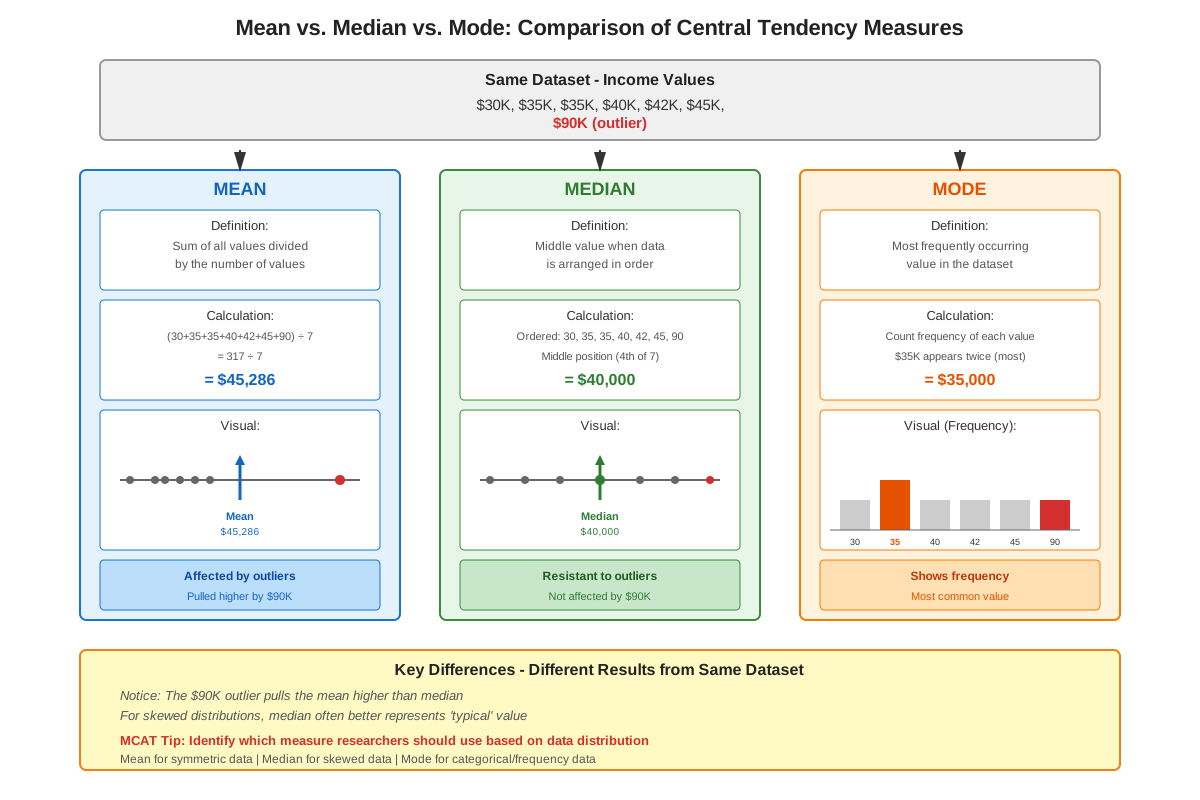
In Research Methods and Statistics, measures of central tendency describe the center or typical value of a distribution. The mean serves as one of three primary measures, alongside the median and mode. The mean is particularly useful because it incorporates every value in the dataset, making it sensitive to the actual magnitude of all observations.
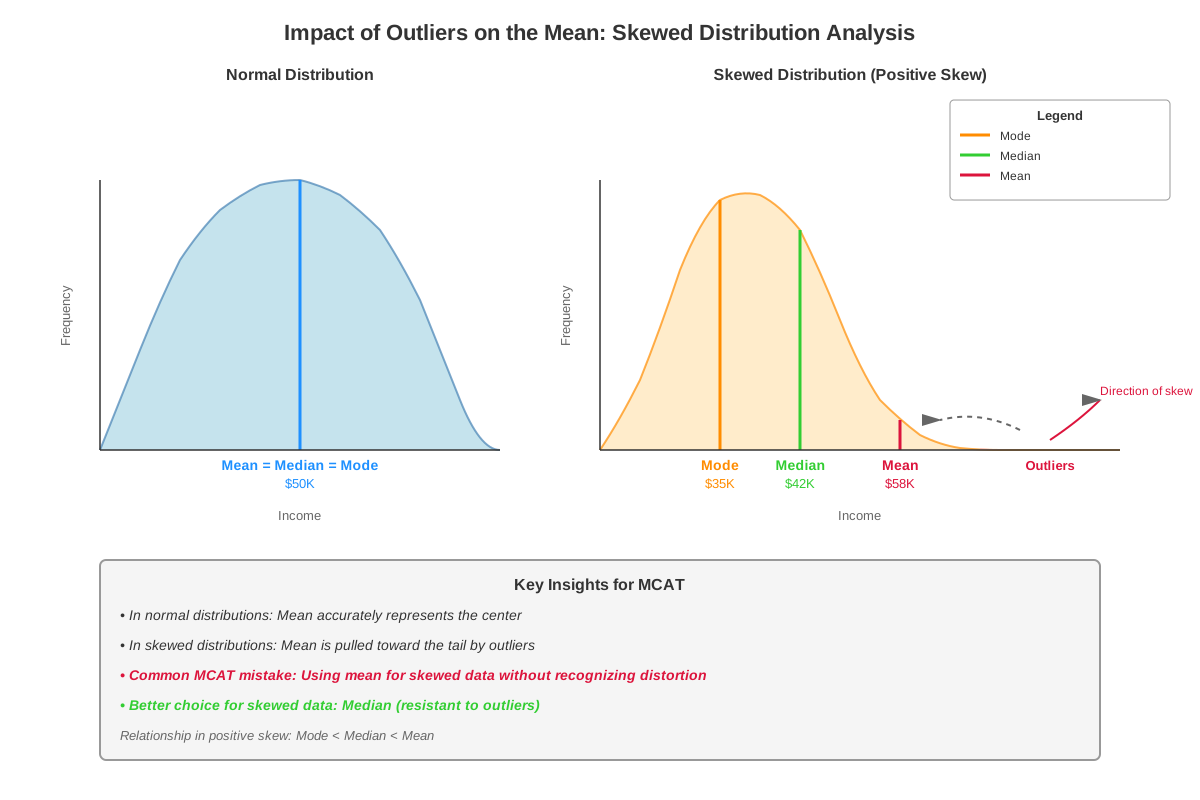
The mean's mathematical properties make it the foundation for many advanced statistical procedures, including variance, standard deviation, and inferential statistics like t-tests and ANOVA. When data follows a normal distribution (bell-shaped curve), the mean, median, and mode converge at the same central point, making the mean an excellent representative value.
Properties and Characteristics of the Mean
The mean possesses several important mathematical properties relevant to MCAT questions:
- Sensitivity to every value: Each data point contributes to the mean, so changing any single value affects the mean
- Sensitivity to outliers: Extreme values disproportionately influence the mean because they contribute large magnitudes to the sum
- Balance point: The sum of deviations from the mean always equals zero; values above the mean balance values below it
- Unique value: Every dataset has exactly one mean (unlike mode, which can have multiple values)
- Algebraic manipulability: The mean can be used in further calculations and statistical tests
When the Mean is Appropriate
The mean serves as the best measure of central tendency under specific conditions:
- Interval or ratio data: The mean requires numerical data where differences between values are meaningful (not just categorical or ordinal data)
- Symmetrical distributions: When data is relatively evenly distributed around the center, the mean accurately represents typical values
- Normal distributions: Bell-shaped distributions make the mean the most efficient and informative measure
- No extreme outliers: When extreme values are absent or minimal, the mean isn't distorted
In Sociology research on the MCAT, the mean appropriately describes variables like age, income (when not highly skewed), test scores, reaction times, symptom severity ratings, and physiological measurements.
When the Mean is Misleading
Understanding when the mean fails to represent typical values is crucial for MCAT critical thinking questions:
| Situation | Why Mean is Problematic | Better Alternative |
|---|---|---|
| Skewed distributions | Extreme values pull the mean toward the tail | Median |
| Presence of outliers | Single extreme values distort the mean | Median or trimmed mean |
| Bimodal distributions | Two distinct groups create a mean that represents neither | Mode or separate group means |
| Ordinal data | Numerical codes don't represent true intervals | Median or mode |
| Small sample sizes with variability | Mean may not be stable or representative | Report range or median |
For example, in a study of household income in a neighborhood with nine families earning $40,000-$60,000 and one family earning $2,000,000, the mean income would be approximately $234,000—a value that represents none of the actual families and grossly overstates typical income. The median would be approximately $50,000, far more representative of the typical household.
The Mean in Sociological Research
In Sociology contexts on the MCAT, the mean frequently appears in research examining:
- Health disparities: Mean health outcomes across different demographic groups
- Behavioral studies: Average frequencies of behaviors (substance use, exercise, social interactions)
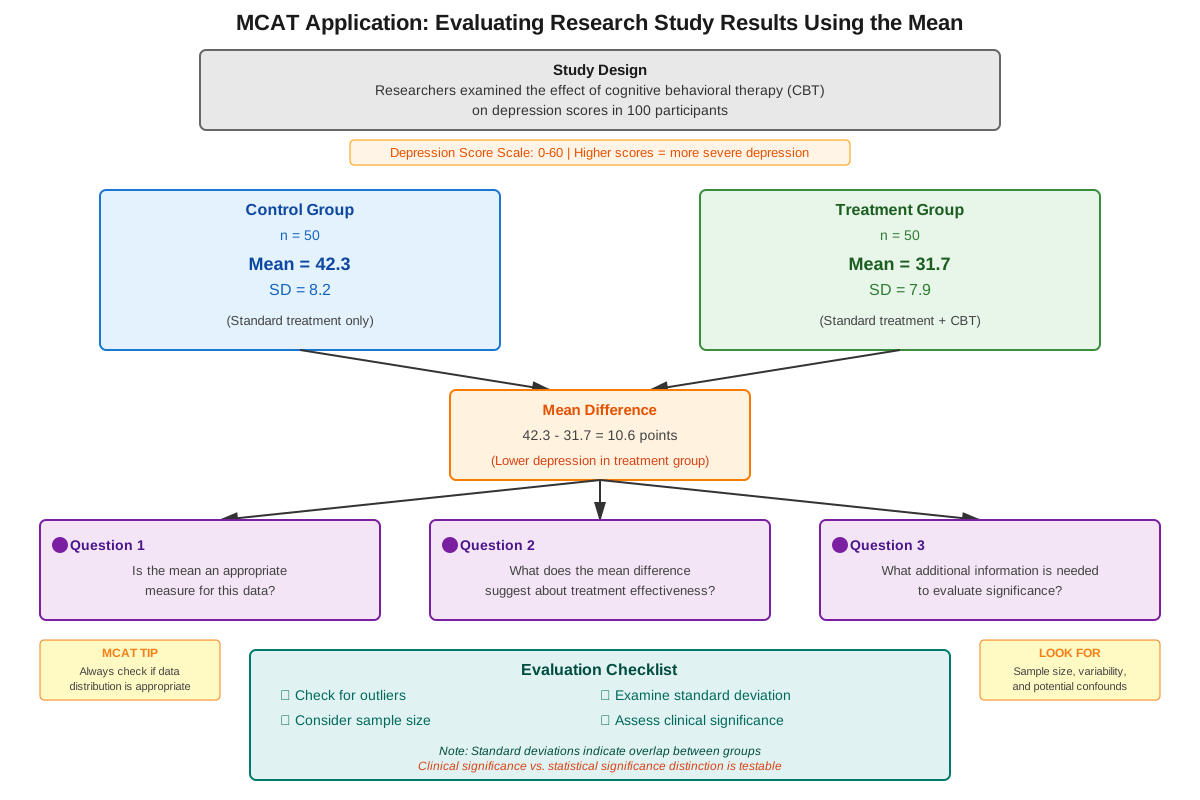
- Intervention effectiveness: Mean scores on outcome measures comparing treatment and control groups
- Socioeconomic indicators: Average education levels, income, or resource access
- Attitude and belief surveys: Mean ratings on Likert scales measuring social attitudes
Researchers report means to summarize group characteristics, compare conditions, and test hypotheses about differences between populations. MCAT passages often present tables showing means with standard deviations or standard errors, requiring students to interpret whether observed differences are meaningful.
Concept Relationships
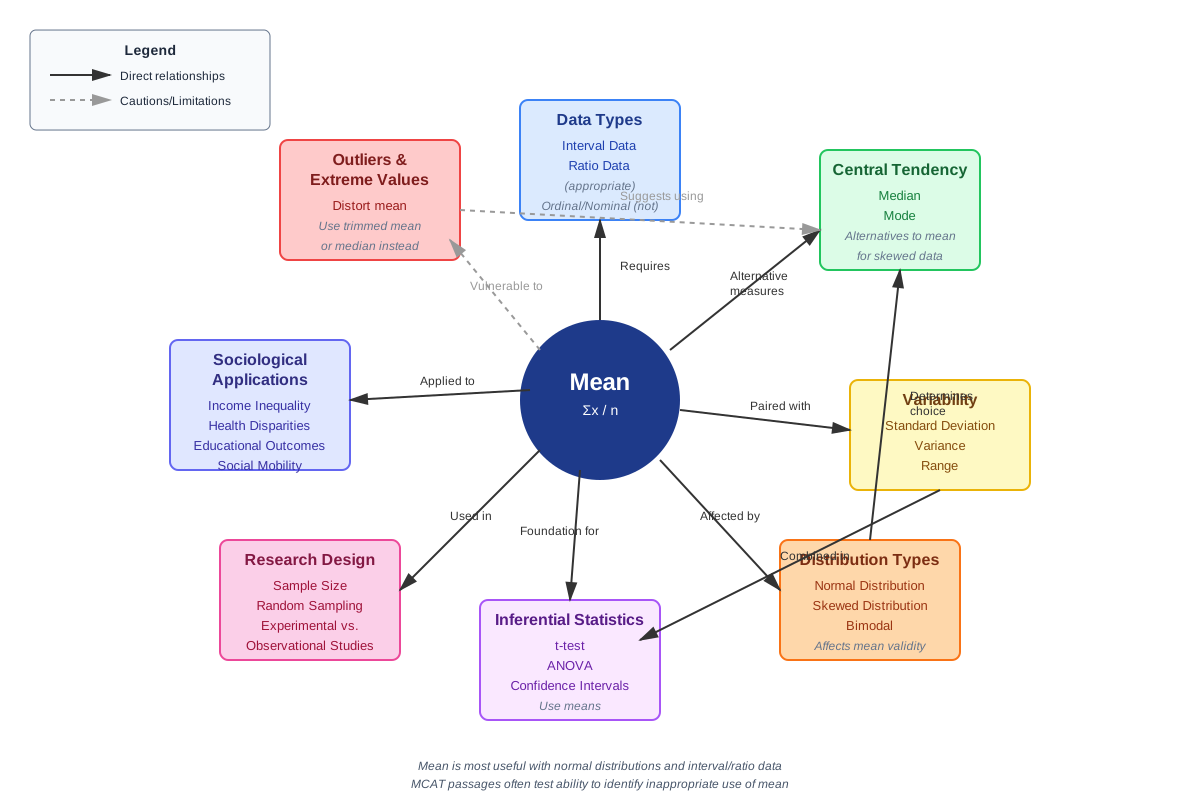
The mean functions as a central hub connecting multiple statistical and research methodology concepts tested on the MCAT. Understanding these relationships enables deeper comprehension and faster question analysis.
Mean → Standard Deviation: The standard deviation measures how far, on average, data points deviate from the mean. Calculating standard deviation requires first determining the mean, then measuring each value's distance from it. Together, mean and standard deviation characterize a distribution's center and spread.
Mean ↔ Median ↔ Mode: These three measures of central tendency relate systematically. In symmetrical distributions, all three converge. In right-skewed distributions, mean > median > mode. In left-skewed distributions, mode > median > mean. Recognizing these patterns helps students quickly assess distribution shape from reported statistics.
Mean → Normal Distribution: The normal distribution is defined by its mean (μ) and standard deviation (σ). The mean determines the distribution's center, and approximately 68% of values fall within one standard deviation of the mean in normal distributions—a high-yield fact for MCAT questions.
Sample Mean → Population Mean: In inferential statistics, researchers calculate sample means (x̄) to estimate population means (μ). Understanding this relationship is essential for interpreting research validity and generalizability in MCAT passages.
Mean → Statistical Significance Testing: T-tests, ANOVA, and other inferential tests compare means across groups to determine if observed differences likely reflect true population differences or merely sampling variation. MCAT passages frequently describe studies using these tests.
Outliers → Mean Distortion: Extreme values disproportionately affect the mean, creating a direct relationship where outlier presence should trigger consideration of alternative measures. This connects to research validity and appropriate statistical choice.
High-Yield Facts
⭐ The mean is calculated by summing all values and dividing by the number of observations (Σx/n)
⭐ The mean is highly sensitive to outliers and extreme values, which can make it unrepresentative of typical values
⭐ In right-skewed distributions, mean > median; in left-skewed distributions, mean < median; in symmetrical distributions, mean = median
⭐ The mean is most appropriate for interval/ratio data with relatively symmetrical distributions and no extreme outliers
⭐ The mean serves as the balance point of a distribution where the sum of deviations equals zero
- The mean incorporates information from every data point, unlike the median which only considers position
- When comparing experimental groups, researchers typically compare means to assess intervention effects
- The mean is required to calculate variance and standard deviation, making it foundational for understanding data spread
- Sample means (x̄) estimate population means (μ), with larger samples generally providing better estimates
- The mean can be calculated from frequency distributions by multiplying each value by its frequency, summing products, and dividing by total frequency
- In normal distributions, approximately 68% of values fall within one standard deviation of the mean
- The mean of combined groups is not simply the average of the two group means unless the groups are equal in size
Quick check — test yourself on Mean so far.
Try Flashcards →Common Misconceptions
Misconception: The mean always represents the "typical" or "most common" value in a dataset.
Correction: The mean represents the arithmetic average but may not reflect typical values when distributions are skewed or contain outliers. In income data with extreme high earners, the mean income may exceed what 90% of people actually earn. The median or mode may better represent typical values in such cases.
Misconception: The mean, median, and mode are interchangeable and always give similar results.
Correction: These measures only converge in perfectly symmetrical distributions. In skewed distributions, they diverge systematically, with the mean being pulled most strongly toward the tail. Recognizing which measure is reported and what it implies about distribution shape is crucial for MCAT interpretation.
Misconception: A higher mean always indicates a better outcome or more desirable condition.
Correction: The interpretation of mean values depends entirely on what is being measured. A higher mean symptom severity score indicates worse outcomes, while a higher mean treatment adherence rate indicates better outcomes. Context determines whether higher or lower means are preferable.
Misconception: The mean of two group means equals the overall mean when combining groups.
Correction: This is only true when both groups have equal sample sizes. When groups differ in size, the overall mean must be calculated by weighting each group's mean by its sample size, or by combining all raw data and recalculating. For example, if Group A (n=10) has mean=50 and Group B (n=30) has mean=70, the overall mean is not 60 but rather (10×50 + 30×70)/40 = 65.
Misconception: If a study reports means, the data must follow a normal distribution.
Correction: Researchers sometimes report means even when data is skewed or non-normal, though this may be inappropriate. The presence of reported means doesn't guarantee normal distribution. MCAT questions may test whether students recognize when reported means are misleading given the actual data distribution.
Misconception: The mean is always the most accurate or precise measure of central tendency.
Correction: Accuracy and appropriateness depend on data characteristics. For ordinal data, skewed distributions, or data with outliers, the median is often more appropriate and representative. The "best" measure depends on the research question and data properties.
Worked Examples
Example 1: Calculating and Interpreting Mean in a Health Disparity Study
Scenario: A sociological study examines daily fruit and vegetable servings across three socioeconomic groups. Group A (low SES, n=5): 2, 3, 2, 4, 3 servings. Group B (middle SES, n=5): 4, 5, 4, 6, 5 servings. Group C (high SES, n=4): 6, 7, 8, 6 servings. Calculate the mean for each group and the overall mean. What does this reveal about health disparities?
Solution:
Step 1: Calculate Group A mean
- Sum: 2+3+2+4+3 = 14
- Mean: 14/5 = 2.8 servings per day
Step 2: Calculate Group B mean
- Sum: 4+5+4+6+5 = 24
- Mean: 24/5 = 4.8 servings per day
Step 3: Calculate Group C mean
- Sum: 6+7+8+6 = 27
- Mean: 27/4 = 6.75 servings per day
Step 4: Calculate overall mean (cannot simply average the three group means because sample sizes differ)
- Total sum: 14+24+27 = 65
- Total n: 5+5+4 = 14
- Overall mean: 65/14 = 4.64 servings per day
Interpretation: The progressive increase in mean servings from low SES (2.8) to middle SES (4.8) to high SES (6.75) demonstrates a clear socioeconomic gradient in fruit and vegetable consumption. This pattern exemplifies health disparities where social determinants of health (income, education, access) correlate with health behaviors. The overall mean of 4.64 servings falls below the commonly recommended 5+ servings daily, but this masks substantial variation across groups. This example connects to Sociology concepts of social stratification, health equity, and structural determinants of health behavior—all high-yield for the MCAT.
Example 2: Recognizing When Mean is Misleading
Scenario: A study examines hospital wait times for emergency department patients. The reported mean wait time is 45 minutes. However, the distribution shows: 80% of patients wait 15-30 minutes, 15% wait 30-45 minutes, and 5% wait 120-240 minutes due to complex cases requiring extensive triage. Is the mean an appropriate measure here? What would you recommend?
Solution:
Step 1: Analyze distribution characteristics
- The distribution is right-skewed (long tail toward high values)
- A small percentage (5%) of extreme values (120-240 minutes) exist
- The majority (80%) experience wait times well below the reported mean
Step 2: Assess mean appropriateness
- The mean of 45 minutes is pulled upward by the 5% of extreme cases
- Most patients (80%) wait less than the mean, making it unrepresentative of typical experience
- The mean suggests a "typical" wait of 45 minutes, but this is actually longer than what most patients experience
Step 3: Recommend alternative measures
- Median: Would better represent the typical patient experience, likely falling in the 20-30 minute range
- Mode: Would identify the most common wait time range
- Stratified reporting: Report separately for routine cases versus complex cases
- Percentiles: Report 25th, 50th, 75th, and 90th percentiles to show distribution shape
Step 4: Connect to MCAT concepts
This scenario tests critical evaluation of research methodology and statistical appropriateness—key skills for the MCAT. Recognizing that the mean can be misleading in skewed distributions demonstrates statistical literacy essential for interpreting medical literature. The example also connects to healthcare access and quality measurement in Sociology, as wait time disparities may reflect systemic issues in healthcare delivery.
MCAT Application: Questions might present similar scenarios and ask: "Which measure of central tendency would most accurately represent typical patient experience?" or "The researchers report a mean wait time of 45 minutes. What does this suggest about the distribution of wait times?" Correct answers would identify the right-skewed distribution and recommend the median as more appropriate.
Exam Strategy
Approaching Mean-Related MCAT Questions
When encountering questions involving the mean, follow this systematic approach:
- Identify what is being measured: Determine the variable (income, test scores, symptom severity) and its scale (interval/ratio, ordinal, nominal)
- Assess data distribution: Look for clues about symmetry, skewness, or outliers in passage text, graphs, or tables
- Determine appropriateness: Decide if the mean is suitable given the data characteristics
- Calculate if needed: Perform calculations carefully, double-checking arithmetic
- Interpret in context: Connect the numerical value to the research question and real-world meaning
Trigger Words and Phrases
Watch for these terms that signal mean-related content:
- "Average" (usually refers to mean unless otherwise specified)
- "Arithmetic mean"
- "Central tendency"
- "Typical value"
- "Mean ± standard deviation" (common reporting format)
- "Compared mean scores between groups"
- "Statistically significant difference in means"
Process of Elimination Tips
When evaluating answer choices:
- Eliminate options confusing mean with median or mode unless the distribution is symmetrical
- Reject answers suggesting the mean is unaffected by outliers—this is false
- Eliminate choices claiming the mean is always the best measure—appropriateness depends on data characteristics
- Reject calculations that average group means without considering sample size differences
- Eliminate interpretations that ignore distribution shape when assessing whether the mean represents typical values
Time Allocation
For discrete questions requiring mean calculation, allocate 60-90 seconds. For passage-based questions requiring interpretation of reported means, allocate 45-60 seconds after passage reading. If a question requires both calculation and interpretation, budget up to 2 minutes. Don't spend excessive time on complex calculations—MCAT math is designed to be straightforward, so if calculations become unwieldy, reconsider your approach.
Exam Tip: When passages present data tables with means and standard deviations, quickly scan for patterns (which groups have higher/lower means, how much overlap exists based on standard deviations) before reading questions. This preview helps you locate relevant information faster when answering.
Memory Techniques
Mnemonic for When Mean is Appropriate: "SINS"
- Symmetrical distribution
- Interval or ratio data
- No extreme outliers
- Sufficient sample size
If data meets SINS criteria, the mean is likely appropriate.
Visualization for Mean vs. Median in Skewed Distributions
Picture a playground seesaw (teeter-totter):
- The mean is where you'd place the fulcrum to balance the seesaw considering the weight (magnitude) of all children
- The median is the middle child when all children line up by position
- When one very heavy child (outlier) sits far to one side, the fulcrum (mean) must shift toward that child to maintain balance, but the middle child's position (median) doesn't change
This visualization helps remember that the mean is pulled toward outliers while the median remains stable.
Acronym for Distribution Relationships: "RSL"
Remember the order of mean, median, and mode in skewed distributions:
Right-skewed: Mean > Median > Mode (alphabetical order: Mean, Median, Mode)
Symmetrical: Mean = Median = Mode (all equal)
Left-skewed: Mode > Median > Mean (reverse alphabetical order)
The acronym RSL (Right-Symmetrical-Left) helps recall these patterns.
Memory Aid for Mean Formula
"Sum it all up, then divide by how many you have" captures the essence of (Σx)/n in plain language.
Summary
The mean is the arithmetic average of a dataset, calculated by summing all values and dividing by the number of observations. As a fundamental measure of central tendency in Research Methods and Statistics, the mean appears frequently in MCAT Sociology passages, particularly in research contexts examining health disparities, behavioral patterns, and intervention effectiveness. While the mean incorporates information from every data point and serves as the foundation for advanced statistical procedures, its sensitivity to outliers and extreme values makes it potentially misleading in skewed distributions. Students must distinguish situations where the mean appropriately represents typical values (symmetrical distributions with interval/ratio data and no extreme outliers) from situations where the median would be more appropriate (skewed distributions or presence of outliers). Understanding the systematic relationships between mean, median, and mode in different distribution shapes enables quick assessment of data characteristics from reported statistics. For MCAT success, students must not only calculate means accurately but also critically evaluate their appropriateness, interpret them in research contexts, and recognize when reported means may obscure important variations within populations—skills essential for future physicians interpreting medical literature and population health data.
Key Takeaways
- The mean (Σx/n) is the arithmetic average that incorporates every value in a dataset, making it sensitive to outliers and extreme values
- The mean is most appropriate for interval/ratio data with symmetrical distributions and no extreme outliers; the median is preferable for skewed data
- In right-skewed distributions, mean > median; in left-skewed distributions, mean < median; in symmetrical distributions, mean = median
- MCAT passages frequently present means when reporting research results, requiring students to interpret values, compare groups, and assess appropriateness
- Understanding when the mean is misleading demonstrates critical thinking about research methodology—a key MCAT skill
- The mean connects to multiple statistical concepts including standard deviation, normal distribution, and inferential statistics
- Calculating overall means from multiple groups requires weighting by sample size, not simply averaging group means
Related Topics
Median and Mode: These alternative measures of central tendency complement the mean, with the median being particularly important for skewed distributions and ordinal data. Mastering the mean enables comparison across all three measures and understanding of when each is most appropriate.
Standard Deviation and Variance: These measures of dispersion are calculated using deviations from the mean, making mean comprehension prerequisite to understanding data spread and variability.
Normal Distribution: The normal curve is defined by its mean and standard deviation, with the mean marking the distribution's center. Understanding the mean is essential for interpreting normal distribution properties frequently tested on the MCAT.
Statistical Significance and Hypothesis Testing: T-tests, ANOVA, and other inferential procedures compare means across groups to test research hypotheses. Mean mastery enables understanding of how researchers determine whether group differences are meaningful.
Research Validity and Reliability: Appropriate use of the mean versus alternative measures relates to measurement validity. Understanding when the mean accurately represents constructs connects to broader research methodology concepts.
Practice CTA
Now that you've mastered the concept of the mean, reinforce your understanding by attempting practice questions and flashcards focused on measures of central tendency. Challenge yourself with questions that require not just calculation but critical evaluation of when the mean is appropriate versus misleading. The more you practice applying these concepts to MCAT-style passages and questions, the more automatic your recognition of statistical patterns will become. Remember: statistical literacy is increasingly emphasized on the MCAT, and your ability to quickly interpret and evaluate reported means will serve you well not only on test day but throughout your medical career. You've got this—keep practicing!
Sign up free to keep reading
Create a free AnvayaPrep account to finish this MCAT guide on Mean — plus flashcards and practice questions.