Overview
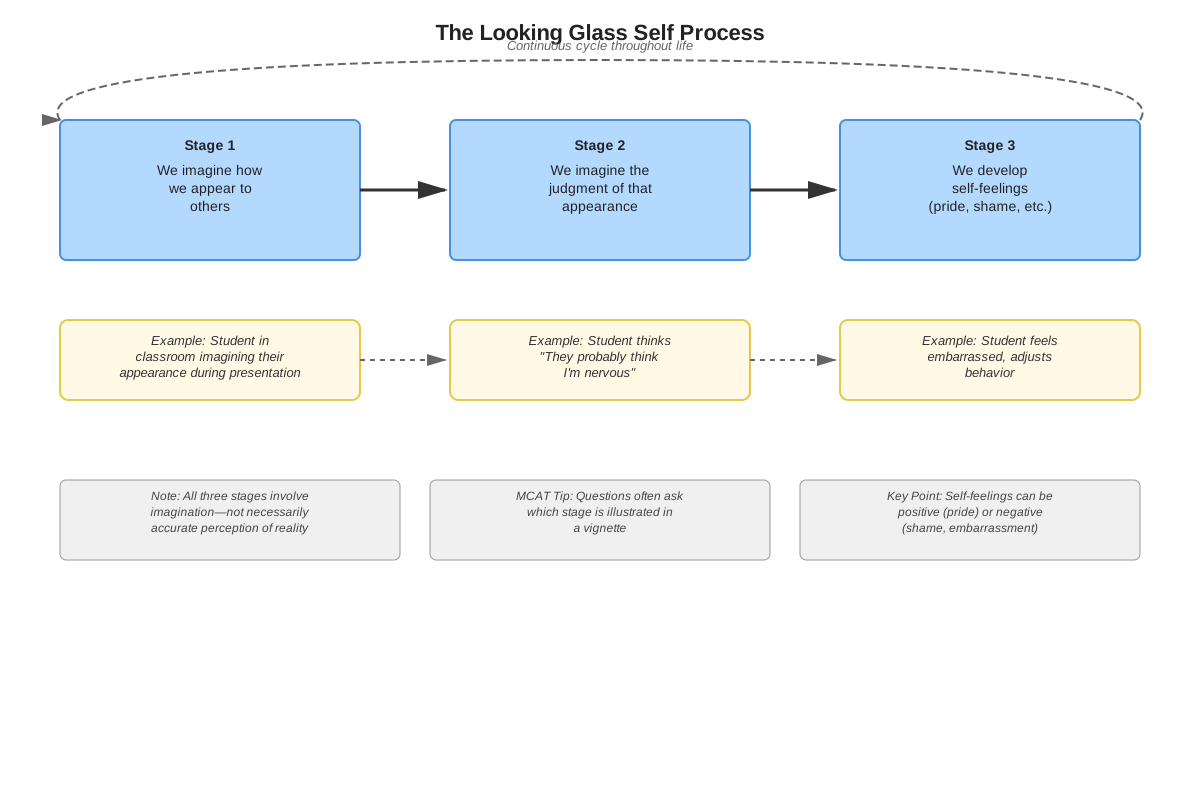
The looking glass self is a foundational concept in Sociology that explains how individuals develop their sense of self through social interaction. Coined by sociologist Charles Horton Cooley in 1902, this theory proposes that people shape their self-concept based on how they believe others perceive them. Rather than forming identity in isolation, individuals metaphorically use other people as a "mirror" or "looking glass" to see themselves reflected back. This process involves imagining how we appear to others, imagining their judgment of that appearance, and then developing feelings about ourselves based on these imagined judgments. The looking glass self represents a dynamic, ongoing process that occurs throughout life as individuals continuously adjust their self-perception through social feedback.
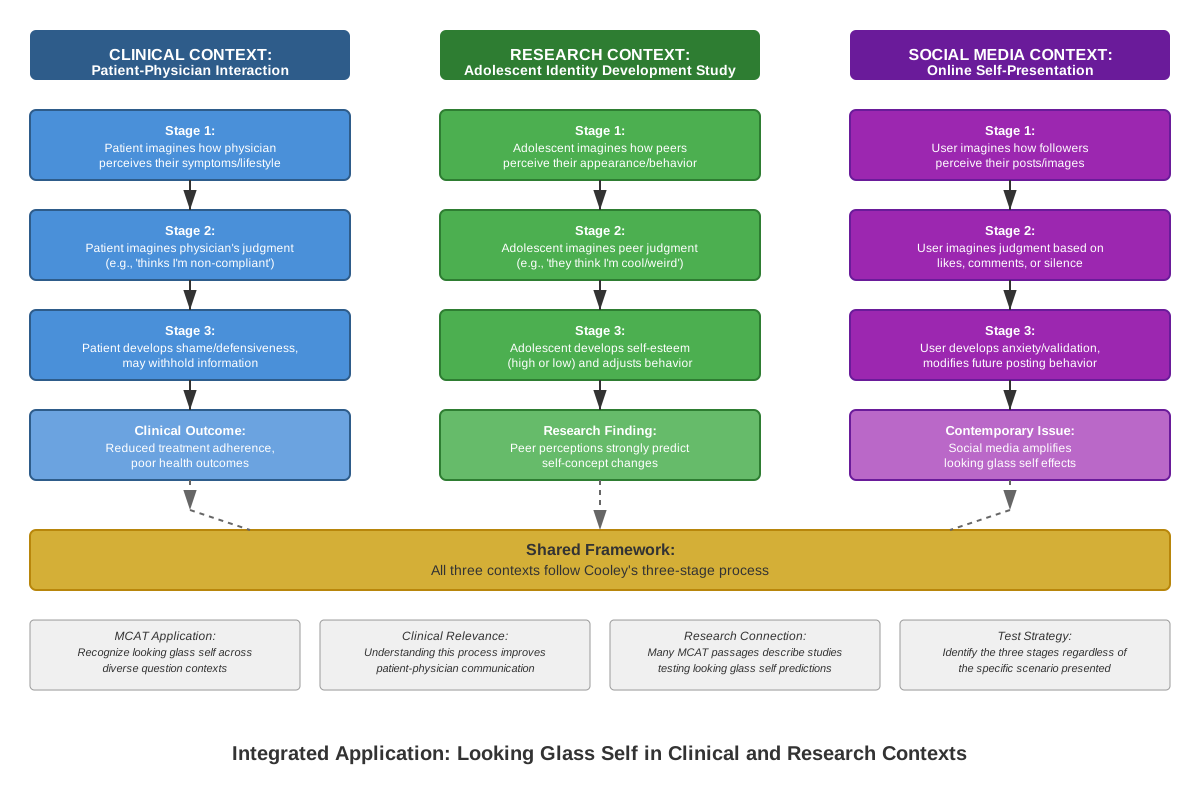
For the MCAT, the looking glass self is essential because it appears frequently in questions about Social Interaction and Identity, self-concept formation, and symbolic interactionism. The MCAT Psychological, Social, and Biological Foundations of Behavior section regularly tests students' ability to apply this concept to clinical scenarios, research studies, and social situations. Understanding this theory enables test-takers to analyze how patients develop health-related identities, how medical professionals' perceptions influence patient behavior, and how social environments shape psychological outcomes. Questions may present vignettes about adolescent identity development, patient-physician interactions, or social media's impact on self-esteem, all requiring application of looking glass self principles.
The looking glass self connects to broader Sociology concepts including symbolic interactionism (the theoretical framework from which it emerged), social identity theory, self-concept development, and socialization processes. It relates closely to reference groups, significant others, and the dramaturgical approach developed by Erving Goffman. Understanding the looking glass self provides the foundation for comprehending how social structures, cultural norms, and interpersonal relationships collectively shape individual psychology and behavior—a core theme throughout MCAT social science content.
Learning Objectives
- [ ] Define looking glass self using accurate Sociology terminology
- [ ] Explain why looking glass self matters for the MCAT
- [ ] Apply looking glass self to exam-style questions
- [ ] Identify common mistakes related to looking glass self
- [ ] Connect looking glass self to related Sociology concepts
- [ ] Distinguish between the three components of the looking glass self process
- [ ] Analyze how the looking glass self differs from other theories of self-concept formation
- [ ] Evaluate the role of significant others versus generalized others in looking glass self development
- [ ] Predict how different social contexts influence looking glass self outcomes
Prerequisites
- Basic understanding of self-concept: The general idea that individuals have perceptions and beliefs about themselves; relevant because the looking glass self explains how this self-concept forms through social processes
- Familiarity with socialization: The process by which individuals learn and internalize social norms and values; relevant because the looking glass self is a mechanism of socialization
- Introduction to symbolic interactionism: The theoretical perspective emphasizing that people act based on meanings derived from social interaction; relevant because the looking glass self is a key concept within this framework
- Understanding of social interaction: Basic knowledge that humans communicate and influence each other; relevant because the looking glass self depends entirely on interpersonal interaction
Why This Topic Matters
The looking glass self has profound clinical and real-world significance in healthcare contexts. Medical professionals must understand how patients' self-concepts are shaped by perceived medical judgments—a patient diagnosed with a chronic illness may internalize stigma based on how they believe healthcare providers view them, affecting treatment adherence and health outcomes. Mental health practitioners use looking glass self principles to understand conditions like social anxiety disorder, where individuals become preoccupied with imagined negative evaluations from others. The concept also explains how physician identity develops through medical training as students internalize perceived evaluations from attending physicians and peers.
On the MCAT, the looking glass self MCAT content appears with high frequency in the Psychological, Social, and Biological Foundations of Behavior section. Statistical analysis of recent MCAT administrations indicates that questions involving self-concept formation, identity development, and symbolic interactionism appear in approximately 15-20% of the social science passages. The looking glass self specifically appears in 3-5 questions per exam, either as the primary concept being tested or as background knowledge needed to interpret research findings or clinical scenarios.
Common exam presentations include: (1) research passages describing studies on adolescent self-esteem and peer influence, requiring students to identify looking glass self mechanisms; (2) clinical vignettes about patients modifying behavior based on perceived physician judgment; (3) questions about social media's impact on identity formation through feedback loops; (4) scenarios involving stigmatized identities and how individuals internalize social perceptions; and (5) questions distinguishing the looking glass self from related concepts like social comparison theory or self-perception theory. The MCAT frequently tests whether students can identify all three components of the process and apply them to novel situations.
Core Concepts
Definition and Theoretical Foundation
The looking glass self is a social psychological concept proposing that individuals develop their self-concept through a three-stage process of imagining how they appear to others, imagining others' judgments of that appearance, and experiencing emotional responses to those imagined judgments. Charles Horton Cooley introduced this concept in his 1902 work "Human Nature and the Social Order," positioning it within the symbolic interactionist tradition that views the self as fundamentally social rather than innate or purely psychological.
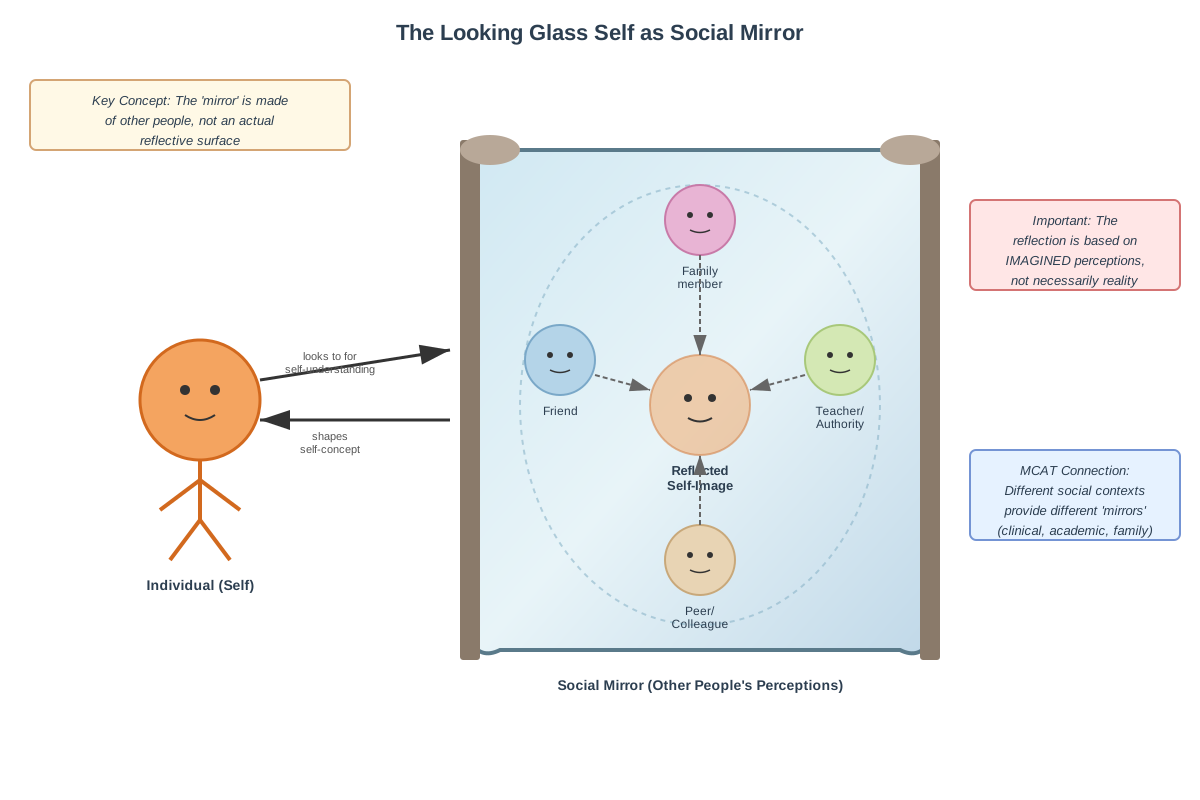
The term "looking glass" refers to a mirror, emphasizing that other people serve as reflective surfaces through which individuals see themselves. However, this is not passive reflection—it involves active interpretation, imagination, and emotional processing. The looking glass self operates continuously throughout life, though it is particularly influential during childhood and adolescence when self-concept is most malleable.
The Three Components of the Looking Glass Self
The looking glass self process consists of three sequential components that work together to shape self-perception:
- Imagination of our appearance to others: The individual imagines how they appear to another person in a specific social interaction. This includes physical appearance, behavior, speech, mannerisms, and any other observable characteristics. For example, a medical student presenting a case to an attending physician imagines how their presentation style, knowledge level, and professional demeanor appear to the attending.
- Imagination of others' judgment: The individual then imagines how the other person evaluates or judges that appearance. This involves attributing thoughts, feelings, and evaluations to the other person. The medical student might imagine the attending thinks they are well-prepared, knowledgeable, and professional—or alternatively, that the attending views them as unprepared or incompetent.
- Self-feeling or emotional response: Based on the imagined judgment, the individual experiences an emotional reaction and adjusts their self-concept accordingly. If the medical student imagines positive judgment, they may feel pride and develop confidence in their clinical abilities. If they imagine negative judgment, they may feel shame or embarrassment and question their competence.
Key Characteristics and Mechanisms
The looking glass self operates through several important mechanisms:
Subjectivity of perception: The process is based on imagined perceptions rather than actual perceptions. What matters is not how others truly view us, but how we think they view us. This creates potential for misalignment between actual social feedback and perceived feedback. A patient might believe their physician judges them negatively for their weight, even if the physician holds no such judgment.
Selective attention to significant others: Not all social interactions equally influence the looking glass self. Significant others—people whose opinions we value highly—have disproportionate impact on self-concept formation. For children, parents and primary caregivers are the most influential significant others. For medical students, attending physicians and respected mentors serve this role. The looking glass self is less influenced by strangers or people we don't respect.
Cumulative and iterative nature: The looking glass self is not a one-time process but occurs repeatedly across countless social interactions. Self-concept emerges from the accumulated pattern of imagined judgments over time. A single negative interaction may have minimal impact, but consistent patterns of imagined negative judgment can profoundly shape self-perception.
Bidirectional influence: While the looking glass self describes how social perception shapes individual identity, individuals also actively select social environments and relationships that reinforce their existing self-concept, creating feedback loops. Someone who develops a positive academic self-concept may seek out intellectually challenging environments that further reinforce this identity.
Comparison with Related Concepts
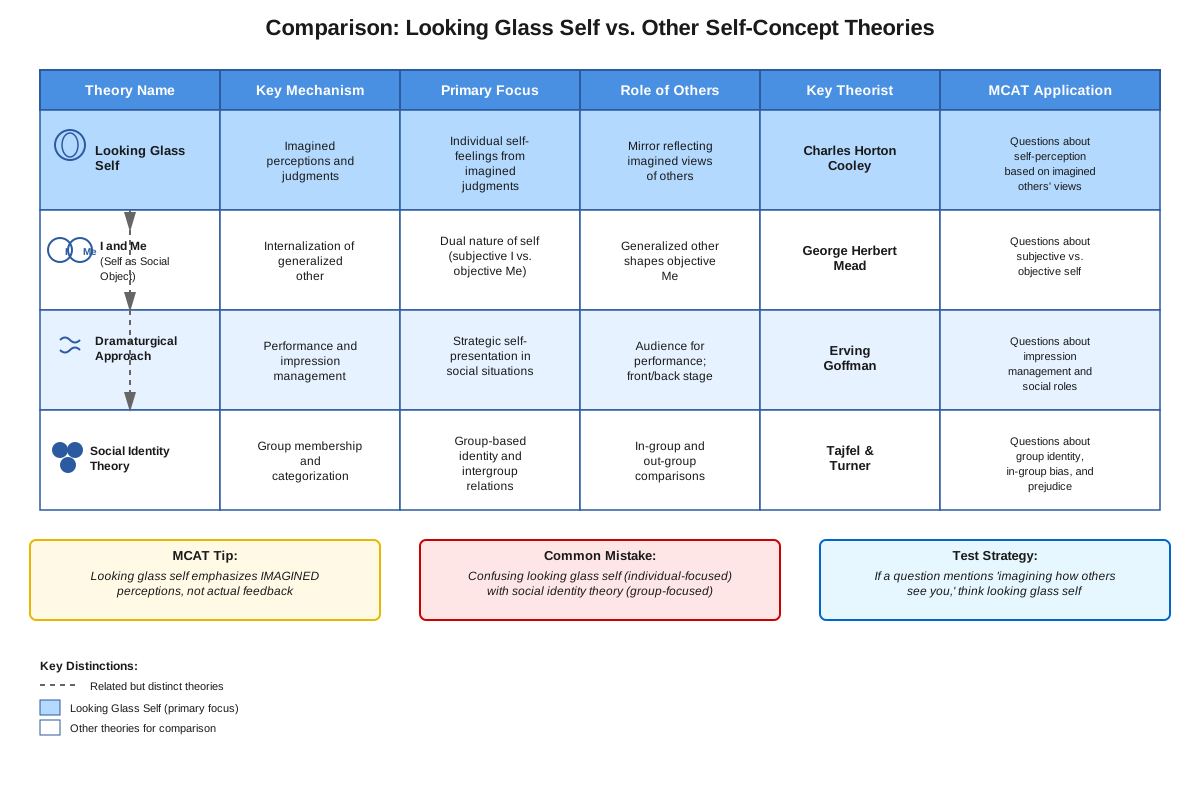
| Concept | Focus | Key Difference from Looking Glass Self |
|---|---|---|
| Looking Glass Self | Self-concept formed through imagined perceptions of others | Emphasizes imagined judgments, not actual feedback |
| Social Comparison Theory | Self-evaluation through comparison with others | Focuses on comparing abilities/attributes, not on others' perceptions of us |
| Self-Perception Theory | Inferring self-attributes from observing own behavior | Internal observation rather than social reflection |
| Reflected Appraisal | Self-concept based on actual feedback from others | Emphasizes actual feedback rather than imagined perceptions |
| Dramaturgical Approach | Self-presentation as performance for audiences | Focuses on impression management rather than self-concept formation |
Application to Identity Development
The looking glass self plays a crucial role in identity formation across the lifespan. During childhood, parents and caregivers serve as the primary looking glass. Children who consistently imagine positive judgments from caregivers develop secure self-concepts and healthy self-esteem. Those who imagine negative or inconsistent judgments may develop insecure identities.
In adolescence, the looking glass shifts dramatically toward peers. Teenagers become intensely focused on how they believe peers perceive them, leading to heightened self-consciousness and identity experimentation. Social media has amplified this process by providing constant feedback (likes, comments, shares) that adolescents interpret as judgments of their worth.
For adults, the looking glass self continues operating in professional contexts, romantic relationships, and social communities. Healthcare professionals develop their professional identity partly through imagining how patients, colleagues, and supervisors perceive their competence and compassion.
Cultural and Social Context
The looking glass self operates differently across cultural contexts. In individualistic cultures (like the United States), people may be more selective about whose opinions influence their self-concept, prioritizing personal authenticity over social conformity. In collectivistic cultures (like many Asian societies), the looking glass self may have stronger influence as individuals place greater emphasis on social harmony and group belonging.
Social structures also shape whose reflections matter most. In hierarchical organizations like hospitals, subordinates may be highly attuned to how superiors perceive them, while superiors may be less influenced by subordinates' imagined judgments. Power dynamics thus create asymmetries in looking glass self processes.
Concept Relationships
The looking glass self connects to multiple concepts within Social Interaction and Identity. It emerges from symbolic interactionism, the broader theoretical framework proposing that human behavior is shaped by symbols and meanings created through social interaction. While symbolic interactionism provides the general theory, the looking glass self specifically explains the mechanism of self-concept formation.
The looking glass self → leads to → self-concept development, which represents the accumulated beliefs and perceptions individuals hold about themselves. The looking glass self is the process by which self-concept is formed and modified. Self-concept → influences → self-esteem, the evaluative component of self-perception. When the looking glass self process consistently produces imagined positive judgments, high self-esteem results; imagined negative judgments produce low self-esteem.
The concept connects to socialization as one of the primary mechanisms through which individuals learn social norms and develop social identities. The looking glass self operates alongside other socialization processes like direct instruction, modeling, and reinforcement. It also relates to reference groups—the groups individuals use as standards for self-evaluation. Reference groups provide the "mirrors" through which individuals view themselves.
The looking glass self → differs from but complements → Mead's theory of self, which emphasizes role-taking and the distinction between the "I" (spontaneous self) and "me" (socialized self). While Cooley's looking glass self focuses on imagined perceptions, Mead's theory emphasizes actually taking others' perspectives. Both theories share the fundamental premise that self emerges through social interaction.
The concept also connects to impression management (Goffman's dramaturgical approach), but with an important distinction: impression management describes how people actively control others' perceptions, while the looking glass self describes how imagined perceptions shape self-concept. These processes often occur simultaneously—individuals manage impressions while also internalizing imagined judgments.
Quick check — test yourself on Looking glass self so far.
Try Flashcards →High-Yield Facts
⭐ The looking glass self consists of three sequential components: imagining our appearance to others, imagining their judgment, and experiencing emotional responses that shape self-concept.
⭐ The process is based on imagined perceptions, not necessarily actual perceptions—what matters is how we think others view us, regardless of their true opinions.
⭐ Significant others have disproportionate influence on the looking glass self compared to strangers or people whose opinions we don't value.
⭐ Charles Horton Cooley introduced the looking glass self in 1902 as part of the symbolic interactionist tradition in sociology.
⭐ The looking glass self is a continuous, lifelong process that operates across countless social interactions, with cumulative effects on self-concept.
- The looking glass self explains how social interaction shapes identity formation during critical developmental periods, especially adolescence.
- Cultural context influences the looking glass self, with collectivistic cultures showing stronger effects than individualistic cultures.
- The concept differs from social comparison theory, which involves comparing ourselves to others rather than imagining their perceptions of us.
- Social media has intensified looking glass self processes by providing constant, quantifiable feedback that users interpret as social judgments.
- The looking glass self can create self-fulfilling prophecies when imagined negative judgments lead to behaviors that actually produce negative social responses.
- Power dynamics and social hierarchies create asymmetries in whose imagined judgments most strongly influence self-concept.
- The looking glass self operates even when the imagined judgments are inaccurate, demonstrating the subjective nature of self-concept formation.
Common Misconceptions
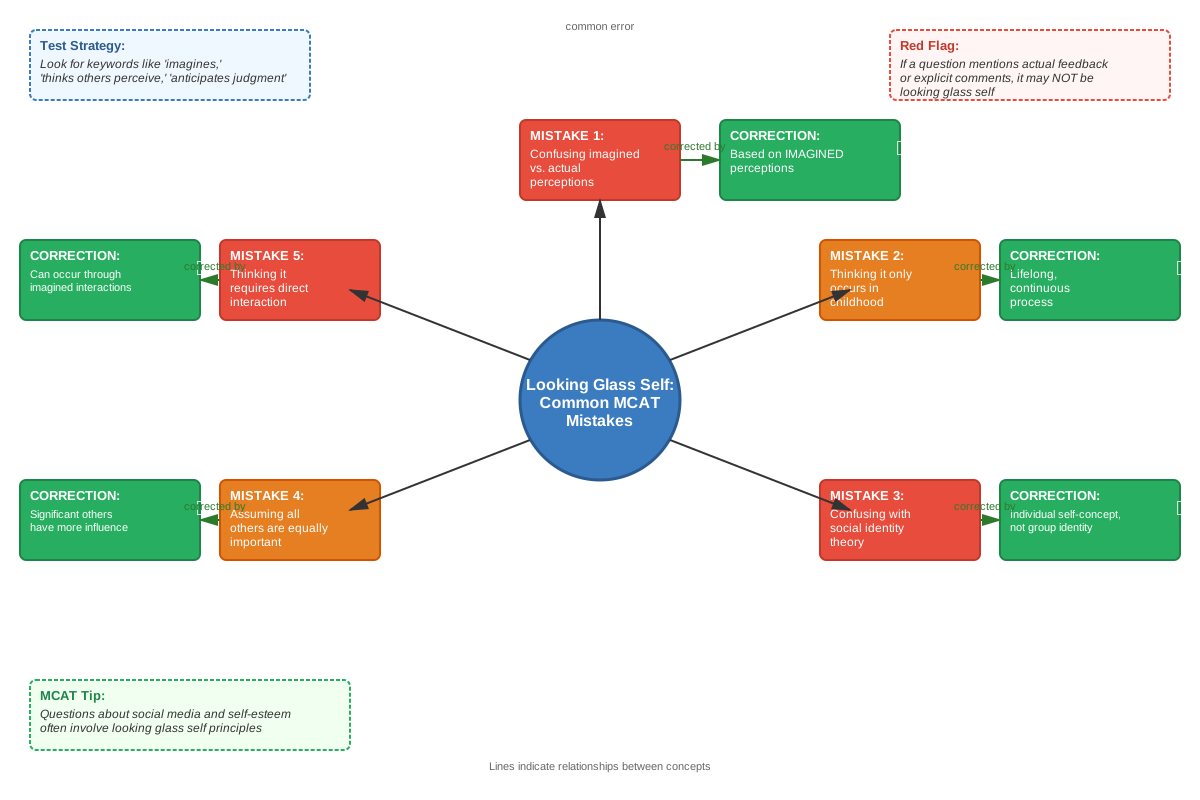
Misconception: The looking glass self means we see ourselves exactly as others see us. → Correction: The looking glass self is based on how we imagine others perceive us, which may differ substantially from their actual perceptions. The process is subjective and interpretive, not an accurate reflection of others' true opinions.
Misconception: The looking glass self only operates during childhood and adolescence. → Correction: While particularly influential during developmental periods, the looking glass self continues operating throughout the entire lifespan. Adults constantly adjust their self-concepts based on imagined social judgments in professional, romantic, and social contexts.
Misconception: The looking glass self and social comparison theory are the same concept. → Correction: Social comparison involves evaluating ourselves by comparing our abilities and attributes to others, while the looking glass self involves imagining how others perceive and judge us. Social comparison is about relative standing; looking glass self is about imagined social perception.
Misconception: Everyone's opinion equally influences the looking glass self. → Correction: Significant others—people whose opinions we value—have disproportionate influence on self-concept formation. Strangers or people we don't respect have minimal impact on the looking glass self process.
Misconception: The looking glass self is a passive process where we simply absorb others' views. → Correction: The looking glass self involves active interpretation, imagination, and emotional processing. Individuals actively construct meaning from social interactions rather than passively receiving feedback. Additionally, people select social environments that reinforce existing self-concepts.
Misconception: If someone gives you direct feedback, that's the looking glass self in action. → Correction: The looking glass self specifically involves imagined perceptions and judgments, not actual feedback. When someone explicitly tells you their opinion, that's reflected appraisal or direct social feedback, which is related but distinct from the looking glass self process.
Worked Examples
Example 1: Adolescent Social Media Use
Vignette: A 16-year-old posts a photo on social media and receives 50 likes within an hour. She feels happy and confident, thinking her peers view her as popular and attractive. The next day, she posts another photo that receives only 10 likes. She feels anxious and embarrassed, believing her peers now think she's not as interesting or attractive.
Analysis:
Step 1 - Identify the three components:
- Imagination of appearance: The adolescent imagines how she appears to her peers through the photos she posts—as popular, attractive, and interesting (first post) or as less appealing (second post).
- Imagination of judgment: She interprets the number of likes as indicators of peer judgment. Many likes = peers judge her positively; few likes = peers judge her negatively.
- Emotional response and self-concept impact: The imagined positive judgment produces happiness and confidence; the imagined negative judgment produces anxiety and diminished self-worth.
Step 2 - Apply looking glass self principles:
This scenario demonstrates the subjective nature of the looking glass self. The adolescent's self-concept shifts based on her interpretation of social feedback (likes), not necessarily on peers' actual opinions. The 10 likes might still represent positive attention, but she interprets it as negative judgment relative to her expectations. This also shows how social media amplifies looking glass self processes by providing quantifiable, immediate feedback that users interpret as social judgments.
Step 3 - Connect to learning objectives:
This example illustrates how the looking glass self operates in contemporary contexts and how imagined judgments (not actual peer opinions) drive self-concept changes. It demonstrates the emotional component of the process and shows how the same person can experience different looking glass self outcomes based on varying social feedback.
Example 2: Medical Student Clinical Rotation
Vignette: During rounds, a third-year medical student presents a patient case to the attending physician. The attending asks several challenging questions that the student struggles to answer. The student notices the attending's facial expression appears stern and interprets this as disappointment. The student begins to doubt their clinical knowledge and feels anxious about future presentations. Over subsequent weeks, this pattern continues, and the student develops a self-concept as "not good enough" for their chosen specialty.
Analysis:
Step 1 - Identify the looking glass self process:
- Component 1: The student imagines how they appear to the attending—as unprepared, lacking knowledge, or incompetent.
- Component 2: The student imagines the attending judges them negatively, interpreting the stern expression and difficult questions as indicators of disappointment or disapproval.
- Component 3: The student experiences shame and anxiety, leading to a diminished professional self-concept and questioning of career choices.
Step 2 - Identify key principles:
This scenario demonstrates several important aspects of the looking glass self. First, the attending physician is a significant other whose imagined opinion carries substantial weight in shaping the student's professional identity. Second, the process is based on imagined judgment—the attending's stern expression might reflect concentration or teaching style rather than actual disappointment, but the student's interpretation is what matters. Third, the cumulative nature is evident as repeated experiences compound to create lasting self-concept changes.
Step 3 - Clinical and exam relevance:
This example shows how the looking glass self operates in medical education and professional development. It also illustrates potential negative consequences when imagined judgments are consistently negative, potentially leading to imposter syndrome or career dissatisfaction. For MCAT purposes, this demonstrates application to healthcare contexts and shows how the concept explains professional identity formation.
Step 4 - Distinguish from related concepts:
This is looking glass self (imagining the attending's judgment) rather than social comparison (comparing performance to other students) or direct feedback (the attending explicitly stating an evaluation). The key is that the student's self-concept changes based on imagined perceptions derived from interpreting nonverbal cues and questioning patterns.
Exam Strategy
When approaching looking glass self MCAT questions, use this systematic strategy:
Step 1 - Identify trigger words and phrases: Watch for language indicating imagined perceptions: "believes others think," "worried about how they appear," "concerned with others' opinions," "imagines that others view them as," or "interprets others' reactions as." These phrases signal that the looking glass self is likely the relevant concept. Also watch for scenarios involving self-concept changes following social interactions.
Step 2 - Verify all three components: To confirm a scenario involves the looking glass self, identify all three components: (1) imagining appearance to others, (2) imagining their judgment, and (3) emotional response affecting self-concept. If any component is missing, consider whether a different concept might be more appropriate. Questions may ask you to identify which component is illustrated in a specific part of a passage.
Step 3 - Distinguish from similar concepts: The MCAT frequently includes answer choices mixing the looking glass self with related concepts. Use these distinctions:
- If the scenario involves actual feedback rather than imagined perceptions → reflected appraisal, not looking glass self
- If the scenario involves comparing oneself to others' abilities → social comparison theory
- If the scenario involves managing how others perceive you → impression management
- If the scenario involves inferring self-attributes from observing own behavior → self-perception theory
Step 4 - Consider the social context: Identify who serves as the "looking glass" in the scenario. Is this person a significant other whose opinion would strongly influence self-concept? Questions may test whether you understand that not all social interactions equally affect the looking glass self. Strangers or people whose opinions aren't valued have minimal impact.
Step 5 - Process of elimination tips:
- Eliminate answers suggesting the process is based on accurate perception of others' actual opinions (the looking glass self is subjective)
- Eliminate answers suggesting the process only occurs in childhood (it's lifelong)
- Eliminate answers confusing the looking glass self with other self-concept theories
- Eliminate answers suggesting passive reception of feedback rather than active interpretation
Time allocation: Looking glass self questions typically require 60-90 seconds. Spend 20-30 seconds identifying the three components, 20-30 seconds distinguishing from related concepts, and 20-30 seconds evaluating answer choices. Don't overthink—if you can identify imagined perceptions leading to self-concept changes, you've likely identified the looking glass self correctly.
Exam Tip: When a passage describes someone's self-concept changing after a social interaction, immediately ask: "Is this based on what they think others think, or on what others actually think?" This single question often distinguishes the looking glass self from related concepts.
Memory Techniques
Mnemonic for the three components - "AIR":
- Appearance: Imagine how we appear to others
- Imagination: Imagine their judgment of that appearance
- Response: Emotional response and self-concept adjustment
Visualization strategy: Picture yourself literally looking into a mirror, but instead of seeing your physical reflection, you see thought bubbles containing what you imagine others think about you. These thought bubbles then transform into emotions (happy faces for positive imagined judgments, sad faces for negative ones) that stick to your reflection, changing how you see yourself. This visual metaphor captures the essence of the looking glass self as a reflective, interpretive, and emotional process.
Acronym for key characteristics - "SICS":
- Subjective (based on imagined, not actual perceptions)
- Iterative (continuous process throughout life)
- Cumulative (effects build over time)
- Selective (significant others matter most)
Memory hook for distinguishing from social comparison: "Looking glass = looking at THEIR eyes (what they think of me); Social comparison = looking at THEIR abilities (how I compare to them)." This emphasizes that looking glass self is about others' perceived judgments of us, while social comparison is about relative standing.
Cooley's "Cool Mirror" technique: Remember that Charles Horton Cooley introduced the concept by thinking of a "cool mirror" that reflects not your actual appearance but your imagined social appearance. The "cool" reminds you of Cooley's name, and "mirror" reminds you of "looking glass."
Summary
The looking glass self is a foundational concept in Sociology explaining how individuals develop self-concept through a three-stage process of imagining how they appear to others, imagining others' judgments of that appearance, and experiencing emotional responses that shape self-perception. Introduced by Charles Horton Cooley in 1902 within the symbolic interactionist tradition, this theory emphasizes that identity formation is fundamentally social rather than individual. The process is subjective—based on imagined rather than actual perceptions—and operates continuously throughout life, with significant others exerting disproportionate influence. For the MCAT, understanding the looking glass self is essential for analyzing questions about identity development, self-concept formation, and Social Interaction and Identity. The concept appears frequently in passages involving adolescent development, professional identity formation, patient-physician interactions, and social media's psychological effects. Success on MCAT questions requires distinguishing the looking glass self from related concepts like social comparison theory, reflected appraisal, and impression management, while recognizing all three components of the process and understanding its subjective, cumulative nature.
Key Takeaways
- The looking glass self consists of three sequential components: imagining our appearance to others, imagining their judgment, and experiencing emotional responses that shape self-concept
- The process is based on imagined perceptions, not necessarily actual perceptions—subjectivity is central to the concept
- Significant others (people whose opinions we value) have disproportionate influence on the looking glass self compared to strangers or casual acquaintances
- The looking glass self is a continuous, lifelong process that operates across countless social interactions with cumulative effects on identity
- The concept differs from social comparison theory (comparing abilities), reflected appraisal (actual feedback), and impression management (controlling others' perceptions)
- Charles Horton Cooley introduced the looking glass self in 1902 as part of symbolic interactionism
- For MCAT success, focus on identifying all three components, distinguishing from similar concepts, and applying the theory to clinical and research scenarios
Related Topics
Symbolic Interactionism: The broader theoretical framework from which the looking glass self emerged; understanding this perspective deepens comprehension of how symbols, meanings, and social interaction shape human behavior and identity.
George Herbert Mead's Theory of Self: Mead's concepts of the "I" and "me," role-taking, and the generalized other complement Cooley's looking glass self by explaining how individuals internalize social perspectives to develop self-awareness.
Reference Groups: Groups that individuals use as standards for self-evaluation and behavior; understanding reference groups explains whose "looking glass" matters most in different contexts.
Impression Management and Dramaturgical Approach: Erving Goffman's theory of how individuals present themselves to control others' perceptions; this complements the looking glass self by explaining the behavioral strategies people use in social interaction.
Self-Concept and Self-Esteem: The accumulated beliefs and evaluations individuals hold about themselves; the looking glass self is the primary mechanism through which these psychological constructs develop.
Socialization: The broader process through which individuals learn social norms and develop social identities; the looking glass self operates as one mechanism within this larger process.
Identity Formation and Development: Understanding how identity develops across the lifespan, particularly during adolescence; the looking glass self provides one theoretical explanation for developmental changes in self-concept.
Practice CTA
Now that you've mastered the looking glass self, test your understanding with practice questions and flashcards. Focus on applying the three components to novel scenarios, distinguishing the concept from related theories, and analyzing how social context influences the process. Remember that the MCAT rewards not just recognition of concepts but the ability to apply them to complex, real-world situations. Your thorough understanding of this high-yield topic will serve you well across multiple questions on test day. Challenge yourself with timed practice to build both accuracy and speed—you've got this!
Sign up free to keep reading
Create a free AnvayaPrep account to finish this MCAT guide on Looking glass self — plus flashcards and practice questions.