Overview
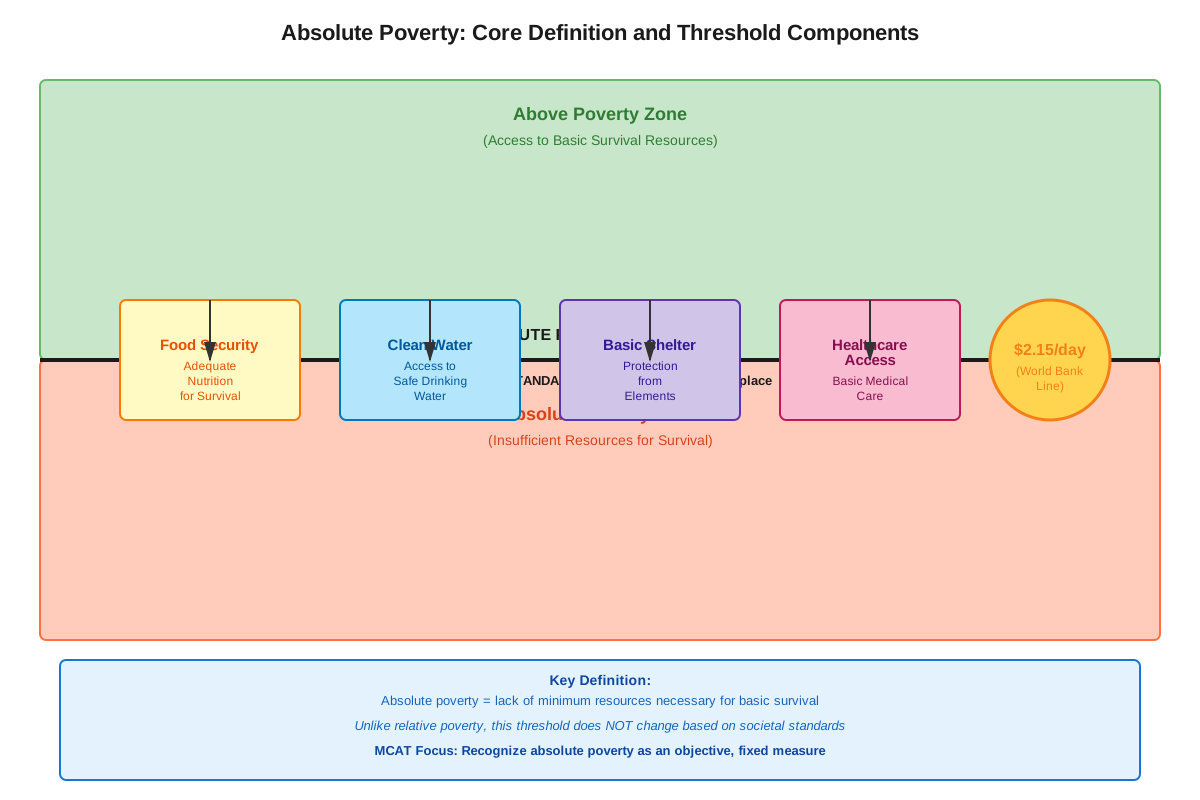
Absolute poverty represents one of the most fundamental concepts in Sociology and plays a critical role in understanding Social Stratification and Inequality on the MCAT. This concept refers to a fixed standard of deprivation where individuals lack the minimum resources necessary for basic survival—including food, clean water, shelter, and healthcare. Unlike relative poverty, which compares individuals to others in their society, absolute poverty establishes an objective threshold below which human life cannot be sustained with dignity or health.
Understanding absolute poverty is essential for the MCAT Sociology section because it connects directly to health disparities, access to medical care, and social determinants of health—all high-yield topics that appear frequently in passages and discrete questions. The MCAT tests not only the definition of absolute poverty but also its consequences, measurement methods, and relationship to global health outcomes. Questions often present scenarios involving resource scarcity, healthcare access barriers, or international development contexts where students must identify absolute poverty and distinguish it from related concepts.
This topic serves as a cornerstone for understanding broader themes in social stratification, including how economic systems create and perpetuate inequality, how poverty affects health outcomes across the lifespan, and how social institutions respond to extreme deprivation. Mastering absolute poverty enables students to analyze complex passages about global health initiatives, understand the social context of disease prevalence, and recognize how structural factors influence individual health behaviors—all critical competencies for both the MCAT and future medical practice.
Learning Objectives
- [ ] Define Absolute poverty using accurate Sociology terminology
- [ ] Explain why Absolute poverty matters for the MCAT
- [ ] Apply Absolute poverty to exam-style questions
- [ ] Identify common mistakes related to Absolute poverty
- [ ] Connect Absolute poverty to related Sociology concepts
- [ ] Distinguish between absolute poverty and relative poverty with specific examples
- [ ] Analyze how absolute poverty affects health outcomes and healthcare access
- [ ] Evaluate different measurement approaches for absolute poverty (e.g., international poverty line, basic needs approach)
- [ ] Synthesize connections between absolute poverty and social determinants of health
Prerequisites
- Basic understanding of socioeconomic status (SES): Absolute poverty represents the extreme lower end of the socioeconomic spectrum, making SES concepts foundational
- Familiarity with social stratification systems: Understanding how societies organize hierarchically helps contextualize where absolute poverty fits within inequality structures
- Knowledge of social determinants of health: Absolute poverty directly impacts health through mechanisms involving these determinants
- Basic economic concepts (resources, income, consumption): These terms are essential for understanding how poverty is measured and defined
Why This Topic Matters
Clinical and Real-World Significance
Absolute poverty represents a critical public health crisis affecting over 700 million people globally who live on less than $2.15 per day (the World Bank's international poverty line). In medical practice, physicians regularly encounter patients whose health conditions are directly caused or exacerbated by absolute poverty—from malnutrition and infectious diseases to delayed care-seeking and medication non-adherence due to cost barriers. Understanding absolute poverty helps future physicians recognize that many health problems have social roots requiring interventions beyond clinical treatment.
The concept also illuminates health disparities both globally and within developed nations. Even in wealthy countries, pockets of absolute poverty exist where individuals lack access to clean water, adequate nutrition, or safe housing—conditions that directly determine health outcomes. Recognizing absolute poverty enables healthcare providers to advocate for patients, connect them with resources, and understand the structural barriers they face.
Exam Statistics and Question Types
Absolute poverty appears in approximately 3-5% of MCAT Sociology questions, making it a moderate-to-high-yield topic. Questions typically appear in three formats:
- Passage-based questions featuring global health initiatives, international development programs, or comparative health statistics between nations
- Discrete questions testing definitional knowledge and the ability to distinguish absolute from relative poverty
- Data interpretation questions presenting poverty statistics, health outcome correlations, or resource distribution graphs
The MCAT frequently embeds absolute poverty within passages about infectious disease prevalence in developing nations, maternal and child health outcomes, or barriers to healthcare access. Students must recognize poverty indicators even when the term "absolute poverty" isn't explicitly stated.
Common Exam Contexts
- Passages describing health interventions in sub-Saharan Africa or South Asia
- Scenarios involving lack of access to basic sanitation or clean water
- Questions about the relationship between poverty and infant mortality rates
- Comparative analyses of health outcomes between developed and developing nations
- Discussions of the Millennium Development Goals or Sustainable Development Goals
- Case studies involving malnutrition, preventable infectious diseases, or maternal mortality
Core Concepts
Definition and Characteristics of Absolute Poverty
Absolute poverty (also called extreme poverty) refers to a condition where individuals lack the minimum resources necessary to meet basic human needs for survival and health. This represents a fixed, objective standard that remains constant across time and place, unlike relative poverty which varies by societal context. The World Bank defines the international poverty line at $2.15 per day (2017 purchasing power parity), though this threshold is periodically updated.
Key characteristics of absolute poverty include:
- Insufficient caloric intake: Inability to obtain adequate food for basic nutrition (typically below 2,000-2,500 calories daily)
- Lack of safe drinking water: No reliable access to clean water sources
- Inadequate shelter: Homelessness or housing that fails to protect from environmental hazards
- Absence of basic healthcare: No access to essential medical services, vaccinations, or medications
- Insufficient clothing: Lack of appropriate clothing for climate protection
The concept emerged from the work of sociologists like Seebohm Rowntree, who in 1901 established a "poverty line" based on the minimum income needed for physical survival. This approach differs fundamentally from relative poverty, which defines deprivation in comparison to the living standards of others in the same society.
Measurement Approaches
Several methodologies exist for measuring and identifying absolute poverty:
| Measurement Method | Description | Strengths | Limitations |
|---|---|---|---|
| International Poverty Line | Fixed dollar amount per day ($2.15) adjusted for purchasing power | Enables global comparisons; simple to understand | May not reflect local cost variations; arbitrary threshold |
| Basic Needs Approach | Identifies specific goods/services required for survival | Comprehensive; considers multiple dimensions | Difficult to standardize across cultures |
| Caloric Intake Method | Measures ability to obtain minimum daily calories | Objective biological basis | Ignores non-food necessities |
| Capability Approach | Assesses ability to achieve basic functionings (Amartya Sen) | Holistic; considers human dignity | More subjective; harder to quantify |
The MCAT most frequently references the international poverty line approach, though questions may present scenarios requiring students to recognize absolute poverty through descriptive indicators rather than numerical thresholds.
Absolute Poverty vs. Relative Poverty
Understanding the distinction between these two poverty concepts is critical for MCAT success:
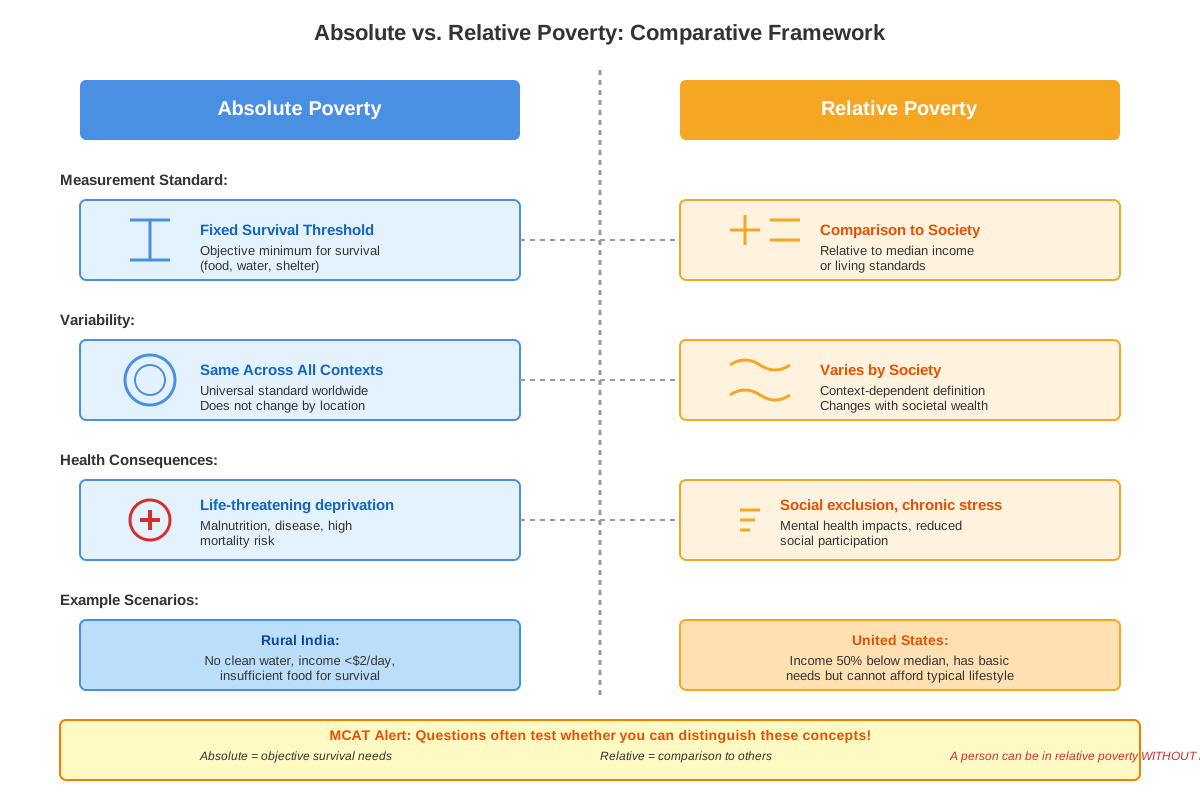
Absolute poverty establishes a universal minimum standard—if someone cannot afford food, water, and shelter necessary for survival, they experience absolute poverty regardless of their society's overall wealth. A person living on $1 per day experiences absolute poverty whether they live in Switzerland or Somalia.
Relative poverty defines deprivation in comparison to others within the same society. Someone might have adequate food and shelter but still experience relative poverty if their resources fall significantly below their society's median. In the United States, a family earning $30,000 annually might experience relative poverty (falling below 50% of median income) without experiencing absolute poverty (they can still meet basic survival needs).
MCAT Exam Tip: Questions often present scenarios and ask students to identify the type of poverty. Look for keywords: "survival," "basic needs," and "minimum standard" suggest absolute poverty, while "compared to others," "social exclusion," and "median income" suggest relative poverty.
Health Consequences of Absolute Poverty
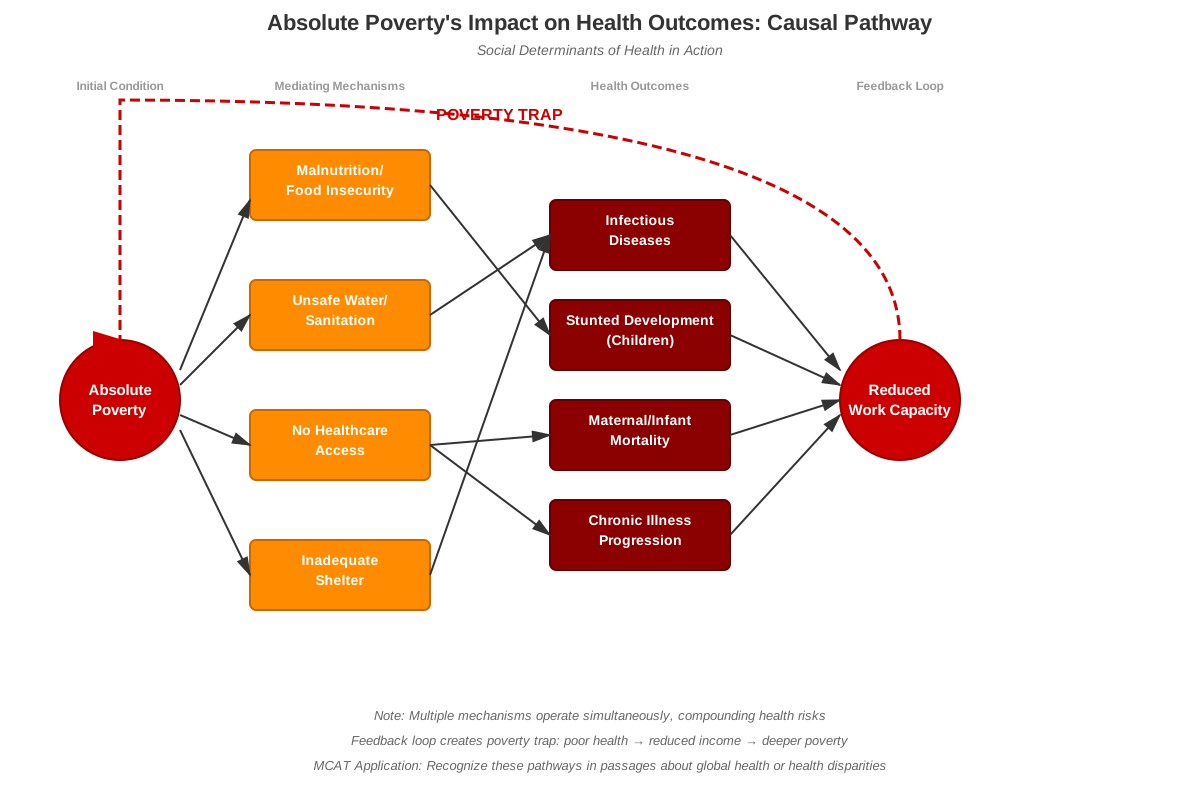
Absolute poverty creates a cascade of negative health outcomes through multiple mechanisms:
- Malnutrition and stunting: Insufficient caloric intake leads to protein-energy malnutrition, micronutrient deficiencies, and impaired physical and cognitive development in children
- Infectious disease vulnerability: Lack of clean water and sanitation increases exposure to waterborne diseases (cholera, typhoid, dysentery); crowded housing facilitates transmission of tuberculosis and respiratory infections
- Maternal and infant mortality: Absence of prenatal care, skilled birth attendance, and emergency obstetric services dramatically increases death rates
- Reduced life expectancy: Individuals in absolute poverty typically live 10-20 years less than those with adequate resources
- Chronic disease complications: Inability to afford medications or follow-up care for conditions like diabetes or hypertension leads to preventable complications
The relationship between absolute poverty and health operates through social determinants of health—the conditions in which people are born, grow, live, work, and age. Absolute poverty represents the most extreme manifestation of adverse social determinants.
Geographic Distribution and Demographics
Absolute poverty concentrates in specific global regions and demographic groups:
- Sub-Saharan Africa: Contains the highest proportion of people in absolute poverty (approximately 40% of the population)
- South Asia: Houses the largest absolute number of people in extreme poverty
- Rural areas: Poverty rates typically exceed urban rates, though urban slums also experience extreme deprivation
- Children: Disproportionately affected, with nearly half of those in absolute poverty being under age 18
- Women and girls: Experience higher poverty rates due to gender discrimination in education, employment, and resource access
Understanding these patterns helps students recognize absolute poverty in MCAT passages, which often feature scenarios from these contexts.
Structural and Systemic Causes
Absolute poverty results from complex interactions of structural factors rather than individual failings:
- Colonial legacies: Historical exploitation and resource extraction created lasting economic disadvantages
- Weak institutions: Absence of functioning governments, legal systems, and property rights
- Geographic disadvantages: Landlocked nations, areas prone to natural disasters, or regions with poor agricultural potential
- Conflict and instability: War and political violence destroy infrastructure and economic systems
- Global economic systems: Trade policies, debt burdens, and unequal exchange relationships perpetuate poverty
- Population growth: Rapid population increase can outpace economic development in resource-scarce areas
The MCAT emphasizes understanding poverty as a structural issue rather than attributing it to individual characteristics—a key sociological perspective that contrasts with individualistic explanations.
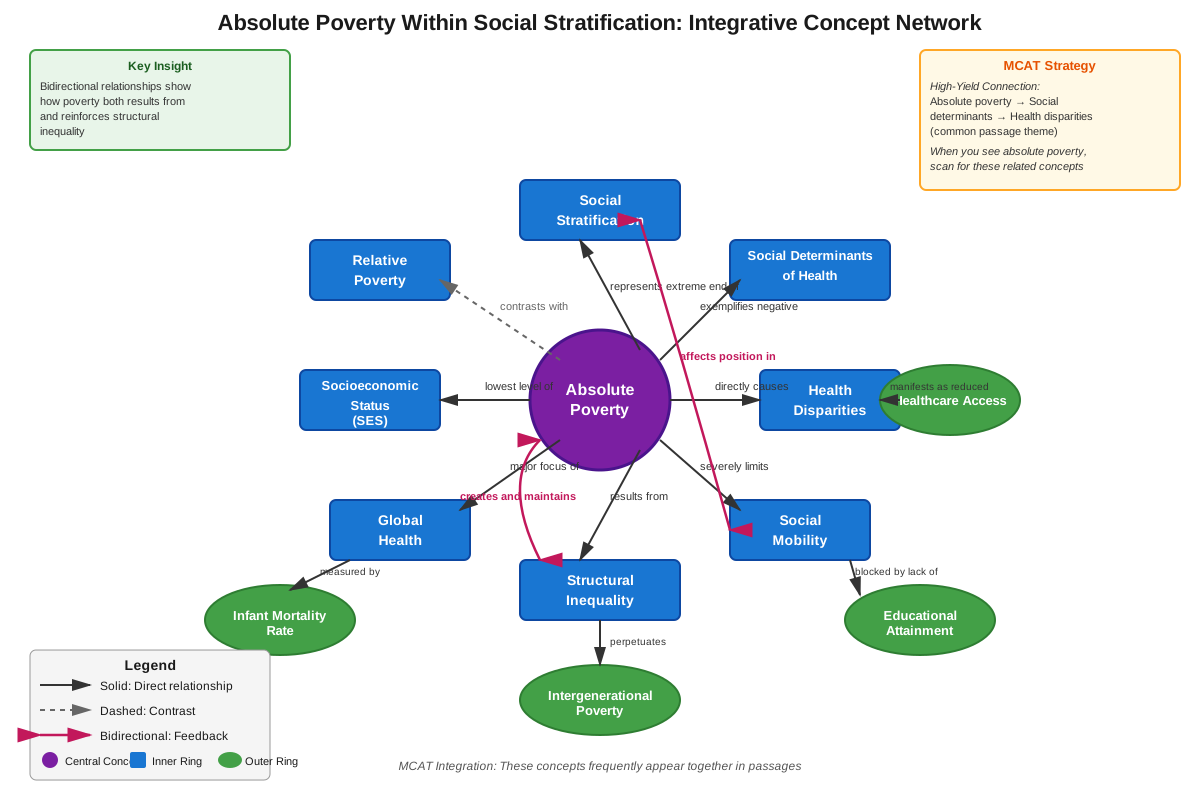
Concept Relationships
Absolute poverty sits at the intersection of multiple sociological concepts, forming a web of interconnected ideas essential for MCAT mastery:
Social Stratification → Absolute Poverty: Social stratification systems (class, caste, estate) create hierarchies where absolute poverty represents the bottom tier. Understanding stratification mechanisms helps explain how poverty is created and maintained across generations.
Absolute Poverty → Health Disparities: Absolute poverty directly causes health disparities through limited access to healthcare, nutrition, clean water, and safe environments. This connection appears frequently in MCAT passages linking social factors to disease prevalence.
Social Determinants of Health ↔ Absolute Poverty: These concepts are bidirectionally related—absolute poverty represents the most severe manifestation of adverse social determinants, while poor health can trap individuals in poverty through medical costs and reduced work capacity.
Absolute Poverty vs. Relative Poverty: These parallel concepts measure deprivation differently but often co-occur. Understanding their distinction enables accurate analysis of MCAT scenarios.
Absolute Poverty → Social Mobility: Extreme poverty creates barriers to upward mobility through limited educational access, poor health, and lack of social capital, perpetuating intergenerational poverty cycles.
Globalization ↔ Absolute Poverty: Globalization has complex effects—reducing absolute poverty in some regions through economic growth while potentially increasing inequality and relative poverty.
Social Capital → Absolute Poverty: Lack of social networks and community resources both results from and contributes to absolute poverty, creating isolation that compounds material deprivation.
This interconnected framework helps students recognize that MCAT questions about absolute poverty often test multiple concepts simultaneously, requiring integrated understanding rather than isolated memorization.
High-Yield Facts
⭐ Absolute poverty is defined by a fixed, objective standard of deprivation (inability to meet basic survival needs), unlike relative poverty which compares individuals to societal norms
⭐ The World Bank's international poverty line is currently $2.15 per day (2017 PPP), used to measure extreme poverty globally
⭐ Absolute poverty directly causes increased mortality, morbidity, and reduced life expectancy through mechanisms involving malnutrition, infectious disease, and lack of healthcare access
⭐ Sub-Saharan Africa has the highest proportion of people living in absolute poverty, while South Asia has the largest absolute number
⭐ Absolute poverty represents a structural/systemic issue rather than individual failure—caused by factors like weak institutions, colonial legacies, and global economic inequalities
- Approximately 700 million people globally live in absolute poverty (below $2.15/day)
- Children comprise nearly half of those experiencing absolute poverty worldwide
- Absolute poverty rates have declined significantly over the past 30 years, primarily due to economic growth in China and India
- Women experience higher rates of absolute poverty than men due to systemic gender discrimination
- Absolute poverty creates intergenerational cycles through impaired child development, limited educational access, and poor health
- The capability approach (Amartya Sen) expanded poverty measurement beyond income to include human functionings and freedoms
- Absolute poverty correlates strongly with preventable diseases like malaria, tuberculosis, and diarrheal illnesses
- Access to clean water and sanitation—often absent in absolute poverty—prevents more deaths than medical interventions
- Absolute poverty can exist even in wealthy nations, though it's far more prevalent in low-income countries
- The Sustainable Development Goals (SDGs) aim to eliminate absolute poverty globally by 2030
Quick check — test yourself on Absolute poverty so far.
Try Flashcards →Common Misconceptions
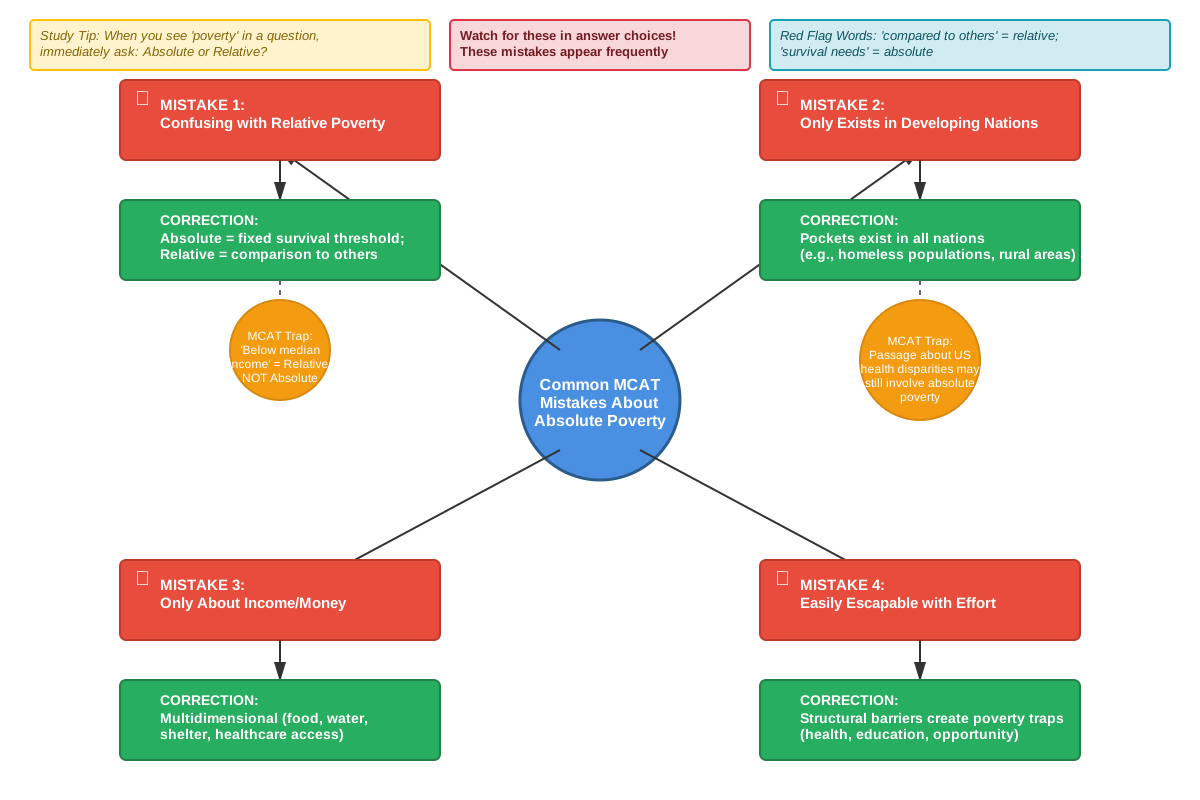
Misconception: Absolute poverty and relative poverty are the same thing, just measured differently.
Correction: These are fundamentally different concepts. Absolute poverty uses a fixed standard based on survival needs that remains constant across societies, while relative poverty compares individuals to others in their specific society. Someone can experience relative poverty without absolute poverty (having basic needs met but earning much less than societal median), or theoretically experience absolute poverty without relative poverty (if everyone in a society lacks basic resources).
Misconception: Absolute poverty only exists in developing countries.
Correction: While absolute poverty is far more prevalent in low-income nations, it exists in pockets within wealthy countries as well. Homeless populations, individuals in extreme rural poverty, and some marginalized communities in developed nations may lack access to adequate food, clean water, or shelter—meeting the definition of absolute poverty despite living in affluent societies.
Misconception: Absolute poverty is primarily caused by individual laziness or poor decision-making.
Correction: Sociology emphasizes structural and systemic causes of absolute poverty, including colonial exploitation, weak institutions, geographic disadvantages, conflict, and global economic inequalities. The MCAT consistently frames poverty as a social/structural issue rather than an individual failing—this sociological perspective is critical for exam success.
Misconception: The poverty line ($2.15/day) represents a comfortable living standard that meets all basic needs.
Correction: The international poverty line represents an extremely minimal threshold—barely enough for survival. People living at this level experience severe deprivation and lack resources for anything beyond the most basic food and shelter. The line marks extreme poverty, not adequate living conditions.
Misconception: If absolute poverty is declining globally, it's no longer an important health issue.
Correction: Despite progress, over 700 million people still live in absolute poverty, experiencing preventable suffering and death. Additionally, those just above the poverty line remain extremely vulnerable. For the MCAT, absolute poverty remains highly relevant because it illustrates fundamental connections between social conditions and health outcomes—principles that apply across the socioeconomic spectrum.
Misconception: Absolute poverty and food insecurity are identical concepts.
Correction: Food insecurity (uncertain access to adequate food) is one component of absolute poverty but doesn't encompass the full concept. Absolute poverty includes lack of shelter, clean water, healthcare, and other basic needs beyond food. Someone could experience food insecurity without meeting the full criteria for absolute poverty if they have shelter and other resources.
Worked Examples
Example 1: Distinguishing Poverty Types
Scenario: A research study examines two families. Family A lives in rural Malawi, earning $1.50 per day. They lack access to clean water, and their children show signs of malnutrition. Family B lives in the United States, earning $25,000 annually. They have adequate food and housing but cannot afford many items their peers consider normal, leading to social exclusion. Which family experiences absolute poverty, and which experiences relative poverty?
Analysis:
Step 1: Identify indicators of absolute poverty—inability to meet basic survival needs (food, water, shelter, healthcare).
Family A shows clear signs: income below international poverty line ($2.15/day), lack of clean water, and malnutrition. These indicate inability to meet basic survival needs.
Step 2: Identify indicators of relative poverty—deprivation compared to societal standards, social exclusion, falling below median income.
Family B has adequate food and housing (basic needs met) but experiences deprivation relative to their society and social exclusion from inability to afford items peers consider normal.
Step 3: Apply definitions.
Family A experiences absolute poverty—they cannot meet the fixed, objective standard for basic survival needs.
Family B experiences relative poverty—they are deprived compared to others in their society but meet basic survival needs.
Answer: Family A experiences absolute poverty; Family B experiences relative poverty.
Connection to Learning Objectives: This example demonstrates the ability to distinguish between poverty types using specific indicators, apply definitions to realistic scenarios, and recognize that these concepts can occur independently.
Example 2: Analyzing Health Consequences
Scenario: An MCAT passage describes a village in rural Bangladesh where 80% of residents live on less than $2 per day. The passage notes high rates of diarrheal disease, infant mortality three times the national average, and widespread childhood stunting. A public health intervention provides water filtration systems and basic sanitation infrastructure. Two years later, diarrheal disease rates have decreased by 60%, and infant mortality has declined by 40%. Which of the following best explains these improvements?
A) The intervention increased relative poverty by creating inequality between those with and without filtration systems
B) Addressing absolute poverty through improved access to clean water reduced exposure to waterborne pathogens
C) The intervention primarily affected relative poverty by changing social comparisons within the village
D) Genetic factors were more important than poverty in determining health outcomes
Analysis:
Step 1: Identify the poverty type in the scenario.
Income below $2/day (near international poverty line), combined with lack of basic sanitation and clean water, indicates absolute poverty. The health consequences (diarrheal disease, high infant mortality, stunting) are classic outcomes of absolute poverty.
Step 2: Analyze the intervention mechanism.
Water filtration and sanitation infrastructure directly address basic survival needs—specifically, access to clean water. This targets absolute poverty by meeting a fundamental need that was previously unmet.
Step 3: Connect intervention to health outcomes.
Diarrheal disease is primarily caused by waterborne pathogens from contaminated water. Providing clean water directly reduces pathogen exposure, explaining the 60% decrease. Infant mortality often results from dehydration due to diarrheal disease, explaining the 40% decline.
Step 4: Evaluate answer choices.
A) Incorrect—the intervention addressed absolute poverty (basic needs), not relative poverty (social comparisons).
B) Correct—directly connects addressing absolute poverty (clean water access) to reduced pathogen exposure and improved health outcomes.
C) Incorrect—focuses on relative poverty, which isn't the primary issue in this scenario.
D) Incorrect—contradicts the sociological perspective that structural factors (poverty) drive health outcomes; also contradicts the data showing intervention effectiveness.
Answer: B
Connection to Learning Objectives: This example demonstrates applying absolute poverty concepts to exam-style questions, connecting poverty to health outcomes through specific mechanisms, and distinguishing absolute from relative poverty in complex scenarios.
Exam Strategy
Approaching MCAT Questions on Absolute Poverty
Step 1: Identify poverty indicators in the question stem or passage
- Look for income levels (especially references to $2-3/day or less)
- Note mentions of lacking basic needs: food, water, shelter, healthcare
- Watch for geographic clues (sub-Saharan Africa, South Asia, rural areas)
- Recognize health outcomes associated with extreme deprivation (malnutrition, high infant mortality, preventable infectious diseases)
Step 2: Determine if the question asks about absolute or relative poverty
- Absolute poverty questions focus on survival needs, fixed standards, and basic resources
- Relative poverty questions emphasize social comparisons, inequality within societies, and median income
- Some questions test your ability to distinguish between these concepts
Step 3: Apply the structural/systemic perspective
- MCAT sociology consistently frames poverty as a structural issue, not individual failure
- Eliminate answer choices that blame individuals for poverty
- Favor answers emphasizing institutions, systems, historical factors, and social determinants
Step 4: Connect to health outcomes
- Many absolute poverty questions link to health disparities, disease prevalence, or healthcare access
- Trace the causal pathway: poverty → lack of resources → specific health mechanism → outcome
- Consider both direct effects (malnutrition) and indirect effects (inability to afford treatment)
Trigger Words and Phrases
Words indicating absolute poverty:
- "Survival," "basic needs," "minimum standard," "extreme poverty"
- "International poverty line," "$2/day," "subsistence"
- "Malnutrition," "lack of clean water," "inadequate shelter"
- "Developing nations," "low-income countries," "sub-Saharan Africa"
Words indicating relative poverty:
- "Compared to," "median income," "social exclusion," "inequality"
- "Cannot afford items others consider normal"
- "Deprived relative to society"
Words indicating structural causes (favor these answers):
- "Systemic," "institutional," "structural," "historical," "colonial legacy"
- "Social determinants," "access barriers," "resource distribution"
Process of Elimination Tips
- Eliminate answers that confuse absolute and relative poverty: If the scenario clearly describes inability to meet basic survival needs, eliminate answers discussing social comparisons or relative deprivation.
- Eliminate individualistic explanations: Answers attributing poverty to personal laziness, poor choices, or character flaws contradict sociological perspectives and are typically incorrect.
- Eliminate answers that ignore health connections: When passages describe both poverty and health outcomes, answers that fail to connect these elements are usually wrong.
- Favor answers with specific mechanisms: Vague answers are often incorrect; favor answers that specify how poverty leads to particular outcomes through identifiable pathways.
Time Allocation Advice
Absolute poverty questions typically require 60-90 seconds:
- 15-20 seconds: Read and identify poverty type and key indicators
- 20-30 seconds: Analyze the specific question being asked and locate relevant passage information
- 20-30 seconds: Evaluate answer choices using elimination strategies
- 10 seconds: Confirm your answer addresses the question and matches passage information
Don't overthink these questions—they usually test straightforward application of definitions and concepts rather than complex reasoning.
Memory Techniques
Mnemonic for Absolute Poverty Characteristics: "WASH-FC"
Water (lack of clean water)
Adequate nutrition (insufficient food/calories)
Shelter (inadequate housing)
Healthcare (no access to medical services)
Fixed standard (objective, doesn't change across societies)
Clothes (insufficient clothing for protection)
Visualization Strategy: The Survival Pyramid
Visualize a pyramid with absolute poverty at the base:
- Base (Absolute Poverty): Cannot meet survival needs—imagine someone without food, water, or shelter
- Middle (Above Poverty Line): Basic needs met but limited resources
- Top (Affluence): Abundant resources beyond basic needs
When answering questions, mentally place the scenario's subjects on this pyramid. If they're at the base (survival threatened), it's absolute poverty.
Acronym for Distinguishing Poverty Types: "FIXED vs. FLEX"
Absolute Poverty = FIXED
- Fixed standard across societies
- International poverty line
- Xtreme deprivation
- Existence threatened
- Defined by survival needs
Relative Poverty = FLEX
- Flexible (varies by society)
- Less than others in society
- Exclusion from social norms
- X-compared to median income
Memory Hook for Health Consequences: "MILD"
Malnutrition and stunting
Infectious diseases (waterborne, respiratory)
Life expectancy reduced
Death rates increased (maternal, infant mortality)
Summary
Absolute poverty represents a fixed, objective standard of deprivation where individuals cannot meet basic survival needs including adequate food, clean water, shelter, and healthcare. Defined by the World Bank as living on less than $2.15 per day, absolute poverty affects over 700 million people globally, concentrated primarily in sub-Saharan Africa and South Asia. Unlike relative poverty, which measures deprivation compared to societal norms, absolute poverty establishes a universal minimum threshold that remains constant across time and place. For the MCAT, understanding absolute poverty is essential because it directly connects to health disparities, disease prevalence, and healthcare access—appearing frequently in passages about global health, social determinants of health, and health inequalities. The concept must be understood from a structural perspective, recognizing that poverty results from systemic factors like weak institutions, colonial legacies, and global economic inequalities rather than individual failings. Absolute poverty causes severe health consequences through multiple mechanisms: malnutrition impairs development, lack of clean water increases infectious disease exposure, and absence of healthcare access leads to preventable mortality. Students must be able to distinguish absolute from relative poverty, identify poverty indicators in passages, connect poverty to specific health outcomes through causal pathways, and apply sociological frameworks emphasizing structural rather than individualistic explanations.
Key Takeaways
- Absolute poverty is defined by a fixed, objective standard (inability to meet basic survival needs like food, water, shelter, healthcare), distinguishing it from relative poverty which uses social comparisons
- The international poverty line ($2.15/day) serves as the primary measurement tool for identifying extreme poverty globally, though other approaches like basic needs assessment also exist
- Absolute poverty directly causes poor health outcomes through mechanisms including malnutrition, infectious disease exposure, and lack of healthcare access—making it a critical social determinant of health
- Over 700 million people live in absolute poverty globally, concentrated in sub-Saharan Africa and South Asia, with children and women disproportionately affected
- Sociology frames absolute poverty as a structural/systemic issue caused by factors like weak institutions, colonial legacies, and global inequalities—not individual failings
- MCAT questions test the ability to distinguish poverty types, identify poverty indicators in passages, and connect poverty to health outcomes through specific causal pathways
- Absolute poverty appears frequently in MCAT passages about global health, infectious disease prevalence, maternal/child health, and healthcare access barriers
Related Topics
Relative Poverty: Understanding how deprivation is measured through social comparisons and median income provides essential contrast to absolute poverty, enabling accurate identification of poverty types in MCAT scenarios.
Social Determinants of Health: Absolute poverty represents the most extreme manifestation of adverse social determinants; mastering this broader framework helps explain how social conditions influence health across the socioeconomic spectrum.
Health Disparities: Absolute poverty creates and perpetuates health disparities both globally and within nations; understanding these connections enables analysis of inequality in health outcomes.
Social Stratification Systems: Examining how societies organize hierarchically (class, caste, estate systems) provides context for understanding where absolute poverty fits within inequality structures.
Global Health and Epidemiology: Many MCAT passages about infectious disease prevalence, maternal mortality, and child health outcomes feature absolute poverty as a key contextual factor.
Social Mobility: Understanding barriers to upward mobility helps explain how absolute poverty perpetuates across generations through limited education, poor health, and lack of social capital.
Globalization and Development: Examining how global economic integration affects poverty rates connects absolute poverty to broader sociological themes about modernization and economic change.
Practice CTA
Now that you've mastered the core concepts of absolute poverty, it's time to reinforce your learning through active practice. Complete the practice questions and flashcards for this topic to test your ability to distinguish poverty types, identify indicators in complex passages, and apply concepts to exam-style scenarios. Remember, the MCAT rewards not just knowledge but the ability to apply concepts quickly and accurately under time pressure—practice is essential for building that skill. You've built a strong foundation; now solidify it through deliberate practice. Your understanding of absolute poverty will serve you well not only on test day but throughout your medical career as you work to address the social factors that profoundly influence your patients' health.
Sign up free to keep reading
Create a free AnvayaPrep account to finish this MCAT guide on Absolute poverty — plus flashcards and practice questions.