Overview
Poverty represents one of the most critical concepts within Social Stratification and Inequality for the MCAT Sociology curriculum. Understanding poverty extends beyond simple economic definitions to encompass complex sociological frameworks that examine how individuals and groups experience material deprivation, social exclusion, and limited access to resources necessary for full participation in society. The MCAT tests not only definitional knowledge but also the ability to analyze how poverty intersects with health outcomes, healthcare access, social mobility, and broader systems of inequality.
For medical professionals, comprehending poverty is essential because socioeconomic status consistently emerges as one of the strongest predictors of health outcomes across virtually all disease categories. Poverty influences everything from prenatal care access to chronic disease management, mental health outcomes, and life expectancy. The MCAT Psychological, Social, and Biological Foundations of Behavior section frequently presents passages examining health disparities, patient decision-making under resource constraints, and the social determinants of health—all of which require sophisticated understanding of poverty's multidimensional nature.
This topic connects intimately with other sociology concepts including social class, social capital, cultural capital, social mobility, discrimination, and institutional inequality. Poverty serves as both a consequence and a cause within systems of stratification, creating feedback loops that perpetuate disadvantage across generations. Mastering this topic enables students to analyze complex sociological scenarios, interpret research findings about health disparities, and understand the structural factors that shape individual health behaviors and outcomes.
Learning Objectives
- [ ] Define Poverty using accurate Sociology terminology
- [ ] Explain why Poverty matters for the MCAT
- [ ] Apply Poverty to exam-style questions
- [ ] Identify common mistakes related to Poverty
- [ ] Connect Poverty to related Sociology concepts
- [ ] Distinguish between absolute poverty and relative poverty with clinical examples
- [ ] Analyze the relationship between poverty and health outcomes using sociological frameworks
- [ ] Evaluate how different theoretical perspectives (functionalist, conflict, symbolic interactionist) explain poverty's persistence
- [ ] Apply the concept of the poverty line and its limitations to real-world scenarios
Prerequisites
- Basic understanding of social stratification: Necessary to contextualize poverty within broader systems of inequality and hierarchical social organization
- Familiarity with socioeconomic status (SES): Poverty represents the lower extreme of SES, which combines income, education, and occupational prestige
- Knowledge of social institutions: Understanding how institutions (healthcare, education, legal systems) function helps explain how poverty is perpetuated
- Awareness of health disparities: Provides context for why poverty matters specifically for medical professionals and MCAT test-takers
Why This Topic Matters
Clinical and Real-World Significance
Poverty directly impacts virtually every aspect of health and healthcare delivery. Patients living in poverty face barriers including inability to afford medications, lack of transportation to appointments, food insecurity affecting chronic disease management, housing instability complicating treatment adherence, and increased exposure to environmental hazards. Physicians who understand poverty's multidimensional nature can provide more effective, culturally competent care and advocate for systemic changes that address root causes of health disparities. The social determinants of health framework—increasingly emphasized in medical education—places poverty at the center of understanding population health outcomes.
Exam Statistics and Question Types
Poverty appears in approximately 15-20% of MCAT Sociology passages, making it one of the highest-yield topics in the discipline. Questions typically appear in three formats: (1) passage-based questions requiring interpretation of research on health disparities or social mobility, (2) discrete questions testing definitional knowledge and theoretical perspectives, and (3) application questions presenting clinical vignettes where socioeconomic factors influence patient behavior or outcomes. The MCAT particularly favors questions that require distinguishing between individual-level and structural explanations for poverty, understanding measurement challenges, and connecting poverty to health outcomes.
Common Exam Appearances
Poverty frequently appears in passages discussing: longitudinal studies tracking health outcomes across socioeconomic groups, research on neighborhood effects and concentrated disadvantage, studies examining healthcare utilization patterns, investigations of educational achievement gaps, analyses of intergenerational mobility, and examinations of policy interventions. The MCAT often presents data tables showing correlations between income levels and various health metrics, requiring students to interpret findings while avoiding causal oversimplification.
Core Concepts
Defining Poverty
Poverty refers to the state of having insufficient material resources to meet basic needs and participate fully in society. However, this seemingly straightforward definition masks considerable complexity in how poverty is conceptualized, measured, and experienced. Sociologists distinguish between multiple dimensions and types of poverty, each with distinct implications for understanding inequality and health.
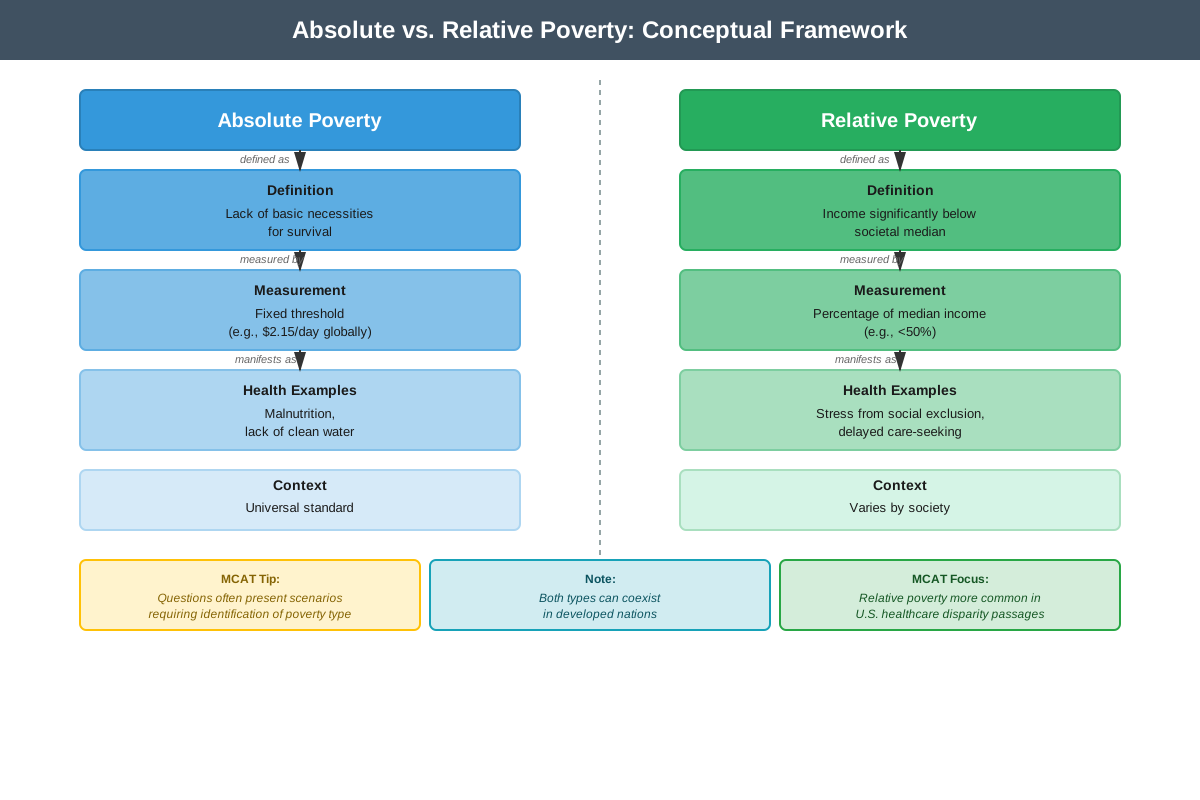
Absolute poverty defines poverty as the inability to meet basic survival needs—food, shelter, clean water, and minimal healthcare. This approach establishes a fixed threshold based on the cost of essential goods and services. The World Bank's international poverty line (currently $2.15 per day) exemplifies absolute poverty measurement. Absolute poverty focuses on material deprivation severe enough to threaten survival and basic functioning.
Relative poverty defines poverty in relation to the living standards of the broader society. Individuals experience relative poverty when their resources fall substantially below the average, preventing full social participation even if basic survival needs are met. For example, lacking internet access might not threaten survival but creates significant disadvantage in contemporary society. Relative poverty acknowledges that poverty is socially constructed and varies across contexts—what constitutes poverty in wealthy nations differs from poverty in developing countries.
The poverty line (or poverty threshold) represents the official income level below which individuals or families are classified as poor. In the United States, the federal poverty line is calculated based on the cost of a minimum food budget multiplied by three, adjusted for family size. For 2024, the poverty line for a family of four is approximately $30,000 annually. However, this measure faces criticism for failing to account for geographic cost-of-living variations, childcare expenses, medical costs, and other contemporary necessities beyond food.
Theoretical Perspectives on Poverty
Different sociological paradigms offer competing explanations for poverty's existence and persistence, each with distinct implications for policy and intervention.
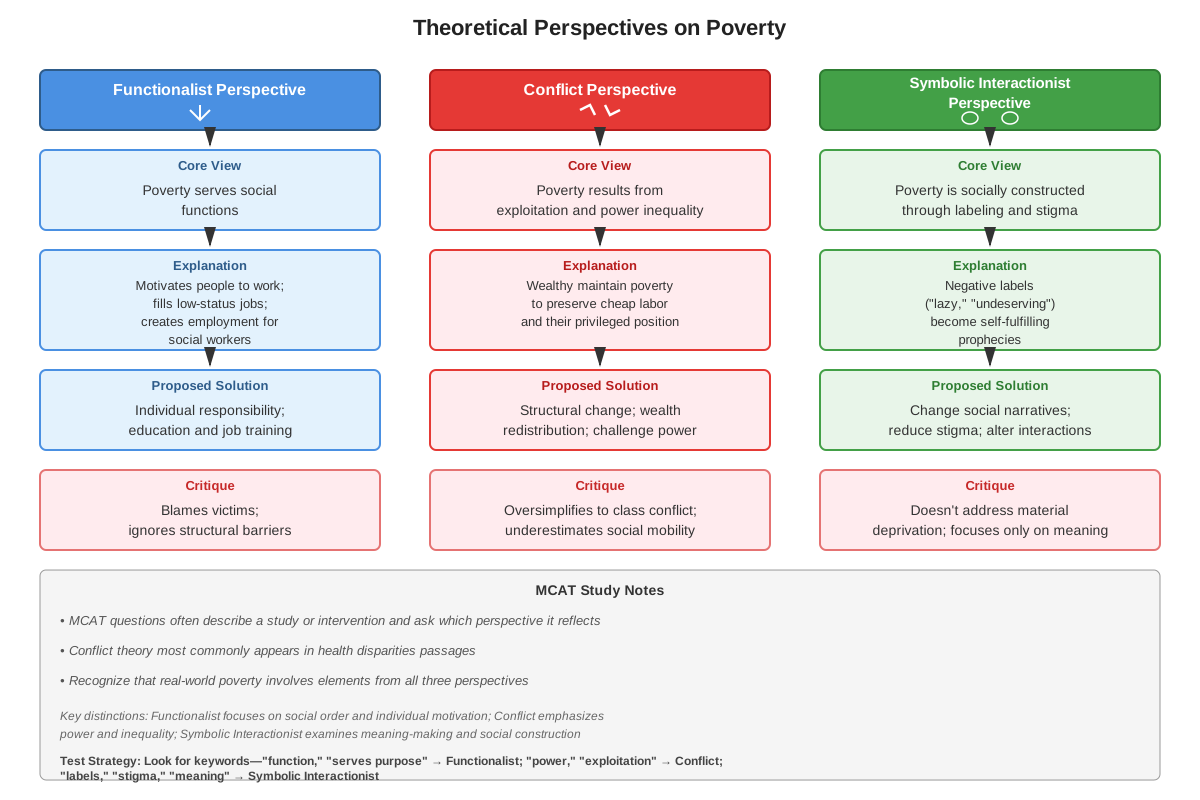
Functionalist theory views poverty as serving certain functions for society, though this perspective is controversial. From this view, poverty ensures that undesirable jobs get filled (someone must do society's "dirty work"), creates jobs in social services, and motivates individuals to work hard to avoid poverty. Critics argue this perspective blames victims and ignores structural barriers that trap people in poverty regardless of individual effort.
Conflict theory explains poverty as resulting from exploitation and unequal power distribution. This perspective emphasizes how dominant groups maintain advantages by limiting others' access to resources, education, and opportunities. Poverty persists because it benefits those with power—providing cheap labor, maintaining social hierarchies, and preventing challenges to existing power structures. Conflict theorists focus on structural factors like discrimination, inadequate minimum wages, and policies that favor wealth accumulation by the already-wealthy.
Symbolic interactionism examines how poverty is experienced, interpreted, and stigmatized at the micro level. This perspective explores how poverty shapes identity, how stereotypes about the poor influence interactions, and how individuals navigate the stigma of poverty. The concept of social exclusion—the process by which individuals are systematically blocked from rights, opportunities, and resources normally available to society members—connects to symbolic interactionist concerns about how poverty affects social participation and identity.
Culture of Poverty Theory
The culture of poverty theory, proposed by anthropologist Oscar Lewis, suggests that poverty creates distinct cultural patterns—values, beliefs, and behaviors—that perpetuate disadvantage across generations. According to this controversial theory, individuals raised in poverty develop attitudes (present-orientation, fatalism, distrust of institutions) that hinder upward mobility even when opportunities arise. This theory has been heavily criticized for victim-blaming, ignoring structural constraints, and misinterpreting adaptive responses to poverty as cultural deficits. Contemporary sociologists emphasize that behaviors associated with poverty typically represent rational adaptations to constrained circumstances rather than internalized cultural values.
Measuring and Experiencing Poverty
| Measurement Approach | Definition | Advantages | Limitations |
|---|---|---|---|
| Income-based | Uses income thresholds (poverty line) | Simple, quantifiable, allows comparisons | Ignores wealth, assets, non-cash benefits |
| Consumption-based | Measures actual spending on goods/services | Reflects living standards more directly | Difficult to measure accurately |
| Multidimensional | Combines income, education, health, housing | Captures poverty's complexity | More difficult to calculate and compare |
| Subjective | Based on individuals' self-assessment | Captures lived experience | Not standardized, varies by expectations |
Poverty and Social Mobility
Social mobility—movement between social class positions—connects intimately with poverty. Intergenerational mobility refers to changes in social position between parents and children, while intragenerational mobility describes changes within an individual's lifetime. Research consistently shows that poverty significantly constrains upward mobility through multiple mechanisms:
- Educational barriers: Under-resourced schools, inability to afford college, need to work rather than study
- Social capital deficits: Limited access to networks that provide job opportunities and mentorship
- Cultural capital gaps: Unfamiliarity with dominant cultural codes valued in educational and professional settings
- Health disadvantages: Chronic stress, inadequate healthcare, and environmental hazards that impair cognitive development and physical health
- Neighborhood effects: Concentrated poverty creates environments with limited opportunities, higher crime, and fewer positive role models
Poverty and Health: The Fundamental Cause Theory
Fundamental cause theory explains why socioeconomic status, including poverty, maintains strong associations with health outcomes even as specific diseases and risk factors change over time. According to this theory, SES represents a "fundamental cause" of health disparities because it determines access to resources—knowledge, money, power, prestige, and beneficial social connections—that can be used to avoid risks and adopt protective strategies regardless of the specific health threats present in any era.
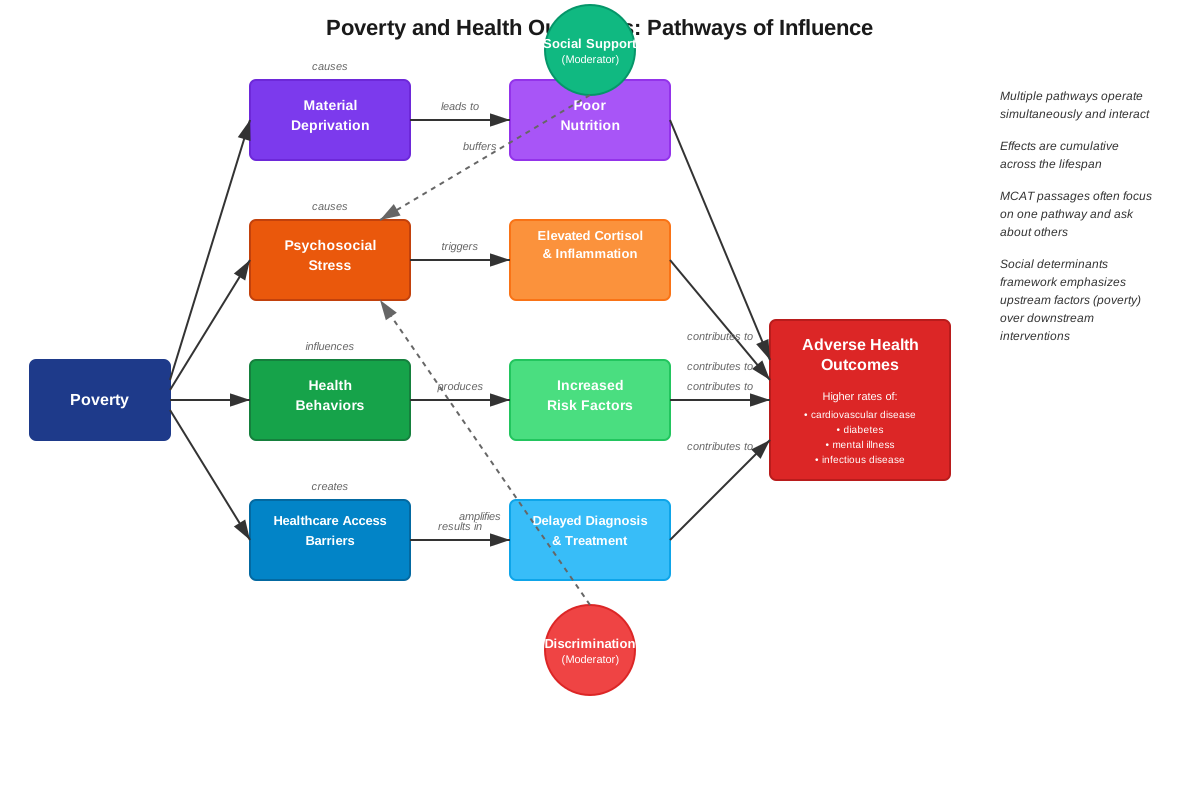
Poverty affects health through multiple pathways:
- Material deprivation: Inability to afford nutritious food, safe housing, healthcare, and medications
- Chronic stress: Financial insecurity, discrimination, and daily hassles activate stress response systems, leading to allostatic load
- Environmental exposures: Greater likelihood of living near pollution sources, in substandard housing with lead paint or mold
- Healthcare access: Lack of insurance, inability to take time off work for appointments, transportation barriers
- Health behaviors: Limited resources for exercise facilities, healthy food options (food deserts), and stress management
Concentrated Poverty and Neighborhood Effects
Concentrated poverty occurs when poverty is geographically clustered, creating neighborhoods where most residents are poor. This spatial concentration amplifies poverty's negative effects through mechanisms including:
- Social isolation from mainstream opportunities and networks
- Reduced tax base leading to inadequate public services
- Limited commercial investment and job opportunities
- Higher crime rates and violence exposure
- Peer effects that normalize disadvantage
- Collective socialization challenges with fewer successful role models
The neighborhood effects literature demonstrates that living in high-poverty areas produces negative outcomes beyond individual family poverty, affecting educational achievement, employment prospects, health, and even mortality rates.
Concept Relationships
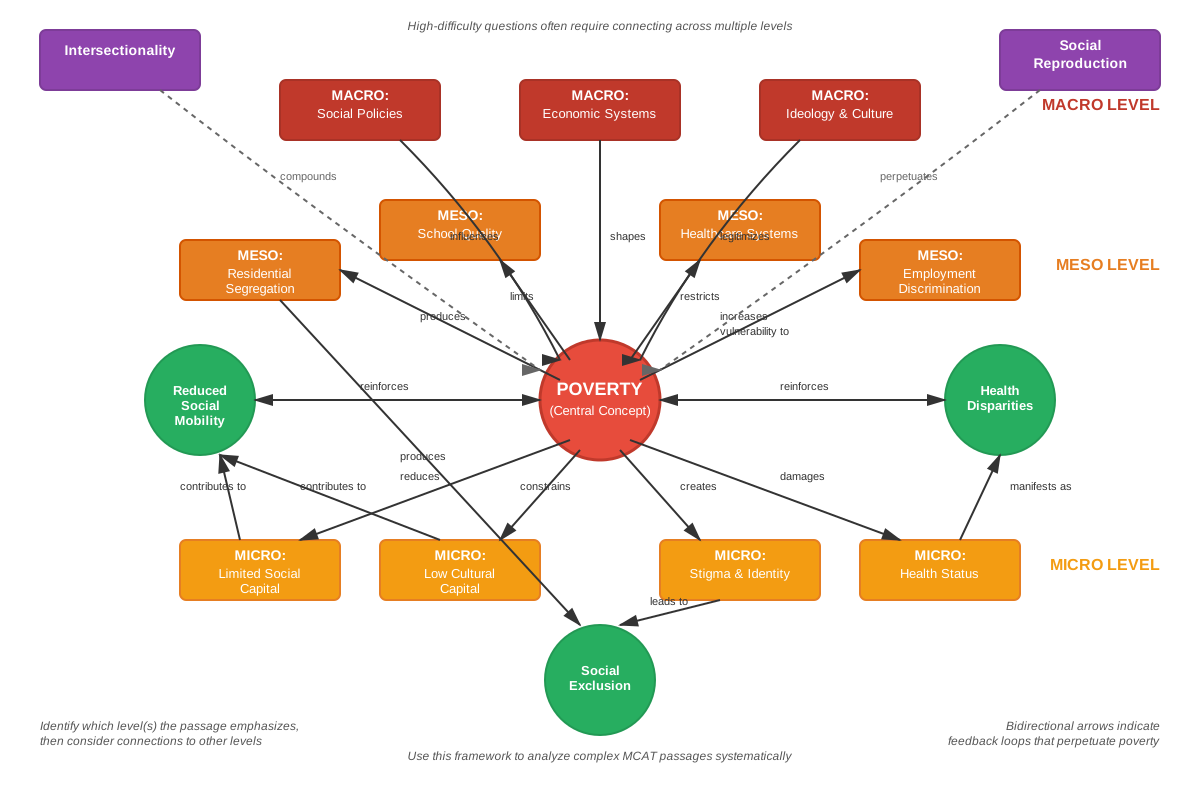
Poverty sits at the intersection of multiple sociological concepts, serving as both cause and consequence within systems of inequality. Social stratification creates the hierarchical structure within which poverty exists as the bottom tier, while social class provides the categorical framework for understanding poverty's position relative to working, middle, and upper classes. Poverty directly constrains social mobility, creating barriers that prevent upward movement and sometimes trap families in poverty across generations.
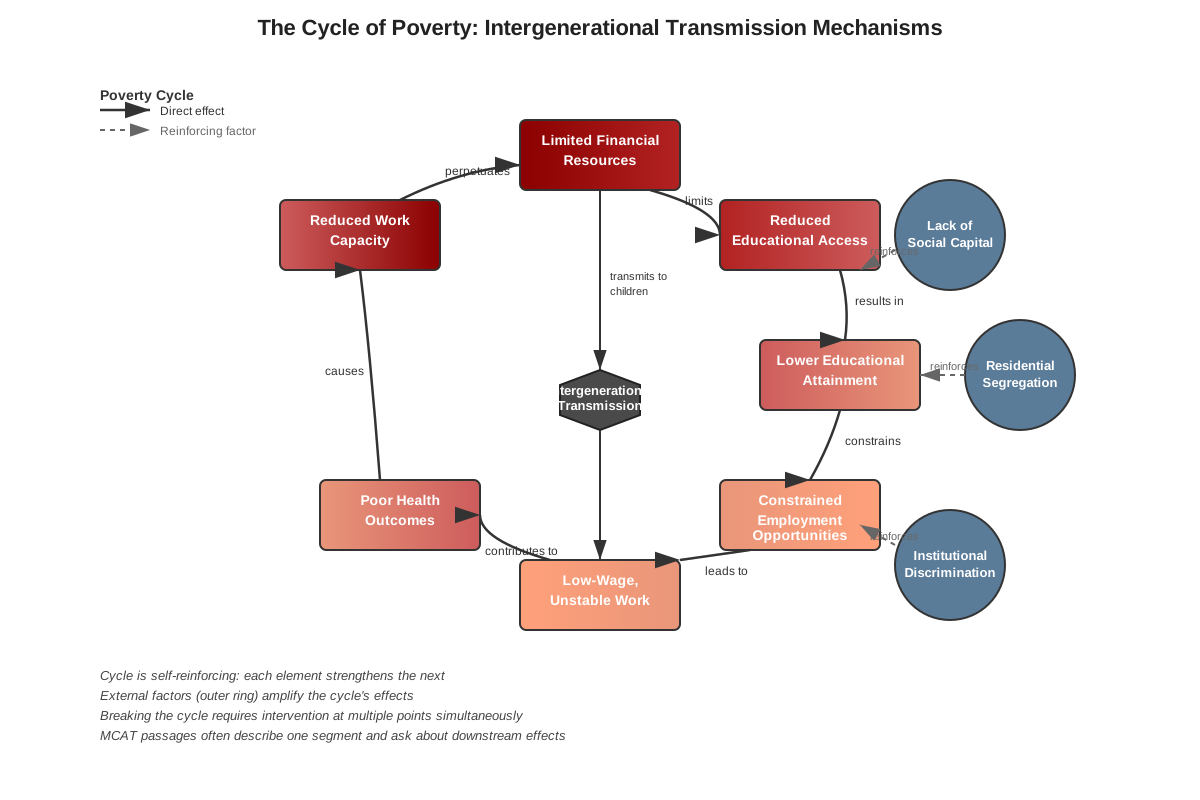
The relationship flows bidirectionally: Discrimination based on race, gender, or other characteristics increases poverty risk → Poverty limits access to quality education → Limited education restricts occupational opportunities → Restricted opportunities perpetuate low socioeconomic status → Low SES increases exposure to health risks → Poor health limits work capacity → Limited work capacity deepens poverty. This cyclical pattern illustrates how poverty becomes self-perpetuating through multiple reinforcing mechanisms.
Social capital (networks and relationships that provide resources) and cultural capital (knowledge, skills, and credentials valued by dominant groups) both mediate poverty's effects. Individuals in poverty typically have less social capital connecting them to opportunity structures and less cultural capital recognized by gatekeepers in education and employment. Meanwhile, institutional discrimination in housing, lending, criminal justice, and healthcare systems systematically disadvantages those in poverty, creating structural barriers independent of individual characteristics or efforts.
The connection to health operates through social determinants of health, with poverty influencing virtually every determinant: education, healthcare access, neighborhood environment, food security, housing quality, and exposure to violence. Understanding these interconnections enables sophisticated analysis of how poverty operates within broader systems of inequality.
Quick check — test yourself on Poverty so far.
Try Flashcards →High-Yield Facts
⭐ Absolute poverty refers to inability to meet basic survival needs, while relative poverty refers to having substantially less than the societal average, preventing full social participation.
⭐ The U.S. poverty line is calculated based on three times the cost of a minimum food budget, adjusted for family size, but is criticized for not accounting for geographic variation, childcare, or medical expenses.
⭐ Fundamental cause theory explains why socioeconomic status maintains strong associations with health across time and changing disease patterns—SES determines access to resources that can be deployed to avoid risks and adopt protective strategies.
⭐ Concentrated poverty amplifies negative effects beyond individual family poverty through mechanisms including social isolation, reduced public services, limited commercial investment, and negative peer effects.
⭐ Culture of poverty theory has been largely discredited because it attributes poverty to cultural values rather than structural constraints and misinterprets adaptive responses as cultural deficits.
⭐ Poverty constrains social mobility through multiple mechanisms: educational barriers, social capital deficits, cultural capital gaps, health disadvantages, and neighborhood effects.
- Relative poverty is more common in developed nations, while absolute poverty remains prevalent in developing countries, though both types exist everywhere.
- The poverty rate varies significantly by demographic characteristics: children, racial minorities, single-parent households, and individuals with disabilities experience disproportionately high poverty rates.
- Intergenerational poverty (poverty persisting across generations) results from cumulative disadvantages in education, health, social networks, and wealth accumulation.
- Social exclusion extends beyond material deprivation to include systematic blocking from rights, opportunities, and resources normally available to society members.
- Poverty increases risk for virtually all negative health outcomes including infant mortality, chronic diseases, mental illness, substance abuse, and premature death.
- Food deserts—areas lacking access to affordable, nutritious food—disproportionately affect low-income neighborhoods and contribute to health disparities.
- The working poor—individuals employed but still below the poverty line—demonstrate that employment alone does not guarantee escape from poverty when wages are insufficient.
Common Misconceptions
Misconception: Poverty results primarily from individual laziness or poor choices. → Correction: Poverty results from complex structural factors including inadequate wages, discrimination, limited educational opportunities, and systemic barriers. Most people in poverty work (the "working poor"), and individual effort cannot overcome structural constraints like lack of affordable childcare, healthcare costs, or discriminatory hiring practices.
Misconception: The poverty line accurately identifies all people struggling economically. → Correction: The poverty line significantly underestimates economic hardship because it fails to account for geographic cost-of-living differences, childcare expenses, medical costs, and transportation needs. Many families earning above the poverty line still cannot afford basic necessities. Researchers often use 200% of the poverty line as a more realistic threshold for economic security.
Misconception: Culture of poverty theory accurately explains why poverty persists across generations. → Correction: Culture of poverty theory has been largely discredited because it misattributes poverty to cultural values rather than structural constraints. What appears as "cultural" patterns typically represent rational adaptations to constrained circumstances. Intergenerational poverty persists primarily due to structural factors: inadequate schools in poor neighborhoods, lack of wealth to pass to children, limited social networks connecting to opportunities, and discrimination.
Misconception: Absolute poverty and relative poverty are interchangeable concepts. → Correction: Absolute poverty refers to inability to meet basic survival needs (food, shelter, clean water), while relative poverty refers to having substantially less than the societal average. Someone can be relatively poor without experiencing absolute poverty—for example, having enough food and shelter but lacking resources for internet access, which creates significant disadvantage in modern society. The distinction matters because interventions differ: absolute poverty requires ensuring basic needs, while relative poverty requires addressing inequality and social exclusion.
Misconception: Poverty affects health primarily through lack of healthcare access. → Correction: While healthcare access matters, poverty affects health through multiple pathways: chronic stress from financial insecurity, inability to afford nutritious food, exposure to environmental hazards in substandard housing, limited resources for health-promoting behaviors, and neighborhood effects including violence exposure. Even with universal healthcare, socioeconomic health gradients persist because poverty operates through these diverse mechanisms.
Misconception: Measuring poverty is straightforward and objective. → Correction: Poverty measurement involves subjective decisions about what constitutes "basic needs," how to account for non-cash benefits, whether to use income or consumption, and how to adjust for family size and geographic variation. Different measurement approaches produce different poverty rates and identify different populations as poor. The choice of measurement reflects underlying assumptions about poverty's nature and has significant policy implications.
Worked Examples
Example 1: Analyzing a Research Passage on Health Disparities
Passage Summary: Researchers conducted a longitudinal study following 10,000 individuals from birth to age 40, measuring childhood socioeconomic status and adult health outcomes. Results showed that individuals raised in families below the poverty line had 2.5 times higher rates of cardiovascular disease, 3 times higher rates of diabetes, and died an average of 7 years earlier than those raised in middle-income families. These associations persisted even after controlling for adult income, education, and health insurance status.
Question: Which concept best explains why childhood poverty predicts adult health outcomes even after controlling for adult socioeconomic status?
Analysis Process:
- Identify key information: Childhood poverty predicts adult health; effect persists after controlling for adult SES
- Consider relevant concepts: This suggests poverty's effects are not simply about current resources but involve developmental or cumulative processes
- Evaluate options:
- Culture of poverty would suggest values/behaviors, but controlling for adult SES should account for this
- Fundamental cause theory focuses on current resources, which were controlled
- Cumulative disadvantage/allostatic load best explains lasting effects: childhood poverty creates chronic stress, affects development, and produces biological "weathering" that persists into adulthood
- Connect to learning objectives: This demonstrates poverty's multidimensional effects on health beyond simple resource access
Answer: The concept of cumulative disadvantage or allostatic load best explains these findings. Childhood poverty creates chronic stress that affects biological development, including stress response systems, immune function, and cardiovascular health. These biological changes accumulate over time, creating lasting vulnerability even when adult circumstances improve. This illustrates why poverty must be understood as affecting health through multiple pathways beyond current resource access.
Example 2: Distinguishing Poverty Types in Clinical Context
Vignette: A physician sees two patients. Patient A is a 45-year-old living in rural Appalachia with annual household income of $15,000, no running water, and difficulty obtaining sufficient food. Patient B is a 45-year-old living in San Francisco with annual household income of $35,000, stable housing, and adequate food, but cannot afford internet access, struggles to pay for transportation to medical appointments, and feels excluded from social activities due to cost.
Question: How would you classify each patient's poverty status, and what does this reveal about poverty measurement challenges?
Analysis Process:
- Apply definitions:
- Patient A experiences absolute poverty—unable to meet basic survival needs (clean water, adequate food)
- Patient B experiences relative poverty—has basic needs met but falls substantially below area median income and cannot fully participate in society
- Consider measurement implications:
- Both might be classified as "poor" by federal poverty line (approximately $30,000 for family of four)
- But their experiences and needs differ dramatically
- Geographic cost-of-living variation matters enormously
- Connect to health implications:
- Patient A faces immediate health threats from contaminated water, malnutrition
- Patient B faces barriers to healthcare access, social isolation, chronic stress from financial insecurity
- Both experience poverty-related health risks but through different mechanisms
- Identify measurement challenges: Single income threshold cannot capture poverty's multidimensional nature or geographic variation
Answer: Patient A experiences absolute poverty (inability to meet basic survival needs), while Patient B experiences relative poverty (insufficient resources for full social participation despite meeting survival needs). This comparison reveals critical limitations in poverty measurement: a single income threshold cannot account for geographic cost-of-living differences or capture poverty's multidimensional nature. Both patients face poverty-related health risks but require different interventions—Patient A needs immediate assistance with basic needs, while Patient B needs support for healthcare access and social inclusion. This demonstrates why physicians must understand poverty beyond simple income cutoffs to provide appropriate care.
Exam Strategy
Approaching MCAT Poverty Questions
When encountering poverty-related questions, first identify whether the question asks about definitions (absolute vs. relative poverty), theoretical perspectives (functionalist, conflict, symbolic interactionist), measurement issues (poverty line limitations), or consequences (health effects, social mobility). Many questions require distinguishing between individual-level and structural explanations—the MCAT consistently favors structural/sociological explanations over individual blame.
Trigger Words and Phrases
Watch for these high-yield terms that signal poverty-related content:
- "Socioeconomic status," "income inequality," "material deprivation"
- "Health disparities," "social determinants of health," "access to care"
- "Social mobility," "intergenerational transmission," "cycle of poverty"
- "Concentrated disadvantage," "neighborhood effects," "residential segregation"
- "Working poor," "minimum wage," "income threshold"
When passages present data tables showing correlations between income and health outcomes, expect questions about interpretation (correlation vs. causation), confounding variables, and mechanisms linking poverty to outcomes.
Process-of-Elimination Tips
Eliminate options that:
- Blame individuals for poverty without acknowledging structural constraints
- Confuse absolute and relative poverty definitions
- Suggest poverty serves positive functions without acknowledging harm (functionalist oversimplification)
- Claim single interventions can eliminate poverty (oversimplification of complex problem)
- Ignore the multidimensional nature of poverty (reducing it solely to income)
Favor options that:
- Emphasize structural barriers and systemic factors
- Acknowledge poverty's effects across multiple domains (health, education, social participation)
- Recognize measurement challenges and limitations
- Connect poverty to broader systems of stratification and inequality
- Identify specific mechanisms linking poverty to outcomes
Time Allocation
Poverty questions typically appear in passages requiring 8-10 minutes total (passage reading plus 5-7 questions). Spend approximately 3-4 minutes reading and annotating the passage, identifying the study design, key findings, and theoretical framework. For discrete questions, allocate 45-60 seconds, focusing on precise terminology and definitional distinctions. If a question requires choosing between individual and structural explanations, default to structural unless the passage explicitly supports individual-level factors.
Memory Techniques
Mnemonic for Poverty's Health Pathways
"SCHEME" captures how poverty affects health:
- Stress (chronic financial insecurity, discrimination)
- Care access (lack of insurance, transportation barriers)
- Housing (substandard conditions, environmental hazards)
- Education (limited health literacy, fewer resources for healthy behaviors)
- Material deprivation (inadequate food, inability to afford medications)
- Environment (neighborhood violence, pollution exposure)
Visualization Strategy for Poverty Types
Picture a ladder representing societal resources:
- Absolute poverty: Below the ladder entirely—cannot reach even the bottom rung (basic survival needs unmet)
- Relative poverty: On the ladder but far below others—can reach bottom rungs but cannot climb to participate fully in society
Acronym for Theoretical Perspectives
"FCS" for the three main perspectives:
- Functionalist: Poverty serves Functions (controversial—motivates work, fills undesirable jobs)
- Conflict: Poverty results from Competition and exploitation by powerful groups
- Symbolic interactionist: Poverty affects Social interactions, identity, and stigma experiences
Memory Aid for Poverty Line Limitations
"GCHM" captures what the poverty line fails to account for:
- Geographic cost-of-living variation
- Childcare expenses
- Health/medical costs
- Modern necessities (internet, transportation)
Summary
Poverty represents a multidimensional state of material deprivation and social exclusion that profoundly affects health outcomes and life opportunities. The MCAT requires understanding both absolute poverty (inability to meet basic survival needs) and relative poverty (having substantially less than societal average, preventing full participation), along with recognition that the poverty line provides an imperfect measure that fails to capture geographic variation and contemporary necessities. Theoretical perspectives offer competing explanations: functionalist theory controversially suggests poverty serves societal functions, conflict theory emphasizes exploitation and structural inequality, and symbolic interactionism examines lived experiences and stigma. The culture of poverty theory has been largely discredited for victim-blaming and ignoring structural constraints. Poverty constrains social mobility through educational barriers, social and cultural capital deficits, health disadvantages, and neighborhood effects. Fundamental cause theory explains poverty's persistent association with health by emphasizing that socioeconomic status determines access to resources deployable for health protection across changing circumstances. For the MCAT, students must distinguish between individual and structural explanations (favoring structural), recognize poverty's multidimensional effects, understand measurement challenges, and connect poverty to health disparities through specific mechanisms including chronic stress, healthcare access barriers, environmental exposures, and material deprivation.
Key Takeaways
- Absolute poverty (inability to meet basic survival needs) differs fundamentally from relative poverty (insufficient resources for full social participation relative to societal standards)
- The poverty line provides a standardized but flawed measure that fails to account for geographic cost-of-living variation, childcare, medical expenses, and modern necessities
- Poverty results primarily from structural factors (inadequate wages, discrimination, limited opportunities) rather than individual deficits, and the MCAT consistently favors structural explanations
- Fundamental cause theory explains why poverty maintains strong associations with health across time—SES determines access to resources deployable for health protection regardless of specific disease threats
- Poverty affects health through multiple pathways: chronic stress, healthcare access barriers, material deprivation, environmental exposures, and neighborhood effects—not just lack of medical care
- Concentrated poverty amplifies negative effects beyond individual family poverty through social isolation, reduced services, and negative peer effects
- Poverty constrains social mobility through interconnected barriers in education, social networks, cultural capital, health, and neighborhood environments, creating intergenerational transmission of disadvantage
Related Topics
Social Class and Socioeconomic Status: Understanding the broader stratification system within which poverty exists, including measurement of SES through income, education, and occupation, enables more sophisticated analysis of inequality's structure and consequences.
Social Capital and Cultural Capital: These concepts explain mechanisms through which poverty constrains opportunity—limited networks providing job access (social capital) and unfamiliarity with dominant cultural codes (cultural capital) perpetuate disadvantage independent of individual ability.
Health Disparities and Social Determinants of Health: Poverty serves as a fundamental social determinant affecting virtually all health outcomes, making this connection essential for understanding population health patterns and clinical care contexts.
Social Mobility and Stratification: Examining patterns of movement between social positions reveals how poverty constrains upward mobility and how structural barriers perpetuate inequality across generations.
Discrimination and Institutional Inequality: Understanding how systems systematically disadvantage certain groups illuminates why poverty disproportionately affects racial minorities, women, and other marginalized populations.
Practice CTA
Now that you have mastered the core concepts of poverty and its relationship to health and social stratification, test your understanding with practice questions and flashcards. Focus particularly on distinguishing between absolute and relative poverty, identifying structural versus individual explanations, and connecting poverty to health outcomes through specific mechanisms. The MCAT rewards precise terminology and sophisticated analysis of how poverty operates within broader systems of inequality—skills you have developed through this comprehensive guide. Approach practice questions systematically, using the exam strategies outlined above, and remember that poverty questions often require integrating multiple concepts to analyze complex scenarios. Your investment in understanding this high-yield topic will pay dividends across numerous MCAT passages and questions!
Sign up free to keep reading
Create a free AnvayaPrep account to finish this MCAT guide on Poverty — plus flashcards and practice questions.