Overview
Sexual orientation is a fundamental aspect of human identity that describes an individual's enduring pattern of emotional, romantic, and/or sexual attractions to men, women, both genders, neither gender, or another gender. Within Sociology, sexual orientation represents a critical dimension of social identity that intersects with systems of power, privilege, and inequality. Understanding sexual orientation is essential for MCAT success because it appears frequently in passages examining social stratification and inequality, discrimination, identity formation, and health disparities.
The MCAT Psychological, Social, and Biological Foundations of Behavior section regularly tests students' understanding of how sexual orientation functions as both a personal identity and a social category that shapes life experiences, access to resources, and health outcomes. Questions may present research studies examining health disparities among LGBTQ+ populations, scenarios involving discrimination or stigma, or passages exploring the social construction of sexuality. Students must demonstrate sophisticated understanding of sexual orientation as distinct from gender identity, sex assigned at birth, and sexual behavior—concepts that are frequently confused but represent separate dimensions of human sexuality.
From a sociological perspective, sexual orientation matters because it serves as a basis for social stratification, creating hierarchies of privilege and marginalization. Heterosexuality functions as the dominant, normalized orientation in most societies (heteronormativity), while non-heterosexual orientations have historically faced—and continue to face—systematic discrimination, legal barriers, and social stigma. This topic connects directly to broader sociological concepts including minority stress theory, intersectionality, social identity theory, and the medicalization of deviance. Mastering sexual orientation enables students to analyze complex passages about health equity, social movements, institutional discrimination, and the relationship between identity and wellbeing.
Learning Objectives
- [ ] Define sexual orientation using accurate Sociology terminology
- [ ] Explain why sexual orientation matters for the MCAT
- [ ] Apply sexual orientation to exam-style questions
- [ ] Identify common mistakes related to sexual orientation
- [ ] Connect sexual orientation to related Sociology concepts
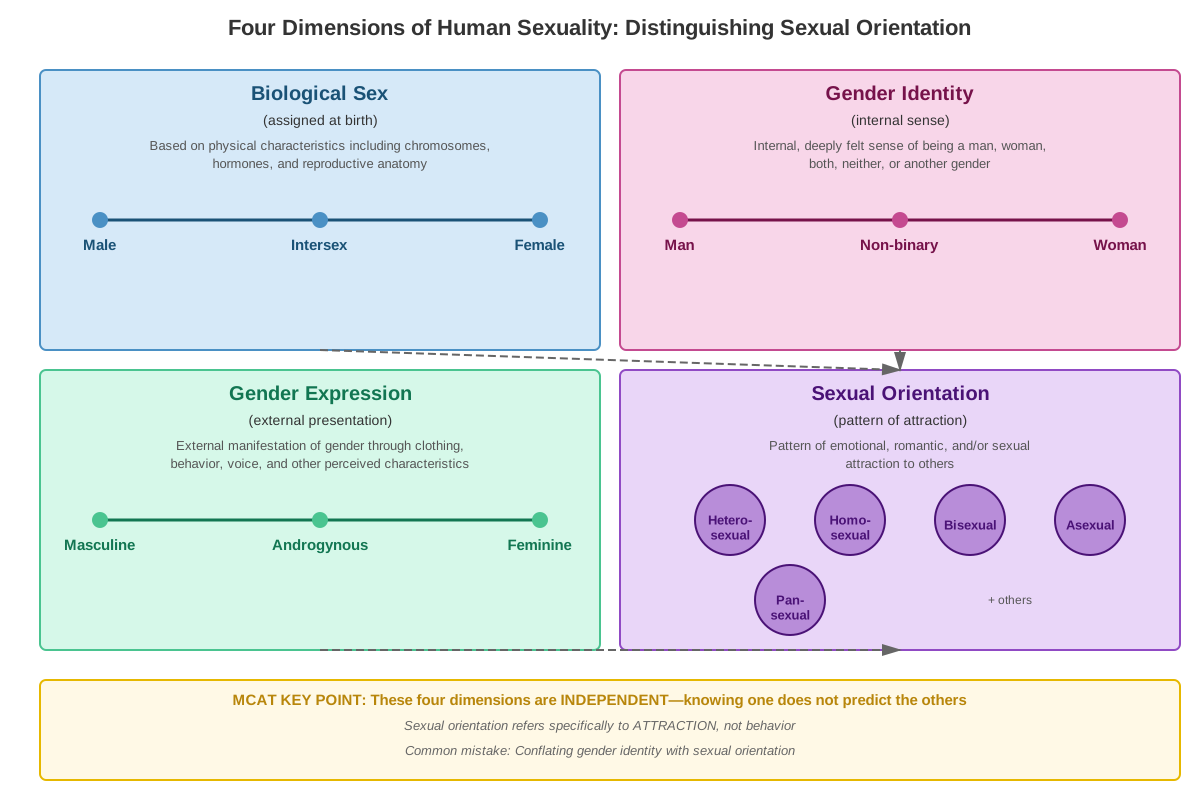
- [ ] Distinguish sexual orientation from gender identity, biological sex, and sexual behavior
- [ ] Analyze how heteronormativity creates social stratification and health disparities
- [ ] Evaluate the role of minority stress in shaping health outcomes for sexual minority populations
- [ ] Apply intersectionality frameworks to understand how sexual orientation interacts with other social identities
Prerequisites
- Basic understanding of social identity: Sexual orientation represents one dimension of social identity that shapes how individuals understand themselves and how society categorizes them
- Familiarity with social stratification concepts: Understanding how societies create hierarchies of privilege and disadvantage provides the foundation for analyzing sexual orientation-based inequality
- Knowledge of discrimination and prejudice: Recognizing different forms of bias (individual, institutional, structural) enables analysis of how sexual minorities experience marginalization
- Awareness of socialization processes: Understanding how individuals learn social norms and values helps explain how attitudes toward sexual orientation develop and persist
Why This Topic Matters
Sexual orientation appears with high frequency on the MCAT, particularly in passages examining health disparities, social inequality, and identity development. According to AAMC content outlines, students must understand how social categories create differential access to power, resources, and opportunities—and sexual orientation represents a prime example of this sociological principle. Questions typically appear in two formats: discrete questions testing definitional knowledge and passage-based questions requiring application of concepts to research scenarios or clinical vignettes.
Real-world significance extends beyond exam performance. Healthcare providers must understand how sexual orientation influences health outcomes through multiple pathways: direct discrimination in healthcare settings, minority stress leading to elevated rates of mental health conditions, barriers to accessing culturally competent care, and health behavior differences shaped by community norms. LGBTQ+ populations experience documented health disparities including higher rates of depression, anxiety, substance use, and suicidality—not due to sexual orientation itself, but due to social stigma, discrimination, and minority stress. Understanding these mechanisms prepares future physicians to provide equitable, affirming care.
MCAT passages commonly present research studies comparing health outcomes between heterosexual and sexual minority populations, scenarios involving coming out processes and family rejection, or analyses of policy changes affecting LGBTQ+ rights. Students must recognize how sexual orientation functions as a social determinant of health, identify mechanisms linking stigma to health outcomes, and avoid conflating sexual orientation with other dimensions of sexuality and gender. High-performing students demonstrate nuanced understanding of how sexual orientation intersects with race, socioeconomic status, and other identities to create unique experiences of privilege and marginalization.
Core Concepts
Defining Sexual Orientation
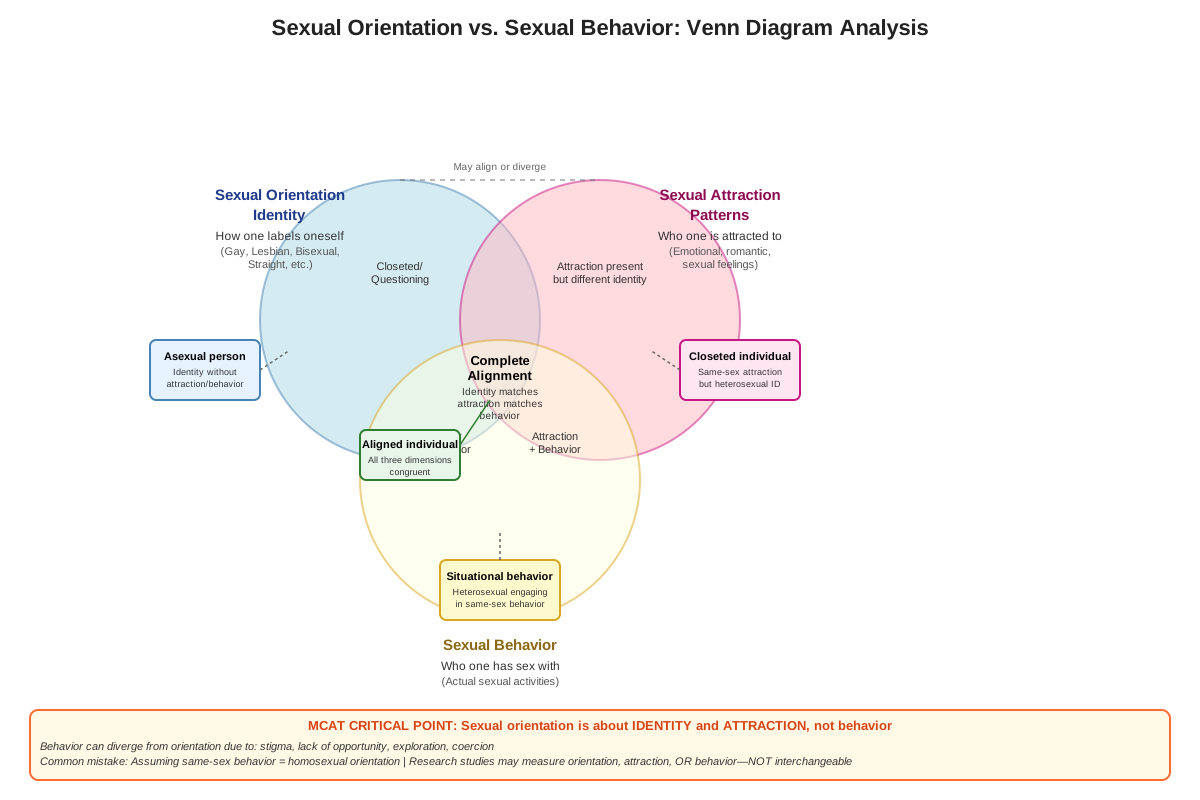
Sexual orientation refers to an enduring pattern of emotional, romantic, and/or sexual attractions to individuals of a particular gender or genders. This multidimensional construct encompasses three distinct components: attraction (who one is drawn to), behavior (who one engages with sexually), and identity (how one labels oneself). Importantly, these three dimensions do not always align—an individual might experience same-sex attraction without engaging in same-sex behavior or identifying as gay or lesbian.
The most commonly recognized sexual orientations include:
- Heterosexual (straight): Attraction to individuals of a different gender
- Homosexual (gay/lesbian): Attraction to individuals of the same gender
- Bisexual: Attraction to individuals of more than one gender
- Pansexual: Attraction to individuals regardless of gender
- Asexual: Experiencing little or no sexual attraction to others
- Queer: An umbrella term encompassing non-heterosexual orientations (reclaimed from historical use as a slur)
MCAT Exam Tip: Questions may test whether students recognize that sexual orientation is about attraction patterns, not behavior or choice. Watch for answer choices that incorrectly frame orientation as a lifestyle choice or behavioral preference.
Sexual Orientation vs. Related Concepts
The MCAT frequently tests students' ability to distinguish sexual orientation from related but distinct concepts:
| Concept | Definition | Example |
|---|---|---|
| Sexual orientation | Pattern of emotional/romantic/sexual attraction | A woman attracted to women (lesbian) |
| Gender identity | Internal sense of being male, female, both, or neither | A person assigned female at birth who identifies as male (transgender man) |
| Biological sex | Physical characteristics (chromosomes, hormones, anatomy) | Individual with XY chromosomes, testes, penis (typically male) |
| Sexual behavior | Actual sexual activities engaged in | A man who identifies as straight but has sex with men |
| Gender expression | External presentation of gender through clothing, behavior, etc. | A woman who presents in masculine ways (butch) |
These distinctions matter because conflating these concepts leads to incorrect reasoning on exam questions. For example, a transgender man (assigned female at birth, identifies as male) who is attracted to women is heterosexual, not lesbian—his sexual orientation is defined by his gender identity (male) and the gender he's attracted to (female).
Heteronormativity and Social Stratification
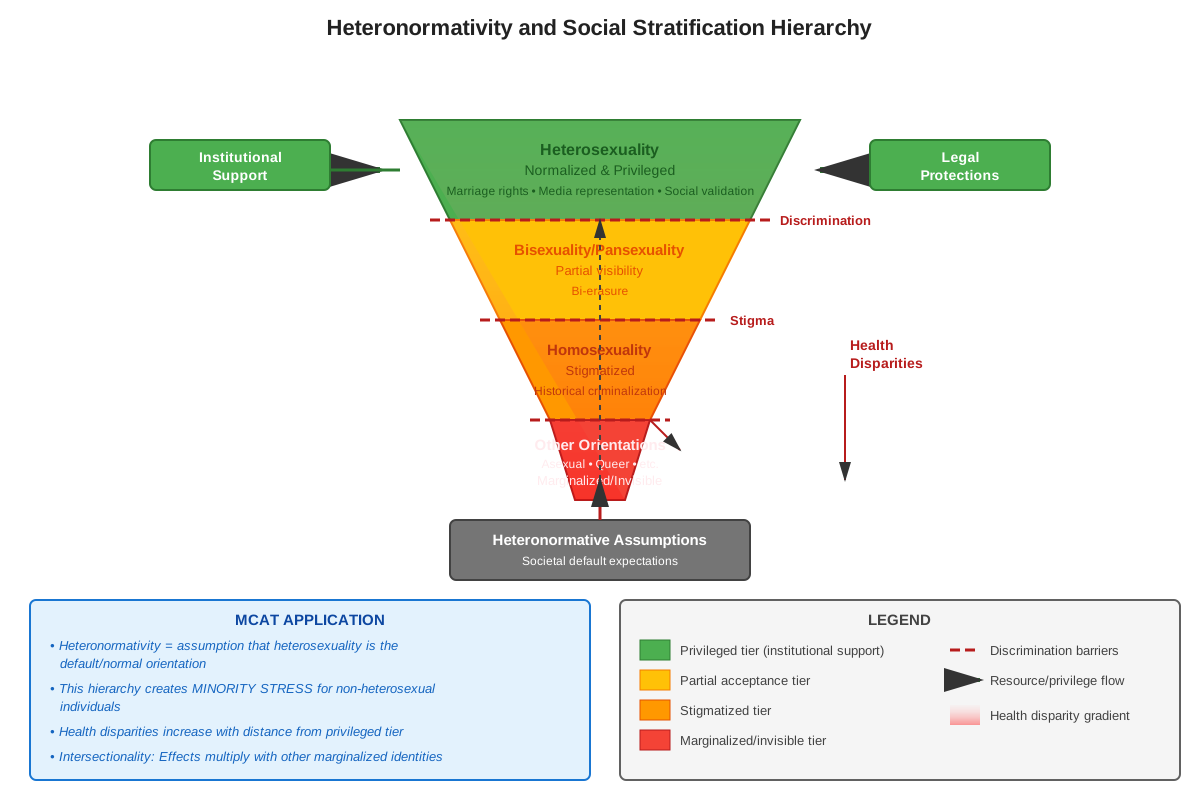
Heteronormativity describes the cultural bias that views heterosexuality as the normal, natural, or preferred sexual orientation. This ideology permeates social institutions, creating a system of social stratification where heterosexual individuals occupy privileged positions while sexual minorities face marginalization. Heteronormativity manifests through:
- Institutional practices: Marriage laws historically excluding same-sex couples, adoption policies favoring heterosexual parents, healthcare forms assuming opposite-sex partners
- Cultural representations: Media predominantly featuring heterosexual relationships, children's books centering heterosexual families
- Social expectations: Assumptions that children will grow up to be heterosexual, pressure to conform to heterosexual norms
- Language patterns: Using "partner" or "spouse" as gender-neutral only when discussing same-sex relationships, assuming everyone is straight until proven otherwise
This normative framework creates heterosexual privilege—unearned advantages that heterosexual individuals receive simply by virtue of their sexual orientation. Examples include the ability to discuss one's partner without fear of discrimination, legal recognition of relationships in all jurisdictions, and freedom from harassment based on sexual orientation.
Minority Stress Theory
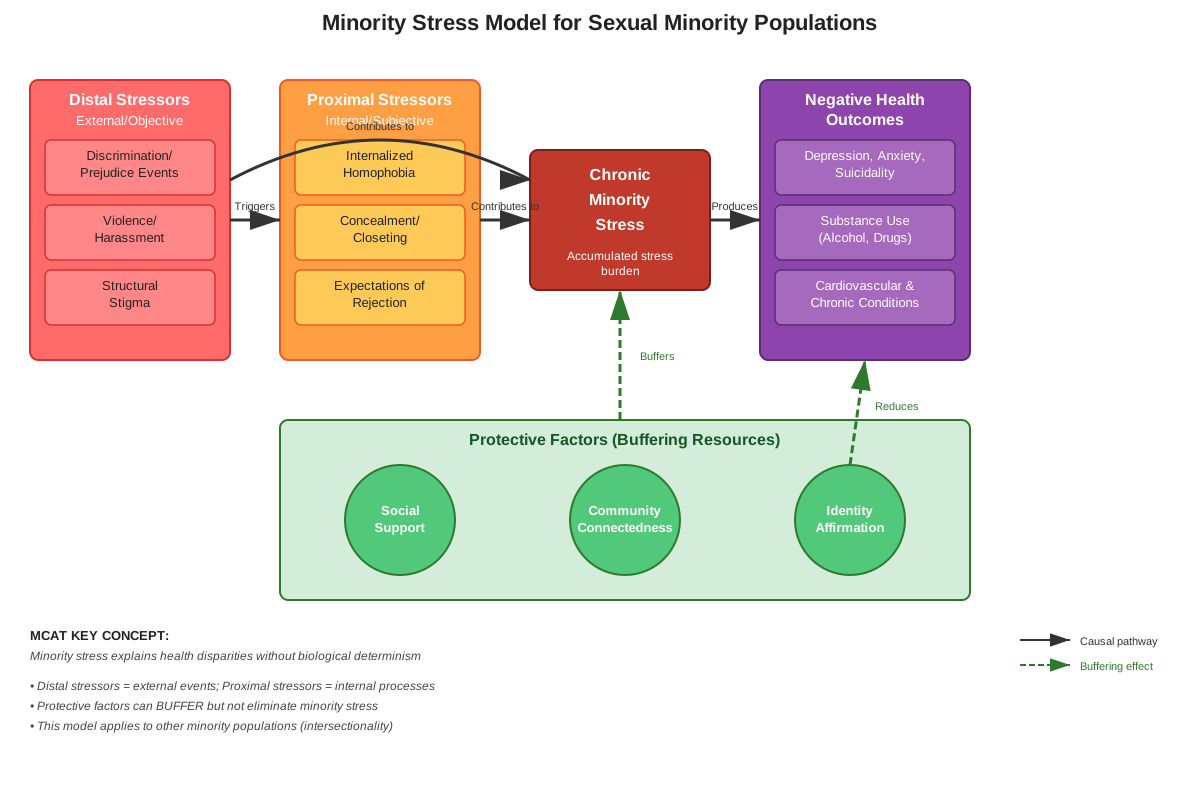
Minority stress theory explains how sexual minorities experience excess stress due to their stigmatized social position, leading to health disparities. Developed by Ira Meyer, this framework identifies both distal stressors (external, objective events) and proximal stressors (internal, subjective processes):
Distal stressors (external):
- Discrimination and violence
- Prejudice events (being called slurs, denied services)
- Structural stigma (discriminatory laws and policies)
Proximal stressors (internal):
- Expectations of rejection
- Concealment of sexual orientation
- Internalized homophobia (accepting negative societal attitudes about one's own orientation)
These chronic stressors accumulate over time, activating physiological stress responses and depleting psychological resources. The result: elevated rates of depression, anxiety, substance use disorders, and suicidality among sexual minority populations compared to heterosexual populations. Critically, minority stress theory locates the source of health disparities in social stigma and discrimination—not in sexual orientation itself.
High-Yield Concept: When MCAT passages present data showing health disparities between heterosexual and sexual minority populations, the correct explanation typically involves minority stress, discrimination, or stigma—NOT inherent characteristics of sexual orientation itself.
Coming Out and Identity Development
Coming out refers to the process of disclosing one's sexual orientation to others. This ongoing process (not a single event) involves multiple stages and decisions about when, how, and to whom to disclose. Coming out represents a significant developmental milestone with important implications for mental health and wellbeing.
Identity development models describe stages individuals may progress through:
- Identity confusion: Awareness that one's feelings differ from heterosexual norms
- Identity comparison: Beginning to consider that one might be gay, lesbian, or bisexual
- Identity tolerance: Accepting the possibility of non-heterosexual identity
- Identity acceptance: Positive identification with sexual minority identity
- Identity pride: Immersion in LGBTQ+ community and culture
- Identity synthesis: Integration of sexual orientation as one aspect of overall identity
Research demonstrates that coming out to supportive family and friends correlates with better mental health outcomes, while family rejection predicts elevated risk for depression, substance use, and suicidality. However, coming out also carries risks in contexts where discrimination and violence are likely, creating complex decision-making processes.
Intersectionality and Sexual Orientation
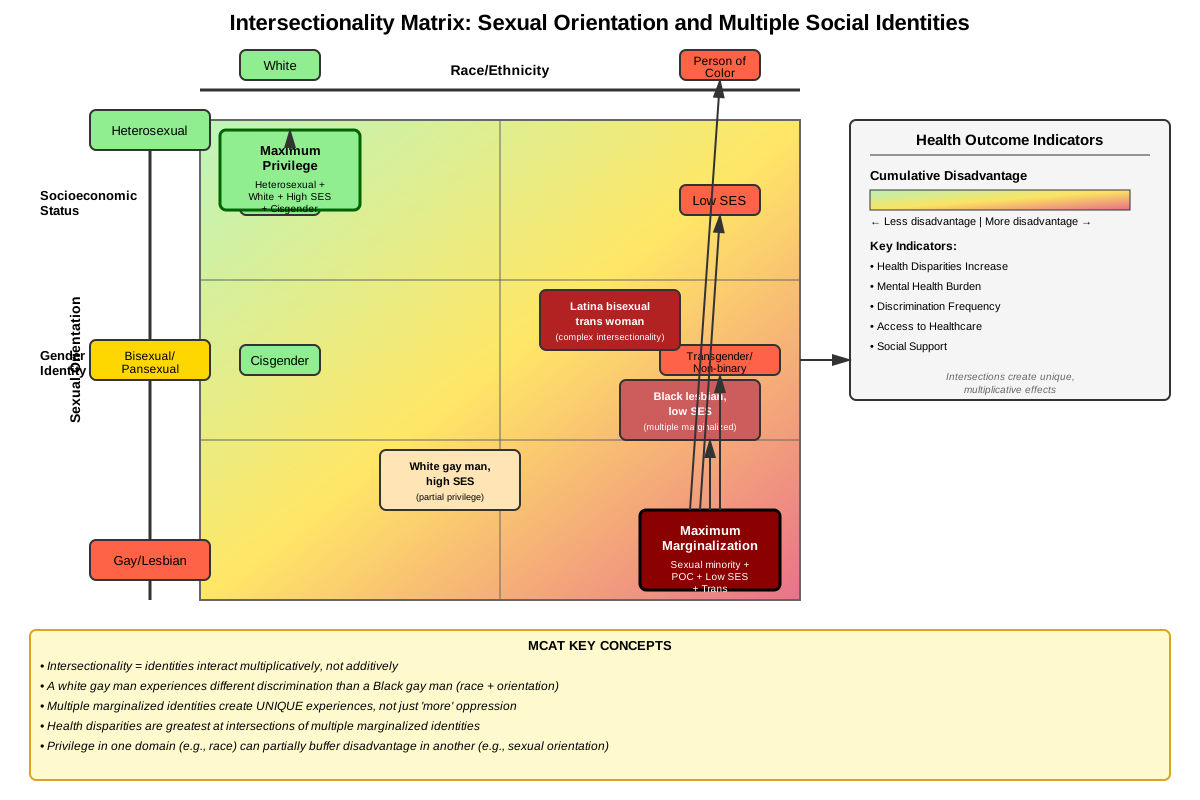
Intersectionality, a framework developed by Kimberlé Crenshaw, recognizes that social identities (race, class, gender, sexual orientation, etc.) intersect to create unique experiences of privilege and oppression. Sexual orientation does not exist in isolation—it interacts with other identities to shape life experiences.
For example:
- A Black lesbian woman experiences discrimination differently than a white lesbian woman due to the intersection of racism, sexism, and heterosexism
- A low-income gay man faces different barriers than a wealthy gay man due to class privilege
- A bisexual person may experience unique forms of stigma (biphobia) from both heterosexual and gay/lesbian communities
MCAT passages may present research examining these intersections, requiring students to recognize how multiple marginalized identities compound disadvantage while privileged identities may buffer against some forms of discrimination.
Concept Relationships
Sexual orientation connects to broader sociological frameworks through multiple pathways. At the foundation, social stratification creates hierarchies where heterosexuality occupies the privileged position and non-heterosexual orientations face marginalization. This stratification operates through heteronormativity → which produces stigma and discrimination → leading to minority stress → resulting in health disparities.
The concept links to social identity theory, which explains how individuals derive part of their self-concept from group memberships. Sexual orientation represents one such group membership that shapes identity, particularly for sexual minorities who must navigate stigmatized identities. This connects to identity development processes, including coming out, which influence psychological wellbeing.
Intersectionality serves as a meta-framework showing how sexual orientation interacts with race, class, gender, and other identities. This relationship demonstrates that sexual orientation cannot be understood in isolation—its effects depend on what other identities an individual holds.
The topic also connects to medicalization concepts, as homosexuality was historically classified as a mental disorder until removed from the DSM in 1973. This history illustrates how social categories can be incorrectly pathologized, and how medical/scientific institutions reflect broader social prejudices.
Finally, sexual orientation relates to social movements and collective action, as LGBTQ+ rights movements have challenged discriminatory laws and changed social attitudes. This demonstrates how marginalized groups organize to resist oppression and achieve social change.
Quick check — test yourself on Sexual orientation so far.
Try Flashcards →High-Yield Facts
⭐ Sexual orientation refers to patterns of attraction, not behavior or choice—it is an enduring characteristic, not a lifestyle decision.
⭐ Sexual orientation is distinct from gender identity—sexual orientation is about who you're attracted to; gender identity is about who you are.
⭐ Heteronormativity creates social stratification by positioning heterosexuality as normal/natural and marginalizing other orientations.
⭐ Minority stress theory explains health disparities among sexual minorities through chronic exposure to stigma, discrimination, and prejudice.
⭐ Health disparities among LGBTQ+ populations result from social stigma, not from sexual orientation itself—this is a critical distinction for MCAT questions.
- Sexual orientation encompasses three dimensions: attraction, behavior, and identity—these do not always align.
- Coming out is an ongoing process (not a single event) with significant mental health implications depending on social support.
- Internalized homophobia occurs when sexual minorities accept negative societal attitudes about their own orientation.
- Family rejection of sexual minority youth predicts elevated risk for depression, substance use, and suicidality.
- Intersectionality demonstrates that sexual orientation interacts with other identities (race, class, gender) to create unique experiences.
- Bisexual individuals may face unique stigma (biphobia) from both heterosexual and gay/lesbian communities.
- Structural stigma refers to discriminatory laws, policies, and institutional practices that disadvantage sexual minorities.
- Sexual orientation exists on a continuum rather than in discrete categories (Kinsey scale concept).
- Asexuality represents a valid sexual orientation characterized by little or no sexual attraction.
- The removal of homosexuality from the DSM in 1973 illustrates how medical classifications reflect social values, not just biological facts.
Common Misconceptions
Misconception: Sexual orientation is a choice or lifestyle preference.
Correction: Sexual orientation is an enduring pattern of attraction that individuals do not choose. Research consistently demonstrates that sexual orientation emerges early in development and is not subject to voluntary change. Framing orientation as a choice reflects heteronormative bias and leads to incorrect reasoning on MCAT questions.
Misconception: Sexual orientation and gender identity are the same thing.
Correction: These are distinct dimensions of human sexuality and gender. Sexual orientation describes who you're attracted to; gender identity describes who you are. A transgender man attracted to women is heterosexual, not lesbian. MCAT questions frequently test this distinction.
Misconception: Higher rates of mental health problems among LGBTQ+ populations indicate that non-heterosexual orientations are inherently pathological.
Correction: Health disparities result from minority stress, discrimination, and stigma—not from sexual orientation itself. When social acceptance increases and discrimination decreases, mental health disparities diminish. This represents a critical distinction for interpreting research findings on MCAT passages.
Misconception: Sexual behavior determines sexual orientation.
Correction: Sexual orientation is defined by patterns of attraction, not behavior. An individual may identify as gay without ever engaging in same-sex behavior, or may engage in same-sex behavior without identifying as gay (e.g., men who have sex with men but identify as heterosexual). These dimensions can diverge.
Misconception: Bisexuality is just a phase or indicates confusion.
Correction: Bisexuality represents a valid, stable sexual orientation characterized by attraction to more than one gender. Bisexual individuals face unique stigma (biphobia) including invalidation of their identity from both heterosexual and gay/lesbian communities. Research demonstrates bisexuality is not a transitional identity.
Misconception: Coming out is a single event that happens once.
Correction: Coming out is an ongoing process involving repeated decisions about disclosure across different contexts and relationships. Sexual minorities continuously navigate decisions about whether, when, and how to disclose their orientation in new situations throughout their lives.
Misconception: All LGBTQ+ individuals experience discrimination and stigma in the same way.
Correction: Intersectionality demonstrates that experiences vary based on other identities. A wealthy white gay man experiences different forms and degrees of discrimination than a low-income Black lesbian woman. MCAT questions may test understanding of how multiple identities interact.
Worked Examples
Example 1: Interpreting Research on Health Disparities
Passage Summary: A study compares rates of depression between heterosexual and lesbian/gay/bisexual adolescents. Results show that LGB adolescents have significantly higher rates of depression. The passage presents several potential explanations.
Question: Which explanation is most consistent with minority stress theory?
A) LGB adolescents have genetic vulnerabilities that predispose them to depression
B) The stress of concealing one's identity and experiencing discrimination leads to elevated depression rates
C) Confusion about sexual orientation causes psychological distress
D) LGB adolescents engage in riskier behaviors that lead to depression
Analysis:
- Step 1: Identify what minority stress theory predicts. This theory locates the source of health disparities in social stigma, discrimination, and stress related to marginalized status—not in inherent characteristics of sexual orientation itself.
- Step 2: Evaluate each answer choice:
- Choice A suggests inherent biological vulnerability, which contradicts minority stress theory's emphasis on social factors
- Choice B directly describes minority stress mechanisms: concealment (proximal stressor) and discrimination (distal stressor)
- Choice C pathologizes sexual orientation itself, suggesting the orientation causes distress rather than social stigma
- Choice D implies behavioral factors without addressing the social context that shapes those behaviors
- Step 3: Select the answer that attributes disparities to social factors rather than inherent characteristics of sexual orientation.
Correct Answer: B
Key Reasoning: Minority stress theory explicitly states that health disparities result from chronic exposure to stigma and discrimination, not from sexual orientation itself. The correct answer must identify social/environmental stressors rather than individual pathology.
Example 2: Distinguishing Sexual Orientation from Related Concepts
Vignette: Alex was assigned female at birth but identifies as male. Alex is attracted to women and is in a relationship with a woman named Sarah.
Question: How would Alex's sexual orientation most accurately be described?
A) Lesbian, because Alex was assigned female at birth and is attracted to women
B) Heterosexual, because Alex identifies as male and is attracted to women
C) Bisexual, because Alex's gender identity differs from sex assigned at birth
D) Queer, because Alex is transgender
Analysis:
- Step 1: Identify the key distinction being tested. This question requires understanding that sexual orientation is determined by gender identity (not sex assigned at birth) and the gender(s) one is attracted to.
- Step 2: Determine Alex's gender identity. The vignette states Alex "identifies as male"—this is his gender identity regardless of sex assigned at birth.
- Step 3: Determine who Alex is attracted to. The vignette states Alex is attracted to women.
- Step 4: Define sexual orientation based on gender identity and attraction. A male (Alex's gender identity) attracted to women is heterosexual.
- Step 5: Evaluate wrong answers:
- Choice A incorrectly uses sex assigned at birth rather than gender identity
- Choice C confuses gender identity with sexual orientation
- Choice D confuses transgender status (gender identity) with sexual orientation
Correct Answer: B
Key Reasoning: Sexual orientation is defined by the relationship between one's gender identity and the gender(s) one is attracted to. Alex's gender identity is male, and he is attracted to women, making him heterosexual. This question tests the critical distinction between gender identity and sexual orientation.
Exam Strategy
When approaching MCAT questions on sexual orientation, follow this systematic approach:
1. Identify what dimension is being tested: Determine whether the question asks about sexual orientation specifically or about related concepts (gender identity, biological sex, sexual behavior). Many incorrect answers deliberately conflate these concepts.
2. Watch for trigger words:
- "Attraction" → signals sexual orientation
- "Identity" → could refer to sexual orientation OR gender identity (context matters)
- "Behavior" → distinct from orientation
- "Minority stress" → explanation for health disparities
- "Heteronormativity" → system creating stratification
- "Intersectionality" → multiple identities interacting
3. Apply the social causation principle: When passages present health disparities between heterosexual and sexual minority populations, the correct explanation almost always involves social factors (stigma, discrimination, minority stress) rather than inherent characteristics of sexual orientation. Eliminate answers that pathologize orientation itself.
4. Use process of elimination:
- Eliminate answers that frame sexual orientation as a choice
- Eliminate answers that conflate sexual orientation with gender identity
- Eliminate answers that attribute disparities to orientation itself rather than social stigma
- Eliminate answers that suggest sexual orientation is determined by behavior alone
5. Time allocation: Sexual orientation questions typically require 60-90 seconds. Definitional questions should take less time (45-60 seconds), while passage-based questions requiring application may take longer (90-120 seconds). Don't overthink—these questions test straightforward application of core concepts.
6. Recognize common question formats:
- Research interpretation: "Which explanation is most consistent with minority stress theory?"
- Concept distinction: "Which statement best describes the difference between sexual orientation and gender identity?"
- Application: "Based on the passage, which factor most likely contributes to the observed health disparity?"
Exam Tip: If you're stuck between two answers, choose the one that emphasizes social/environmental factors over individual pathology. The MCAT consistently frames health disparities as products of social inequality, not inherent group characteristics.
Memory Techniques
MCAT Sexual Orientation Essentials (Mnemonic: "ABIDE")
- Attraction (not behavior or choice)
- Bias creates stratification (heteronormativity)
- Intersectionality matters (multiple identities interact)
- Distinct from gender identity
- Environmental stress causes disparities (minority stress theory)
Distinguishing Related Concepts (Mnemonic: "SOBS")
- Sexual orientation = who you're attracted to
- Orientation ≠ behavior
- Biological sex = physical characteristics
- Self-identity (gender) = who you are
Minority Stress Components (Visualization)
Picture a person surrounded by two layers of stress:
- Outer layer (distal stressors): External arrows labeled "discrimination," "prejudice events," "structural stigma"
- Inner layer (proximal stressors): Internal thought bubbles labeled "expectations of rejection," "concealment," "internalized homophobia"
Coming Out Process (Acronym: "CCTAPS")
- Confusion
- Comparison
- Tolerance
- Acceptance
- Pride
- Synthesis
Key Distinction Reminder
"Orientation is about ATTRACTION, not ACTION" (emphasizes that behavior doesn't define orientation)
Summary
Sexual orientation represents an enduring pattern of emotional, romantic, and sexual attractions that serves as a fundamental dimension of human identity and a basis for social stratification. For MCAT success, students must understand that sexual orientation is distinct from gender identity, biological sex, and sexual behavior—concepts frequently conflated in incorrect answer choices. Heteronormativity creates a system of privilege and marginalization where heterosexuality is positioned as normal while sexual minorities face systematic disadvantage. Minority stress theory explains how chronic exposure to stigma and discrimination produces health disparities among LGBTQ+ populations—critically, these disparities result from social factors, not from sexual orientation itself. Sexual orientation intersects with other identities (race, class, gender) to create unique experiences of privilege and oppression, requiring intersectional analysis. Coming out represents an ongoing process with significant mental health implications depending on social support. MCAT questions test definitional knowledge, ability to distinguish related concepts, and application of minority stress theory to interpret research findings on health disparities.
Key Takeaways
- Sexual orientation is an enduring pattern of attraction (not behavior or choice) that is distinct from gender identity, biological sex, and sexual behavior
- Heteronormativity creates social stratification by positioning heterosexuality as normal/natural and marginalizing other orientations
- Minority stress theory explains health disparities among sexual minorities through chronic exposure to stigma and discrimination—disparities result from social factors, not orientation itself
- Sexual orientation intersects with other identities (race, class, gender) to create unique experiences requiring intersectional analysis
- Coming out is an ongoing process (not a single event) with mental health implications that depend on social support and acceptance
- MCAT questions frequently test ability to distinguish sexual orientation from related concepts and to attribute health disparities to social rather than individual factors
- When interpreting research on LGBTQ+ health, correct answers emphasize environmental stressors (discrimination, stigma, minority stress) over inherent pathology
Related Topics
Gender Identity and Transgender Experience: Understanding how individuals' internal sense of gender may differ from sex assigned at birth; connects to sexual orientation through shared experiences of stigma and the importance of distinguishing these concepts.
Social Identity Theory: Explains how group memberships (including sexual orientation) shape self-concept and intergroup relations; provides theoretical foundation for understanding identity development.
Health Disparities and Social Determinants of Health: Sexual orientation functions as a social determinant creating differential health outcomes; mastering this topic enables analysis of how social position influences health.
Intersectionality: Framework for understanding how multiple identities interact; essential for analyzing how sexual orientation combines with race, class, and gender to shape experiences.
Stigma and Discrimination: Broader concepts that apply across multiple marginalized identities; understanding these mechanisms enables analysis of how sexual minorities experience social disadvantage.
Social Movements and Collective Action: LGBTQ+ rights movements illustrate how marginalized groups organize to challenge inequality; connects to broader understanding of social change processes.
Practice CTA
Now that you've mastered the core concepts of sexual orientation, test your understanding with practice questions and flashcards. Focus on distinguishing sexual orientation from related concepts, applying minority stress theory to research scenarios, and recognizing how heteronormativity creates social stratification. Remember: the MCAT rewards precise conceptual understanding and the ability to apply sociological frameworks to novel situations. You've built a strong foundation—now reinforce it through active practice. Your ability to analyze sexual orientation through a sociological lens will serve you well not only on exam day but throughout your medical career as you work to provide equitable, affirming care to all patients.
Sign up free to keep reading
Create a free AnvayaPrep account to finish this MCAT guide on Sexual orientation — plus flashcards and practice questions.