Overview
Gender identity is a fundamental concept in Sociology that refers to an individual's internal, deeply felt sense of being male, female, both, neither, or anywhere along the gender spectrum. This personal conception of oneself may or may not correspond to the sex assigned at birth based on biological characteristics. Understanding gender identity is crucial for the MCAT because it represents a key component of Social Stratification and Inequality, illuminating how societies organize, categorize, and create hierarchies among individuals based on gender-related characteristics.
For the MCAT, particularly in the Psychological, Social, and Biological Foundations of Behavior section, gender identity appears frequently in passages examining health disparities, social interactions, identity formation, and discrimination. The exam tests not only definitional knowledge but also the ability to apply sociological frameworks to analyze how gender identity intersects with healthcare access, mental health outcomes, and social experiences. Questions may present clinical vignettes involving transgender patients, research studies on gender development, or scenarios exploring the distinction between biological sex, gender identity, and gender expression.
The topic of Gender identity Sociology connects intimately with broader concepts including socialization, identity development, stigma, discrimination, intersectionality, and social constructionism. It serves as a lens through which to examine how societies create and maintain gender norms, how individuals navigate these expectations, and how deviation from normative gender categories can result in marginalization and health inequities. Mastering this topic enables students to analyze complex social phenomena and understand the lived experiences of diverse populations—skills essential for both the MCAT and future medical practice.
Learning Objectives
- [ ] Define Gender identity using accurate Sociology terminology
- [ ] Explain why Gender identity matters for the MCAT
- [ ] Apply Gender identity to exam-style questions
- [ ] Identify common mistakes related to Gender identity
- [ ] Connect Gender identity to related Sociology concepts
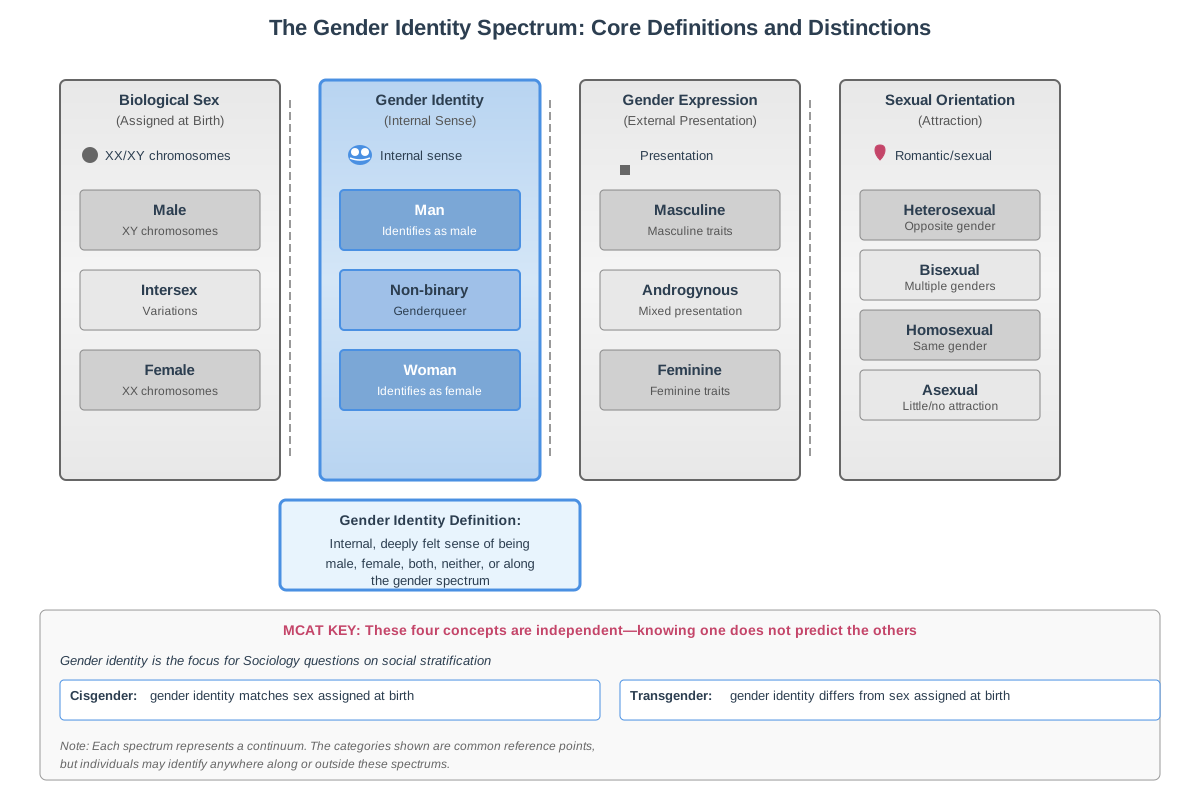
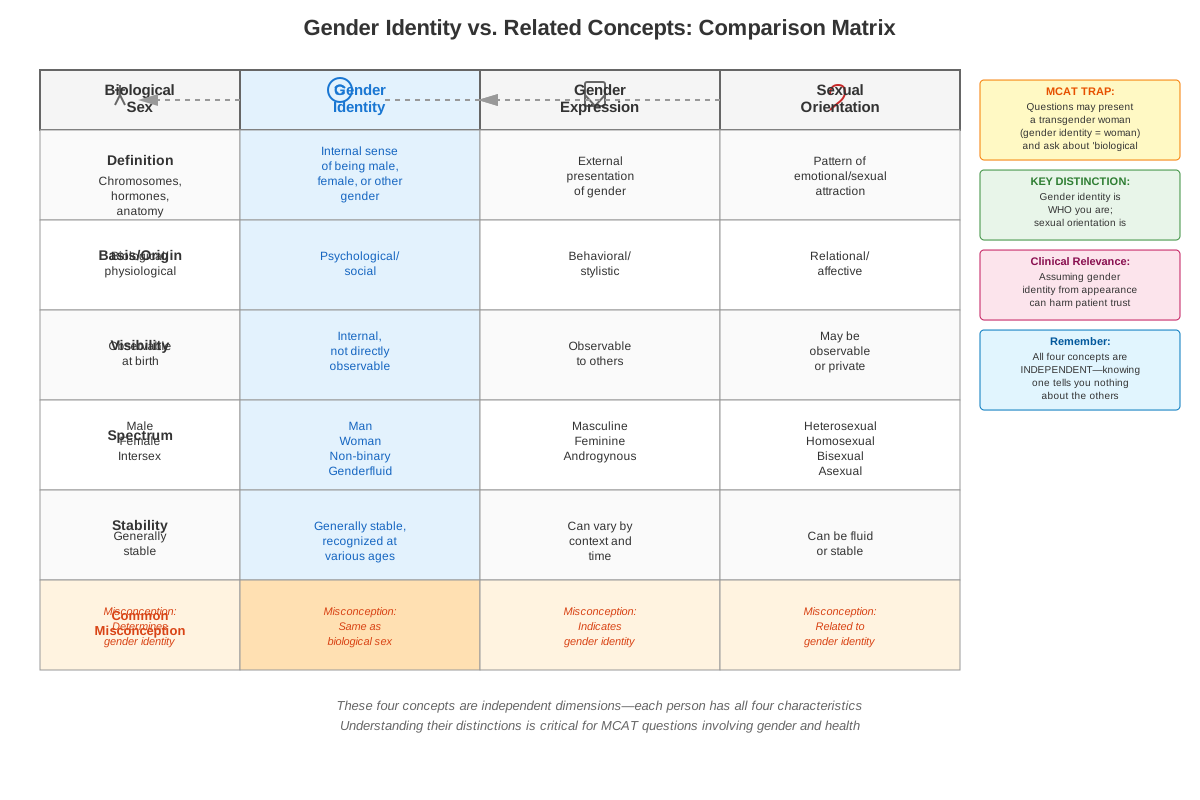
- [ ] Distinguish between gender identity, biological sex, gender expression, and sexual orientation
- [ ] Analyze how gender identity relates to social stratification and health disparities
- [ ] Evaluate the role of socialization and social institutions in shaping gender identity development
Prerequisites
- Basic understanding of socialization: Relevant because gender identity development occurs through social processes and interactions with family, peers, and institutions
- Familiarity with identity formation theories: Important for understanding how individuals develop their sense of self, including gender identity, across the lifespan
- Knowledge of social constructionism: Essential for grasping how gender categories are created and maintained by societies rather than being purely biological
- Understanding of discrimination and stigma: Necessary to comprehend the social consequences faced by individuals whose gender identity differs from societal expectations
Why This Topic Matters
Clinical and Real-World Significance
Gender identity has profound implications for healthcare delivery and patient outcomes. Transgender and gender non-conforming individuals experience significant health disparities, including higher rates of mental health challenges, barriers to healthcare access, and experiences of discrimination within medical settings. Physicians who understand gender identity can provide culturally competent care, use appropriate terminology, and recognize how gender-related stress impacts health. Additionally, understanding gender identity helps healthcare providers recognize that assumptions based on appearance or assigned sex may not reflect a patient's actual identity, which can affect everything from medication dosing to screening recommendations.
Exam Statistics and Question Types
Gender identity appears in approximately 5-8% of MCAT Psychological, Social, and Biological Foundations questions, making it a high-yield topic. Questions typically fall into three categories: (1) definitional questions testing understanding of terminology and distinctions between related concepts, (2) application questions requiring analysis of research studies or clinical scenarios involving gender identity, and (3) reasoning questions asking students to predict outcomes or explain phenomena using sociological frameworks. The topic frequently appears in passages examining health disparities, identity development, or social inequality.
Common Exam Passage Contexts
- Research studies comparing health outcomes between cisgender and transgender populations
- Clinical vignettes involving patients whose gender identity differs from sex assigned at birth
- Sociological analyses of gender socialization in childhood
- Studies examining discrimination experiences and their health consequences
- Passages exploring intersectionality and how gender identity combines with other social identities
- Research on gender identity development across the lifespan
Core Concepts
Defining Gender Identity
Gender identity represents an individual's internal, deeply held sense of their own gender. This psychological and emotional experience of gender may align with the sex assigned at birth (making someone cisgender) or may differ from it (making someone transgender). Gender identity exists on a spectrum and includes identities such as male, female, both (bigender), neither (agender), or fluid (gender fluid). Critically, gender identity is distinct from biological sex, which refers to physical characteristics including chromosomes, hormones, and reproductive anatomy.
The concept of gender identity emerged from sociological and psychological research demonstrating that gender is not simply a biological given but involves complex psychological, social, and cultural dimensions. Gender identity Sociology examines how societies create gender categories, how individuals internalize or resist these categories, and how gender identity intersects with social structures to produce inequality.
Key Distinctions in Gender-Related Concepts
Understanding gender identity requires distinguishing it from related but distinct concepts:
| Concept | Definition | Example |
|---|---|---|
| Biological Sex | Physical characteristics including chromosomes, hormones, reproductive organs | Male (XY chromosomes, testes), Female (XX chromosomes, ovaries), Intersex (variations in sex characteristics) |
| Gender Identity | Internal sense of one's own gender | Transgender woman (assigned male at birth, identifies as female), Cisgender man (assigned male at birth, identifies as male) |
| Gender Expression | External presentation of gender through clothing, behavior, mannerisms | Masculine, feminine, androgynous presentation regardless of identity |
| Sexual Orientation | Pattern of emotional, romantic, or sexual attraction | Heterosexual, homosexual, bisexual, asexual |
These distinctions are crucial for MCAT questions, which frequently test whether students can differentiate between these concepts. A common exam scenario might describe someone who is biologically male, identifies as male (cisgender), presents in a feminine manner (gender expression), and is attracted to men (sexual orientation)—requiring students to recognize that these are independent dimensions.
Gender Identity Development
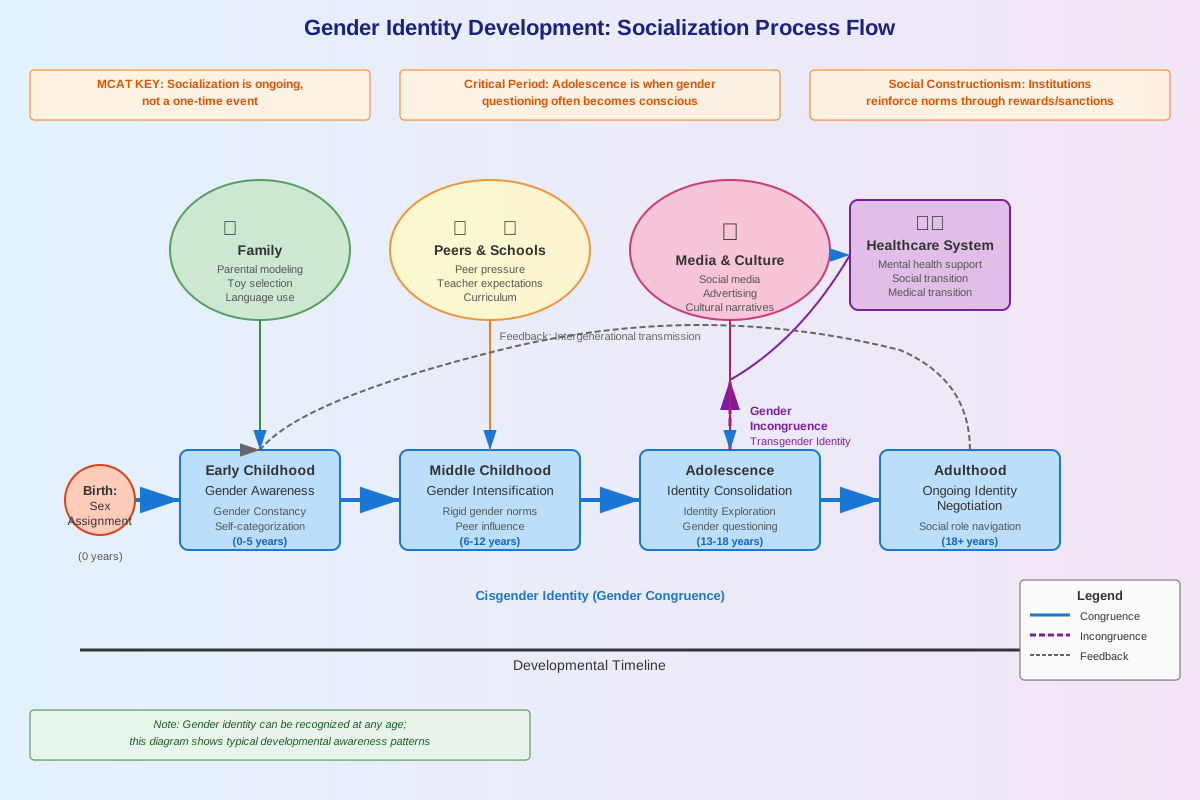
Gender identity development begins early in childhood, typically between ages 2-4, when children begin to label themselves and others by gender. However, the process continues throughout life. Several theoretical frameworks explain this development:
- Social Learning Theory: Children learn gender identity through observation, imitation, and reinforcement from parents, peers, and media
- Cognitive Developmental Theory: Children actively construct understanding of gender through cognitive maturation and categorization
- Gender Schema Theory: Children develop mental frameworks (schemas) about gender that guide their perception and behavior
For transgender individuals, gender identity development may involve recognizing incongruence between assigned sex and internal identity, a process that can occur at various life stages. Research indicates that gender identity is established early and is resistant to change through external pressure, supporting the understanding that it is a fundamental aspect of self rather than a choice or phase.
Social Construction of Gender
Social constructionism provides a critical framework for understanding gender identity within sociology. This perspective argues that gender categories and their meanings are created by societies rather than being natural or inevitable. Different cultures recognize different gender categories—for example, some Indigenous cultures recognize Two-Spirit identities, and South Asian cultures recognize hijra as a distinct gender category. This cultural variation demonstrates that gender is not simply biological but is shaped by social and cultural contexts.
The social construction of gender involves:
- Gender norms: Societal expectations about appropriate behavior, appearance, and roles for different genders
- Gender roles: Socially prescribed behaviors and responsibilities assigned to different genders
- Gender stereotypes: Oversimplified beliefs about characteristics of different genders
- Gender socialization: The process through which individuals learn and internalize gender norms
Gender Identity and Social Stratification
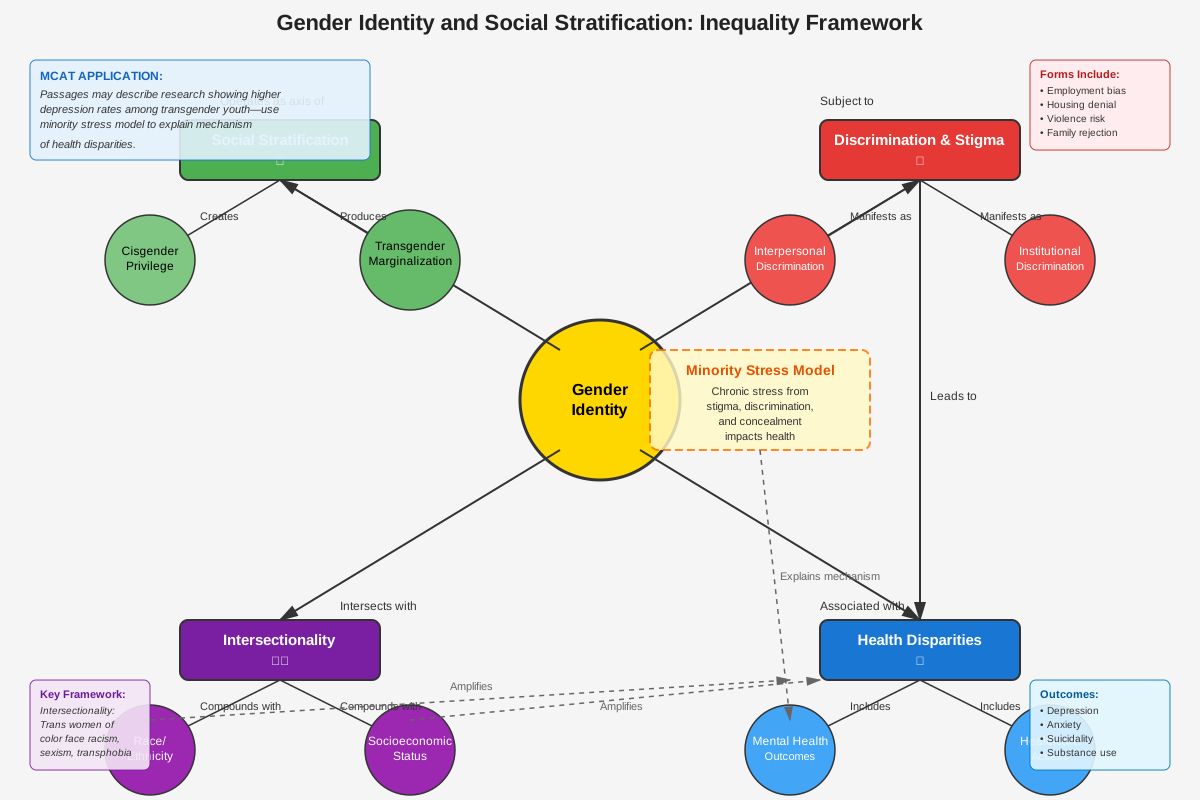
Gender identity intersects with Social Stratification and Inequality in multiple ways. Societies typically privilege cisgender identities while marginalizing transgender and gender non-conforming identities, creating a hierarchy based on conformity to gender norms. This stratification manifests through:
- Institutional discrimination: Policies and practices that exclude or disadvantage transgender individuals (e.g., healthcare coverage exclusions, identification document requirements)
- Interpersonal discrimination: Direct experiences of prejudice, harassment, or violence based on gender identity
- Structural inequality: Systematic disadvantages in employment, housing, education, and healthcare access
- Minority stress: Chronic stress experienced by stigmatized groups, contributing to health disparities
The minority stress model is particularly relevant for understanding health outcomes among transgender individuals. This framework explains how chronic exposure to stigma, discrimination, and prejudice creates psychological stress that contributes to mental and physical health problems. MCAT passages frequently reference this model when discussing health disparities.
Intersectionality and Gender Identity
Intersectionality examines how gender identity combines with other social identities (race, class, sexuality, disability) to create unique experiences of privilege or oppression. A transgender woman of color, for example, experiences discrimination related to both gender identity and race, and these forms of oppression interact in ways that cannot be understood by examining either identity alone. MCAT questions increasingly incorporate intersectional perspectives, requiring students to analyze how multiple identities shape health outcomes and social experiences.
Concept Relationships
Gender identity connects to numerous sociological concepts in a complex web of relationships. At the foundation, socialization → shapes → gender identity development, as individuals learn about gender categories and expectations through family, peers, media, and institutions. This socialization process interacts with identity formation theories, which explain how individuals develop their sense of self across multiple dimensions.
Gender identity → influences → social interactions, as individuals navigate social spaces based on how their identity is perceived and whether it conforms to societal expectations. When gender identity diverges from norms, individuals may experience stigma and discrimination → leading to → minority stress → resulting in → health disparities. This causal chain is frequently tested on the MCAT.
The concept also connects to social constructionism, which provides the theoretical framework for understanding how gender categories are created and maintained. Social constructionism → explains → why gender identity varies across cultures and historical periods. Additionally, gender identity → intersects with → social stratification, as societies create hierarchies that privilege certain gender identities while marginalizing others.
Intersectionality → modifies → the experience of gender identity, as individuals simultaneously navigate multiple social identities. Finally, understanding gender identity → enables analysis of → healthcare disparities, access to resources, and social inequality—all high-yield MCAT topics.
High-Yield Facts
⭐ Gender identity is an individual's internal sense of their gender, which may or may not align with sex assigned at birth
⭐ Cisgender refers to individuals whose gender identity matches their sex assigned at birth; transgender refers to those whose gender identity differs from sex assigned at birth
⭐ Gender identity, biological sex, gender expression, and sexual orientation are distinct, independent dimensions
⭐ Gender identity is established early in development (typically ages 2-4) and is resistant to change through external pressure
⭐ The minority stress model explains how chronic discrimination and stigma contribute to health disparities among transgender individuals
- Gender is socially constructed, with different cultures recognizing different gender categories and norms
- Gender dysphoria is the distress that may accompany incongruence between gender identity and sex assigned at birth (not all transgender individuals experience dysphoria)
- Transgender individuals face significant health disparities including higher rates of depression, anxiety, and suicide attempts, largely attributable to discrimination and minority stress
- Intersectionality examines how gender identity combines with other identities (race, class, sexuality) to create unique experiences
- Social institutions (family, education, media, healthcare) play crucial roles in reinforcing gender norms and can either support or marginalize diverse gender identities
Quick check — test yourself on Gender identity so far.
Try Flashcards →Common Misconceptions
Misconception: Gender identity is the same as sexual orientation
Correction: Gender identity refers to one's internal sense of gender (who you are), while sexual orientation refers to patterns of attraction (who you're attracted to). These are independent dimensions—transgender individuals can have any sexual orientation, and sexual orientation does not determine gender identity.
Misconception: Gender identity is a choice or phase that can be changed
Correction: Gender identity is a fundamental aspect of self that develops early and is resistant to change. Attempts to change gender identity (conversion therapy) are ineffective and harmful. Gender identity is not chosen any more than other core aspects of identity.
Misconception: Biological sex and gender are synonymous
Correction: Biological sex refers to physical characteristics (chromosomes, hormones, anatomy), while gender encompasses psychological, social, and cultural dimensions including gender identity. Gender identity may or may not align with biological sex.
Misconception: All transgender individuals experience gender dysphoria
Correction: While many transgender individuals experience distress related to incongruence between identity and assigned sex (gender dysphoria), not all do. Gender dysphoria is a clinical diagnosis describing distress, not a requirement for being transgender. Some individuals experience gender euphoria when expressing their authentic identity without significant dysphoria.
Misconception: Gender identity is determined entirely by socialization
Correction: While socialization influences gender expression and understanding of gender categories, gender identity itself appears to have biological, psychological, and social components. Research suggests biological factors (including prenatal hormone exposure and brain structure) may contribute to gender identity development, though the exact mechanisms remain under investigation.
Misconception: There are only two gender identities (male and female)
Correction: Gender identity exists on a spectrum and includes identities beyond the binary, such as non-binary, genderqueer, agender, bigender, and gender fluid. Different cultures historically recognized multiple gender categories, demonstrating that binary gender is a cultural construct rather than a universal truth.
Worked Examples
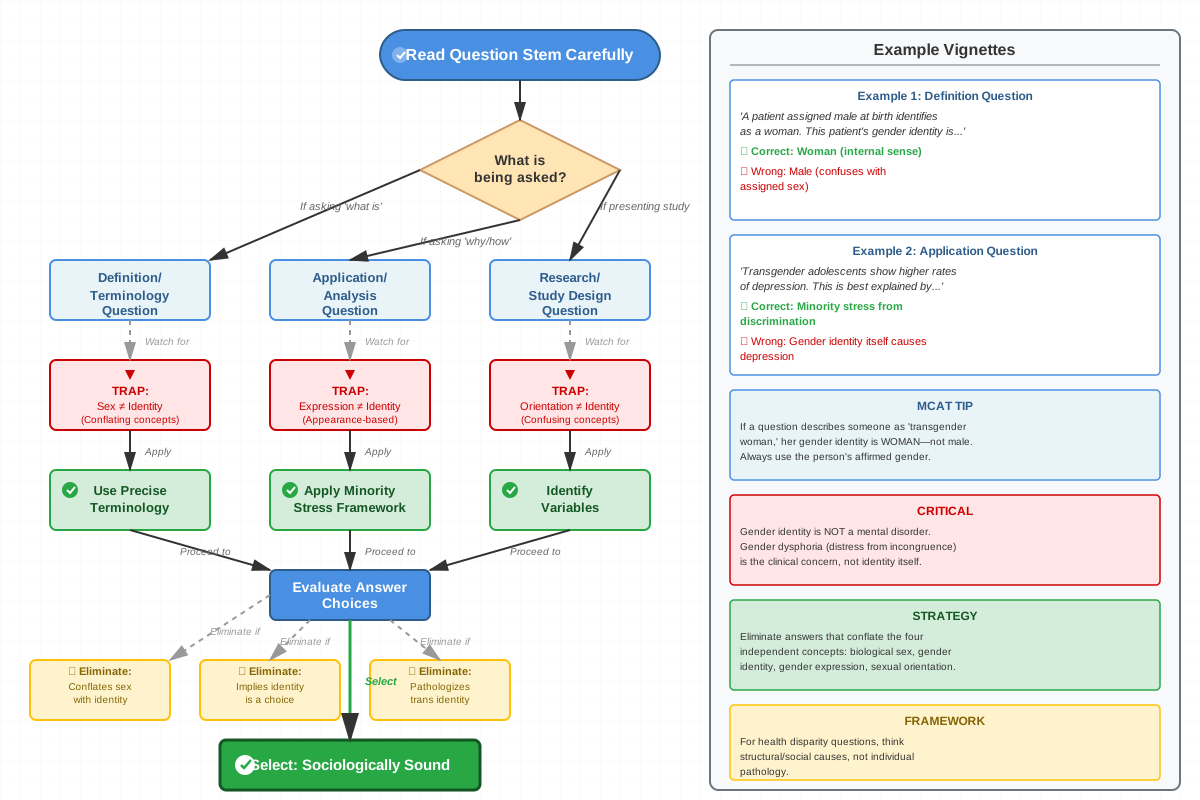
Example 1: Distinguishing Gender-Related Concepts
Vignette: A research study examines a population of individuals who were assigned female at birth. Among the participants, some identify as women and are attracted to men, some identify as women and are attracted to women, some identify as men and present in masculine ways, and some identify as non-binary and present androgynously. The researchers are interested in understanding health outcomes across different groups.
Question: Which of the following dimensions is the study examining?
A) Only gender identity
B) Only sexual orientation
C) Gender identity, sexual orientation, and gender expression
D) Only biological sex
Worked Solution:
Step 1: Identify what each described group represents
- "Assigned female at birth" = biological sex
- "Identify as women/men/non-binary" = gender identity
- "Attracted to men/women" = sexual orientation
- "Present in masculine ways/androgynously" = gender expression
Step 2: Determine which dimensions vary across the groups
- Biological sex is constant (all assigned female at birth)
- Gender identity varies (women, men, non-binary)
- Sexual orientation varies (attracted to men, attracted to women)
- Gender expression varies (masculine, androgynous, presumably feminine)
Step 3: Eliminate incorrect answers
- A is incorrect because sexual orientation and gender expression also vary
- B is incorrect because gender identity and gender expression also vary
- D is incorrect because biological sex is constant, and other dimensions vary
Answer: C - The study examines gender identity (women, men, non-binary), sexual orientation (attracted to men vs. women), and gender expression (masculine, androgynous presentations).
Key Learning Point: This question tests the ability to distinguish between related but distinct concepts—a high-yield skill for MCAT gender identity questions. Always identify which specific dimension is being described.
Example 2: Applying the Minority Stress Model
Vignette: A longitudinal study follows two groups of adolescents: cisgender adolescents and transgender adolescents. Both groups have similar baseline rates of depression at age 12. By age 18, the transgender group shows significantly higher rates of depression and anxiety. Researchers note that the transgender adolescents reported frequent experiences of discrimination, family rejection, and bullying during the study period.
Question: Which sociological framework best explains these findings?
A) Social learning theory
B) Minority stress model
C) Cognitive dissonance theory
D) Structural functionalism
Worked Solution:
Step 1: Identify the key elements of the scenario
- Two groups with similar baseline mental health
- Divergent outcomes over time
- Transgender group experiences discrimination, rejection, and bullying
- Transgender group develops higher rates of mental health problems
Step 2: Connect to relevant sociological frameworks
- The scenario describes how chronic stress from stigma and discrimination leads to health disparities
- This matches the minority stress model, which explains how stigmatized groups experience chronic stress that contributes to mental and physical health problems
Step 3: Eliminate incorrect answers
- A (Social learning theory) explains how behaviors are learned through observation and reinforcement, not health disparities from discrimination
- C (Cognitive dissonance theory) explains discomfort from holding conflicting beliefs, not relevant here
- D (Structural functionalism) examines how social institutions contribute to social stability, not health disparities from discrimination
Answer: B - The minority stress model specifically explains how chronic exposure to discrimination, stigma, and prejudice creates psychological stress that contributes to health disparities among marginalized groups, including transgender individuals.
Key Learning Point: The minority stress model is a high-yield framework for explaining health disparities related to gender identity. When you see a passage describing discrimination leading to health problems in a marginalized group, consider this model.
Exam Strategy
Approaching Gender Identity Questions
When encountering MCAT questions about gender identity, follow this systematic approach:
- Identify which dimension is being discussed: Determine whether the question involves gender identity, biological sex, gender expression, or sexual orientation. Many questions test whether you can distinguish these concepts.
- Look for sociological frameworks: Questions often require applying specific theories (minority stress model, social constructionism, intersectionality). Identify trigger words that signal which framework to use.
- Consider the social context: Gender identity questions frequently involve social stratification, discrimination, or health disparities. Think about how social structures and interactions affect individuals.
- Avoid biological determinism: While biological factors may contribute to gender identity, MCAT questions typically emphasize social and psychological dimensions. Be cautious about answers that reduce gender identity purely to biology.
Trigger Words and Phrases
Watch for these high-yield terms that signal specific concepts:
- "Internal sense of gender" → gender identity definition
- "Assigned at birth" → distinguishing biological sex from gender identity
- "Chronic discrimination," "stigma," "prejudice" → minority stress model
- "Socially constructed," "cultural variation" → social constructionism
- "Multiple identities," "combined effects" → intersectionality
- "Gender norms," "expectations," "socialization" → social learning and gender role development
- "Health disparities," "mental health outcomes" → consequences of minority stress
Process of Elimination Tips
- Eliminate answers that conflate distinct concepts: If an answer treats gender identity and sexual orientation as the same thing, eliminate it
- Eliminate purely biological explanations: For sociology questions, answers that reduce gender identity entirely to chromosomes or hormones are typically incorrect
- Eliminate answers suggesting gender identity is a choice: Gender identity is not chosen or easily changed
- Watch for extreme language: Answers using "always," "never," or "all" regarding gender identity are often incorrect, as gender identity is diverse and exists on a spectrum
Time Allocation
Gender identity questions typically require 60-90 seconds. Spend:
- 20-30 seconds reading and identifying the key concept being tested
- 20-30 seconds connecting to relevant frameworks or definitions
- 20-30 seconds eliminating wrong answers and confirming the correct choice
Don't overthink these questions—they usually test straightforward application of definitions and frameworks rather than complex reasoning.
Memory Techniques
Mnemonic for Key Distinctions: "BIGE"
Remember the four distinct dimensions related to gender:
- Biological sex (chromosomes, anatomy)
- Identity (internal sense of gender)
- Gender expression (external presentation)
- Emotion/attraction (sexual orientation - who you're attracted to)
Visualization for Gender Identity Spectrum
Visualize gender identity as a color spectrum rather than a binary switch. Just as colors exist on a continuous spectrum (not just red or blue), gender identity exists on a spectrum with many possibilities. This helps remember that gender identity is not limited to two categories.
Acronym for Minority Stress Components: "SPIED"
Remember the components that contribute to minority stress:
- Stigma (social devaluation)
- Prejudice (negative attitudes)
- Institutional discrimination (systemic barriers)
- Expectation of rejection (vigilance)
- Direct discrimination (personal experiences)
Memory Palace for Social Construction
Imagine walking through a house where each room represents a different culture:
- Room 1 (Western culture): Two doors labeled "male" and "female"
- Room 2 (Indigenous culture): Three doors including "Two-Spirit"
- Room 3 (South Asian culture): Three doors including "hijra"
This visualization reinforces that gender categories are socially constructed and vary across cultures.
Summary
Gender identity represents an individual's internal, deeply felt sense of their gender, which may or may not align with the sex assigned at birth based on biological characteristics. This concept is fundamental to understanding social stratification and inequality, as societies create hierarchies that privilege cisgender identities while marginalizing transgender and gender non-conforming individuals. For the MCAT, students must distinguish gender identity from related but distinct concepts including biological sex, gender expression, and sexual orientation. The minority stress model explains how chronic discrimination and stigma contribute to significant health disparities among transgender populations, making this a high-yield framework for exam questions. Gender identity is socially constructed, with different cultures recognizing different gender categories, and develops early in life through complex interactions of biological, psychological, and social factors. Understanding gender identity requires recognizing its intersections with other social identities and its profound implications for healthcare access, patient-provider interactions, and health outcomes.
Key Takeaways
- Gender identity is an individual's internal sense of gender, distinct from biological sex, gender expression, and sexual orientation—these four dimensions are independent
- Cisgender individuals have gender identity matching sex assigned at birth; transgender individuals have gender identity differing from sex assigned at birth
- The minority stress model explains how chronic discrimination and stigma create health disparities among transgender individuals—a high-yield framework for MCAT questions
- Gender is socially constructed, with different cultures recognizing different gender categories, demonstrating that binary gender is not universal
- Gender identity develops early (ages 2-4), is resistant to change, and is not a choice—attempts to change it are ineffective and harmful
- Intersectionality examines how gender identity combines with other social identities to create unique experiences of privilege or oppression
- Understanding gender identity is essential for providing culturally competent healthcare and recognizing how social factors influence health outcomes
Related Topics
Sexual Orientation and Identity: Explores patterns of attraction and romantic/sexual identity formation, building on the distinction between gender identity and sexual orientation established in this topic.
Socialization and Identity Development: Examines broader processes of identity formation across the lifespan, providing context for understanding how gender identity develops within larger frameworks of self-concept.
Stigma and Discrimination: Analyzes mechanisms of social stigma and various forms of discrimination, deepening understanding of how gender identity-based marginalization operates.
Health Disparities: Investigates systematic differences in health outcomes across social groups, applying concepts from gender identity to understand healthcare inequities.
Intersectionality: Explores how multiple social identities combine to create unique experiences, extending the intersectional analysis introduced in gender identity discussions.
Social Constructionism: Examines how social realities are created through human interaction and cultural processes, providing theoretical foundation for understanding gender as socially constructed.
Practice CTA
Now that you've mastered the core concepts of gender identity, it's time to solidify your understanding through active practice. Complete the associated practice questions to test your ability to distinguish between related concepts, apply the minority stress model, and analyze gender identity within sociological frameworks. Use the flashcards to reinforce key definitions and high-yield facts. Remember: understanding gender identity not only prepares you for MCAT success but also equips you with essential knowledge for providing compassionate, culturally competent care to diverse patient populations. Your investment in mastering this topic will serve you throughout your medical career!
Sign up free to keep reading
Create a free AnvayaPrep account to finish this MCAT guide on Gender identity — plus flashcards and practice questions.