Overview
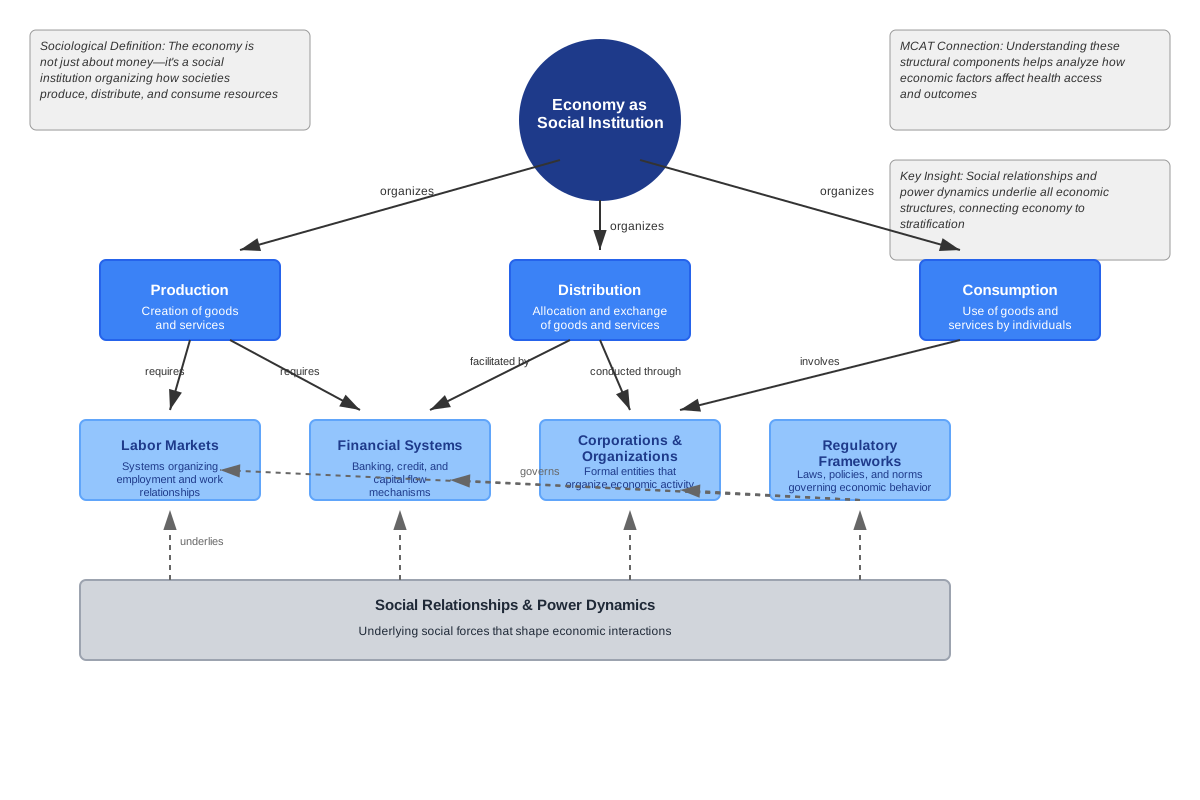
The economy is a fundamental component of social structure and institutions, representing the organized system through which societies produce, distribute, and consume goods and services. Within sociology, the economy extends far beyond simple financial transactions—it encompasses the social relationships, power dynamics, cultural values, and institutional frameworks that shape how resources flow through society. Understanding the economy from a sociological perspective requires examining how economic systems influence social stratification, shape individual opportunities, and interact with other social institutions such as education, family, and government.
For the MCAT, mastery of economic concepts within sociology is essential because the exam frequently tests how economic structures affect health outcomes, access to healthcare, social mobility, and population-level disparities. The Psychological, Social, and Biological Foundations of Behavior section regularly presents passages that explore how economic factors intersect with health behaviors, medical decision-making, and social determinants of health. Questions may ask test-takers to analyze how unemployment affects mental health, how economic inequality influences disease prevalence, or how different economic systems shape healthcare delivery models.
The economy serves as a critical bridge connecting multiple sociological domains. It directly influences social stratification by determining resource distribution and class structures, affects demographic patterns through employment opportunities and migration, and shapes cultural values regarding work, success, and consumption. Economic institutions also interact bidirectionally with political systems, educational structures, and family organization, making economic literacy essential for understanding the complex web of social forces that the MCAT evaluates. This topic represents high-yield content that appears across multiple question types, from discrete questions testing definitions to complex passage-based analyses requiring application of economic principles to healthcare scenarios.
Learning Objectives
- [ ] Define economy using accurate sociology terminology
- [ ] Explain why economy matters for the MCAT
- [ ] Apply economy concepts to exam-style questions
- [ ] Identify common mistakes related to economy
- [ ] Connect economy to related sociology concepts
- [ ] Distinguish between different economic systems and their social implications
- [ ] Analyze how economic factors serve as social determinants of health
- [ ] Evaluate the relationship between economic structures and social stratification
- [ ] Synthesize connections between economy and other social institutions
Prerequisites
- Basic understanding of social institutions: The economy functions as one of several major social institutions that organize society, requiring familiarity with institutional analysis
- Fundamental knowledge of social stratification: Economic concepts directly relate to class systems, inequality, and resource distribution patterns
- Awareness of sociological perspectives: Understanding functionalist, conflict, and symbolic interactionist approaches helps analyze economic phenomena from multiple theoretical frameworks
- General comprehension of culture and socialization: Economic behaviors and values are culturally transmitted and vary across societies
Why This Topic Matters
The economy represents one of the most clinically and socially relevant topics for future physicians because economic factors consistently emerge as powerful social determinants of health. Patients' economic circumstances—including employment status, income level, insurance coverage, and neighborhood economic conditions—profoundly influence their health outcomes, treatment adherence, disease prevention behaviors, and healthcare utilization patterns. Physicians who understand economic sociology can better recognize how financial barriers affect patient care, identify systemic factors contributing to health disparities, and advocate for policies that address economic determinants of health.
On the MCAT, economy-related content appears with high frequency across multiple question formats. Approximately 15-20% of sociology questions involve economic concepts either directly or as contextual factors in passages. The exam commonly presents passages describing healthcare access disparities, employment-related stress, socioeconomic status correlations with disease, or policy interventions targeting economic barriers to health. Questions may require students to identify economic systems, explain how economic structures perpetuate inequality, analyze the relationship between unemployment and mental health outcomes, or evaluate how economic policies affect population health.
Economic concepts typically appear in MCAT passages through several recurring scenarios: studies examining correlations between income and health outcomes, descriptions of healthcare systems in different economic contexts, analyses of how economic recessions affect community health, investigations of occupational health disparities, or evaluations of interventions designed to reduce economic barriers to care. The exam frequently tests whether students can distinguish between individual economic circumstances and structural economic factors, recognize bidirectional relationships between health and economic status, and apply economic concepts to predict social and health outcomes.
Core Concepts
Definition and Scope of Economy in Sociology
The economy in sociological terms refers to the social institution that organizes the production, distribution, and consumption of goods and services within a society. Unlike purely economic definitions that focus on markets and financial transactions, economy sociology examines how economic activities are embedded within social relationships, cultural values, power structures, and institutional arrangements. The economy encompasses not only formal market transactions but also informal exchanges, household production, volunteer labor, and the social norms that govern economic behavior.
The sociological study of economy recognizes that economic systems are socially constructed rather than natural or inevitable. Different societies organize economic activity through varying institutional arrangements, reflecting cultural values, historical development, and power distributions. Economic institutions interact continuously with other social structures, including family systems that provide unpaid domestic labor, educational institutions that prepare workers, political systems that regulate markets, and religious organizations that shape attitudes toward wealth and consumption.
Economic Systems and Their Social Implications
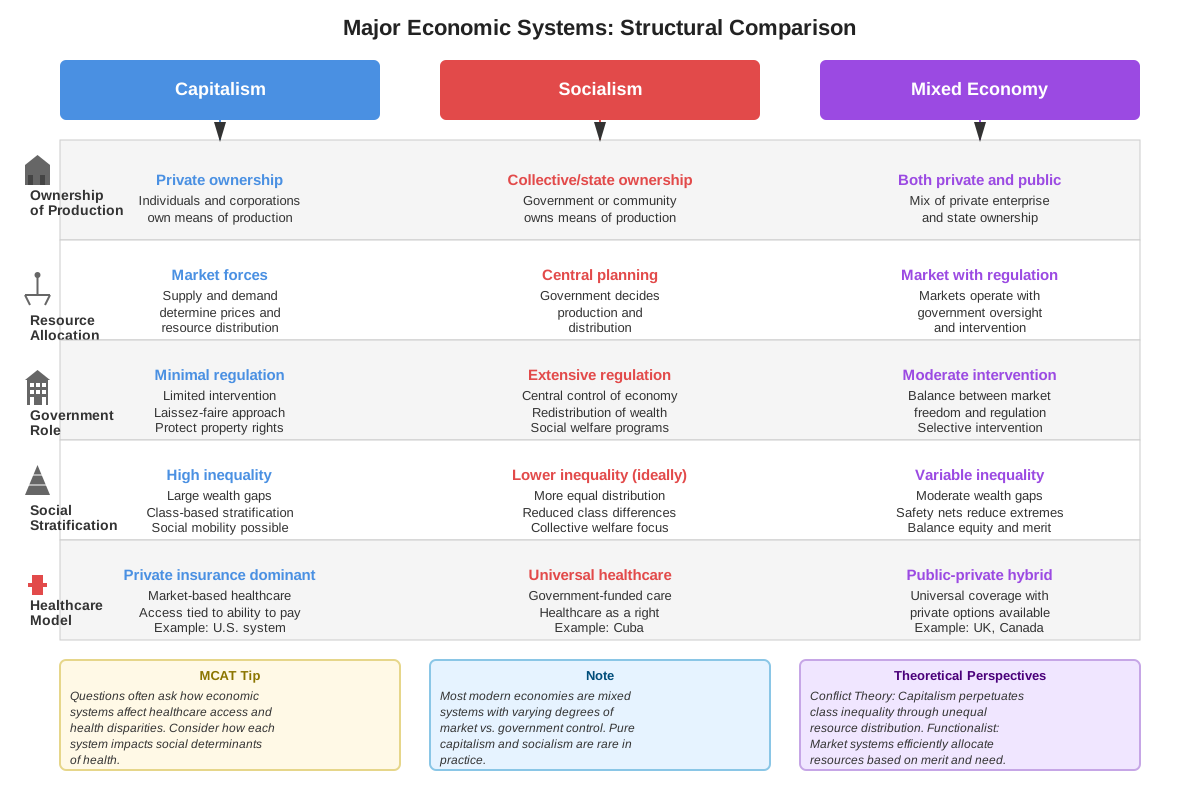
Economic systems represent the fundamental organizational frameworks through which societies structure production and distribution. The three primary types that appear on the MCAT are capitalism, socialism, and mixed economies, each with distinct social consequences:
| Economic System | Ownership Structure | Distribution Mechanism | Social Implications |
|---|---|---|---|
| Capitalism | Private ownership of means of production | Market forces (supply/demand) | High inequality potential; individual mobility possible; innovation incentivized; limited social safety net |
| Socialism | Collective/state ownership | Central planning or democratic control | Greater equality emphasis; universal services; reduced individual accumulation; potential efficiency challenges |
| Mixed Economy | Combination of private and public ownership | Markets with government regulation | Balance of efficiency and equity; social safety nets; regulated capitalism; most common in developed nations |
Capitalism emphasizes private property rights, profit motivation, competitive markets, and minimal government intervention in economic affairs. Sociologically, capitalist systems tend to produce significant economic stratification, as wealth accumulates among successful market participants while others face economic insecurity. However, capitalism also creates opportunities for social mobility through entrepreneurship and merit-based advancement, though these opportunities are unevenly distributed across social groups.
Socialism prioritizes collective ownership and equitable distribution of resources, often through government coordination of economic activity. Socialist principles emphasize meeting basic needs, reducing inequality, and preventing exploitation of workers. From a sociological perspective, socialist systems may reduce economic stratification but can face challenges in efficiency, innovation incentives, and individual freedom in economic decision-making.
Most contemporary societies operate as mixed economies, combining market mechanisms with government regulation, public services, and social welfare programs. These systems attempt to balance capitalism's productive efficiency with socialism's equity concerns, providing social safety nets while maintaining private enterprise. Understanding mixed economies is particularly relevant for MCAT questions about healthcare systems, as most developed nations use mixed economic approaches to healthcare delivery.
Economic Sectors and Labor Division
Economies organize productive activity into distinct sectors that reflect technological development and social organization:
- Primary sector: Extraction of raw materials (agriculture, mining, fishing, forestry)
- Secondary sector: Manufacturing and industrial production transforming raw materials
- Tertiary sector: Service provision (retail, healthcare, education, finance)
- Quaternary sector: Information processing and knowledge creation (research, technology, consulting)
The division of labor represents how societies allocate different productive tasks among individuals and groups. As societies develop economically, they typically experience sectoral shifts from primary to tertiary and quaternary dominance, a process called economic development. This transition profoundly affects social structure, creating new occupational categories, changing skill requirements, altering family structures as work moves outside households, and transforming community organization.
The division of labor creates economic interdependence, where individuals and groups rely on others for goods and services they do not produce themselves. This interdependence strengthens social cohesion but also creates vulnerabilities when economic disruptions occur. Émile Durkheim's concept of organic solidarity describes how complex divisions of labor in modern societies create social bonds through mutual dependence, contrasting with the mechanical solidarity of simpler societies with minimal labor division.
Economic Inequality and Stratification
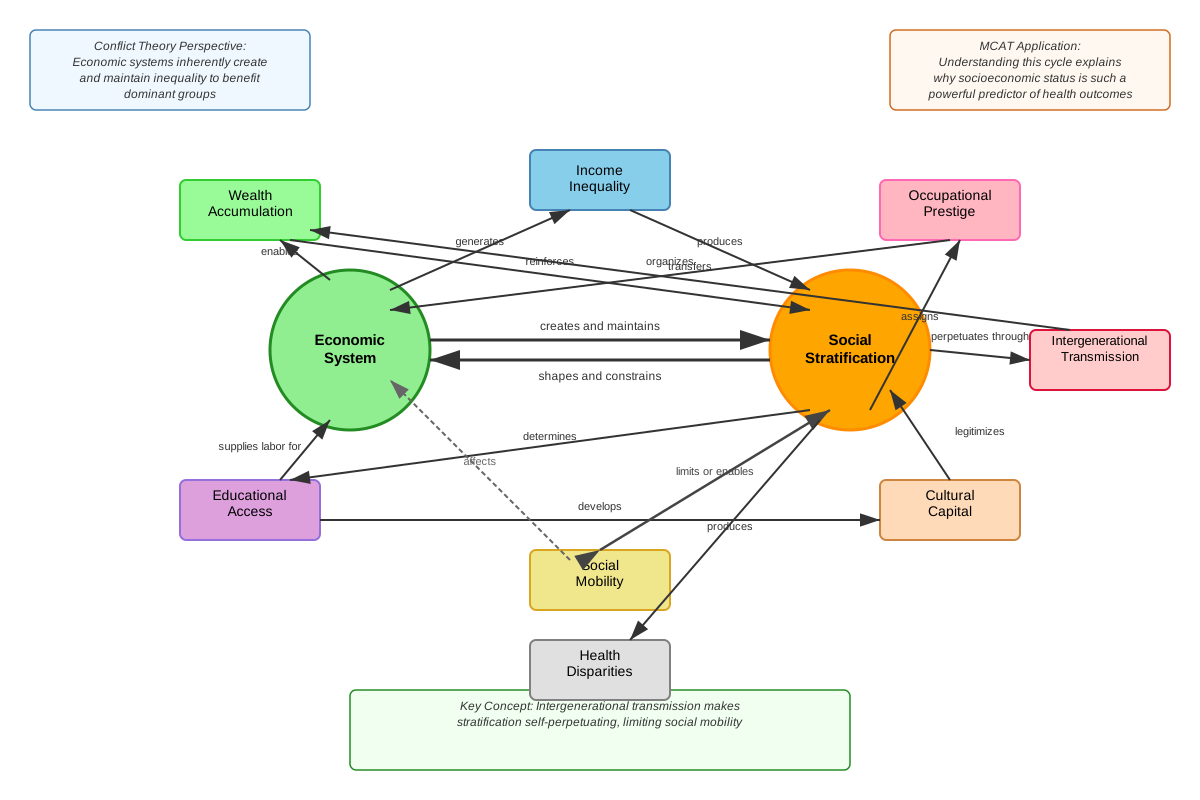
The economy serves as the primary mechanism generating social stratification—the hierarchical arrangement of individuals and groups based on valued resources. Economic stratification manifests through unequal distribution of wealth (accumulated assets), income (earnings flow), and economic opportunities. These economic inequalities intersect with other stratification dimensions including race, gender, education, and geographic location.
Income inequality refers to disparities in earnings from employment, investments, and transfers. The Gini coefficient measures income inequality on a scale from 0 (perfect equality) to 1 (perfect inequality), providing a standardized metric for comparing societies. High income inequality correlates with numerous negative social outcomes, including reduced social mobility, increased crime rates, poorer population health, and decreased social cohesion.
Wealth inequality typically exceeds income inequality because wealth accumulates across generations through inheritance, investment returns, and property appreciation. Wealth provides economic security, generates passive income, and creates opportunities for education and entrepreneurship, making wealth concentration a powerful mechanism perpetuating stratification across generations.
Economic mobility describes the ability of individuals or families to move between economic positions within the stratification system. Intragenerational mobility refers to changes during an individual's lifetime, while intergenerational mobility describes changes between parents and children. Societies vary considerably in economic mobility rates, with structural factors including educational access, labor market conditions, discrimination, and social policies significantly influencing mobility opportunities.
Economy as Social Determinant of Health
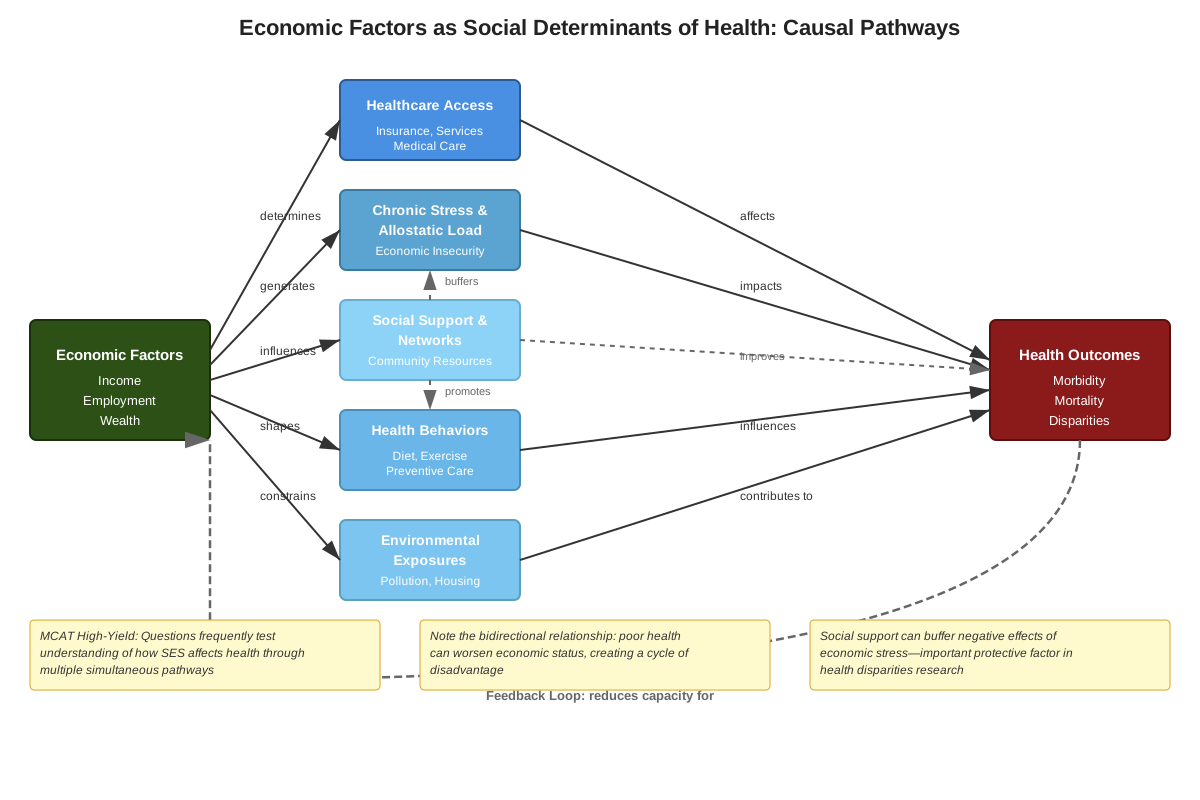
Economic factors represent critical social determinants of health—the conditions in which people are born, grow, live, work, and age that shape health outcomes. The relationship between economy and health operates through multiple pathways that MCAT questions frequently explore:
Direct material pathways connect economic resources to health through purchasing power for nutritious food, safe housing, healthcare services, and health-promoting goods. Economic deprivation limits access to these health-protective resources, directly increasing disease risk and reducing treatment effectiveness.
Psychosocial pathways link economic circumstances to health through stress mechanisms. Financial insecurity, unemployment, job instability, and relative economic deprivation generate chronic stress that activates physiological stress responses, increasing risks for cardiovascular disease, mental health disorders, and immune dysfunction. The relative deprivation hypothesis suggests that perceived economic disadvantage relative to reference groups generates health-damaging stress even when absolute material needs are met.
Behavioral pathways connect economic factors to health through influences on health behaviors. Economic stress correlates with increased smoking, alcohol use, poor dietary choices, and reduced physical activity. Limited economic resources also constrain health-promoting behaviors by reducing access to recreational facilities, healthy food options, and preventive healthcare services.
Healthcare access pathways directly link economic resources to health through ability to afford insurance, pay for services, take time off work for medical appointments, and access quality healthcare facilities. Economic barriers to healthcare contribute substantially to health disparities across socioeconomic groups.
Work, Employment, and Occupational Health
Work represents the primary mechanism through which most individuals participate in the economy and obtain economic resources. Sociologically, work provides not only income but also social identity, status, social connections, time structure, and sense of purpose. The occupational structure of a society—the distribution of jobs across different types and levels—reflects economic organization and shapes social stratification.
Employment status significantly affects health and wellbeing through multiple mechanisms. Unemployment correlates with increased rates of depression, anxiety, substance abuse, cardiovascular disease, and mortality. These health effects operate through loss of income, loss of social connections, reduced self-esteem, disrupted time structure, and increased stress. The health impacts of unemployment extend beyond the unemployed individual to affect family members and communities.
Underemployment—working in positions below one's skill level or working fewer hours than desired—also generates negative health consequences through economic insecurity, reduced income, and psychological distress from unfulfilled potential. Job insecurity, even among the currently employed, produces chronic stress and health consequences similar to actual unemployment.
Occupational health examines how work conditions affect worker health and safety. Different occupations carry varying physical hazards (injury risks, toxic exposures, ergonomic strains) and psychosocial hazards (high demands, low control, effort-reward imbalance). The job strain model identifies high-demand, low-control positions as particularly health-damaging, while the effort-reward imbalance model emphasizes how perceived unfairness in the exchange of effort for compensation generates health-damaging stress.
Economic Globalization and Health
Globalization describes the increasing economic, cultural, and political interconnection of societies worldwide. Economic globalization involves expansion of international trade, growth of multinational corporations, global financial integration, and international labor markets. These processes create complex health implications that MCAT passages may explore.
Globalization can improve health through economic growth that increases resources for healthcare, technology transfer that spreads medical innovations, and international cooperation on health challenges. However, globalization also generates health risks through rapid disease spread across borders, environmental degradation from industrial expansion, labor exploitation in global supply chains, and widening inequalities between and within nations.
The social determinants of health framework emphasizes how global economic structures shape population health patterns. International trade agreements affect food systems and nutrition, global labor markets influence working conditions and occupational health, and international financial policies impact government capacity to fund health services and social programs.
Concept Relationships
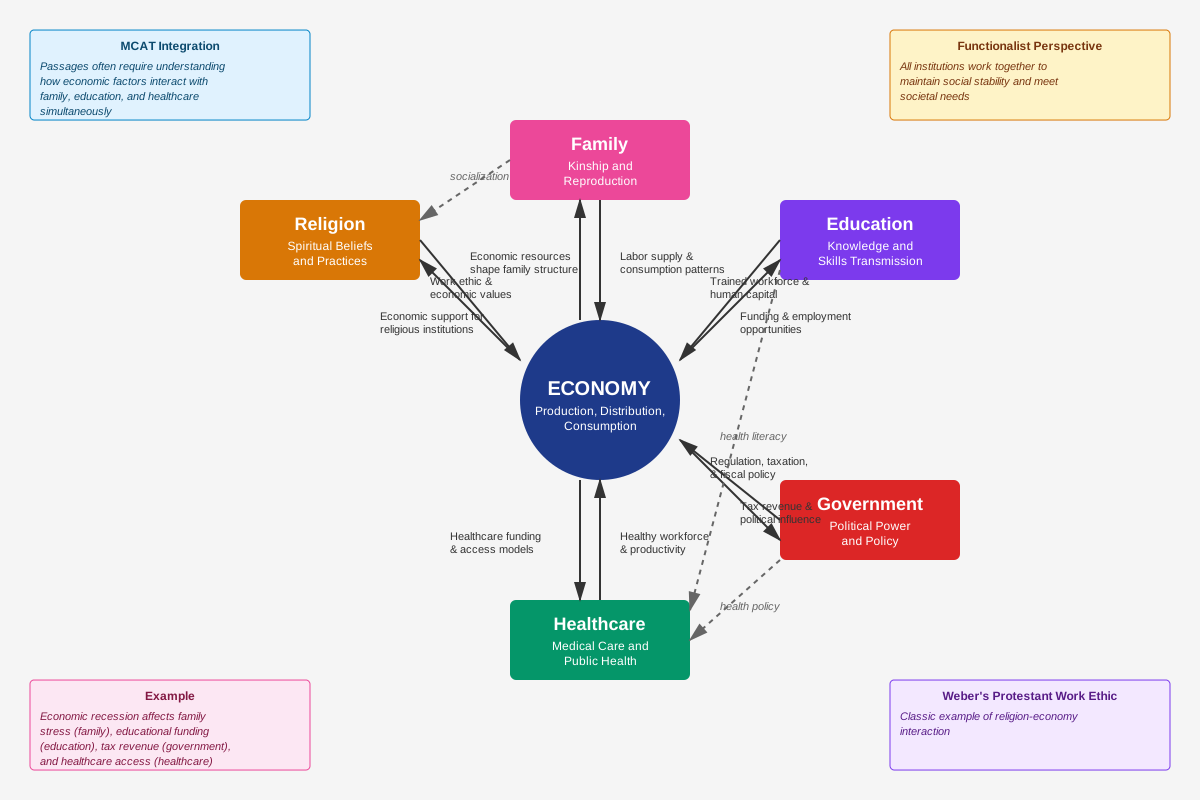
The economy functions as a central organizing institution that connects to virtually all other sociological concepts. Understanding these relationships is essential for MCAT success, as exam questions frequently require recognizing how economic factors interact with other social forces.
Economy → Social Stratification: Economic systems directly generate stratification by determining resource distribution patterns. Capitalism produces class-based stratification through market competition, while socialist systems attempt to reduce economic stratification through redistribution. The economy creates the material basis for social class divisions, which then influence access to education, healthcare, political power, and social networks.
Economy ↔ Education: Bidirectional relationships connect economic and educational institutions. Education systems prepare workers for economic roles through human capital development, while economic structures shape educational access and outcomes through funding mechanisms, opportunity costs of schooling, and returns to education. Economic inequality often perpetuates across generations through unequal educational opportunities.
Economy ↔ Family: Economic conditions profoundly influence family formation, structure, and functioning. Economic resources affect marriage timing, fertility decisions, household composition, and parenting practices. Conversely, families provide crucial economic functions including socialization of workers, unpaid domestic labor, consumption decisions, and intergenerational wealth transfer.
Economy → Health: As detailed above, economic factors operate as powerful social determinants of health through material, psychosocial, behavioral, and healthcare access pathways. This unidirectional emphasis reflects how economic conditions shape health more strongly than health shapes economic conditions, though bidirectional effects exist (e.g., illness causing economic hardship).
Economy ↔ Political Systems: Economic and political institutions interact continuously. Political systems regulate economic activity through laws, policies, and enforcement mechanisms, while economic actors influence political processes through lobbying, campaign contributions, and structural power. Different political-economic arrangements (welfare states, neoliberal states, developmental states) reflect varying balances of political and economic power.
Economy → Culture: Economic systems shape cultural values regarding work, success, consumption, and social relationships. Capitalist economies tend to emphasize individualism, competition, and material success, while socialist economies may emphasize collective welfare and equality. However, culture also influences economic behavior through norms governing trust, reciprocity, and acceptable business practices.
Conceptual flow: Economic System → Labor Division → Occupational Structure → Income/Wealth Distribution → Social Stratification → Differential Access to Resources → Health Disparities → Reinforcement of Economic Inequality (feedback loop)
Quick check — test yourself on Economy so far.
Try Flashcards →High-Yield Facts
⭐ The economy is the social institution organizing production, distribution, and consumption of goods and services, embedded within social relationships and cultural values.
⭐ Capitalism emphasizes private ownership and market distribution; socialism emphasizes collective ownership and planned distribution; mixed economies combine both approaches.
⭐ Economic factors operate as social determinants of health through material, psychosocial, behavioral, and healthcare access pathways.
⭐ Income inequality refers to earnings disparities, while wealth inequality refers to asset disparities; wealth inequality typically exceeds income inequality.
⭐ Unemployment correlates with increased rates of depression, anxiety, cardiovascular disease, and mortality through multiple mechanisms including income loss and psychological stress.
- The division of labor creates organic solidarity in modern societies through economic interdependence among specialized workers.
- Economic sectors progress from primary (extraction) to secondary (manufacturing) to tertiary (services) to quaternary (information) as societies develop.
- The Gini coefficient measures income inequality on a scale from 0 (perfect equality) to 1 (perfect inequality).
- Intergenerational mobility describes economic position changes between parents and children; intragenerational mobility describes changes within an individual's lifetime.
- The job strain model identifies high-demand, low-control positions as particularly health-damaging work environments.
- Relative deprivation refers to perceived disadvantage compared to reference groups, generating stress even when absolute needs are met.
- Economic globalization increases international economic integration through trade, investment, and labor market connections, with complex health implications.
- Human capital refers to skills, knowledge, and capabilities that increase worker productivity and economic value.
- Underemployment includes working below skill level or fewer hours than desired, generating economic insecurity and psychological distress.
- Mixed economies characterize most developed nations, combining market mechanisms with government regulation and social welfare programs.
Common Misconceptions
Misconception: The economy only refers to financial markets and monetary transactions. → Correction: Sociologically, the economy encompasses all systems of production, distribution, and consumption, including informal exchanges, household production, and the social relationships embedding economic activity. The economy extends far beyond formal markets to include unpaid labor, barter systems, and gift economies.
Misconception: Economic systems are natural or inevitable rather than socially constructed. → Correction: Economic systems represent social choices reflecting cultural values, power distributions, and historical development. Different societies organize economic activity through varying institutional arrangements, demonstrating that economic structures are human creations that can be modified through collective action and policy changes.
Misconception: Individual economic outcomes result purely from personal effort and merit. → Correction: While individual effort matters, economic outcomes reflect complex interactions between individual characteristics and structural factors including family background, educational opportunities, discrimination, labor market conditions, and social networks. Structural factors significantly constrain or enable individual economic mobility.
Misconception: Health determines economic status more than economic status determines health. → Correction: While health can affect economic outcomes (e.g., illness causing job loss), the predominant causal direction flows from economic conditions to health outcomes. Economic factors operate as fundamental social determinants of health through multiple pathways, making economic circumstances a primary driver of health disparities.
Misconception: Wealth and income are interchangeable terms. → Correction: Income refers to the flow of earnings over time (wages, salaries, investment returns), while wealth refers to the stock of accumulated assets (property, savings, investments) at a point in time. Wealth inequality typically exceeds income inequality, and wealth provides economic security and opportunities beyond what income alone provides.
Misconception: Economic globalization uniformly benefits or harms health across all populations. → Correction: Globalization's health effects are complex and unevenly distributed. Some populations benefit from economic growth and technology transfer, while others experience exploitation, environmental degradation, or widening inequalities. Health impacts depend on how globalization processes interact with local contexts, policies, and power structures.
Worked Examples
Example 1: Analyzing Economic Determinants of Health Disparities
Vignette: A study examines cardiovascular disease (CVD) rates across neighborhoods in a metropolitan area. Researchers find that neighborhoods with median household incomes below $35,000 have CVD rates 2.5 times higher than neighborhoods with median incomes above $75,000. The association persists after controlling for individual-level factors including age, sex, and race. The study also finds that low-income neighborhoods have fewer grocery stores selling fresh produce, more fast-food restaurants, fewer recreational facilities, higher crime rates, and greater exposure to air pollution.
Question: Which pathway best explains how neighborhood economic conditions affect CVD rates in this scenario?
Analysis:
Step 1: Identify the economic factor—neighborhood-level income, representing a structural economic characteristic rather than individual economic status.
Step 2: Recognize that the association persists after controlling for individual characteristics, suggesting neighborhood economic conditions exert independent effects beyond individual socioeconomic status.
Step 3: Examine the mechanisms described—limited healthy food access, abundant unhealthy food options, reduced physical activity opportunities, chronic stress from crime exposure, and environmental health hazards.
Step 4: Classify these mechanisms according to social determinants of health pathways:
- Material pathway: Limited access to health-promoting resources (healthy food, safe recreation spaces)
- Behavioral pathway: Environmental constraints on health behaviors (diet, physical activity)
- Environmental pathway: Direct health hazards (air pollution)
- Psychosocial pathway: Chronic stress from neighborhood conditions
Step 5: Recognize this as a structural economic determinant operating through multiple simultaneous pathways, demonstrating how economic conditions shape the environments in which people live and the resources available for health maintenance.
Answer: The scenario illustrates how neighborhood economic conditions operate as social determinants of health through multiple pathways simultaneously—material constraints on healthy resources, environmental shaping of health behaviors, direct environmental hazards, and psychosocial stress. This represents a structural-level economic effect on health that operates beyond individual economic circumstances.
Connection to learning objectives: This example demonstrates applying economy concepts to exam-style questions, connecting economy to health outcomes, and recognizing how economic structures operate as social determinants of health through multiple mechanisms.
Example 2: Distinguishing Economic Systems and Their Health Implications
Vignette: Country A provides universal healthcare coverage funded through taxation, with all citizens receiving comprehensive medical services regardless of ability to pay. The government employs most healthcare workers and owns most hospitals. Country B provides healthcare primarily through private insurance purchased by individuals or provided by employers. Government programs cover only elderly and very poor populations. Healthcare facilities are mostly privately owned and operated for profit. Country C combines universal coverage for basic services with private insurance options for additional services, mixing public and private healthcare delivery.
Question: How do these different economic approaches to healthcare reflect broader economic system characteristics, and what are their implications for health equity?
Analysis:
Step 1: Identify the economic system characteristics reflected in each healthcare approach:
- Country A: Collective provision, government ownership, universal access—reflects socialist principles applied to healthcare
- Country B: Private provision, market-based distribution, limited government role—reflects capitalist principles applied to healthcare
- Country C: Mixed public-private approach—reflects mixed economy principles applied to healthcare
Step 2: Analyze equity implications using economic sociology concepts:
Country A's approach emphasizes equality of access regardless of economic resources, potentially reducing health disparities related to ability to pay. However, this system may face challenges in efficiency, innovation, or individual choice that critics of socialist approaches emphasize.
Country B's approach creates market-based stratification in healthcare access, where economic resources determine service quality and availability. This reflects capitalism's general tendency to distribute goods through purchasing power, potentially creating significant health disparities between economic groups but possibly incentivizing innovation and efficiency.
Country C's approach attempts to balance equity and efficiency by ensuring basic universal coverage while allowing market mechanisms for additional services. This reflects mixed economy principles of providing social safety nets while maintaining private sector roles.
Step 3: Connect to broader sociological concepts:
- These healthcare systems reflect how economic institutions shape access to valued resources (health services)
- Different systems create different patterns of health-related social stratification
- Economic organization of healthcare affects health outcomes as a social determinant of health
- Systems reflect cultural values regarding collective responsibility versus individual responsibility for health
Answer: The three countries represent socialist, capitalist, and mixed economic approaches to healthcare organization. Country A's universal public system reflects socialist principles emphasizing equality and collective provision, likely reducing economic barriers to care but potentially facing efficiency challenges. Country B's market-based system reflects capitalist principles emphasizing private provision and individual responsibility, potentially creating innovation incentives but likely generating health disparities based on economic resources. Country C's mixed approach attempts to balance equity and efficiency through universal basic coverage with private options, reflecting mixed economy principles common in developed nations.
Connection to learning objectives: This example demonstrates distinguishing between economic systems, connecting economy to health outcomes, applying economic concepts to healthcare scenarios, and recognizing how economic organization shapes social stratification in health access.
Exam Strategy
When approaching MCAT questions involving economy concepts, employ these strategic approaches:
Identify the level of analysis: Economy questions may focus on individual economic circumstances (micro-level), organizational or community economic factors (meso-level), or societal economic systems (macro-level). Recognizing the appropriate level helps select correct answers. Watch for trigger words like "individual income" (micro), "neighborhood economic conditions" (meso), or "economic system" (macro).
Distinguish correlation from causation: The MCAT frequently tests whether students can recognize that economic-health correlations may reflect economic factors causing health outcomes, health affecting economic circumstances, or third variables influencing both. Generally, economic conditions more strongly determine health than vice versa, but bidirectional relationships exist. Look for language indicating causal direction: "economic factors contribute to," "health outcomes result from," or "economic consequences of illness."
Recognize multiple pathways: Economic factors affect health through material, psychosocial, behavioral, and healthcare access pathways simultaneously. Correct answers often acknowledge multiple mechanisms rather than single pathways. Eliminate answers suggesting only one mechanism when passages describe complex scenarios.
Connect to social determinants framework: Economy questions frequently embed within social determinants of health contexts. Recognize economic factors as "upstream" determinants that shape "downstream" health behaviors and outcomes. This framework helps predict answer patterns and eliminate options that reverse causal sequences.
Watch for structural versus individual framing: The MCAT tests whether students recognize structural economic factors (systems, policies, labor markets) versus individual economic circumstances (personal income, employment status). Questions may ask about interventions, with structural approaches targeting economic systems and individual approaches targeting personal economic management. Structural factors generally have broader population-level impacts.
Time allocation: Economy passages typically require 1.5-2 minutes for reading and 1-1.5 minutes per question. Budget approximately 9-10 minutes for a typical 6-question passage set. Economy concepts often appear in straightforward applications, allowing efficient question completion when concepts are well-mastered.
Process of elimination: Eliminate answers that:
- Confuse economic systems (e.g., attributing socialist characteristics to capitalism)
- Reverse causal directions (e.g., suggesting health primarily determines economic status)
- Ignore structural factors by focusing exclusively on individual choices
- Oversimplify complex economic-health relationships to single mechanisms
- Contradict the social determinants of health framework
Trigger phrases indicating economy content:
- "Socioeconomic status," "income level," "wealth distribution"
- "Employment status," "job security," "occupational conditions"
- "Economic inequality," "income disparities," "wealth gap"
- "Healthcare access," "ability to afford," "insurance coverage"
- "Neighborhood economic conditions," "community resources"
- "Economic system," "market-based," "universal coverage"
Memory Techniques
MCAT Economy Mnemonic - "CAPITALISM":
- Competition drives markets
- Accumulation of private wealth
- Private ownership of production means
- Inequality tends to increase
- Trade and markets distribute goods
- Advancement through merit (ideally)
- Limited government intervention
- Innovation incentivized
- Stratification results from market outcomes
- Mobility possible but unequal
Social Determinants Pathway Mnemonic - "MBPH":
- Material: Direct purchasing power for health resources
- Behavioral: Economic influences on health behaviors
- Psychosocial: Stress from economic insecurity
- Healthcare: Access determined by economic resources
Economic Sectors Sequence - "PSTQ":
- Primary: Extraction (agriculture, mining)
- Secondary: Manufacturing (factories, construction)
- Tertiary: Services (retail, healthcare, education)
- Quaternary: Information/knowledge (research, technology)
Visualization Strategy: Picture the economy as a tree with roots, trunk, and branches. The roots represent the economic system (capitalism, socialism, mixed) providing foundational structure. The trunk represents the division of labor and occupational structure organizing productive activity. The branches represent different sectors and industries. The leaves represent individual workers and consumers. The fruit represents goods and services produced. This image helps visualize how economic systems (roots) support structures (trunk) that organize activity (branches) involving people (leaves) to produce outcomes (fruit).
Inequality Visualization: Imagine a pyramid for wealth distribution. In high-inequality societies, the pyramid is very steep with a tiny peak (few wealthy) and broad base (many poor). In low-inequality societies, the pyramid is flatter with more gradual slopes. This visual helps remember that wealth concentration creates steep stratification hierarchies.
Summary
The economy represents the social institution organizing production, distribution, and consumption of goods and services, functioning as a critical component of social structure that profoundly influences health outcomes and social stratification. For the MCAT, understanding economy requires recognizing how different economic systems (capitalism, socialism, mixed economies) create distinct patterns of resource distribution and social organization. Economic factors operate as fundamental social determinants of health through material pathways (purchasing power for health resources), psychosocial pathways (stress from economic insecurity), behavioral pathways (economic influences on health behaviors), and healthcare access pathways (ability to afford services). The economy connects to virtually all other sociological concepts, shaping social stratification through income and wealth distribution, interacting with educational and family institutions, and reflecting cultural values regarding work and success. MCAT questions frequently test whether students can distinguish between economic systems, recognize how economic factors affect health through multiple mechanisms, identify structural versus individual economic influences, and apply economic concepts to healthcare scenarios. Mastery requires understanding both micro-level economic circumstances (individual income, employment status) and macro-level economic structures (systems, policies, labor markets) while recognizing their complex interactions in shaping health and social outcomes.
Key Takeaways
- The economy is the social institution organizing production, distribution, and consumption, embedded within social relationships and extending beyond simple market transactions to include informal exchanges and unpaid labor
- Capitalism (private ownership, market distribution), socialism (collective ownership, planned distribution), and mixed economies (combined approaches) create distinct patterns of stratification and resource access with different health equity implications
- Economic factors operate as powerful social determinants of health through material, psychosocial, behavioral, and healthcare access pathways, making economic conditions fundamental drivers of health disparities
- The division of labor creates economic interdependence and organic solidarity while organizing societies into primary, secondary, tertiary, and quaternary sectors that reflect development levels
- Unemployment, underemployment, and job insecurity generate significant negative health consequences through income loss, psychological stress, and disrupted social connections
- Economic inequality manifests through both income disparities (earnings flow) and wealth disparities (accumulated assets), with wealth inequality typically exceeding income inequality and perpetuating across generations
- The economy connects bidirectionally with education, family, and political institutions while unidirectionally influencing health outcomes more strongly than health influences economic status
Related Topics
Social Stratification and Social Class: Deepens understanding of how economic systems create hierarchical social arrangements, examining class consciousness, status groups, and mobility patterns that economic structures generate.
Social Determinants of Health: Expands the economic-health connection by examining how multiple social factors (education, neighborhood, discrimination) interact with economic conditions to shape population health patterns.
Healthcare Systems and Policy: Applies economic concepts to analyze different approaches to healthcare organization, financing, and delivery, examining how economic principles shape medical care access and quality.
Globalization and Social Change: Extends economic analysis to international scales, examining how global economic integration affects societies, cultures, health patterns, and inequality within and between nations.
Work and Occupations: Explores in greater depth how labor markets function, occupational structures evolve, and work conditions affect individual and population wellbeing through economic and social mechanisms.
Social Institutions: Provides broader context for understanding how the economy interacts with family, education, religion, and government as interconnected institutional systems organizing social life.
Practice CTA
Now that you have mastered the core concepts of economy within sociology, challenge yourself with practice questions and flashcards to reinforce your understanding. The MCAT rewards not just knowledge but application—practice identifying economic concepts in complex passages, distinguishing between economic systems in healthcare scenarios, and recognizing how economic factors operate as social determinants of health. Each practice question strengthens your ability to quickly recognize economy-related content and apply appropriate frameworks under timed conditions. Your investment in mastering this high-yield topic will pay dividends across multiple question types on test day. You've built a strong foundation—now solidify it through deliberate practice!
Sign up free to keep reading
Create a free AnvayaPrep account to finish this MCAT guide on Economy — plus flashcards and practice questions.