Overview
Norms are the unwritten and written rules that govern behavior within a society or group, serving as the fundamental building blocks of social order and predictability. In Sociology, norms represent shared expectations about appropriate conduct that guide interactions, maintain social cohesion, and enable individuals to anticipate how others will behave in various situations. These behavioral standards exist across all levels of social organization—from intimate dyads to entire civilizations—and operate both consciously and unconsciously to shape human action. Understanding norms is essential for comprehending how societies maintain stability, how deviance is defined and managed, and how cultural values translate into everyday behavior.
For the MCAT, norms represent a high-yield topic that appears frequently in the Psychological, Social, and Biological Foundations of Behavior section. Questions often present scenarios requiring test-takers to identify different types of norms, distinguish between formal and informal social controls, or analyze how norm violations affect group dynamics and individual identity. The MCAT particularly emphasizes the relationship between norms and other sociological constructs such as values, sanctions, deviance, socialization, and social institutions. Test passages may describe cultural practices, workplace behaviors, medical settings, or experimental social situations where understanding normative expectations is crucial for selecting the correct answer.
Within the broader framework of Social Structure and Institutions, norms function as the operational mechanisms through which abstract cultural values become concrete behavioral expectations. They connect individual agency to structural constraints, linking micro-level interactions to macro-level social patterns. Norms intersect with concepts of social control, conformity, group dynamics, cultural transmission, and institutional functioning—making them a conceptual hub that connects multiple domains of sociological inquiry tested on the MCAT.
Learning Objectives
- [ ] Define norms using accurate Sociology terminology
- [ ] Explain why norms matter for the MCAT
- [ ] Apply norms to exam-style questions
- [ ] Identify common mistakes related to norms
- [ ] Connect norms to related Sociology concepts
- [ ] Distinguish between different types of norms (folkways, mores, taboos, laws)
- [ ] Analyze the relationship between norms, sanctions, and social control
- [ ] Evaluate how norm violations contribute to definitions of deviance and social change
Prerequisites
- Culture and Society: Understanding that culture comprises shared beliefs, values, and practices is essential because norms represent the behavioral manifestation of cultural values
- Socialization: Knowledge of how individuals learn social expectations through primary and secondary socialization explains how norms are transmitted and internalized
- Groups and Organizations: Familiarity with in-groups, out-groups, and reference groups provides context for understanding how different groups maintain distinct normative systems
- Values: Recognizing that values are abstract ideals helps distinguish them from norms, which are specific behavioral guidelines
Why This Topic Matters
Clinical and Real-World Significance
Norms profoundly impact healthcare delivery, patient compliance, and medical decision-making. Healthcare professionals must navigate complex normative systems including professional ethics codes, institutional protocols, cultural health beliefs, and patient expectations. Understanding norms helps physicians recognize when cultural practices conflict with medical recommendations, identify barriers to treatment adherence, and appreciate how social stigma affects health-seeking behavior. For instance, norms surrounding mental health disclosure vary dramatically across cultures, directly influencing diagnosis rates and treatment outcomes. Medical professionals who understand normative variation can provide more culturally competent care and better address health disparities.
MCAT Exam Statistics
Norms appear in approximately 15-20% of Sociology questions on the MCAT, making them one of the most frequently tested concepts in the Psychological, Social, and Biological Foundations section. Questions typically fall into three categories: (1) identification questions asking students to classify norm types from scenarios, (2) application questions requiring analysis of how norm violations affect social dynamics, and (3) synthesis questions connecting norms to deviance, socialization, or social institutions. The AAMC particularly favors questions that integrate norms with other concepts rather than testing definitional knowledge in isolation.
Common Exam Passage Contexts
MCAT passages featuring norms often present: anthropological studies of cultural practices requiring norm classification; workplace scenarios involving professional conduct expectations; experimental studies examining conformity and obedience; healthcare settings where medical norms conflict with patient cultural norms; descriptions of subcultures with distinct normative systems; or historical accounts of social movements challenging existing norms. Recognizing these contexts helps students quickly identify when norm-related concepts are being tested.
Core Concepts
Definition and Fundamental Characteristics
Norms are socially constructed rules that prescribe appropriate and inappropriate behavior within specific contexts, groups, or societies. Unlike instincts or reflexes, norms are learned through socialization and vary across cultures, time periods, and social situations. They represent the "should" and "should not" of social life—the expectations that guide conduct and enable social coordination. Norms possess several defining characteristics: they are shared among group members (though not necessarily universally), enforced through sanctions (positive or negative consequences), context-dependent (behavior appropriate in one setting may violate norms in another), and subject to change over time as societies evolve.
Norms operate at multiple levels of consciousness. Some norms are explicitly codified and consciously followed (like traffic laws), while others function as implicit background assumptions that individuals follow automatically without deliberate thought (like maintaining personal space in elevators). This dual nature makes norms both powerful regulators of behavior and potential sources of cultural misunderstanding when individuals from different normative systems interact.
Types of Norms: A Hierarchical Classification
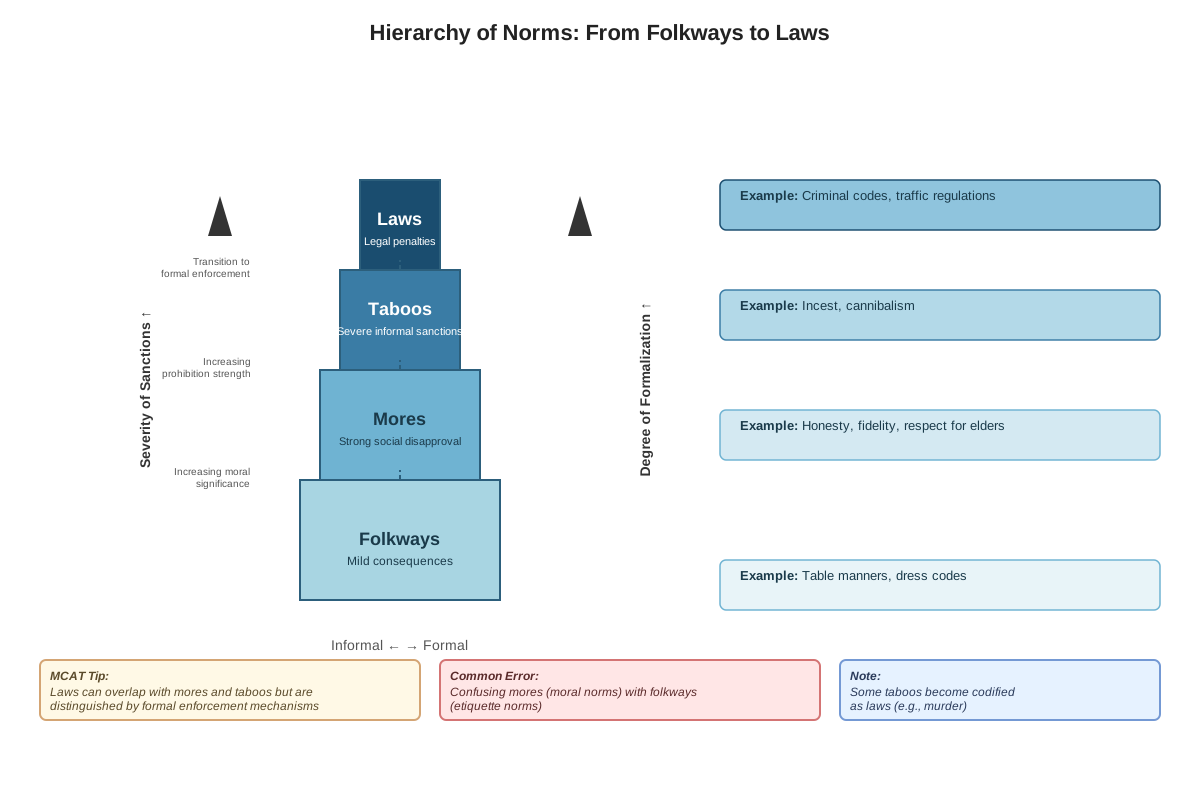
Sociologists classify norms along a continuum based on their importance to social functioning and the severity of sanctions for violations:
| Norm Type | Definition | Violation Consequence | Examples |
|---|---|---|---|
| Folkways | Informal norms governing everyday behavior and etiquette | Mild disapproval, social awkwardness | Table manners, dress codes, greeting rituals |
| Mores | Norms with strong moral significance essential to social welfare | Strong disapproval, ostracism, moral outrage | Honesty, fidelity, care for children |
| Taboos | Extremely strong prohibitions against behaviors considered deeply repugnant | Severe social rejection, potential violence | Incest, cannibalism, desecration of sacred objects |
| Laws | Formally codified norms enforced by institutional authority | Legal penalties (fines, imprisonment, execution) | Criminal statutes, civil regulations, constitutional provisions |
Folkways represent the weakest category of norms, governing routine social interactions and conventions. Violating folkways typically results in minor social discomfort rather than serious consequences. For example, wearing pajamas to a formal dinner violates folkway expectations but doesn't threaten social order. The MCAT often tests whether students can distinguish folkway violations (which produce embarrassment) from more serious norm violations.
Mores (pronounced "MOR-ays") carry moral weight and relate to a society's fundamental values about right and wrong. Violating mores generates moral condemnation and can result in social exclusion. The distinction between folkways and mores isn't always absolute—norms can shift categories as cultural values change. For instance, norms about smoking in public spaces have evolved from folkways to mores in many societies as health concerns have intensified.
Taboos represent the strongest informal norms, prohibiting behaviors that evoke visceral disgust or horror. Taboos often relate to sexuality, death, bodily functions, or sacred matters. The strength of taboos varies across cultures—behaviors considered taboo in one society may be acceptable or even normative in another. MCAT questions may present cross-cultural scenarios requiring recognition that taboo status is culturally relative.
Laws differ from other norms through formal codification and institutional enforcement. While most laws reflect underlying mores (laws against murder, theft), some laws enforce folkways (traffic regulations) or may even conflict with evolving social norms (laws that lag behind changing attitudes). The relationship between laws and informal norms is dynamic—social movements often seek to change laws to align with shifting normative expectations.
Formal vs. Informal Norms
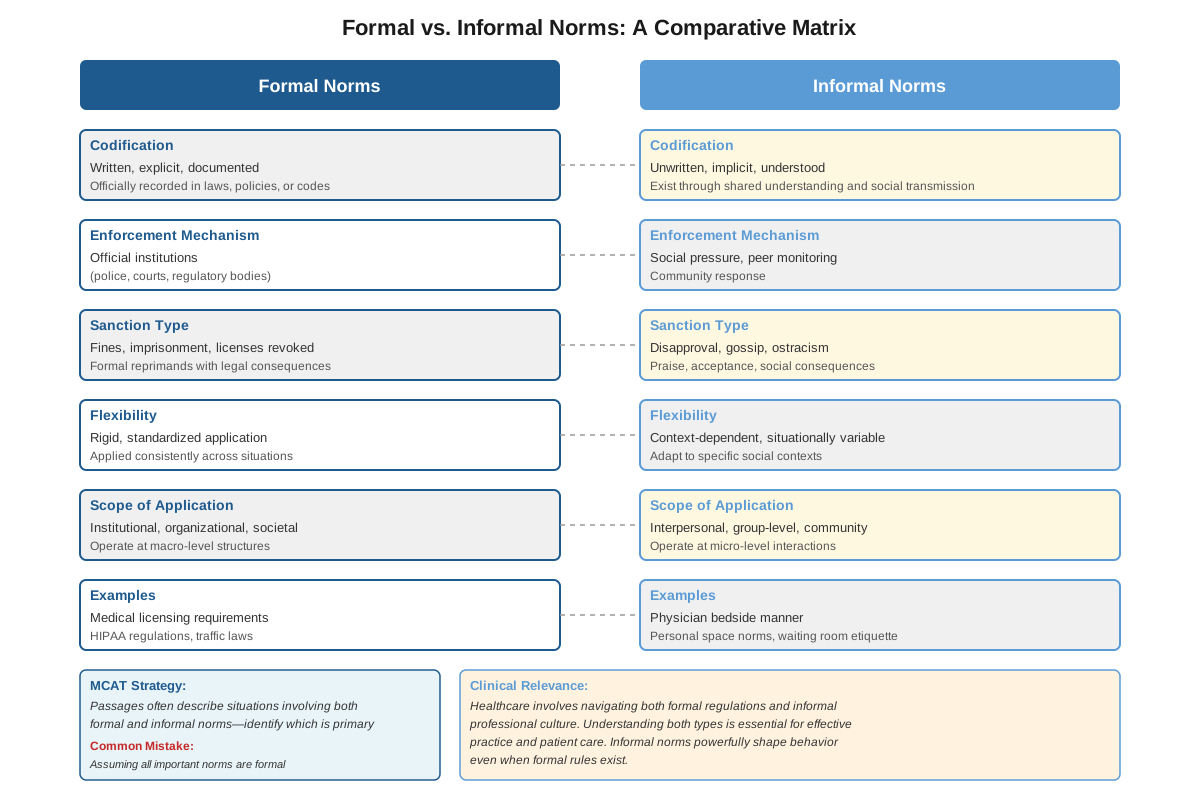
Beyond the hierarchical classification, norms can be categorized as formal or informal based on how explicitly they are stated and enforced:
Formal norms are explicitly written, officially communicated, and enforced through designated authorities. These include laws, organizational policies, professional codes of conduct, and institutional regulations. Formal norms typically specify both the expected behavior and the consequences for violations. Medical licensing requirements, hospital protocols, and research ethics guidelines exemplify formal norms in healthcare contexts.
Informal norms are unwritten expectations learned through observation, socialization, and social interaction. These norms are enforced through informal sanctions like approval, disapproval, gossip, or social inclusion/exclusion. Most everyday social behavior is governed by informal norms—how close to stand during conversation, appropriate topics for small talk, or when to make eye contact. The MCAT frequently tests understanding of how informal norms operate in medical settings, such as the unwritten rules governing physician-patient interactions.
Prescriptive vs. Proscriptive Norms
Norms can also be classified by whether they mandate action or prohibit it:
Prescriptive norms specify what individuals should do—positive obligations and expected behaviors. Examples include norms to help others in distress, reciprocate favors, or respect elders. In medical contexts, prescriptive norms include obligations to maintain patient confidentiality and obtain informed consent.
Proscriptive norms specify what individuals should not do—prohibitions and forbidden behaviors. These include taboos, prohibitions against violence, and restrictions on deception. Most criminal laws are proscriptive, defining impermissible conduct rather than mandating specific actions.
Sanctions: The Enforcement Mechanism
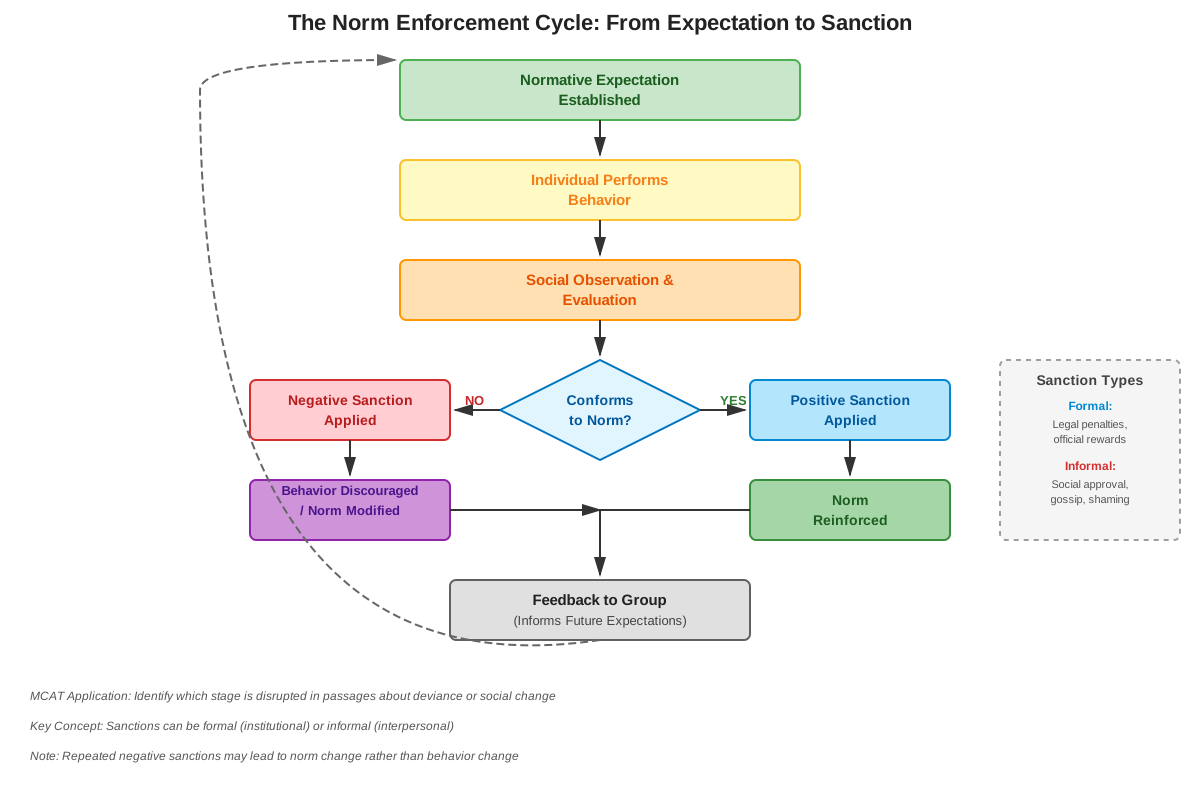
Sanctions are the rewards and punishments that enforce norms, making them operational rather than merely aspirational. Sanctions can be classified along two dimensions:
Positive sanctions reward norm compliance (praise, awards, promotions, social acceptance), while negative sanctions punish violations (criticism, fines, imprisonment, social rejection). Both types motivate conformity, though through different mechanisms.
Formal sanctions are administered by official authorities through institutional channels (legal penalties, academic grades, professional licensure), while informal sanctions operate through everyday social interactions (smiles, frowns, gossip, inclusion/exclusion). The most effective norm enforcement typically combines multiple sanction types—for example, laws against theft are enforced through formal legal penalties but also through informal social disapproval.
The relationship between norm strength and sanction severity generally correlates: stronger norms (mores, taboos, laws) typically invoke more severe sanctions for violations, while weaker norms (folkways) generate milder responses. However, this relationship isn't absolute—some laws carry minimal penalties despite formal status, while some informal norms generate intense social consequences.
Norm Internalization and Social Control
Internalization refers to the process through which external norms become part of an individual's internal value system, transforming external social control into self-regulation. Successfully internalized norms are followed even without external monitoring because individuals have adopted them as personal standards. This process occurs primarily during socialization, particularly in childhood, but continues throughout life as individuals encounter new social contexts.
Internalization represents the most efficient form of social control because it eliminates the need for constant external enforcement. When norms are deeply internalized, violations produce internal sanctions (guilt, shame, cognitive dissonance) even in the absence of external observers. The MCAT often tests understanding of how internalization relates to concepts like the superego (Freudian theory), moral development (Kohlberg), and identity formation.
Cultural Variation in Norms
Norms vary dramatically across cultures, making cultural competence essential for healthcare providers. What constitutes appropriate behavior in one cultural context may violate norms in another. Examples of culturally variable norms include:
- Personal space and physical contact: Comfortable interpersonal distance varies from approximately 18 inches in some Middle Eastern cultures to several feet in some Northern European cultures
- Eye contact: Direct eye contact signals respect and honesty in many Western cultures but may indicate disrespect or aggression in some Asian and Indigenous cultures
- Time orientation: Punctuality norms range from strict adherence to scheduled times to more flexible, relationship-oriented approaches
- Communication style: Norms about directness, emotional expression, and conflict management vary substantially across cultures
Understanding normative variation helps explain health disparities, treatment adherence patterns, and communication challenges in diverse healthcare settings. MCAT questions often present cross-cultural scenarios requiring recognition that norm violations are context-dependent rather than absolute.
Concept Relationships
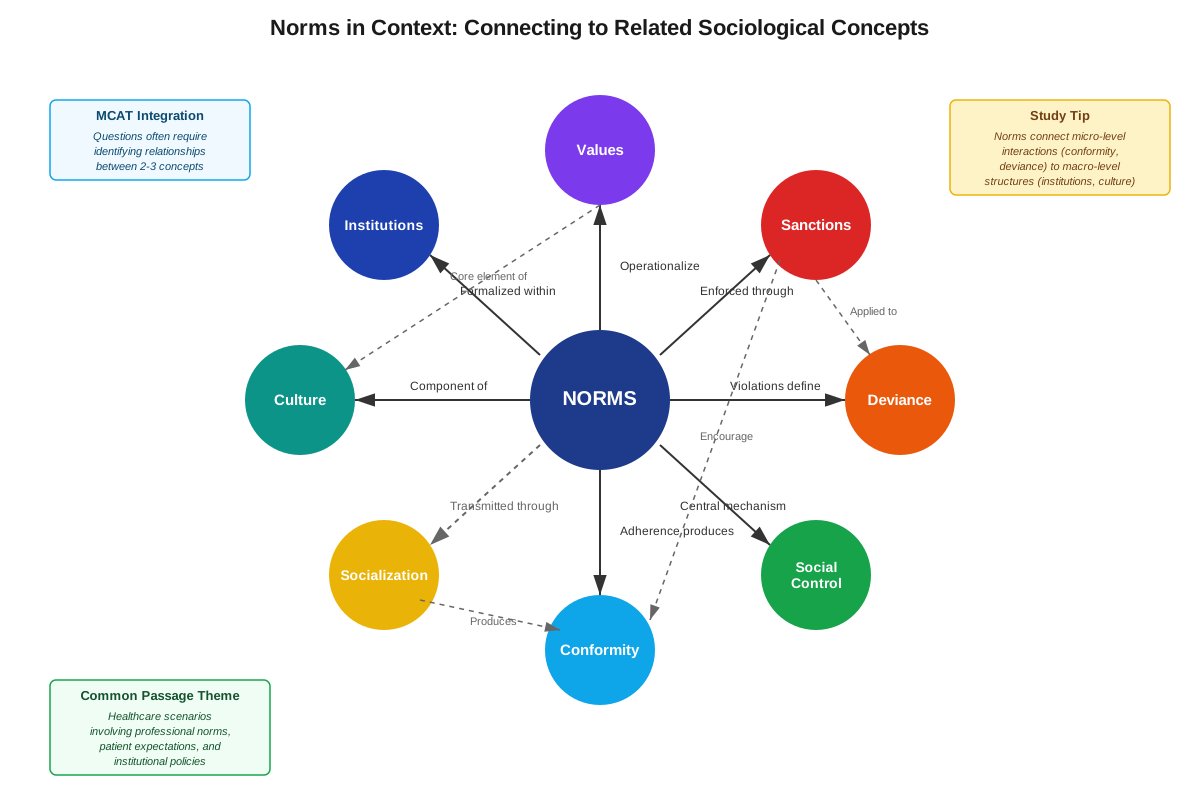
Norms function as a central hub connecting multiple sociological concepts tested on the MCAT. Understanding these relationships enables more sophisticated analysis of exam questions:
Norms ↔ Values: Values are abstract ideals (freedom, equality, honesty), while norms are concrete behavioral guidelines that operationalize values. Values provide the "why" behind norms—the underlying justification for behavioral expectations. For example, the value of human dignity underlies norms about respectful treatment of others.
Norms → Sanctions: Sanctions enforce norms, creating consequences for compliance and violations. This relationship is bidirectional—the severity of sanctions signals norm importance, while norm strength determines appropriate sanction levels.
Norms → Deviance: Deviance is defined relative to norms—behavior that violates normative expectations. Without norms, the concept of deviance becomes meaningless. This relationship is socially constructed; what counts as deviant changes as norms evolve.
Socialization → Norms → Internalization: Socialization is the process through which individuals learn norms, leading to internalization when norms become part of personal identity. This sequence explains how external social control becomes self-regulation.
Culture → Norms → Social Structure: Culture provides the broad framework of shared meanings, norms translate cultural values into behavioral expectations, and consistent norm-following creates predictable social structures and institutions.
Norms ↔ Social Control: Norms are the standards by which social control operates, while social control mechanisms (formal and informal) enforce norms. This reciprocal relationship maintains social order.
Norms → Conformity: Conformity involves adjusting behavior to align with group norms. Understanding norms is prerequisite to understanding conformity pressures and processes.
Norms ↔ Social Change: Social movements often challenge existing norms, while successful norm change reflects broader social transformation. This dynamic relationship explains how societies evolve while maintaining stability.
Quick check — test yourself on Norms so far.
Try Flashcards →High-Yield Facts
⭐ Norms are socially constructed behavioral expectations that vary across cultures, contexts, and time periods—they are not universal or biologically determined.
⭐ The four main types of norms in order of increasing strength are: folkways (etiquette), mores (moral rules), taboos (strongest prohibitions), and laws (formal codification).
⭐ Sanctions are the enforcement mechanisms for norms and can be positive (rewards) or negative (punishments), and formal (official) or informal (social).
⭐ Internalization occurs when external norms become part of an individual's internal value system, enabling self-regulation without external monitoring.
⭐ Deviance is defined relative to norms—behavior that violates normative expectations in a particular social context.
- Formal norms are explicitly codified and officially enforced, while informal norms are unwritten and enforced through social interaction.
- Prescriptive norms mandate what should be done, while proscriptive norms prohibit specific behaviors.
- Norm violations produce consequences ranging from mild social awkwardness (folkway violations) to severe legal penalties (law violations).
- Cultural competence requires recognizing that norms vary across cultural contexts—behavior appropriate in one culture may violate norms in another.
- The relationship between norms and values is hierarchical: values are abstract ideals, while norms are concrete behavioral guidelines that operationalize values.
- Norms operate at multiple levels of consciousness, from explicit awareness to automatic, unconscious compliance.
- Social institutions (family, education, religion, government) serve as primary mechanisms for norm transmission and enforcement.
- Norm change typically occurs gradually through shifting cultural values, though social movements can accelerate transformation.
- The strength of a norm correlates with the severity of sanctions for violations and the degree of social consensus about its importance.
- Healthcare settings involve complex intersections of professional norms, institutional policies, legal requirements, and patient cultural norms.
Common Misconceptions
Misconception: Norms are universal across all human societies.
Correction: Norms are socially constructed and vary dramatically across cultures, historical periods, and social contexts. What is normative in one society may be deviant in another. Only the existence of norms as a social phenomenon is universal—the specific content of norms is culturally relative.
Misconception: Laws are always the strongest type of norm.
Correction: While laws are formally codified, they may be weaker than informal mores or taboos in terms of actual behavioral influence. Some laws are routinely violated with minimal social disapproval (jaywalking), while some informal norms (taboos) generate more powerful compliance pressures than legal requirements.
Misconception: Violating norms always results in formal punishment.
Correction: Most norm violations are managed through informal sanctions (disapproval, gossip, social exclusion) rather than formal penalties. Only violations of laws and formal organizational rules typically invoke official sanctions. Folkway violations usually produce only mild social discomfort.
Misconception: Norms and values are synonymous terms.
Correction: Values are abstract ideals about what is good, desirable, or important (freedom, equality, honesty), while norms are specific behavioral guidelines that operationalize values (don't cut in line, tell the truth, respect others' property). Values provide the justification for norms but operate at a higher level of abstraction.
Misconception: Once internalized, norms never change.
Correction: Norm internalization is not permanent or immutable. Individuals can undergo resocialization that modifies internalized norms, and societies collectively transform normative systems over time. Social movements, technological changes, and cultural contact all contribute to norm evolution.
Misconception: All members of a society agree on and follow the same norms.
Correction: Normative consensus is rarely complete. Societies contain subcultures with distinct normative systems, generational differences in norm acceptance, and ongoing debates about appropriate behavior. Norm violations are common, and the boundary between normative and deviant behavior is often contested rather than clear-cut.
Worked Examples
Example 1: Identifying Norm Types in a Medical Context
Scenario: A medical student observes several behavioral expectations during hospital rounds: (1) physicians must wash hands before patient contact, (2) team members should not interrupt the attending physician during presentations, (3) medical staff must obtain informed consent before procedures, and (4) discussing patient cases in public elevators is strongly discouraged. Classify each expectation as a folkway, more, taboo, or law.
Analysis:
Expectation 1 (hand washing): This represents both a law (formally required by health regulations) and a more (strong moral significance related to patient safety). When behavior is both legally mandated and morally significant, it occupies multiple categories. The legal classification takes precedence for categorization purposes, but recognizing the moral dimension is important.
Expectation 2 (not interrupting): This is a folkway—an informal norm governing professional etiquette and hierarchy. Violations would create social awkwardness and potentially damage professional relationships but wouldn't constitute moral violations or legal infractions. The consequence would be disapproval rather than serious sanctions.
Expectation 3 (informed consent): This is clearly a law—formally codified in medical ethics regulations and legal statutes. Violations carry serious legal consequences including malpractice liability and potential criminal charges. It also reflects underlying mores about patient autonomy and respect for persons.
Expectation 4 (not discussing cases publicly): This represents a more—a norm with strong moral significance related to patient confidentiality and professional ethics. While HIPAA regulations make some privacy violations illegal, the general expectation to avoid public case discussions is primarily enforced through professional norms and informal sanctions (professional reputation damage, peer disapproval) rather than legal penalties for every instance.
Key Takeaway: Medical settings involve overlapping normative systems (legal, professional, ethical, social), and single behaviors may be regulated by multiple norm types simultaneously. MCAT questions often require distinguishing the primary classification while recognizing secondary dimensions.
Example 2: Analyzing Norm Violation and Social Response
Scenario: A research study examines responses to norm violations in different contexts. In Condition A, a confederate wears pajamas to a formal business meeting. In Condition B, a confederate loudly discusses graphic details of a surgical procedure in a restaurant. In Condition C, a confederate parks in a designated handicapped space without proper authorization. Predict the type and severity of social sanctions in each condition and explain the underlying normative principles.
Analysis:
Condition A (pajamas at business meeting): This violates folkways regarding professional dress codes. Expected sanctions would be informal and mild: surprised looks, social discomfort, possible exclusion from future professional opportunities, and damage to professional credibility. The violation signals lack of social awareness and disrespect for professional norms but doesn't constitute moral transgression. Observers would likely feel embarrassed for the violator rather than morally outraged.
Condition B (graphic medical discussion in restaurant): This violates mores regarding appropriate public discourse and consideration for others. Expected sanctions would be informal but more severe: strong disapproval, requests to stop, possible intervention by restaurant staff, and social ostracism. The violation demonstrates insensitivity to others' comfort and violates norms about appropriate context for disturbing content. Observers would likely feel disgust and moral disapproval, not merely social awkwardness.
Condition C (illegal parking in handicapped space): This violates both laws (formal regulations) and mores (moral norms about fairness and consideration for disabled individuals). Expected sanctions would be both formal and informal: legal penalties (fines, potential towing), strong social disapproval, moral condemnation, and possible confrontation by observers. The violation demonstrates both legal transgression and moral failing, generating multiple sanction types. This represents the most serious violation of the three scenarios.
Comparative Analysis: The severity of social response correlates with norm strength. Folkway violations (Condition A) generate mild discomfort, more violations (Condition B) produce moral disapproval, and law violations with moral dimensions (Condition C) invoke both formal penalties and strong informal sanctions. MCAT questions often require predicting social responses based on norm type and understanding why certain violations generate stronger reactions than others.
Connection to Learning Objectives: This example demonstrates application of norm concepts to predict social behavior, distinguishes between norm types based on violation consequences, and illustrates how sanctions function as enforcement mechanisms—all high-yield skills for MCAT questions.
Exam Strategy
Approaching MCAT Questions on Norms
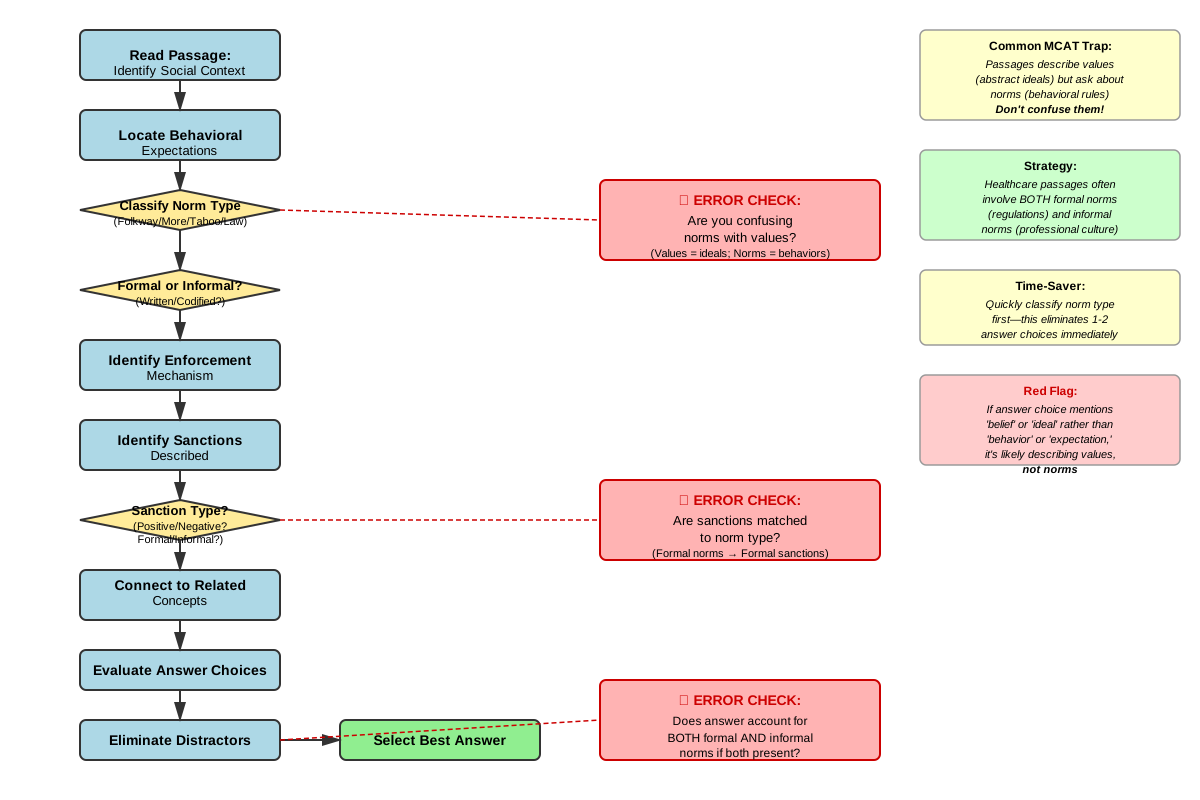
When encountering norm-related questions, follow this systematic approach:
- Identify the social context: Determine whether the scenario involves formal institutions (requiring attention to laws and formal norms) or informal social settings (emphasizing folkways and mores).
- Look for violation cues: MCAT questions often present norm violations rather than compliance. Identify what behavioral expectation is being violated and classify the norm type.
- Assess sanction severity: The strength of social response indicates norm importance. Mild disapproval suggests folkway violations, moral outrage indicates more violations, and legal consequences signal law violations.
- Consider cultural context: Watch for cross-cultural scenarios where norm content varies. The question may test whether you recognize normative relativity rather than assuming universal standards.
- Connect to broader concepts: Norm questions often integrate other concepts (deviance, socialization, social control, conformity). Identify these connections to eliminate incorrect answers.
Trigger Words and Phrases
Recognize these linguistic cues that signal norm-related content:
- "Expected behavior," "appropriate conduct," "social rules": Direct references to norms
- "Should/should not," "ought to": Prescriptive and proscriptive language indicating normative expectations
- "Violation," "transgression," "breaking rules": Signals norm violation and potential deviance
- "Consequences," "punishment," "reward": References to sanctions
- "Cultural differences," "varies across societies": Indicates normative relativity
- "Informal rules," "unwritten expectations": Distinguishes informal from formal norms
- "Legal requirements," "official policy": Signals formal norms and laws
- "Moral obligation," "ethical duty": Often indicates mores rather than folkways
Process of Elimination Tips
When uncertain between answer choices:
- Eliminate options that confuse norms with values: If an answer describes abstract ideals rather than behavioral guidelines, it's likely incorrect.
- Rule out answers that ignore cultural context: Options assuming universal norm content (rather than recognizing cultural variation) are typically wrong.
- Eliminate choices that misclassify norm strength: If an answer treats a folkway violation as if it were a taboo violation (or vice versa), it's incorrect.
- Reject options that confuse formal and informal enforcement: Answers suggesting legal penalties for folkway violations or only social disapproval for law violations are usually wrong.
Time Allocation Advice
Norm questions typically require 60-90 seconds:
- 15-20 seconds: Read and comprehend the scenario
- 20-30 seconds: Identify the norm type and relevant concepts
- 20-30 seconds: Evaluate answer choices
- 10 seconds: Verify selection and move forward
Don't overthink norm classification—if a scenario clearly describes a violation with specific consequences, use those consequences to guide classification rather than getting caught in definitional nuances.
Memory Techniques
Mnemonic for Norm Hierarchy
"Friendly Morals Teach Laws" (FMTL)
- Friendly = Folkways (weakest, social etiquette)
- Morals = Mores (moral significance)
- Teach = Taboos (strongest prohibitions)
- Laws = Laws (formal codification)
This sequence moves from weakest to strongest informal norms, with laws as the formal category.
Sanction Classification Matrix
Remember sanctions using the 2×2 PINFIN matrix:
| Positive | Negative | |
|---|---|---|
| Formal | Promotions, Incentives | Fines, Imprisonment |
| Informal | Nods, Friendship | Ignoring, Nasty looks |
This creates the acronym PINFIN (Positive-Informal-Negative-Formal-Informal-Negative), helping recall all four sanction types.
Visualization Strategy for Norm Internalization
Visualize internalization as a three-stage journey:
- External Stage: Imagine norms as external signs and rules posted around you—you follow them because others are watching
- Transitional Stage: Picture the signs becoming semi-transparent—you're starting to follow rules even when not monitored
- Internal Stage: Visualize the signs dissolving and becoming part of your internal compass—you follow norms because they're part of your identity
This progression helps remember that internalization transforms external social control into self-regulation.
Acronym for Cultural Norm Variation
SPACE reminds you of key dimensions where norms vary culturally:
- Space (personal distance, territoriality)
- Punctuality (time orientation)
- Affection (emotional expression, physical contact)
- Communication (directness, eye contact)
- Etiquette (greetings, dining, dress)
Summary
Norms are socially constructed behavioral expectations that function as the operational rules governing social interaction and maintaining social order. They exist along a continuum from weak folkways (etiquette and conventions) through morally significant mores to powerful taboos and formally codified laws. Norms are enforced through sanctions—positive and negative, formal and informal—that reward compliance and punish violations. Through socialization, norms become internalized, transforming external social control into self-regulation. Understanding norms requires recognizing their cultural relativity, their relationship to abstract values, and their role in defining deviance. For the MCAT, mastering norms means being able to classify norm types from scenarios, predict social responses to violations, recognize cultural variation in normative content, and connect norms to broader sociological concepts including deviance, social control, socialization, and social institutions. Norms represent a high-yield topic that appears frequently in exam questions, often integrated with other concepts rather than tested in isolation.
Key Takeaways
- Norms are behavioral guidelines, not abstract values—they specify what people should and should not do in specific contexts, operationalizing cultural values into concrete expectations.
- The four main norm types (folkways, mores, taboos, laws) differ in strength, moral significance, and violation consequences—recognizing these differences enables accurate classification in exam scenarios.
- Sanctions enforce norms through a 2×2 matrix of positive/negative and formal/informal consequences—understanding this matrix helps predict social responses to norm compliance and violation.
- Norms are culturally relative, not universal—what constitutes appropriate behavior varies across societies, making cultural competence essential for healthcare providers.
- Internalization transforms external norms into internal values—this process, occurring primarily through socialization, enables self-regulation without constant external monitoring.
- Norms connect to multiple sociological concepts—they define deviance, guide socialization, enable social control, and structure institutions, making them a conceptual hub for MCAT questions.
- Medical contexts involve overlapping normative systems—professional ethics, institutional policies, legal requirements, and cultural norms simultaneously shape healthcare behavior.
Related Topics
Deviance and Social Control: Understanding norms is prerequisite to studying deviance, which is defined as norm-violating behavior. Mastering norms enables analysis of how societies define, respond to, and manage deviant behavior through formal and informal control mechanisms.
Socialization: Norms are transmitted through socialization processes in primary groups (family) and secondary institutions (schools, workplaces). Understanding how norms are learned deepens comprehension of both concepts.
Culture and Society: Norms represent the behavioral dimension of culture, translating abstract cultural values into concrete expectations. Studying cultural systems requires understanding how norms function within broader cultural frameworks.
Social Institutions: Institutions (family, education, religion, government, healthcare) serve as primary mechanisms for norm creation, transmission, and enforcement. Understanding institutional functioning requires grasping how norms operate within organizational contexts.
Conformity and Obedience: These psychological processes involve adjusting behavior to align with group norms or authority commands. Mastering norms provides the foundation for understanding conformity pressures and compliance mechanisms.
Symbolic Interactionism: This theoretical perspective emphasizes how norms emerge through social interaction and shared meaning-making. Understanding norms from an interactionist perspective reveals their socially constructed nature.
Practice CTA
Now that you've mastered the core concepts of norms, reinforce your understanding by attempting practice questions and reviewing flashcards focused on this topic. Challenge yourself to identify norm types in everyday situations, predict social responses to violations, and connect norms to other sociological concepts. The more you actively apply these concepts to diverse scenarios, the more automatic your recognition will become on test day. Remember: norms appear in approximately 15-20% of MCAT Sociology questions, making this time investment highly valuable for your score. You've built a strong conceptual foundation—now strengthen it through deliberate practice!
Sign up free to keep reading
Create a free AnvayaPrep account to finish this MCAT guide on Norms — plus flashcards and practice questions.