Overview
Values represent one of the foundational pillars of sociological analysis and are essential for understanding human behavior, social organization, and cultural dynamics on the MCAT. In Sociology, values are defined as deeply held beliefs and ideals that guide individual and collective behavior, serving as standards by which people judge what is desirable, good, important, and worth striving for in life. These abstract principles shape everything from personal decision-making to institutional policies, making them central to the study of Social Structure and Institutions.
For the MCAT, understanding values is critical because they appear across multiple contexts within the Psychological, Social, and Biological Foundations of Behavior section. Values influence health behaviors, medical decision-making, patient-provider interactions, and healthcare disparities. The exam frequently tests the ability to distinguish values from related concepts like norms, beliefs, and attitudes, and to analyze how values operate at individual, group, and societal levels. Questions may present clinical scenarios where conflicting values create ethical dilemmas, or research passages examining how cultural values affect health outcomes.
Values connect intimately with other sociological concepts including culture, socialization, social institutions, and social change. They form the ideological foundation upon which norms (behavioral rules) are built and provide the rationale for institutional structures. Understanding values enables deeper comprehension of topics like cultural relativism, ethnocentrism, social inequality, and the medicalization of deviance—all high-yield areas for Values MCAT preparation. Mastering this topic provides the conceptual framework necessary for analyzing complex social phenomena that appear throughout the sociology and psychology content on the exam.
Learning Objectives
- [ ] Define Values using accurate Sociology terminology
- [ ] Explain why Values matters for the MCAT
- [ ] Apply Values to exam-style questions
- [ ] Identify common mistakes related to Values
- [ ] Connect Values to related Sociology concepts
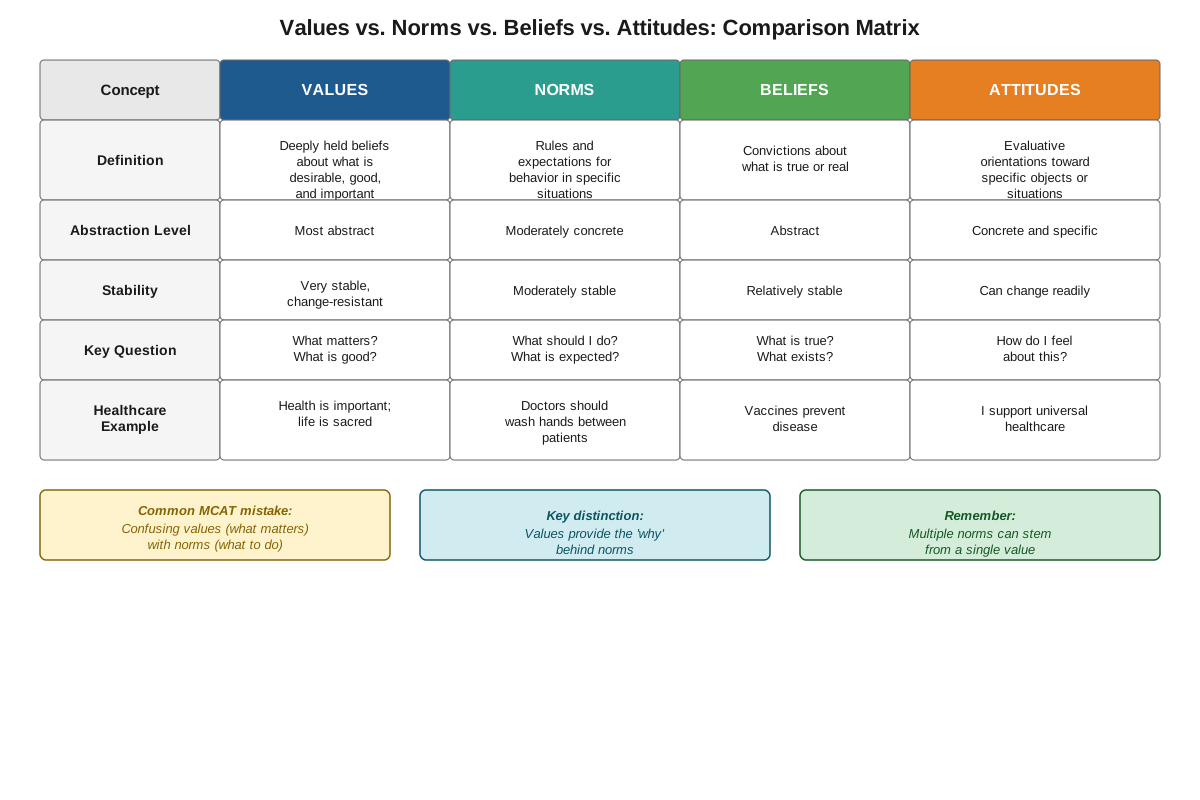
- [ ] Distinguish between values, norms, beliefs, and attitudes with precision
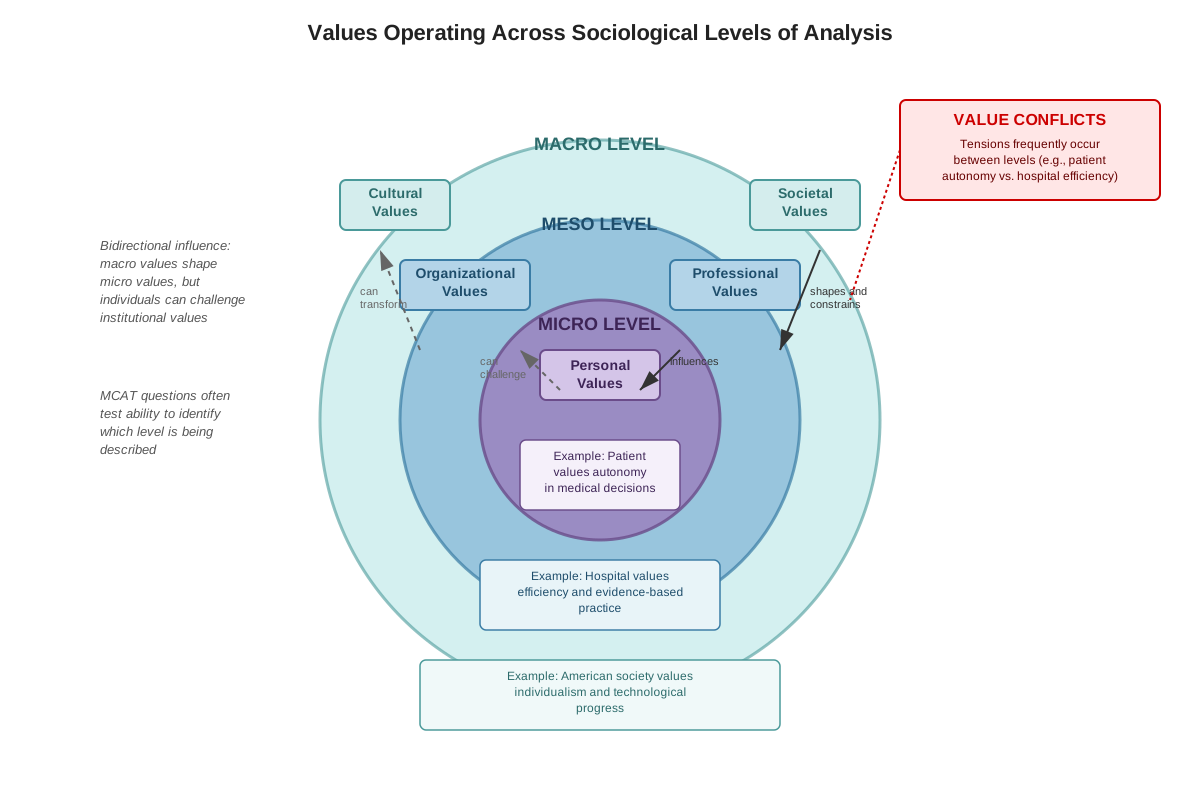
- [ ] Analyze how values operate at micro, meso, and macro sociological levels
- [ ] Evaluate the role of values in creating and maintaining social institutions
- [ ] Predict how value conflicts manifest in healthcare settings and medical ethics
Prerequisites
- Basic understanding of culture: Values are core components of culture and cannot be understood in isolation from cultural systems
- Familiarity with sociological perspective: Recognizing that sociology examines patterns at group and societal levels, not just individual psychology
- Awareness of social institutions: Values provide the ideological foundation for institutions like family, education, religion, and healthcare
- Introduction to socialization: Values are transmitted through socialization processes across the lifespan
Why This Topic Matters
Clinical and Real-World Significance
Values profoundly impact healthcare delivery, patient compliance, and health outcomes. When patients' cultural or religious values conflict with medical recommendations (such as blood transfusions for Jehovah's Witnesses or end-of-life care decisions), healthcare providers must navigate these value systems to provide patient-centered care. Understanding values helps future physicians recognize their own biases, practice cultural humility, and address health disparities rooted in value differences between providers and patients. Values also underlie public health debates about vaccination, reproductive rights, mental health treatment, and resource allocation—all areas where medical professionals must engage with diverse value systems.
Exam Statistics and Question Types
Values appear in approximately 8-12% of sociology questions on the MCAT, making them a high-yield topic. The exam tests values through multiple question formats: passage-based questions analyzing research on cultural values and health behaviors, discrete questions requiring differentiation between sociological concepts, and scenario-based questions examining value conflicts in clinical or research settings. Questions often require students to identify which sociological concept (value, norm, belief, or attitude) is being described or to predict behavioral outcomes based on stated values.
Common Exam Appearances
Values typically appear in MCAT passages discussing: cross-cultural health research comparing individualistic versus collectivistic societies; studies on health disparities linked to cultural values; ethical dilemmas in medical practice; socialization processes in medical education; and analyses of how institutional values shape healthcare delivery. The exam frequently presents scenarios where students must recognize value conflicts, distinguish dominant from subordinate cultural values, or explain how values influence social change and institutional reform.
Core Concepts
Definition and Characteristics of Values
Values are culturally defined standards of desirability, goodness, and importance that serve as broad guidelines for social living. Unlike specific behavioral rules, values are abstract principles that transcend particular situations. For example, "honesty" is a value, while "do not lie on medical school applications" is a norm derived from that value. Values possess several key characteristics that distinguish them from other cultural elements:
Values are prescriptive rather than descriptive—they specify what should be rather than what is. They are hierarchically organized, meaning individuals and societies rank values in order of importance, creating value systems. Values are relatively stable over time, though they can evolve through social change. They are emotionally charged, evoking strong feelings when upheld or violated. Finally, values are learned through socialization rather than being innate, transmitted through families, educational institutions, religious organizations, and media.
Types and Levels of Values
Values operate at multiple sociological levels, each relevant for MCAT analysis:
Individual values represent personal priorities and principles that guide an individual's choices and judgments. These develop through unique life experiences while being shaped by broader cultural contexts. Group values characterize specific social groups, such as professional values in medicine (beneficence, non-maleficence, autonomy, justice) or generational values (Baby Boomers versus Millennials). Cultural values are shared by members of a society or cultural group, such as American emphasis on individualism and achievement or East Asian emphasis on collectivism and harmony.
Values can also be categorized by content domain:
| Value Type | Description | MCAT-Relevant Examples |
|---|---|---|
| Moral values | Standards of right and wrong behavior | Honesty, justice, compassion in medical ethics |
| Aesthetic values | Standards of beauty and artistic merit | Less commonly tested but relevant to cultural competence |
| Economic values | Standards regarding wealth and material success | Healthcare as commodity versus right; cost-benefit analysis |
| Social values | Standards for interpersonal relationships | Collectivism versus individualism affecting family involvement in care |
| Political values | Standards for governance and power distribution | Healthcare policy debates; patient autonomy versus paternalism |
| Religious values | Standards derived from spiritual beliefs | End-of-life decisions; reproductive healthcare; dietary restrictions |
Values Versus Related Concepts
The MCAT frequently tests the ability to distinguish values from conceptually similar terms:
Values versus Norms: While values are abstract ideals (e.g., "health is important"), norms are specific behavioral expectations that operationalize values (e.g., "wash hands before patient contact"). Norms are concrete and situation-specific; values are abstract and broadly applicable. Values explain why norms exist—the norm of handwashing derives from values of health, safety, and professional responsibility.
Values versus Beliefs: Beliefs are cognitive statements about what is true or real, while values are evaluative statements about what is good or desirable. The statement "exercise improves cardiovascular health" is a belief; "maintaining good health is important" is a value. Beliefs can be empirically verified or falsified; values cannot because they are normative rather than factual.
Values versus Attitudes: Attitudes are evaluative orientations toward specific objects, people, or situations, combining cognitive, affective, and behavioral components. Attitudes are more specific and changeable than values. A physician might value patient autonomy (abstract principle) while holding a negative attitude toward a specific patient's decision to refuse treatment (specific evaluation). Values are broader and more stable; attitudes are narrower and more flexible.
Value Systems and Hierarchies
Individuals and societies organize values into value systems—integrated hierarchies where some values take precedence over others. These hierarchies explain behavioral choices when values conflict. For example, a patient who values both life preservation and quality of life must prioritize one when facing terminal illness decisions. Similarly, societies create dominant value hierarchies that shape institutions and policies.
Dominant values are those emphasized and reinforced by major social institutions, reflecting the priorities of powerful groups. In American society, dominant values include achievement, individualism, efficiency, and progress. Subordinate values or alternative values characterize minority groups or subcultures and may conflict with dominant values. Understanding value hierarchies helps explain social inequality, as dominant groups often have greater power to institutionalize their values.
Value Transmission and Socialization
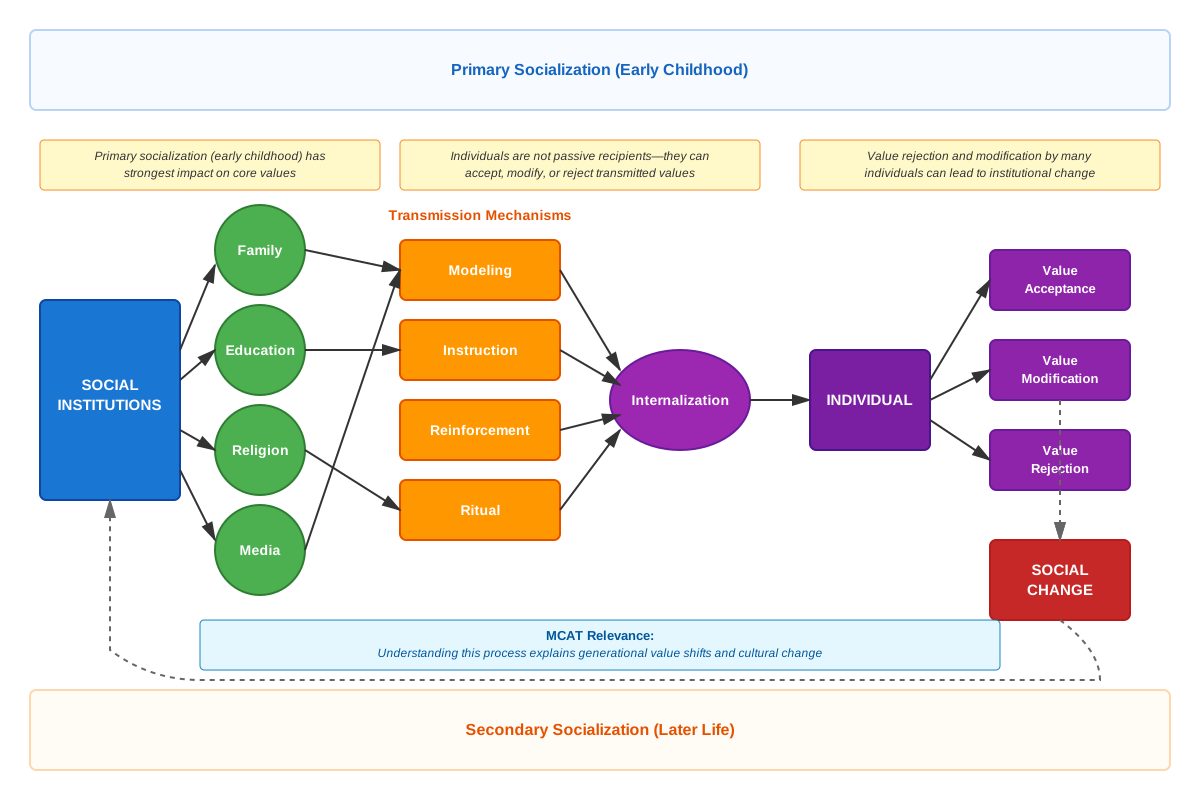
Values are transmitted through socialization, the lifelong process by which individuals learn cultural norms and values. Primary socialization occurs in childhood through family, where fundamental values are established. Secondary socialization continues through schools, peer groups, religious institutions, and media, refining and sometimes challenging early values.
Agents of socialization vary in their influence on value formation. Families typically transmit core moral and religious values. Educational institutions emphasize achievement, discipline, and civic values. Peer groups become increasingly influential during adolescence, sometimes promoting values that conflict with family or institutional values. Media exposure shapes values regarding consumption, beauty standards, and social relationships. For medical students, professional socialization in medical school transmits the values of the medical profession, sometimes creating conflicts with pre-existing personal or cultural values.
Values and Social Institutions
Social institutions—stable patterns of social relationships organized around basic societal needs—are fundamentally shaped by values. Each institution reflects and reinforces particular value priorities:
The family institution embodies values of love, loyalty, and intergenerational responsibility, though specific family values vary across cultures (nuclear versus extended family emphasis). The educational institution promotes values of knowledge, achievement, and meritocracy. The economic institution reflects values regarding work, wealth distribution, and material success. The healthcare institution is built on values of health, healing, beneficence, and increasingly, patient autonomy and justice.
Institutional values sometimes conflict, creating social tensions. For example, economic values emphasizing profit maximization may conflict with healthcare values emphasizing universal access to care. These value conflicts drive policy debates and social change efforts.
Value Conflict and Social Change
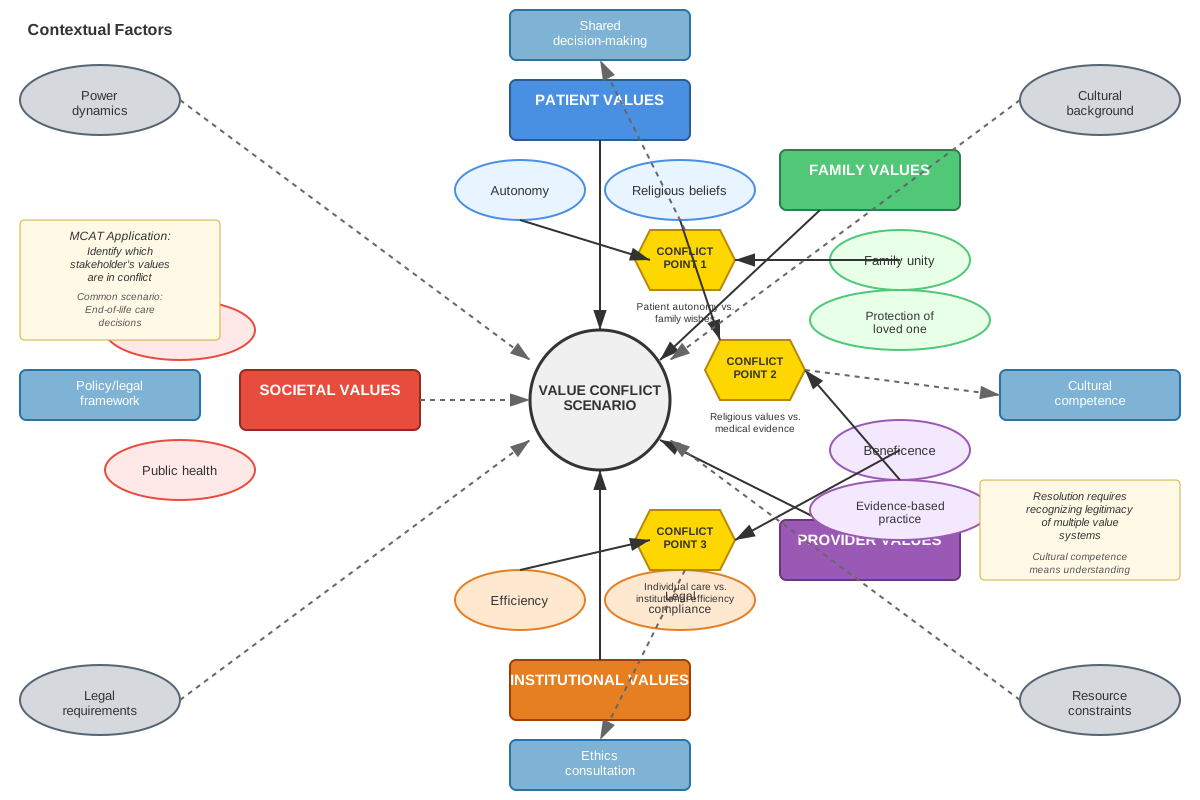
Value conflict occurs when individuals or groups hold incompatible values or prioritize values differently. These conflicts manifest at multiple levels: intrapersonal (within an individual), interpersonal (between individuals), and intergroup (between social groups). Value conflicts are particularly salient in healthcare, where patients, families, and providers may hold different values regarding treatment goals, quality versus quantity of life, and the role of medical intervention.
Value conflicts drive social change as groups mobilize to challenge dominant values and promote alternative value systems. Social movements often frame their goals in terms of values—civil rights movements emphasizing equality and justice, environmental movements emphasizing sustainability and stewardship, healthcare reform movements emphasizing access and equity. Understanding how value conflicts generate social change helps explain historical shifts in medical practice, such as the transition from medical paternalism to patient autonomy.
Cultural Variation in Values
Values vary significantly across cultures, making cultural competence essential for healthcare providers. Individualistic cultures (common in Western societies) emphasize personal autonomy, self-reliance, and individual achievement. Collectivistic cultures (common in Asian, African, and Latin American societies) emphasize group harmony, interdependence, and family obligations. These value differences profoundly affect healthcare interactions, including decision-making processes (individual versus family-centered), communication styles (direct versus indirect), and treatment preferences.
Other culturally variable value dimensions include: power distance (acceptance of hierarchical authority), uncertainty avoidance (tolerance for ambiguity), masculinity versus femininity (emphasis on competition versus cooperation), and time orientation (present versus future focus). Recognizing these value differences helps healthcare providers avoid ethnocentrism and deliver culturally responsive care.
Concept Relationships
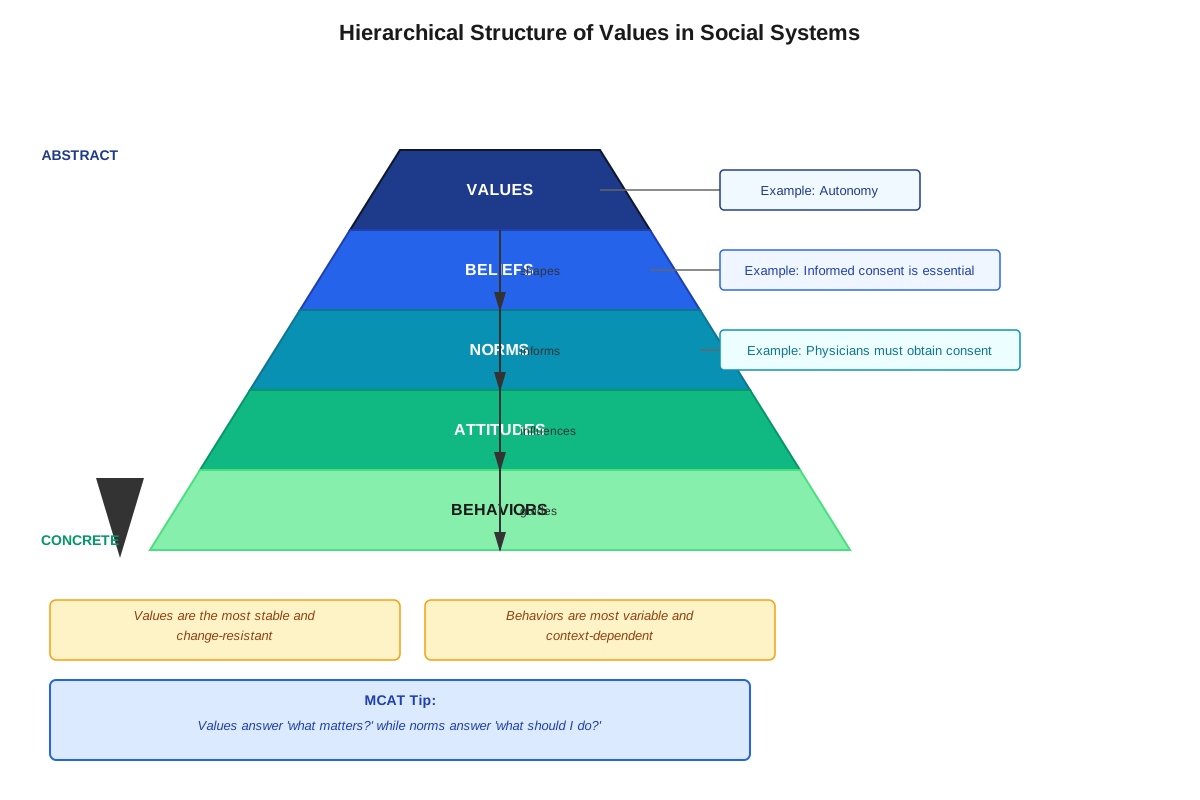
Values form the ideological foundation of culture, generating the norms that regulate behavior and shaping the beliefs that people hold about reality. This hierarchical relationship can be mapped as: Values → Norms → Behaviors. For example, the value of health generates norms about exercise and diet, which influence actual health behaviors.
Values connect bidirectionally with socialization: socialization transmits values from one generation to the next, while values shape socialization practices (what parents teach children, what schools emphasize). Similarly, values both shape and are shaped by social institutions. Institutions embody and enforce societal values, but institutional practices can also gradually shift values over time.
Value conflicts connect to concepts of social change, social movements, and cultural evolution. When subordinate groups challenge dominant values, they may catalyze institutional reform and cultural transformation. This process links values to topics like social inequality, power, and stratification.
Within healthcare contexts, values connect to medical ethics (autonomy, beneficence, non-maleficence, justice), health disparities (how value differences affect access and outcomes), and the sick role (how values shape expectations for patients and providers). Understanding these connections enables integrated analysis of complex MCAT passages.
Quick check — test yourself on Values so far.
Try Flashcards →High-Yield Facts
⭐ Values are abstract, culturally defined standards of desirability that guide behavior across situations, while norms are specific behavioral rules that operationalize values in particular contexts.
⭐ The primary distinction between values and beliefs is that values are evaluative (what is good/desirable) while beliefs are cognitive (what is true/real).
⭐ Individualistic cultures emphasize personal autonomy and achievement, while collectivistic cultures emphasize group harmony and interdependence—this distinction frequently appears in cross-cultural health research passages.
⭐ Values are transmitted through socialization by agents including family, education, peers, religion, and media, with family typically having the strongest influence on core moral values.
⭐ Value conflicts drive social change when groups mobilize to challenge dominant values and promote alternative value systems, often through social movements.
- Values are hierarchically organized into value systems where some values take precedence over others, explaining behavioral choices when values conflict.
- Dominant values reflect the priorities of powerful groups and are reinforced by major social institutions, while subordinate values characterize minority groups.
- Professional socialization in medical school transmits medical values (beneficence, non-maleficence, autonomy, justice) that may conflict with students' pre-existing personal or cultural values.
- Attitudes are more specific and changeable than values; attitudes apply to particular objects or situations while values are broad principles.
- Social institutions (family, education, economy, healthcare) are organized around and reflect particular value priorities, creating institutional value systems.
- Ethnocentrism occurs when people judge other cultures by their own cultural values rather than understanding values in cultural context.
- Value consensus promotes social stability and cohesion, while value conflict can generate social tension but also drives innovation and social change.
Common Misconceptions
Misconception: Values and norms are the same thing and can be used interchangeably.
Correction: Values are abstract ideals (e.g., "honesty is important"), while norms are specific behavioral expectations (e.g., "tell patients the truth about their diagnosis"). Norms operationalize values in concrete situations. The MCAT specifically tests this distinction.
Misconception: Values are innate or biologically determined rather than learned.
Correction: Values are culturally transmitted through socialization processes. While humans may have innate capacities for moral reasoning, the specific values people hold are learned from their cultural environment. This is why values vary dramatically across cultures and historical periods.
Misconception: Everyone in a society shares the same values.
Correction: While societies have dominant values, there is always value diversity. Different social classes, ethnic groups, generations, and subcultures hold varying and sometimes conflicting values. Recognizing value pluralism is essential for cultural competence in healthcare.
Misconception: Values directly determine behavior in a simple, predictable way.
Correction: The relationship between values and behavior is complex and mediated by many factors including situational constraints, competing values, social norms, and individual attitudes. People may hold values they don't consistently act upon due to these intervening variables.
Misconception: Beliefs and values are identical concepts.
Correction: Beliefs are statements about what is true or false (cognitive), while values are judgments about what is good or desirable (evaluative). "Exercise improves health" is a belief; "health is important" is a value. The MCAT frequently tests this distinction.
Misconception: Value conflicts are always negative and should be eliminated.
Correction: While value conflicts can create tension, they also drive social progress, innovation, and cultural evolution. Many positive social changes (civil rights, patient autonomy in medicine) resulted from groups challenging dominant values. Value pluralism can strengthen societies by promoting diverse perspectives.
Misconception: Medical values are universal and transcend cultural differences.
Correction: While principles like beneficence are widely recognized, their interpretation and relative priority vary across cultures. For example, patient autonomy is highly valued in Western medicine but may conflict with family-centered decision-making valued in collectivistic cultures.
Worked Examples
Example 1: Distinguishing Values, Norms, and Beliefs
Scenario: A research passage describes a study examining factors affecting medication adherence in diabetic patients. The passage states: "Participants reported that maintaining good health was very important to them (Statement A). Most participants believed that taking medication as prescribed would control their blood sugar levels (Statement B). However, many participants failed to take medications consistently, citing forgetfulness and busy schedules. The medical community expects patients to follow prescribed treatment regimens (Statement C)."
Question: Which statement best represents a value?
Analysis:
- Statement A ("maintaining good health was very important") is evaluative—it expresses what is desirable or good. This is a value.
- Statement B ("taking medication as prescribed would control blood sugar") is a factual claim about cause and effect. This is a belief that can be empirically verified.
- Statement C ("the medical community expects patients to follow prescribed treatment regimens") describes a behavioral expectation. This is a norm within the medical institution.
Answer: Statement A represents a value because it expresses an abstract ideal about what is important or desirable (health), rather than a specific behavioral rule (norm) or factual claim (belief).
Connection to Learning Objectives: This example demonstrates the ability to distinguish values from related concepts using precise sociological terminology, a high-yield skill for MCAT questions.
Example 2: Analyzing Value Conflict in Healthcare
Scenario: A 45-year-old patient from a collectivistic cultural background is diagnosed with terminal cancer. The oncologist wants to discuss prognosis and treatment options directly with the patient, consistent with the principle of patient autonomy. However, the patient's adult children request that the physician not disclose the full prognosis to their parent, explaining that in their culture, families protect loved ones from distressing information and make medical decisions collectively. The patient has not explicitly stated preferences about information disclosure.
Question: This scenario primarily illustrates a conflict between which values?
Analysis:
This scenario involves a clash between different cultural value systems:
- The Western medical value of individual autonomy emphasizes the patient's right to information and self-determination in medical decisions. This reflects individualistic cultural values prioritizing personal choice and independence.
- The collectivistic value of family interdependence and protection emphasizes family-centered decision-making and protecting loved ones from harm, including psychological distress from bad news. This reflects collectivistic cultural values prioritizing group harmony and family obligations.
Both parties are acting consistently with their value systems—neither is "wrong." The physician is following professional values taught in Western medical training, while the family is honoring their cultural values about family roles and protection.
Resolution Approach: The physician should explore the patient's own preferences through culturally sensitive communication, potentially asking the patient whom they want involved in medical discussions. This respects both autonomy (by asking the patient) and family values (by allowing family involvement if the patient desires it).
Connection to Learning Objectives: This example demonstrates how values operate in clinical contexts, how value conflicts arise from cultural differences, and how understanding values is essential for culturally competent care—all high-yield applications for the MCAT.
Exam Strategy
Approaching MCAT Questions on Values
When encountering questions about values, first identify whether the question asks you to: (1) define or identify a value, (2) distinguish values from related concepts, (3) analyze value conflicts, or (4) predict behavioral or social outcomes based on values. Each question type requires a different approach.
For definition/identification questions, look for abstract, evaluative language about what is good, important, or desirable. Eliminate options that describe specific behaviors (norms), factual claims (beliefs), or evaluations of specific objects (attitudes).
For distinction questions, create a mental comparison table:
- Values = abstract, evaluative, broad, stable
- Norms = concrete, behavioral, specific, situation-dependent
- Beliefs = cognitive, factual claims, verifiable
- Attitudes = evaluative toward specific objects, less stable than values
Trigger Words and Phrases
Watch for these value indicators in passages and questions:
- "Important," "desirable," "good," "worthwhile," "should," "ought"
- "Principles," "ideals," "standards," "priorities"
- "Cultural values," "core values," "value system"
Norm indicators include:
- "Expected," "required," "rules," "should do" (specific behavior)
- "Sanctions," "enforcement," "compliance"
Belief indicators include:
- "Think," "believe," "true," "false," "causes," "leads to"
- "Knowledge," "understanding," "perception of reality"
Process of Elimination Tips
When distinguishing between concepts, eliminate options that:
- Describe specific behaviors when the question asks about abstract principles (likely confusing values with norms)
- Make factual claims when the question asks about evaluative standards (likely confusing values with beliefs)
- Focus on specific objects or situations when the question asks about broad principles (likely confusing values with attitudes)
For questions about cultural values, eliminate ethnocentric options that judge other cultures by Western standards. The MCAT expects cultural relativism—understanding values within their cultural context.
Time Allocation
Values questions typically require 60-90 seconds. Spend 30 seconds carefully reading the question stem and identifying what concept is being tested. Spend 20-30 seconds analyzing the passage or scenario for relevant information. Spend 20-30 seconds evaluating options and eliminating incorrect answers. Don't overthink these questions—the MCAT tests straightforward application of sociological definitions, not philosophical nuances.
Memory Techniques
Mnemonic for Values vs. Related Concepts
"VANS" helps distinguish the four commonly confused concepts:
- Values = Very abstract, evaluative ideals (what's good/important)
- Attitudes = Applied to specific objects/situations (evaluations of particular things)
- Norms = Necessary behaviors, specific rules (what to do)
- Statements of fact = Beliefs (what's true/real)
Visualization Strategy
Picture values as the foundation of a building (abstract, stable, supporting everything above), norms as the walls and rooms (concrete structures that organize behavior), beliefs as the windows (how we see and understand reality), and attitudes as the furniture (specific, changeable, applied to particular situations).
Acronym for Cultural Value Dimensions
"I-C-P-U-M-T" for major cultural value dimensions:
- Individualism vs. Collectivism
- Competition vs. Cooperation
- Power distance (hierarchy acceptance)
- Uncertainty avoidance
- Masculinity vs. Femininity
- Time orientation (present vs. future)
Memory Aid for Value Characteristics
"HELPS" describes key characteristics of values:
- Hierarchically organized (value systems)
- Emotionally charged (strong feelings)
- Learned through socialization (not innate)
- Prescriptive (what should be)
- Stable over time (relatively enduring)
Summary
Values are abstract, culturally defined standards of desirability that serve as broad guidelines for social living, distinguishing them from the specific behavioral rules (norms), factual claims (beliefs), and situation-specific evaluations (attitudes) with which they are often confused. Operating at individual, group, and cultural levels, values are transmitted through socialization and organized into hierarchical value systems that explain behavioral choices when values conflict. Values provide the ideological foundation for social institutions and shape everything from personal health behaviors to healthcare policy debates. Cultural variation in values—particularly the individualism-collectivism dimension—profoundly affects healthcare interactions and outcomes, making cultural competence essential for medical professionals. Value conflicts drive social change and appear frequently in MCAT passages examining medical ethics, health disparities, and cross-cultural healthcare. Mastering the precise definitions and distinctions between values and related concepts, understanding how values operate across sociological levels, and recognizing value conflicts in clinical scenarios are essential skills for achieving high scores on sociology questions.
Key Takeaways
- Values are abstract, evaluative standards of what is good or desirable, distinct from norms (behavioral rules), beliefs (factual claims), and attitudes (specific evaluations)
- Values are learned through socialization, organized hierarchically into value systems, and vary significantly across cultures, particularly along the individualism-collectivism dimension
- The relationship flows hierarchically: values generate norms, which guide behaviors; values also shape beliefs and attitudes
- Value conflicts in healthcare commonly arise between patient autonomy and family-centered decision-making, between economic and health values, and between professional and personal values
- Understanding values is essential for analyzing medical ethics, health disparities, cultural competence, and social change—all high-yield MCAT topics
- The MCAT frequently tests the ability to distinguish values from related concepts and to analyze how value differences affect healthcare interactions and outcomes
- Professional socialization transmits medical values (beneficence, non-maleficence, autonomy, justice) that may conflict with pre-existing personal or cultural values
Related Topics
Norms and Sanctions: Understanding how values generate specific behavioral expectations (norms) and how societies enforce norms through sanctions deepens comprehension of social control mechanisms.
Culture and Society: Values are core components of culture; exploring cultural systems, cultural relativism, and ethnocentrism builds on value concepts.
Socialization: Examining how values are transmitted across the lifespan through various agents of socialization connects to value formation and change.
Social Institutions: Analyzing how institutions embody and enforce particular value priorities extends understanding of values' structural role in society.
Medical Ethics: The four principles of medical ethics (autonomy, beneficence, non-maleficence, justice) represent core values in healthcare that frequently appear in MCAT scenarios.
Health Disparities: Understanding how value differences between providers and patients contribute to disparities in healthcare access and outcomes applies value concepts to health equity issues.
Mastering values provides the conceptual foundation necessary for analyzing these interconnected topics, enabling sophisticated analysis of complex MCAT passages.
Practice CTA
Now that you've mastered the core concepts of values in sociology, it's time to solidify your understanding through active practice. Attempt the practice questions and flashcards associated with this topic to test your ability to distinguish values from related concepts, analyze value conflicts in clinical scenarios, and apply sociological terminology with precision. Remember, the MCAT rewards not just knowledge but the ability to apply concepts quickly and accurately under time pressure. Each practice question you complete strengthens your pattern recognition and builds the confidence you need for test day. You've built a strong foundation—now reinforce it through deliberate practice!
Sign up free to keep reading
Create a free AnvayaPrep account to finish this MCAT guide on Values — plus flashcards and practice questions.