Overview
Matching causal structure is a critical skill within the Logical Reasoning section of the LSAT, specifically appearing in parallel reasoning questions. These questions require test-takers to identify arguments that share the same underlying causal reasoning pattern as a stimulus argument, even when the subject matter differs entirely. The ability to abstract the logical structure from specific content separates high-scoring candidates from those who struggle with these challenging question types.
On the LSAT, matching causal structure questions test whether students can recognize when two arguments employ identical causal reasoning frameworks. For instance, one argument might claim that increased exercise causes improved mood, while the parallel argument states that higher temperatures cause increased ice cream sales. Though the topics differ completely, both follow the same causal pattern: X causes Y. The LSAT frequently disguises these structural similarities beneath layers of varied content, making pattern recognition essential. Students must learn to strip away the surface-level details and focus exclusively on the logical skeleton of each argument.
This topic connects intimately with broader Logical Reasoning concepts, particularly causal reasoning, argument structure analysis, and formal logic. Mastering causal structure matching strengthens overall analytical abilities because it requires simultaneous attention to multiple logical elements: the direction of causation, the presence of necessary versus sufficient conditions, the existence of alternative explanations, and the strength of causal claims. These skills transfer directly to Flaw questions, Strengthen/Weaken questions, and Assumption questions—all of which frequently involve causal reasoning. Understanding how to match causal structures provides a foundation for recognizing when arguments make similar logical moves, even across vastly different contexts.
Learning Objectives
- [ ] Identify how Matching causal structure appears in LSAT questions
- [ ] Explain the reasoning pattern behind Matching causal structure
- [ ] Apply Matching causal structure to solve LSAT-style problems accurately
- [ ] Distinguish between different types of causal relationships (simple causation, correlation, reverse causation, common cause)
- [ ] Recognize when answer choices contain structural mismatches in causal direction, strength, or complexity
- [ ] Systematically eliminate incorrect answer choices by identifying specific structural deviations
- [ ] Abstract causal arguments into symbolic representations to facilitate accurate matching
Prerequisites
- Basic causal reasoning: Understanding the difference between causation and correlation is fundamental, as matching causal structure requires recognizing when arguments claim genuine causal relationships versus mere associations.
- Argument structure identification: Students must be able to identify premises and conclusions, since causal structure matching depends on recognizing where causal claims appear within an argument's logical framework.
- Conditional logic fundamentals: Familiarity with sufficient and necessary conditions helps distinguish causal claims from conditional statements, which often appear similar but follow different logical rules.
- Parallel reasoning basics: General understanding of how parallel reasoning questions work provides context for why causal structure matching represents a specific subset of these question types.
Why This Topic Matters
Matching causal structure questions appear with significant frequency on the LSAT, typically comprising 1-3 questions per Logical Reasoning section. Given that each LSAT contains two Logical Reasoning sections, test-takers can expect to encounter 2-6 such questions on any given exam. These questions carry the same point value as any other question, but they often consume more time due to their complexity, making efficiency crucial for overall section performance.
In real-world applications, the ability to recognize parallel causal structures underlies critical thinking in law, policy analysis, and scientific reasoning. Attorneys must identify when precedent cases share the same causal logic as current cases, even when factual details differ. Policy analysts need to recognize when interventions in one domain might work in another based on structural similarities in causal mechanisms. Scientists regularly apply causal reasoning patterns from one experimental context to another, relying on structural parallels rather than surface similarities.
On the LSAT, matching causal structure appears most commonly in Parallel Reasoning questions, which explicitly ask test-takers to find the answer choice that "most closely parallels the reasoning" in the stimulus. However, understanding causal structure also aids performance on Method of Reasoning questions, where recognizing the causal pattern helps identify how an argument proceeds. Additionally, this skill supports Flaw questions when the flaw involves causal reasoning, and Strengthen/Weaken questions where understanding the original causal structure helps identify which answer choices affect the argument's validity.
Core Concepts
Understanding Causal Claims
A causal claim asserts that one phenomenon brings about or produces another phenomenon. In logical notation, this relationship can be represented as "X causes Y" or "X → Y" (though this arrow differs from conditional logic arrows). The key feature distinguishing causal claims from other logical relationships is the assertion of a productive or generative connection—not merely that two things occur together, but that one actively brings about the other.
LSAT matching causal structure questions require identifying when two arguments make parallel causal assertions. The structure includes several critical elements: the cause (independent variable), the effect (dependent variable), the direction of causation, and any modifying conditions or qualifications. For example, "Regular meditation reduces anxiety" presents meditation as the cause and anxiety reduction as the effect, with a straightforward unidirectional relationship.
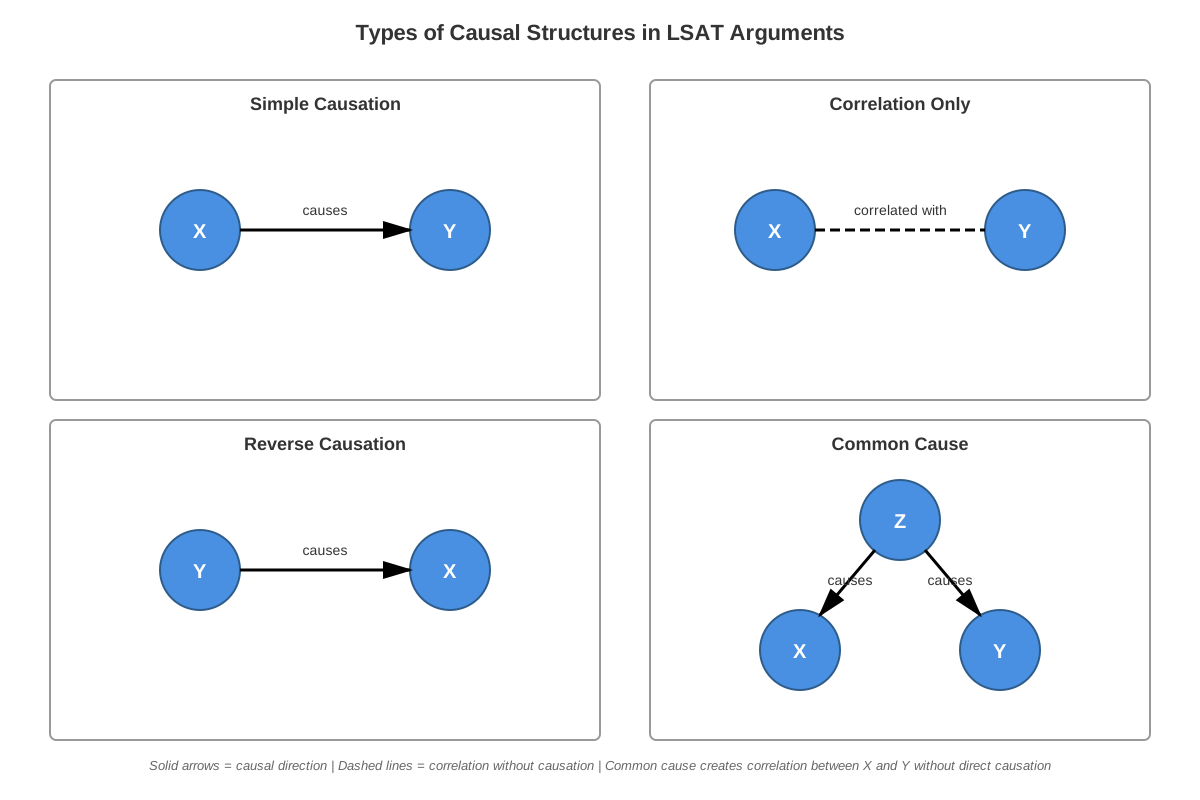
Types of Causal Structures
Different causal patterns appear regularly on the LSAT, and recognizing these patterns enables accurate matching:
| Causal Structure Type | Pattern | Example |
|---|---|---|
| Simple Causation | X causes Y | "Smoking causes lung cancer" |
| Reverse Causation | Y causes X (opposite direction) | "Lung cancer causes smoking" (incorrect reversal) |
| Common Cause | Z causes both X and Y | "Genetic factors cause both smoking behavior and lung cancer susceptibility" |
| Causal Chain | X causes Y, which causes Z | "Stress causes poor sleep, which causes reduced immunity" |
| Preventive Causation | X prevents Y | "Vaccination prevents disease" |
| Necessary Cause | X is necessary for Y (Y cannot occur without X) | "Oxygen is necessary for fire" |
| Sufficient Cause | X is sufficient for Y (X guarantees Y) | "Decapitation is sufficient for death" |
When matching causal structures, the correct answer must preserve not only the presence of causation but also the specific type and direction. An argument claiming simple causation cannot parallel an argument involving a common cause, even if both mention causal relationships.
Causal Direction and Strength
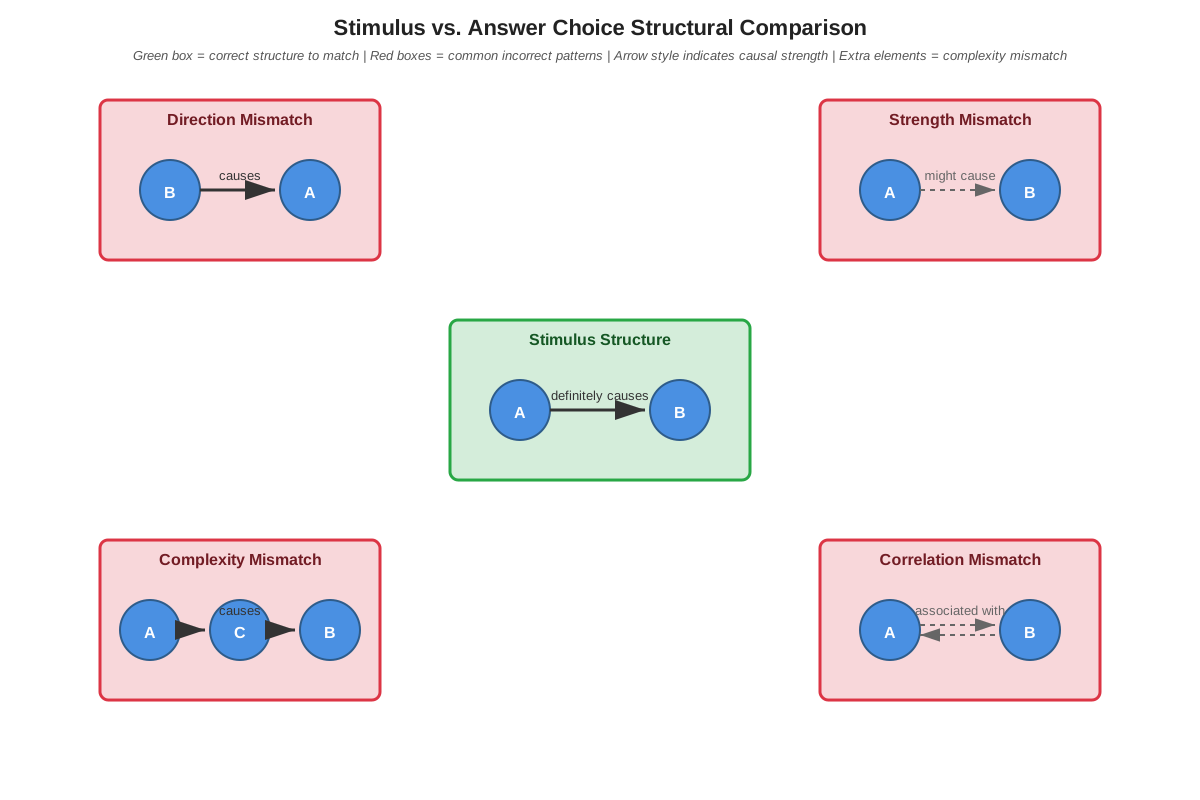
The direction of causation represents perhaps the most frequently tested element in matching questions. Consider these structurally different arguments:
- "Increased advertising causes higher sales" (A → S)
- "Higher sales cause increased advertising" (S → A)
- "Increased advertising correlates with higher sales" (A ↔ S, no causal claim)
These three statements are structurally distinct. A correct parallel to statement 1 must maintain the same directional relationship, where the first element causes the second, not vice versa.
Causal strength refers to whether the argument claims a definite, probable, or possible causal relationship. Matching requires preserving this strength:
- Strong causation: "X definitely causes Y" or "X causes Y"
- Moderate causation: "X probably causes Y" or "X tends to cause Y"
- Weak causation: "X might cause Y" or "X can cause Y"
An argument stating "Exercise definitely improves cardiovascular health" cannot parallel an argument claiming "Diet might improve cardiovascular health" because the causal strength differs.
Complexity and Qualifications
Many LSAT causal arguments include qualifications or limiting conditions that must appear in parallel form. For example:
"When combined with proper diet, exercise causes weight loss in most people."
This argument contains multiple structural elements:
- A causal claim (exercise causes weight loss)
- A necessary condition (proper diet must be present)
- A qualification (works for "most people," not all)
A structurally parallel argument must include all three elements: a causal claim with a necessary accompanying condition and a similar qualification about scope. An answer choice stating "Exercise always causes weight loss" fails to match because it lacks both the necessary condition and the scope qualification.
Distinguishing Causation from Correlation
The LSAT frequently includes wrong answer choices that confuse causation with correlation. Correlation indicates that two phenomena occur together or vary together, while causation asserts that one produces the other. Consider:
- Causal: "Studying causes improved test scores"
- Correlational: "Studying is associated with improved test scores"
These statements differ structurally. The causal claim asserts a productive relationship, while the correlational claim merely notes co-occurrence. When matching causal structures, an argument making a definite causal claim cannot parallel an argument that only establishes correlation, even if the correlation is strong.
Abstracting Causal Structure
The key skill in matching causal structure involves abstraction—mentally removing specific content while preserving logical form. This process follows several steps:
- Identify the causal claim: Locate the statement asserting that one thing causes another
- Determine the direction: Establish which element is the cause and which is the effect
- Note the strength: Identify whether the causation is definite, probable, or possible
- Recognize qualifications: Mark any conditions, limitations, or scope restrictions
- Create a symbolic representation: Use variables (X, Y, Z) to represent the abstract structure
- Apply the template: Test each answer choice against this abstract template
For example, given the stimulus: "Excessive screen time before bed disrupts sleep patterns in adolescents," the abstraction process yields:
- Causal claim: Present (disrupts = causes disruption)
- Direction: Screen time (cause) → sleep disruption (effect)
- Strength: Definite (no hedging language)
- Qualifications: Timing condition (before bed), population limitation (adolescents)
- Symbolic form: When X occurs at time T, X causes Y in population P
A parallel argument must match all these structural elements, regardless of content.
Concept Relationships
The concepts within matching causal structure build upon each other hierarchically. Understanding causal claims forms the foundation, as students must first recognize when an argument makes a causal assertion before attempting to match its structure. This foundational skill leads directly to distinguishing causation from correlation, since many wrong answers exploit confusion between these concepts.
Once students can reliably identify causal claims, they must master causal direction and strength, which adds nuance to basic causal recognition. These elements connect to types of causal structures, as different patterns (simple causation, common cause, causal chains) represent variations in direction and complexity. Understanding these types enables recognition of complexity and qualifications, where arguments add conditions or limitations to basic causal claims.
All these concepts converge in abstracting causal structure, the ultimate skill that synthesizes all previous elements. Abstraction requires simultaneously attending to claim type, direction, strength, and qualifications while mentally removing specific content—a cognitively demanding task that becomes manageable only after mastering component skills.
The relationship to prerequisite topics flows naturally: basic causal reasoning provides the conceptual foundation for recognizing causal claims, argument structure identification enables locating where causal claims appear within arguments, conditional logic fundamentals helps distinguish causal from conditional relationships, and parallel reasoning basics supplies the question-type context for applying causal structure matching.
Textual relationship map:
Basic Causal Reasoning → Identifying Causal Claims → Distinguishing Causation from Correlation → Recognizing Causal Direction → Understanding Causal Strength → Identifying Causal Types → Noting Qualifications and Complexity → Abstracting Causal Structure → Successfully Matching Parallel Arguments
High-Yield Facts
⭐ Causal direction must match exactly: If the stimulus argues X causes Y, the correct answer must also have its first element causing its second element, not the reverse.
⭐ Correlation is not causation: Answer choices that merely establish correlation or association cannot parallel arguments making definite causal claims.
⭐ Causal strength must be preserved: Arguments claiming definite causation cannot parallel arguments suggesting only possible or probable causation.
⭐ All qualifications must appear in parallel form: If the stimulus includes conditions, limitations, or scope restrictions, the correct answer must include structurally similar qualifications.
⭐ Common cause structures differ from simple causation: An argument stating "Z causes both X and Y" has a fundamentally different structure from "X causes Y."
- Preventive causation (X prevents Y) differs structurally from productive causation (X causes Y), even though both involve causal relationships.
- Causal chains require each link to appear in the parallel argument: if the stimulus argues X→Y→Z, the answer must also contain a three-element chain.
- Necessary causes (X is necessary for Y) and sufficient causes (X is sufficient for Y) represent distinct structural patterns that cannot parallel each other.
- The presence of alternative explanations in the stimulus requires parallel alternative explanations in the correct answer.
- Temporal sequence alone does not establish causation: "X occurs before Y" differs structurally from "X causes Y."
- Bidirectional causation (X causes Y and Y causes X) represents a specific pattern that requires exact parallel structure.
- Negative causation (X causes the absence of Y) must parallel other negative causation arguments, not positive causation.
- Probabilistic causal claims (X increases the probability of Y) differ from deterministic claims (X causes Y) and require matching probabilistic language.
Quick check — test yourself on Matching causal structure so far.
Try Flashcards →Common Misconceptions
Misconception: If two arguments both mention causation, they have matching causal structures.
Correction: Matching requires identical patterns in direction, strength, type, and qualifications—not merely the presence of causal language. An argument where X causes Y has a completely different structure from one where Z causes both X and Y, even though both involve causation.
Misconception: The content domains must be similar for arguments to have parallel causal structures.
Correction: Parallel reasoning questions specifically test the ability to recognize identical structures across different content domains. An argument about exercise causing health improvements can perfectly parallel an argument about advertising causing sales increases, despite completely different subject matter.
Misconception: Reversing the order of presentation changes the causal structure.
Correction: The causal structure depends on which element causes which, not the order of mention in the sentence. "Improved health results from exercise" has the same structure as "Exercise causes improved health," even though the effect is mentioned first in the former.
Misconception: Strong correlation implies the same structure as causation.
Correction: Even perfect correlation (where X and Y always occur together) differs structurally from causation (where X produces Y). Matching causal structure requires the parallel argument to also make a causal claim, not merely establish correlation.
Misconception: Conditional statements (if X, then Y) have the same structure as causal statements (X causes Y).
Correction: Conditional logic and causal reasoning follow different rules. "If it rains, the ground gets wet" (conditional) differs structurally from "Rain causes the ground to get wet" (causal), even though they seem similar. Conditionals establish logical relationships, while causal claims assert productive mechanisms.
Misconception: Temporal sequence (X happens before Y) equals causation (X causes Y).
Correction: The LSAT frequently includes wrong answers that confuse temporal ordering with causal relationships. Just because X precedes Y does not mean X causes Y—this represents the classic "post hoc ergo propter hoc" fallacy.
Misconception: All elements of the stimulus must appear in the parallel argument.
Correction: Only the structural elements must match, not every detail. If the stimulus includes background information that doesn't affect the causal structure, the parallel argument need not include similar background information.
Worked Examples
Example 1: Simple Causation with Qualification
Stimulus: "Studies show that regular consumption of green tea reduces the risk of heart disease in adults over 40. Therefore, drinking green tea causes improved cardiovascular health in middle-aged populations."
Analysis:
Let's abstract the causal structure step-by-step:
- Identify the causal claim: "drinking green tea causes improved cardiovascular health"
- Determine direction: Green tea consumption (cause) → cardiovascular health improvement (effect)
- Note strength: Definite causation ("causes," not "might cause" or "is associated with")
- Recognize qualifications: Population limitation (middle-aged/adults over 40)
- Symbolic representation: X causes Y in population P
Now let's evaluate answer choices:
Choice A: "Research indicates that daily meditation correlates with reduced anxiety in college students. Thus, meditation is associated with better mental health in young adults."
Evaluation: This fails to match because it establishes correlation ("correlates with," "is associated with") rather than causation. The stimulus makes a definite causal claim, while this choice only notes association. Eliminate.
Choice B: "Evidence suggests that regular exercise causes weight loss in sedentary individuals. Therefore, physical activity produces body composition changes in previously inactive people."
Evaluation: This matches perfectly:
- Causal claim: Present ("causes," "produces")
- Direction: Exercise (cause) → weight loss (effect)
- Strength: Definite causation
- Qualifications: Population limitation (sedentary/previously inactive individuals)
- Structure: X causes Y in population P
This is the correct answer.
Choice C: "Data show that increased education spending improves test scores. Consequently, better funding causes academic improvement."
Evaluation: This appears to match initially, but it lacks the population qualification present in the stimulus. The stimulus specifically limits its claim to "adults over 40," while this choice makes an unqualified universal claim. Eliminate.
Learning Objective Connection: This example demonstrates how to identify matching causal structure in LSAT questions (Objective 1) and apply the reasoning pattern to solve problems accurately (Objective 3).
Example 2: Common Cause Structure
Stimulus: "Researchers discovered that a specific gene variant causes both increased appetite and slower metabolism. This explains why some individuals struggle with weight management—the same genetic factor produces both excessive hunger and reduced calorie burning."
Analysis:
- Identify the causal claim: A single cause (gene variant) produces two distinct effects
- Determine direction: Gene variant (cause) → appetite increase (effect 1) AND metabolism slowdown (effect 2)
- Note strength: Definite causation ("causes," "produces")
- Recognize qualifications: None regarding population or conditions
- Symbolic representation: Z causes both X and Y (common cause structure)
This represents a common cause structure, fundamentally different from simple causation. The correct answer must also present a single cause producing two separate effects.
Choice A: "Scientists found that childhood trauma causes anxiety, which in turn causes sleep problems. This shows how early experiences lead to multiple health issues."
Evaluation: This presents a causal chain (X→Y→Z), not a common cause structure. Trauma causes anxiety, then anxiety causes sleep problems—two separate causal links rather than one cause producing two independent effects. Eliminate.
Choice B: "Studies reveal that air pollution causes both respiratory illness and cardiovascular disease. This demonstrates why environmental factors produce multiple health problems—the same pollutants damage both lung tissue and blood vessels."
Evaluation: This matches perfectly:
- Causal claim: Single cause (air pollution) produces two effects
- Direction: Pollution (cause) → respiratory illness (effect 1) AND cardiovascular disease (effect 2)
- Strength: Definite causation ("causes," "produce," "damage")
- Qualifications: None
- Structure: Z causes both X and Y
This is the correct answer.
Choice C: "Research shows that exercise improves mood and that improved mood increases productivity. Therefore, exercise indirectly enhances work performance."
Evaluation: Like Choice A, this presents a causal chain rather than a common cause. Exercise causes mood improvement, which then causes productivity increases—sequential causation rather than a single cause producing multiple simultaneous effects. Eliminate.
Learning Objective Connection: This example illustrates how to explain the reasoning pattern behind matching causal structure (Objective 2), specifically distinguishing common cause structures from causal chains and simple causation.
Exam Strategy
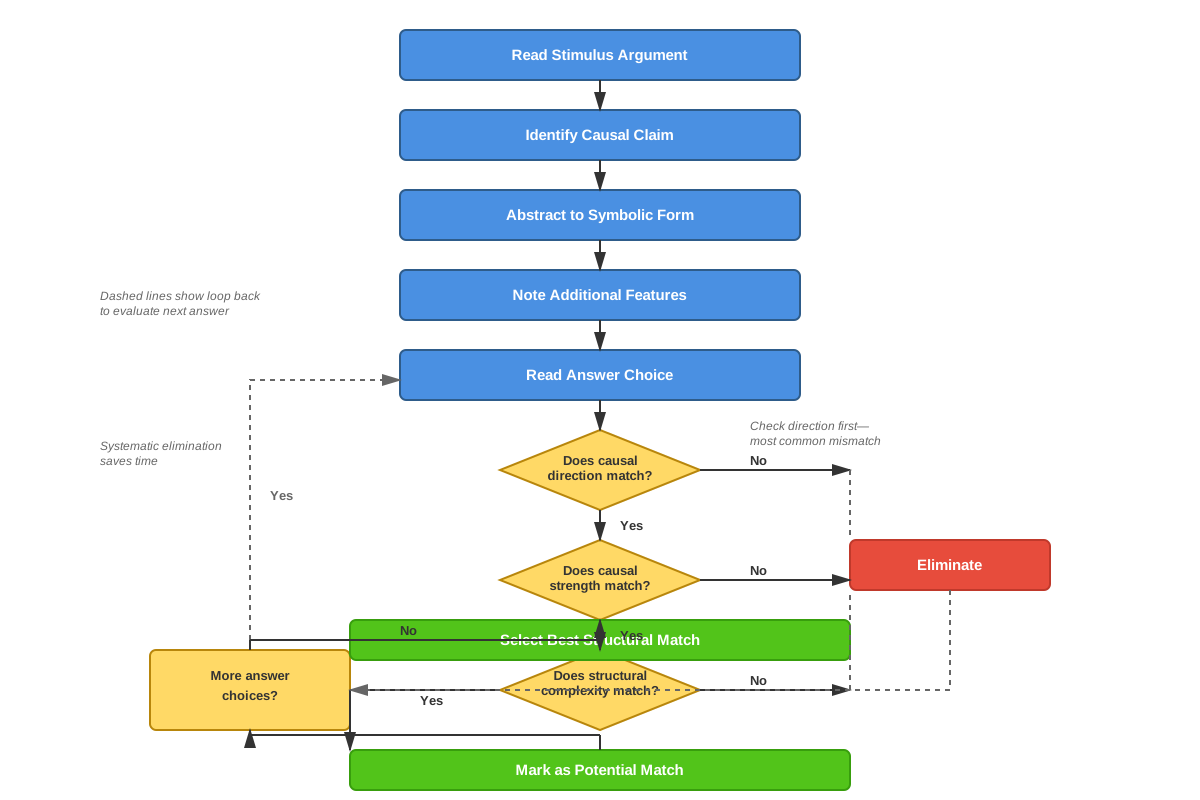
When approaching LSAT matching causal structure questions, employ a systematic process that maximizes accuracy while managing time effectively:
Step 1: Read the question stem first (5 seconds). Confirm that the question asks for parallel reasoning or matching structure. Look for phrases like "most closely parallels the reasoning," "employs a pattern of reasoning most similar to," or "uses which of the following argumentative strategies."
Step 2: Analyze the stimulus structure (30-45 seconds). Before reading answer choices, invest time understanding the stimulus's causal structure:
- Underline or mentally note the causal claim
- Draw an arrow indicating causal direction
- Circle any qualifying language (scope limitations, strength modifiers)
- Create a brief symbolic representation (X→Y, Z→X&Y, etc.)
Step 3: Predict the structure (10 seconds). Before examining answers, articulate what the correct answer must contain: "I need an argument where one thing definitely causes another, with a limitation to a specific population."
Step 4: Eliminate systematically (60-90 seconds). Evaluate each answer choice against specific structural criteria:
Trigger words indicating causation: causes, produces, brings about, leads to, results in, generates, creates, gives rise to, is responsible for
Trigger words indicating correlation only: is associated with, correlates with, relates to, corresponds to, accompanies, occurs with
Trigger words indicating conditional logic: if...then, only if, unless, whenever, provided that (these indicate conditional, not causal, relationships)
Eliminate answer choices immediately when you identify:
- Direction mismatch: The cause and effect are reversed
- Strength mismatch: Definite causation in stimulus but probabilistic in answer (or vice versa)
- Type mismatch: Simple causation in stimulus but common cause in answer
- Qualification mismatch: Stimulus has scope limitations but answer doesn't (or vice versa)
- Correlation instead of causation: Answer establishes association rather than productive relationship
Step 5: Verify the remaining choice (15-20 seconds). Before selecting, confirm that the remaining answer matches ALL structural elements, not just some. Check direction, strength, type, and qualifications one final time.
Time allocation: Allocate approximately 2-2.5 minutes for matching causal structure questions. These questions typically require more time than average Logical Reasoning questions due to their complexity, but spending more than 2.5 minutes risks time management problems. If stuck between two choices after 2 minutes, make an educated guess and move forward.
Common trap patterns: The LSAT frequently includes wrong answers that:
- Reverse the causal direction while maintaining causal language
- Substitute correlation for causation
- Present causal chains when the stimulus shows simple causation
- Omit crucial qualifications present in the stimulus
- Change causal strength (definite to probable or vice versa)
Recognizing these patterns enables faster elimination and higher accuracy.
Memory Techniques
DCSTQ Mnemonic for analyzing causal structure:
- Direction: Which way does causation flow?
- Claim: Is this actually causation or just correlation?
- Strength: Definite, probable, or possible?
- Type: Simple, common cause, chain, preventive?
- Qualifications: Any scope limitations or conditions?
Visualization Strategy: Picture causal arguments as arrows connecting boxes. The cause is the starting box, the effect is the ending box, and the arrow represents the causal relationship. For common cause structures, visualize one box with two arrows pointing to two separate boxes. For causal chains, visualize three boxes connected by two arrows in sequence. This visual representation helps distinguish structural patterns quickly.
The "Content Blindness" Technique: When reading answer choices, mentally replace all specific content with generic variables. Instead of reading "meditation reduces anxiety," think "X causes Y." This forces attention to structure rather than content, preventing the common error of selecting answers with similar subject matter but different logical structure.
Acronym for Common Cause: Remember SCTE (Single Cause, Two Effects) to quickly identify common cause structures and distinguish them from causal chains.
The "Arrow Test": Before selecting an answer, draw mental arrows for both the stimulus and the answer choice. If the arrow patterns don't match exactly (same number of arrows, same directions, same starting and ending points), the structures don't match.
Summary
Matching causal structure represents a high-yield LSAT skill requiring the ability to abstract logical patterns from specific content. Success depends on systematically analyzing five structural elements: the presence of genuine causation (versus mere correlation), the direction of causal flow, the strength of the causal claim, the type of causal pattern (simple, common cause, chain, preventive), and any qualifications or scope limitations. The LSAT tests this skill primarily through Parallel Reasoning questions, where test-takers must identify answer choices that preserve the stimulus's causal structure while changing the subject matter entirely. Common errors include confusing correlation with causation, reversing causal direction, overlooking qualifications, and matching content rather than structure. The key to mastery involves developing the ability to create symbolic representations of causal arguments, stripping away specific details to reveal underlying logical skeletons. This abstraction skill, combined with systematic elimination of structurally mismatched answer choices, enables accurate and efficient performance on these challenging questions.
Key Takeaways
- Matching causal structure requires preserving direction, strength, type, and qualifications—not just the presence of causal language
- Correlation and causation represent fundamentally different logical structures that cannot parallel each other
- Common cause structures (Z causes both X and Y) differ critically from simple causation (X causes Y) and causal chains (X→Y→Z)
- Abstraction is essential: focus on logical form rather than content similarity when evaluating answer choices
- Systematic analysis using the DCSTQ framework (Direction, Claim, Strength, Type, Qualifications) prevents overlooking crucial structural elements
- Wrong answers frequently reverse causal direction, substitute correlation for causation, or omit qualifications present in the stimulus
- Allocate 2-2.5 minutes per question and eliminate choices immediately when structural mismatches appear
Related Topics
Causal Reasoning Flaws: Understanding matching causal structure provides direct preparation for identifying flaws in causal arguments, including confusing correlation with causation, reversing cause and effect, and overlooking alternative explanations. Mastery of causal structure matching makes flaw identification more intuitive.
Strengthen and Weaken Questions with Causal Arguments: Many Strengthen/Weaken questions involve causal reasoning. Recognizing the structure of causal arguments helps identify which answer choices affect the argument's validity by supporting or undermining the causal relationship.
Method of Reasoning Questions: These questions ask how an argument proceeds, and many arguments employ causal reasoning. Understanding causal structures enables accurate description of argumentative methods.
Parallel Flaw Questions: These combine parallel reasoning with flaw identification, requiring recognition of both the logical structure and the error pattern. Mastering causal structure matching prepares students for this advanced question type.
Necessary and Sufficient Assumptions in Causal Arguments: Causal arguments often depend on assumptions about the absence of alternative causes or the presence of necessary conditions. Understanding causal structure helps identify these assumptions.
Practice CTA
Now that you've mastered the core concepts of matching causal structure, it's time to apply these skills to actual LSAT questions. The practice questions and flashcards will reinforce your ability to abstract causal patterns, distinguish structural variations, and eliminate wrong answers efficiently. Remember: matching causal structure is a learnable skill that improves dramatically with deliberate practice. Each practice question you complete strengthens your pattern recognition abilities and builds the automaticity needed for test-day success. Approach the practice materials systematically, using the DCSTQ framework and elimination strategies you've learned. Your investment in mastering this high-yield topic will pay dividends across multiple Logical Reasoning question types!
Sign up free to keep reading
Create a free AnvayaPrep account to finish this LSAT guide on Matching causal structure — plus flashcards and practice questions.