Overview
Heat transfer is a fundamental concept in thermodynamics that describes the movement of thermal energy from one object or system to another due to a temperature difference. This process is essential for understanding how energy flows in biological systems, medical devices, and countless physical phenomena tested on the MCAT. Unlike work, which involves organized energy transfer through mechanical means, heat transfer represents the spontaneous flow of thermal energy from regions of higher temperature to regions of lower temperature until thermal equilibrium is reached.
The MCAT extensively tests heat transfer within the Physics section, particularly as part of the Thermodynamics and Gases unit. Questions may appear as standalone discrete items or embedded within passage-based scenarios involving physiological processes like thermoregulation, calorimetry experiments, or medical applications such as hypothermia treatment and thermal imaging. Understanding heat transfer requires mastery of three distinct mechanisms—conduction, convection, and radiation—each with unique characteristics, governing equations, and biological relevance.
This topic connects intimately with other physics concepts including temperature, thermal energy, specific heat capacity, phase changes, and the laws of thermodynamics. It also bridges to biological sciences through homeostasis, metabolic heat production, and environmental physiology. A solid grasp of Heat transfer Physics enables students to tackle complex interdisciplinary passages that integrate physical principles with physiological applications, making it a medium-to-high yield topic for exam preparation.
Learning Objectives
- [ ] Define Heat transfer using accurate Physics terminology
- [ ] Explain why Heat transfer matters for the MCAT
- [ ] Apply Heat transfer to exam-style questions
- [ ] Identify common mistakes related to Heat transfer
- [ ] Connect Heat transfer to related Physics concepts
- [ ] Distinguish between the three mechanisms of heat transfer (conduction, convection, and radiation) and identify which mechanism dominates in specific scenarios
- [ ] Calculate heat transfer rates using appropriate equations for each mechanism
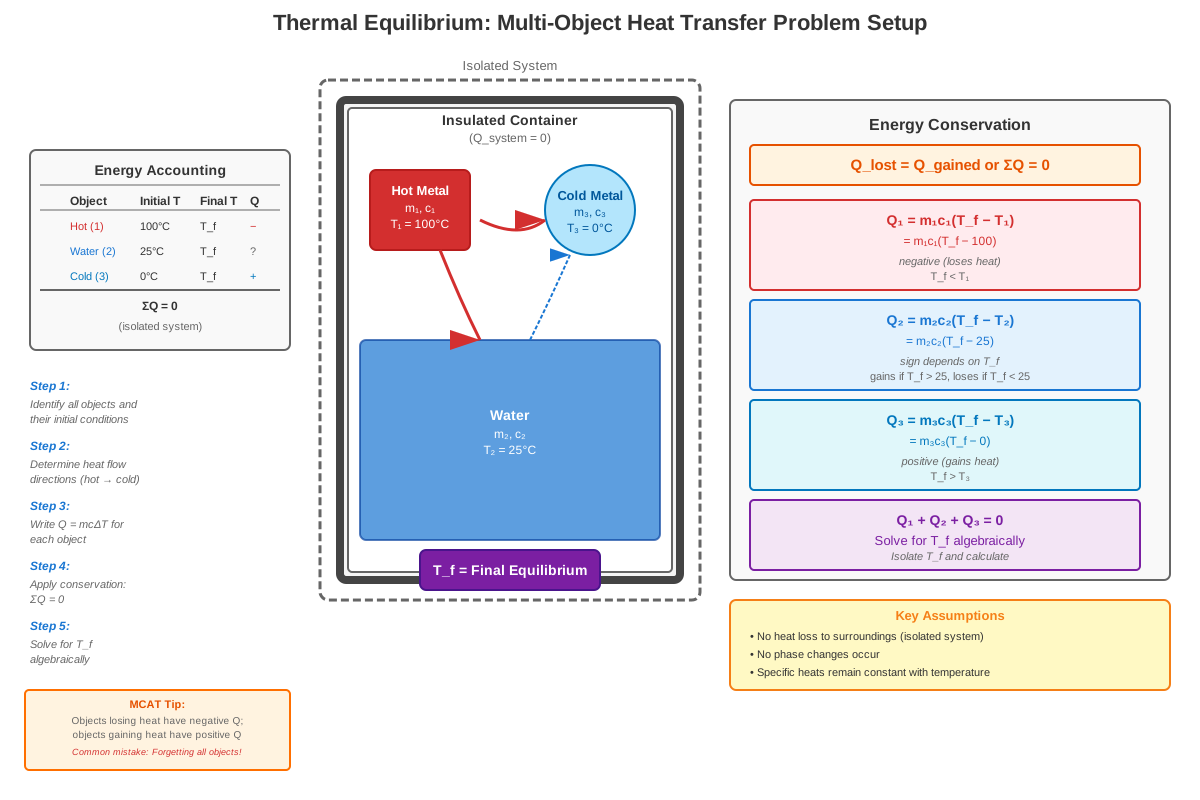
- [ ] Analyze thermal equilibrium problems involving multiple objects and heat transfer processes
Prerequisites
- Temperature and thermal energy: Understanding the distinction between temperature (average kinetic energy of particles) and thermal energy (total kinetic energy) is essential for comprehending why heat flows and how much energy transfers.
- Kinetic molecular theory: Knowledge of particle motion and collisions explains the microscopic mechanisms underlying conduction and convection.
- Energy conservation: The first law of thermodynamics provides the framework for tracking energy as it transfers between systems through heat.
- Specific heat capacity and calorimetry: Familiarity with Q = mcΔT allows calculation of temperature changes resulting from heat transfer.
- States of matter: Understanding solid, liquid, and gas properties explains why different heat transfer mechanisms dominate in different media.
Why This Topic Matters
Heat transfer MCAT questions appear regularly across multiple contexts, making this a versatile and important topic. Clinically, heat transfer principles underlie numerous medical applications: fever management, therapeutic hypothermia for neuroprotection, burn injury assessment, infrared thermography for detecting inflammation, and understanding how the body maintains core temperature through vasodilation and vasoconstriction. Medical devices like incubators, heating pads, and cryotherapy equipment all operate based on controlled heat transfer.
On the MCAT, heat transfer appears in approximately 3-5% of physics questions, often integrated with thermodynamics, fluids, or biological passages. Common question formats include: calculating heat transfer rates through tissue, analyzing thermoregulation mechanisms, interpreting calorimetry experiments, comparing insulation effectiveness, and predicting temperature changes in coupled systems. Passage-based questions frequently present experimental setups measuring thermal conductivity or scenarios involving metabolic heat production.
The interdisciplinary nature of heat transfer makes it particularly high-yield. A single passage might combine physics calculations with physiological adaptations to temperature stress, requiring students to seamlessly integrate knowledge from multiple domains. Understanding heat transfer mechanisms also enables quick elimination of incorrect answer choices by recognizing physically impossible scenarios (such as spontaneous heat flow from cold to hot without external work).
Core Concepts
Definition and Fundamental Principles
Heat transfer is the process by which thermal energy moves from a region of higher temperature to a region of lower temperature. This spontaneous process continues until thermal equilibrium is achieved—the state where all parts of a system reach the same temperature and net heat transfer ceases. Heat (Q) is measured in joules (J) or calories (cal), with 1 cal = 4.184 J. The direction of heat flow is always from hot to cold, a consequence of the second law of thermodynamics and the tendency toward maximum entropy.
The rate of heat transfer depends on several factors: the temperature difference (ΔT) between regions, the properties of the materials involved, the surface area through which transfer occurs, and the distance over which transfer happens. Unlike temperature, which is an intensive property (independent of system size), heat is an extensive property that depends on the amount of substance involved.
Conduction
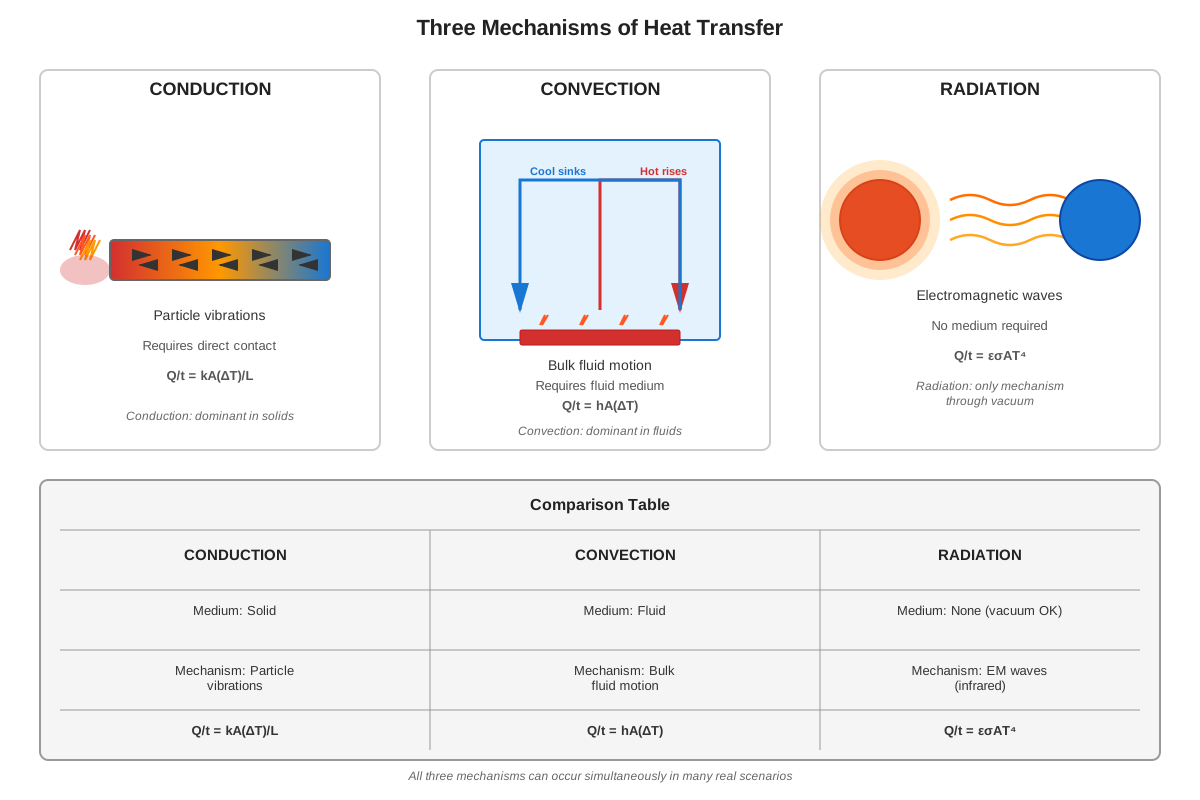
Conduction is heat transfer through direct molecular contact within a substance or between substances in physical contact. When a temperature gradient exists within a material, energetic particles in the hotter region collide with neighboring particles, transferring kinetic energy progressively through the material. This mechanism dominates in solids, where particles are closely packed and fixed in position, allowing efficient energy transfer through vibrations and collisions.
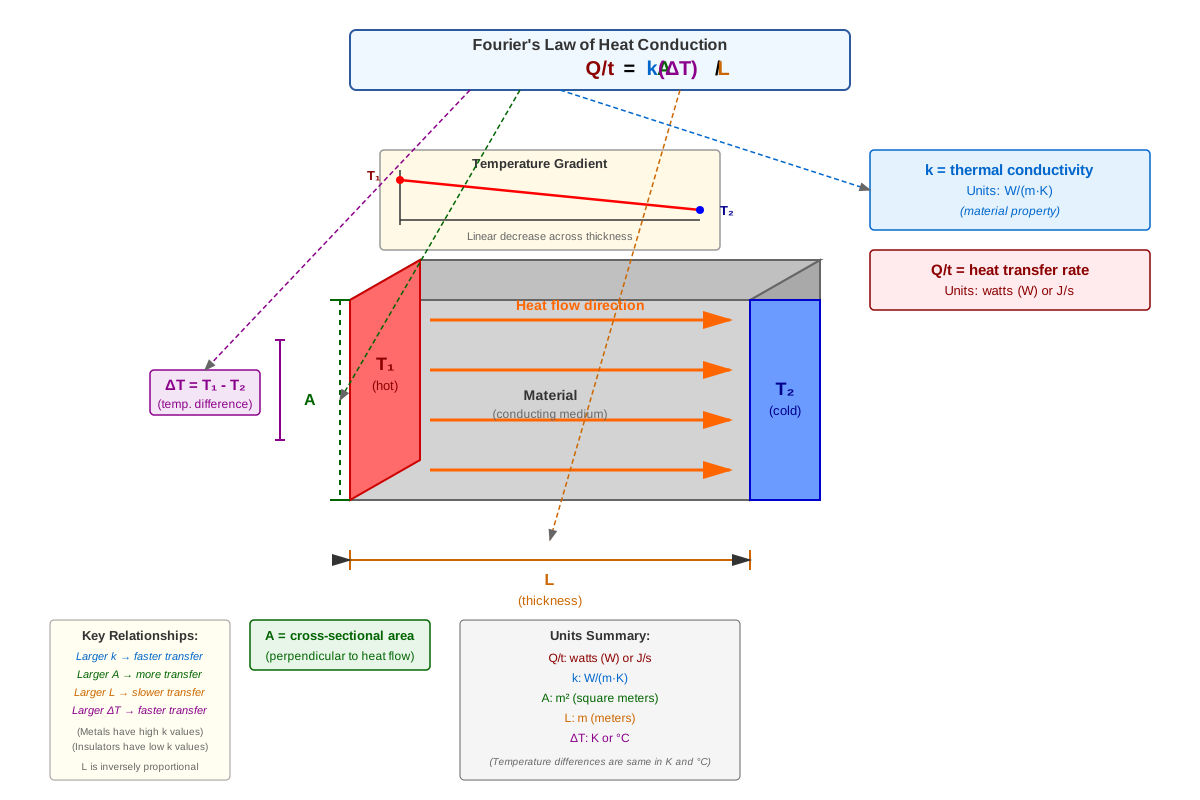
The rate of heat conduction is governed by Fourier's law:
Q/t = kA(ΔT/d)Where:
- Q/t = rate of heat transfer (power, in watts or J/s)
- k = thermal conductivity (material-specific constant, W/m·K)
- A = cross-sectional area perpendicular to heat flow (m²)
- ΔT = temperature difference between the two ends (K or °C)
- d = thickness or distance over which heat flows (m)
Thermal conductivity (k) quantifies how readily a material conducts heat. Metals have high thermal conductivity (copper: ~400 W/m·K) because free electrons facilitate rapid energy transfer. Insulators like wood, plastic, and biological tissue have low thermal conductivity (tissue: ~0.2 W/m·K), making them effective at preventing heat loss. Air has very low thermal conductivity (~0.024 W/m·K), which is why materials with trapped air pockets (foam, fur, feathers) serve as excellent insulators.
For the MCAT, recognize that conduction rate increases with greater temperature difference, larger surface area, higher thermal conductivity, and smaller thickness. This explains why touching metal feels colder than touching wood at the same temperature—metal conducts heat away from your hand more rapidly.
Convection
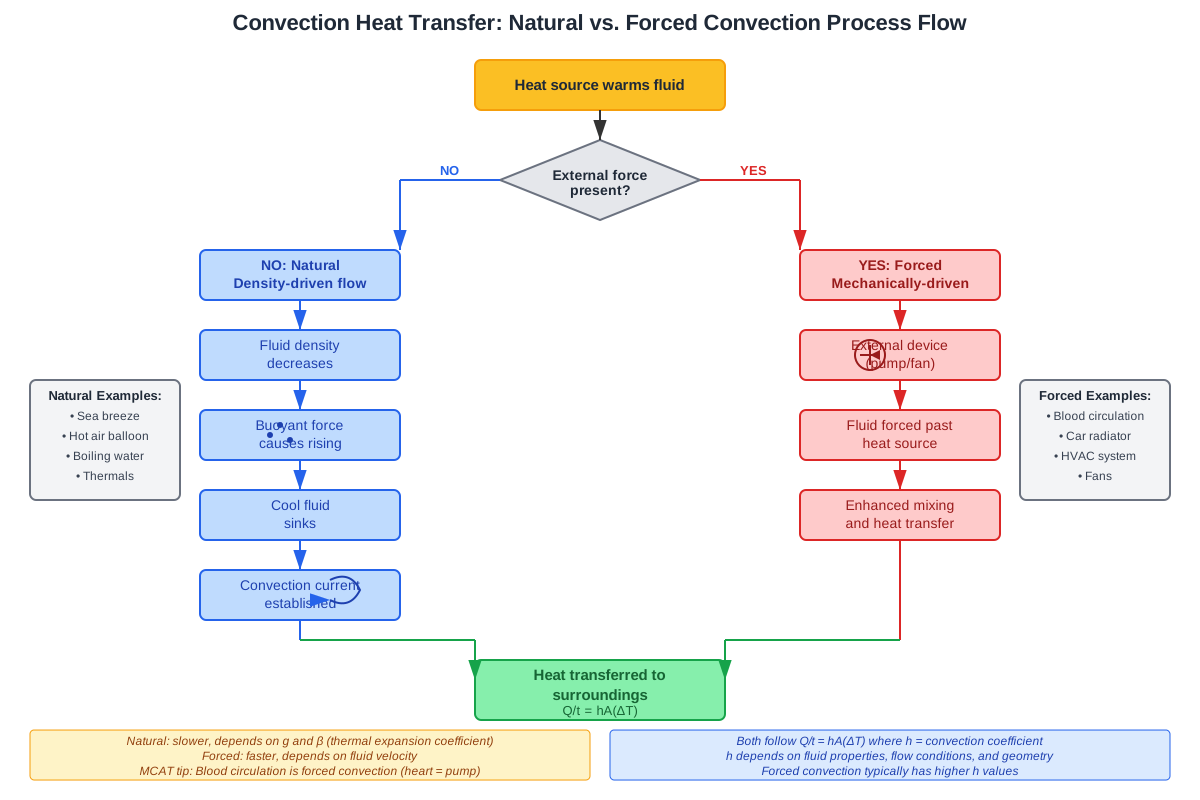
Convection is heat transfer through the bulk movement of fluids (liquids or gases). Unlike conduction, which involves energy transfer between stationary particles, convection physically transports heated fluid from one location to another, carrying thermal energy with it. This mechanism is particularly important in fluids where particles can move freely.
Two types of convection exist:
Natural (free) convection occurs when density differences caused by temperature variations create buoyancy forces that drive fluid motion. Hot fluid becomes less dense and rises, while cooler, denser fluid sinks, creating circulation patterns called convection currents. Examples include warm air rising from a radiator, ocean currents, and blood flow redistribution during thermoregulation.
Forced convection occurs when external forces (pumps, fans, wind) drive fluid motion, enhancing heat transfer beyond natural convection rates. Examples include fan-cooled electronics, forced-air heating systems, and blood circulation driven by the heart.
The rate of convective heat transfer is described by Newton's law of cooling:
Q/t = hA(ΔT)Where:
- h = convective heat transfer coefficient (depends on fluid properties, flow velocity, and surface geometry)
- A = surface area in contact with the fluid
- ΔT = temperature difference between the surface and the bulk fluid
Convection is generally more efficient than conduction in fluids because bulk fluid motion transports energy much faster than molecular collisions alone. This explains why wind increases heat loss from skin (wind chill effect) and why stirring hot coffee cools it faster.
Radiation
Radiation is heat transfer through electromagnetic waves, primarily in the infrared spectrum. Unlike conduction and convection, radiation requires no medium—it can occur through a vacuum, which is how solar energy reaches Earth. All objects with temperature above absolute zero emit thermal radiation, with the amount and wavelength distribution depending on temperature.
The rate of radiative heat transfer is governed by the Stefan-Boltzmann law:
P = εσAT⁴Where:
- P = radiated power (W)
- ε = emissivity (dimensionless, 0 to 1; measures how effectively a surface emits radiation)
- σ = Stefan-Boltzmann constant (5.67 × 10⁻⁸ W/m²·K⁴)
- A = surface area (m²)
- T = absolute temperature (K)
Emissivity depends on surface properties: perfect blackbodies have ε = 1 (absorb and emit all radiation), while shiny metallic surfaces have low emissivity (reflect most radiation). Human skin has emissivity ~0.97, making it an effective thermal radiator.
The net radiative heat transfer between an object and its surroundings is:
P_net = εσA(T⁴ - T_surroundings⁴)This equation shows that radiation becomes increasingly important at high temperatures (note the T⁴ dependence). For small temperature differences, radiation is often less significant than conduction or convection, but it dominates at very high temperatures (glowing metal, stars) and in vacuum environments.
Comparison of Heat Transfer Mechanisms
| Mechanism | Medium Required | Dominant In | Rate Equation | Key Factor |
|---|---|---|---|---|
| Conduction | Solid contact | Solids | Q/t = kA(ΔT/d) | Thermal conductivity (k) |
| Convection | Fluid motion | Liquids, gases | Q/t = hA(ΔT) | Fluid velocity, convection coefficient (h) |
| Radiation | None (EM waves) | All, especially vacuum | P = εσAT⁴ | Temperature (T⁴ dependence) |
Thermal Resistance and R-Values
Thermal resistance (R) quantifies a material's ability to resist heat flow, analogous to electrical resistance. It is the inverse of thermal conductance:
R = d/(kA)For building insulation, R-value (R = d/k) is commonly used, with higher values indicating better insulation. Multiple layers of insulation add their R-values in series, just as electrical resistances add in series circuits.
Applications in Biological Systems
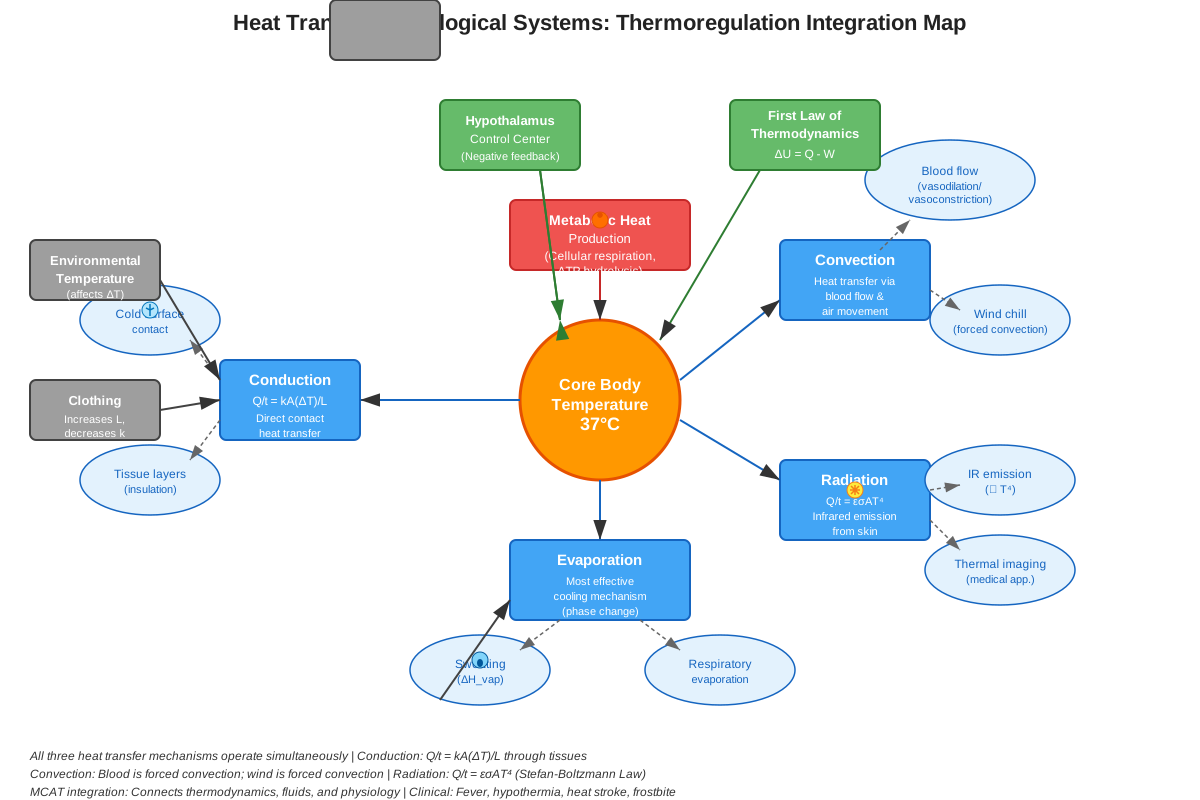
The human body employs all three heat transfer mechanisms for thermoregulation:
- Conduction: Heat transfers from the body core to skin surface through tissue, then to objects in contact (clothing, chair)
- Convection: Blood circulation redistributes heat internally; air currents remove heat from skin surface
- Radiation: The body radiates infrared energy to cooler surroundings; this accounts for ~60% of heat loss at rest in moderate environments
During cold exposure, vasoconstriction reduces blood flow to skin, decreasing convective heat delivery to the surface and minimizing heat loss. Shivering generates metabolic heat through muscle contractions. During heat exposure, vasodilation increases skin blood flow, enhancing convective heat delivery, while sweating enables evaporative cooling (a phase change process closely related to heat transfer).
Concept Relationships
The three heat transfer mechanisms are interconnected processes that often occur simultaneously. In most real-world scenarios, conduction transfers heat from a hot object to its surface, convection carries heat away from the surface through fluid motion, and radiation exchanges energy with distant objects. For example, a hot cup of coffee loses heat through conduction to the cup walls, convection to surrounding air, and radiation to the environment.
Heat transfer connects directly to temperature (the driving force for heat flow) and thermal energy (the quantity being transferred). The relationship Q = mcΔT links heat transfer to specific heat capacity, determining how much temperature changes for a given heat transfer. Phase changes represent special cases where heat transfer occurs without temperature change, as energy breaks intermolecular bonds rather than increasing kinetic energy.
The first law of thermodynamics (ΔU = Q - W) incorporates heat transfer as one mechanism of energy exchange, while the second law explains why heat spontaneously flows from hot to cold. Entropy increases during irreversible heat transfer processes, connecting thermodynamics to statistical mechanics.
Relationship map:
Temperature difference → drives → Heat transfer (via conduction, convection, radiation) → changes → Thermal energy → affects → Temperature (via Q = mcΔT) → influences → Thermodynamic state → governed by → Laws of thermodynamics
Quick check — test yourself on Heat transfer so far.
Try Flashcards →High-Yield Facts
⭐ Heat always flows spontaneously from higher temperature to lower temperature until thermal equilibrium is reached.
⭐ Conduction rate is directly proportional to thermal conductivity (k), area (A), and temperature difference (ΔT), but inversely proportional to thickness (d): Q/t = kA(ΔT/d).
⭐ Metals are excellent thermal conductors due to free electrons; insulators like air, wood, and tissue have low thermal conductivity.
⭐ Convection requires fluid motion and is enhanced by forced flow (fans, pumps); it generally transfers heat faster than conduction in fluids.
⭐ Radiation is the only heat transfer mechanism that works in a vacuum and has a T⁴ temperature dependence (Stefan-Boltzmann law).
- Thermal resistance (R-value) measures insulation effectiveness; higher R-values indicate better insulation.
- Emissivity (ε) ranges from 0 to 1; blackbodies (ε = 1) are perfect absorbers and emitters, while shiny surfaces have low emissivity.
- Natural convection occurs due to density differences from temperature variations, creating buoyancy-driven flow.
- The human body loses heat through all three mechanisms: conduction (~3%), convection (~15%), radiation (~60%), and evaporation (~22%) at rest in moderate conditions.
- Wind chill results from enhanced convective heat loss when air movement increases the convective heat transfer coefficient (h).
- Touching metal feels colder than wood at the same temperature because metal's higher thermal conductivity conducts heat away from skin faster.
- Multiple insulating layers add their thermal resistances in series, improving overall insulation effectiveness.
Common Misconceptions
Misconception: Heat and temperature are the same thing.
Correction: Heat is energy in transit due to temperature difference (measured in joules), while temperature is a measure of average kinetic energy of particles (measured in Kelvin or Celsius). A large cold object can contain more thermal energy than a small hot object.
Misconception: Cold flows from cold objects to hot objects.
Correction: Only heat (thermal energy) flows, and it always moves from hot to cold. "Cold" is simply the absence of thermal energy; there is no "cold energy" that flows. When you touch ice, heat flows from your warm hand to the cold ice, making your hand feel cold.
Misconception: Good conductors are always hot, and good insulators are always cold.
Correction: Thermal conductivity describes how quickly heat transfers through a material, not the material's temperature. A metal spoon and wooden spoon at room temperature have the same temperature, but metal feels colder because it conducts heat away from your hand faster.
Misconception: Radiation only occurs at very high temperatures or from glowing objects.
Correction: All objects above absolute zero emit thermal radiation continuously. The amount increases with temperature (T⁴ dependence), and the peak wavelength shifts from infrared (room temperature) to visible light (very high temperatures). You constantly emit infrared radiation even though you don't glow visibly.
Misconception: Convection can occur in solids.
Correction: Convection requires bulk fluid motion, which only occurs in liquids and gases where particles can move freely. Solids transfer heat exclusively through conduction (and radiation from their surfaces). What appears as "convection" in solids is actually conduction through the material.
Misconception: Thicker materials always provide better insulation.
Correction: While increasing thickness (d) decreases conduction rate (Q/t = kA(ΔT/d)), the material's thermal conductivity (k) matters more. A thin layer of foam (low k) can insulate better than a thick layer of metal (high k). Optimal insulation combines low k materials with adequate thickness.
Misconception: Heat transfer stops when objects reach the same temperature.
Correction: Net heat transfer stops at thermal equilibrium, but microscopic energy exchange continues in both directions at equal rates. Individual particles still collide and exchange energy, but the average energy flow in each direction balances, resulting in no net transfer.
Worked Examples
Example 1: Conduction Through a Window
Problem: A glass window has dimensions 1.5 m × 1.0 m and thickness 4.0 mm. The inside surface temperature is 20°C and the outside surface temperature is 0°C. The thermal conductivity of glass is 0.80 W/m·K. Calculate the rate of heat loss through the window.
Solution:
Step 1: Identify the appropriate equation for conduction:
Q/t = kA(ΔT/d)Step 2: List known values and convert units:
- k = 0.80 W/m·K
- A = 1.5 m × 1.0 m = 1.5 m²
- ΔT = 20°C - 0°C = 20 K (temperature differences are the same in Celsius and Kelvin)
- d = 4.0 mm = 0.004 m
Step 3: Substitute values and calculate:
Q/t = (0.80 W/m·K)(1.5 m²)(20 K)/(0.004 m)
Q/t = (0.80)(1.5)(20)/(0.004) W
Q/t = 24/0.004 W
Q/t = 6,000 W = 6.0 kWAnswer: The rate of heat loss through the window is 6.0 kW or 6,000 J/s.
Analysis: This substantial heat loss explains why windows are major sources of energy loss in buildings. The rate is directly proportional to area and temperature difference, and inversely proportional to thickness. Doubling the window thickness would halve the heat loss rate. Double-pane windows with air gaps (low thermal conductivity) dramatically reduce heat loss by increasing effective thickness and using a low-k material.
MCAT Connection: This problem type tests understanding of conduction equations and unit conversions. Watch for questions asking how changing one variable affects heat transfer rate—use the equation to identify direct versus inverse relationships.
Example 2: Thermoregulation and Multiple Heat Transfer Mechanisms
Problem: A person with body surface area 1.8 m² and skin temperature 33°C sits in a room at 22°C. The convective heat transfer coefficient is 6.0 W/m²·K. Assuming the person's emissivity is 0.95 and the room walls are at 22°C, calculate: (a) the rate of convective heat loss, and (b) the rate of radiative heat loss. (Stefan-Boltzmann constant σ = 5.67 × 10⁻⁸ W/m²·K⁴)
Solution:
(a) Convective heat loss:
Step 1: Use Newton's law of cooling:
Q/t = hA(ΔT)Step 2: Substitute values:
- h = 6.0 W/m²·K
- A = 1.8 m²
- ΔT = 33°C - 22°C = 11 K
Q/t = (6.0 W/m²·K)(1.8 m²)(11 K)
Q/t = 118.8 W ≈ 120 W
(b) Radiative heat loss:
Step 1: Use the net radiation equation:
P_net = εσA(T⁴ - T_surroundings⁴)Step 2: Convert temperatures to Kelvin:
- T_skin = 33°C + 273 = 306 K
- T_room = 22°C + 273 = 295 K
Step 3: Substitute values:
P_net = (0.95)(5.67 × 10⁻⁸ W/m²·K⁴)(1.8 m²)[(306 K)⁴ - (295 K)⁴]Step 4: Calculate T⁴ values:
- (306)⁴ = 8.76 × 10⁹ K⁴
- (295)⁴ = 7.57 × 10⁹ K⁴
- Difference = 1.19 × 10⁹ K⁴
Step 5: Complete calculation:
P_net = (0.95)(5.67 × 10⁻⁸)(1.8)(1.19 × 10⁹) W
P_net = 115.5 W ≈ 116 WAnswer: (a) Convective heat loss is approximately 120 W; (b) Radiative heat loss is approximately 116 W.
Analysis: Both convection and radiation contribute significantly to heat loss, with similar magnitudes in this scenario. Total heat loss is approximately 236 W, which must be balanced by metabolic heat production to maintain constant body temperature. If the room temperature drops or air movement increases (raising h), convective losses increase. The T⁴ dependence of radiation means radiative losses increase dramatically at higher skin temperatures.
MCAT Connection: This problem illustrates how the body loses heat through multiple simultaneous mechanisms. Exam questions might ask which mechanism dominates under different conditions (e.g., radiation becomes more important in still air, convection dominates in wind) or how physiological responses (vasoconstriction, vasodilation) affect heat transfer rates.
Exam Strategy
When approaching Heat transfer MCAT questions, first identify which mechanism(s) are involved by examining the physical setup: solid contact suggests conduction, fluid motion indicates convection, and energy transfer across empty space or mention of electromagnetic waves signals radiation. Many problems involve multiple mechanisms operating simultaneously.
Trigger words and phrases to recognize:
- Conduction: "in contact with," "through the material," "thermal conductivity," "thickness," "insulation"
- Convection: "fluid flow," "air circulation," "blood flow," "stirring," "wind," "forced/natural convection"
- Radiation: "electromagnetic," "infrared," "emissivity," "vacuum," "without contact," "glowing"
- General: "heat loss/gain," "thermal equilibrium," "temperature difference," "rate of heat transfer"
Process-of-elimination strategies:
- Eliminate answers suggesting heat flows from cold to hot without external work (violates second law)
- Eliminate answers confusing heat with temperature (e.g., "heat of 37°C")
- For conduction problems, eliminate answers showing direct proportionality to thickness (should be inverse)
- For radiation problems, eliminate answers with linear temperature dependence (should be T⁴)
- Eliminate answers suggesting convection in solids or conduction in vacuum
Quantitative problem approach:
- Write down the relevant equation immediately (Q/t = kA(ΔT/d) for conduction, Q/t = hA(ΔT) for convection, P = εσAT⁴ for radiation)
- List all given values and identify what's being asked
- Check units and convert if necessary (especially temperature to Kelvin for radiation)
- For ratio/comparison questions, set up proportions rather than calculating absolute values
- Estimate answers before calculating to catch errors
Time allocation: Discrete questions on heat transfer should take 60-90 seconds. Passage-based questions may require 90-120 seconds if they involve calculations or multiple steps. If a calculation seems excessively complex, look for a conceptual shortcut or proportional reasoning approach.
Common question formats:
- Calculating heat transfer rates given material properties and geometry
- Comparing insulation effectiveness of different materials or configurations
- Analyzing thermoregulation mechanisms in physiological contexts
- Interpreting experimental data from calorimetry or thermal conductivity measurements
- Predicting temperature changes in coupled systems at thermal equilibrium
Memory Techniques
Mnemonic for heat transfer mechanisms: "Can Cats Radiate?"
- Conduction: Contact required, solids
- Convection: Currents in fluids
- Radiation: Remote transfer, no medium needed
Conduction equation memory aid: "Kate's Area Totally Divided"
- Q/t = KA(ΔT)/D
- Helps remember that k, A, and ΔT are in the numerator, d is in the denominator
Radiation temperature dependence: "To the Fourth!"
- Hold up four fingers to remember P ∝ T⁴
- Visualize radiation power increasing dramatically with temperature
Thermal conductivity ranking visualization:
- Picture a metal spoon, wooden spoon, and air gap in order
- Metal (high k, ~100s) → Wood (medium k, ~0.1) → Air (low k, ~0.02)
- "Metals Move heat, Wood Waits, Air Avoids"
Convection types: "Natural Rises, Forced Flies"
- Natural convection: hot fluid naturally rises due to buoyancy
- Forced convection: external force makes fluid fly past surfaces
Heat flow direction: "Hot to Cold, Always Bold"
- Heat boldly flows from hot to cold, never the reverse (without work)
- Visualize heat as water flowing downhill (from high temperature to low)
Summary
Heat transfer is the spontaneous movement of thermal energy from higher to lower temperature regions through three distinct mechanisms: conduction (direct molecular contact in solids), convection (bulk fluid motion in liquids and gases), and radiation (electromagnetic waves requiring no medium). Each mechanism has characteristic equations governing transfer rates: conduction depends on thermal conductivity, area, temperature difference, and thickness (Q/t = kA(ΔT/d)); convection depends on the convective coefficient, area, and temperature difference (Q/t = hA(ΔT)); and radiation depends on emissivity, area, and absolute temperature to the fourth power (P = εσAT⁴). For the MCAT, understanding which mechanism dominates in different scenarios, recognizing the factors that increase or decrease heat transfer rates, and applying these principles to physiological thermoregulation and experimental contexts is essential. Heat transfer connects fundamentally to temperature, thermal energy, thermodynamic laws, and biological homeostasis, making it a versatile topic that appears across multiple question types and passage contexts.
Key Takeaways
- Heat transfer occurs spontaneously from hot to cold through conduction (solid contact), convection (fluid motion), or radiation (electromagnetic waves), with each mechanism having distinct characteristics and governing equations
- Conduction rate is directly proportional to thermal conductivity (k), area, and temperature difference, but inversely proportional to thickness; metals conduct well due to free electrons
- Convection requires fluid motion and can be natural (buoyancy-driven) or forced (externally driven); it generally transfers heat faster than conduction in fluids
- Radiation is the only mechanism that works in vacuum and has a T⁴ temperature dependence, making it increasingly important at high temperatures
- The human body uses all three mechanisms for thermoregulation, with physiological responses (vasoconstriction, vasodilation, shivering, sweating) modulating heat transfer rates
- MCAT questions test mechanism identification, rate calculations, material comparisons, and physiological applications; watch for trigger words indicating which mechanism is involved
- Common errors include confusing heat with temperature, forgetting inverse relationship between conduction and thickness, and neglecting to convert to Kelvin for radiation calculations
Related Topics
- Specific Heat Capacity and Calorimetry: Understanding Q = mcΔT enables calculation of temperature changes resulting from heat transfer; calorimetry experiments measure heat transfer between substances
- Phase Changes and Latent Heat: Heat transfer during phase transitions occurs without temperature change, requiring understanding of latent heat of fusion and vaporization
- First Law of Thermodynamics: Heat transfer is one mechanism of energy exchange in ΔU = Q - W, connecting to internal energy and work
- Second Law of Thermodynamics and Entropy: The spontaneous direction of heat flow (hot to cold) reflects entropy increase and the second law
- Thermal Expansion: Temperature changes from heat transfer cause dimensional changes in materials, important for understanding thermal stress
- Thermoregulation and Homeostasis: Physiological mechanisms for maintaining body temperature integrate all heat transfer mechanisms with metabolic heat production
Mastering heat transfer provides the foundation for understanding energy flow in physical and biological systems, enabling progression to more complex thermodynamic analyses and physiological applications.
Practice CTA
Now that you've mastered the core concepts of heat transfer, it's time to solidify your understanding through active practice. Attempt the practice questions to test your ability to identify mechanisms, calculate transfer rates, and apply these principles to MCAT-style scenarios. Use the flashcards to reinforce high-yield facts and equations until they become automatic. Remember: understanding the concepts is the first step, but exam success requires applying them quickly and accurately under time pressure. You've built a strong foundation—now practice turning that knowledge into points!
Sign up free to keep reading
Create a free AnvayaPrep account to finish this MCAT guide on Heat transfer — plus flashcards and practice questions.