Overview
Fertility is a fundamental demographic concept in Sociology that refers to the actual reproductive performance of individuals, couples, or populations—specifically, the number of live births occurring within a population. Unlike fecundity (the biological capacity to reproduce), fertility measures actual births and serves as a critical indicator of population dynamics, social change, and public health outcomes. For the MCAT, understanding fertility extends beyond simple definitions to encompass how social, economic, cultural, and political factors shape reproductive patterns across different societies and time periods.
The study of Fertility Sociology is essential for MCAT success because it intersects with multiple testable domains: population health, healthcare access, social stratification, cultural norms, and policy impacts. Questions on the MCAT frequently present demographic data, population pyramids, or scenarios involving reproductive health disparities that require students to analyze fertility patterns and their sociological implications. Understanding fertility rates, trends, and determinants enables test-takers to interpret complex passages about public health interventions, demographic transitions, and social inequality.
Within the broader context of Demographics and Social Change, fertility represents one of the three core components of population change (alongside mortality and migration). Changes in fertility patterns drive profound social transformations: declining fertility rates in developed nations contribute to aging populations and shifting dependency ratios, while high fertility in developing regions influences resource allocation, educational systems, and economic development. Mastering fertility concepts provides the foundation for understanding demographic transition theory, population momentum, replacement-level fertility, and the sociological factors that influence reproductive decision-making across diverse cultural contexts.
Learning Objectives
- [ ] Define Fertility using accurate Sociology terminology
- [ ] Explain why Fertility matters for the MCAT
- [ ] Apply Fertility to exam-style questions
- [ ] Identify common mistakes related to Fertility
- [ ] Connect Fertility to related Sociology concepts
- [ ] Calculate and interpret key fertility measures including crude birth rate, general fertility rate, and total fertility rate
- [ ] Analyze how social determinants (education, income, religion, urbanization) influence fertility patterns
- [ ] Evaluate the relationship between fertility trends and demographic transition stages
- [ ] Compare fertility patterns across different populations and explain observed disparities using sociological frameworks
Prerequisites
- Basic population statistics: Understanding rates, ratios, and proportions is necessary for calculating and interpreting fertility measures
- Social stratification concepts: Knowledge of how socioeconomic status, education, and class affect life outcomes provides context for fertility disparities
- Cultural sociology fundamentals: Awareness of how cultural values, norms, and religious beliefs shape behavior is essential for understanding reproductive choices
- Healthcare access and disparities: Familiarity with barriers to healthcare helps explain differential fertility outcomes across populations
- Basic demographic terminology: Understanding concepts like population size, age structure, and cohorts enables comprehension of fertility's population-level impacts
Why This Topic Matters
Fertility represents a high-yield topic for the MCAT Psychological, Social, and Biological Foundations of Behavior section, appearing in approximately 5-8% of sociology-focused questions. The topic's importance stems from its direct relevance to population health, healthcare policy, and social inequality—all priority areas for medical education. Understanding fertility patterns helps future physicians recognize how social determinants influence reproductive health outcomes, maternal mortality, family planning access, and intergenerational health disparities.
In clinical practice, physicians regularly encounter fertility-related issues: counseling patients on family planning, addressing infertility concerns, managing high-risk pregnancies in populations with limited prenatal care, and understanding how cultural beliefs influence reproductive decisions. Medical professionals must recognize that fertility is not merely a biological phenomenon but a socially constructed and culturally mediated process influenced by education, economic opportunity, gender equality, and healthcare infrastructure.
On the MCAT, fertility appears in multiple question formats. Passage-based questions often present demographic data tables showing fertility rates across countries or time periods, requiring students to identify trends and explain underlying social causes. Discrete questions may test knowledge of fertility measures, the demographic transition model, or factors influencing reproductive decision-making. Pseudo-discrete questions frequently embed fertility concepts within scenarios about healthcare access, women's education, or public health interventions. Common passage themes include: comparing developed versus developing nations' fertility patterns, analyzing the impact of education on women's reproductive choices, evaluating family planning programs, and interpreting population pyramids that reflect different fertility regimes.
Core Concepts
Defining Fertility and Fecundity
Fertility refers to the actual production of live births within a population during a specified time period. This sociological measure captures realized reproductive behavior rather than biological potential. In contrast, fecundity describes the biological capacity to reproduce—the physiological ability to conceive and carry a pregnancy to term. This distinction is crucial for the MCAT: fertility is a social and behavioral measure influenced by choice, access, and cultural factors, while fecundity is a biological measure determined by age, health status, and reproductive physiology.
For example, a 25-year-old woman with normal reproductive function has high fecundity, but her fertility (actual childbearing) depends on numerous social factors: whether she chooses to have children, access to contraception, educational and career goals, partner availability, economic resources, and cultural expectations. A population may have high fecundity but low fertility due to widespread contraceptive use, delayed marriage, or economic constraints that discourage childbearing.
Key Fertility Measures
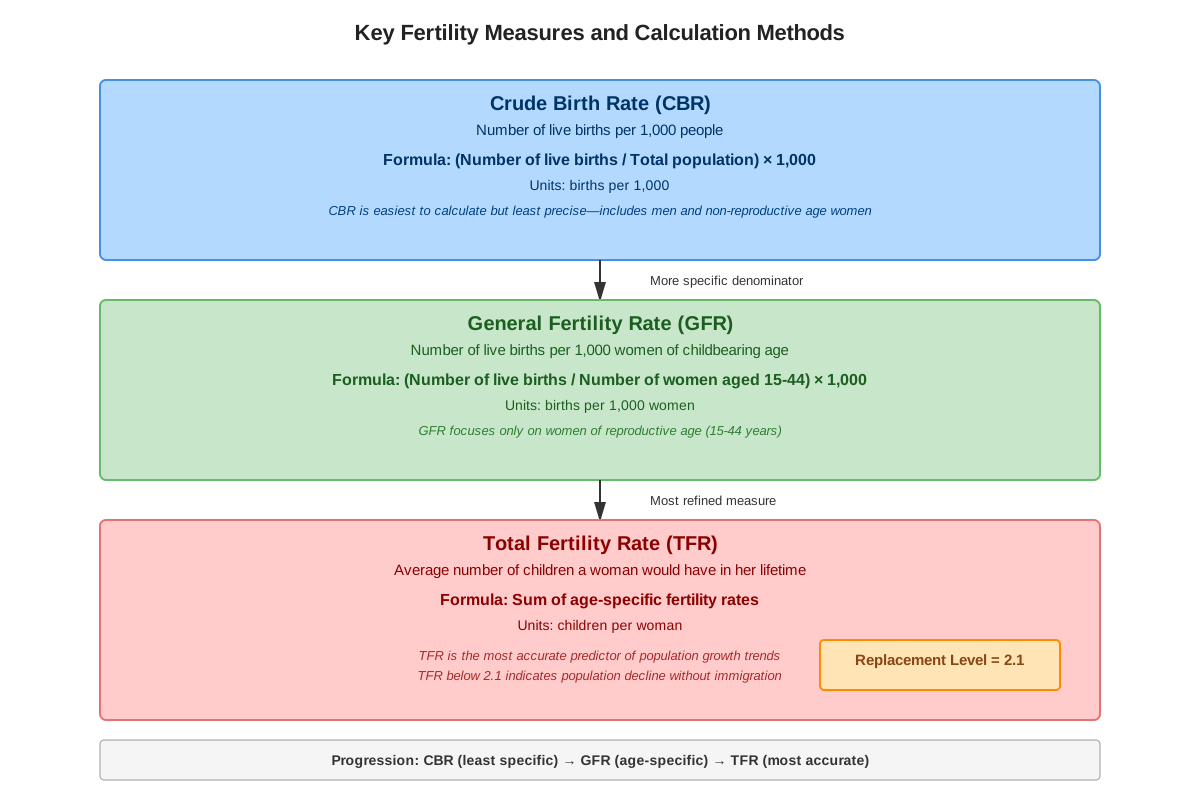
Fertility MCAT questions frequently require calculation or interpretation of specific fertility measures. Understanding these metrics enables analysis of demographic data presented in passages:
| Measure | Definition | Calculation | Interpretation |
|---|---|---|---|
| Crude Birth Rate (CBR) | Number of live births per 1,000 population per year | (Total births / Total population) × 1,000 | Basic measure; affected by age structure |
| General Fertility Rate (GFR) | Number of live births per 1,000 women aged 15-44 per year | (Total births / Women aged 15-44) × 1,000 | More refined; focuses on reproductive-age women |
| Total Fertility Rate (TFR) | Average number of children a woman would have over her lifetime | Sum of age-specific fertility rates | Best measure for comparing populations |
| Age-Specific Fertility Rate (ASFR) | Births per 1,000 women in specific age group per year | (Births to age group / Women in age group) × 1,000 | Shows fertility patterns by age |
The Total Fertility Rate (TFR) is the most important measure for MCAT purposes. A TFR of 2.1 is considered replacement-level fertility in developed nations—the rate at which a population exactly replaces itself from one generation to the next without migration. The 2.1 figure (rather than 2.0) accounts for infant and childhood mortality. TFR values below 2.1 indicate population decline without immigration, while values above 2.1 indicate population growth.
Social Determinants of Fertility
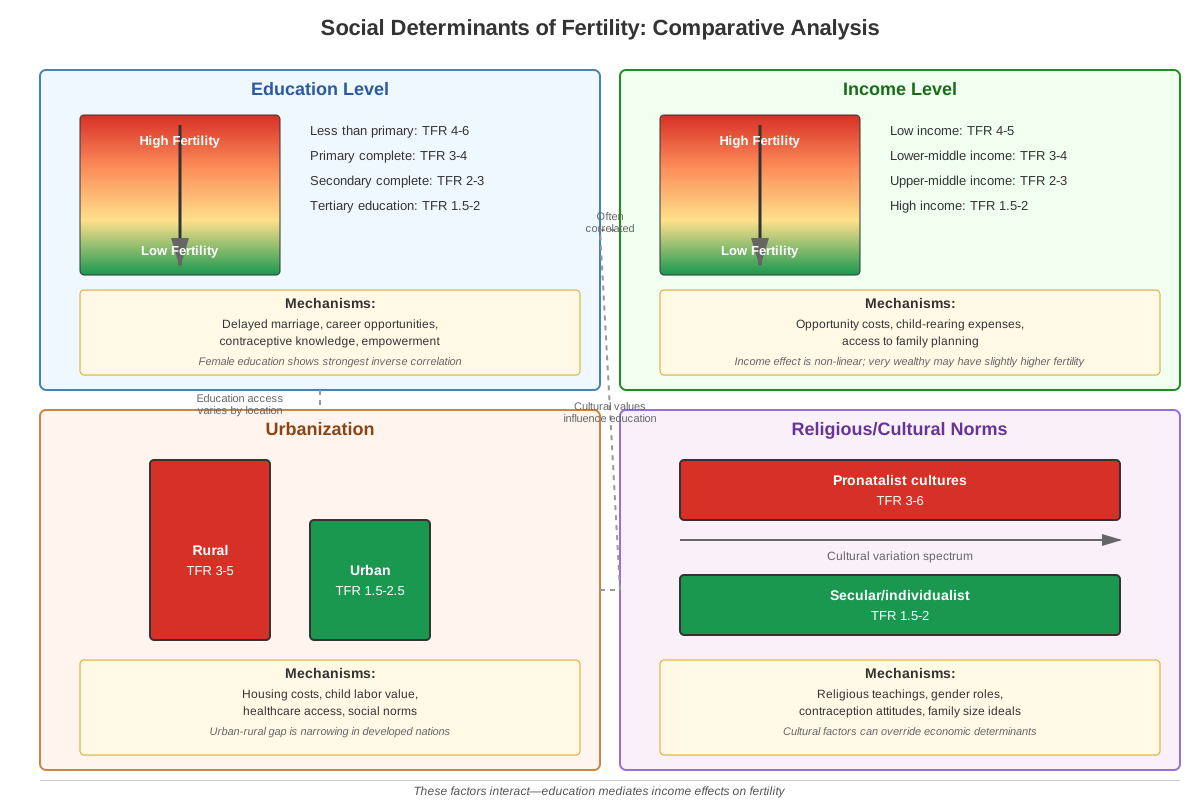
Multiple social factors influence fertility patterns, and the MCAT frequently tests understanding of these relationships:
Education and Fertility: One of the strongest inverse relationships in demography exists between women's education and fertility. Higher educational attainment correlates with delayed childbearing, smaller family sizes, and increased contraceptive use. Mechanisms include: increased opportunity costs of childbearing (career opportunities), greater knowledge of family planning methods, enhanced autonomy in reproductive decision-making, and delayed marriage. This relationship appears consistently across cultures and development levels.
Economic Factors: The relationship between income and fertility varies by development context. In developing nations, higher income often correlates with lower fertility as families invest more resources per child (quality-quantity tradeoff). In developed nations, the relationship becomes more complex: very low-income and very high-income groups may have higher fertility than middle-income groups. Economic uncertainty, housing costs, and childcare expenses influence reproductive timing and family size decisions.
Urbanization: Urban residence typically associates with lower fertility compared to rural areas. Urban environments offer greater access to education and employment for women, higher living costs, smaller housing spaces, reduced economic value of child labor, and greater availability of family planning services. Rural areas often maintain traditional family structures and gender roles that support higher fertility.
Religion and Culture: Religious beliefs and cultural norms profoundly influence fertility through attitudes toward contraception, ideal family size, gender roles, and the value placed on children. Pronatalist cultures emphasize childbearing as a social duty and source of status, while other cultural contexts prioritize individual achievement and smaller families. Religious prohibitions on contraception or abortion directly affect fertility outcomes.
Gender Equality: Societies with greater gender equality typically exhibit lower fertility rates. When women have equal access to education, employment, property rights, and political participation, they gain greater control over reproductive decisions and often choose smaller families or delayed childbearing. Conversely, patriarchal societies where women's primary role centers on reproduction tend to maintain higher fertility.
Demographic Transition Model and Fertility
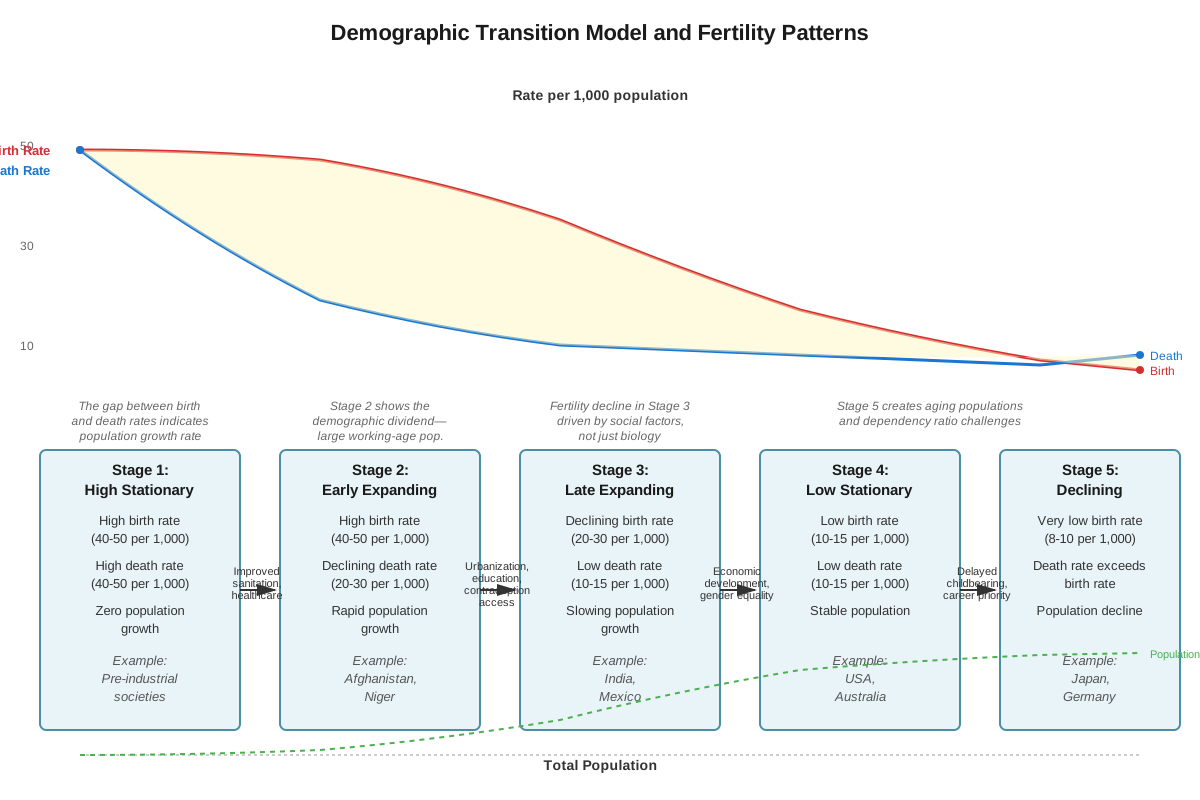
The Demographic Transition Model describes how populations shift from high birth and death rates to low birth and death rates as societies modernize. Fertility plays a central role in this transition:
Stage 1 (Pre-transition): High fertility (TFR 5-7) and high mortality create slow population growth. High fertility compensates for high infant and child mortality. Limited contraception, pronatalist cultural values, and women's limited education maintain high birth rates.
Stage 2 (Early transition): Mortality declines due to improved sanitation, nutrition, and healthcare, but fertility remains high, causing rapid population growth. This lag between mortality decline and fertility decline creates a demographic gap and population explosion.
Stage 3 (Late transition): Fertility begins declining as urbanization increases, women's education expands, child mortality falls (reducing need for many births), and contraception becomes available. Population growth slows as birth rates approach death rates.
Stage 4 (Post-transition): Both fertility and mortality stabilize at low levels. TFR approaches or falls below replacement level (2.1). Population growth slows or reverses, creating aging populations and potential labor shortages.
Stage 5 (Possible): Some demographers propose a fifth stage where fertility falls well below replacement (TFR 1.3-1.5), creating population decline and severe aging challenges, as seen in Japan, Italy, and South Korea.
Fertility and Population Structure
Fertility patterns shape population pyramids—graphical representations of age and sex distribution. High fertility creates a pyramid with a wide base (many young people), while low fertility creates a rectangular or inverted structure (fewer young people, more elderly). These structures have profound social implications:
- High dependency ratios: When fertility is very high or very low, the working-age population must support large numbers of dependents (children in high-fertility contexts, elderly in low-fertility contexts)
- Population momentum: Even when fertility drops to replacement level, populations continue growing for decades due to the large number of women in reproductive ages (a legacy of previous high fertility)
- Generational replacement: Below-replacement fertility threatens long-term population sustainability without immigration
Fertility Differentials and Disparities
Fertility differentials refer to variations in fertility rates across population subgroups. The MCAT tests understanding of these disparities and their social causes:
- Racial and ethnic disparities: In the United States, fertility rates vary by race/ethnicity due to differences in socioeconomic status, cultural values, healthcare access, and discrimination
- Socioeconomic disparities: Lower-income populations often have higher fertility due to limited contraceptive access, lower educational attainment, and different cultural norms
- Geographic disparities: Rural versus urban differences, and regional variations within countries, reflect differential access to education, healthcare, and economic opportunities
- Global disparities: Developed nations (TFR 1.5-2.0) versus developing nations (TFR 3.0-6.0) show dramatic differences driven by development level, women's status, and healthcare infrastructure
Concept Relationships
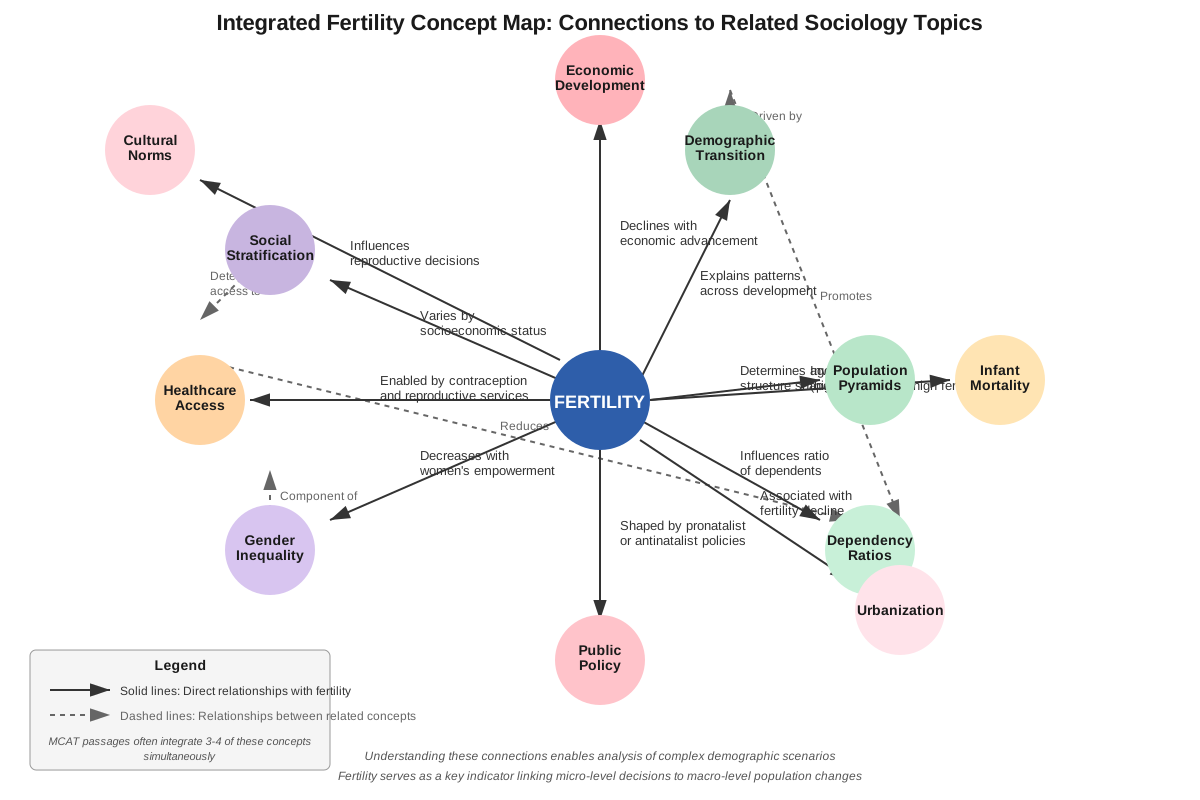
Fertility connects to numerous sociological concepts tested on the MCAT, forming an interconnected web of demographic and social phenomena. Understanding these relationships enables sophisticated analysis of exam passages.
Fertility → Population Growth: Fertility directly determines natural population increase (births minus deaths). High fertility drives population growth, while below-replacement fertility leads to population decline without immigration. This relationship links to migration (the third component of population change) and population momentum (continued growth despite falling fertility due to age structure).
Education → Fertility: Women's educational attainment inversely correlates with fertility through multiple pathways: delayed marriage and childbearing, increased labor force participation, greater autonomy in reproductive decisions, and enhanced knowledge of contraception. This relationship connects to social stratification, gender inequality, and human capital theory.
Fertility → Social Change: Declining fertility transforms societies by altering age structures, dependency ratios, labor markets, and intergenerational relationships. This connects to social institutions (family structure changes), economic systems (labor supply effects), and healthcare systems (shifting from pediatric to geriatric focus).
Healthcare Access → Fertility: Availability of family planning services, contraception, prenatal care, and reproductive health education directly influences fertility outcomes. This relationship links to health disparities, social determinants of health, and healthcare policy.
Culture and Religion → Fertility: Cultural values regarding ideal family size, gender roles, and the meaning of parenthood shape reproductive behavior. Religious teachings on contraception, abortion, and procreation influence fertility. This connects to cultural capital, socialization, and social norms.
Urbanization → Fertility: Urban-rural differences in fertility reflect variations in economic structures, educational opportunities, housing costs, and cultural values. This relationship links to modernization theory, social change, and economic development.
Relationship Map:
Socioeconomic Status → Education → Women's Empowerment → Fertility ↓
                                                              ↓
Healthcare Access → Contraceptive Use → Fertility ↓ → Population Growth ↓
                                                              ↓
Cultural Values → Pronatalism/Family Size Preferences → Fertility
                                                              ↓
Fertility → Age Structure → Dependency Ratios → Social Policy Needs
Quick check — test yourself on Fertility so far.
Try Flashcards →High-Yield Facts
⭐ Total Fertility Rate (TFR) measures the average number of children a woman would have over her lifetime; replacement-level fertility is 2.1 in developed nations.
⭐ Women's education is the strongest predictor of lower fertility across all societies, operating through delayed marriage, increased opportunity costs, and enhanced reproductive autonomy.
⭐ The Demographic Transition Model describes the shift from high birth/death rates to low birth/death rates, with fertility decline lagging behind mortality decline in Stage 2, causing rapid population growth.
⭐ Crude Birth Rate (CBR) measures births per 1,000 total population, while General Fertility Rate (GFR) measures births per 1,000 women aged 15-44, making GFR more accurate for comparing populations with different age structures.
⭐ Below-replacement fertility (TFR < 2.1) leads to population aging and eventual decline without immigration, creating challenges for pension systems and healthcare.
- Fecundity refers to biological capacity to reproduce, while fertility measures actual births—a crucial distinction for MCAT questions.
- Urbanization consistently correlates with lower fertility due to higher costs of living, greater educational and employment opportunities for women, and reduced economic value of children.
- Population momentum means populations continue growing for decades after reaching replacement-level fertility due to large cohorts of reproductive-age women.
- Pronatalist policies (tax incentives, parental leave, childcare subsidies) attempt to increase fertility in low-fertility societies, while antinatalist policies (family planning programs, education) aim to reduce fertility in high-fertility contexts.
- Fertility differentials by race, ethnicity, socioeconomic status, and geography reflect underlying social inequalities in education, healthcare access, and economic opportunity.
- Religious beliefs significantly influence fertility through teachings on contraception, abortion, and ideal family size, with more religious populations typically exhibiting higher fertility.
- Age-specific fertility rates show that fertility peaks in the late 20s in most populations, with teenage fertility and fertility after age 35 carrying higher health risks.
Common Misconceptions
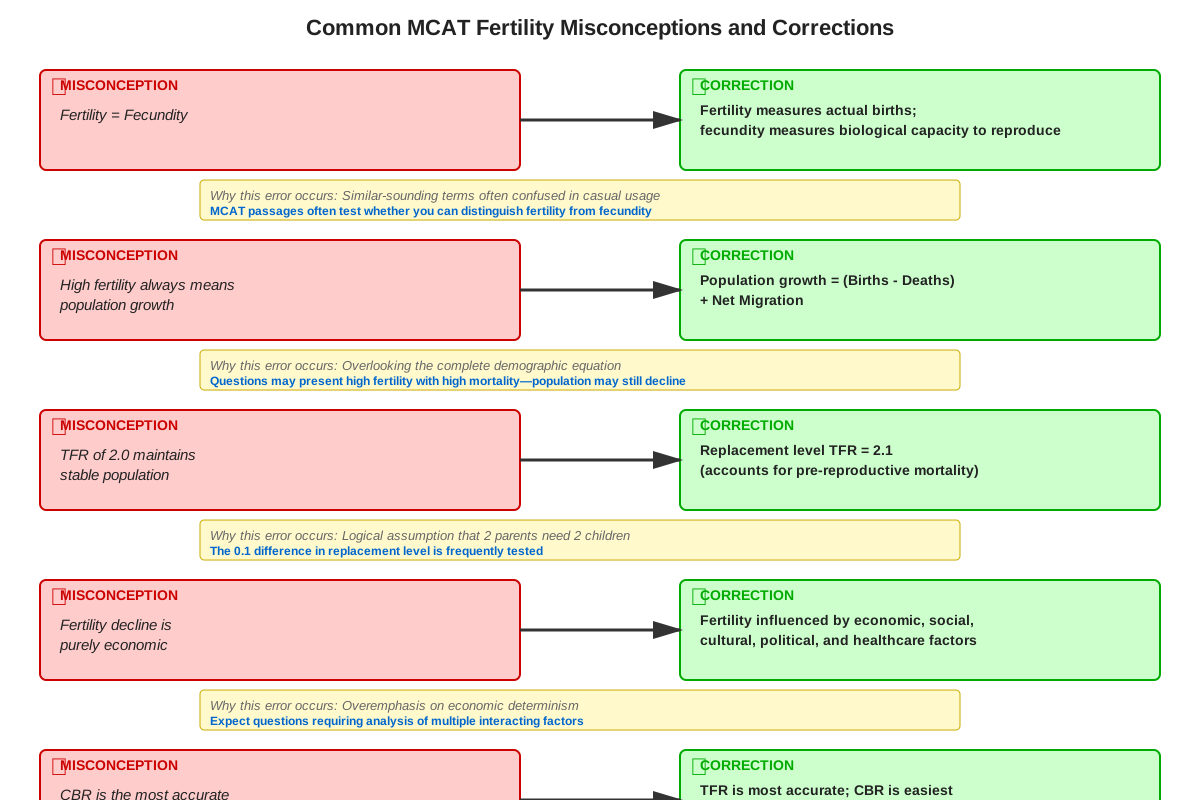
Misconception: Fertility and fecundity are interchangeable terms.
Correction: Fertility measures actual births in a population (a behavioral/social measure), while fecundity refers to biological capacity to reproduce (a physiological measure). A population can have high fecundity but low fertility if people choose not to have children or lack access to reproductive healthcare.
Misconception: Replacement-level fertility is 2.0 children per woman.
Correction: Replacement-level fertility is 2.1 in developed nations to account for infant and childhood mortality and the slight male excess at birth. In developing nations with higher mortality, replacement level may be 2.3 or higher. The MCAT expects recognition that 2.1 is the standard replacement level.
Misconception: Higher income always leads to lower fertility.
Correction: The income-fertility relationship varies by context. In developing nations, higher income typically correlates with lower fertility. In developed nations, the relationship is U-shaped: very low-income and very high-income groups may have higher fertility than middle-income groups. Economic security can enable desired fertility among wealthy families.
Misconception: Declining fertility immediately stops population growth.
Correction: Due to population momentum, populations continue growing for 50-70 years after reaching replacement-level fertility because large cohorts of young people enter reproductive ages. Only when these cohorts age does population growth cease.
Misconception: Crude Birth Rate (CBR) is the best measure for comparing fertility across populations.
Correction: CBR is affected by population age structure and can be misleading when comparing populations with different age distributions. Total Fertility Rate (TFR) provides a better comparison because it's independent of age structure and represents completed fertility.
Misconception: All religious populations have high fertility.
Correction: While religiosity generally correlates with higher fertility, the relationship varies by religion, denomination, and degree of religious observance. Additionally, education and economic factors can override religious influences on fertility. Context matters more than simple religious affiliation.
Misconception: Fertility decline is always voluntary and reflects women's preferences.
Correction: While increased autonomy often drives fertility decline, some low fertility results from structural barriers: unaffordable housing, lack of childcare, employment insecurity, or incompatibility between work and family life. Distinguishing voluntary from constrained fertility choices is important for policy analysis.
Worked Examples
Example 1: Interpreting Demographic Data
Scenario: A researcher presents data from two countries:
- Country A: TFR = 5.8, CBR = 42 per 1,000, 45% of population under age 15, female literacy rate = 35%
- Country B: TFR = 1.4, CBR = 9 per 1,000, 14% of population under age 15, female literacy rate = 99%
Question: Which demographic transition stage is each country in, and what social factors explain the fertility difference?
Analysis:
Step 1: Identify demographic transition stages based on fertility levels.
- Country A has very high TFR (5.8) and high CBR (42), indicating Stage 2 (early transition) where mortality has declined but fertility remains high, causing rapid population growth.
- Country B has very low TFR (1.4, well below replacement) and low CBR (9), indicating Stage 4 or 5 (post-transition) with both low mortality and low fertility.
Step 2: Analyze age structure implications.
- Country A's young age structure (45% under 15) reflects high fertility and creates a wide-based population pyramid, ensuring continued population growth through momentum even if fertility declines.
- Country B's older age structure (only 14% under 15) reflects decades of low fertility, creating a rectangular or inverted pyramid and population aging challenges.
Step 3: Connect social factors to fertility differences.
- The dramatic difference in female literacy (35% vs. 99%) is the most significant social determinant. Country A's low female education limits women's autonomy, employment opportunities, and knowledge of family planning, maintaining high fertility.
- Country B's near-universal female education empowers women's reproductive choices, increases opportunity costs of childbearing, and delays marriage and first births.
Step 4: Consider additional factors.
- Country A likely has limited contraceptive access, rural population majority, traditional gender roles, and economic structures where children provide labor and old-age security.
- Country B likely has universal healthcare including family planning, urban majority, gender equality, and economic structures where children represent significant costs rather than economic assets.
Answer: Country A is in Stage 2 of demographic transition with high fertility driven by low female education, limited contraceptive access, and traditional social structures. Country B is in Stage 4/5 with below-replacement fertility resulting from high female education, gender equality, urbanization, and economic development. The 64-percentage-point difference in female literacy is the strongest predictor of the fertility gap.
Example 2: Evaluating a Public Health Intervention
Scenario: A developing nation implements a program providing free secondary education for girls in rural areas. Researchers track fertility outcomes over 15 years and find that women who completed secondary school have a TFR of 2.8 compared to 5.2 for women with only primary education.
Question: Using sociological concepts, explain the mechanisms through which education reduced fertility and predict additional social changes likely to occur.
Analysis:
Step 1: Identify direct mechanisms linking education to fertility.
- Delayed marriage and childbearing: Secondary education keeps girls in school during prime marriage years, raising age at first marriage and first birth. Later childbearing compresses reproductive years, reducing total births.
- Increased opportunity costs: Education creates employment opportunities, making childbearing more costly in terms of foregone income and career advancement.
- Enhanced knowledge: Education provides information about reproductive health, contraception, and family planning methods.
- Greater autonomy: Education empowers women to make independent reproductive decisions rather than deferring to husbands or family elders.
Step 2: Calculate the fertility reduction.
- Fertility declined from 5.2 to 2.8 births per woman—a reduction of 2.4 births (46% decrease).
- While still above replacement level (2.1), this represents substantial progress toward demographic transition.
Step 3: Apply sociological frameworks.
- Human capital theory: Education increases women's human capital, making them more valuable in the labor market and increasing the opportunity cost of time spent in childbearing and childrearing.
- Social change theory: Education serves as a catalyst for broader social transformation, challenging traditional gender roles and family structures.
- Modernization theory: Education facilitates the shift from traditional to modern values, including smaller ideal family sizes.
Step 4: Predict additional social changes.
- Improved child health: Educated mothers have better knowledge of nutrition, hygiene, and healthcare, reducing child mortality.
- Increased female labor force participation: Education enables women to enter formal employment, changing household economic dynamics.
- Delayed demographic transition: The nation will likely progress from Stage 2 to Stage 3, with fertility continuing to decline as education expands.
- Intergenerational effects: Educated mothers invest more in each child's education, creating a positive feedback loop.
- Changing family structures: Nuclear families may become more common as extended family authority weakens.
Answer: Education reduced fertility through multiple mechanisms: delayed marriage and childbearing, increased opportunity costs of children, enhanced reproductive knowledge, and greater female autonomy. The 46% fertility reduction will accelerate demographic transition, improve child health outcomes, increase female labor force participation, and transform family structures. This intervention demonstrates how addressing social determinants (education) produces demographic changes (lower fertility) with cascading social effects.
Exam Strategy
Approaching Fertility Questions on the MCAT:
- Identify the fertility measure: Determine whether the question involves CBR, GFR, TFR, or ASFR. Each measure has different interpretations and uses. TFR questions are most common and most important.
- Look for social determinants: MCAT questions rarely test fertility in isolation. Look for information about education (especially women's education), income, urbanization, religion, or healthcare access. These factors explain fertility patterns.
- Apply demographic transition logic: If a passage presents fertility data across time or compares countries, consider which demographic transition stage applies. Stage 2 (high fertility, declining mortality) and Stage 4 (low fertility and mortality) are most frequently tested.
- Distinguish correlation from causation: The MCAT often presents correlational data (e.g., "countries with higher female education have lower fertility") and asks about mechanisms. Be prepared to explain why relationships exist, not just that they exist.
Trigger Words and Phrases:
- "Birth rate" or "number of children" → Think about fertility measures and social determinants
- "Women's education" or "female literacy" → Strongest predictor of lower fertility
- "Developing nation" or "low-income country" → Likely higher fertility, Stage 2 or 3 of demographic transition
- "Population pyramid" or "age structure" → Consider how fertility patterns create different population shapes
- "Replacement level" → TFR of 2.1; below this means eventual population decline
- "Family planning" or "contraceptive access" → Direct influence on fertility through proximate determinants
- "Urbanization" or "rural-urban migration" → Associated with fertility decline
Process-of-Elimination Tips:
- Eliminate answers that confuse fertility with fecundity (biological capacity vs. actual births)
- Eliminate answers suggesting simple, unidirectional relationships (e.g., "higher income always reduces fertility") without considering context
- Eliminate answers that ignore the role of women's agency and education in fertility decisions
- Eliminate answers that suggest immediate population effects from fertility changes (ignore population momentum)
- Eliminate answers that attribute fertility patterns solely to biological factors without considering social determinants
Time Allocation:
- Fertility questions typically appear in passages with demographic data tables or graphs. Spend 30-45 seconds analyzing the data before reading questions.
- For discrete questions on fertility definitions or measures, aim for 30-45 seconds per question.
- For passage-based questions requiring interpretation of fertility trends and social causes, allocate 60-90 seconds per question.
- If a question asks you to calculate a fertility rate, do so quickly but carefully—these are typically straightforward if you know the formulas.
Memory Techniques
Mnemonic for Social Determinants of Fertility (REDUCE):
- Religion and culture (pronatalist vs. smaller family values)
- Education (especially women's education—strongest predictor)
- Development level (economic development correlates with lower fertility)
- Urbanization (urban residence associated with lower fertility)
- Contraceptive access (availability of family planning services)
- Equality (gender equality enables reproductive autonomy)
Mnemonic for Demographic Transition Stages (HELP):
- High both (Stage 1: high birth and death rates)
- Explosion (Stage 2: death rates fall, birth rates high = population explosion)
- Lowering (Stage 3: birth rates begin lowering)
- Post-transition (Stage 4: both low, stable population)
Visualization for Fertility vs. Fecundity:
Imagine a factory (fecundity = production capacity) versus actual products made (fertility = actual output). A factory might have capacity to produce 1,000 cars per day (high fecundity) but only produce 200 (low fertility) due to economic decisions, lack of demand, or resource constraints. Similarly, biological capacity doesn't determine actual births—social factors do.
Acronym for Fertility Measures (CBG-TAT):
- Crude Birth Rate (per 1,000 total population)
- General Fertility Rate (per 1,000 women aged 15-44)
- Total Fertility Rate (lifetime births per woman)
- Age-Specific Fertility Rate (by age group)
- Total = most important for MCAT
Memory Aid for Replacement Level:
"2.1 to replace the two" (2.1 children needed to replace two parents, with the extra 0.1 accounting for mortality before reproductive age)
Summary
Fertility, defined as the actual production of live births within a population, represents a critical demographic concept for MCAT success. Unlike fecundity (biological capacity), fertility is a social and behavioral measure profoundly influenced by education, economic development, urbanization, gender equality, healthcare access, and cultural values. Key fertility measures include Crude Birth Rate, General Fertility Rate, and Total Fertility Rate (TFR), with TFR being most important for comparing populations. Replacement-level fertility of 2.1 represents the rate at which populations exactly replace themselves. The Demographic Transition Model describes how societies shift from high to low fertility as they modernize, with fertility decline lagging behind mortality decline in Stage 2, creating rapid population growth. Women's education emerges as the strongest predictor of lower fertility across all contexts, operating through delayed marriage, increased opportunity costs, enhanced knowledge, and greater reproductive autonomy. Fertility patterns shape population age structures, dependency ratios, and long-term social change, making fertility analysis essential for understanding population health, healthcare policy, and social inequality—all high-yield topics for the MCAT.
Key Takeaways
- Fertility measures actual births (social/behavioral), while fecundity measures biological capacity—a critical distinction for MCAT questions
- Total Fertility Rate (TFR) is the most important measure, with replacement level at 2.1 in developed nations
- Women's education is the strongest and most consistent predictor of lower fertility across all societies and development levels
- The Demographic Transition Model describes fertility decline as societies modernize, with Stage 2's lag between mortality and fertility decline causing population explosions
- Multiple social determinants influence fertility: education, income, urbanization, gender equality, healthcare access, religion, and culture
- Population momentum means populations continue growing decades after reaching replacement-level fertility due to age structure
- Below-replacement fertility (TFR < 2.1) creates population aging and eventual decline without immigration, as seen in many developed nations
Related Topics
Mortality and Life Expectancy: Understanding death rates complements fertility knowledge, as both determine natural population increase. The relationship between declining mortality and lagging fertility decline drives demographic transition.
Migration: The third component of population change, migration interacts with fertility to determine population growth. Immigration can offset below-replacement fertility in developed nations.
Population Pyramids and Age Structure: Visual representations of population age and sex distribution directly reflect fertility patterns and enable prediction of future demographic trends.
Social Stratification and Inequality: Fertility differentials by race, ethnicity, and socioeconomic status reflect broader patterns of social inequality in education, healthcare access, and economic opportunity.
Gender and Society: Women's status, education, and empowerment fundamentally shape fertility patterns, connecting reproductive behavior to broader gender inequality issues.
Healthcare Systems and Access: Availability of reproductive healthcare, family planning services, and contraception directly influences fertility outcomes and health disparities.
Urbanization and Social Change: The shift from rural to urban residence drives fertility decline and broader social transformations in family structure, gender roles, and economic organization.
Practice CTA
Now that you've mastered the core concepts of fertility and its sociological determinants, it's time to reinforce your learning through active practice. Complete the practice questions and flashcards to test your ability to apply fertility concepts to MCAT-style scenarios. Focus especially on interpreting demographic data, explaining social determinants of fertility patterns, and connecting fertility to broader demographic and social change concepts. Remember: understanding fertility isn't just about memorizing definitions—it's about analyzing how social factors shape reproductive behavior and population dynamics. Your ability to think sociologically about fertility will serve you well not only on the MCAT but throughout your medical career as you encounter patients making reproductive decisions within complex social contexts. You've got this!
Sign up free to keep reading
Create a free AnvayaPrep account to finish this MCAT guide on Fertility — plus flashcards and practice questions.