Overview
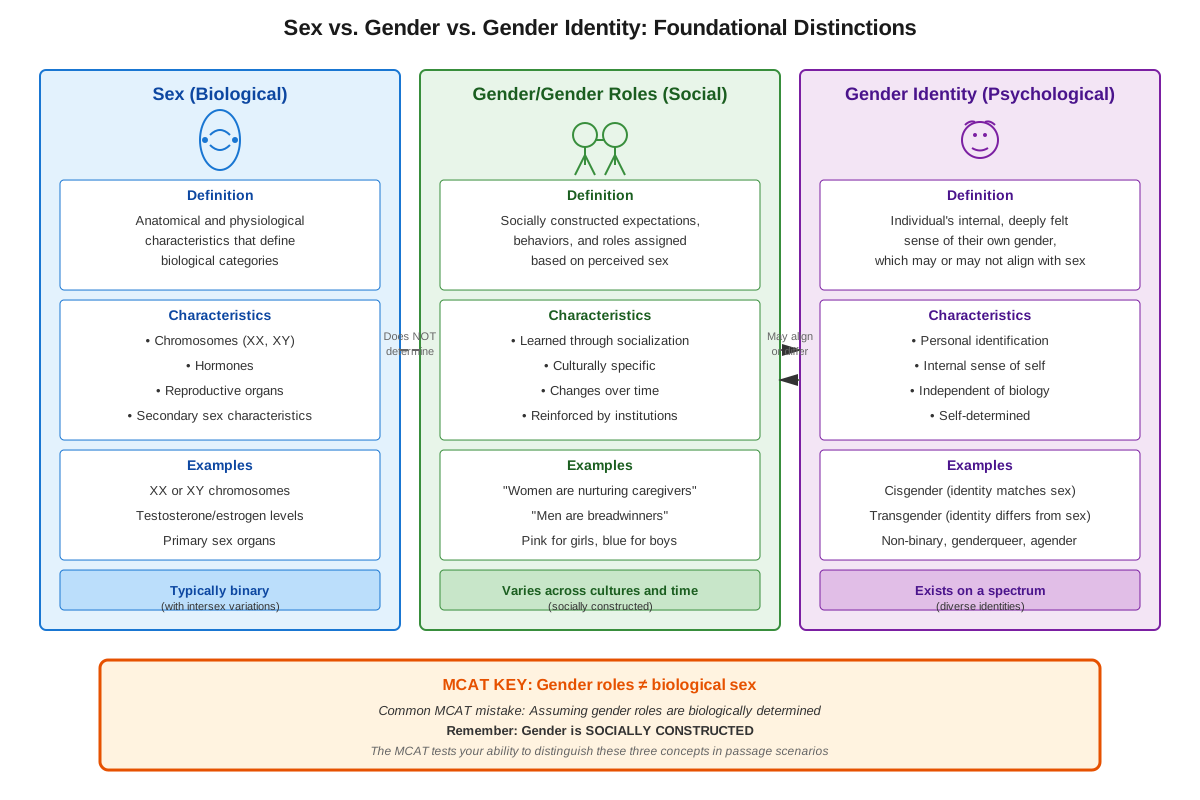
Gender roles represent one of the most fundamental organizing principles of human societies and constitute a critical component of the MCAT's Sociology curriculum within Social Stratification and Inequality. Gender roles are socially constructed expectations, behaviors, and norms that societies assign to individuals based on their perceived or assigned gender. Unlike biological sex, which refers to anatomical and physiological characteristics, gender roles are learned through socialization and vary significantly across cultures and historical periods. Understanding this distinction is essential for MCAT success, as the exam frequently tests students' ability to differentiate between biological and social determinants of behavior.
The MCAT places substantial emphasis on gender roles because they intersect with numerous other sociological concepts including socialization, social institutions, power dynamics, and health disparities. Questions on this topic often appear in Psychological, Social, and Biological Foundations of Behavior passages that explore how gender expectations influence health-seeking behaviors, physician-patient interactions, occupational choices, and mental health outcomes. The exam tests not only definitional knowledge but also the ability to apply gender role theory to analyze complex social scenarios, identify mechanisms of gender socialization, and recognize how gender intersects with other forms of stratification such as race, class, and sexuality.
Mastery of gender roles provides the foundation for understanding broader patterns of social inequality and stratification. This topic connects directly to concepts such as stereotype threat, discrimination, social constructionism, symbolic interactionism, and structural functionalism. The MCAT expects students to recognize how gender roles are maintained through social institutions (family, education, media, religion), how they change over time, and how violations of gender norms can result in social sanctions. This knowledge is particularly relevant for future physicians who must understand how gender expectations affect patient behavior, treatment adherence, and health outcomes across diverse populations.
Learning Objectives
- [ ] Define Gender roles using accurate Sociology terminology
- [ ] Explain why Gender roles matters for the MCAT
- [ ] Apply Gender roles to exam-style questions
- [ ] Identify common mistakes related to Gender roles
- [ ] Connect Gender roles to related Sociology concepts
- [ ] Distinguish between sex, gender, and gender identity in sociological contexts
- [ ] Analyze how gender roles are transmitted through agents of socialization
- [ ] Evaluate the relationship between gender roles and health disparities
- [ ] Compare gender role expectations across different theoretical frameworks (functionalist, conflict, symbolic interactionist)
Prerequisites
- Basic understanding of socialization: Gender roles are learned through socialization processes; understanding primary and secondary socialization is essential for grasping how gender expectations are transmitted
- Familiarity with social institutions: Gender roles are reinforced by institutions like family, education, and media; knowing how institutions function helps explain gender role persistence
- Concept of social construction: Recognizing that many aspects of social life are created through human interaction rather than being biologically determined is fundamental to understanding gender as distinct from sex
- Basic knowledge of stratification: Gender roles contribute to and result from systems of inequality; understanding social hierarchies provides context for gender-based disparities
Why This Topic Matters
Gender roles have profound real-world implications for medical practice and public health. Physicians regularly encounter patients whose health behaviors, symptom reporting, and treatment adherence are shaped by gender expectations. For example, traditional masculine gender roles that emphasize stoicism and self-reliance contribute to men's lower rates of preventive care utilization and delayed help-seeking for mental health concerns. Conversely, feminine gender roles that prioritize caregiving can lead women to neglect their own health needs. Understanding these patterns enables future physicians to provide culturally competent, patient-centered care that accounts for how gender socialization influences health outcomes.
On the MCAT, gender roles appear with high frequency across multiple question types. Approximately 8-12% of Psychological, Social, and Biological Foundations of Behavior questions directly or indirectly address gender concepts. The topic appears most commonly in passage-based questions that present research studies examining gender differences in behavior, health outcomes, or social interactions. Discrete questions often test definitional knowledge, asking students to distinguish between sex and gender or to identify examples of gender role socialization. The exam also features questions requiring application of gender role theory to novel scenarios, such as analyzing how gender expectations might influence a patient's response to a diagnosis or treatment recommendation.
Common exam presentations include passages describing: gender disparities in STEM fields and the role of stereotype threat; differences in physician communication patterns with male versus female patients; the impact of gender role conflict on mental health; occupational segregation and the gender wage gap; and how media representations reinforce or challenge traditional gender norms. The MCAT particularly favors questions that require students to identify the social (rather than biological) origins of gender differences and to recognize how gender intersects with other dimensions of identity and stratification.
Core Concepts
Definition and Distinction: Sex, Gender, and Gender Identity
Gender roles are the socially constructed and culturally specific expectations, behaviors, activities, and attributes that a society considers appropriate for individuals based on their assigned or perceived gender. This definition emphasizes three critical elements: social construction (created through human interaction rather than biological necessity), cultural specificity (varying across societies and time periods), and normative expectations (prescribing what individuals "should" do rather than what they inevitably will do).
The MCAT requires precise differentiation between related terms. Sex refers to biological and physiological characteristics including chromosomes, hormones, and reproductive anatomy, typically categorized as male, female, or intersex. Gender refers to the social, cultural, and psychological attributes associated with masculinity and femininity. Gender identity is an individual's internal sense of their own gender, which may or may not align with their assigned sex at birth. Gender expression refers to external manifestations of gender through clothing, behavior, and presentation. These distinctions are high-yield for the MCAT because exam questions frequently test whether students can identify social versus biological explanations for observed differences between groups.
Theoretical Perspectives on Gender Roles
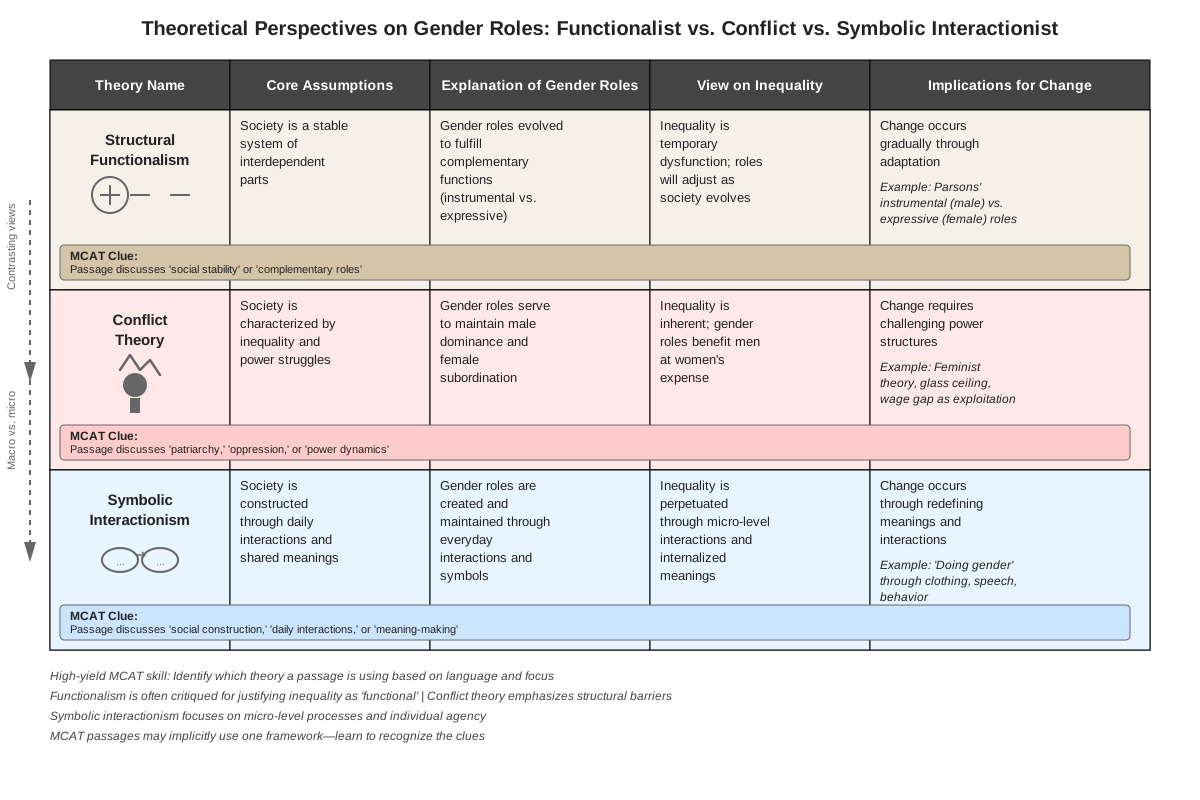
Different sociological theories offer distinct explanations for the origin and persistence of gender roles, and the MCAT tests understanding of these frameworks:
Structural Functionalism views gender roles as serving important social functions by creating complementary roles that promote social stability and efficiency. From this perspective, traditional divisions of labor (men in instrumental/breadwinner roles, women in expressive/caretaker roles) were adaptive for pre-industrial societies. While the MCAT acknowledges this perspective, questions often ask students to identify its limitations, particularly its tendency to justify inequality and its inability to explain rapid changes in gender roles.
Conflict Theory interprets gender roles as mechanisms through which men maintain power and privilege over women. This perspective emphasizes how gender roles serve the interests of dominant groups by restricting women's access to economic resources, political power, and social status. The MCAT frequently tests conflict theory applications, particularly in questions about the gender wage gap, occupational segregation, and the "second shift" (women's disproportionate responsibility for domestic labor even when employed full-time).
Symbolic Interactionism focuses on how gender roles are created and maintained through everyday interactions and the meanings people attach to gendered behaviors. This micro-level perspective examines how individuals "do gender" through performances that signal their gender identity to others. The concept of gender socialization—the lifelong process through which individuals learn gender norms—is central to this perspective. The MCAT often presents scenarios requiring students to identify how specific interactions reinforce or challenge gender expectations.
Feminist Theory analyzes how gender intersects with other systems of oppression and advocates for gender equality. Intersectionality, a key feminist concept, recognizes that gender cannot be understood in isolation from race, class, sexuality, and other dimensions of identity. MCAT questions increasingly incorporate intersectional analysis, asking students to consider how gender roles vary across different social groups.
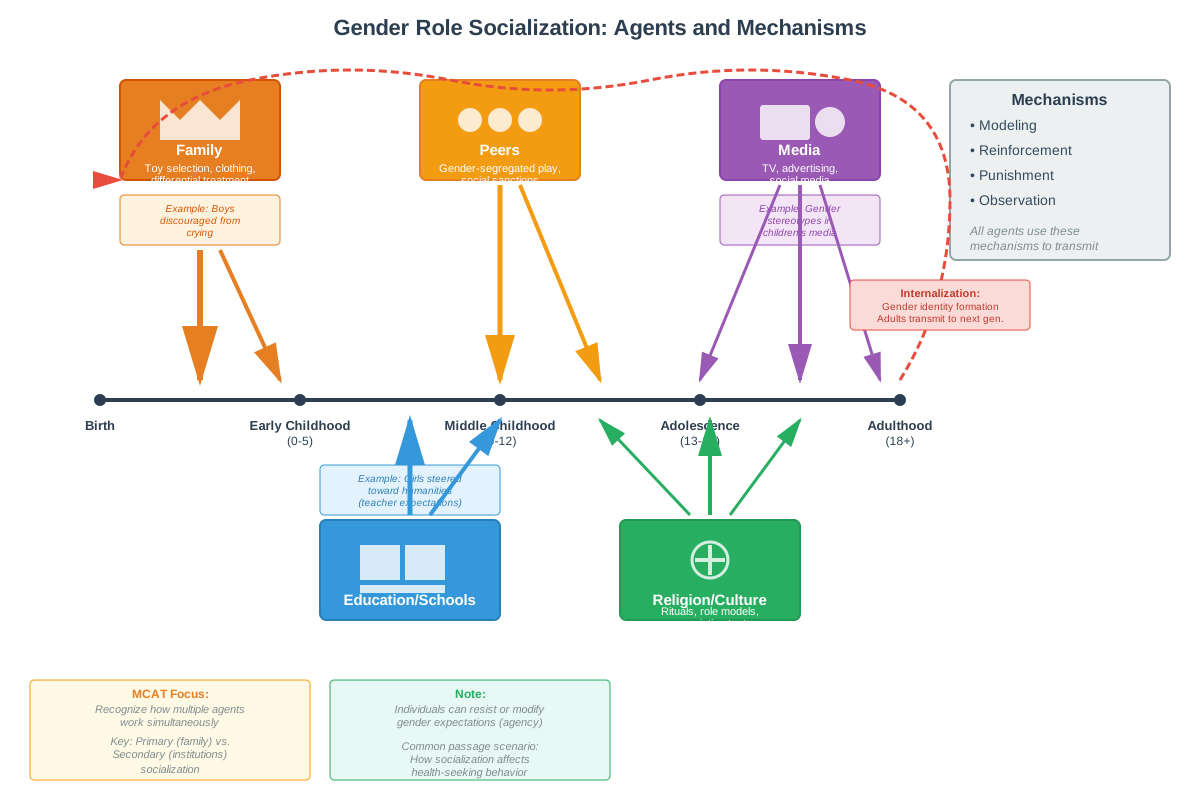
Agents of Gender Socialization
Gender roles are transmitted through multiple agents of socialization:
Family serves as the primary agent, beginning in infancy. Parents often treat children differently based on gender, selecting gender-typed toys, encouraging different activities, and responding differently to emotions (e.g., comforting girls who cry while encouraging boys to "be tough"). Research shows these differential treatments occur even when parents consciously attempt to raise children in gender-neutral ways, demonstrating the pervasive nature of gender socialization.
Peers become increasingly influential during childhood and adolescence. Children enforce gender norms through play preferences, friendship patterns, and social sanctions for gender-nonconforming behavior. The MCAT may present scenarios involving peer pressure to conform to gender expectations or the social consequences of violating gender norms.
Schools reinforce gender roles through both formal curriculum and hidden curriculum. Historically, textbooks portrayed men and women in stereotypical roles, though this has improved. The hidden curriculum—implicit lessons conveyed through school structure and teacher behavior—continues to transmit gender messages, such as when teachers call on boys more frequently in math and science classes.
Media provides powerful models of gender-appropriate behavior through television, films, advertising, and social media. Traditional media often presents exaggerated gender stereotypes, though representation has become more diverse. The MCAT may ask students to analyze how media representations influence gender role development or body image concerns.
Religion and other institutions also contribute to gender socialization by prescribing gender-specific roles, behaviors, and expectations based on religious doctrine and tradition.
Gender Role Socialization Across the Lifespan
| Life Stage | Key Gender Socialization Processes | MCAT-Relevant Examples |
|---|---|---|
| Infancy/Early Childhood | Differential treatment by caregivers; gender-typed toys and clothing; early language about gender | Parents selecting pink/blue items; encouraging dolls vs. trucks; praising girls for appearance, boys for activity |
| Middle Childhood | Peer segregation by gender; enforcement of gender norms through play; development of gender constancy | Gender-segregated play groups; teasing for cross-gender interests; understanding that gender is stable |
| Adolescence | Intensification of gender role expectations; peer pressure for conformity; development of gender identity | Pressure for girls to prioritize appearance; expectations for boys to demonstrate toughness; dating scripts |
| Adulthood | Occupational choices influenced by gender; division of domestic labor; parenting roles | Gender wage gap; women's disproportionate housework; maternal vs. paternal leave patterns |
| Later Adulthood | Shifting gender roles with retirement; caregiving responsibilities; widowhood | Women as primary caregivers for aging spouses; changing household dynamics |
Gender Role Strain and Conflict
Gender role strain occurs when individuals experience stress from trying to meet gender role expectations. Gender role conflict specifically refers to psychological distress resulting from restrictive gender roles. The MCAT frequently tests these concepts in relation to mental health outcomes.
For men, traditional masculine gender roles emphasizing emotional restriction, self-reliance, and dominance can lead to:
- Reluctance to seek medical or mental health care
- Higher rates of substance abuse
- Difficulty forming intimate relationships
- Increased risk-taking behavior
For women, traditional feminine gender roles emphasizing nurturance, appearance, and deference can contribute to:
- Higher rates of depression and anxiety
- Body image concerns and eating disorders
- Difficulty asserting needs in medical settings
- Career limitations due to caregiving responsibilities
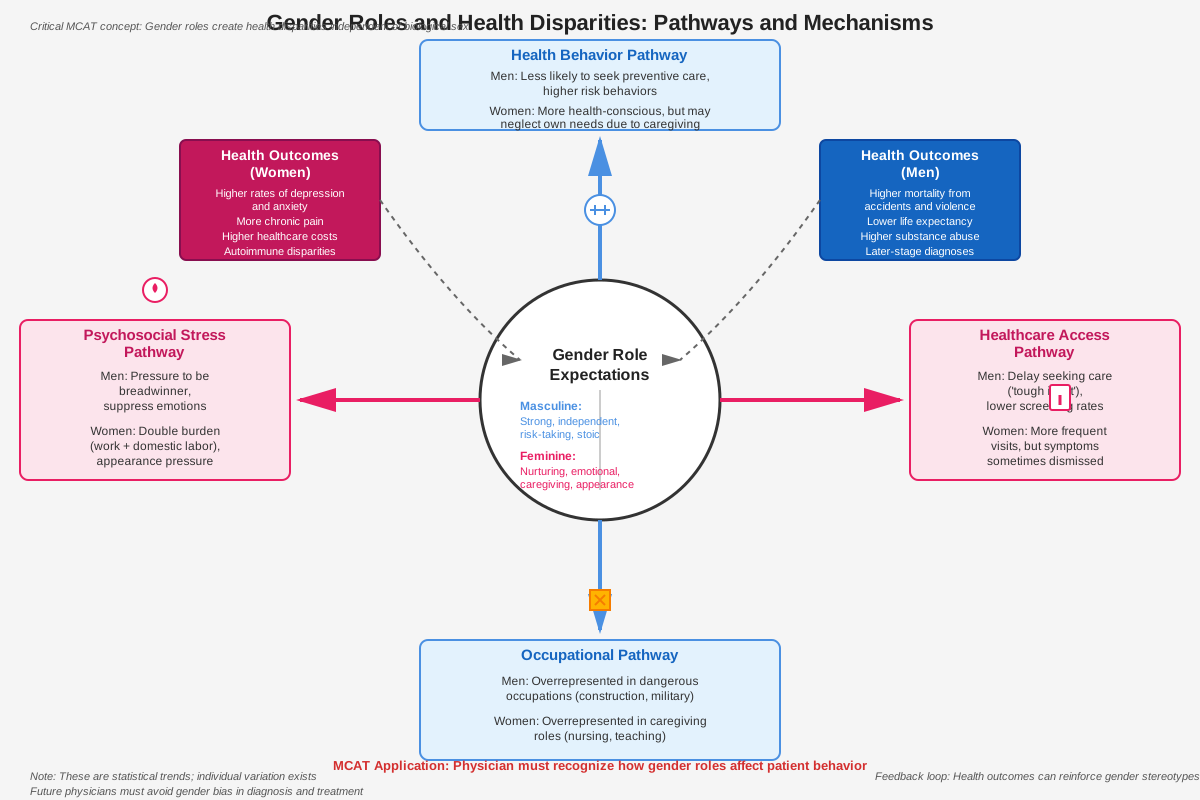
Gender Roles and Health Disparities
The MCAT emphasizes connections between gender roles and health outcomes:
Help-seeking behavior: Traditional masculine norms discourage men from seeking preventive care and mental health services, contributing to later diagnosis of serious conditions and higher mortality rates for preventable diseases.
Symptom presentation: Gender roles influence how individuals describe symptoms. Women may be more likely to report emotional and relational aspects of illness, while men may minimize symptoms or focus on physical manifestations.
Provider bias: Healthcare providers' own gender role expectations can influence diagnosis and treatment. Research shows women's pain is more likely to be attributed to emotional causes, while men's symptoms are taken more seriously—a pattern with significant clinical consequences.
Risk behaviors: Gender roles shape engagement in health-risk behaviors, with masculine norms associated with higher rates of smoking, excessive alcohol consumption, and dangerous driving.
Gender Role Change and Resistance
Gender roles are not static; they evolve in response to economic, political, and social changes. The MCAT may present historical or cross-cultural comparisons to test understanding of gender role variability:
Factors promoting change:
- Women's labor force participation
- Legal reforms (voting rights, employment discrimination laws)
- Feminist movements
- Economic necessity
- Technological changes reducing physical strength requirements
Mechanisms of resistance:
- Backlash against gender equality movements
- Institutional inertia in organizations
- Gender policing—social sanctions for violating gender norms
- Internalized gender ideology
Concept Relationships
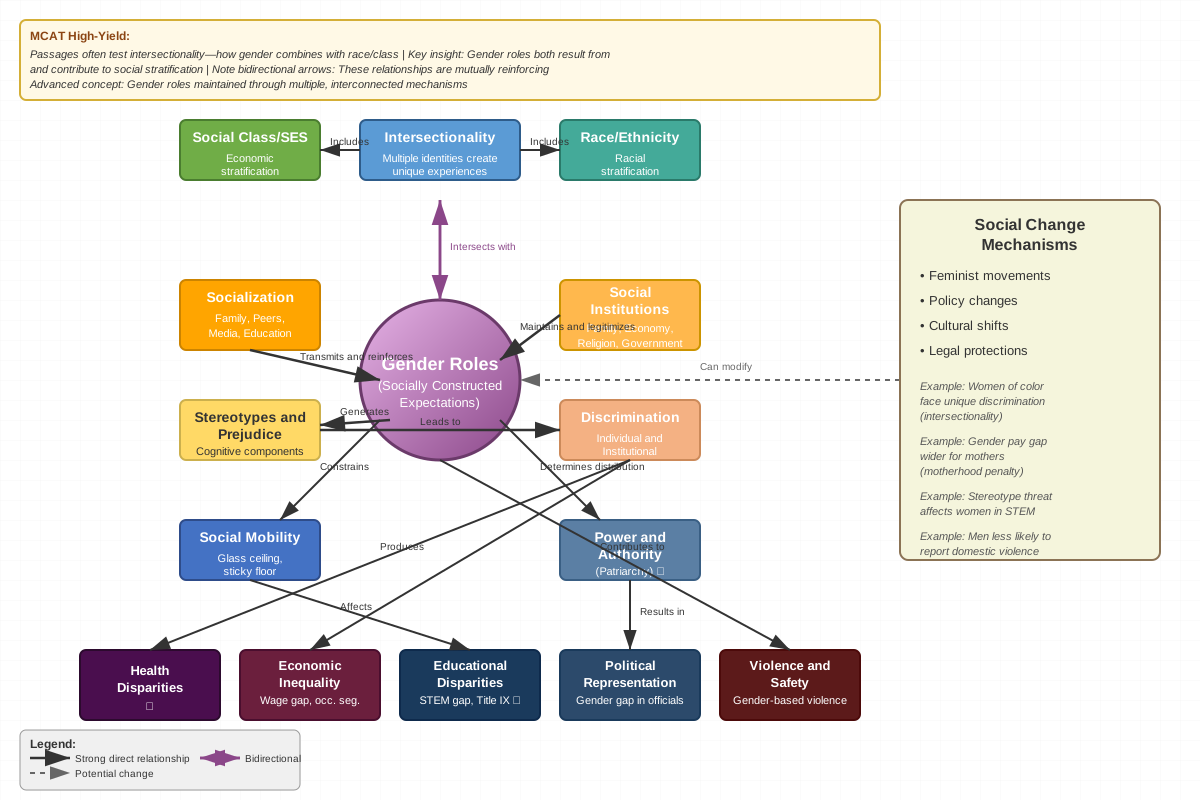
Gender roles connect to numerous other MCAT sociology concepts through multiple pathways. The foundational relationship is: Socialization → Gender Role Learning → Gender Role Performance → Social Stratification. This sequence demonstrates how individual-level processes (learning and performing gender) contribute to macro-level patterns of inequality.
Gender roles emerge from and reinforce social constructionism, the theoretical perspective that social categories are created through human interaction rather than reflecting natural or inevitable divisions. This connects to symbolic interactionism, which examines how individuals create meaning through interaction and how gender is "performed" in daily life. The concept of doing gender illustrates how routine interactions maintain gender distinctions.
Gender roles contribute directly to social stratification and inequality through multiple mechanisms. Occupational segregation (concentration of men and women in different jobs) results partly from gender role socialization that channels individuals toward gender-typed careers. This connects to the gender wage gap and glass ceiling (invisible barriers preventing women's advancement to leadership positions). These economic inequalities intersect with social capital (networks and connections), as gender roles influence access to professional networks.
The relationship between gender roles and discrimination operates bidirectionally: gender roles create expectations that lead to discriminatory treatment, while experiences of discrimination reinforce gender role conformity. This connects to stereotype threat, where awareness of negative stereotypes about one's gender impairs performance. For example, reminding women of gender stereotypes before a math test can reduce their performance, demonstrating how gender roles affect outcomes beyond individual ability.
Gender roles intersect with intersectionality, recognizing that gender experiences vary by race, class, sexuality, and other identities. For instance, gender role expectations for Black women differ from those for white women, and working-class masculinity differs from upper-class masculinity. This connects to multiple jeopardy or double jeopardy, where individuals face compounded disadvantages from multiple marginalized identities.
Within healthcare contexts, gender roles influence illness behavior (how people recognize and respond to symptoms), sick role expectations (how patients are expected to behave when ill), and patient-provider communication. These connections are particularly high-yield for MCAT passages presenting clinical scenarios.
Quick check — test yourself on Gender roles so far.
Try Flashcards →High-Yield Facts
⭐ Gender roles are socially constructed, not biologically determined—they vary across cultures and historical periods, demonstrating their social rather than natural origins.
⭐ Sex refers to biological characteristics; gender refers to social and cultural attributes—the MCAT frequently tests this distinction in both discrete and passage-based questions.
⭐ Gender socialization begins in infancy and continues throughout the lifespan—it occurs through family, peers, schools, media, and other institutions.
⭐ Traditional masculine gender roles contribute to men's lower rates of healthcare utilization—norms emphasizing self-reliance and emotional restriction discourage help-seeking behavior.
⭐ Gender roles contribute to occupational segregation and the gender wage gap—socialization channels individuals toward gender-typed careers, contributing to economic inequality.
- Intersectionality recognizes that gender cannot be understood in isolation from race, class, and other dimensions of identity—gender role expectations vary across social groups.
- Gender role strain occurs when individuals experience stress from conforming to restrictive gender expectations—this can negatively impact mental and physical health.
- Doing gender refers to the active performance of gender through everyday behaviors and interactions—gender is something people do, not just something they are.
- The second shift describes women's disproportionate responsibility for housework and childcare even when employed full-time—this reflects persistent gender role expectations.
- Gender policing refers to social sanctions (criticism, ostracism, violence) directed at individuals who violate gender norms—this mechanism maintains gender role conformity.
- Stereotype threat can impair performance when individuals are reminded of negative stereotypes about their gender—this demonstrates how gender roles affect outcomes beyond individual ability.
- The glass ceiling represents invisible barriers preventing women's advancement to leadership positions—it results from both explicit discrimination and subtle gender role expectations.
Common Misconceptions
Misconception: Gender roles are biologically determined and therefore universal across all cultures.
Correction: While biological sex differences exist, gender roles are socially constructed and vary dramatically across cultures and historical periods. Anthropological research documents societies with gender role expectations very different from contemporary Western norms, demonstrating their social origins. The MCAT expects recognition that observed gender differences in behavior typically result from socialization rather than biology.
Misconception: Sex and gender are synonymous terms that can be used interchangeably.
Correction: Sex refers to biological and physiological characteristics (chromosomes, hormones, anatomy), while gender refers to socially constructed roles, behaviors, and attributes. This distinction is fundamental to MCAT sociology content and appears frequently in exam questions. Using these terms interchangeably represents a conceptual error that will lead to incorrect answers.
Misconception: Gender roles only affect women; men are not constrained by gender expectations.
Correction: Both men and women experience restrictions and consequences from gender role expectations, though the specific constraints differ. Traditional masculine roles that discourage emotional expression and help-seeking behavior contribute to men's higher rates of suicide, substance abuse, and delayed medical care. The MCAT tests understanding that gender roles affect all genders, not just women.
Misconception: Gender role socialization ends in childhood; adults are free from gender role influences.
Correction: Gender socialization is a lifelong process that continues through adulthood and into later life. Adults face gender role expectations in workplace settings, intimate relationships, parenting, and healthcare contexts. The MCAT may present scenarios involving adult gender role socialization, such as new parents adopting traditional divisions of childcare despite egalitarian intentions.
Misconception: Individuals who violate gender norms face no social consequences in contemporary society.
Correction: Despite increasing acceptance of gender diversity, individuals who violate gender norms continue to face social sanctions ranging from subtle disapproval to discrimination and violence. Gender policing mechanisms maintain conformity to gender expectations. The MCAT may test recognition of how social sanctions enforce gender role conformity.
Misconception: Gender roles are changing so rapidly that traditional expectations no longer influence behavior.
Correction: While gender roles have evolved significantly, traditional expectations continue to influence behavior in many domains. Women still perform disproportionate housework and childcare, occupational segregation persists, and gender stereotypes continue to affect evaluations and opportunities. The MCAT expects recognition that gender role change is incomplete and uneven across different social domains.
Worked Examples
Example 1: Gender Roles and Healthcare Utilization
Vignette: A research study examines preventive healthcare utilization among adults aged 25-45. The study finds that men are significantly less likely than women to schedule annual physical examinations, even after controlling for insurance status, income, and access to healthcare facilities. When interviewed, male participants frequently stated that they "don't have time" for doctor visits and that they only seek care when "something is seriously wrong." Female participants were more likely to report regular preventive care visits and to describe healthcare as an important priority.
Question: Which of the following best explains the observed gender difference in preventive healthcare utilization?
A) Biological differences in disease susceptibility make preventive care less necessary for men
B) Traditional masculine gender roles that emphasize self-reliance discourage help-seeking behavior
C) Women have more health problems than men and therefore require more frequent medical care
D) Men have better health literacy than women and can self-diagnose conditions without physician assistance
Analysis:
This question tests application of gender role theory to health behavior, a high-yield MCAT topic. Let's evaluate each option:
Option A suggests a biological explanation. However, the question stem indicates that differences persist after controlling for relevant variables, and biological differences would not explain men's statements about "not having time" or only seeking care when "seriously wrong." This represents the common MCAT trap of offering biological explanations for socially determined phenomena. Eliminate.
Option B correctly identifies gender role socialization as the mechanism. Traditional masculine gender roles emphasize self-reliance, stoicism, and emotional restriction. These norms discourage help-seeking behavior and frame healthcare utilization as weakness or unnecessary. The men's statements about only seeking care when "seriously wrong" directly reflect masculine norms that discourage attention to health concerns. This is the correct answer.
Option C reverses causation. Women don't utilize more preventive care because they have more health problems; rather, they may detect problems earlier because they utilize more preventive care. Additionally, this option doesn't explain the gender difference—it simply restates the observation. Eliminate.
Option D contradicts evidence. Men's lower healthcare utilization is associated with worse health outcomes and later diagnosis of serious conditions, suggesting poorer rather than better health management. This option also doesn't explain why men would avoid preventive care if they had superior health knowledge. Eliminate.
Answer: B
Key Takeaway: When MCAT questions present gender differences in behavior, look for social and cultural explanations (gender roles, socialization) rather than biological explanations, especially when the behavior involves learned patterns like healthcare utilization.
Example 2: Intersectionality and Gender Role Expectations
Vignette: A sociologist conducts interviews with working mothers from different racial and socioeconomic backgrounds about their experiences balancing employment and childcare. White middle-class mothers frequently describe feeling guilty about working outside the home and express concern about not spending enough time with their children. Black working-class mothers are more likely to describe employment as consistent with good mothering, viewing their financial contributions as essential to providing for their children. The researcher notes that both groups face challenges balancing work and family, but their interpretations of these challenges differ significantly.
Question: The findings described in the passage best illustrate which sociological concept?
A) Gender role strain affects all women equally regardless of other social identities
B) Intersectionality demonstrates that gender role expectations vary by race and class
C) Structural functionalism explains complementary gender roles in families
D) Social mobility is easier for women from higher socioeconomic backgrounds
Analysis:
This question tests understanding of intersectionality and how gender roles vary across different social groups.
Option A contradicts the passage, which explicitly describes different experiences and interpretations between groups. The concept of universal gender role strain affecting all women equally ignores the variation documented in the research. Eliminate.
Option B correctly identifies intersectionality—the recognition that gender cannot be understood in isolation from race, class, and other dimensions of identity. The passage demonstrates that gender role expectations for mothers vary by race and class: white middle-class mothers face expectations that prioritize intensive mothering and physical presence with children, while Black working-class mothers operate within different cultural frameworks that view employment as compatible with good mothering. This reflects intersectional analysis. This is the correct answer.
Option C introduces structural functionalism, which is not relevant to the passage's focus on variation in gender role expectations across groups. Structural functionalism would predict similar complementary roles across families, not the variation described. Eliminate.
Option D addresses social mobility, which is not the focus of the passage. While socioeconomic differences are mentioned, the passage examines gender role expectations and interpretations, not mobility patterns. Eliminate.
Answer: B
Key Takeaway: Intersectionality is increasingly tested on the MCAT. When passages describe variation in gender experiences across racial, class, or other social groups, intersectionality is likely the relevant concept. Avoid options suggesting universal gender experiences that ignore social context.
Exam Strategy
When approaching MCAT questions on gender roles, employ these strategic approaches:
Identify the social construction trigger: Questions testing gender roles often include phrases like "socially constructed," "learned through socialization," "varies across cultures," or "changes over time." These phrases signal that the correct answer will emphasize social rather than biological explanations. When you see gender differences described in a passage, immediately consider whether gender role socialization could explain the pattern.
Distinguish sex from gender: The MCAT frequently tests this distinction. When answer choices include both biological and social explanations, carefully evaluate whether the question asks about sex (biological characteristics) or gender (social roles and expectations). Questions about behavior, attitudes, occupational choices, or social interactions typically involve gender rather than sex. Biological explanations are rarely correct for questions about social behavior.
Apply the intersectionality lens: Increasingly, MCAT passages present gender in combination with race, class, or other identities. When passages describe variation in gender experiences across different groups, consider intersectionality. Eliminate answer choices suggesting universal gender experiences that ignore social context.
Watch for healthcare applications: Gender roles frequently appear in clinical contexts. Common scenarios include: gender differences in symptom reporting, help-seeking behavior, patient-provider communication, adherence to treatment, and health risk behaviors. When analyzing these scenarios, consider how gender role socialization might influence the observed patterns.
Recognize theoretical frameworks: Questions may ask you to identify which sociological theory best explains a gender-related phenomenon. Remember: structural functionalism emphasizes complementary roles and social stability (often presented as outdated); conflict theory emphasizes power and inequality; symbolic interactionism focuses on interaction and meaning-making; feminist theory emphasizes gender inequality and intersectionality.
Process of elimination strategy: Eliminate options that:
- Suggest gender roles are biologically determined or universal
- Confuse sex with gender
- Ignore cultural or historical variation in gender expectations
- Present gender as affecting only women
- Offer biological explanations for social behaviors
Time allocation: Gender role questions typically require 60-90 seconds. Definitional questions testing sex versus gender should take 30-45 seconds. Application questions requiring analysis of scenarios may take 90-120 seconds. Don't overthink these questions—the MCAT tests straightforward application of gender role theory, not nuanced philosophical debates about gender.
Flag ambiguous language: If a question uses "sex" and "gender" interchangeably or imprecisely, use context to determine the intended meaning. Questions about behavior, roles, and social expectations are asking about gender even if they use the term "sex."
Memory Techniques
Mnemonic for Agents of Socialization: "FPS MR"
- Family (primary agent, begins in infancy)
- Peers (increasingly influential in childhood/adolescence)
- Schools (formal and hidden curriculum)
- Media (provides models and representations)
- Religion (prescribes gender-specific roles)
Visualization for Sex vs. Gender Distinction:
Picture a biological body (representing sex—chromosomes, hormones, anatomy) wearing different costumes (representing gender—socially constructed roles that can be changed, vary across cultures, and are performed). This image reinforces that sex is biological while gender is social and variable.
Acronym for Gender Role Consequences: "SHOW"
- Stratification (gender roles contribute to social inequality)
- Health disparities (gender roles influence health behaviors and outcomes)
- Occupational segregation (gender roles channel people into gender-typed careers)
- Wage gap (gender roles contribute to economic inequality)
Memory Palace for Theoretical Perspectives:
Imagine walking through a house with different rooms representing theories:
- Functionalist room: Everything is organized and complementary (men's and women's roles fit together like puzzle pieces)—but the room is old-fashioned and dusty
- Conflict room: One side is elevated above the other (representing power imbalance)—men's side has more resources
- Symbolic Interactionist room: Mirrors everywhere (representing how people perform gender and see themselves reflected in others' responses)
- Feminist room: Multiple interconnected spaces (representing intersectionality)—different experiences in different areas
Rhyme for Gender Role Strain:
"When roles are too tight, they cause strain and fight"—helps remember that restrictive gender expectations lead to psychological distress and conflict.
Summary
Gender roles represent socially constructed expectations, behaviors, and norms assigned to individuals based on their perceived gender. Unlike biological sex, gender roles are learned through socialization, vary across cultures and historical periods, and are maintained through social institutions and everyday interactions. The MCAT emphasizes the distinction between sex (biological) and gender (social), tests understanding of how gender roles are transmitted through agents of socialization (family, peers, schools, media, religion), and requires application of gender role theory to healthcare contexts. Multiple theoretical perspectives explain gender roles: structural functionalism views them as serving social functions, conflict theory interprets them as mechanisms of male dominance, symbolic interactionism examines how gender is performed in daily interactions, and feminist theory emphasizes intersectionality and inequality. Gender roles contribute to social stratification through occupational segregation, wage gaps, and differential access to resources. They also influence health outcomes by shaping help-seeking behavior, symptom presentation, and risk behaviors. Gender role strain occurs when restrictive expectations cause psychological distress, affecting both men and women differently. Understanding gender roles is essential for analyzing health disparities, patient behavior, and social inequality—all high-yield MCAT topics.
Key Takeaways
- Gender roles are socially constructed, not biologically determined—they vary across cultures and time periods, demonstrating their social origins rather than natural inevitability
- Sex (biological characteristics) and gender (social roles) are distinct concepts—the MCAT frequently tests this distinction, and confusing them leads to incorrect answers
- Gender socialization occurs through multiple agents (family, peers, schools, media, religion) across the lifespan—it begins in infancy and continues through adulthood
- Gender roles contribute to social stratification and health disparities—they influence occupational choices, economic outcomes, healthcare utilization, and health behaviors
- Intersectionality recognizes that gender experiences vary by race, class, and other identities—gender role expectations are not universal but differ across social groups
- Traditional gender roles affect both men and women—masculine norms discouraging help-seeking contribute to men's health risks, while feminine norms emphasizing caregiving affect women's career trajectories
- Gender roles are maintained through social sanctions (gender policing) but also change in response to economic, political, and social forces—they are neither completely fixed nor completely fluid
Related Topics
Sex and Gender: Deeper exploration of biological sex characteristics, gender identity development, transgender experiences, and the distinction between gender identity and gender expression—builds directly on gender roles foundation
Social Stratification Systems: Examination of how gender intersects with race, class, and other dimensions to create complex hierarchies—gender roles are one component of broader stratification patterns
Socialization: Comprehensive study of how individuals learn social norms, values, and roles throughout the lifespan—gender socialization is a specific application of general socialization processes
Discrimination and Prejudice: Analysis of how stereotypes, prejudice, and discrimination operate, including gender-based discrimination in employment, education, and healthcare—gender roles create the foundation for gender stereotypes
Health Disparities: Investigation of how social factors including gender, race, and socioeconomic status contribute to differential health outcomes—gender roles are a key mechanism producing health disparities
Symbolic Interactionism: Detailed examination of how meaning is created through social interaction, including the concept of "doing gender"—provides theoretical framework for understanding gender as performance
Feminist Theory and Intersectionality: Advanced exploration of how multiple systems of oppression intersect and how feminist movements have challenged gender inequality—extends gender role analysis to activism and social change
Practice CTA
Now that you've mastered the core concepts of gender roles, it's time to solidify your understanding through active practice. Challenge yourself with MCAT-style practice questions that require you to apply gender role theory to novel scenarios, distinguish between sex and gender in complex passages, and analyze how gender intersects with other dimensions of social stratification. Use flashcards to reinforce high-yield distinctions and theoretical frameworks. Remember: understanding gender roles isn't just about memorizing definitions—it's about developing the analytical skills to recognize how gender shapes behavior, health, and inequality in diverse contexts. Your ability to think sociologically about gender will serve you well not only on exam day but throughout your medical career. You've got this!
Sign up free to keep reading
Create a free AnvayaPrep account to finish this MCAT guide on Gender roles — plus flashcards and practice questions.