Overview
Neutral connotation is a critical concept in GRE Verbal Reasoning that tests a student's ability to distinguish between words that carry emotional weight and those that remain objective or impartial. While many vocabulary questions focus on identifying positive or negative associations, the GRE frequently challenges test-takers to recognize when a word lacks emotional coloring entirely. Understanding neutral connotation becomes particularly important in Text Completion and Sentence Equivalence questions, where selecting a word with the wrong emotional tone—even if it seems semantically similar—will result in an incorrect answer.
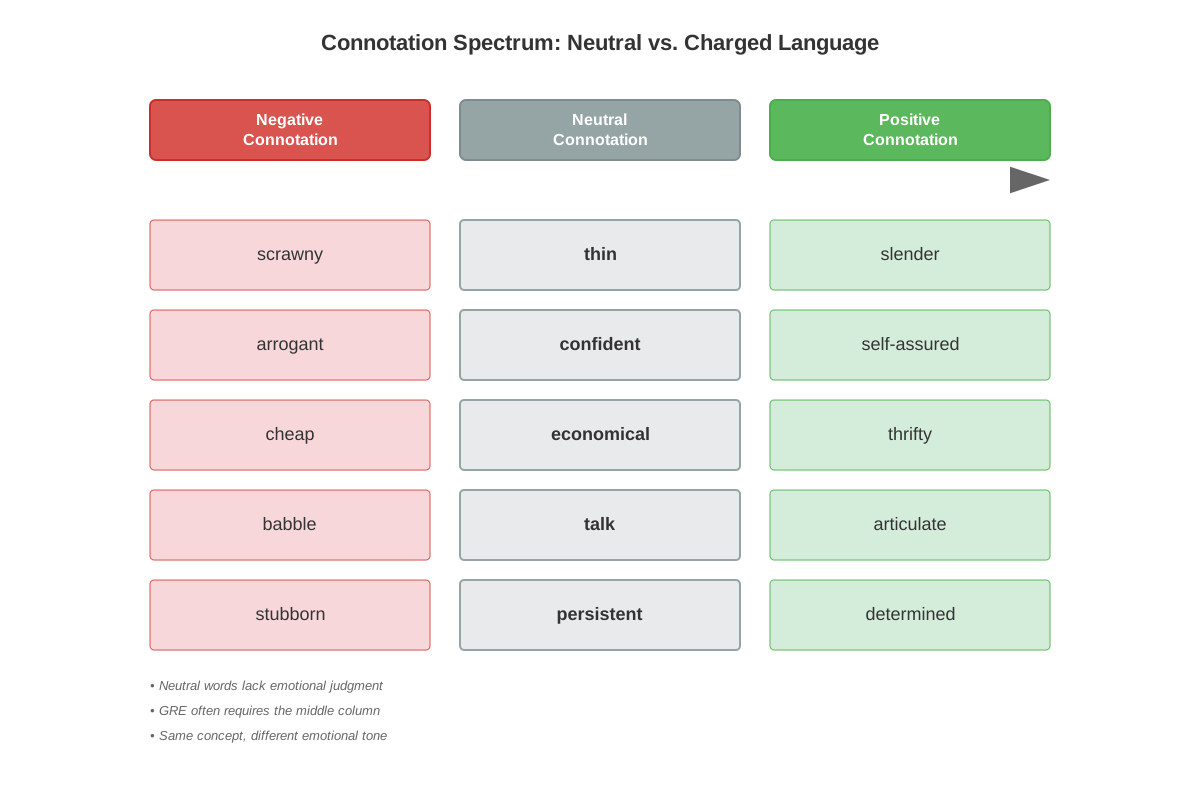
The ability to identify GRE neutral connotation separates high-scoring students from average performers because it requires nuanced understanding beyond simple definitions. Many test-takers struggle with this concept because everyday language often blurs the line between neutral description and subtle judgment. For instance, while "thin," "slender," and "scrawny" all describe a similar physical state, only "thin" maintains true neutrality; "slender" carries positive associations while "scrawny" suggests unhealthy weakness. The GRE exploits these subtle distinctions to test vocabulary depth and contextual awareness.
This topic connects intimately with broader Verbal Reasoning skills including tone analysis, author's intent, and precise word choice. Mastering neutral connotation enhances performance across multiple question types, from identifying the author's attitude in Reading Comprehension passages to selecting contextually appropriate vocabulary in sentence completion tasks. It also reinforces understanding of how language shapes perception—a skill that extends beyond test-taking into academic writing and critical reading.
Learning Objectives
- [ ] Identify when Neutral connotation is being tested in GRE questions
- [ ] Explain the core rule or strategy behind Neutral connotation
- [ ] Apply Neutral connotation to GRE-style questions accurately
- [ ] Distinguish between neutral, positive, and negative connotations in word sets
- [ ] Evaluate context clues that signal the need for emotionally neutral vocabulary
- [ ] Analyze how connotation shifts affect sentence meaning and author's tone
- [ ] Construct a systematic approach for eliminating emotionally charged answer choices
Prerequisites
- Basic vocabulary knowledge: Understanding word definitions provides the foundation for recognizing subtle emotional differences between synonyms
- Context clue identification: Recognizing how surrounding words and phrases signal tone is essential for determining when neutral language is required
- Synonym and antonym relationships: Familiarity with word relationships helps distinguish between words with similar meanings but different connotations
- Sentence structure analysis: Understanding how sentences convey tone and attitude enables recognition of when neutral language maintains logical consistency
Why This Topic Matters
Neutral connotation appears in approximately 15-20% of GRE Verbal Reasoning questions, making it a high-frequency concept that directly impacts scores. Questions testing this skill appear most commonly in Text Completion (especially two-blank and three-blank questions) and Sentence Equivalence sections, where selecting words with inappropriate emotional coloring eliminates answer choices even when their denotative meanings seem correct.
In real-world applications, understanding neutral connotation is essential for academic writing, where objective analysis requires language free from emotional bias. Graduate-level research, scientific writing, and professional communication all demand the ability to describe phenomena without inserting subjective judgment. The GRE tests this skill because graduate programs require students who can distinguish between factual reporting and opinion-laden language.
On the exam, neutral connotation typically appears in passages or sentences that describe situations objectively, present balanced viewpoints, or discuss topics requiring impartial language. Common contexts include scientific descriptions, historical accounts, procedural explanations, and analytical discussions where the author maintains deliberate neutrality. Test-makers often create wrong answers by offering words with subtle positive or negative associations that test-takers might overlook under time pressure.
Core Concepts
Defining Neutral Connotation
Neutral connotation refers to words that convey their literal, dictionary meaning without carrying additional emotional, evaluative, or judgmental associations. These words function as objective descriptors that neither praise nor criticize, neither elevate nor diminish their subjects. While denotation refers to a word's explicit definition, connotation encompasses the feelings, associations, and implied meanings that accompany that definition.
A word with neutral connotation serves as a baseline descriptor—it presents information without coloring the reader's emotional response. For example, "house" is neutral, while "home" carries positive emotional associations (warmth, belonging, comfort) and "shack" carries negative ones (poverty, disrepair, inadequacy). All three words might refer to the same physical structure, but their connotations create vastly different impressions.
The Connotation Spectrum
Understanding neutral connotation requires recognizing where words fall on the emotional spectrum:
| Negative Connotation | Neutral Connotation | Positive Connotation |
|---|---|---|
| Stubborn | Determined | Resolute |
| Cheap | Inexpensive | Economical |
| Childish | Youthful | Childlike |
| Pushy | Assertive | Confident |
| Scrawny | Thin | Slender |
| Stench | Smell | Aroma |
| Mob | Crowd | Gathering |
| Scheme | Plan | Strategy |
This spectrum demonstrates that synonyms—words with similar denotative meanings—can occupy different positions based on their emotional coloring. The GRE frequently tests whether students can identify the neutral option among emotionally charged alternatives.
Context Signals for Neutral Language
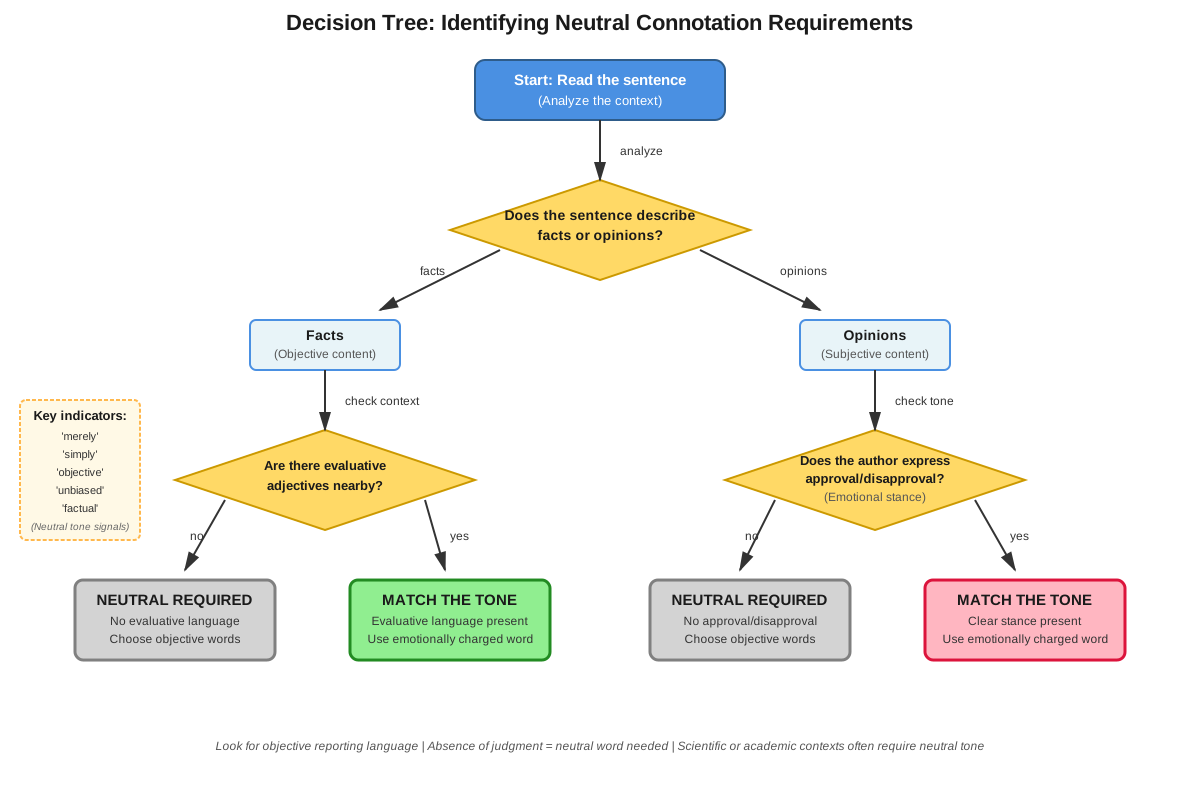
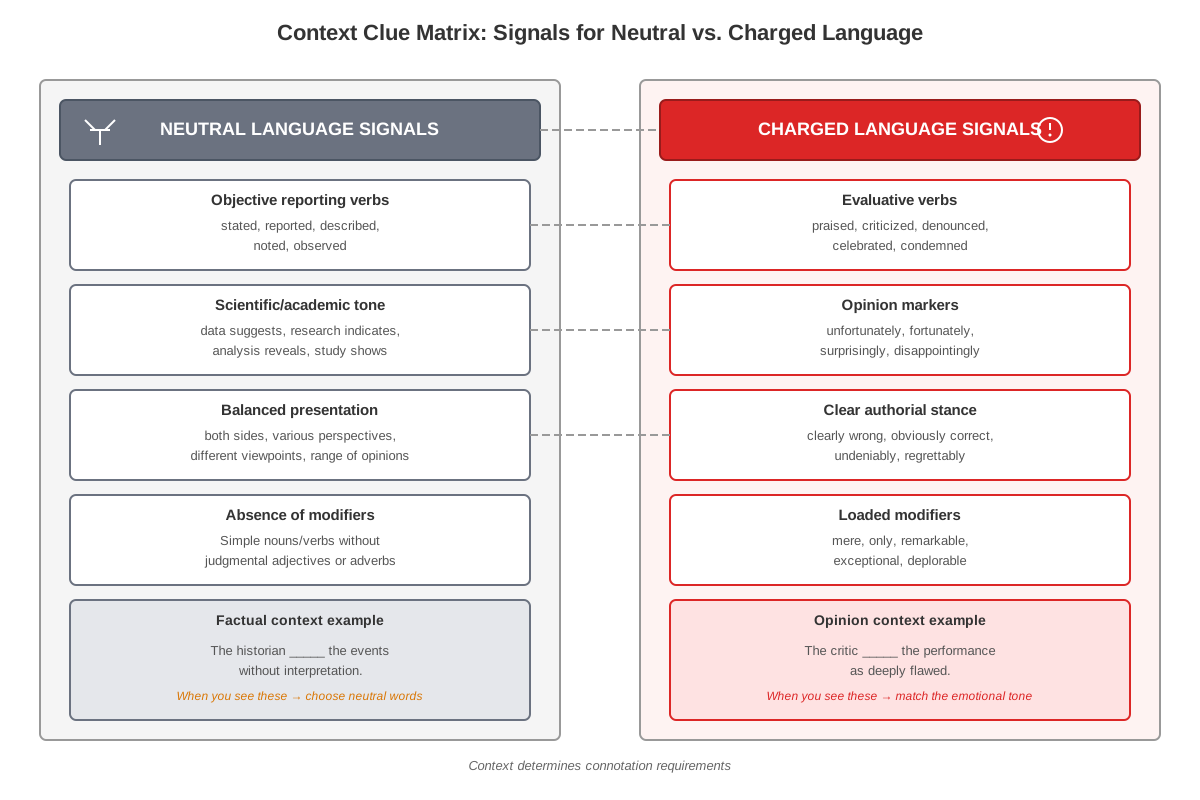
Certain contextual elements signal that neutral connotation is required:
- Objective reporting: Sentences presenting facts, data, or observations without interpretation require neutral vocabulary
- Balanced analysis: When an author presents multiple viewpoints fairly, neutral language maintains impartiality
- Scientific or technical descriptions: Academic and technical writing typically demands emotionally neutral terminology
- Definitional statements: Explanations of concepts or processes require objective language
- Contrast structures: When a sentence contrasts neutral description with emotional reaction, the blank requires neutral vocabulary
Distinguishing Subtle Connotations
The most challenging aspect of neutral connotation involves recognizing subtle emotional coloring that might seem neutral at first glance. Words like "interesting," "unusual," or "notable" appear neutral but actually carry mild positive connotations suggesting worthiness of attention. Truly neutral alternatives might be "observable," "present," or "existing."
Consider these progressions from negative through neutral to positive:
- Describing intelligence: Cunning → Clever → Intelligent → Brilliant → Genius
- Describing speech: Babble → Talk → Speak → Articulate → Eloquent
- Describing size: Puny → Small → Modest → Substantial → Impressive
The neutral terms occupy the middle position, describing without evaluating. However, context determines whether even these "neutral" words function objectively—"modest" might be neutral when describing size but carries positive connotations when describing behavior.
Functional Neutrality vs. Absolute Neutrality
An important distinction exists between words that are functionally neutral in specific contexts and those that maintain neutrality across all uses. "Walk" is nearly always neutral, while "stroll" (leisurely, pleasant) and "trudge" (laborious, weary) carry connotations. However, "interesting" might function neutrally in "The data showed interesting patterns" but positively in "She's an interesting person."
The GRE tests functional neutrality—whether a word maintains objectivity within the specific sentence context. This requires analyzing not just the word in isolation but how it interacts with surrounding language to create overall tone.
Common Neutral Word Categories
Certain categories of words tend toward neutrality:
- Basic descriptors: Walk, look, say, think, make, do
- Quantitative terms: Some, many, few, several, numerous
- Temporal markers: Before, after, during, while, when
- Spatial indicators: Near, far, above, below, beside
- Neutral verbs of attribution: State, indicate, show, demonstrate, reveal
These words form the backbone of objective description, though even they can acquire connotation through context and modification.
Concept Relationships
Neutral connotation connects directly to tone identification, as recognizing an author's objective stance requires identifying neutral language patterns. When passages maintain neutral connotation throughout, the author's tone is analytical, objective, or impartial—key descriptors in Reading Comprehension questions.
The concept flows from understanding denotation vs. connotation: denotation provides the foundation (literal meaning), while connotation analysis adds the layer of emotional coloring. Neutral connotation represents the point where connotation approaches zero—where words function purely denotatively.
Relationship map:
Vocabulary knowledge → Synonym recognition → Connotation awareness → Neutral/Positive/Negative distinction → Context analysis → Appropriate word selection → Correct answer identification
Neutral connotation also connects to word precision and register appropriateness. Academic and formal contexts typically require neutral language, while informal contexts permit more emotionally colored vocabulary. Understanding when neutrality is required relates to recognizing the formality level and purpose of a passage.
The skill builds toward author's purpose analysis in Reading Comprehension. Authors who maintain neutral connotation typically aim to inform or explain rather than persuade or entertain. Recognizing this pattern helps answer questions about the author's primary purpose or attitude toward the subject.
High-Yield Facts
⭐ Neutral connotation refers to words that convey literal meaning without emotional, evaluative, or judgmental associations.
⭐ The GRE tests neutral connotation most frequently in Text Completion and Sentence Equivalence questions where tone consistency is essential.
⭐ Words with similar denotations can have vastly different connotations: "house" (neutral), "home" (positive), "shack" (negative).
⭐ Context clues indicating need for neutral language include objective reporting, scientific descriptions, and balanced analysis.
⭐ Subtle connotations are the most challenging to identify—words like "interesting" or "unusual" seem neutral but carry mild positive associations.
- Truly neutral words function as baseline descriptors without coloring the reader's emotional response.
- The connotation spectrum ranges from negative through neutral to positive, with synonyms occupying different positions.
- Functional neutrality depends on context—a word might be neutral in one sentence but emotionally colored in another.
- Common neutral word categories include basic descriptors, quantitative terms, and neutral verbs of attribution.
- Eliminating emotionally charged answer choices is often the fastest path to correct answers in connotation-based questions.
- Academic and technical writing demands neutral connotation to maintain objectivity and credibility.
- Authors who maintain neutral connotation throughout a passage typically aim to inform or explain rather than persuade.
Quick check — test yourself on Neutral connotation so far.
Try Flashcards →Common Misconceptions
Misconception: All synonyms are interchangeable in any context because they have the same basic meaning.
Correction: Synonyms share denotative meaning but differ in connotation. "Thin," "slender," and "scrawny" all describe similar body types, but only "thin" maintains neutrality while the others carry positive or negative associations that change sentence meaning.
Misconception: Neutral words are always simple or basic vocabulary.
Correction: While many basic words are neutral, sophisticated vocabulary can also be neutral. "Ameliorate" (improve) is advanced but neutral, while "fix" is simple but can carry connotations depending on context. Neutrality relates to emotional coloring, not vocabulary level.
Misconception: If a word doesn't seem strongly positive or negative, it must be neutral.
Correction: Many words carry subtle connotations that affect meaning significantly. "Interesting," "unusual," and "notable" seem mild but actually suggest worthiness of attention (positive). Truly neutral alternatives would be "observable" or "present."
Misconception: The same word always has the same connotation regardless of context.
Correction: Context determines functional neutrality. "Modest" is neutral when describing size ("a modest increase") but positive when describing behavior ("a modest demeanor"). Always evaluate words within their specific sentence context.
Misconception: Neutral connotation only matters in vocabulary questions, not in Reading Comprehension.
Correction: Recognizing neutral connotation helps identify author's tone, purpose, and attitude in Reading Comprehension passages. Authors maintaining neutral language throughout signal objective, analytical, or informative purposes rather than persuasive or emotional ones.
Worked Examples
Example 1: Text Completion
Question: The researcher's report was notably _________, presenting data without interpretation or commentary that might suggest personal bias.
(A) objective
(B) fascinating
(C) comprehensive
(D) controversial
(E) persuasive
Solution Process:
Step 1: Identify context clues. The phrase "without interpretation or commentary that might suggest personal bias" signals that the blank requires a word describing neutral, unbiased presentation.
Step 2: Analyze each option's connotation:
- (A) "objective" = neutral/positive in academic contexts, means unbiased and factual
- (B) "fascinating" = positive, suggests engaging or interesting quality
- (C) "comprehensive" = neutral/positive, means thorough but doesn't address bias
- (D) "controversial" = negative/neutral, suggests dispute but doesn't indicate lack of bias
- (E) "persuasive" = neutral in definition but implies intent to convince, opposite of unbiased
Step 3: Eliminate emotionally charged or contextually inappropriate options. "Fascinating" (B) is too positive and doesn't address the bias issue. "Persuasive" (E) contradicts the idea of presenting data without interpretation. "Controversial" (D) doesn't relate to the researcher's approach. "Comprehensive" (C) could describe the report but doesn't capture the neutrality emphasized by the context.
Step 4: Select the answer that maintains neutral connotation while fitting the context. "Objective" (A) directly describes the neutral, unbiased approach described in the sentence.
Answer: (A) objective
Connection to Learning Objectives: This example demonstrates identifying when neutral connotation is tested (context clues about lack of bias) and applying the concept to eliminate emotionally charged alternatives.
Example 2: Sentence Equivalence
Question: The historian's account of the battle was remarkably _________, neither glorifying the victors nor vilifying the defeated.
Select two answer choices that produce sentences with the same meaning:
(A) impartial
(B) engaging
(C) detailed
(D) neutral
(E) sympathetic
(F) comprehensive
Solution Process:
Step 1: Identify the requirement. The phrase "neither glorifying... nor vilifying" indicates the blank needs words describing lack of emotional bias—neutral connotation.
Step 2: Analyze each option:
- (A) "impartial" = neutral, means unbiased and fair
- (B) "engaging" = positive, means interesting or captivating
- (C) "detailed" = neutral regarding thoroughness but doesn't address emotional tone
- (D) "neutral" = explicitly describes lack of bias
- (E) "sympathetic" = positive, suggests favorable emotional response
- (F) "comprehensive" = neutral regarding completeness but doesn't address bias
Step 3: Identify words that are both synonymous and contextually appropriate. "Impartial" (A) and "neutral" (D) both describe the lack of emotional bias indicated by the context. They create equivalent meanings: the account didn't favor either side.
Step 4: Verify that other options don't work as pairs. "Detailed" (C) and "comprehensive" (F) are similar but don't address the emotional neutrality emphasized by "neither glorifying nor vilifying." "Engaging" (B) and "sympathetic" (E) carry positive connotations inappropriate for the context.
Answer: (A) impartial and (D) neutral
Connection to Learning Objectives: This example shows how to distinguish neutral connotation from other qualities (thoroughness, engagement) and select words that maintain objectivity while creating equivalent sentence meanings.
Exam Strategy
Identifying Neutral Connotation Questions
Watch for these trigger phrases that signal neutral connotation is being tested:
- "objective," "unbiased," "impartial," "factual"
- "without judgment," "without interpretation," "without commentary"
- "neither praise nor criticism," "neither positive nor negative"
- "balanced," "fair," "even-handed"
- Scientific or technical contexts requiring objective description
When you see these signals, immediately shift your focus from pure definition to emotional coloring. The correct answer will lack positive or negative associations.
Systematic Elimination Process
- Read for tone first: Before looking at answer choices, determine whether the sentence requires neutral, positive, or negative connotation based on context clues.
- Categorize each option: Quickly label each answer choice as positive (+), negative (-), or neutral (0) based on its connotation.
- Eliminate mismatched tones: If the context requires neutrality, immediately eliminate all options marked + or -.
- Compare remaining neutral options: Among neutral choices, select the one that best fits the specific context and maintains logical consistency.
- Verify with substitution: Read the complete sentence with your selected answer to confirm it maintains appropriate tone throughout.
Time Management
Connotation questions should take 45-60 seconds once you recognize the pattern. Spend:
- 10 seconds identifying the tone requirement from context
- 20 seconds categorizing answer choices by connotation
- 15 seconds eliminating and selecting
- 10 seconds verifying your answer
Exam Tip: If you're stuck between two seemingly neutral options, choose the simpler, more basic word. The GRE rarely requires obscure vocabulary when testing connotation—the challenge is recognizing subtle emotional coloring, not knowing rare definitions.
Common Trap Patterns
The GRE creates wrong answers by:
- Offering near-synonyms with different connotations: "Slender" vs. "thin" vs. "scrawny"
- Including words that seem neutral but carry subtle bias: "Interesting," "unusual," "remarkable"
- Providing contextually appropriate words with wrong emotional tone: A word might fit logically but violate tone consistency
- Using formal vocabulary to disguise connotation: Advanced words can still carry emotional coloring
Memory Techniques
The "Baseline Test" Mnemonic
Remember BASE for identifying neutral words:
- Basic descriptor without judgment
- Applicable without emotional reaction
- Substitutable for similar words without tone shift
- Emotionally colorless in context
Visualization Strategy
Picture a neutral zone (like a demilitarized area) where words exist without emotional "weapons." Positive words carry "praise weapons," negative words carry "criticism weapons," and neutral words enter the zone unarmed. When the GRE asks for neutral connotation, visualize selecting only unarmed words.
The Synonym Spectrum Technique
For commonly tested word groups, memorize the spectrum from negative to positive with the neutral term in the middle:
- STUBBORN - determined - RESOLUTE (S-D-R)
- CHEAP - inexpensive - ECONOMICAL (C-I-E)
- CHILDISH - youthful - CHILDLIKE (C-Y-C)
The middle term is your neutral baseline.
The "Reporter Test"
Ask yourself: "Would a professional news reporter use this word in an objective news article?" If yes, it's likely neutral. If it seems too colorful, emotional, or judgmental for straight news reporting, it carries connotation.
Summary
Neutral connotation represents a critical GRE Verbal Reasoning skill that tests the ability to distinguish between words that carry emotional weight and those that remain objective. While synonyms share denotative meanings, their connotations—the emotional associations and implied judgments they carry—differ significantly. The GRE exploits these subtle distinctions in Text Completion and Sentence Equivalence questions, where selecting emotionally charged vocabulary, even when semantically similar, produces incorrect answers. Success requires recognizing context clues that signal the need for neutral language (objective reporting, scientific descriptions, balanced analysis), systematically categorizing answer choices by emotional coloring, and eliminating options that introduce inappropriate positive or negative associations. Mastering this concept enhances performance across multiple question types and connects to broader skills including tone analysis, author's purpose identification, and precise word choice—all essential for achieving top Verbal Reasoning scores.
Key Takeaways
- Neutral connotation refers to words conveying literal meaning without emotional, evaluative, or judgmental associations
- Context clues like "objective," "unbiased," "without interpretation," and scientific descriptions signal when neutral language is required
- Synonyms with similar denotations can occupy vastly different positions on the connotation spectrum from negative through neutral to positive
- The most challenging aspect involves recognizing subtle connotations in words that seem neutral but carry mild emotional coloring
- Systematic elimination of emotionally charged answer choices is the fastest path to correct answers in connotation-based questions
- Neutral connotation appears in 15-20% of GRE Verbal questions and directly impacts Text Completion and Sentence Equivalence performance
- Mastering this skill enhances Reading Comprehension by enabling accurate identification of author's tone, purpose, and attitude
Related Topics
Positive and Negative Connotation: Building on neutral connotation, this topic explores how words carry favorable or unfavorable associations and how the GRE tests the ability to match emotional tone to context. Mastering neutral connotation provides the baseline for recognizing when positive or negative coloring is appropriate.
Tone and Style in Reading Comprehension: Understanding neutral connotation enables accurate identification of author's tone (objective, analytical, impartial) in passages, which directly impacts answering questions about author's attitude and purpose.
Precision in Word Choice: This advanced topic examines how subtle differences in connotation, register, and specificity affect meaning. Neutral connotation mastery provides the foundation for understanding these nuanced distinctions.
Context Clue Strategies: Developing skills in identifying context signals that indicate required tone and connotation enhances overall vocabulary question performance and builds on the context analysis practiced in neutral connotation questions.
Practice CTA
Now that you understand the principles of neutral connotation, it's time to reinforce your learning through active practice. Attempt the practice questions designed specifically for this topic, focusing on identifying context clues that signal neutral language and systematically eliminating emotionally charged alternatives. Use the flashcards to build recognition of common word groups organized by connotation spectrum. Remember: recognizing neutral connotation is a skill that improves rapidly with deliberate practice—each question you analyze strengthens your ability to make these crucial distinctions under test conditions. Your investment in mastering this high-yield concept will pay dividends across multiple question types on test day!
Sign up free to keep reading
Create a free AnvayaPrep account to finish this GRE guide on Neutral connotation — plus flashcards and practice questions.