Overview
Appositive clues represent one of the most reliable and frequently tested contextual strategies in GRE Text Completion questions. An appositive is a noun or noun phrase that renames, defines, or provides additional information about another noun immediately adjacent to it. In the context of GRE Verbal Reasoning, gre appositive clues function as powerful signals that reveal the meaning of blank spaces by offering synonymous or explanatory information within the sentence structure itself. These clues typically appear set off by commas, dashes, or colons, creating a natural pause that signals the reader to pay attention to the clarifying information being provided.
Understanding appositive clues is essential for GRE success because they represent one of the most direct forms of contextual evidence available in Text Completion questions. Unlike more subtle inference-based clues, appositives explicitly state information that helps determine the correct answer. When test-makers include appositives in sentences, they are providing a roadmap to the correct answer—students who recognize these structures can often predict the answer before even looking at the choices. This skill becomes particularly valuable under timed conditions, as identifying appositives allows for rapid, confident answer selection without extensive deliberation.
Within the broader framework of Verbal Reasoning, appositive clues connect to the fundamental principle that GRE sentences contain internal logic and self-supporting evidence. They represent one category within a larger family of contextual clues that includes contrast indicators, cause-and-effect relationships, and parallel structure. Mastering appositives builds the foundation for recognizing all forms of definitional and explanatory language patterns that appear throughout GRE reading passages and Text Completion questions. This topic bridges vocabulary knowledge with reading comprehension, demonstrating that success on the GRE requires not just knowing word meanings but also skillfully extracting meaning from sentence structure.
Learning Objectives
- [ ] Identify when Appositive clues is being tested
- [ ] Explain the core rule or strategy behind Appositive clues
- [ ] Apply Appositive clues to GRE-style questions accurately
- [ ] Distinguish between appositives and other types of contextual clues in complex sentences
- [ ] Recognize the three primary punctuation patterns that signal appositive structures
- [ ] Predict correct answers using appositive information before reviewing answer choices
- [ ] Evaluate answer choices by testing their logical consistency with appositive clues
Prerequisites
- Basic sentence structure knowledge: Understanding subjects, predicates, and noun phrases is essential for identifying which elements function as appositives and which nouns they modify.
- Punctuation comprehension: Familiarity with how commas, dashes, and colons function in sentences enables recognition of the boundaries that typically mark appositive phrases.
- Vocabulary foundation: A working knowledge of intermediate-level vocabulary helps students focus on structural clues rather than being distracted by unfamiliar words in the appositive itself.
- Text Completion question format: Understanding the basic structure and requirements of GRE Text Completion questions provides the context for applying appositive strategies effectively.
Why This Topic Matters
Appositive clues appear with remarkable frequency on the GRE Verbal Reasoning section, showing up in approximately 20-30% of Text Completion questions across both single-blank and multi-blank formats. This high occurrence rate makes appositive recognition one of the highest-yield strategies students can master. Questions featuring appositive clues tend to be more straightforward than those relying on subtle inference, meaning that students who identify these structures can secure quick, confident points that boost both accuracy and time management.
In real-world contexts, the ability to recognize appositives translates directly to improved reading comprehension across academic and professional materials. Scientific papers, legal documents, and scholarly articles frequently employ appositives to define technical terms or clarify complex concepts. Graduate-level coursework demands the ability to extract definitions and explanations from dense prose—exactly the skill that appositive recognition develops. Beyond academics, professional communication in fields like journalism, business analysis, and policy writing relies heavily on appositive structures to convey precise information efficiently.
On the GRE specifically, appositive clues most commonly appear in medium-difficulty Text Completion questions, though they can surface in questions at any difficulty level. They appear in both Sentence Equivalence and Text Completion formats, though they are particularly prevalent in single-blank Text Completion questions where the sentence structure provides strong contextual support. Test-makers often embed appositives in sentences with sophisticated vocabulary to test whether students can use structural clues to overcome lexical gaps. The GRE also frequently combines appositives with other clue types, creating layered questions that reward students who can identify multiple forms of evidence within a single sentence.
Core Concepts
Definition and Structure of Appositives
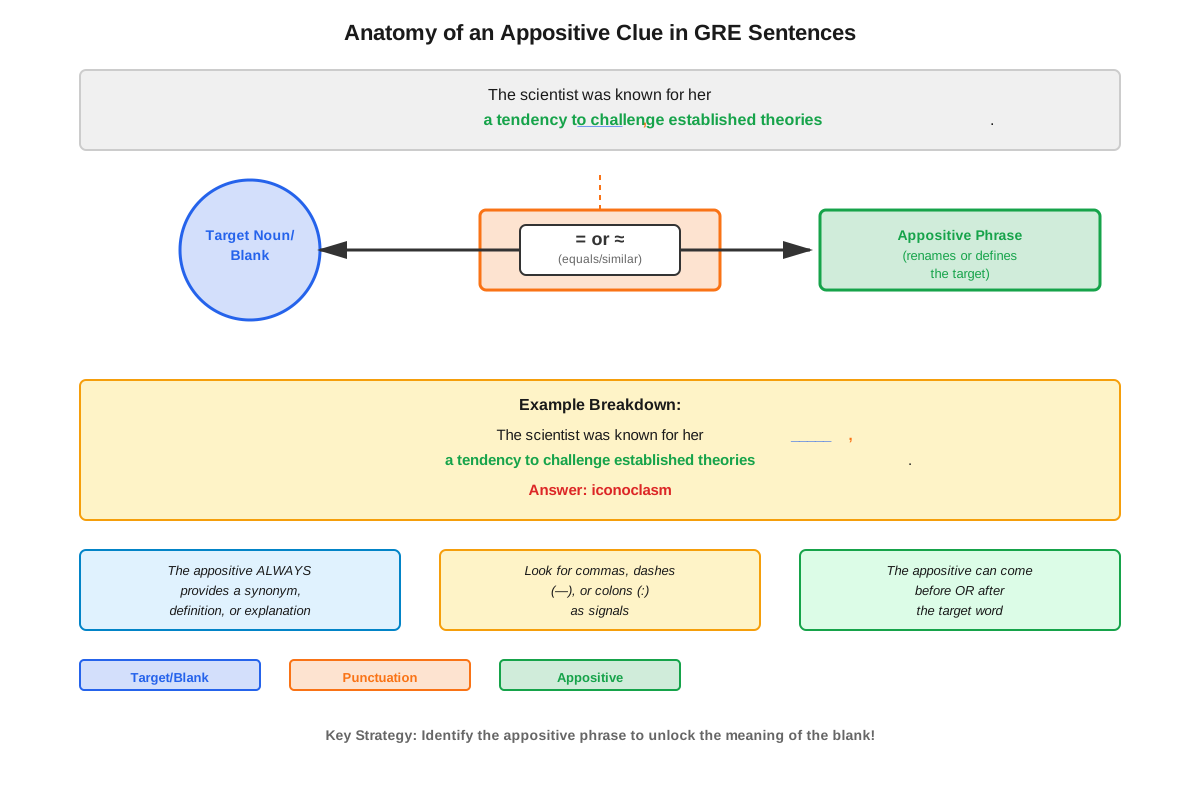
An appositive is a grammatical construction in which a noun or noun phrase is placed beside another noun to rename, identify, or provide additional information about it. The defining characteristic of an appositive is that it refers to the same entity as the noun it modifies—the two elements are equivalent or synonymous. In the sentence "My colleague, a renowned physicist, won the award," the phrase "a renowned physicist" is an appositive that renames "my colleague." Both phrases refer to the same person, and the appositive provides clarifying information about that person's identity or characteristics.
Appositives can be either restrictive or nonrestrictive. Nonrestrictive appositives, which are more common on the GRE, provide additional but not essential information and are set off by punctuation marks (commas, dashes, or colons). Restrictive appositives, which are essential to the meaning of the sentence and are not set off by punctuation, appear less frequently in GRE questions. For test-taking purposes, students should focus primarily on nonrestrictive appositives, as these are the structures that most reliably signal definitional clues.
Punctuation Patterns That Signal Appositives
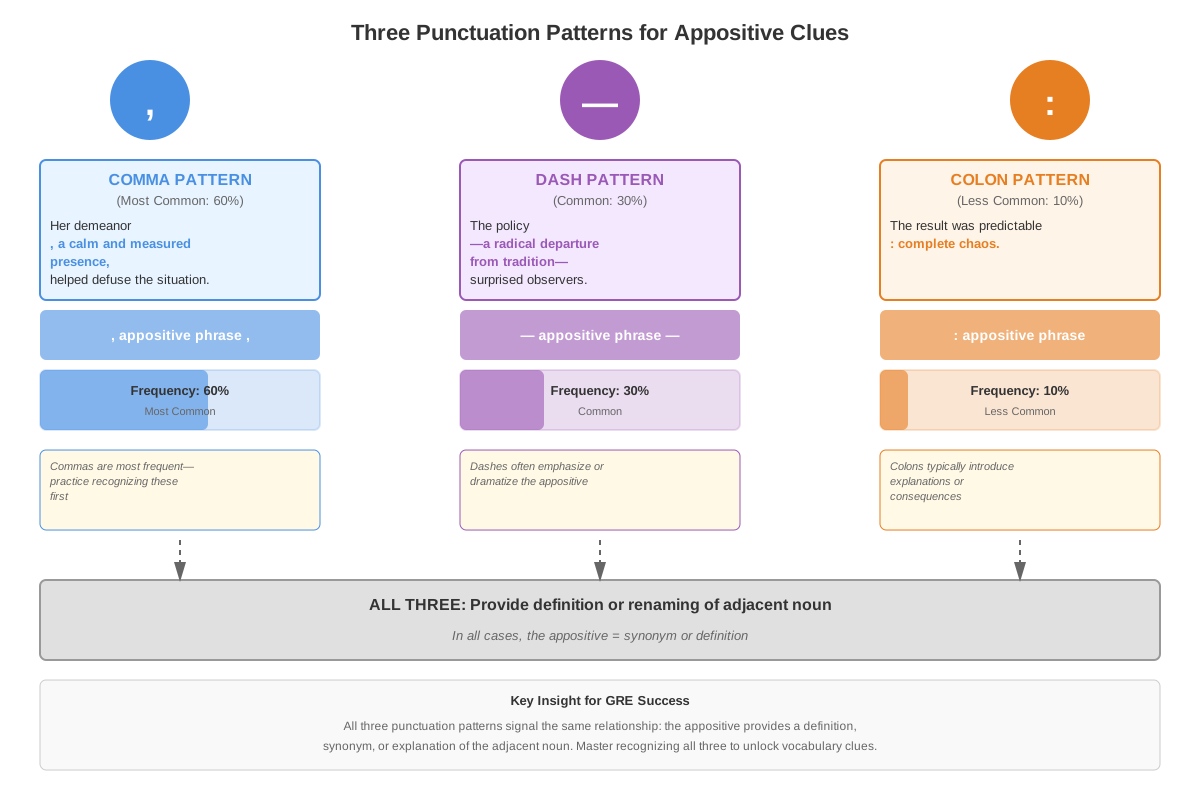
Three primary punctuation patterns indicate the presence of appositive clues on the GRE:
Comma-enclosed appositives are the most common pattern. The appositive appears between two commas, creating a clear interruption in the sentence flow: "The scientist, _____ of conventional methods, proposed a radical new approach." The blank falls within the appositive structure, and the surrounding context indicates that the missing word should describe someone who rejects or questions conventional methods.
Dash-enclosed appositives function similarly to comma-enclosed structures but often signal emphasis or a more dramatic pause: "The politician's speech—a _____ of empty promises and vague commitments—failed to convince voters." The dashes highlight the appositive as particularly important, and the phrase "empty promises and vague commitments" provides strong clues about the missing word (likely "litany," "collection," or "series").
Colon-introduced appositives typically follow the noun they modify and provide explanatory information: "The researcher demonstrated one quality above all: _____." The colon signals that what follows will define or specify the "quality" mentioned, creating a direct definitional relationship.
Identifying Appositive Clues in GRE Questions
To identify when appositive clues are being tested, students should scan for these structural markers:
- Punctuation signals: Look for commas, dashes, or colons that set off explanatory phrases
- Positional relationships: Notice when a descriptive phrase immediately follows or precedes a noun
- Equivalence indicators: Watch for phrases that seem to rename or redefine another element
- Definitional language: Identify words or phrases that explain or specify meaning
When a blank appears within or adjacent to an appositive structure, the GRE is almost certainly testing the student's ability to recognize the definitional relationship. The appositive will contain information that either directly defines the blank or provides strong contextual clues about its meaning.
The Core Strategy: Using Appositives to Predict Answers
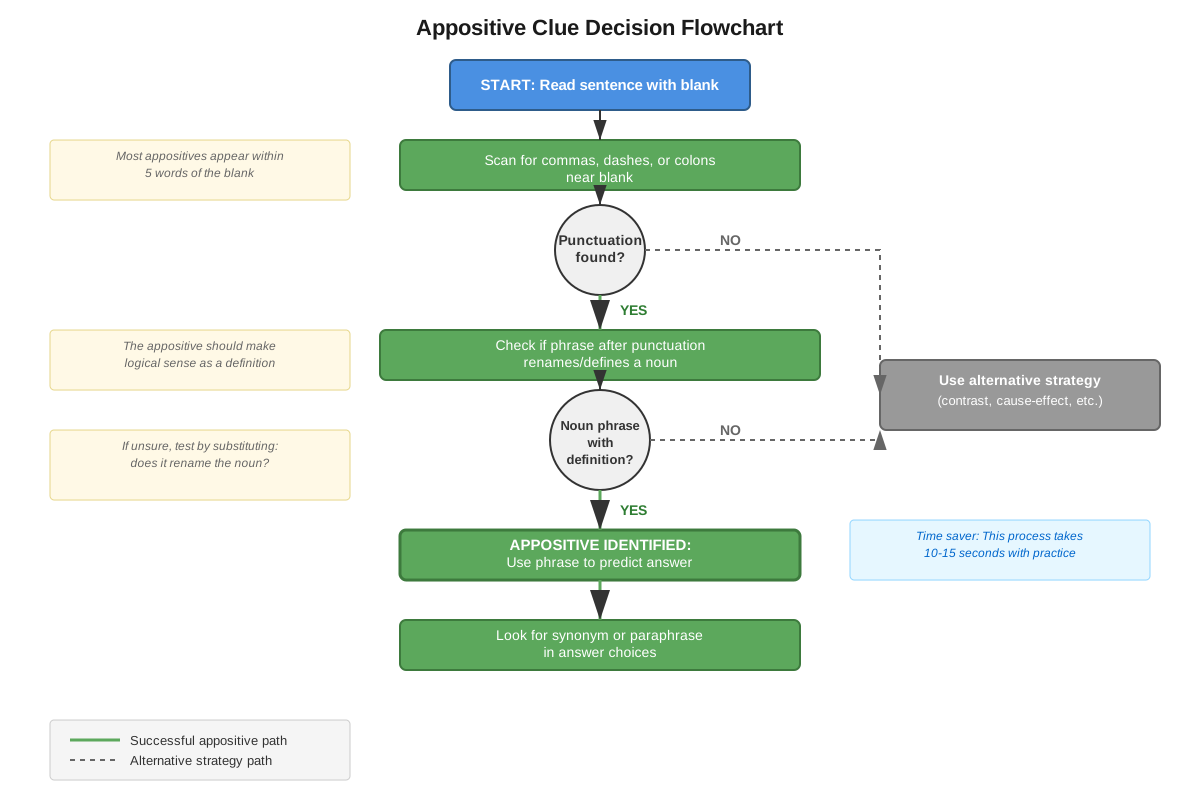
The fundamental strategy for leveraging appositive clues involves a three-step process:
Step 1: Identify the appositive structure by locating the punctuation markers and determining which phrases are in an appositive relationship.
Step 2: Determine the relationship between the appositive and the blank. Ask: Does the appositive define the blank? Does it provide examples of the blank? Does it explain the consequences or characteristics of the blank?
Step 3: Predict an answer based on the information in the appositive before looking at the answer choices. This prediction should be a word or phrase in your own language that captures the meaning suggested by the appositive.
This predictive approach is crucial because it prevents students from being misled by attractive but incorrect answer choices. By forming a clear expectation of what the answer should mean, students can evaluate choices against their prediction rather than trying to make each choice "fit" the sentence.
Types of Information Appositives Provide
Appositives can provide several types of clarifying information, each creating a different relationship with the blank:
| Appositive Type | Information Provided | Example Structure |
|---|---|---|
| Definitional | Direct synonym or definition | "The phenomenon, _____, occurs rarely" |
| Exemplifying | Specific examples of a general concept | "The virtues—honesty, integrity, and _____—were evident" |
| Characteristic | Descriptive qualities or features | "The leader, _____ and charismatic, inspired followers" |
| Explanatory | Clarifying details or elaboration | "Her approach, _____ rather than confrontational, succeeded" |
| Consequential | Results or effects | "The policy, _____ to small businesses, was repealed" |
Understanding which type of information an appositive provides helps students determine the precise relationship between the appositive and the blank, leading to more accurate predictions.
Appositives in Multi-Blank Questions
In Text Completion questions with multiple blanks, appositives can provide clues for one blank while other structural elements provide clues for additional blanks. Students should identify which blank(s) the appositive directly informs and then use other contextual clues for remaining blanks. Sometimes a single appositive structure provides information relevant to multiple blanks, creating a chain of logical relationships that students must trace through the sentence.
Concept Relationships
The concepts within appositive clues form a hierarchical relationship: Punctuation patterns → signal → Appositive structures → which provide → Definitional information → that enables → Answer prediction. Each element depends on the previous one, creating a logical chain from surface-level recognition to strategic application.
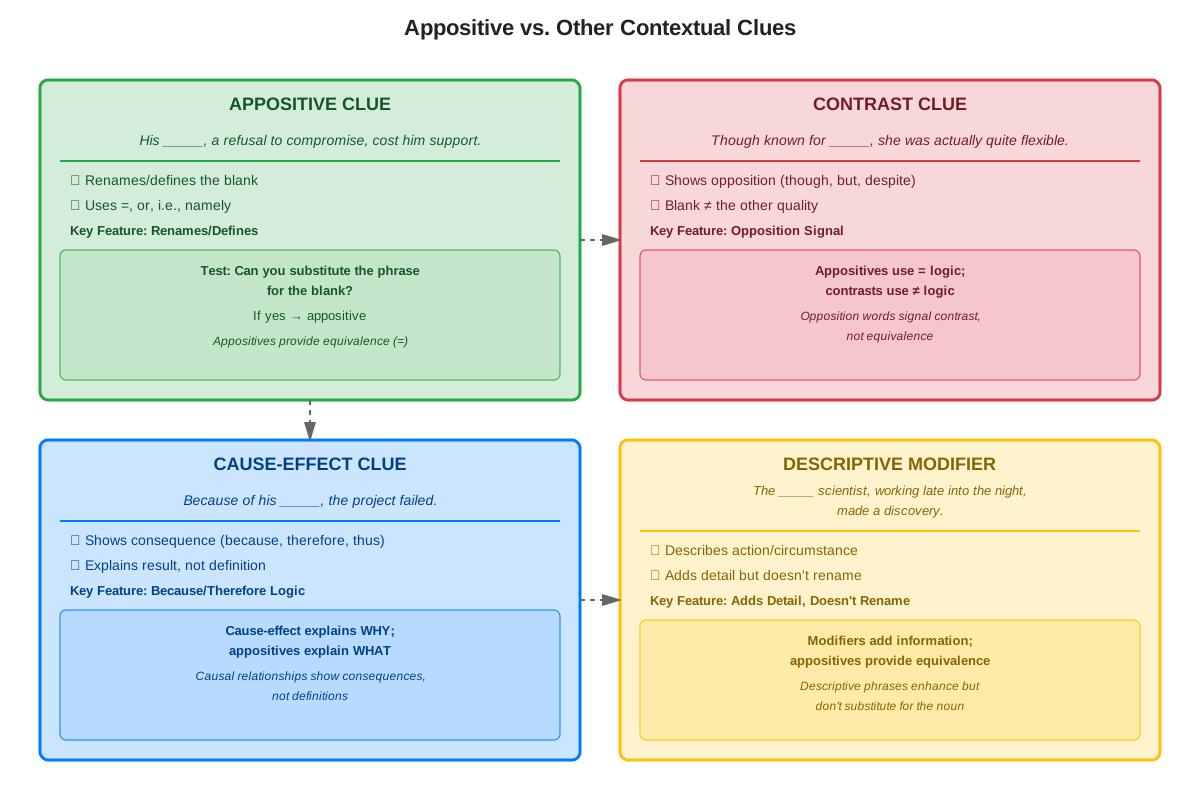
Appositive clues connect to broader Text Completion strategies through their role as one type of contextual evidence. They exist alongside contrast clues (signaled by words like "although," "despite," "however"), support clues (signaled by words like "because," "since," "therefore"), and parallel structure clues. While contrast clues indicate that the blank should mean the opposite of nearby information, appositive clues indicate that the blank should mean the same as or be consistent with the appositive phrase.
The relationship between appositives and vocabulary knowledge is complementary rather than hierarchical. Strong vocabulary helps students understand the information within appositives, but recognizing appositive structures can help students determine correct answers even when they don't know every word in the sentence. This makes appositive recognition particularly valuable for students still building their vocabulary base.
Appositives also connect to reading comprehension skills more broadly. The same structural awareness that helps identify appositives in Text Completion questions aids in understanding complex sentences in Reading Comprehension passages. Students who can quickly identify definitional relationships within sentences can extract key information more efficiently from dense academic prose.
Quick check — test yourself on Appositive clues so far.
Try Flashcards →High-Yield Facts
⭐ Appositives are noun phrases that rename or define adjacent nouns and are typically set off by commas, dashes, or colons.
⭐ When a blank appears within or adjacent to an appositive structure, the appositive almost always provides direct clues to the correct answer.
⭐ Predicting an answer based on the appositive before reviewing choices significantly increases accuracy and speed.
⭐ Comma-enclosed appositives are the most common punctuation pattern on the GRE, appearing in approximately 15-20% of Text Completion questions.
⭐ The information in an appositive is equivalent to or explanatory of the noun it modifies—this equivalence relationship is the key to solving these questions.
- Appositives can appear before or after the noun they modify, though post-positioned appositives are more common on the GRE.
- Dash-enclosed appositives often signal emphasis and may contain the most important clues in the sentence.
- Colon-introduced appositives typically provide definitions or specifications of preceding nouns.
- Multiple appositives can appear in a single sentence, each providing clues for different blanks in multi-blank questions.
- Appositives frequently contain descriptive language that directly parallels the meaning of the blank.
- The GRE often places challenging vocabulary within appositives to test whether students can use structural clues despite lexical gaps.
- Recognizing appositives can help eliminate incorrect answer choices that contradict the definitional information provided.
Common Misconceptions
Misconception: All phrases between commas are appositives. → Correction: Not every comma-enclosed phrase is an appositive. Appositives specifically rename or define nouns; other comma-enclosed elements might be parenthetical remarks, dependent clauses, or transitional phrases that don't create definitional relationships.
Misconception: Appositives always provide synonyms for the blank. → Correction: While appositives often provide synonymous information, they can also provide examples, characteristics, explanations, or consequences. The relationship is one of equivalence or clarification, not necessarily direct synonymy.
Misconception: If you don't understand the vocabulary in the appositive, you can't use it as a clue. → Correction: Even partial understanding of an appositive can provide valuable clues. Focus on the words you do know, use root analysis for unfamiliar terms, and consider the overall tone and context to extract meaning.
Misconception: Appositives only appear in single-blank Text Completion questions. → Correction: Appositives appear across all Text Completion formats, including multi-blank questions and Sentence Equivalence questions. In multi-blank questions, an appositive might provide clues for one blank while other structural elements inform additional blanks.
Misconception: The appositive always appears immediately before or after the blank. → Correction: While proximity is common, appositives can be separated from the blank by other sentence elements. The key is identifying which noun the appositive modifies and tracing the logical relationship to the blank.
Misconception: Dashes and colons function identically to commas in signaling appositives. → Correction: While all three punctuation marks can signal appositives, they carry different emphases. Dashes suggest emphasis or dramatic pause, colons indicate that explanatory information follows, and commas are neutral markers. These nuances can provide additional context clues.
Worked Examples
Example 1: Comma-Enclosed Appositive
Question: The historian's interpretation, a _____ departure from traditional scholarship, challenged long-held assumptions about the period.
Step 1 - Identify the structure: The phrase "a _____ departure from traditional scholarship" is set off by commas, indicating it's an appositive that renames or describes "interpretation."
Step 2 - Analyze the appositive content: The appositive tells us this interpretation is "a departure from traditional scholarship" and that it "challenged long-held assumptions." Both phrases suggest something that breaks from convention, questions established views, or introduces new perspectives.
Step 3 - Consider the overall sentence logic: The word "departure" is key—it means moving away from something. The fact that it challenged assumptions reinforces that this is not a minor or subtle change but a significant one.
Step 4 - Predict an answer: Before looking at choices, predict words like "radical," "bold," "dramatic," "significant," or "controversial"—all suggesting a major break from tradition.
Step 5 - Evaluate choices:
- (A) tentative - Incorrect; suggests hesitation, contradicts "challenged"
- (B) radical - Correct; matches prediction, indicates major departure
- (C) modest - Incorrect; contradicts "departure" and "challenged"
- (D) conventional - Incorrect; opposite of "departure from traditional"
- (E) incremental - Incorrect; suggests gradual change, not challenging assumptions
Answer: (B) radical
Connection to learning objectives: This example demonstrates identifying appositive clues (the comma-enclosed phrase), explaining the strategy (using the appositive to predict meaning), and applying it accurately (selecting the answer that matches the appositive's meaning).
Example 2: Dash-Enclosed Appositive with Multiple Clues
Question: The committee's decision—a _____ that satisfied neither the progressive nor the conservative factions—ultimately pleased no one.
Step 1 - Identify the structure: The phrase between dashes is an appositive describing "decision." The dashes emphasize this information as particularly important.
Step 2 - Analyze the appositive content: The appositive tells us this decision "satisfied neither the progressive nor the conservative factions." The phrase "neither...nor" indicates it failed to please either side.
Step 3 - Consider additional clues: The phrase "ultimately pleased no one" reinforces that this decision was unsatisfying to all parties. This suggests a middle-ground approach or an attempt to balance competing interests that failed.
Step 4 - Predict an answer: Predict words like "compromise," "middle-ground," "accommodation," or "concession"—terms suggesting an attempt to satisfy multiple parties that typically results in satisfying none completely.
Step 5 - Evaluate choices:
- (A) mandate - Incorrect; suggests authoritative command, doesn't fit "satisfied neither"
- (B) compromise - Correct; matches prediction, explains why neither side was satisfied
- (C) innovation - Incorrect; doesn't explain the failure to satisfy factions
- (D) ultimatum - Incorrect; suggests forceful demand, contradicts attempt to satisfy both sides
- (E) consensus - Incorrect; suggests agreement, contradicts "pleased no one"
Answer: (B) compromise
Connection to learning objectives: This example shows how dash-enclosed appositives often contain crucial information, demonstrates the strategy of using multiple clues within the appositive (both "satisfied neither" and the specific mention of two factions), and illustrates accurate application by selecting the answer that explains the relationship described.
Exam Strategy
When approaching GRE questions involving appositive clues, implement this systematic process:
First 10 seconds - Scan for punctuation: Before reading the entire sentence, quickly scan for commas, dashes, or colons near the blank. These punctuation marks are visual signals that often indicate appositive structures. This initial scan primes your brain to recognize the structural relationships as you read.
Next 20 seconds - Read actively for structure: As you read the sentence, identify which phrases are in appositive relationships. Ask yourself: "What is renaming what?" or "What is defining what?" Mark or mentally note the appositive and the noun it modifies.
Trigger words and phrases to watch for:
- Phrases beginning with "a" or "an" between commas (often signal definitional appositives)
- Descriptive phrases following colons
- Explanatory phrases between dashes
- Words like "namely," "specifically," "that is," or "in other words" (these explicitly signal definitional relationships)
Next 15 seconds - Predict before looking at choices: Based on the appositive, formulate your own word or phrase for the blank. Write it down if possible. This prediction serves as your anchor for evaluating answer choices and prevents you from being swayed by sophisticated-sounding but incorrect options.
Final 15 seconds - Eliminate and select: Compare each answer choice to your prediction. Eliminate choices that contradict the appositive's meaning or don't create logical equivalence. If multiple choices seem possible, plug each into the sentence and test whether it maintains the equivalence relationship with the appositive.
Process-of-elimination tips specific to appositives:
- Eliminate any choice that contradicts information in the appositive
- Eliminate choices that would make the appositive redundant or illogical
- Eliminate choices that break the equivalence relationship (if the appositive defines X, the blank should be consistent with that definition)
- In Sentence Equivalence questions, both correct answers must maintain the same relationship with the appositive
Time allocation: Appositive-based questions should be among your faster solves. Allocate approximately 60 seconds for single-blank questions with clear appositives, as these provide direct evidence. If you've spent more than 90 seconds and haven't identified the appositive relationship, mark the question and return to it later—you may be missing a structural element.
Advanced strategy: In multi-blank questions, identify which blank(s) the appositive directly informs, solve those first, then use your answers to provide additional context for remaining blanks. This sequential approach builds confidence and often reveals additional clues for harder blanks.
Memory Techniques
The COMMA mnemonic for identifying and using appositive clues:
- Check for punctuation (commas, dashes, colons)
- Observe which noun is being renamed
- Match the blank to the appositive's meaning
- Make a prediction before viewing choices
- Assess each choice against your prediction
Visualization strategy: Picture appositives as "equals signs" in the sentence. When you see the punctuation that signals an appositive, mentally replace it with an equals sign (=). This reinforces that the appositive and the noun it modifies are equivalent: "The scientist, = a pioneer in her field, = received recognition." This visual cue helps maintain focus on the equivalence relationship.
The "Rename Game": When practicing, explicitly state the renaming relationship aloud: "The appositive [phrase] renames [noun]." This verbal reinforcement strengthens pattern recognition. For example: "The phrase 'a radical departure from tradition' renames 'interpretation.'"
Punctuation personality acronym - CDC:
- Commas = Common, neutral markers
- Dashes = Dramatic, emphatic markers
- Colons = Clarifying, explanatory markers
This acronym helps remember both the punctuation types and their relative emphasis levels.
The Equivalence Test: Before finalizing an answer, perform this mental test: "If I replace the blank with this answer choice, does it create a logical equivalence with the appositive?" If the answer is no, eliminate that choice. This simple test catches many errors.
Summary
Appositive clues represent one of the most reliable and high-yield strategies for GRE Text Completion questions, appearing in approximately 20-30% of questions across various formats. An appositive is a noun phrase that renames, defines, or provides additional information about an adjacent noun, typically set off by commas, dashes, or colons. The fundamental strategy involves three steps: identifying the appositive structure through punctuation signals, determining the equivalence relationship between the appositive and the blank, and predicting an answer based on the definitional information provided before reviewing answer choices. Appositives can provide various types of information—definitions, examples, characteristics, explanations, or consequences—all of which create logical relationships that point toward the correct answer. Success with appositive clues requires recognizing punctuation patterns, understanding equivalence relationships, and systematically applying the prediction strategy. This skill not only improves Text Completion performance but also enhances overall reading comprehension by developing structural awareness of how sentences convey meaning through grammatical relationships.
Key Takeaways
- Appositive clues are noun phrases set off by commas, dashes, or colons that rename or define adjacent nouns, providing direct evidence for Text Completion blanks.
- The core strategy is to identify the appositive structure, determine its relationship to the blank, and predict an answer before reviewing choices.
- Comma-enclosed appositives are the most common pattern, but dashes signal emphasis and colons introduce explanatory information.
- Appositives create equivalence relationships—the information in the appositive should be consistent with or define the meaning of the blank.
- Predicting answers based on appositives before viewing choices prevents being misled by attractive but incorrect options.
- Appositive recognition appears across all Text Completion formats and significantly improves both accuracy and speed.
- Even partial understanding of an appositive's vocabulary can provide sufficient clues when combined with structural awareness and context.
Related Topics
Contrast Clues in Text Completion: While appositives signal equivalence and definition, contrast clues (signaled by words like "although," "despite," "however") indicate that the blank should mean the opposite of nearby information. Mastering appositives provides a foundation for recognizing all types of structural clues, as both require identifying signal words and understanding logical relationships.
Parallel Structure in Sentence Equivalence: Appositive recognition skills transfer directly to identifying parallel structures in Sentence Equivalence questions, where grammatically parallel elements often provide clues about blank meanings. Understanding how equivalent elements relate strengthens performance across multiple question types.
Punctuation and Sentence Structure: Deeper study of how punctuation creates meaning in complex sentences builds on appositive recognition. Understanding restrictive versus nonrestrictive clauses, parenthetical elements, and other punctuation-dependent structures enhances overall reading comprehension.
Context Clue Integration: Advanced Text Completion questions often combine multiple clue types—appositives, contrast indicators, cause-and-effect relationships, and tone markers. After mastering appositives individually, students should practice identifying and integrating multiple clue types within single sentences.
Practice CTA
Now that you understand the structure and strategy behind appositive clues, it's time to reinforce this knowledge through active practice. Attempt the practice questions designed specifically for this topic, focusing on identifying punctuation patterns, determining equivalence relationships, and predicting answers before reviewing choices. Use the flashcards to drill recognition of appositive structures until identifying them becomes automatic. Remember that appositive recognition is a high-yield skill that will serve you across numerous GRE questions—the time you invest in mastering this strategy will pay dividends in both accuracy and confidence on test day. Each practice question is an opportunity to strengthen your pattern recognition and build the automaticity that leads to top scores.
Sign up free to keep reading
Create a free AnvayaPrep account to finish this GRE guide on Appositive clues — plus flashcards and practice questions.