Overview
The thesis statement is the cornerstone of every successful GRE Analytical Writing essay. It serves as the central argument that guides the entire essay, providing both the writer and the reader with a clear roadmap of the position being taken and the reasoning that will follow. In the context of the GRE Analytical Writing section, particularly the "Analyze an Issue" task, a well-crafted thesis statement can be the difference between a score of 3 and a score of 6. The thesis statement must accomplish multiple objectives simultaneously: it must take a clear position on the issue presented, acknowledge the complexity of the topic, and preview the logical structure of the argument that follows.
Understanding how to construct an effective gre thesis statement is essential because it directly impacts every other element of the essay. A strong thesis statement provides coherence, demonstrates critical thinking, and signals to the grader that the writer has a sophisticated understanding of the issue at hand. The GRE graders specifically look for essays that maintain a focused position throughout, and this focus originates from the thesis statement. Without a clear, defensible thesis, even well-written body paragraphs will appear disconnected and fail to build toward a compelling argument.
The thesis statement connects intimately with other Analytical Writing concepts including essay organization, paragraph development, evidence selection, and conclusion writing. It serves as the foundation upon which all other writing elements are built. The position articulated in the thesis determines what examples will be relevant, how counterarguments should be addressed, and what the conclusion should emphasize. Mastering thesis statement construction is therefore not an isolated skill but rather a fundamental competency that enables success across all aspects of the Analytical Writing section.
Learning Objectives
- [ ] Identify when Thesis statement is being tested
- [ ] Explain the core rule or strategy behind Thesis statement
- [ ] Apply Thesis statement to GRE-style questions accurately
- [ ] Construct thesis statements that take nuanced positions on complex issues
- [ ] Evaluate the effectiveness of sample thesis statements and identify weaknesses
- [ ] Adapt thesis statement structure to different types of Issue prompts
- [ ] Integrate acknowledgment of complexity and counterarguments within thesis statements
Prerequisites
- Basic essay structure: Understanding of introduction, body paragraphs, and conclusion is necessary because the thesis statement must fit appropriately within the introductory framework and guide the subsequent essay organization.
- Argument analysis fundamentals: Ability to identify claims, evidence, and reasoning is relevant because constructing a thesis requires understanding what constitutes a defensible position.
- Critical thinking skills: Capacity to evaluate multiple perspectives on an issue is essential because effective GRE thesis statements must demonstrate nuanced thinking rather than simplistic binary positions.
- Academic writing conventions: Familiarity with formal writing style and tone is important because the thesis statement must be expressed in language appropriate for graduate-level academic discourse.
Why This Topic Matters
The thesis statement is not merely an academic formality—it represents the writer's ability to synthesize complex information, take a defensible position, and communicate that position clearly. In professional and academic contexts beyond the GRE, the ability to articulate a clear central argument is fundamental to research papers, policy recommendations, grant proposals, and business communications. Graduate programs value this skill because it demonstrates the analytical rigor necessary for advanced study and research.
On the GRE Analytical Writing section, the thesis statement appears in every single Issue essay, making it one of the most consistently tested elements of the exam. According to ETS scoring guidelines, essays that score in the 5-6 range consistently demonstrate "a clear and insightful position on the issue," which originates directly from the thesis statement. Conversely, essays scoring in the 1-3 range typically exhibit "unclear or seriously limited analysis," often stemming from weak or absent thesis statements. The thesis statement accounts for a significant portion of the grader's assessment of the essay's overall coherence and analytical depth.
Common ways this topic appears include prompts that ask test-takers to evaluate claims about education, technology, government policy, or societal values. The thesis statement must respond directly to the specific wording of the prompt, whether it asks the writer to "discuss the extent to which you agree or disagree," "explain your views on the policy and its implications," or "discuss which view more closely aligns with your own position." Each prompt type requires subtle adjustments to thesis statement construction, making this a high-yield area for strategic preparation.
Core Concepts
Definition and Purpose of a Thesis Statement
A thesis statement is a one-to-two sentence declaration that presents the writer's position on the issue and previews the main reasoning that will support that position. Unlike a topic sentence, which introduces the content of a single paragraph, the thesis statement governs the entire essay. It must be specific enough to be defensible with concrete reasoning and examples, yet broad enough to allow for comprehensive exploration of the issue. The thesis statement typically appears at the end of the introductory paragraph, though it may occasionally appear at the beginning when the writer wants to establish the position immediately before providing context.
The primary purpose of the thesis statement is to establish argumentative focus. Every subsequent paragraph, example, and piece of reasoning should connect back to and support the thesis. This creates coherence—one of the four key criteria by which GRE essays are evaluated. A secondary purpose is to demonstrate analytical sophistication to the grader. A nuanced thesis that acknowledges complexity signals that the writer can think critically about multifaceted issues rather than resorting to oversimplified binary thinking.
Components of an Effective GRE Thesis Statement
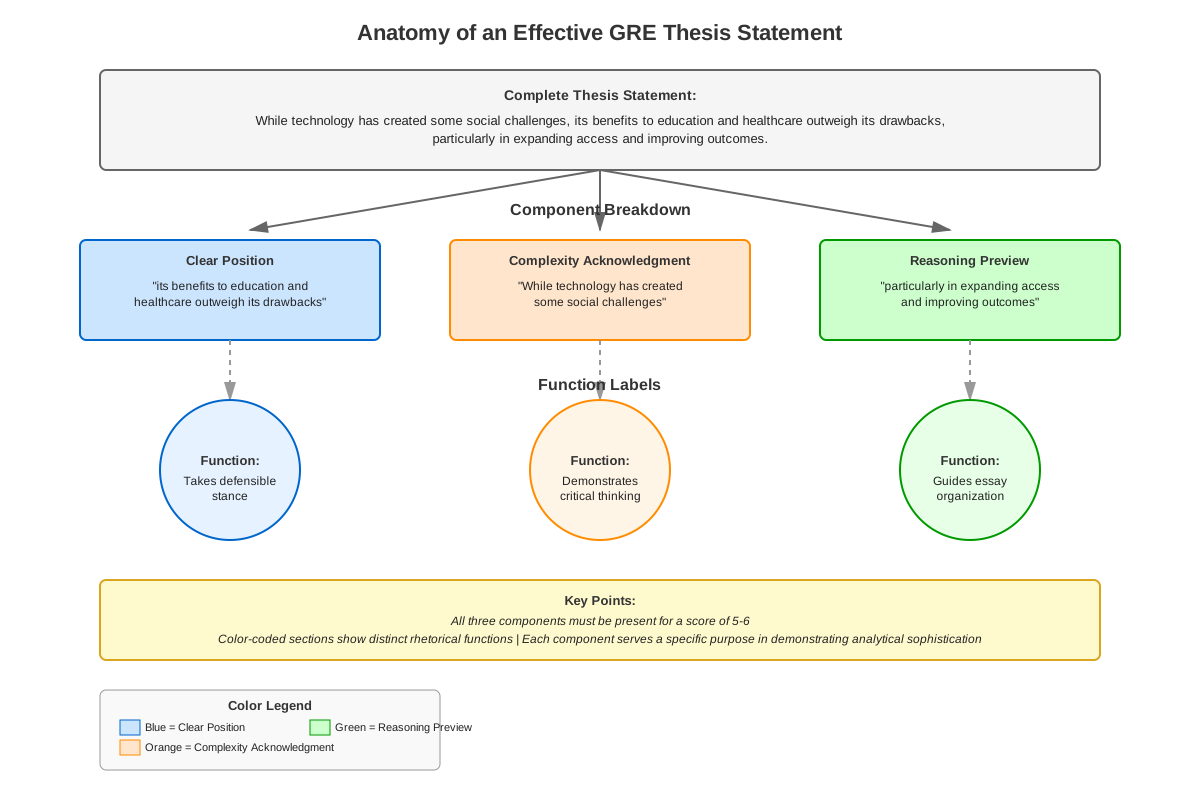
An effective gre thesis statement contains three essential components:
- Clear Position: The thesis must unambiguously state where the writer stands on the issue. Vague language like "there are many perspectives" or "this is a complex issue" fails to establish a position. Instead, the thesis should use decisive language: "While X has some merit, Y is ultimately more important because..."
- Scope Definition: The thesis should indicate the boundaries of the argument, signaling what aspects of the issue will be addressed. This prevents the essay from becoming unfocused or attempting to cover too much ground superficially.
- Reasoning Preview: The most sophisticated thesis statements hint at the logical structure of the argument by briefly indicating the main reasons for the position. This can be accomplished through parallel structure or by mentioning key criteria that will be explored.
Types of Thesis Statement Structures
Different GRE prompts call for different thesis statement approaches:
| Prompt Type | Thesis Structure | Example Framework |
|---|---|---|
| Agree/Disagree | State degree of agreement with qualification | "While I largely agree that X, this position must be qualified by considering Y and Z." |
| Comparative | Indicate which option is preferable and why | "Although both approaches have merit, X is superior to Y when evaluated based on [criteria]." |
| Policy Evaluation | State whether policy should be implemented with conditions | "The proposed policy should be implemented, but only with modifications that address [concerns]." |
| Extent/Degree | Specify the conditions under which claim is valid | "The claim holds true in [contexts], but fails to account for [exceptions]." |
Nuance and Qualification in Thesis Statements
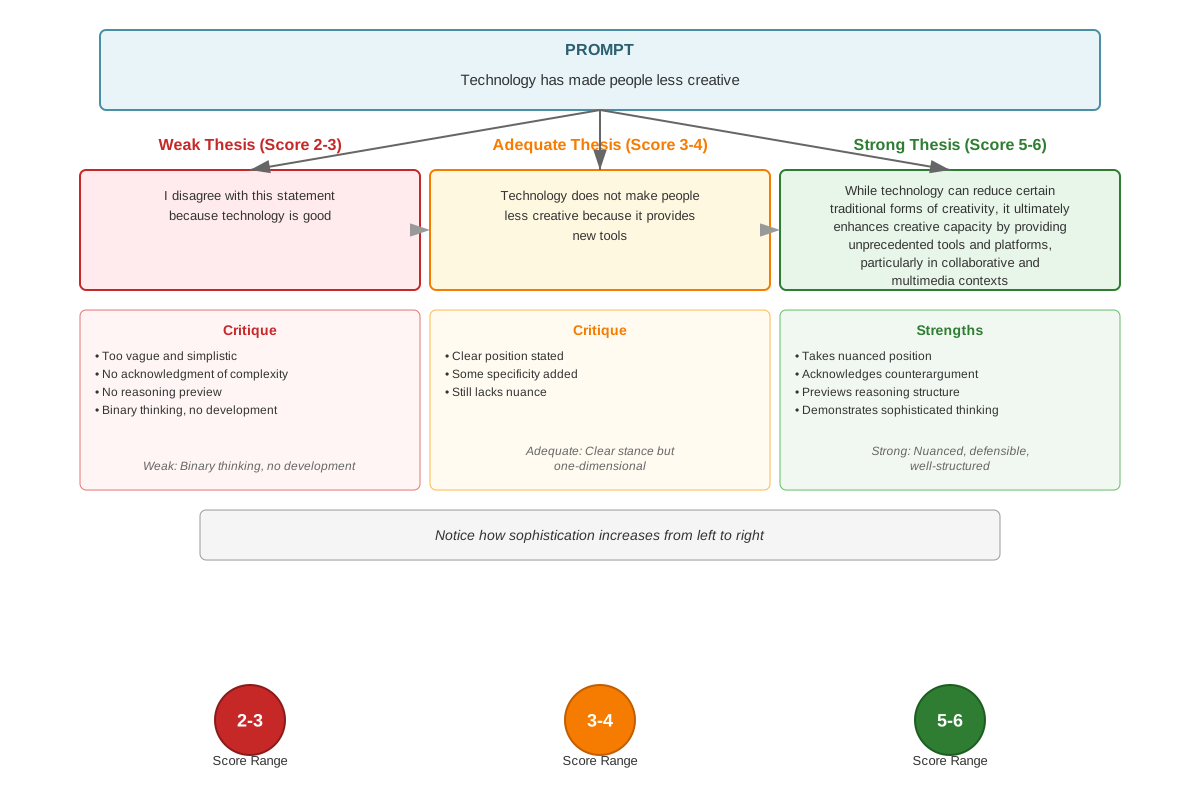
One of the most important distinctions between mediocre and excellent GRE thesis statements is the presence of nuance. A nuanced thesis acknowledges that most issues are complex and that absolute positions are rarely defensible. This is accomplished through qualification—using phrases that indicate conditional agreement or recognition of counterarguments:
- "While X is generally true, important exceptions exist in cases where..."
- "Although Y presents valid concerns, these are outweighed by..."
- "To the extent that Z applies to [specific context], the claim is valid, but..."
Qualification does not weaken the thesis; rather, it strengthens it by demonstrating intellectual honesty and critical thinking. The key is to acknowledge complexity while still maintaining a clear position. The thesis should not be so qualified that it becomes wishy-washy or fails to take a stance.
Common Thesis Statement Pitfalls
Several common errors undermine thesis statement effectiveness:
Announcement statements simply declare what the essay will discuss without taking a position: "This essay will examine both sides of the issue." This fails to establish an argument.
Overly broad claims attempt to make universal statements that cannot be adequately supported: "Technology always improves society." Such claims are easily refuted and demonstrate unsophisticated thinking.
Purely descriptive statements summarize the issue without arguing a position: "Education policy affects many stakeholders." This provides no argumentative direction.
Hidden thesis statements bury the position in the middle of the introduction or fail to state it explicitly, leaving the grader uncertain about the writer's stance.
Positioning the Thesis Statement
The placement of the thesis statement within the introduction follows conventional academic writing patterns. Most effective GRE essays position the thesis at the end of the introductory paragraph, after providing brief context about the issue. This structure allows the writer to:
- Open with a hook or general statement about the issue's significance
- Provide necessary background or define key terms
- Present the thesis as the natural culmination of the introduction
- Transition smoothly into the first body paragraph
Some writers successfully place the thesis at the beginning of the introduction, immediately establishing their position before explaining context. This approach works well when the prompt is straightforward and requires minimal explanation, but it can feel abrupt if the issue requires contextual setup.
Concept Relationships
The thesis statement serves as the central hub connecting all other elements of the GRE Analytical Writing essay. The relationship flows as follows:
Prompt Analysis → Thesis Statement → Essay Organization → Body Paragraphs → Conclusion
The process begins with careful analysis of the prompt's specific wording and requirements. This analysis directly informs thesis construction—the thesis must respond to what the prompt actually asks, not what the writer wishes it asked. The thesis statement then determines essay organization: the number of body paragraphs, their sequence, and their focus all derive from the position and reasoning preview established in the thesis.
Each body paragraph connects back to the thesis by developing one aspect of the argument. The topic sentence of each body paragraph should explicitly link to the thesis, and the paragraph's examples and analysis should support the thesis's central claim. This creates a coherent argumentative structure where every element serves the thesis.
The thesis statement also relates to counterargument acknowledgment. A sophisticated thesis often incorporates recognition of opposing views, which then necessitates addressing those counterarguments within the essay body. This relationship ensures that the essay demonstrates critical thinking rather than one-sided advocacy.
Finally, the thesis connects to the conclusion by providing the position that the conclusion will reinforce and synthesize. The conclusion should not introduce new arguments but rather should demonstrate how the body paragraphs have collectively supported the thesis statement's central claim.
Within the topic itself, the concepts relate hierarchically: understanding the definition and purpose of thesis statements enables recognition of effective components, which in turn allows for construction of appropriately structured thesis statements that avoid common pitfalls and incorporate nuance.
Quick check — test yourself on Thesis statement so far.
Try Flashcards →High-Yield Facts
⭐ The thesis statement must appear in the introduction, typically as the last sentence of the first paragraph.
⭐ An effective GRE thesis statement takes a clear position while acknowledging the complexity of the issue.
⭐ The thesis should respond directly to the specific wording and requirements of the prompt.
⭐ Nuanced thesis statements that include qualification typically score higher than absolute, unqualified claims.
⭐ Every body paragraph must connect back to and support the thesis statement.
- A thesis statement is not the same as a topic sentence; it governs the entire essay, not just one paragraph.
- The thesis should be specific enough to be arguable but broad enough to allow for comprehensive development.
- Announcement statements ("This essay will discuss...") are ineffective thesis statements that fail to establish a position.
- The best thesis statements preview the reasoning structure that will follow in the body paragraphs.
- Thesis statements should avoid absolute language like "always," "never," "all," or "none" unless the claim can be definitively supported.
- A strong thesis can be challenged—if no reasonable person could disagree, it's likely a statement of fact rather than an arguable thesis.
- The thesis statement should be written in formal academic language appropriate for graduate-level writing.
- Revising the thesis statement after drafting body paragraphs can improve alignment between the stated position and the actual argument developed.
Common Misconceptions
Misconception: The thesis statement must be a single sentence. → Correction: While conciseness is valued, a thesis statement can be two sentences if the complexity of the position requires it. The key is clarity and precision, not arbitrary length restrictions.
Misconception: A strong thesis takes an extreme, unqualified position to show confidence. → Correction: GRE graders reward nuanced thinking that acknowledges complexity. Absolute positions often appear unsophisticated and are difficult to defend adequately within the essay's scope.
Misconception: The thesis should present both sides equally without taking a clear stance. → Correction: While acknowledging counterarguments is important, the thesis must establish a clear position. Presenting both sides equally without indicating which is more valid fails to create an argumentative focus.
Misconception: The thesis can be implied rather than explicitly stated. → Correction: GRE essays require an explicit thesis statement. Graders spend limited time on each essay and need to identify the position quickly. An implied thesis risks being missed entirely, resulting in a lower score.
Misconception: The thesis statement should introduce new arguments in the conclusion. → Correction: The thesis is established in the introduction and reinforced in the conclusion. The conclusion should synthesize how the body paragraphs supported the thesis, not introduce new positions or arguments.
Misconception: A thesis about a complex issue must be complex and difficult to understand. → Correction: Even when addressing complex issues, the thesis statement itself should be clear and accessible. Complexity should be reflected in nuanced thinking, not convoluted sentence structure.
Misconception: The thesis should match personal beliefs rather than what can be best argued. → Correction: The GRE tests analytical writing ability, not personal conviction. The thesis should reflect the position that can be most effectively supported with reasoning and examples, regardless of personal beliefs.
Worked Examples
Example 1: Technology and Education Prompt
Prompt: "The best way to improve education is to increase access to technology in classrooms. Discuss the extent to which you agree or disagree with this claim."
Weak Thesis: "Technology in classrooms has both advantages and disadvantages that should be considered."
Analysis of Weakness: This thesis fails to take a clear position. It merely acknowledges that the issue has multiple perspectives without indicating where the writer stands. It provides no argumentative direction and would result in an unfocused essay.
Improved Thesis: "While increased access to classroom technology can enhance certain aspects of learning, it is not the best way to improve education because effective teaching depends more fundamentally on teacher quality, curriculum design, and student engagement strategies that technology alone cannot provide."
Analysis of Strength: This thesis accomplishes multiple objectives:
- Clear position: It disagrees with the claim that technology is the "best" way to improve education
- Acknowledges validity: It recognizes that technology has benefits ("can enhance certain aspects")
- Provides reasoning preview: It indicates the essay will discuss teacher quality, curriculum design, and engagement strategies
- Responds to prompt language: It directly addresses the "best way" phrasing in the prompt
The body paragraphs would then develop each of the three factors mentioned (teacher quality, curriculum design, engagement strategies), explaining why each is more fundamental than technology access. A counterargument paragraph might acknowledge specific benefits of technology while explaining why these don't make it the "best" approach.
Example 2: Government Policy Prompt
Prompt: "Governments should prioritize economic growth over environmental protection because a strong economy provides the resources needed to address environmental problems later. Discuss the extent to which you agree or disagree with this position."
Weak Thesis: "I disagree with this statement because the environment is important."
Analysis of Weakness: This thesis is too simplistic and fails to engage with the prompt's reasoning. It doesn't address the claim that economic growth provides resources for later environmental action. The use of "I" is acceptable but the reasoning is underdeveloped.
Improved Thesis: "This position is fundamentally flawed because it fails to recognize that environmental degradation often becomes irreversible, making delayed action ineffective regardless of available resources. Rather than prioritizing one over the other, governments should pursue sustainable economic development that integrates environmental protection from the outset, as this approach prevents the false choice the prompt presents."
Analysis of Strength: This thesis demonstrates sophisticated thinking:
- Directly challenges the prompt's logic: It identifies the flaw in the "address problems later" reasoning
- Proposes an alternative framework: Rather than simply disagreeing, it suggests a different approach (sustainable development)
- Shows analytical depth: It recognizes that the prompt presents a false dichotomy
- Sets up clear argumentative structure: The essay would discuss irreversibility of environmental damage, limitations of delayed action, and benefits of integrated approaches
The body paragraphs would provide examples of irreversible environmental damage (species extinction, climate tipping points), explain why economic resources cannot always reverse damage, and present cases where integrated sustainable development has succeeded.
Exam Strategy
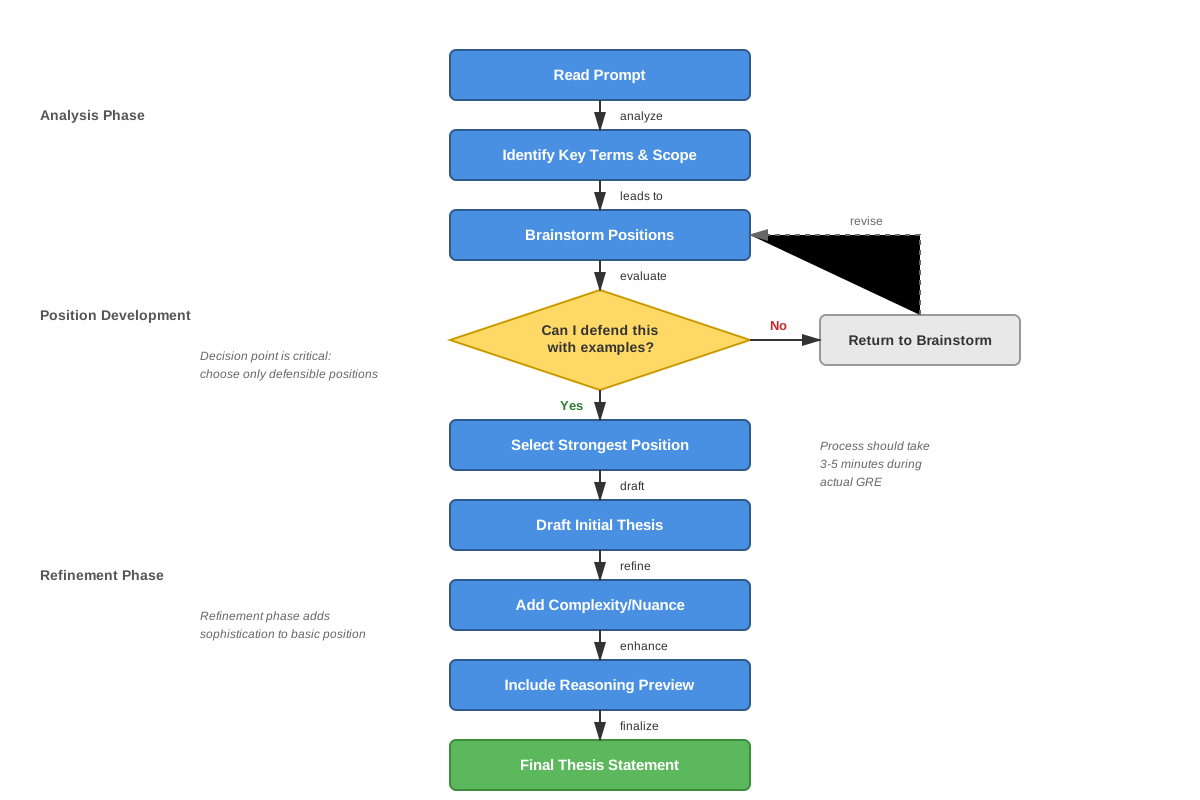
When approaching the Issue essay, allocate the first 3-4 minutes to planning, with significant focus on thesis development. Before writing, ensure the thesis clearly responds to the prompt's specific question. GRE prompts use precise language—"best way," "most important," "should always," "extent to which"—and the thesis must address these specific phrasings.
Trigger words to watch for in prompts:
- "Extent to which" → signals need for qualified, nuanced position
- "Best" or "most important" → requires comparative analysis
- "Should always" or "never" → invites discussion of exceptions
- "Discuss which view" → requires choosing between presented options
Process for thesis construction:
- Identify the prompt's core claim or question
- Determine your position (agree, disagree, or qualified stance)
- List 2-3 main reasons supporting your position
- Consider the most significant counterargument
- Draft thesis incorporating position, reasoning preview, and acknowledgment of complexity
- Verify thesis directly responds to prompt's specific wording
Time allocation tip: If struggling to formulate the perfect thesis during planning, write a working thesis and begin body paragraphs. Often, the process of developing arguments clarifies the position, allowing for thesis revision before finalizing the introduction. However, ensure at least 2-3 minutes remain to write a proper introduction with clear thesis.
Process-of-elimination for thesis evaluation: When reviewing your drafted thesis, eliminate it if it:
- Could apply to a different prompt (too generic)
- Fails to take a clear position (too neutral)
- Uses announcement language ("This essay will...")
- Contains only absolute claims without qualification
- Doesn't respond to the prompt's specific question
Exam Tip: The thesis statement is often the first thing graders look for when assessing an essay. A clear, sophisticated thesis creates a positive first impression that influences the grader's perception of the entire essay.
Memory Techniques
Acronym for thesis components - PQRS:
- Position: State where you stand clearly
- Qualification: Acknowledge complexity/counterarguments
- Reasoning: Preview your main supporting points
- Specificity: Respond to the prompt's exact wording
Visualization strategy: Picture the thesis as a roadmap. Just as a roadmap shows the destination (your position) and the major routes to get there (your reasoning), your thesis should show readers where the essay is going and how it will get there.
Mnemonic for avoiding weak thesis statements - "No DAFT Theses":
- Descriptive only (no argument)
- Announcement style ("This essay will...")
- Fact-based (not arguable)
- Too vague (could apply to any prompt)
Mental checklist - "The Three C's":
- Clear position
- Complexity acknowledged
- Connected to prompt
Pattern recognition: Strong GRE thesis statements often follow the structure: "While [acknowledgment of opposing view/complexity], [main position] because [reasoning preview]." Memorizing this template provides a reliable starting point that can be adapted to various prompts.
Summary
The thesis statement is the foundational element of every successful GRE Analytical Writing essay, serving as both the central argument and the organizational roadmap for the entire response. An effective thesis must accomplish three critical objectives: establish a clear, defensible position on the issue; acknowledge the complexity of the topic through appropriate qualification; and preview the reasoning structure that will follow in the body paragraphs. The thesis must respond directly to the specific wording of the prompt, whether it asks about extent of agreement, comparative evaluation, or policy assessment. Sophisticated thesis statements avoid common pitfalls such as announcement language, purely descriptive claims, and overly broad generalizations. Instead, they demonstrate nuanced thinking by recognizing valid counterarguments while maintaining a focused argumentative stance. The thesis connects to every other element of the essay—from body paragraph organization to conclusion synthesis—making it the single most important sentence in the entire response. Mastery of thesis statement construction directly correlates with higher essay scores because it demonstrates the analytical rigor and clear communication skills that graduate programs value.
Key Takeaways
- The thesis statement must take a clear position while acknowledging complexity through qualification and nuance
- Every effective thesis responds directly to the specific wording and requirements of the prompt
- Strong thesis statements preview the reasoning structure that will be developed in body paragraphs
- Placement typically occurs at the end of the introductory paragraph, serving as a bridge to the essay body
- Avoid announcement statements, purely descriptive claims, and overly broad generalizations that cannot be adequately supported
- Nuanced positions that recognize exceptions and counterarguments score higher than absolute, unqualified claims
- The thesis serves as the organizational hub connecting all essay elements from body paragraphs to conclusion
Related Topics
Essay Organization and Structure: Understanding how to organize body paragraphs that effectively support the thesis statement, including topic sentence construction and paragraph unity. Mastering thesis statements enables more effective overall essay organization.
Counterargument Integration: Learning how to acknowledge and refute opposing viewpoints strengthens thesis statements by demonstrating critical thinking and analytical depth.
Evidence Selection and Analysis: Developing the ability to choose relevant examples and analyze them effectively to support the thesis position established in the introduction.
Conclusion Writing: Crafting conclusions that synthesize the argument and reinforce the thesis without merely repeating it, demonstrating how the body paragraphs have collectively supported the central claim.
Prompt Analysis Techniques: Developing systematic approaches to deconstructing GRE prompts to ensure thesis statements respond to what is actually being asked rather than what the writer assumes is being asked.
Practice CTA
Now that you understand the critical role of thesis statements in GRE Analytical Writing, it's time to apply this knowledge through deliberate practice. Work through the practice questions to construct thesis statements for various prompt types, and use the flashcards to reinforce key concepts about thesis statement components and common pitfalls. Remember that thesis statement construction is a skill that improves with practice—each prompt you analyze and each thesis you draft strengthens your ability to quickly formulate sophisticated, nuanced positions under timed conditions. Your investment in mastering this foundational skill will pay dividends across every Issue essay you write on test day.
Sign up free to keep reading
Create a free AnvayaPrep account to finish this GRE guide on Thesis statement — plus flashcards and practice questions.